
Reviewed · GUIDED TOURS IN ROME
Rome: Domus Aurea Guided Tour and Virtual Reality Experience
Nero’s Domus Aurea is one of Rome’s strangest visits: a buried palace where bare brick, fading frescoes, and modern Oculus VR work together to show what Nero’s Golden House may once have looked like. The virtual reconstruction gives shape to rooms that are now mostly ruins.
I like the tour’s clear focus on the palace itself, especially the Octagonal Hall and the inventive use of concrete. I also like that a guide puts Nero’s grand plan into context, including his wish to link the Palatine residences with gardens and a huge dynastic home.
The main caution is practical: it is cool inside, acoustics can be poor, and the site is not suitable for wheelchair users, people with mobility impairments, or those with claustrophobia. Arrive early, bring a jacket, and stay close to the guide.
Key points to know before booking
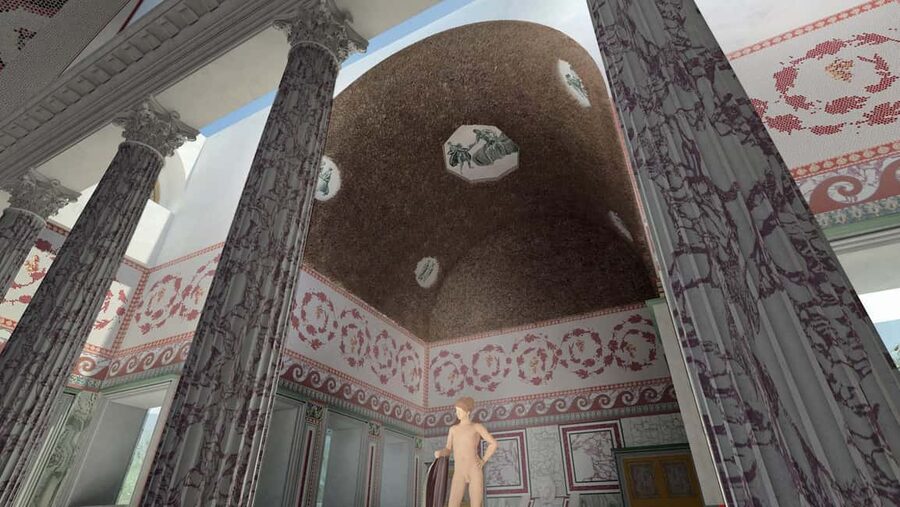
- The VR presentation rebuilds Nero’s Golden Vault, helping you picture color, decoration, and scale that the ruins cannot show on their own.
- The visit lasts 1.5 hours, with about 70 minutes listed for the guided portion inside the Domus Aurea.
- You see important palace spaces, including the Octagonal Hall, Cryptoporticus, Hall of Birds, and Golden Vault.
- The guide explains Roman concrete, an important part of how this large and ambitious complex was built.
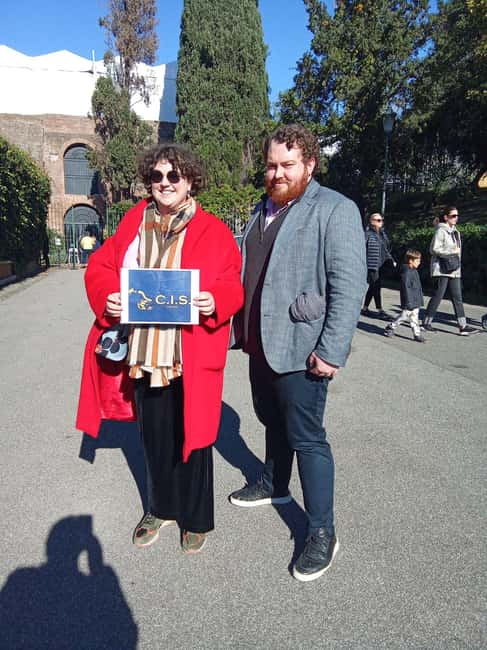
- The meeting point is at the Colosseo metro station, near the green kiosk, with a C.I.S. Tours sign.
- The interior stays around 10 degrees Celsius, so a sweater or light jacket is not optional for most people.
Why the Domus Aurea feels different from Rome’s famous ruins
The Colosseum gets the crowds and the postcards. The Domus Aurea offers something quieter and more unusual: the remains of a private imperial palace hidden beneath later layers of Rome.
Nero built the complex after the great fire of Rome in AD 64. The palace was not simply one large house. It was a vast imperial residence tied to gardens, ceremonial rooms, and spaces intended for court life and entertainment. The plan aimed to connect existing Palatine homes with the Esquiline gardens, creating a single royal-style complex.
That ambition matters when you enter the ruins. You are not looking at a tidy villa with every room intact. You are seeing fragments of a huge project that once contained an entire court and productive activities. The remains make more sense when your guide explains the scale and purpose behind them.
Nero’s reputation also gives the place an edge. This was the emperor known for extravagant parties and unpopular rule. The Domus Aurea became a symbol of excess, and later emperors covered much of it with new construction. The Colosseum was built over part of Nero’s former lake area, while the palace itself was buried and forgotten for centuries.
That burial helped preserve some of the wall paintings. It also created the dim, enclosed setting you experience today. The palace is less about grand open views and more about seeing how Roman builders and decorators worked inside a controlled imperial world.
More Guided Tours in Rome
- Colosseum, Roman Forum & Palatine Guided Tour
★ 4.7 · 63,148 reviews - Vatican Museums, Sistine Chapel & St Peter’s Basilica Guided Tour
★ 4.5 · 39,149 reviews - Rome: Colosseum, Palatine Hill and Roman Forum Guided Tour
★ 4.8 · 32,814 reviews
Meeting near the Colosseo metro station
You meet the group at the lower floor of the Colosseo metro station, at street level, near the green kiosk. Look for staff carrying the C.I.S. Tours sign.
This is a busy part of Rome, so do not cut the timing close. You are asked to arrive 20 minutes before the booked start time. One booking experience involved confusion because the staff member appeared only shortly before departure and the entry was delayed. That makes early arrival especially sensible.
Have the full names of every participant ready. The tickets are nominative, so the names need to match the booking information. Bring a passport or identity card, including for children.
The meeting point is convenient if you are already visiting the Colosseum, Roman Forum, or Palatine Hill. It is also easy to reach by metro, though the station area can be crowded and distracting. Give yourself time to locate the green kiosk and the tour representative.
The activity is advertised at 1.5 hours. The guided tour itself is listed as 70 minutes, with the remaining time covering the entry process and virtual reality portion. This is a useful length for a focused archaeological visit. You get enough time for explanation without giving up half a day in Rome.
Inside the Golden House
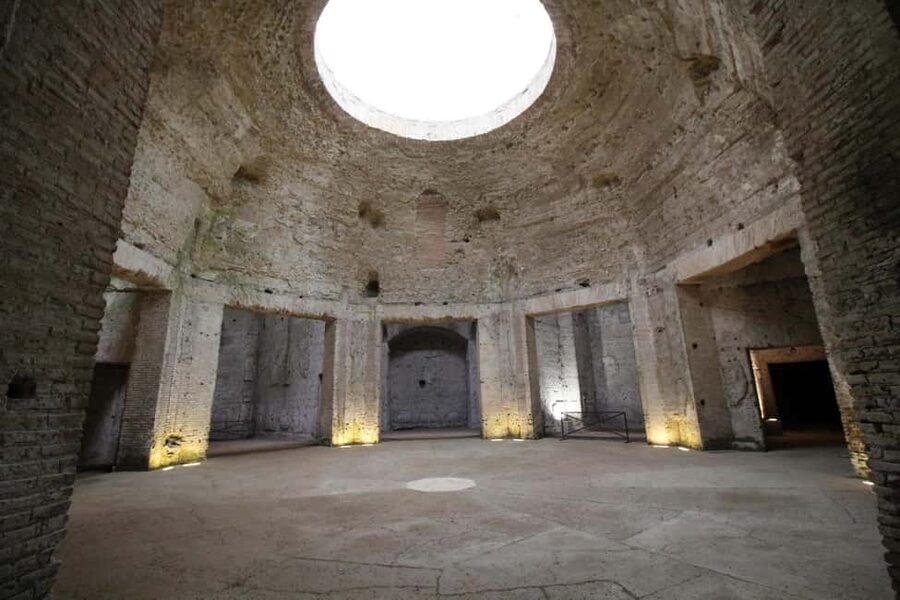
The Domus Aurea does not greet you with shining gold walls. The name refers to Nero’s original palace, which was famous for its lavish decoration and precious materials. Today, much of what you see is raw archaeological fabric: brick, concrete, surviving plaster, and painted fragments.
That contrast is part of the appeal. You can look directly at the remains, then use the guide’s explanation and the VR presentation to picture the palace at its height. The experience asks you to move between evidence and reconstruction rather than pretending the modern ruins are complete.
The cool interior is worth planning for. Temperatures are around 10 degrees Celsius, and several visitors specifically wished they had brought a sweater. Comfortable shoes are also important. The site is not appropriate for wheelchair users or people with mobility impairments, and the enclosed spaces may be uncomfortable if you have claustrophobia.
Food and drinks are not allowed inside. Large bags and luggage are also prohibited, so this is not a place to visit while carrying all your airport baggage. Unaccompanied minors are not permitted.
The Octagonal Hall and Nero’s building ideas
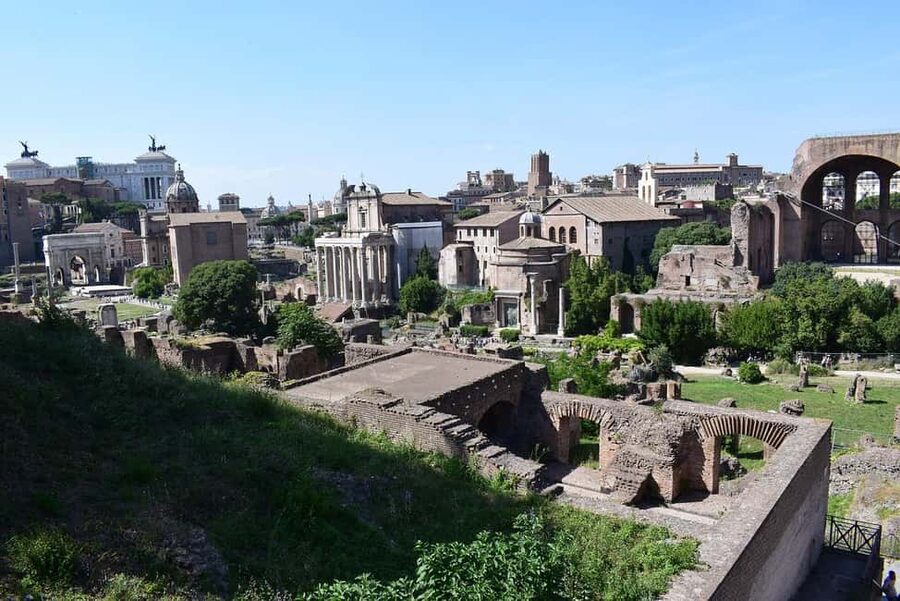
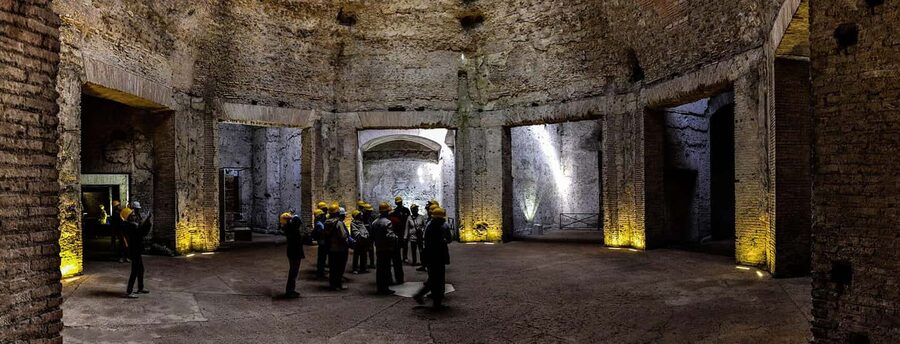
The Octagonal Hall is one of the most memorable rooms on the route. Its shape reflects the Roman interest in unusual geometry and ambitious interior design. The room is tied to the wider palace plan, where architecture was meant to impress, surprise, and support imperial ceremony.
The guide also explains the use of concrete, which is one of the most valuable parts of the visit for anyone interested in Roman engineering. Concrete let Roman builders create broad spans, vaulted ceilings, and complex forms that would have been difficult to achieve with cut stone alone.
You should listen for the connection between structure and decoration. The palace was not just a collection of pretty wall paintings. Its rooms, vaults, corridors, and light effects were designed as a complete experience for Nero’s court.
The remains make the engineering easier to appreciate because so much of the decorative surface is gone. You can see the underlying construction more clearly than you might in a fully restored building. The guide’s job is to connect those plain structural details with the finished palace that once covered them.
A few more Rome half-days worth a look
- Vatican: Museums & Sistine Chapel Entrance Ticket
★ 4.5 · 144,003 reviews - Vatican Museums & Sistine Chapel Tour with Optional Basilica
★ 4.3 · 67,413 reviews - Rome: Guided Tour of Colosseum, Roman Forum & Palatine Hill
★ 4.7 · 27,897 reviews - Rome: Colosseum & Forum with Audio Guide App -Optional Arena
★ 4.2 · 24,770 reviews
The Cryptoporticus and Hall of Birds
The Cryptoporticus is a covered passageway, and it helps you understand how a large Roman palace connected its rooms and service areas. These corridors could provide movement through the complex while protecting people from the weather and controlling access between parts of the residence.
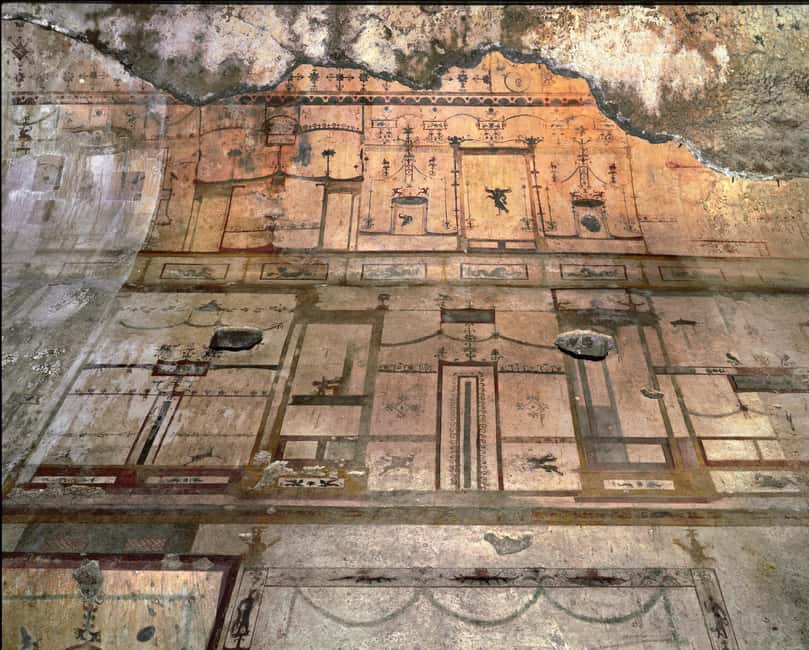
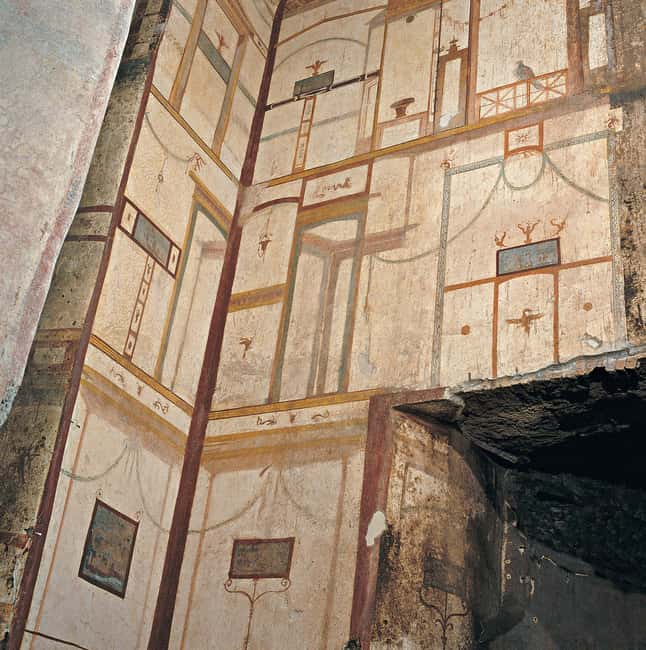
The Hall of Birds is especially useful for seeing the quality of the decoration. The Domus Aurea is valued for its Roman wall paintings, which include delicate figures, ornamental borders, and imaginative designs. Much of this work influenced later artists after the palace was rediscovered.
The rooms are not presented as fully reconstructed galleries. You will see damaged surfaces, restoration work, and areas where the original decoration survives only in pieces. That honesty is important. The appeal is not polished perfection but the chance to study an ancient decorative scheme in its real archaeological setting.
A guide can point out details that are easy to miss when you walk through on your own. The tour is available in Italian, English, French, and Spanish. An audio guide is also included in those languages, which gives you another way to follow the explanation.
One point to keep in mind is sound. The rooms have poor acoustics, and one visitor had difficulty hearing the guide. Stay near the guide whenever possible. If you are sensitive to spoken audio in echoing spaces, the included audio option may help, but the information is still easier to follow when you are positioned close to the live commentary.
What the Oculus VR experience adds
The virtual reality presentation is the tour’s big modern twist. Using an Oculus headset, you see the Golden Vault reconstructed as it may have appeared in Nero’s time.
This is not a replacement for the ruins. It works best as a visual aid. The archaeological remains show you what survived. The VR sequence proposes how the rooms, colors, decoration, and architectural scale may have looked before damage, burial, and later building changed the site.
The presentation is short, so it does not overwhelm the archaeological visit. It also gives you a break from studying dark walls and fragmented frescoes. The shift from physical remains to a digital reconstruction helps you understand why the palace was considered extraordinary.
You should treat the images as informed reconstruction rather than a perfect recording of the past. The supplied information describes what the palace must have looked like according to archaeological and historical interpretation. That distinction is worth remembering, especially if you are interested in how experts rebuild lost buildings.
The best effect comes from using both parts together. First, look at the actual walls and vaults. Then let the VR sequence supply the missing decoration and scale. Afterward, the plain archaeological surfaces are easier to read because you have a mental picture of the completed rooms.
The guide’s role and the language options
The guided explanation is central to the experience. Claudia, one of the guides praised by name, was described as clear in subject knowledge and generous with explanations. Other guide feedback also highlights friendly, careful answers to questions.
That matters here because the Domus Aurea is not self-explanatory. Nero’s building program, the later burial of the palace, Roman concrete, and the wall paintings all need context. Without that context, you may see a series of dark rooms without understanding their place in the larger complex.
The tour runs in Italian, English, French, or Spanish. An audio guide is included in the same four languages. If you are booking for a mixed-language group, check the available departure language when choosing your time.
The experience can vary with the guide and with where you stand in each room. Because the acoustics are not ideal, I would not hang back at the edge of the group. Move with the guide, keep your attention on the explanation, and use the audio option if needed.
Is $67 a fair price?
At $67 per person, this is not the cheapest archaeological stop in Rome. The price includes the Domus Aurea ticket, guided tour, Oculus VR experience, taxes, and fees. It also includes skip-the-ticket-line access, which saves time at a site with timed entry and limited access.
The value depends on how much help you want. If you are comfortable reading archaeological information on your own and prefer to move slowly, a guided visit may feel less flexible. The Domus Aurea is also not a huge all-day attraction. The scheduled visit takes 1.5 hours, so the price is paying for interpretation and the VR element more than for a long duration.
I think the cost makes sense for visitors who want the palace explained rather than simply entered. The VR sequence is the part you cannot reproduce by standing outside or looking at photographs. The guide also helps tie together Nero’s building plans, the palace’s decoration, and Roman engineering.
It is a particularly good choice if you are already paying to see several major Roman sites and want something different from the Colosseum. You do not get a broad city tour or a long walk through multiple monuments. You get a compact, specialized look at one of Rome’s most unusual archaeological sites.
Who should book this visit
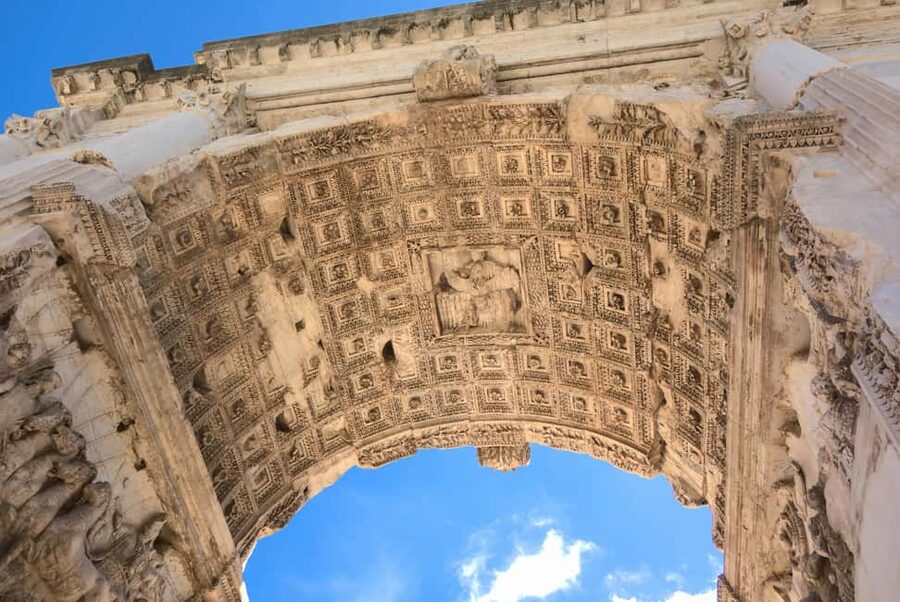
I would recommend it to you if you enjoy archaeology, Roman architecture, imperial history, or digital reconstructions. It also suits anyone who has already seen the Colosseum and Forum and wants a less familiar side of ancient Rome.
Families with older children may appreciate the VR section, though the activity does not allow unaccompanied minors. The enclosed rooms and cool temperature mean you should judge the visit carefully for younger children or anyone who dislikes confined spaces.
The tour is less suitable if you need step-free access, have significant mobility limitations, or use a wheelchair. It is also a poor match if enclosed archaeological spaces make you anxious.
You should bring:
- A passport or identity card
- Comfortable shoes
- A sweater or jacket
- No food, drinks, luggage, or large bags
The cancellation policy allows cancellation up to three days ahead for a 60 percent refund. That is not a full refund, so check your plans before booking.
Should you book the Domus Aurea tour?
Book it if you want a short, focused visit that combines real Roman ruins with a strong visual reconstruction. The VR presentation, the surviving wall paintings, and the explanation of Roman concrete give the tour more substance than a simple walk through an underground ruin.
Skip it if you need complete accessibility, dislike enclosed spaces, or prefer to explore without a guide. Also remember that the rooms are cold and the sound can be difficult, so bring a jacket and stay near the guide.
For most history-minded visitors, this is a good use of 1.5 hours in Rome. The Domus Aurea shows you the remains of Nero’s ambition, while the virtual reality sequence helps you picture the palace before time and later emperors stripped it of its original splendor.
FAQ
How long does the Domus Aurea tour last?
The full activity lasts 1.5 hours. The guided portion inside the Domus Aurea is listed as 70 minutes.
What does the $67 price include?
The price includes the Domus Aurea admission ticket, guided tour, virtual reality experience, and all taxes and fees.
Where is the meeting point?
Meet at the lower floor of the Colosseo metro station, at street level, near the green kiosk. Look for staff with the C.I.S. Tours sign.
How early should I arrive?
Arrive 20 minutes before your booked start time. The names of all participants are required because the tickets are nominative.
What languages are available?
The live guide and included audio guide are available in Italian, English, French, and Spanish.
Is the Domus Aurea wheelchair accessible?
The experience is not suitable for wheelchair users or people with mobility impairments.
Is the site suitable for people with claustrophobia?
No. The activity is listed as unsuitable for people with claustrophobia because parts of the archaeological complex are enclosed.
What should I wear or bring?
Bring comfortable shoes and a jacket or sweater. The temperature inside the Domus Aurea is around 10 degrees Celsius. Bring a passport or identity card, including for children. Food, drinks, luggage, and large bags are not allowed.
Just added around Rome
- Boat excursion to Gaeta with a stop for swimming and snorkeling 2 HOURS★ 5.0 · 240 reviews
- Palatine Hill and Roman Forum Tour with Fast-Track Entrance★ 4.2 · 417 reviews
- Tivoli: Villa D’Este & Villa Adriana Pass & App Audioguide★ 4.4 · 364 reviews
- Tivoli: Villa D’Este Entry Ticket and App Audio Guide★ 4.3 · 191 reviews
- From Rome: Villa D’Este & Villa Adriana Day Trip with Lunch★ 4.4 · 289 reviews
- Vatican Museums & Sistine Chapel Skip-the-Line Guided Tour★ 4.6 · 254 reviews
- Rome: Capitoline Museums and Centrale Montemartini Tickets★ 4.4 · 328 reviews
- Rome: The Three Tenors at St. Paul’s Church Concert Ticket★ 4.7 · 699 reviews
Guided Tours in Rome, compared.
Colosseum, Roman Forum & Palatine Guided Tour
Read our review →
Vatican Museums, Sistine Chapel & St Peter’s Basilica Guided Tour
Read our review →
Colosseum, Palatine Hill and Roman Forum Guided Tour
Read our review →
Guided Tour of Colosseum, Roman Forum & Palatine Hill
Read our review →
Colosseum, Roman Forum and Palatine Hill Guided Tour
Read our review →
Colosseum, Palatine Hill & Roman Forum Guided Tour
Read our review →
Vatican Museums & Sistine Chapel Guided Tour
Read our review →
Colosseum Arena, Palatine Hill & Forum Guided Tour
Read our review →Browse the lists this tour appears in