
Reviewed · PRIVATE TOURS IN ROME
Rome: Caracalla Baths & Circus Maximus — Private or Shared
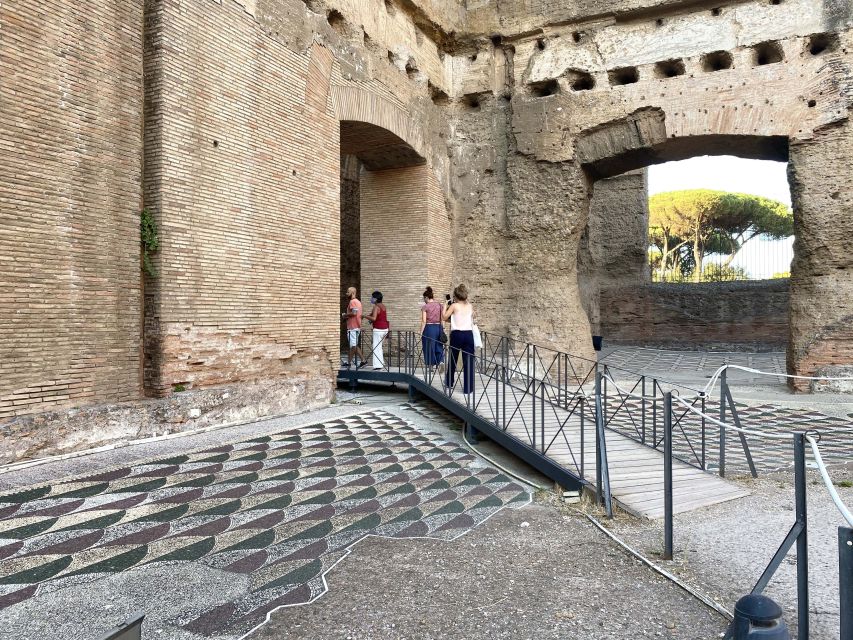
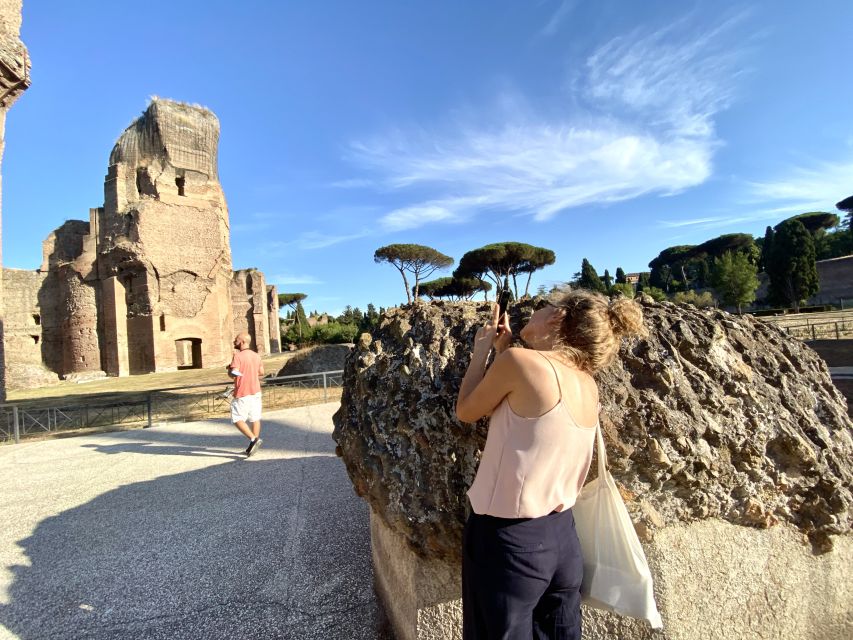
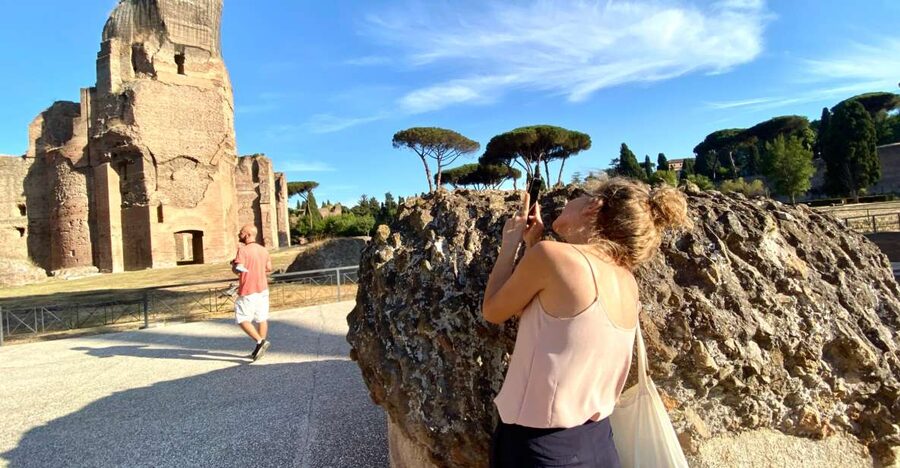
The Baths of Caracalla are one of Rome’s great surprises: huge brick walls, mosaics, and marble-lined rooms still give you a sense of the ancient complex’s size. Your guide explains how Romans moved through the spa, how the underfloor heating worked, and what happened inside each room.
I like the peaceful setting near the Colosseum and the small maximum group of 10. I also like the strong guides, including Chiara, Lars, Francesca, and Anestis, who are praised for clear explanations, humor, and patience. The main drawback is Circus Maximus: the site is historically important, but little of the original stadium remains above ground, so you must rely heavily on your guide and imagination.
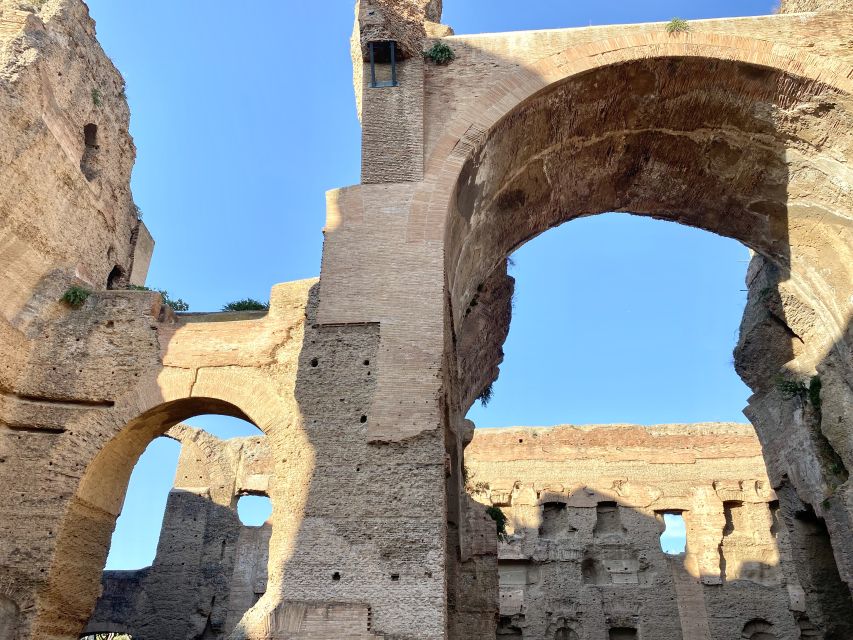
- Caracalla’s enormous surviving walls make the baths easier to picture than many Roman ruins.
- Original mosaics and traces of decoration help explain the complex’s former luxury.
- A live archaeologist guide turns engineering, daily routines, and Roman customs into a readable story.
- Circus Maximus takes only 30 minutes, giving you context without taking over the visit.
- Small groups of up to 10 leave room for questions and a calmer pace.
- The price of $77 is easiest to justify if you value expert interpretation more than a long list of included attractions.
Why Caracalla’s Baths Matter More Than Their Ruins Suggest
Rome gives you plenty of ruins, but the Baths of Caracalla are unusually good at showing how ancient Romans spent their free time. This was not simply a place to wash. It was a grand public complex for bathing, exercise, conversation, reading, and social life.
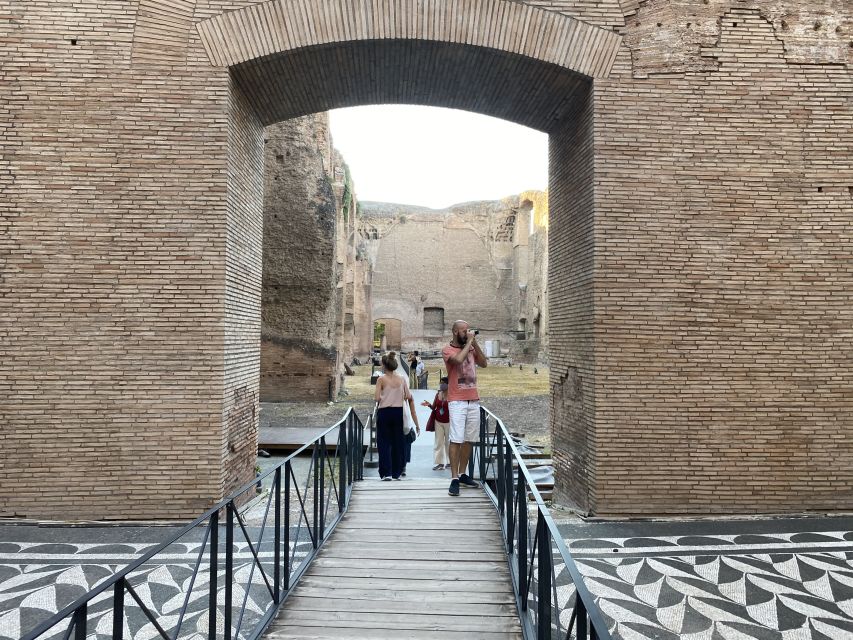
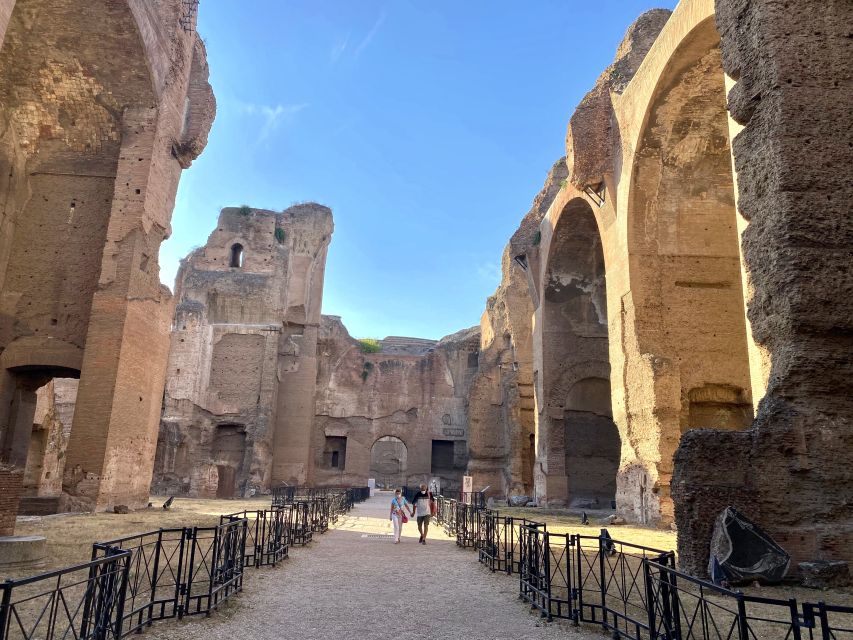
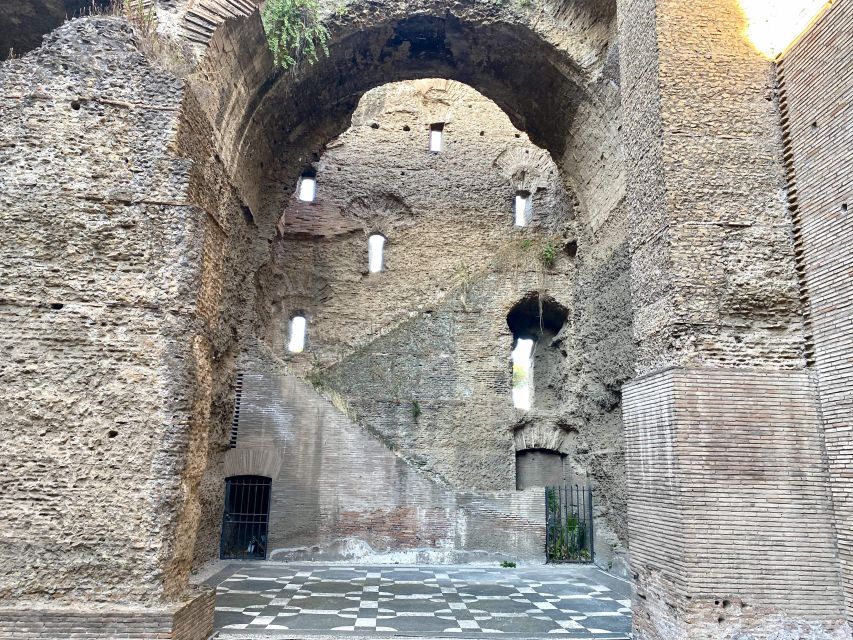
The surviving walls are the first shock. They rise far above you and outline rooms that once held thousands of people. Even in a damaged state, the scale tells you that bathing was a major part of Roman civic life, not a quick chore at the end of the day.
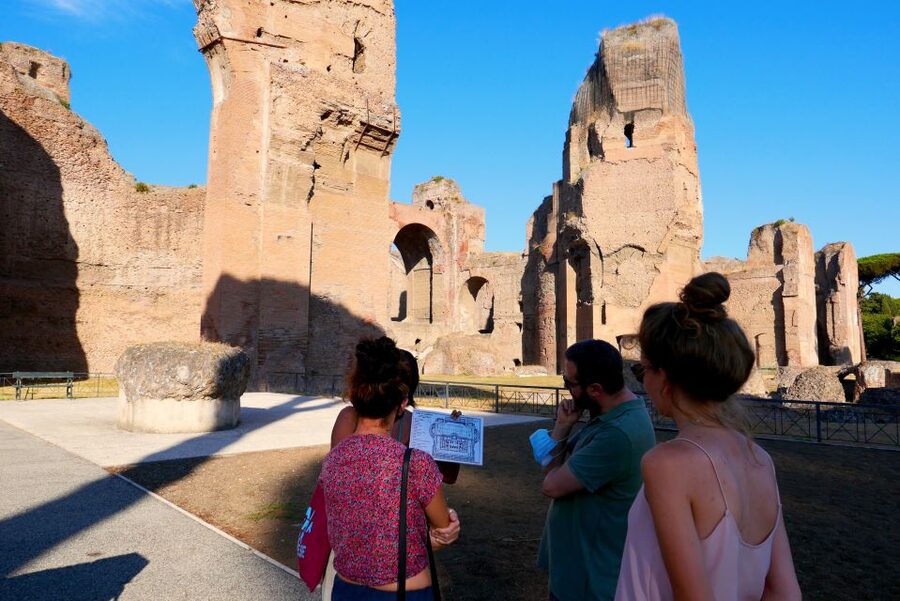
I find this site easier to appreciate with a guide than alone. Without help, you see brick, arches, and broken floors. With an archaeologist explaining the original plan, those fragments begin to suggest a working building with hot rooms, warm rooms, cold rooms, changing areas, exercise spaces, and service corridors.
The tour gives you about one hour inside the baths. That is a useful amount of time for a first visit. You get the main story and the most important rooms without spending half a day on one complex.
Following a Roman Day Through the Thermal Complex
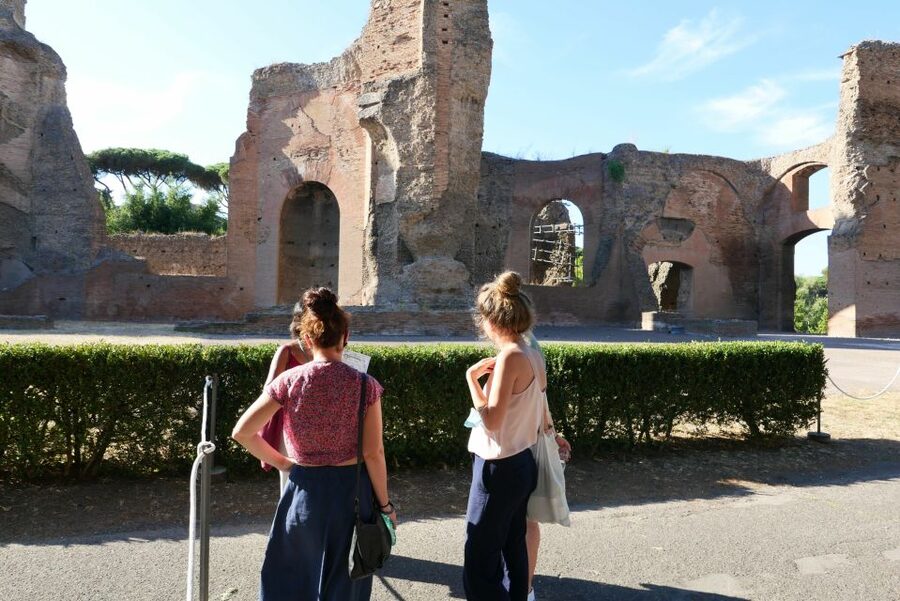
Your guide presents the baths as a sequence rather than a pile of ruins. You learn how a typical Roman might have moved through the complex, from preparation and exercise to bathing and social time.
The exact order could vary, but the important point is that each room had a purpose and a temperature. The tour explains the Roman preference for moving between different bathing spaces, helping you understand why the building needed such a complex heating system.
The hypocaust system, an underfloor heating method, is one of the most useful parts of the visit. Hot air moved beneath raised floors, while furnaces and service areas helped maintain the heat. The system required constant labor, fuel, and careful control. What looks like a quiet ruin once depended on a large workforce behind the scenes.
You also hear about the services offered for both body and mind. The baths were places for physical care, relaxation, conversation, and public life. That wider purpose is what makes the site feel different from a temple or forum. You are looking at a building designed around ordinary leisure, even if its scale was far from ordinary.
More Private Tours in Rome
- Rome by Golf Cart Private Tour: Beyond the Landmarks
★ 5.0 · 4,361 reviews - Early Morning Vatican, Sistine, St. Peter’s Semi or Private Tour
★ 5.0 · 3,779 reviews - Rome on a Golf Cart Semi-Private Tour Max 6 with Private Option
★ 5.0 · 2,502 reviews
Mosaics, Frescoes, and the Luxury of Public Leisure
Look down as much as you look up. Geometric mosaics remain in sections of the floor, and some traces of decoration still help you picture the original interiors.
The surviving color and patterns are especially useful because they counter the familiar image of Rome as a city of bare stone. The baths were designed to impress. Marble, mosaics, frescoes, and grand architectural proportions worked together to make bathing feel special.
Your guide may point out details that are easy to miss when you walk alone. A floor fragment is not just decoration. It tells you about design, materials, craftsmanship, and the social importance of the building.
The site also rewards visitors who like space and quiet. Compared with the Colosseum, the baths generally feel more open and less crowded. You can pause, listen, and look across the remains without the same pressure to keep moving through a packed monument.
That calmer setting is one of the best reasons to add this tour to a Rome visit. It gives you a break from the city’s busiest ancient sites while keeping you close to the Colosseum area.
What Circus Maximus Can and Cannot Show You
After the baths, the tour turns to Circus Maximus for roughly 30 minutes. This was the enormous public-games venue associated with chariot racing, gladiatorial events, and celebrations called ludi.
Ancient sources describe a site built to hold huge crowds, and the tour presents it as the largest structure created for public games. Standing on the former grounds, you learn how races and ceremonies filled the space with noise, movement, and spectacle.
The historical setting is powerful, but you need to adjust your expectations. There is much less to see physically at Circus Maximus than at Caracalla’s Baths. The surviving remains do not give you a complete stadium experience, and much of the visit depends on the guide’s account of what once occupied the site.
That is not a flaw in the history, but it matters when judging value. If you need substantial ruins at both stops, this may disappoint you. If you enjoy reconstructing vanished places from maps, stories, and archaeological clues, the contrast works well.
The guide also connects the circus to Rome’s earliest legends and gods. This moves the discussion beyond races and gladiators, showing how the site was tied to the city’s mythical beginnings.
The Guide Makes the Difference
The strongest part of this experience is the guide. The tour includes a live archaeologist, and that qualification matters most at Circus Maximus, where the visible remains are limited.
Several guides receive specific praise for their approach. Chiara is described as warm, funny, and full of useful local advice. Lars is praised for clear English, patience, and the ability to answer questions. Francesca is noted for her friendly manner and strong historical explanations, while Anestis is remembered for bringing the baths to life and staying clear and helpful even in rainy weather.
Other guides, including Sam, Mario, Samuele, Alicia, and Cynthia, are also singled out for enthusiasm and strong command of the subject. The consistent theme is not simply facts. It is the ability to make the ruins readable.
A small group helps here. With a maximum of 10 people, you have a better chance to ask about mosaics, heating, room layouts, or Roman customs. Some departures may become nearly private when few people book the same language, and past participants have occasionally received a longer visit than the advertised 90 minutes.
You should not count on an extended tour, though. Treat that as a pleasant possibility rather than part of the guaranteed schedule.
A few more Rome half-days worth a look
- Vatican: Museums & Sistine Chapel Entrance Ticket
★ 4.5 · 144,003 reviews - Vatican Museums & Sistine Chapel Tour with Optional Basilica
★ 4.3 · 67,413 reviews - Colosseum, Roman Forum & Palatine Guided Tour
★ 4.7 · 63,148 reviews - Vatican Museums, Sistine Chapel & St Peter’s Basilica Guided Tour
★ 4.5 · 39,149 reviews
Is $77 a Fair Price for 90 Minutes?
At $77 per person, this is not the cheapest way to see Roman ruins. The entrance fee, headset, guide, and on-site assistance are included, but transport, food, and drinks are not.
The price makes more sense if you want interpretation and efficient planning. The guide connects two sites that are close together but quite different in what they show. You also skip the ticket line at the Baths of Caracalla, which saves some time and removes one small task from your day.
The value is strongest for visitors who would otherwise walk through the baths without understanding the heating system, room sequence, or social role of the complex. The value is weaker if you mainly want to enter, take photos, and move on.
I would compare this cost with the rest of your Rome plans. If your schedule already includes several guided monuments, you might prefer to visit these sites independently. If the Baths of Caracalla are high on your list and you want a specialist to explain them, the fee is easier to defend.
The tour also avoids the crowds that can make central Rome tiring. You are paying partly for the guide, but also for a focused visit to a quieter archaeological area.
Timing, Meeting Point, and Walking Comfort
The meeting point is outside the Circo Massimo Metro station, in the direction of Laurentina, in front of the FAO building. Look for a yellow label with the local partner’s name.
Arrive at least five minutes early. You need to complete the sign-up process before the group leaves, and a late arrival could mean missing the start.
The tour lasts 1.5 hours: about one hour at the baths and 30 minutes at Circus Maximus. Wear comfortable shoes, since the visit involves walking across an archaeological site and moving between outdoor areas.
The tour is wheelchair accessible, but there are important restrictions. Baby strollers, trolleys, large backpacks, luggage, pets, drones, weapons, and sharp objects are not allowed inside the monuments. Plan to travel light.
Participants under 18 and European citizens under 25 should carry an official document or a digital copy. The activity can be canceled in poor weather, with an alternative date or full refund offered in that case.
Guiding is available in English, Italian, French, Portuguese, Spanish, and German. When you book, check the exact language and start time rather than assuming every departure offers every option.
Who Will Enjoy This Tour Most?
I would recommend this tour to you if you like archaeology, ancient engineering, or the less obvious corners of Rome. It is especially useful if you want to understand how ordinary leisure worked in the Roman world, rather than focusing only on emperors and battles.
Families with older children may enjoy the heating system, mosaics, and chariot-racing stories. The 90-minute format is manageable, and the guide can make the ruins easier to picture. Younger children may find Circus Maximus less engaging because so little of the original structure remains visible.
This is also a good choice for a second or third day in Rome. The area feels calmer than the Colosseum zone, and the visit gives you a different view of ancient life. Some people use it near the end of their trip as a slower archaeological outing.
I would be more cautious if this is your only ancient-site visit in Rome. The Colosseum, Roman Forum, or Palatine Hill usually provide more visual variety and a larger amount of surviving architecture. The Baths of Caracalla are excellent, but Circus Maximus is mainly a site of historical reconstruction.
The Best Way to Judge the Experience
Ask yourself one simple question: do you want to see ruins, or do you want someone to explain what the ruins meant?
If you want a vivid physical monument, Caracalla’s Baths deliver. Their size, mosaics, and surviving walls are the clear highlight. If you want two fully preserved attractions, Circus Maximus will feel thin.
If you enjoy listening, asking questions, and building a picture of lost architecture, the pairing works. The guide gives you the human story behind the buildings: how Romans bathed, socialized, watched races, and connected public entertainment with religious tradition.
I would book it for a small group or private visit if the price difference fits your budget. The quieter setting and chance to ask questions are central to the experience. A group of 10 is still manageable, but a private or semi-private departure gives you more control over the pace.
Should You Book the Baths and Circus Maximus Tour?
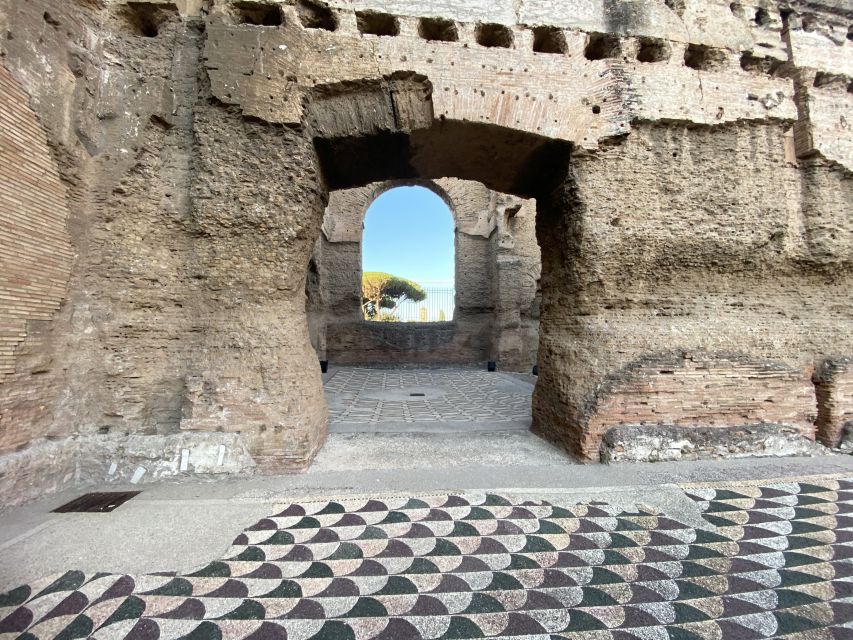
Book this if the Baths of Caracalla interest you and you want a strong guide to explain their scale, mosaics, and heating system. The site is less crowded than Rome’s most famous monuments, and the 90-minute format fits neatly into a busy schedule.
Book with realistic expectations about Circus Maximus. You will learn about one of the ancient world’s greatest venues, but you will not see a fully intact stadium. At $77, the tour is worthwhile for expert storytelling and a focused visit, less so if you are judging value by the amount of visible structure alone.
FAQ
How long does the tour last?
The tour lasts 1.5 hours. About one hour is spent at the Baths of Caracalla and 30 minutes at Circus Maximus.
What is included in the price?
The price includes entrance to the Baths of Caracalla, a sterilized headset, a live archaeologist guide, and on-site assistance.
Where do I meet the guide?
Meet outside the Circo Massimo Metro station, in the direction of Laurentina, in front of the FAO building. Look for a yellow label with the local partner’s name.
What languages are available?
Guiding is available in French, Portuguese, Spanish, English, German, and Italian.
Is the tour suitable for wheelchair users?
The activity is listed as wheelchair accessible. Large bags, trolleys, baby strollers, pets, drones, weapons, and sharp objects are not allowed inside the monuments.
What should I bring?
Wear comfortable walking shoes. Participants younger than 18 and European citizens under 25 should carry an official document or a digital copy.
Can I cancel the booking?
You can cancel up to 24 hours before the activity for a full refund. You can also reserve now and pay later.
Just added around Rome
- Boat excursion to Gaeta with a stop for swimming and snorkeling 2 HOURS★ 5.0 · 240 reviews
- Palatine Hill and Roman Forum Tour with Fast-Track Entrance★ 4.2 · 417 reviews
- Tivoli: Villa D’Este & Villa Adriana Pass & App Audioguide★ 4.4 · 364 reviews
- Tivoli: Villa D’Este Entry Ticket and App Audio Guide★ 4.3 · 191 reviews
- From Rome: Villa D’Este & Villa Adriana Day Trip with Lunch★ 4.4 · 289 reviews
- Vatican Museums & Sistine Chapel Skip-the-Line Guided Tour★ 4.6 · 254 reviews
- Rome: Capitoline Museums and Centrale Montemartini Tickets★ 4.4 · 328 reviews
- Rome: The Three Tenors at St. Paul’s Church Concert Ticket★ 4.7 · 699 reviews
Private Tours in Rome, compared.
Rome by Golf Cart Private Tour: Beyond the Landmarks
Read our review →
Early Morning Vatican, Sistine, St. Peter’s Semi or Private Tour
Read our review →
Rome on a Golf Cart Semi-Private Tour Max 6 with Private Option
Read our review →
Rome Private Arrival Transfer: Fiumicino Airport to Hotel in Rome
Read our review →

Civitavecchia Port: Private or Shared Guided Tour of Rome
Read our review →
Ancient Ostia Antica Semi-Private Day Trip from Rome by Train with Guide
Read our review →
Browse the lists this tour appears in