Reviewed · ROME TOURS
Roman Gladiator School: Learn How to Become a Gladiator
The best part of this Rome experience is that you do not just look at gladiator gear behind glass. You put on a tunic, belt, leather gloves, and a wooden training sword called a rudis, then learn basic moves before entering an arena for a friendly fight. It is part museum visit, part history lesson, and part controlled chaos.
I like the hands-on museum tour, where you can see weapons, helmets, armor, and Roman equipment up close. I also like the small class size, capped at 15 people, because instructors can give children and adults more help. The main drawback is the location: the school is outside the central sights, and the final approach can be hard to find.
- Dress as a gladiator: You receive a tunic, belt, leather gloves, and a training sword for the class.
- Learn before you fight: The session covers Roman soldiers, gladiator equipment, warmups, offense, defense, and basic sword work.
- Finish in the arena: A mock battle and optional tournament provide the big finale, with a prize for the winner.
- Good for families: The minimum age is 6, and the activity has been especially popular with children and teenagers.
- See the museum first: Admission includes the Gladiator School of Rome Museum and its weapons and artifacts.
- Plan the journey: The school is at Via Appia Antica 18, with public transport nearby, but the entrance and driveway can be confusing.
What the Two-Hour Gladiator Class Is Really Like
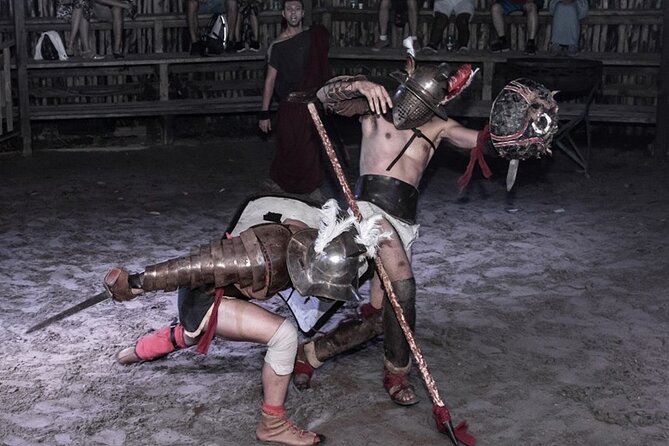
This is an active history lesson, not a formal Colosseum tour. You meet at the Gladiator School of Rome on Via Appia Antica, near the ancient Appian Way and outside the old Roman walls. The class lasts about two hours and ends where it begins.
The instructors belong to the Historic Group of Rome, which specializes in reenacting Roman life and gladiator combat. Their job is part teacher, part coach, and part referee. Guides named Ivan, Patricio, Mirkos, and Flama have led sessions described as warm, funny, and well informed, with plenty of help for children who are new to the activity.
The tone is playful. You are not being trained for real combat, and the weapons are for practice. Still, the instructors give the lesson enough structure to make it feel like more than a costumed photo stop.
The Museum Comes Before the Sword Fight
The experience begins with the Gladiator School of Rome Museum. This is a useful start because it gives the physical activity some context. You see weapons, helmets, shields, uniforms, armor, and other objects linked to Roman soldiers and gladiators.
The museum is not a substitute for the Colosseum Archaeological Park, but it gives you a closer look at the equipment. In some sessions, participants have been able to handle or try on parts of the gear. That detail matters for families. A child who has just seen a helmet or shield on display can connect it to the moves learned outside a few minutes later.
The guide explains what gladiators wore and how different weapons were used. You may also see dioramas and examples of Roman military equipment. The museum portion is brief compared with a dedicated museum visit, so you should not expect a long, quiet gallery tour.
Still, it is one of the strongest parts of the activity. The museum turns the later sword practice into a story with a setting. If you visit the Colosseum before coming here, the ruins give you the scale of Roman public entertainment, while this smaller collection lets you focus on the tools and clothing.
A few more Rome half-days worth a look
- Vatican: Museums & Sistine Chapel Entrance Ticket
★ 4.5 · 144,003 reviews - Vatican Museums & Sistine Chapel Tour with Optional Basilica
★ 4.3 · 67,413 reviews - Colosseum, Roman Forum & Palatine Guided Tour
★ 4.7 · 63,148 reviews
Getting Dressed as a Roman Fighter
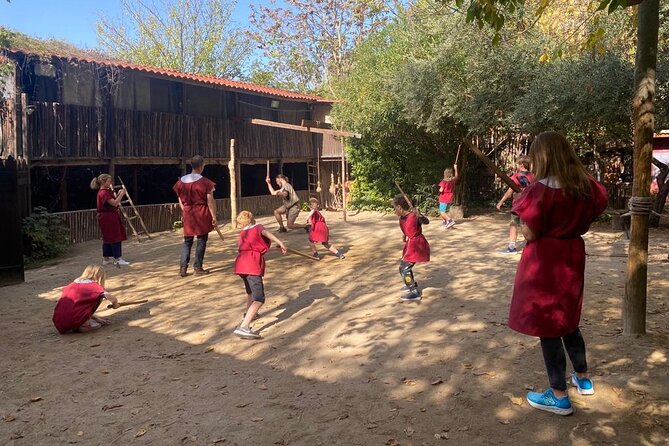
After the museum introduction, you change into the supplied costume. The basic outfit includes a traditional belt, tunic, leather gloves, and a rudis, the wooden training sword used for the lesson.
This is where the activity becomes especially good for children. The costume gives them a clear role, and the photos help make the day memorable. Adults can join in as well. The experience is aimed strongly at families, but adults in their 20s and older can still enjoy it if they are willing to play along.
You do not need to bring your own equipment. Clothing and weapons are hired for the duration of the class. Wear comfortable clothes and shoes underneath the costume, since the session includes warmups, movement, and mock combat.
The activity is not designed for a polished theatrical show where you sit and watch professionals. You are the entertainment. Expect a few awkward swings, plenty of laughter, and instructions repeated until the group gets the basic movements right.
Warmups, Sword Skills, and Gladiator Tactics
The outdoor training portion begins with warmups and agility exercises. Some sessions include an obstacle course or a mental game to help the group think like gladiators. The point is not to master an ancient fighting system in one morning. It is to give you a simple set of movements that you can use in the final match.
You learn basic sword fighting, along with offensive and defensive positions using a sword and shield. The instructor demonstrates the moves and then lets the group practice. This works best when you listen closely and keep your movements controlled.
The class can be physical, especially for younger children who get carried away. One important caution comes from the nature of the activity itself: mock fighting still involves contact and quick movement. A few children have found parts of the combat uncomfortable, so parents should judge their child’s temperament before booking. The instructors provide direction, but this is not a passive attraction.
The group limit of 15 helps here. A smaller class makes it easier for the instructor to correct a stance, explain a move, or keep an enthusiastic child from swinging too freely. In low season, the class may be much smaller. One early morning session had only two adult participants, giving the instructor plenty of time to focus on them.
The Arena Battle and Optional Tournament
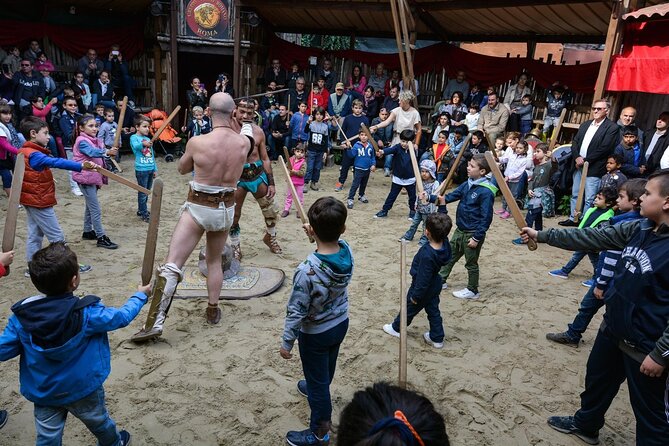
The finale takes place in the arena. You use the skills from the lesson in friendly matches against other members of the group. The exact rhythm depends on the size and age of your class, but expect a staged contest rather than a serious competition.
The instructors keep the mood light, sometimes adding comic moments and dramatic direction. Families often find this the funniest part of the session. Children get to cheer for one another, and adults can join the fun instead of standing on the sidelines.
An optional tournament is available for those who want a little more competition. The winner receives a prize, while everyone receives a certificate of accomplishment at the end. The certificate is a small touch, but it gives children a concrete souvenir from the activity.
Friends and relatives may watch from a viewing platform. That is useful if one parent wants to supervise a younger child, or if a family member prefers not to participate. You do not have to put on the costume to enjoy the museum and watch the arena section.
Same city, a completely different sort of day:
- Vatican Museums, Sistine Chapel & St Peter’s Basilica Guided Tour
★ 4.5 · 39,149 reviews - Rome: Colosseum, Palatine Hill and Roman Forum Guided Tour
★ 4.8 · 32,814 reviews - Rome: Guided Tour of Colosseum, Roman Forum & Palatine Hill
★ 4.7 · 27,897 reviews - Rome: Colosseum & Forum with Audio Guide App -Optional Arena
★ 4.2 · 24,770 reviews
Why Families Often Rate It So Highly

The strongest feature here is the way the class holds children’s attention. Instead of asking them to stand quietly while an adult explains Roman history, it gives them a reason to listen. A sword move has more meaning after you have seen the equipment and heard how it was used.
Children as young as 6 can participate, and the class is built for mixed ages. Families with children around 7, 8, 11, and 14 have found plenty to enjoy. Adults can take part too, though some adult-only groups may find the style a little theatrical or kid-focused.
The instructors are a major part of the experience. Patricio has been praised for handling two families with energy and clear explanations. Ivan has been described as especially engaging with children. Mirkos has led attentive sessions for small groups, while Flama has combined Roman military history with a lively approach.
You should not expect the same guide on every departure, and the supplied information does not promise a particular instructor. What does seem consistent is the use of costumed teaching, humor, and simple demonstrations rather than a dry lecture.
The activity also works well for children who need a more active format. One family brought three autistic children and found the staff supportive. That does not mean every child will respond the same way, but it suggests that the instructors are used to adapting their manner to different participants.
The Location Is the Main Practical Weakness
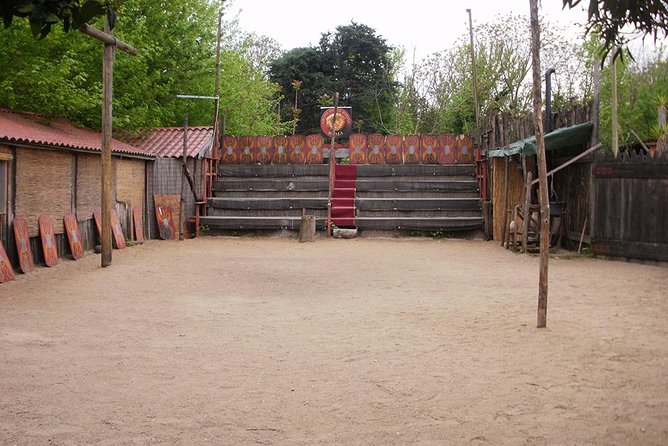
The school is at Via Appia Antica 18, 00179 Rome, near public transportation. It is close enough to the Colosseum to combine with a day of Roman sights, but it is not right beside the amphitheater.
Several practical details matter. The school sits at the end of a long driveway, and the entrance is not always obvious from the map. Take extra time to find it. One route from the Colosseum takes about 45 minutes on foot, which may suit you if you want to walk along the Appian Way, but it is not a quick stroll for every family.
The 118 bus on Via Appia is one public transport option mentioned for reaching the area. Buses do not run very frequently, according to the practical experience shared about the route. Taxis are simpler, but the fare can add to the day’s cost.
I would not schedule this with a tight connection to a timed Colosseum entry. Give yourself a generous buffer, especially if you are traveling with young children or relying on the bus. The location is part of the attraction, since the Appian Way offers a Roman setting, but it also asks for more planning than a tour in central Rome.
Is $108.16 a Fair Price?

At $108.16 per person, this is not a cheap two-hour activity. The value depends on what you want from your Rome visit.
You are paying for a guided museum visit, costume and weapon hire, instruction, arena time, and a certificate. For a family that would otherwise spend the day moving between standard monuments, the activity offers a different kind of memory. It also gives children a role, rather than asking them to follow an adult itinerary.
The price is harder to justify if you are mainly interested in ancient history and prefer long museum visits or archaeological interpretation. The museum is relatively short, and the main event is active play. Adults who dislike costumes or staged battles may find the experience less satisfying.
Group discounts are available, and a maximum of 15 participants keeps the class from becoming too crowded. Before booking, check the current price for your group size and confirm what is included. The details list a drink as included, but at least one participant reported not receiving one. I would bring water and not rely on that item.
Food is not included, and nearby options are limited. Eat before you arrive, especially if you are booking a session around lunch. Snacks may be available, but they should not replace a proper meal.
What to Bring and How to Prepare
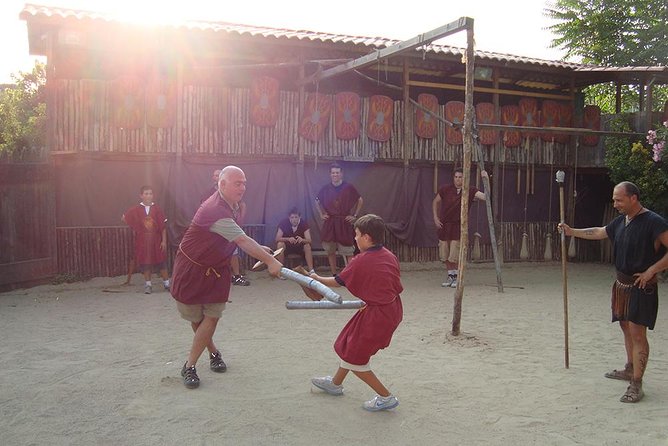
Wear comfortable clothing and shoes. You will be moving, warming up, and handling a practice weapon, so stiff clothing and unsuitable shoes will make the session less enjoyable.
Bring water, even though a drink is listed among the inclusions. Food is not included, and the area does not offer many substantial choices. A small snack can help with children, but eating before the class is the safer plan.
Mosquito repellent is another practical item worth packing. Multiple people have reported mosquito bites, particularly during outdoor portions. This is one of those small Rome trip details that can affect your mood more than expected.
Arrive with enough time to locate the entrance. The meeting point is Via Appia Antica 18, but the school is reached down a driveway, and some people have had trouble finding the exact entry. Save the address and allow extra time rather than arriving at the last minute.
Who Should Book This Experience?
I would recommend this to families with children who enjoy role-play, movement, and competition. It is especially useful if your children have already visited, or plan to visit, the Colosseum and need a more active way to connect with Roman history.
It also suits adults who enjoy theatrical activities and do not mind looking a little silly. The adult-only sessions can work well, especially when the group is small. History fans should come for the equipment, explanations, and reenactment rather than expecting a detailed academic course.
I would think twice if your child dislikes physical contact, loud play, costumes, or being watched during a match. Parents can observe from the viewing platform, but the final battle is still the emotional center of the class.
The activity is offered in English, has a minimum age of 6, and most people can participate. Free cancellation is available if you cancel at least 24 hours before the start time. Changes or cancellations made later are not accepted for a refund.
Should You Book the Gladiator School?
Book it if you want an active, funny, family-friendly break from Rome’s monuments. The museum, costume, training session, and arena battle fit together well, and the instructors give the class enough history to keep it from feeling like a simple costume photo opportunity.
I would make it a planned stop, not an add-on squeezed between two central attractions. Allow time for the journey, bring water and mosquito repellent, and eat before you go. If your group enjoys acting, play fighting, and Roman history, this is likely to become one of your most memorable activities in Rome.
FAQ
Where does the gladiator class take place?
The class takes place at the Gladiator School of Rome, at Via Appia Antica 18, 00179 Rome, Italy.
How long does the experience last?
The class lasts approximately two hours and ends back at the meeting point.
What is included in the booking?
The booking includes the two-hour gladiator class, instruction from members of the Historic Group of Rome, gladiator clothing, weapons hire, admission to the museum, and a certificate of accomplishment. A drink is also listed as included, though it is wise to bring your own.
What clothing and equipment do participants receive?
You receive a traditional belt, tunic, leather gloves, and a training sword called a rudis. The clothing and weapons are provided for the duration of the lesson.
What happens during the class?
You visit the museum, learn about Roman soldiers and gladiators, see weapons and equipment, complete warmups, practice sword and shield techniques, and take part in a mock arena battle.
Is there a tournament?
An optional tournament may be offered at the end of the class. The winner receives a prize, and all participants receive a certificate.
What is the minimum age?
The minimum age is 6 years old.
How many people can join the class?
The activity has a maximum of 15 participants. Group discounts are available.
Can friends and family watch?
Yes. Friends and family may watch the class from a viewing platform, even if they do not take part.
Is hotel transportation included?
No. Hotel pickup and drop-off are not included. The school is near public transportation, but the meeting point can take planning to reach, and the final driveway may be difficult to identify.
What is the cancellation policy?
You can cancel for a full refund up to 24 hours before the experience start time. Cancellations or changes made less than 24 hours before the start time are not accepted for a refund.
Just added around Rome
- Boat excursion to Gaeta with a stop for swimming and snorkeling 2 HOURS★ 5.0 · 240 reviews
- Palatine Hill and Roman Forum Tour with Fast-Track Entrance★ 4.2 · 417 reviews
- Tivoli: Villa D’Este & Villa Adriana Pass & App Audioguide★ 4.4 · 364 reviews
- Tivoli: Villa D’Este Entry Ticket and App Audio Guide★ 4.3 · 191 reviews
- From Rome: Villa D’Este & Villa Adriana Day Trip with Lunch★ 4.4 · 289 reviews
- Vatican Museums & Sistine Chapel Skip-the-Line Guided Tour★ 4.6 · 254 reviews
- Rome: Capitoline Museums and Centrale Montemartini Tickets★ 4.4 · 328 reviews
- Rome: The Three Tenors at St. Paul’s Church Concert Ticket★ 4.7 · 699 reviews
Rome Tours, compared.

Vatican: Museums & Sistine Chapel Entrance Ticket
Read our review →
Vatican Museums & Sistine Chapel Tour with Optional Basilica
Read our review →
Colosseum, Roman Forum & Palatine Guided Tour
Read our review →
Vatican Museums, Sistine Chapel & St Peter’s Basilica Guided Tour
Read our review →
Colosseum, Palatine Hill and Roman Forum Guided Tour
Read our review →
Guided Tour of Colosseum, Roman Forum & Palatine Hill
Read our review →
Colosseum & Forum with Audio Guide App -Optional Arena
Read our review →