
Reviewed · LAST SUPPER TOURS
Leonardo Da Vinci’s Last Supper Guided Tour
Leonardo’s Last Supper is not simply a famous picture on a wall. It is a fragile, dramatic scene that survived centuries of damage, and seeing it in the old convent refectory gives the work a force that reproductions cannot match. The 15-minute viewing limit may sound brief, but the carefully controlled room lets you look without a crush of people.
I like the way the guide explains both Leonardo’s artistic choices and the painting’s troubled survival. I also like the practical advantage of a reserved entry, since access to the refectory is limited and tickets can disappear quickly. The main drawback is price: at $81 per person for about an hour, you are paying a sizeable premium over the basic museum ticket.
Key points to know
- Fifteen minutes with the mural: The refectory visit is strictly timed, so use your minutes well.
- Guides add real value: Anton, Valentina, Fiamma, Marcella, Irene, Anna, and Ileria are among the guides praised for clear explanations and strong command of the subject.
- Look beyond the famous faces: The tour covers perspective, symbolism, the disciples, Leonardo’s method, and later restoration work.
- The meeting point is easy to identify: Find the Crown Tours flag at the corner of Piazza di Santa Maria delle Grazie and Corso Magenta.
- The church visit is not guaranteed: Religious services or events can change what parts of the complex you see.
- Bring identification and dress suitably: A passport or ID is required, and large bags, backpacks, sleeveless shirts, and short skirts are not allowed.
Why Leonardo’s mural deserves your Milan time
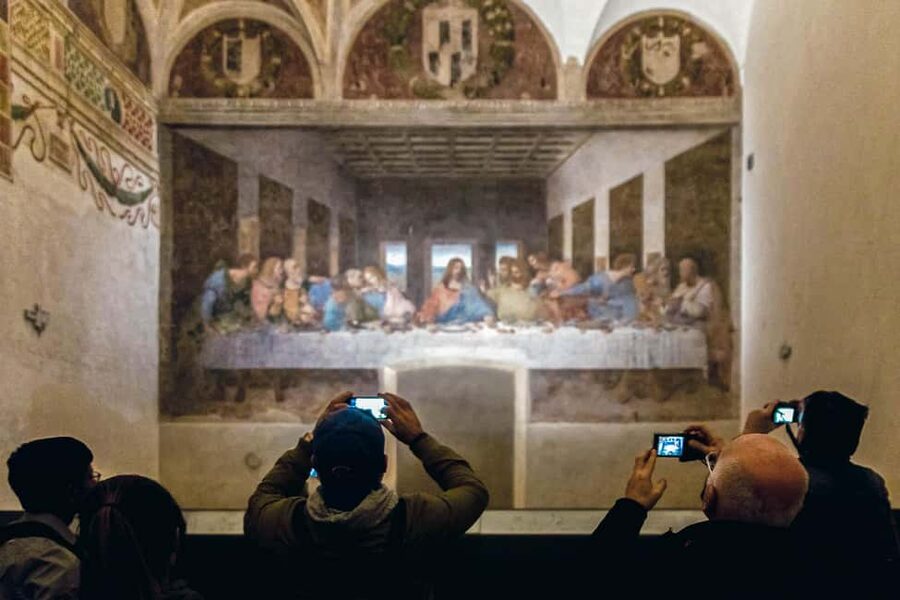
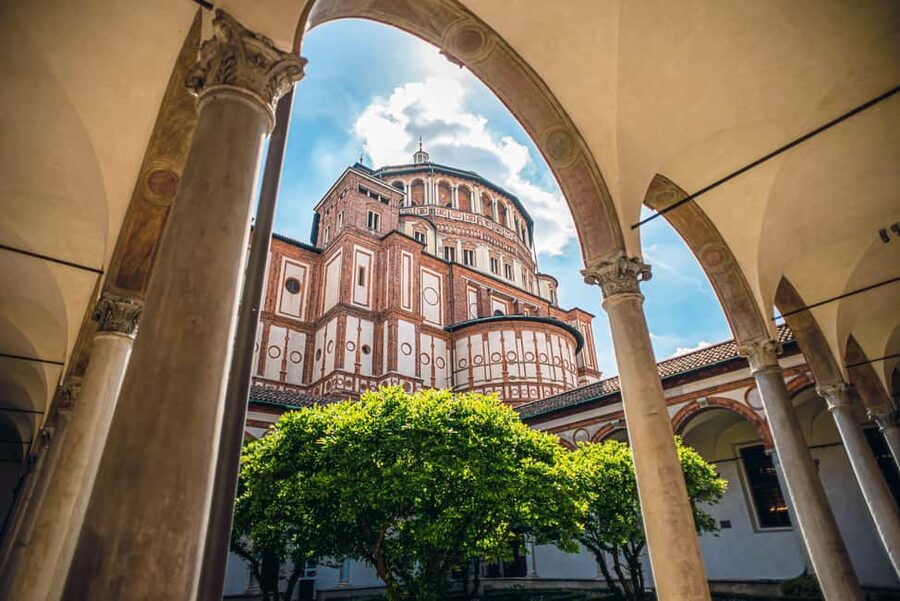
The Last Supper occupies a wall in the refectory of the Dominican convent of Santa Maria delle Grazie. Leonardo painted the scene for Milan’s ruling Sforza family in the late 15th century, when Ludovico Sforza was shaping Milan into an important center of power, art, and learning.
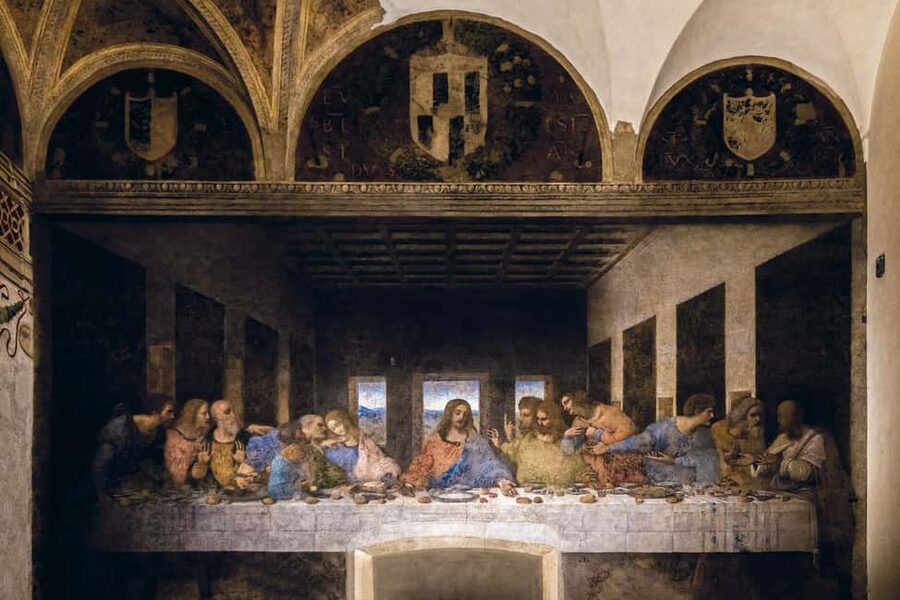
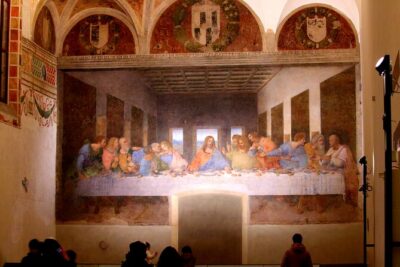
The scene captures the moment after Jesus announces that one of the disciples will betray him. Instead of arranging the figures in a calm row, Leonardo gives each person a distinct reaction. Hands point, faces turn, bodies lean, and the emotional shock moves across the table.
That is the sort of detail a guide can help you catch in a short visit. From a distance, the mural reads as one grand composition. With direction, you begin to notice how the figures are grouped, how the room’s painted architecture extends the real refectory, and how Leonardo uses perspective to pull your eye toward the central figure of Jesus.
The painting is also more complicated than the word fresco suggests. Leonardo used a dry-wall method rather than the more durable wet-plaster technique normally associated with fresco painting. That allowed him more time to work on expression and detail, but it also left the mural vulnerable. The tour explains this process and the many efforts made to preserve what remains.
More Guided Tours in Tuscany
- Milan: Da Vinci’s Last Supper Guided Tour
★ 4.7 · 10,143 reviews - Milan: Guided Tour of Leonardo da Vinci’s ‘The Last Supper’
★ 4.6 · 1,281 reviews - Pisa: Cathedral Guided Tour & Optional Leaning Tower Ticket
★ 4.7 · 1,036 reviews
Meeting at Santa Maria delle Grazie
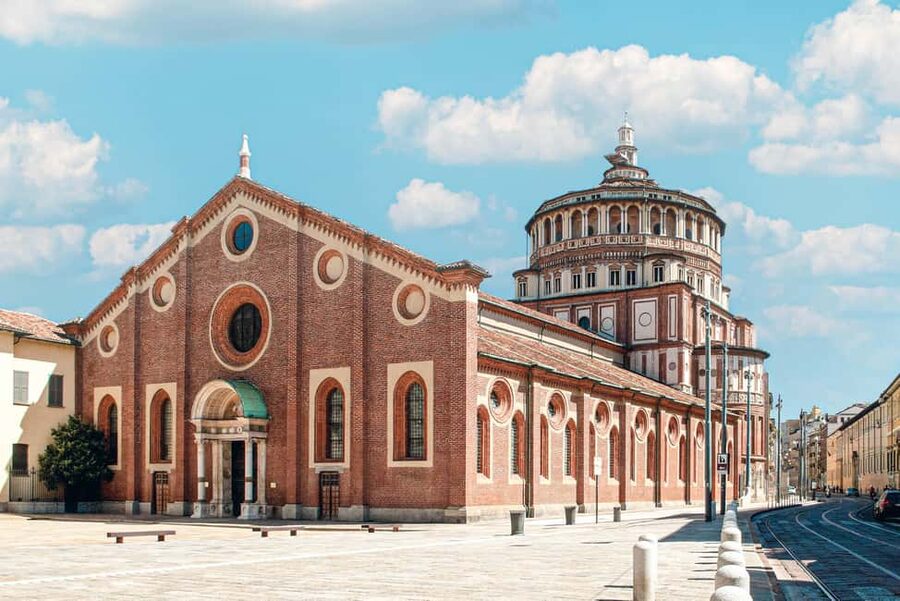
Your meeting point is Piazza di Santa Maria delle Grazie, at the corner with Corso Magenta. Look for a guide holding a flag marked with the Crown Tours logo. This is useful in a busy part of Milan, especially if several groups are gathering near the church.
The listed starting address is Via Bernardino Zenale, 1a, but the practical meeting instructions point you to the piazza. I would arrive early enough to locate the flag without rushing. One earlier visitor had to wait when a guide was late and difficult to identify, although that appears to have been an exception rather than the normal arrangement.
Communication before the visit has generally been clear, including reminders about the time, meeting point, clothing, and identification. Still, check the latest message carefully because one booking confirmation gave slightly different meeting times. When timed entry is involved, a few minutes can matter.
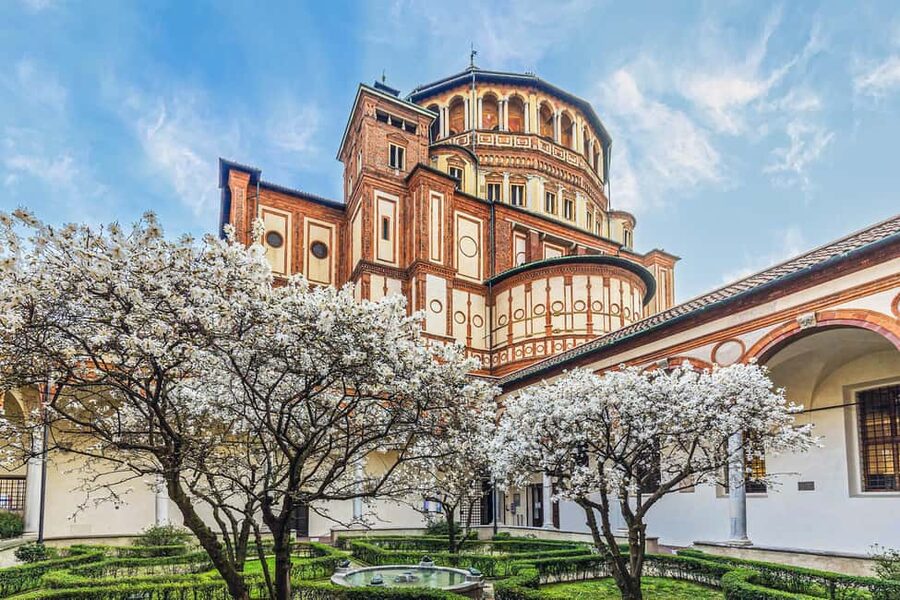
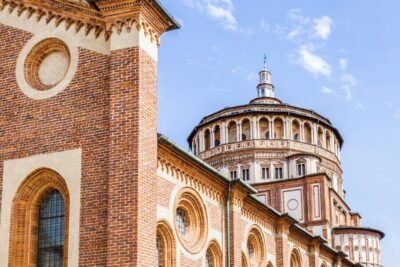
The convent and church are worth looking at before you enter the refectory. Santa Maria delle Grazie is not merely a container for Leonardo’s mural. Its architecture helps explain why the painting was commissioned and how it functioned as part of a religious setting.
Inside the convent and refectory
The group enters the complex with a guide, then continues toward the refectory where The Last Supper is displayed. The route is short, but the setting matters. This was a dining room for Dominican friars, not a modern gallery designed for a single famous object.
The guide places the mural in 15th-century Milan and explains how Leonardo worked under the patronage of Ludovico Sforza. That context makes the picture feel less like an isolated masterpiece and more like part of a larger program of art, religion, and political display.
You may also hear about another artwork across from The Last Supper. One visitor particularly enjoyed learning about this lesser-known fresco, which gives you another reason not to stare only at Leonardo’s wall. The room is small enough that the opposite wall and the surrounding architecture remain part of the experience.
The church itself may or may not be open for your visit. Religious events can prevent access, and this is outside the tour company’s control. If you are especially interested in Santa Maria delle Grazie as a church, treat that part as a possible extra rather than a promise.
Fifteen minutes with The Last Supper
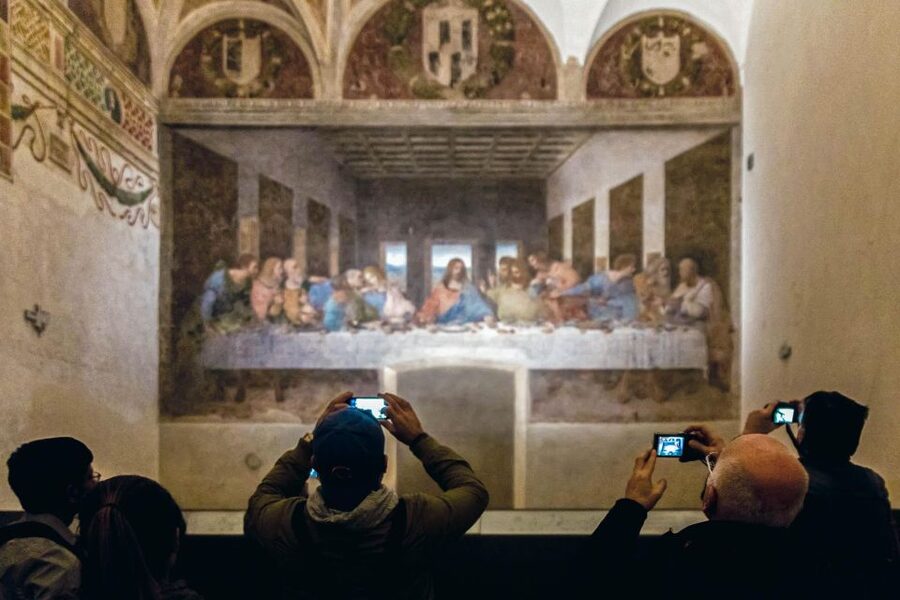
The most important fact to understand is the time limit. You receive a maximum of 15 minutes inside the refectory with The Last Supper. The controlled admission protects the mural and prevents the room from filling with a constant crowd.
Fifteen minutes is enough to appreciate the work, but not enough for a slow, private study of every figure. I suggest looking at the whole composition first. Notice the calm central position of Jesus, the long table, the painted room behind the disciples, and the way the groups of three create a rhythm across the wall.
Then let the guide direct your attention to individual details. A strong guide may explain who the disciples are, how their gestures differ, and how the announcement of betrayal drives the action. Guides have also used tablets to show enlarged details, a useful aid when age and restoration have softened parts of the original surface.
Do not expect the bright, sharp colors seen in many photographs. The mural has suffered from its technique, humidity, war damage, and earlier restoration attempts. The present work is the result of a long effort to stabilize and clarify what survives. Understanding that history changes the way you look at the surface. Faded areas are not simply defects. They are part of the painting’s story.
Flash photography is forbidden. Large bags and backpacks are also not allowed, and small lockers are available at the ticket office for items that cannot enter. Food and drinks, weapons, and sharp objects are prohibited. Bring a passport or official ID, since it is required for entry.
More Last Supper viewings:
- Da Vinci’s Last Supper & Milan Sightseeing Tour
★ 4.4 · 1,997 reviews - Best of Milan Experience Including Da Vinci’s The Last Supper and Milan Duomo
★ 4.5 · 1,516 reviews - Milan: Da Vinci’s Last Supper and Guided Walking Tour
★ 4.8 · 683 reviews - Da Vinci’s Last Supper Express Semi-Private Guided Tour
★ 4.8 · 427 reviews
What the guides add
The strongest part of this experience is usually the live explanation. The guide turns a short viewing period into a compact art lesson, linking Leonardo’s technique with the political and religious world of Milan.
Anton was praised for his enthusiasm and willingness to answer questions. Valentina received similar praise for engaging delivery and clear English. Fiamma, Marcella, Irene, Ileria, Anna, and other guides have also been singled out for their command of Leonardo, Milan, the building, symbolism, and conservation.
The best guides do not simply recite a list of facts. They help you see the painting in stages. First comes the overall composition. Then the perspective, the gestures, and the identity of the disciples. Finally, the guide may explain why the mural matters as both a religious image and a landmark in Renaissance art.
Language options are English and Spanish. Audio equipment is included, which helps you hear the guide in a group. This matters in a stone complex where voices can carry poorly. One visitor specifically noted that the guide took care to make the commentary clear for someone with cochlear implants.
Group size can be private or small, depending on the option available when you book. A smaller group makes it easier to ask questions, though the 15-minute room limit remains the same. Do not assume a private booking gives you extra time with the mural.
Is $81 a fair price?
The standard price of $81 per person is the hardest part to judge. The basic admission price is much lower, and one visitor felt frustrated by the large difference between the official ticket cost and the price of a guided package.
That criticism is fair. You are not paying $81 for a long museum visit. You are paying for access during a difficult booking period, a guide, an audio system, and help with the entry process. The actual encounter with the painting remains limited to 15 minutes.
I see the value most clearly if you have only one chance to visit and do not want to gamble on finding a basic ticket. The guided booking also saves you from studying the mural without context. For a first visit, the explanation of conservation, perspective, and the disciples can make a short viewing much more satisfying.
The value is weaker if you are an art specialist, already have a ticket, or prefer to look quietly without a guide. In that case, the premium may feel steep. Families should also check the child ticket rules carefully before booking. One booking involved confusion over whether a very young child needed a separate ticket, and the issue was settled only at the entrance.
Timing, clothing, and access
Plan for one hour in total, including the guided portion of the visit. There may be some waiting outside, and one person found the opening wait longer than expected. The entry process is controlled, so the group cannot simply walk in whenever it arrives.
Wear respectful clothing for a religious site. Short skirts and sleeveless shirts are not allowed. Leave large luggage at your accommodation if possible. Small lockers are available, but they are not a substitute for arriving with a light bag.
The activity is wheelchair accessible. If you need specific assistance, confirm the arrangements when booking, since the complex has historic architecture and timed movement through its rooms.
Free cancellation is available up to 24 hours before the visit, and the reserve-now-pay-later option helps if your Milan schedule is still changing. Those terms are useful for a city break where museum times, train arrivals, and restaurant bookings can shift.
How to make the most of the fifteen minutes
I would prepare before arrival. Look at a basic image of The Last Supper so the main composition is familiar, but do not spend too much time studying every theory about hidden messages. The guide’s explanation will give you a firmer base.
Once inside, give yourself a quiet first look before trying to photograph anything. Flash photography is not permitted, and the room is designed for seeing rather than lingering over a camera screen.
A simple viewing plan works well:
- Take in the complete wall and its painted perspective.
- Find Jesus at the center and watch how the disciples react around him.
- Notice the three-person groupings and the different gestures.
- Listen for the guide’s explanation of Leonardo’s materials and restoration.
- Use any remaining time to compare the mural with the artwork across the room.
Ask questions if the guide allows it, but keep an eye on the group’s time. The visit is short enough that one long question can take away from everyone’s chance to look.
Who should book this tour?
I would recommend it to a first-time Milan visitor who wants reliable access and an explanation that brings the mural into focus. It also suits anyone with a strong interest in Renaissance art, architecture, religious imagery, or conservation.
Families can benefit from the guide because children may understand the scene better when the gestures and story are explained. The one-hour format is also manageable for younger visitors, though the clothing rules and quiet setting require some preparation.
This is less suited to someone seeking a broad tour of Milan. The itinerary concentrates on Santa Maria delle Grazie and The Last Supper, not the Duomo, La Scala, or other city sights. It is also not ideal if you need a long, unhurried art session.
Should you book Leonardo’s Last Supper Guided Tour?
Book it if seeing Leonardo’s mural is a priority and you want a guide to explain what you are looking at. The entry is carefully managed, the meeting point is clear, and the best guides bring strong energy to the painting’s technique, symbolism, setting, and conservation.
Skip it if $81 feels too high for a one-hour experience and you can secure an official admission ticket on your own. The painting itself is the reason to come, but the short viewing time does not change with the higher price.
For most first-time visitors, I would book early, bring ID, dress conservatively, leave bulky bags behind, and arrive ready to use 15 minutes well. That approach gives you the best chance of enjoying the mural instead of worrying about the logistics around it.
FAQ
How long does the Leonardo Da Vinci’s Last Supper guided tour last?
The tour lasts about one hour. The time inside the refectory with The Last Supper is limited to a maximum of 15 minutes.
Where do I meet the guide?
Meet the guide at Piazza di Santa Maria delle Grazie, at the corner of the piazza and Corso Magenta. Look for a Crown Tours flag.
What languages are available?
Live tours are available in English and Spanish.
Is the entry ticket included?
Yes. The Last Supper entry ticket, a tour guide, and an audio system are included.
Do I need to bring identification?
Yes. Bring a passport or ID card for the visit.
Can I take photographs of The Last Supper?
Photography is allowed only under the site rules, and flash photography is not permitted.
Can I bring a backpack or large bag?
No. Backpacks and large bags are not allowed. Small lockers are available at the ticket office for storing items.
Is the church always included?
No. Religious events can mean that access to the church cannot be guaranteed. The guided visit to The Last Supper remains the main focus.
Can I cancel the booking?
You can cancel up to 24 hours in advance for a full refund. A reserve-now-pay-later option is also available.
Just added around Tuscany
- Florence Sunset Food Tour with Wine & Dine at a Tuscan farmhouse★ 5.0 · 194 reviews
- Wine Tasting Experience in Ponte Vecchio: Best Tuscany selection!★ 5.0 · 197 reviews
- Val d’Orcia Brunello Wine Tour with Montalcino and Montepulciano★ 4.5 · 359 reviews
- Wine Experience In Chianti Hills from Florence★ 4.5 · 195 reviews
- Tuscany Vespa Tour: Lunch & Wine Tasting, Countryside Roads★ 5.0 · 614 reviews
- Tuscany Vespa Tours Through the Hills of Chianti★ 5.0 · 515 reviews
- Tuscany Vespa Tour from Florence with Wine Tasting★ 5.0 · 425 reviews
- Tuscany Bike Tours Through the Chianti Hills with Wine Tasting★ 5.0 · 1,300 reviews
Last Supper Tours, compared.
Guided Walking Tour & Last Supper Visit with Ticket
Read our review →
Milan’s Must See: Half-Day Tour of Last Supper, Duomo & La Scala
Read our review →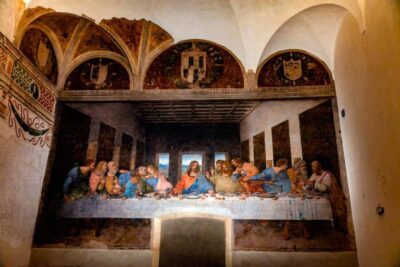
Milan Duomo & The Last Supper Skip-the-Line Small Group Tour
Read our review →
Da Vinci’s Last Supper & Milan Sightseeing Tour
Read our review →
Historic Milan Tour with Skip-the-Line Last Supper Ticket
Read our review →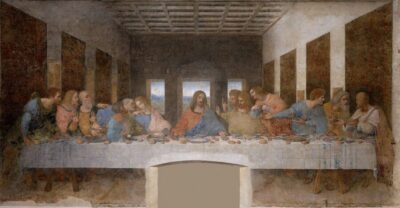
Browse the lists this tour appears in