

Reviewed · MUSEUMS
Guided tour of the Trapani Salt Pans and Salt Museum
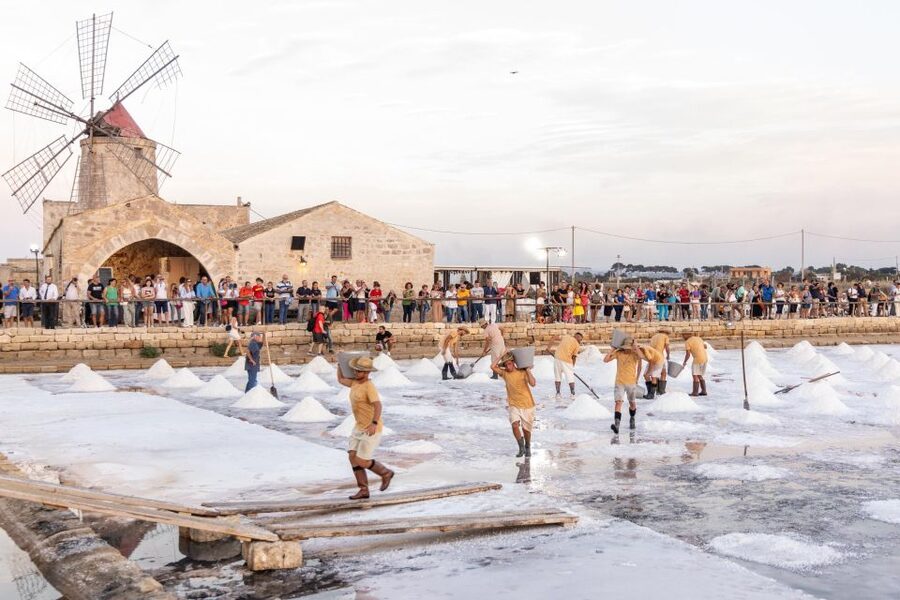
Trapani’s salt pans turn a simple mineral into a full Sicilian story. You’ll walk past white salt banks, pink pools, gray clay, and sea-blue water, then enter an old farmhouse museum with a 1400s windmill. The Culcasi family has worked these pans for four generations, so the tour connects working agriculture, family life, and nature in one compact visit.
I like the hands-on parts best: you can touch salt forming in the tanks and taste whole salt plus flavored fleur de sel from the Slow Food Presidium. I also like the setting inside the WWF reserve, where protected plants and birds share the pans with the salt workers.
The main caution is the walking. The experience lasts 75 minutes, with about one hour on foot, and requires a basic level of fitness. One recent booking was especially unhappy because this detail appeared too late, so read the physical requirements carefully before paying.
Key points to know before you go
- Four generations of salt making: The Culcasi family gives the visit a personal connection to Trapani’s working salt industry.
- Hands-on salt production: You can collect salt with your hands and follow the change from seawater to finished salt.
- A tasting with real local character: Sample whole salt and flavored fleur de sel made by the family.
- A museum inside an old farmhouse: The visit includes an ancient salt museum and a mill dating from the 1400s.
- A protected natural setting: The route passes through the WWF reserve, with salt pools, coastal plants, and birdlife.
- Short, but not sedentary: The 75-minute tour is easy to fit into a day, yet about an hour is spent walking.
Why Trapani’s salt pans are worth your time
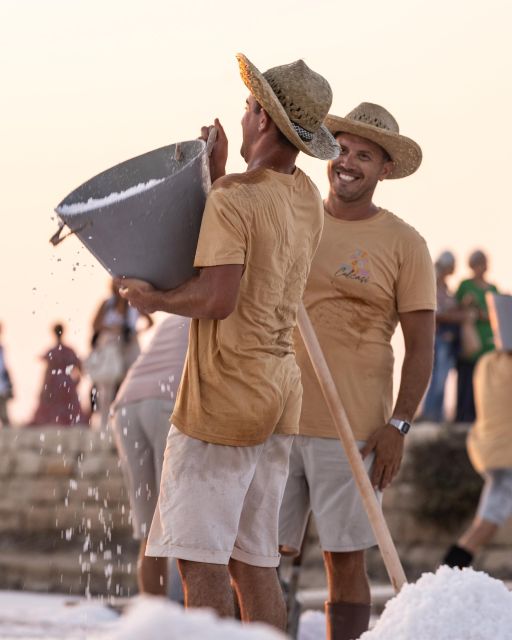
The salt pans south of Trapani are not just pretty pools beside the sea. They show how people use sun, wind, shallow water, and patience to make a food that appears on nearly every table. That practical process gives the visit more weight than a quick stop for photographs.
I like that the Culcasi tour keeps the salt production visible. You are not simply shown a finished packet in a shop. You follow the route from seawater through the production tanks, where evaporation leaves salt behind. The different colors help you understand the work: white salt, pink-toned pools, gray clay, and blue water create a scene that changes with the light.
The visit also makes a good break from churches, ruins, and crowded town centers. You get open air, sea views, and a slower pace. The route is suitable for all age groups in principle, but the hour of walking still matters. Families should consider the stamina of younger children, older relatives, and anyone recovering from illness.
More Guided Tours in Sicily
- Palermo: Teatro Massimo Opera House Guided Tour
★ 4.5 · 1,573 reviews - Catania: Heart of the City Guided Walking Tour
★ 4.6 · 708 reviews - Palermo: Private Custom Walking Tour with Local Guide
★ 4.7 · 661 reviews
Starting below the windmill on Via Salina Chiusa
The meeting point is at Via Salina Chiusa, 1. Go to the ticket office in the forecourt below the windmill, then find the guide behind the salt sales counter. This detail matters because a salt pan can feel spread out and exposed, with several buildings and paths nearby.
The windmill gives you an immediate clue about the old system used here. It is not only a meeting landmark. It helps place the salt works in the older world of wind, water, and manual labor that the museum later explains.
The guide speaks English or Italian. No individual guide names are provided, so you should not expect to request a particular person. The useful thing is that the tour is live rather than an audio walk, giving you a chance to follow explanations as you move through the site.
Wear comfortable shoes, a hat, and comfortable clothing. There is little reason to dress formally for this outing. Sun protection is sensible because the route takes place around open salt pools, although the available information does not specify how much shade you will find.
Walking the salt pans and reading the colors

The first part follows the perimeter of the Salina Culcasi di Nubia. You walk toward the banks of the salt pans, where shallow water reflects the sky. The route is described as relaxing, but it is still a hike of about one hour, so comfortable footwear is more important than it might seem at first.
The colors are one of the strongest reasons to visit in person. White salt catches the eye first, but you will also see blue water, gray clay, and pink pools. These are not painted attractions or carefully staged displays. They are part of the working environment and help you see the many stages of salt production.
The tour lets you follow the process step by step. Seawater enters the tanks and gradually changes as water evaporates. Salt forms in the shallow basins, and you can collect some with your hands. That small action gives you a better feel for the material than simply looking at a pile of finished salt.
I find this part especially useful for children and anyone who learns by doing. You can connect the water in the pool with the crystals you later taste. The process becomes clear without needing a technical lecture.
The setting is also part of the experience. The salt pans are within a WWF reserve, with protected plants and birds. The activity information does not promise particular species or a dedicated bird-watching session, so you should treat wildlife as part of the surroundings rather than the main purpose of the tour.
Tasting whole salt and flavored fleur de sel
At the end of the salt-pan section, you taste whole salt and fleur de sel in several flavors made by the Culcasi family. Fleur de sel is the delicate salt that forms at the surface of the water, and the tasting gives you a direct way to compare it with whole salt.
The flavored versions add a little fun and make the stop more than a standard museum demonstration. The products are connected with the Slow Food Presidium, which gives the tasting a clear local and traditional focus. You are not just sampling a generic souvenir product.
I would pay attention to this part if you enjoy food shopping in Sicily. The tasting helps you decide what kind of salt you might want to take home, and it gives the family’s production a practical link to your own kitchen. The tour includes the tasting, so you do not need to budget separately for that part.
Still, keep the scale in mind. This is a tasting, not a full meal or cooking class. If you are hoping for a long food program, you may find it brief. The main value comes from understanding where the salt comes from and trying several versions in the place where it is made.
More Museum Tours in Sicily:
- Vatican: Museums & Sistine Chapel Entrance Ticket
★ 4.5 · 144,003 reviews - Vatican Museums & Sistine Chapel Tour with Optional Basilica
★ 4.3 · 67,413 reviews - Vatican Museums, Sistine Chapel & St Peter’s Basilica Guided Tour
★ 4.5 · 39,149 reviews - Florence: Skip-The-Line Uffizi Gallery Timed Entry Ticket
★ 4.5 · 27,832 reviews
Inside the old farmhouse salt museum
The second half moves indoors to the ancient salt museum. The museum is housed in an old farmhouse, giving the building itself a role in the story. The displays focus on the demanding work of the salt pans and the family that has managed them across four generations.
This family connection is what gives the museum its strongest human detail. Salt production can sound like a simple natural process, but the work depends on regular labor, careful handling, and knowledge passed down over time. The museum helps connect the pools outside with the people who kept the operation going.
You will also see the ancient mill from the 1400s. The mill adds historical depth without turning the tour into a long formal museum visit. The experience stays tied to the salt works and the sea, rather than presenting unrelated objects.
The museum is included in the official guide of the European Union, according to the supplied activity information. That is useful context, but I would still set your expectations correctly. This is a compact working-site museum, not a major city institution with extensive galleries.
What the 75-minute length means

Seventy-five minutes is a sensible length for this activity. You have enough time to walk the pans, see the salt forming, taste the products, and visit the museum without giving up an entire day in western Sicily.
The tradeoff is that the schedule leaves little room for a slow independent wander. You follow a guided route and move through two connected parts. If you want to photograph every pool or spend a long time watching birds, you may need extra time before or after the tour.
The physical requirement deserves more attention than the short duration suggests. About one hour is spent walking, and a basic level of fitness is required. Flat ground is not the same as no effort, especially in sun or heat. Bring a hat and comfortable shoes, and think carefully about your own stamina before booking.
The activity is marked as wheelchair accessible, but the stated walking requirement may still raise practical questions for some visitors. If you use a wheelchair or have limited mobility, confirm the exact route and surfaces with the provider before arrival. That is a sensible step because accessibility labels do not always explain how much outdoor movement is involved.
Is $21 a fair price?
At $21 per person, I consider this a good-value regional experience if you want more than a scenic photo stop. The price includes entry, a live guided tour of the salt pan, admission to the museum, and the salt tasting.
You are paying for three kinds of access at once. First, you enter a working salt operation. Second, you get interpretation from a live guide in English or Italian. Third, you taste products made at the site. A simple visit to the surrounding area might give you the views, but not the hands-on explanation or museum access.
The value is strongest for people interested in food, local industry, family businesses, and coastal nature. It is less compelling if you only want a quick look at a windmill or a short photo stop. In that case, the hour of walking may feel like too much for the payoff.
The current rating is 4.7 from 423 reviews, with several recent Italian bookings giving very positive marks. That broad response fits the design of the experience: the tour combines scenery, a clear subject, a tasting, and a manageable museum visit. Still, the low ratings point to the same practical issue, the walking requirement and the fact that one person found the site description misleading.
Adding an aperitif or dinner afterward
After the tour, you can have an aperitif with a broad view or eat at the restaurant. These options are not listed as part of the $21 tour price, so plan to treat them as separate choices.
This can make the salt pans a pleasant stop before dinner rather than a rushed visit between other sights. The setting gives you time to look back at the pools after the guided portion. If you are building a full day around Trapani, the combination of tour, aperitif, or restaurant meal may work well.
I would not book the tour solely for the meal, since the supplied details do not describe the menu, prices, or dining hours. Choose the food option because it suits your schedule, then judge the tour on its salt production, museum, and natural setting.
Who will enjoy this tour most
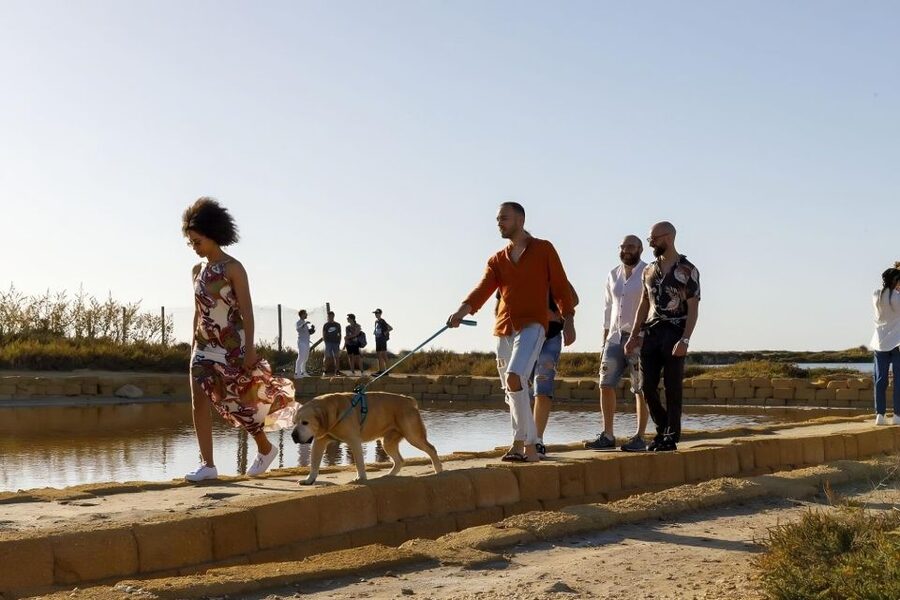
I would recommend it to you if you like seeing how local food is made, prefer smaller working sites to polished attractions, or want a short outdoor activity near Trapani. It also suits families who can manage an hour of walking and enjoy a hands-on explanation.
Food-minded visitors get the most from the tasting. The connection between the pools, the family business, and the flavored fleur de sel gives you something specific to remember and perhaps a useful product to bring home.
History fans will appreciate the farmhouse museum and 1400s mill, though this is not a full-day historical tour. Nature lovers will enjoy the protected setting, but the activity does not promise a dedicated wildlife tour or particular bird sightings.
I would think twice if you are unwell, have limited stamina, or want a mostly seated visit. The recent one-star experience makes the issue clear: do not rely only on the 75-minute total. Plan for about an hour on foot.
Booking details that matter
Free cancellation is available up to 24 hours before the activity for a full refund. You can also reserve now and pay later, which helps if your western Sicily schedule is still changing.
Starting times depend on availability, so check the schedule for the day you want. The meeting point is not a general city-center office. It is the ticket counter beneath the windmill at the salt pans, with the guide behind the salt sales counter.
The tour is offered in English and Italian. Bring comfortable shoes, a hat, and comfortable clothes. Those are simple instructions, but they match the open-air route and the amount of walking involved.
Should you book the Culcasi salt-pan tour?
Book it if you want a local, hands-on look at Trapani’s salt industry rather than a quick scenic drive-by. The best parts are the chance to touch salt in the tanks, taste several kinds of fleur de sel, and see how a family business has continued across four generations.
Skip it if you need a short, seated activity or if an hour of walking is not realistic for you. The tour offers good value at $21, but only when you can enjoy both the outdoor route and the museum.
For most visitors with basic fitness and an interest in Sicilian food or working traditions, I would make room for it. Wear sensible shoes, arrive at the windmill ticket office, and treat the salt pans as a living workplace rather than just a pretty view.
FAQ
Where does the salt-pan tour begin?
The meeting point is the ticket office at Via Salina Chiusa, 1, in the forecourt below the windmill. Find the guide behind the salt sales counter.
How long does the experience last?
The guided experience lasts 75 minutes. About one hour of that time involves walking around the salt pans.
What languages are available?
The live tour is available in English and Italian.
What does the ticket include?
The ticket includes a guided tour of the Culcasi salt pan and salt museum, plus a tasting of whole salt and flavored fleur de sel made by the producer.
Can I touch the salt during the tour?
Yes. You can collect and touch salt forming inside the production tanks as the guide explains how seawater becomes salt.
Is the salt museum included?
Yes. The guided visit to the ancient salt museum is included in the experience.
What historic building can I see?
The museum is inside an old farmhouse, and the visit also includes an ancient mill dating from the 1400s.
Is the tour wheelchair accessible?
The activity is listed as wheelchair accessible. Since the tour also requires about an hour of walking, confirm the route details with the provider if you have specific mobility needs.
What should I wear or bring?
Bring comfortable shoes, a hat, and comfortable clothing. A basic level of fitness is required for the walking portion.
Can I cancel for a refund?
You can cancel up to 24 hours in advance for a full refund. The activity also allows you to reserve now and pay later.
Just added around Sicily
- Syracuse, Ortigia and Noto walking tour from Catania★ 5.0 · 273 reviews
- The Godfather Movie Tour★ 5.0 · 275 reviews
- Tour Etna & Wine Tasting★ 5.0 · 317 reviews
- Etna, Wine and Alcantara Tour – From Taormina★ 5.0 · 464 reviews
- The Original Catania Street Food and Market Tour by Streaty★ 5.0 · 345 reviews
- Etna and Alcantara Gorges Excursion★ 4.5 · 256 reviews
- Etna Tour in 4×4★ 5.0 · 583 reviews
- Etna Morning Jeep Tour★ 4.5 · 241 reviews
Museums, compared.

Vatican: Museums & Sistine Chapel Entrance Ticket
Read our review →
Vatican Museums & Sistine Chapel Tour with Optional Basilica
Read our review →
Vatican Museums, Sistine Chapel & St Peter’s Basilica Guided Tour
Read our review →
Skip-The-Line Uffizi Gallery Timed Entry Ticket
Read our review →
Vatican Museums, Sistine Chapel & Basilica Tour
Read our review →
Vatican Museums & Sistine Chapel Skip-the-Line Entry Ticket
Read our review →Vatican Museums, Sistine Chapel & Basilica Tour
Read our review →
Vatican Museums & Sistine Chapel Guided Tour
Read our review →Browse the lists this tour appears in