

Reviewed · ST MARKS BASILICA TOURS
Florence: Timed Entrance Ticket to San Marco Museum
The most moving part of San Marco Museum is not a grand masterpiece in a crowded gallery. It is the quiet row of former friars’ cells, each decorated with a simple fresco by Beato Angelico. The art feels personal here, made for prayer rather than applause. You can also see the cell of Girolamo Savonarola, the fiery preacher who challenged Florence’s clergy before being hanged and burned.
I like the working Dominican convent, where monks still live, and the elegant Cloister of St. Anthony, with its age-softened doors and frescoes. I also like the modest price: at $15, this is a strong choice if you want Renaissance art in a calmer setting than Florence’s biggest museums. The drawback is that this is admission only. There is no guided tour or audio guide included, and some displays may offer information only in Italian.
Key points to know
- Fra Angelico’s Annunciation: One of the museum’s essential sights, and a fine reason to make the short visit.
- Savonarola’s cell: See the small room tied to one of Florence’s most forceful and controversial religious figures.
- A living convent: Dominican monks still occupy part of the complex, giving the visit a quiet, working-monastery feel.
- Michelozzo’s architecture: The 15th-century convent shows the clean, measured style of early Renaissance Florence.
- Timed admission: Your selected date and time are binding, so arrive ready to enter at that slot.
- Self-guided format: You set the pace, but you must supply the historical and artistic context yourself.
Why San Marco Feels Different From Florence’s Big Museums

Florence has museums built around famous names, long lines, and rooms packed with masterpieces. San Marco works differently. It is both a museum and a former Dominican convent, and the building itself is the main experience.
You enter at Piazza San Marco, 3, where the statuesque exterior gives little away. Inside, the rooms unfold in a quiet sequence of cloisters, corridors, cells, work areas, and galleries. The plan matters because the paintings were created for this setting. You are not seeing frescoes removed from their original purpose and placed on a white gallery wall. You are seeing them where Dominican friars once prayed, worked, and slept.
That makes San Marco especially rewarding if you like art with a strong sense of place. The rooms are not merely containers for paintings. The architecture, religious life, and art belong together.
The complex dates largely from the 15th century. Cosimo de’ Medici commissioned its renovation, and the architect Michelozzo shaped the convent into one of Florence’s clearest early Renaissance buildings. The result is orderly and restrained, with open courtyards and practical rooms rather than palace-style decoration.
More Entry Tickets in Florence
- Florence: Skip-The-Line Uffizi Gallery Timed Entry Ticket
★ 4.5 · 27,832 reviews - Florence: Timed Entrance Ticket to Michelangelo’s David
★ 4.6 · 16,983 reviews - Florence: Michelangelo’s David Skip-the-Line Entry Ticket
★ 4.5 · 12,764 reviews
The Cloister of St. Anthony Comes First

The Cloister of St. Anthony is an excellent place to slow down at the start. Its proportions are graceful without being flashy, and the surrounding doors carry old frescoes that have survived centuries of use.
Look closely at the relationship between the open courtyard and the rooms around it. This was a place for movement, prayer, and daily monastic work. The design gives the convent a calm rhythm: light in the center, simple passages around the edges, and art placed where the friars would encounter it during ordinary routines.
The cloister is also useful for getting your bearings. Florence’s major museums can feel like a race from one famous work to the next. Here, I suggest you pause before heading upstairs or into the main collections. The quiet is part of the experience, and the subdued setting prepares you for the small devotional paintings ahead.
Beato Angelico’s Frescoes in the Friars’ Cells
The heart of San Marco is the series of frescoed cells associated with Fra Angelico, also called Beato Angelico. He was a Dominican friar and one of the great painters of the Florentine Renaissance.
These are not huge history paintings made to impress a court. They are small religious scenes designed for contemplation. The simplicity is deliberate. A friar entering his cell would see a focused image rather than a crowded composition. The paintings ask you to look slowly.
The cells can feel austere. That is part of their power. You will not find lavish interiors or theatrical lighting. Instead, you get whitewashed spaces, basic architectural forms, and luminous religious images. The contrast between plain rooms and delicate frescoes helps the art make its point.
The Annunciation is the work to seek out first. Its pale architecture, quiet figures, and clear sense of space show why Angelico matters. It is gentle rather than dramatic, but the calm arrangement has real force. Allow yourself time with it instead of treating it as one more item on a checklist.
You may also notice that the art changes in mood from cell to cell. The rooms are small, so even modest differences in color, gesture, and composition become clear. This is one reason I prefer San Marco for a slower art day. You can focus on how religious images functioned in daily life, not just on the fame of the painter.
Savonarola’s Cell and Florence’s Religious Conflict
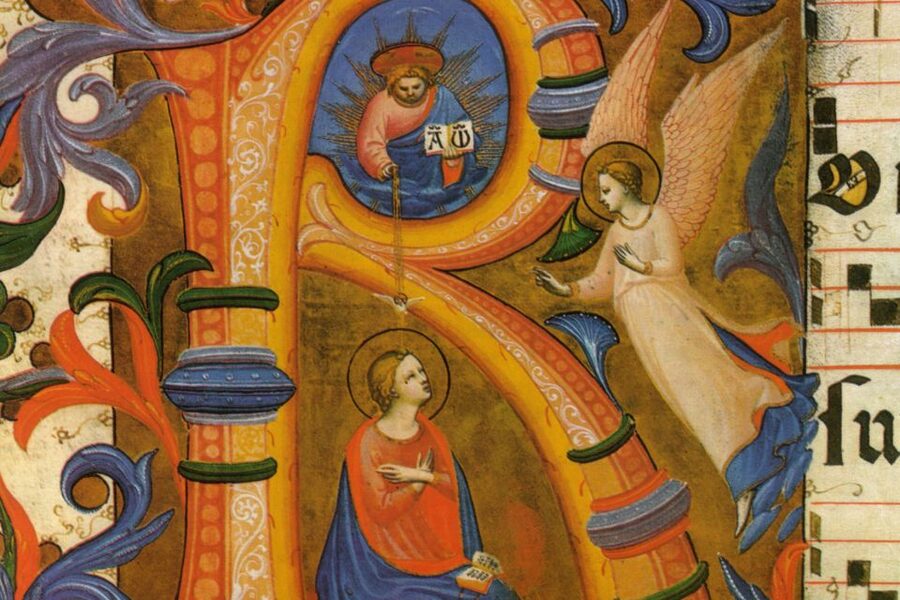
The cell connected with Girolamo Savonarola adds a sharp political and social edge to the visit. Savonarola lived in the convent and became known for passionate sermons condemning corruption and declining morals among the clergy.
His story is tied tightly to Florence. He preached with enough force to influence public life, but his rise did not last. He was eventually executed in Piazza della Signoria, hanged and then burned at the stake.
The cell is modest, and that is exactly why it works. You are not entering a grand memorial room. You are seeing the setting associated with a man who wielded enormous influence through words and religious conviction. The plain space makes his story feel more human and less like a distant chapter in a textbook.
I recommend reading about Savonarola before you arrive, or at least keeping his basic story in mind. Without context, the room can pass quickly. With context, it becomes one of the most meaningful stops in the convent.
More Museum Tours in Florence
- Florence: Leonardo Interactive Museum Entry Ticket
★ 4.5 · 11,763 reviews - Florence Accademia Gallery Tour with Entrance Ticket Included
★ 4.5 · 6,148 reviews - Uffizi Gallery Small Group Tour with Guide
★ 4.5 · 4,923 reviews - Florence: Accademia Gallery Guided Tour
★ 4.6 · 4,156 reviews
The Great Refectory, Kitchen, and Service Rooms
San Marco is not only about frescoes and friars’ cells. The Great Refectory shows how the community gathered for meals, while the old kitchen and service areas reveal the practical side of convent life.
These rooms give needed balance to the devotional art. You begin to picture a functioning religious community, not just a beautiful historic building. Meals had to be prepared, rooms had to be maintained, and monks had to share daily routines. The service spaces may appeal especially to you if you enjoy social history more than formal painting.
The refectory also contains work by Fra Bartolomeo, another important painter and Dominican monk who lived at San Marco in the early 16th century. His presence widens the artistic story beyond Angelico. You can compare the work of two painters connected not only by city and period, but also by the same religious environment.
One practical note: parts of the museum may close temporarily. Two rooms were reported closed during one visit, so you should allow for the possibility that not every space will be available on your date. The main sights remain the reason to come, but access can change.
How Much Time Should You Allow?
The ticket is valid for one day, but the entry hour you select is fixed. The flexible part is your time inside, not the beginning of your visit. If your Florence schedule is tight, treat San Marco as a timed appointment rather than a drop-in stop.
A short visit can cover the cloister, Angelico’s main works, Savonarola’s cell, and the refectory. I would allow extra time if you want to study the frescoes or read the labels. The museum rewards patience more than speed.
Because there is no guided tour included, your pace is entirely your own. That is good news if you dislike being hurried through art. It also means you should not expect a guide to explain the symbolism, history, or connection between the rooms.
The museum has been described as quiet and easy to access, especially compared with Florence’s most famous collections. Advance booking may not always be essential at a quiet time, but the timed ticket gives you a clearer plan and lets you skip the ticket line. Since the admission time is binding, do not book a slot that conflicts with another fixed appointment.
Is the $15 Ticket Good Value?
At $15 per person, this is one of Florence’s better-value art admissions if you care about Renaissance religious art, architecture, or monastic life. You get access to a complete historic complex, not just one gallery.
The value improves if you approach it as a focused visit. San Marco does not try to compete with the Uffizi’s enormous range or the Accademia’s David. Instead, it gives you one coherent setting where painting, architecture, and religious history fit together.
The ticket also includes the booking fee, which makes the total cost easier to understand. Two extra discounts are offered at the Hard Rock Shop and Hard Rock Cafe on Via dei Brunelleschi, 1, near Piazza della Repubblica. I would treat those as minor extras, not a reason to choose the museum.
If you want a guided explanation, budget separately for one. This booking does not include a guide. One account praised a guide named Sabine on a guided visit, but that is not part of this ticket, so you should not expect her or any other guide at the museum.
Who Will Appreciate San Marco Most?
I recommend San Marco to you if you enjoy:
- Renaissance painting in its original setting
- Quiet museums and small rooms
- Religious art with a strong personal purpose
- Architecture connected to daily life
- Stories about Florence’s political and religious conflicts
- A self-guided visit where you can set your own pace
It may be less satisfying if you want a large collection, dramatic secular art, or a full explanation from a guide. The museum is focused and restrained. Some people find it deeply affecting, while others find it worthwhile but less exciting than Florence’s headline sights.
Families with older children may find the convent easier to appreciate than a long sequence of formal galleries. Younger children may need help understanding why the small frescoes matter. The simple rooms and short route can work well for a mixed day of sightseeing, provided you do not expect a flashy museum.
The site is wheelchair accessible, which is useful for planning. Still, the information provided does not describe every surface or room in detail, so you may want to confirm any specific access needs before booking.
Practical Advice Before You Book

Book only a time you can keep. The date and entry slot become binding after purchase, and you can be refused if you arrive outside the allotted time.
Your starting point is the ticket office inside the museum at Piazza San Marco, 3, in Florence. The activity ends at the same location. Take a moment to locate the entrance before your slot, especially if you are coming from another part of the city.
Do not arrive expecting a tour leader. This is a timed entrance ticket, not a guided experience. If you want more background, read a short introduction to Angelico, Savonarola, and Michelozzo before you go.
You can cancel for a full refund up to 24 hours in advance, and the reserve-now, pay-later option keeps your plans flexible. Those policies are useful, but the fixed entry time still requires care.
Should You Book San Marco Museum?
Yes, if you want to see Florence at a quieter, more intimate scale. The combination of Angelico’s frescoes, Savonarola’s cell, Michelozzo’s convent, and the still-active Dominican setting gives you more than a standard art museum visit.
Book it especially if the Uffizi and Accademia feel like too much for one day. San Marco offers a clear subject and a manageable visit for $15. Go with realistic expectations: it is self-guided, some labels may be in Italian only, and occasional rooms may be closed.
If the Annunciation and Angelico’s cell frescoes appeal to you, this ticket is an easy choice. If you need a guide to make art come alive, arrange that separately. Either way, keep your entry time firmly in your schedule and give the convent enough quiet time to work its effect.
FAQ
Where is San Marco Museum?
San Marco Museum is at Piazza San Marco, 3, 50121 Firenze. The ticket office inside the museum is the starting point, and the activity ends there.
How long is the ticket valid?
The ticket is valid for one day. You must enter during the specific date and time slot selected when booking.
Is the entry time flexible?
No. The date and time slot are binding after booking. You may be refused entry if you do not respect the allotted time.
Does the ticket include a guided tour?
No. The ticket includes timed admission and the booking fee, but not a guided tour.
Is San Marco Museum wheelchair accessible?
Yes, the activity is listed as wheelchair accessible.
Can I cancel the booking?
Yes. You can cancel up to 24 hours in advance for a full refund. A reserve-now, pay-later option is also available.
More St Mark Basilica Visits
- Doge’s Palace & St. Mark’s Basilica with Terrace Access Tour
★ 4.7 · 10,697 reviews - Venice: Doge’s Palace, St Mark’s Basilica, and Pala d’Oro
★ 4.4 · 6,235 reviews - Legendary Venice: Doge’s Palace, St Mark’s & VIP Terrace Access
★ 4.5 · 5,033 reviews - Venice: Doge’s Palace and St. Mark’s Basilica Tour
★ 4.5 · 3,734 reviews
Just added around Florence
- Walking Food Tour of Florence with Tastings and Wine★ 5.0 · 518 reviews
- Florence Accademia Guided Tour – Shared, Private & Combo Options★ 4.5 · 370 reviews
- Uffizi Gallery Timed Entry Admission Tickets★ 4.0 · 392 reviews
- Uffizi Gallery Small Group Tour with Guide★ 4.5 · 879 reviews
- Early Access Guided Uffizi Gallery Tour Skip-the-Line Small Group★ 4.5 · 707 reviews
- Uffizi and Accademia Small Group Guided Tour★ 4.5 · 449 reviews
- Florence Central Market Food Tour with Eating Europe★ 5.0 · 224 reviews
- Truffle Hunting Experience with Lunch in San Miniato★ 5.0 · 383 reviews
St Marks Basilica Tours, compared.
Doge’s Palace & St. Mark’s Basilica with Terrace Access Tour
Read our review →
Doge’s Palace, St Mark’s Basilica, and Pala d’Oro
Read our review →
Legendary Venice: Doge’s Palace, St Mark’s & VIP Terrace Access
Read our review →
St. Mark’s Basilica & Doge’s Palace Tour with Ticket
Read our review →
Private 3 hrs Venice Tour: St Mark’s, Walking tour & Boat tour
Read our review →
St Mark’s Basilica, Doge Palace, & Bell Tower Option
Read our review →
Doge’s Palace & St Mark’s Tour with Upgrade Option
Read our review →Browse the lists this tour appears in