
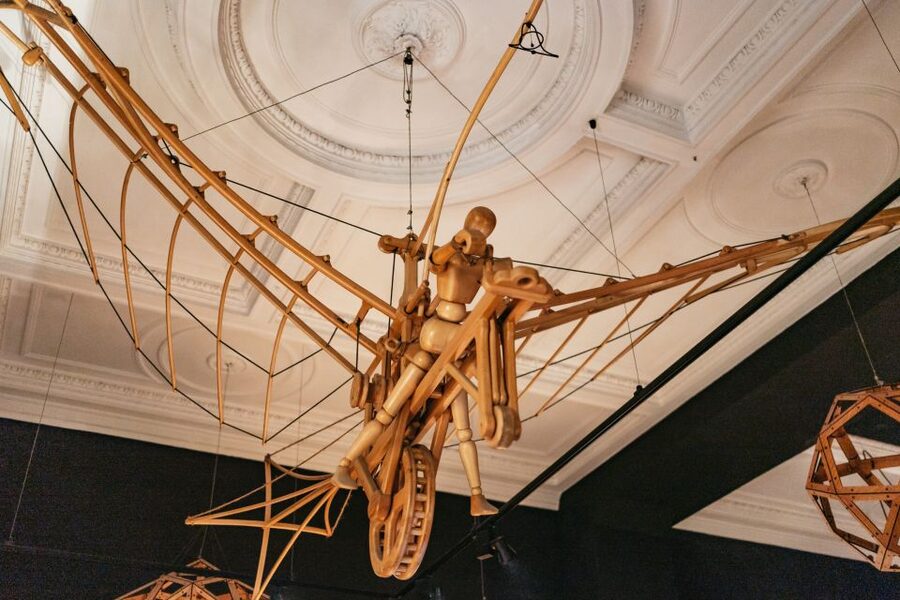
Reviewed · MUSEUMS
Florence: Leonardo Interactive Museum Entry Ticket
Leonardo’s ideas make the most sense when your hands are involved. At this small central Florence museum, you can turn screws, test mechanisms, build bridges and domes, and see how drawings from more than 500 years ago become working machines. I especially like the hands-on exhibits and the way they suit both curious adults and children old enough to follow instructions.
I also like the low $9 price and the easy one-hour format. It is a useful break from grand churches and art galleries, particularly for families. The main drawback is that this is a self-guided museum, not a live tour, and the compact space can feel busy when several groups gather around the same machines.
Key points to know before you go
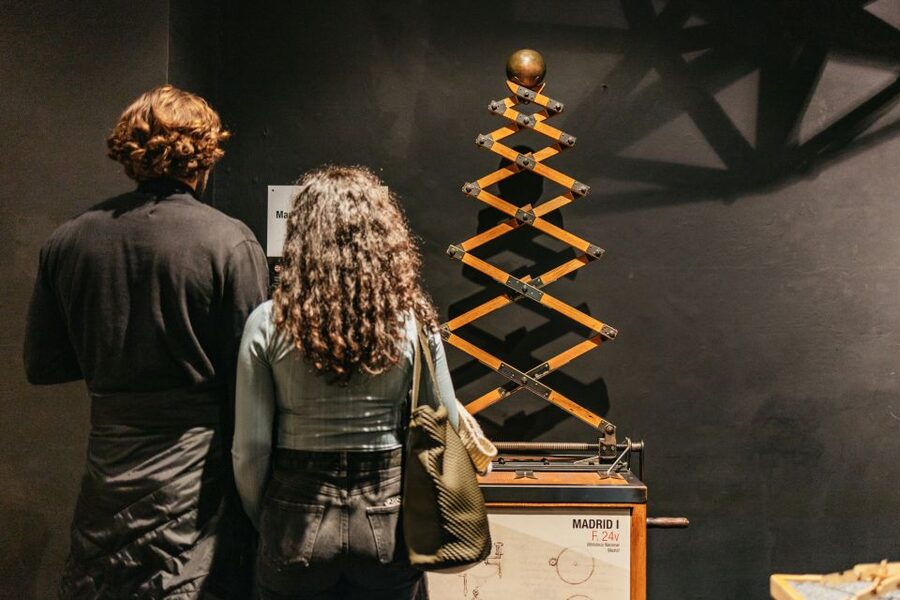
- You can operate reconstructed machines: Try the tank, catapult, worm screw, vertical screw, hydraulic saw, and printing press.
- The museum is close to Florence’s main sights: The entrance is a few steps from the Accademia Gallery and the Duomo.
- It works especially well for children and teenagers: The displays give young visitors something to do, not just something to look at.
- The audio guide uses your own phone: Bring earphones if you want the commentary in English, French, Italian, Spanish, German, or Portuguese.
- Plan on one hour, or up to 90 minutes: A quick visit works, but hands-on exhibits can hold the attention of families longer.
- Buy online and follow the correct entrance signs: There are confusing signs nearby, and another Florence museum has a similar name.
Turning Leonardo’s drawings into working machines
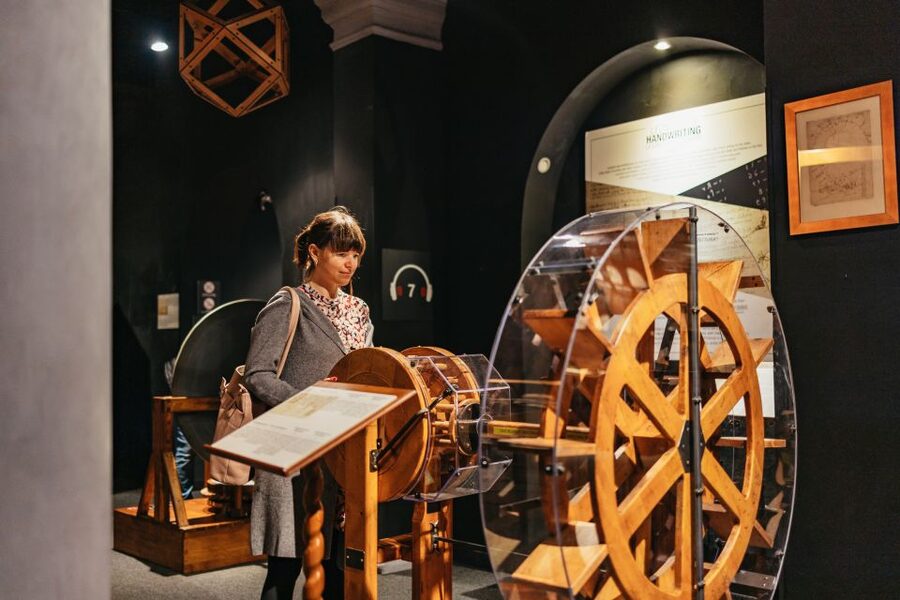
The best part of this museum is the change from looking to doing. Leonardo’s codexes contain sketches of gears, screws, bridges, weapons, lifting devices, and other mechanisms. On a page, these ideas can look tangled and hard to read. Here, working replicas show what the lines were trying to describe.
You can operate several machines yourself, with care. The tank, catapult, worm screw, vertical screw, hydraulic saw, and printing press are among the featured mechanisms. You are not simply standing behind a barrier while a guide explains them. You get a chance to test how a design moves and why its parts fit together.
That physical contact gives you a better feel for Leonardo’s method. He watched water, birds, muscles, tools, and human movement, then tried to understand the forces behind them. The museum connects these observations to his work in engineering, physics, anatomy, and painting.
I find this more useful than a room full of portraits and labels because the machines reveal his habit of asking practical questions. How can a screw lift water? How can a gear transfer motion? How can a bridge hold weight? You can work through some of those questions with your own hands.
More Entry Tickets in Florence
- Florence: Skip-The-Line Uffizi Gallery Timed Entry Ticket
★ 4.5 · 27,832 reviews - Florence: Timed Entrance Ticket to Michelangelo’s David
★ 4.6 · 16,983 reviews - Florence: Michelangelo’s David Skip-the-Line Entry Ticket
★ 4.5 · 12,764 reviews
A compact museum near the Duomo and Accademia
The museum is in Florence’s city center, just a short walk from the Duomo and the Accademia Gallery. That makes it easy to add before or after Michelangelo’s David, a cathedral visit, or a walk through the surrounding streets.
The central location is useful, but it also creates one of the experience’s small traps. The entrance is not always obvious. If you are coming from the Duomo, you may see a red vertical advertisement marked Da Vinci Museum with two arrows pointing right. Those signs do not lead to this museum’s entrance, so use the exact address and booking details rather than following the nearest advertisement.
There are also two Florence museums with very similar Leonardo names. This experience takes place at the original museum, and the other location is a few blocks away. Check the name and address before setting out. A little attention here can save you an unnecessary walk.
Tickets are sold online, and you select the day and time of your visit. That arrangement helps reduce queues, but it means you should not count on simply walking up and buying a ticket at the door. The entry ticket costs about $9 per person, a modest price by Florence standards.
What your one-hour visit looks like
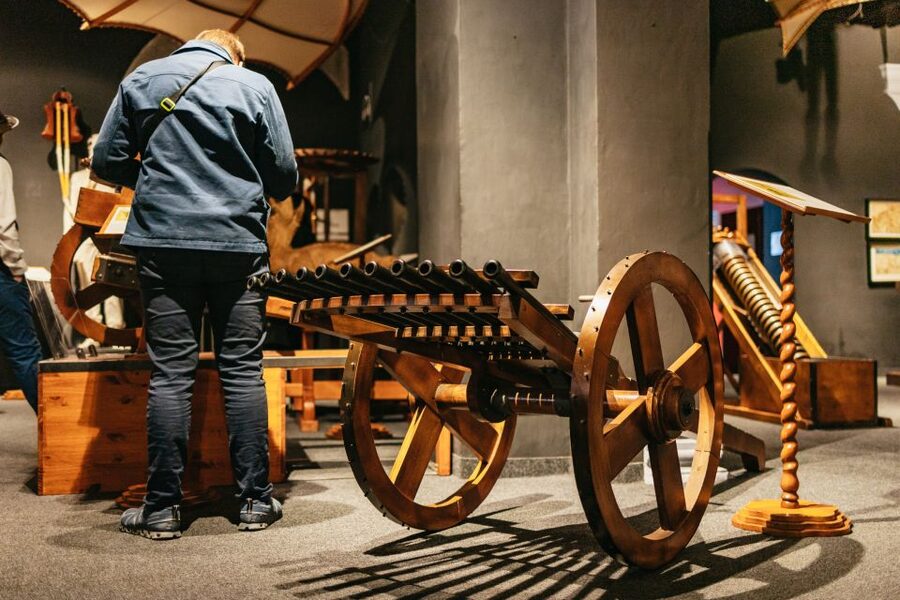
The museum does not follow a fixed guided route. You enter, receive access to the exhibits, and move through the displays at your own pace. The visit can take about an hour, though families and curious teenagers may spend closer to 90 minutes testing the mechanisms.
At the beginning, you get a broad look at Leonardo’s designs and the fields that interested him. The displays link his inventions with engineering, physics, anatomy, and art. This opening context helps you understand that he was not only a painter associated with the Renaissance. He was also a careful observer of motion, materials, water, machines, and the human body.
The central portion is the most active. You can try mechanisms based on drawings from his codexes. Some require turning or pushing. Others let you see how a design handles weight, movement, or pressure. The experience is strongest when you take your time and ask yourself what Leonardo was trying to solve.
You can also build bridges, domes, and polyhedrons in the workshop areas. These activities make abstract ideas easier to grasp. A child may enjoy the challenge of assembling a structure, while an adult may start thinking about balance, support, and geometry.
The museum also includes puzzles and displays tied to Leonardo’s inventions and improvements. You may find yourself spending longer at one simple-looking mechanism than expected, especially if you want to understand why it works. That is why the official one-hour estimate should be treated as a starting point, not a strict limit.
Why the hands-on format works for families
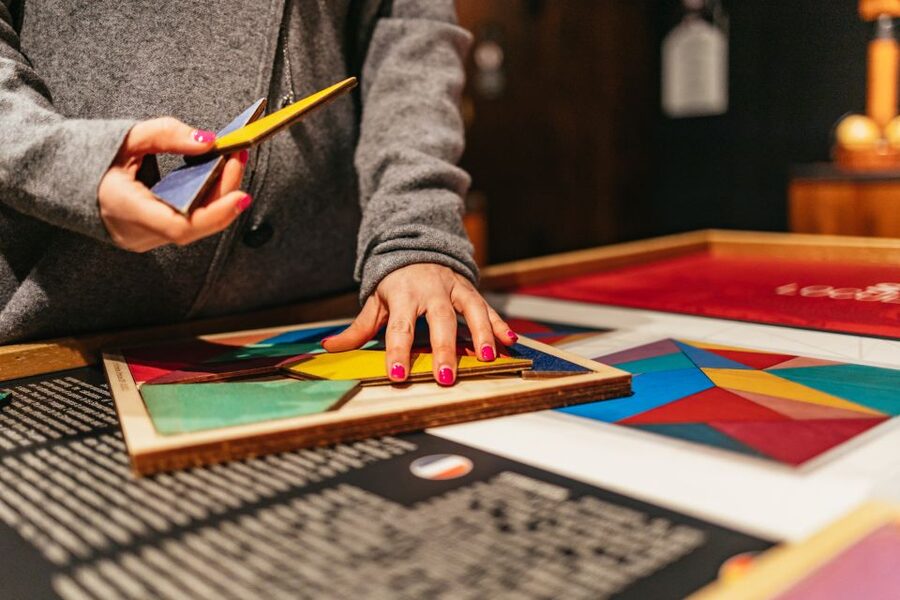
Florence has no shortage of museums where children must look carefully and avoid touching anything. This museum offers a welcome change. Children can test the machines and work through puzzles, which gives them a clear role in the visit.
The recommended age is around seven or eight and older. That is a sensible guide because younger children may need help understanding instructions or handling some mechanisms carefully. Even so, families with younger children have found the experience enjoyable, especially when an adult stays involved.
Teenagers can also get more from this museum than you might expect. The machines connect history with mechanics, and the interactive format feels less like a traditional museum stop. Teenagers who are not drawn to paintings may spend well over an hour working through the inventions.
I would choose this museum for a family after several days of churches, frescoes, and formal galleries. It gives everyone a chance to move around and use their hands. Adults are not left with a children-only attraction, either. The machines offer a practical look at Leonardo’s thinking, and the displays cover serious subjects such as anatomy and engineering.
The only family caution is space. Several people may want to use the same popular machine at once. A quieter time can make the visit easier, and an early 10 a.m. visit has been especially calm for some families. The museum may also be less crowded in February, though conditions vary.
More Museum Tours in Florence
- Florence Accademia Gallery Tour with Entrance Ticket Included
★ 4.5 · 6,148 reviews - Uffizi Gallery Small Group Tour with Guide
★ 4.5 · 4,923 reviews - Florence: Accademia Gallery Guided Tour
★ 4.6 · 4,156 reviews - Florence: Accademia Gallery Guided Tour with Entry Ticket
★ 4.6 · 2,253 reviews
Leonardo’s ideas beyond the famous paintings
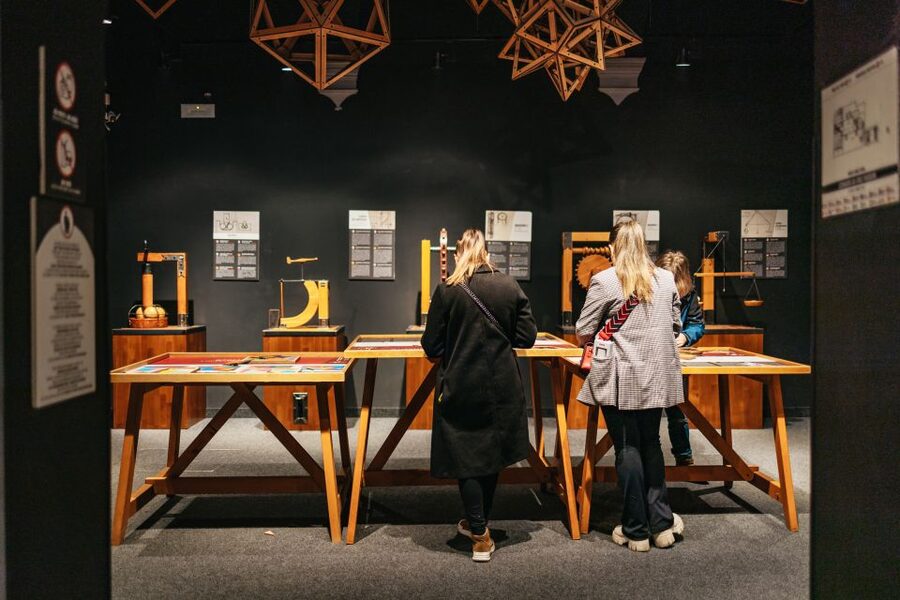
Many people arrive knowing Leonardo mainly as the painter of the Mona Lisa and The Last Supper. The museum shifts attention to the less familiar side of his work.
You can learn how he studied mechanical movement and water power. His designs include devices that resemble later tools and machines, which makes the displays feel surprisingly current. The point is not that Leonardo built every modern invention in finished form. His importance lies in the questions he asked, the experiments he drew, and the connections he made between natural observation and human technology.
The anatomy material adds another layer. Leonardo’s interest in the human body was part of the same habit of close observation that shaped his engineering drawings. He examined structure, movement, and proportion, then carried those observations into both science and art.
The painting section provides useful context, but this is not primarily a fine-art museum. If your main goal is to see original Renaissance paintings, choose the Uffizi, Accademia, or another art museum instead. If you want to understand how Leonardo’s mind moved between art, science, and machines, this is a better fit.
The audio guide and self-guided pace
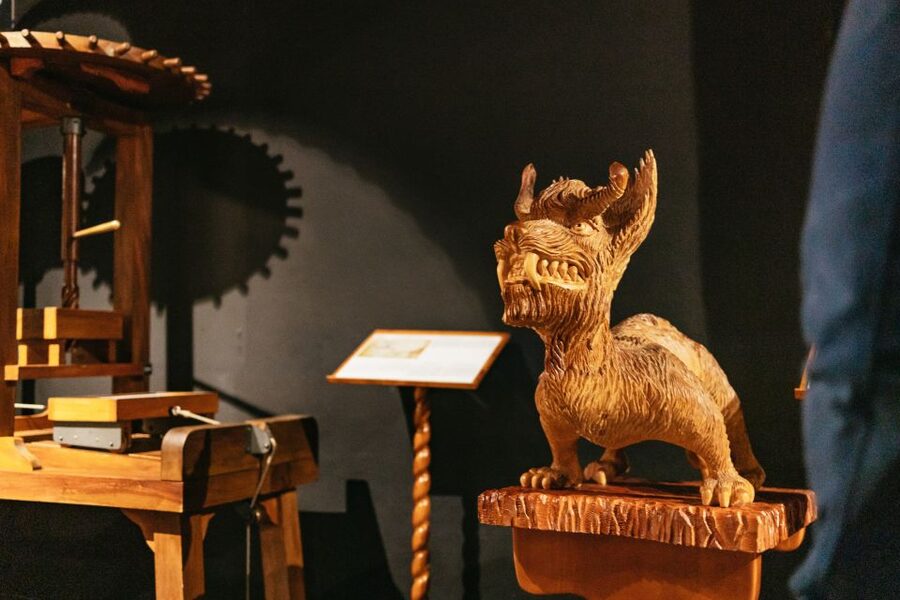
Your ticket includes an audio guide that you access with your smartphone. Commentary is available in Italian, English, French, Spanish, German, and Portuguese. You should bring your own earphones, since the instructions specifically call for listening with earphones while using your phone.
The audio guide lets you pause and move on when you want. That suits a museum where different people stop at different machines. You can listen to background information, then spend extra time on the exhibits that interest you most.
Still, audio commentary is not the same as a live guide. There is no guide leading a group, answering questions, or demonstrating every machine for you. If you enjoy personal explanations and conversation, you may find the format limited. If you prefer setting your own pace, the lack of a live guide is an advantage.
Free Wi-Fi is included, which helps with using the audio content. Keep your phone charged enough for the visit, and use earphones so you can hear the material clearly in the active museum space.
Price, timing, and what the ticket really delivers
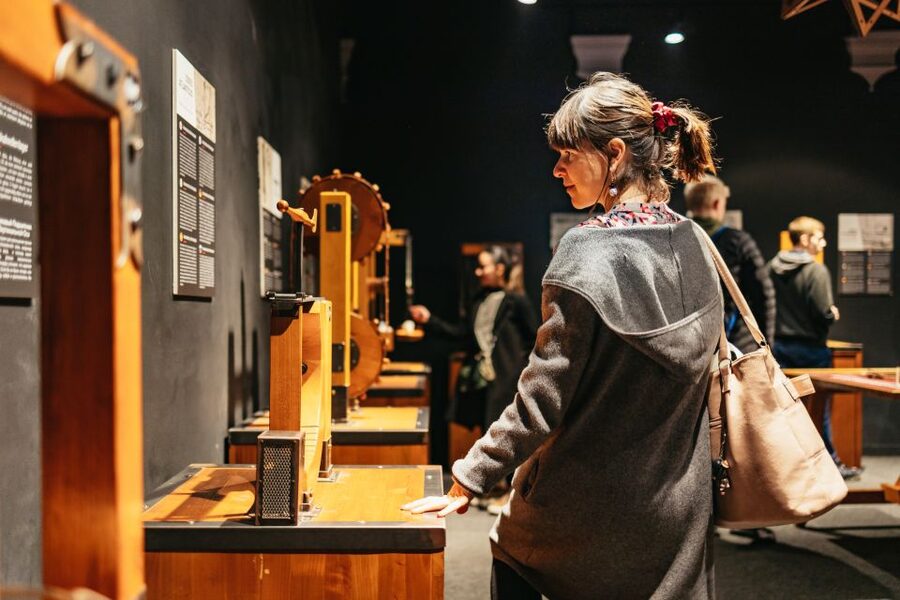
At around $9 per person, this is one of Florence’s easier attractions to justify. The price is low enough that you do not need to spend half a day there to feel you received value. Even a focused one-hour visit gives you access to a large group of reconstructed machines and a multilingual audio guide.
The value improves if you have children, teenagers, or anyone who learns best by doing. A standard museum visit may lose their attention after several rooms. Here, the exhibits give them a reason to keep moving from one station to the next.
For adults, the value depends on your expectations. This is not a major historic palace, an original Leonardo manuscript collection, or a formal art exhibition. The machines are reconstructed models designed to make his ideas understandable. You are paying for access to an interactive learning experience rather than rare original objects.
The museum is also a good use of a spare hour between larger Florence appointments. You do not need to commit to a full morning, and the central location makes it easy to pair with nearby sights. If your schedule is packed with timed museum entries, reserve a time that gives you enough breathing room for the walk.
Cancellation is free up to 24 hours before the visit, and you can reserve now and pay later. Those terms are useful if your Florence schedule is still changing, but the main practical point remains simple: book online and check the time and address carefully.
A few practical limitations to keep in mind
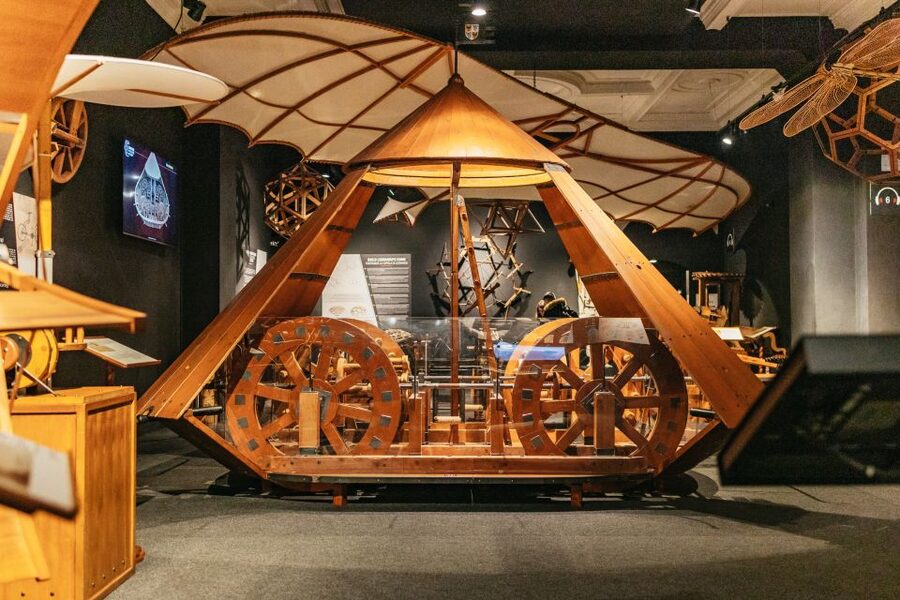
The museum’s strengths are also its limits. Because the exhibits are designed to be used, popular stations may attract a small crowd. You may need to wait briefly before trying a machine, especially if a family is working through a puzzle together.
The museum is self-paced, so the quality of your visit depends partly on how much attention you give the displays. You can rush through in an hour, but you will get more from it if you read the explanations and test the mechanisms thoughtfully.
Photography may also be restricted. At least one visit ended with disappointment over not being allowed to take pictures, so check the current rules when you arrive rather than assuming every exhibit can be photographed. The gift shop may not have the kind of large illustrated book you want as a souvenir, so do not count on finding a coffee-table volume there.
Take care when using the machines. You are invited to try them, but the instructions specifically ask you to do so cautiously. This is an interactive museum, not a place for rough handling.
Who should book the Leonardo Interactive Museum?
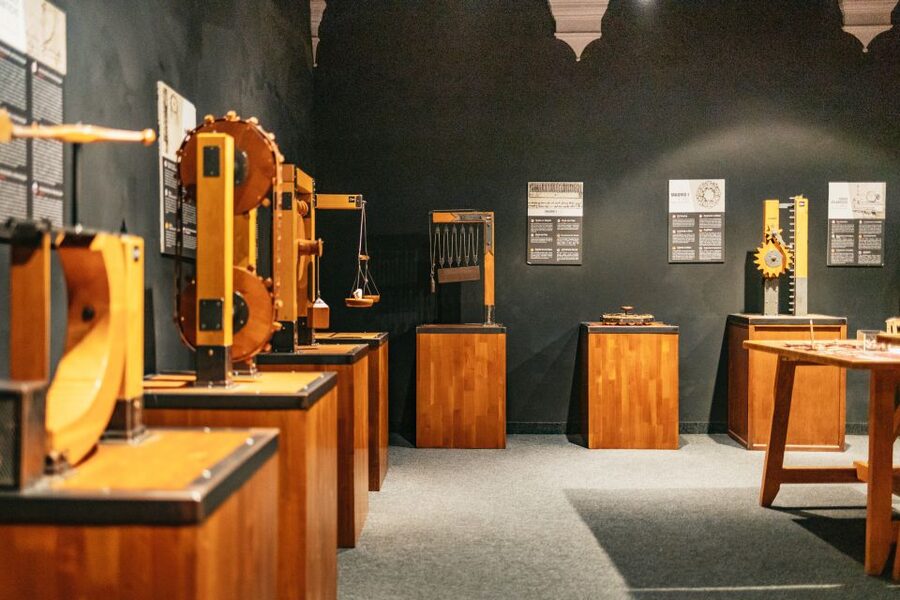
I would book it for families with children around seven or eight and older, teenagers who like puzzles or machines, and adults who want a break from traditional galleries. It is also a smart choice for anyone who has wondered how Leonardo’s sketches would work in real life.
I would be more selective if your Florence visit is very short and your main interests are original paintings, sculpture, or major historic interiors. The museum offers replicas and interactive models, not a collection of Leonardo originals.
For most people, the low price and central location make the decision easy. You can spend an hour learning something concrete, give children permission to touch the exhibits, and see Leonardo as an engineer and observer rather than only as a famous painter.
Should you book this Florence museum?
Book it if you want a lively, practical look at Leonardo’s inventions and can spare an hour near the Duomo. The working machines, puzzles, and building activities are the main reason to go, and the price is especially fair for families.
Skip it if you are searching for original artworks, a formal lecture, or a live guided tour. Before booking, confirm that you have selected the original museum, note the entrance carefully, and bring earphones for the audio guide. With those details handled, this is an entertaining and useful addition to a Florence sightseeing day.
FAQ
How long does the Leonardo Interactive Museum visit take?
The stated duration is one hour. You might spend closer to 90 minutes if you take time to test the machines, solve puzzles, or build bridges, domes, and polyhedrons.
Where is the museum located?
The entrance is a few steps from the Accademia Gallery and the Duomo in central Florence. Be careful with a red sign near the Duomo that says Da Vinci Museum and points right, because it does not lead to this museum’s entrance.
Is there a live guide?
No. The ticket includes an audio guide that you use with your own smartphone and earphones. There is no live guide.
What languages are available for the audio guide?
The audio guide is available in Italian, English, French, Spanish, German, and Portuguese.
Is the museum suitable for children?
The museum is described as suitable for visitors aged around seven or eight and older. Children can try the machines, work through puzzles, and take part in activities involving bridges, domes, and polyhedrons.
What is included with the ticket?
The ticket includes entry to the Leonardo Interactive Museum, the smartphone audio guide, and free Wi-Fi. It does not include a live guide.
Just added around Florence
- Walking Food Tour of Florence with Tastings and Wine★ 5.0 · 518 reviews
- Florence Accademia Guided Tour – Shared, Private & Combo Options★ 4.5 · 370 reviews
- Uffizi Gallery Timed Entry Admission Tickets★ 4.0 · 392 reviews
- Uffizi Gallery Small Group Tour with Guide★ 4.5 · 879 reviews
- Early Access Guided Uffizi Gallery Tour Skip-the-Line Small Group★ 4.5 · 707 reviews
- Uffizi and Accademia Small Group Guided Tour★ 4.5 · 449 reviews
- Florence Central Market Food Tour with Eating Europe★ 5.0 · 224 reviews
- Truffle Hunting Experience with Lunch in San Miniato★ 5.0 · 383 reviews
Museums, compared.

Vatican: Museums & Sistine Chapel Entrance Ticket
Read our review →
Vatican Museums & Sistine Chapel Tour with Optional Basilica
Read our review →
Vatican Museums, Sistine Chapel & St Peter’s Basilica Guided Tour
Read our review →
Skip-The-Line Uffizi Gallery Timed Entry Ticket
Read our review →
Vatican Museums, Sistine Chapel & Basilica Tour
Read our review →
Vatican Museums & Sistine Chapel Skip-the-Line Entry Ticket
Read our review →Vatican Museums, Sistine Chapel & Basilica Tour
Read our review →
Vatican Museums & Sistine Chapel Guided Tour
Read our review →Browse the lists this tour appears in