
Reviewed · ACCADEMIA GALLERY TOURS
David & Duomo: Accademia & Skip the Line Exclusive Dome Access
Seeing Michelangelo’s David before Florence’s crowds fully gather is the star of this experience. You then cross the city to the Duomo, enter through priority access, walk on its rarely available terraces, and climb Brunelleschi’s dome for wide views over Florence.
I like the time-saving access at both major sights, and I like the small group, capped at 18 people. The guide adds useful art and Medici-era context instead of leaving you to stare at famous works without a story.
The main caution is physical: this is a walking tour followed by a steep, narrow climb. At $178.98, it is not cheap, so the value depends on how much you care about avoiding queues and having guided access to the Duomo terraces.
Key points to know before booking
- David before the crowds: The Accademia visit is timed for the quieter part of the day, with about an hour inside.
- Rare terrace access: You get onto the Duomo terraces with a guide, an unusual angle on Florence’s cathedral.
- Climb from the terrace level: You continue upward to the dome after the guided portion, giving you a head start on the climb.
- Small group format: The maximum group size is 18, with headsets used when needed.
- Extra Duomo access: Your ticket remains valid for 72 hours at the Opera del Duomo Museum, Baptistery, and Santa Reparata Crypt.
- Plan for the dress code: Shoulders and knees must be covered, and the cathedral does not allow flip-flops, clogs, slippers, or heeled shoes.
Why this Florence tour works well
Florence is compact, but its headline sights can consume half a day in queues. The Accademia and Duomo are close enough to connect on foot, yet popular enough that a poorly timed visit can mean standing in the sun while your sightseeing clock ticks away.
This tour begins at 8:30 am at Piazza San Marco. That early start matters. The Accademia is often at its calmest before the main daytime rush, and the Duomo climb is more pleasant before the heat builds. You are finished in roughly three and a half hours, with the main work done by late morning.
I also like the order. You begin with Michelangelo’s sculpture, then move through the cathedral complex and finish above the city. The route has a natural build: one extraordinary statue, a grand religious monument, a restricted terrace, and finally the dome summit.
The tour is conducted in English and uses a small group of no more than 18 people. Guides such as Giada, Elena, Angelo, Sara, Florina, Lucy, and Helena have been singled out for clear explanations, humor, energy, and strong art knowledge. Guide assignments can change, of course, but the format gives you a better chance of hearing the person leading the group than a large coach tour would.
More Skip-the-Line Tickets in Florence
- Florence: Skip-The-Line Uffizi Gallery Timed Entry Ticket
★ 4.5 · 27,832 reviews - Florence: Michelangelo’s David Skip-the-Line Entry Ticket
★ 4.5 · 12,764 reviews - Florence: Skip-the-Line Uffizi Small Group Tour
★ 4.6 · 5,926 reviews
Meeting the guide at Piazza San Marco
Your starting point is Piazza San Marco, near public transportation. Arrive 15 minutes early. This is not a place to cut things close, since the guide has timed museum admission and cannot simply hold the group indefinitely.
You will check in with the tour staff before walking to the Accademia. Bring identification for everyone in your party, including children. Children under seven cannot join, and anyone under 18 must be accompanied by an adult.
The group then makes its way to the Galleria dell’Accademia. This opening walk is short, but it helps set the stage for the museum visit. Florence’s artistic power did not appear from nowhere, and a good guide can explain how the city’s political ambitions, religious life, wealthy patrons, and sculptors all fed one another.
Meeting David at the Accademia
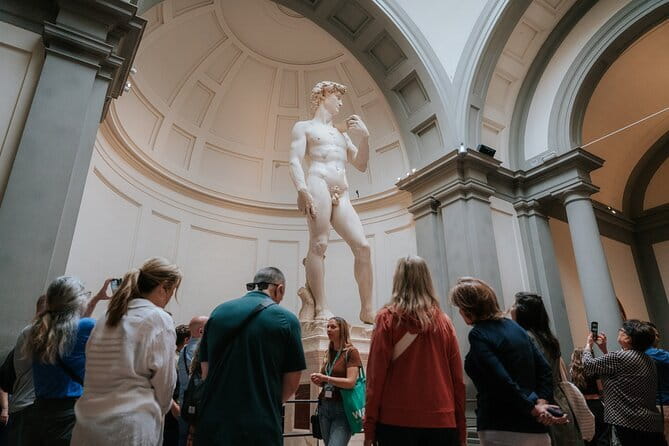
The Accademia is not a vast museum, and this tour does not try to cover every room. Instead, you spend about an hour focusing on the works that matter most, with priority admission helping you avoid the regular entrance queue.
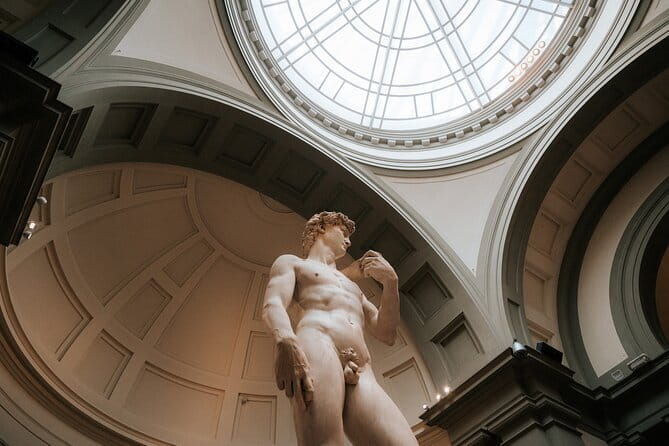
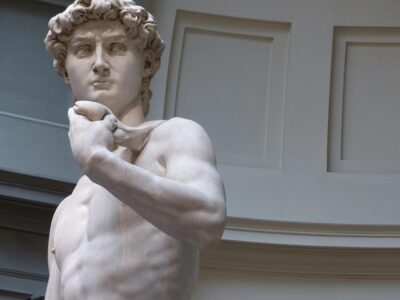
The first major stop is Michelangelo’s David. The statue is familiar from photographs, but its size and physical presence are difficult to grasp until you are standing near it. The figure was created from a single block of marble and became a symbol of Florence’s independent republic, a visual message from a smaller power facing larger threats.
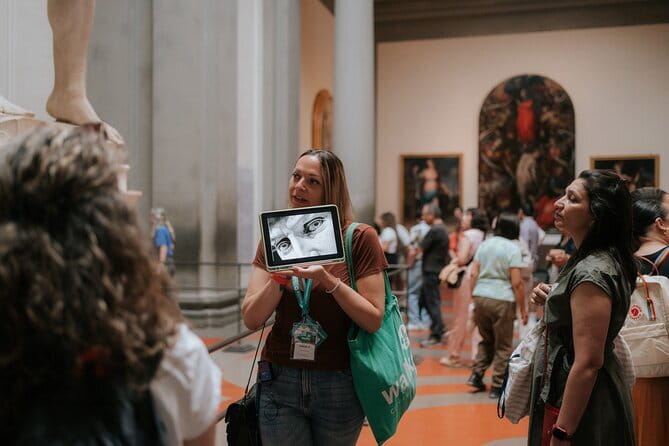
A guide can also point out details that are easy to miss when you are trying to take in the whole figure at once. David’s expression, hands, posture, and concentrated gaze all help tell the story. The sculpture is not simply a handsome biblical hero. He looks alert, tense, and ready.
Allow yourself time to view David from several angles. The guide usually provides the historical and artistic frame first, then gives you room to look. That balance matters. You want explanation, but you also want a quiet moment with the work.
The unfinished sculptures known as the Slaves are another reason this stop earns its place. Their rough surfaces appear to show figures pushing out of the marble, offering a rare glimpse into Michelangelo’s working process. Instead of seeing only the polished result, you can think about the act of carving itself.
This is one of the strongest parts of the tour for anyone interested in art. The guide can help you compare the completed David with the incomplete figures and explain how the visible marks change your sense of Michelangelo’s method.
The Accademia portion is still fairly brief. If you want to inspect every gallery slowly, read every label, and linger over smaller paintings, you may prefer a separate museum visit. Here, the point is focused interpretation and fast entry, not an exhaustive survey.
From the Accademia to the cathedral quarter
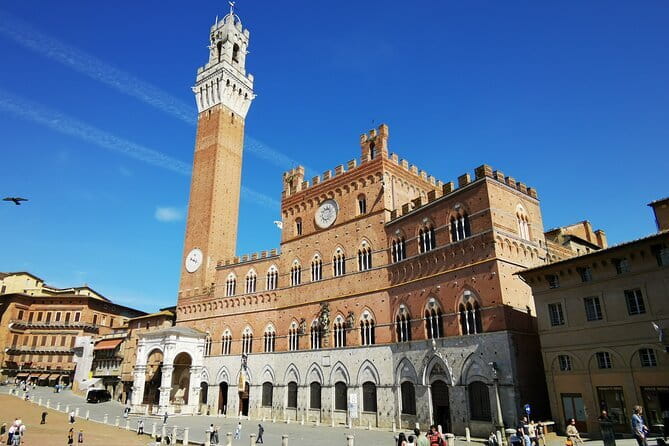
After the museum, you walk toward Piazza del Duomo. Florence rewards this kind of movement. The city center is small enough that the route itself becomes part of the experience, with streets, churches, and old civic buildings providing the setting between major stops.
At the Baptistery, your guide discusses the bronze doors by Lorenzo Ghiberti. Michelangelo reportedly called them the Gates of Paradise, a nickname that captures how highly they were regarded. The doors you see outside are replicas, while the originals are protected in the Opera del Duomo Museum.
This short stop is useful because it gives you a clearer view of the cathedral complex as a connected project. The Duomo is not one isolated building. The cathedral, Baptistery, bell tower, museum, crypt, and dome belong to a larger religious and artistic center.
Your guide also explains the Medici connection to the Baptistery. Members of Florence’s powerful ruling family were baptized here, so the building carries both religious importance and political memory.
The tour does not include a long guided visit to every Duomo monument. Instead, your ticket remains valid for 72 hours at the Opera Duomo Museum, Baptistery of San Giovanni, and Crypt of Santa Reparata. This is a useful bonus, but only if you make time to return.
I would not treat the 72-hour access as automatic savings. You still need the energy and interest for extra visits. If you do use it, the Opera del Duomo Museum is especially helpful after seeing the cathedral, since it holds original works and explains pieces that are displayed outside as copies.
More ways to stand in front of the David:
- Florence: Timed Entrance Ticket to Michelangelo’s David
★ 4.6 · 16,983 reviews - Florence: Michelangelo’s David Priority Ticket & Audio App
★ 4.4 · 6,812 reviews - Florence Accademia Gallery Tour with Entrance Ticket Included
★ 4.5 · 6,148 reviews - Florence: Accademia Gallery Guided Tour
★ 4.6 · 4,156 reviews
Entering Santa Maria del Fiore
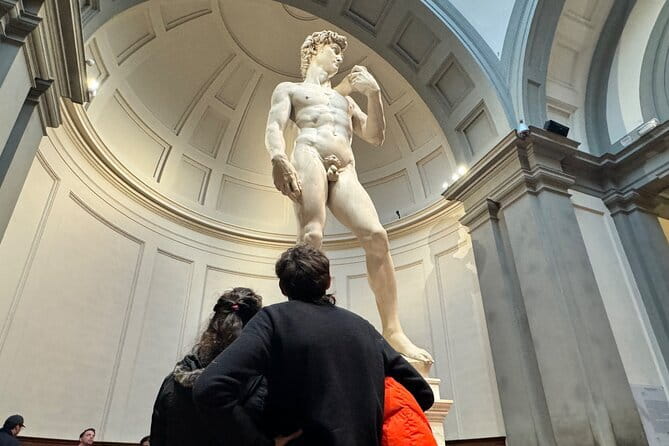
The cathedral interior is your next major stop. Priority access is valuable here because the entrance queue can stretch around the building, particularly later in the morning. You go inside with the guide and hear how the cathedral grew into one of Florence’s defining works.
The interior is grand rather than cozy. Its scale can make details feel distant, so a guide’s explanation helps you know where to look. The dome’s interior decoration, the structure above you, and the long history of construction all become easier to understand with someone pointing out the key elements.
Do not expect the cathedral visit to feel like a separate, quiet museum tour. It is part of a moving route, and the group must keep to the access schedule. Still, it gives essential context before you climb. You see the building from below before experiencing its upper levels.
Remember the religious dress code. Everyone must cover shoulders and knees, regardless of gender. This rule is enforced, and being turned away because of shorts or a sleeveless top can ruin the day. Bring a light covering if your clothing is borderline.
Footwear matters too. Flip-flops, slippers, clogs, and shoes with heels are prohibited inside the cathedral. Wear secure, comfortable shoes with good grip. You will need them for the dome stairs later.
Walking the Duomo terraces
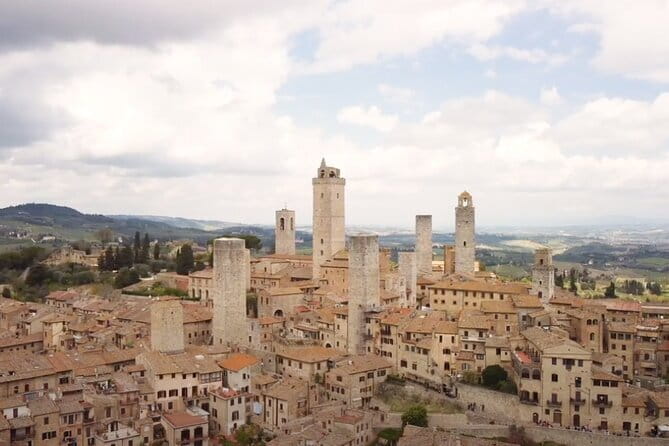
The most unusual part of the guided visit is access to the Duomo terraces. These ledges are rarely open to the public in the same way, and they offer a close view of the cathedral’s stonework from an angle most people never see.
The terraces are not simply a photo platform. They bring you near the structure itself. You can look across Florence, but you can also study the cathedral’s exterior details, height, and construction from within the building’s upper levels.
This section is guided, so it is a good place to listen. The guide can explain how the cathedral was built and why Brunelleschi’s dome presented such a difficult engineering challenge. You also get a sense of the labor involved in creating a building that dominates the city.
The terrace level gives the tour its special character. Many Duomo visits include the cathedral interior or the dome climb, but far fewer offer this particular guided position between the two.
There is a practical tradeoff. The terraces involve stairs, enclosed passages, and uneven movement through a working historic site. If you are uncomfortable in narrow spaces or have difficulty walking at a moderate pace, this is not the right outing.
Climbing Brunelleschi’s dome
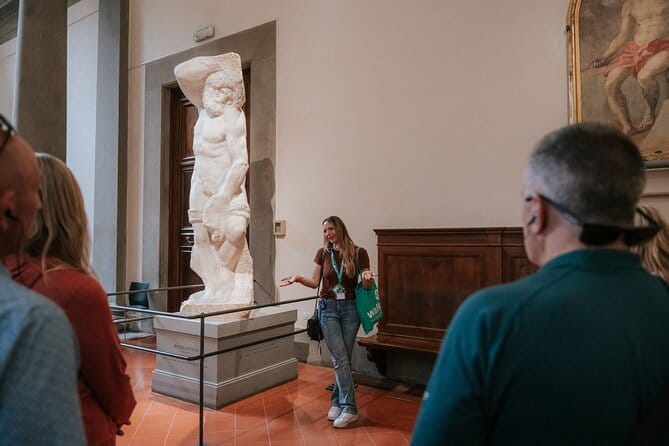
When the guided portion ends at the terrace level, you can continue to the top of the dome. This is not a lift ride. You climb by stairs, and the route becomes narrower and steeper as you rise.
The climb takes about 45 minutes, though the exact time depends on your pace and conditions. The stairs can feel nearly vertical near the top, with tight spiral sections. People who enjoy physical challenges will find the route memorable. People who dislike enclosed stairways should think carefully before booking.
Bring water, especially in summer. Florence can be hot, and the combination of walking, stairs, and a warm interior is demanding. The early start helps, but it does not remove the need to pace yourself.
The reward comes gradually. You see more of Florence with each level, and the view from the top includes the city’s rooftops and the surrounding Tuscan setting. It is a strong finish because the climb gives you time to feel the scale of the building instead of simply arriving at a viewpoint.
The tour’s access arrangement also has practical value. Starting from the terrace level gives you a head start over the long queue below. It does not make the climb easy, but it can reduce waiting and get you moving upward sooner.
Once you reach the top, the experience ends there. You are free to take in the view at your own pace, but hotel pickup and drop-off are not included. The end point is in Piazza del Duomo, so you can continue sightseeing in the center afterward.
What $178.98 gets you
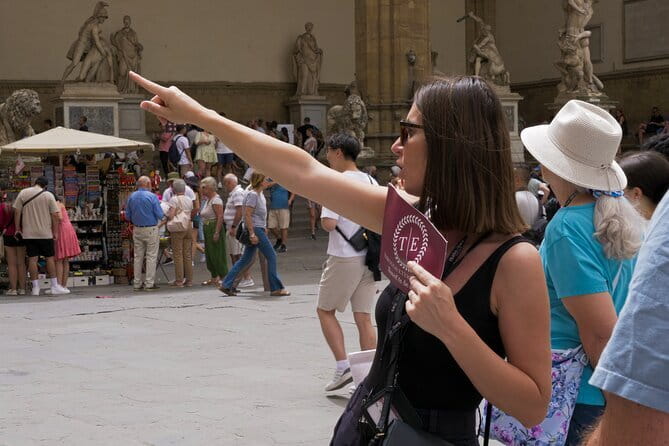
At $178.98 per person, this is a premium tour. You are paying for more than admission to David and the Duomo. The price covers an English-speaking guide, priority entry at the Accademia, special terrace access, priority access for the dome climb, headsets when needed, and the additional 72-hour Duomo tickets.
The biggest value is time. If you would otherwise spend long stretches waiting at two of Florence’s busiest sights, the saved hours may justify the cost. The terrace access is the other major factor. A standard museum ticket cannot recreate that guided visit.
The price is harder to justify if you are comfortable arranging timed tickets yourself, do not need art commentary, or plan to skip the dome climb. It is also less appealing if you prefer slow, independent museum visits.
For me, the tour makes the most sense during a short stay in Florence. You cover David, the cathedral, the terraces, and the dome in one well-organized morning. If you have a week in the city and plenty of flexibility, you may prefer to split these sights across several visits.
Who should book this experience?
I would recommend it to first-time visitors who want the major Florence sights handled efficiently. It suits people who value clear explanations and do not want to gamble on same-day queues.
It is also a good match for families with older children. The climb has a sense of adventure, and one family reported that children enjoyed the winding stairs. The minimum age is seven, and every minor must be with an adult.
Art lovers will get more from David and the Slaves with a guide who can explain technique, symbolism, and Michelangelo’s place in Florence. The same is true for visitors who want historical context around the Medici and the cathedral’s construction.
I would be cautious if you have limited mobility, trouble walking at a moderate pace, or a strong fear of heights or confined stairs. The tour includes substantial walking and a demanding climb, with no option to turn the dome section into an easy ride.
Small details that make the morning run better
Arrive at least 15 minutes early at Piazza San Marco. Missed connections are difficult to fix once the group has entered the museum, and guides may turn off their phones during the tour so they can lead without interruption.
Keep your ID with you. Wear practical shoes and clothing that covers shoulders and knees. Pack water, especially from late spring through summer.
The headsets help when the group spreads out, though equipment can be uncomfortable for some people and may lose connection if it shifts. Stay reasonably close to the guide so you can hear clearly even if the headset is not sitting perfectly.
The tour is offered in English only. Check that this suits everyone in your party before paying.
Should you book David and the Duomo?
Book this tour if you want priority access, strong art commentary, and the rare terrace visit in one morning. The combination is difficult to arrange casually, and the 4.8 rating from 690 reviews, with 96 percent recommending it, reflects a consistently well-liked experience.
Skip it if you want a slow museum day, dislike steep stairs, or are mainly looking for the cheapest entrance ticket. The cost is high, but the time saved and the special terrace access make it reasonable for a short Florence visit. For most first-time visitors who can handle the climb, this is a practical and memorable way to meet the city’s greatest monuments.
FAQ
Where does the tour begin?
The tour begins at Piazza San Marco in Florence. You should arrive 15 minutes before the 8:30 am start time.
Where does the tour end?
The experience ends at Piazza del Duomo after the dome climb. Hotel pickup and drop-off are not included.
How long does the tour last?
The tour lasts approximately three hours and 30 minutes. The Accademia visit takes about one hour, the Baptistery stop about 30 minutes, the guided Duomo and terrace visit about one hour, and the dome climb about 45 minutes.
Is the tour offered in English?
Yes. The experience includes an English-speaking guide and is offered in English.
How many people can join the tour?
The maximum group size is 18 people.
Are children allowed?
Children under seven are not permitted. Minors under 18 must be accompanied by an adult, and every person in the group should bring identification.
What should I wear for the cathedral?
Your shoulders and knees must be covered. Flip-flops, slippers, clogs, and shoes with heels are not allowed inside the cathedral.
Can I visit other Duomo monuments after the tour?
Yes. Your ticket for the Opera del Duomo Museum, Baptistery of San Giovanni, and Crypt of Santa Reparata remains valid for 72 hours.
Just added around Florence
- Walking Food Tour of Florence with Tastings and Wine★ 5.0 · 518 reviews
- Uffizi Gallery Timed Entry Admission Tickets★ 4.0 · 392 reviews
- Uffizi Gallery Small Group Tour with Guide★ 4.5 · 879 reviews
- Florence Accademia Guided Tour – Shared, Private & Combo Options★ 4.5 · 370 reviews
- Early Access Guided Uffizi Gallery Tour Skip-the-Line Small Group★ 4.5 · 707 reviews
- Uffizi and Accademia Small Group Guided Tour★ 4.5 · 449 reviews
- Florence Central Market Food Tour with Eating Europe★ 5.0 · 224 reviews
- Truffle Hunting Experience with Lunch in San Miniato★ 5.0 · 383 reviews
Accademia Gallery Tours, compared.

Michelangelo’s David Skip-the-Line Entry Ticket
Read our review →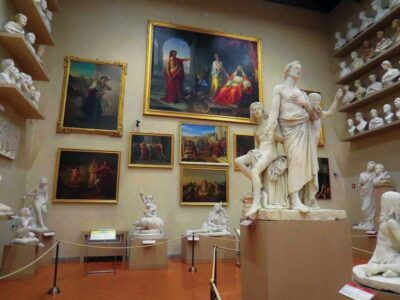
Michelangelo’s David Priority Ticket & Audio App
Read our review →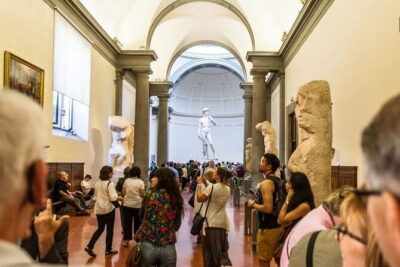
Florence Accademia Gallery Tour with Entrance Ticket Included
Read our review →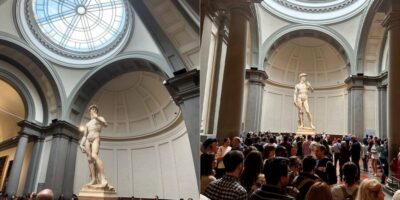
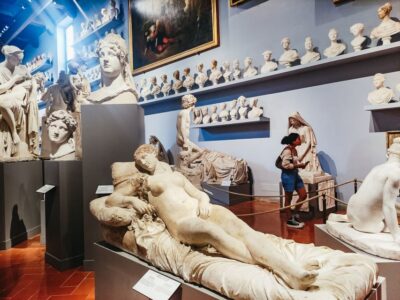
Timed Entry Ticket to Michelangelo’s David & eBook
Read our review →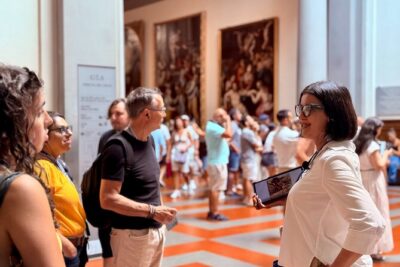
Skip the line: Uffizi and Accademia Small Group Walking Tour
Read our review →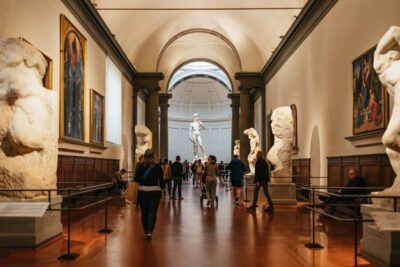
Accademia Gallery Guided Tour with Entry Ticket
Read our review →Browse the lists this tour appears in