
Reviewed · ACCADEMIA GALLERY TOURS
Florence: Timed Entry Ticket to Michelangelo’s David & eBook
Michelangelo’s David is the reason most people visit Florence’s Accademia, and the sculpture earns its fame. At more than 14 feet tall, David has a calm, watchful face and an astonishing amount of detail. Timed entry lets you avoid the ticket-buying line, which can stretch far beyond the museum itself in busy periods.
I like two things here: first, the ticket office is very close to the Accademia, so collecting your paper ticket is simple. Second, the PDF guide gives you enough background to make sense of the rooms without tying you to a group or a fixed commentary. The main drawback is the extra cost. Buying direct from the museum can be cheaper, and a timed ticket still may involve a short wait at the entrance.
Key points to know before booking
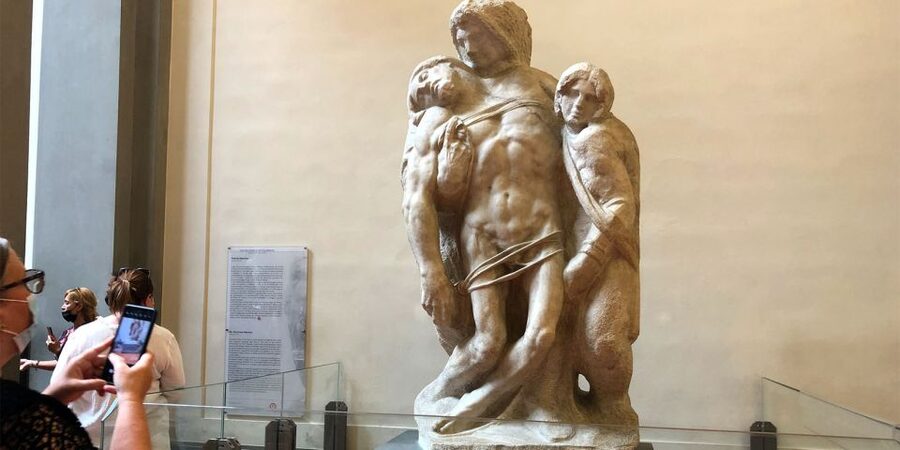
- David is the main event: The sculpture is displayed in the main hall, alongside Michelangelo’s unfinished works.
- Collect your ticket first: Exchange the voucher for a paper ticket at the Florence Specialist office near the gallery.
- Arrive on time: A late arrival can mean losing priority and joining the regular admission line.
- Expect a compact museum visit: Many people spend about 30 minutes to two hours inside, depending on their pace.
- Look beyond David: The Gipsoteca, Medici instruments, medieval altarpieces, and Renaissance paintings add value.
- The ebook is self-guided: It is available in English, Italian, Spanish, French, Portuguese, German, and Russian.
Why the David visit is worth planning around
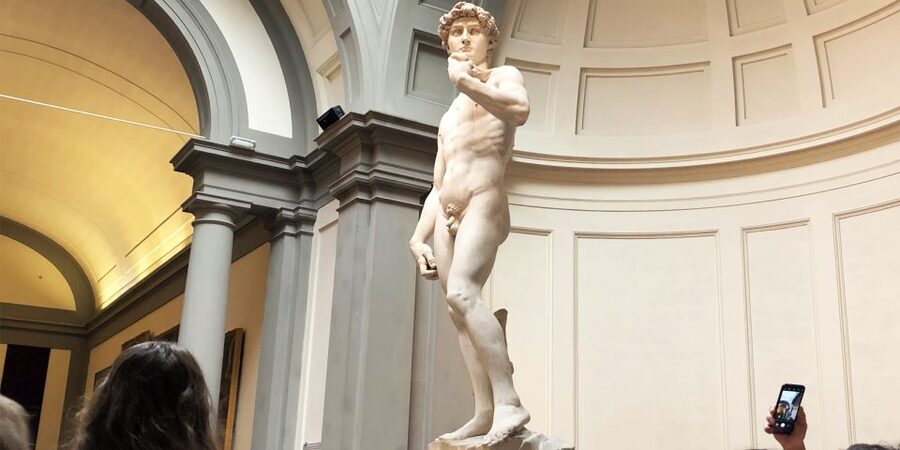
Florence has no shortage of famous art, but David is unusually direct. You walk into the main hall and see the sculpture at the end of the corridor, framed by the architecture around it. Even with other people nearby, the first view has real force.
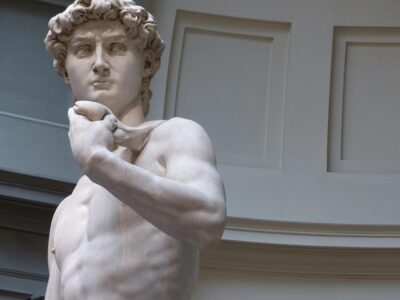
Michelangelo carved David from a single block of marble that other sculptors had considered difficult to use. The figure captures the biblical hero before his fight with Goliath, not after it. His expression is focused rather than triumphant, and the large hands and feet help convey strength.
You can walk around the sculpture and study the details from different angles. Look at the veins in the hands, the curl of the hair, and the tension in the face. The scale is part of the experience. Photographs do not give you a clear sense of how large the work is.
The room can be crowded, especially in the middle of the day. You may need to wait for a clear position, and people often gather in front of the sculpture for photographs. Still, David is raised high enough that you can usually see it even when the room is full.
More Entry Tickets in Florence
- Florence: Skip-The-Line Uffizi Gallery Timed Entry Ticket
★ 4.5 · 27,832 reviews - Florence: Timed Entrance Ticket to Michelangelo’s David
★ 4.6 · 16,983 reviews - Florence: Michelangelo’s David Skip-the-Line Entry Ticket
★ 4.5 · 12,764 reviews
Collecting your ticket near the Accademia
This is not a walk-in ticket that takes you straight from your phone to the museum entrance. You first go to the Florence Specialist office, exchange your voucher for a paper ticket, and download the ebook.
The office is described as being directly opposite or only a short distance from the Accademia entrance. That close location matters. You are not asked to cross Florence or find an obscure meeting point, and staff can point you toward the correct entrance line.
Several useful details make this easier:
- Keep the booking voucher ready on your phone.
- Allow time to find the office before your selected entry slot.
- Collect the paper ticket before joining the museum line.
- Check the entrance instructions carefully, since separate lines can be confusing.
- If you have children aged 6 to 17, carry valid photo identification showing the date of birth.
The ticket office also offers luggage storage, and the office has been useful as a place to wait for a short time. One particularly practical detail is access to Wi-Fi at the office, which helps if your voucher or ebook needs downloading.
How the timed entrance works
The main benefit is not that you walk into an empty museum. The benefit is that you avoid standing in the general ticket-buying line and have a reserved admission time.
At busy times, you may still wait outside the museum. Security checks and visitor limits can slow entry, and the museum controls the number of people inside. Some people have entered within minutes of their time slot, while others have waited around 10 to 15 minutes.
That is still a worthwhile saving when the regular line is long. In high season, the difference between a reserved entry and buying on arrival can affect your whole day in Florence.
Take the selected time seriously. If you arrive late, the priority arrangement may no longer apply, and you can be sent to the regular admission line. Arriving early is sensible, but do not assume you can always enter before your slot. Staff may sometimes offer an earlier time if space is available, but that is not guaranteed.
The arrangement is wheelchair accessible, and small-group options are available. This is not a guided tour, so you are free to move at your own pace once inside.
Michelangelo’s unfinished sculptures in the main hall
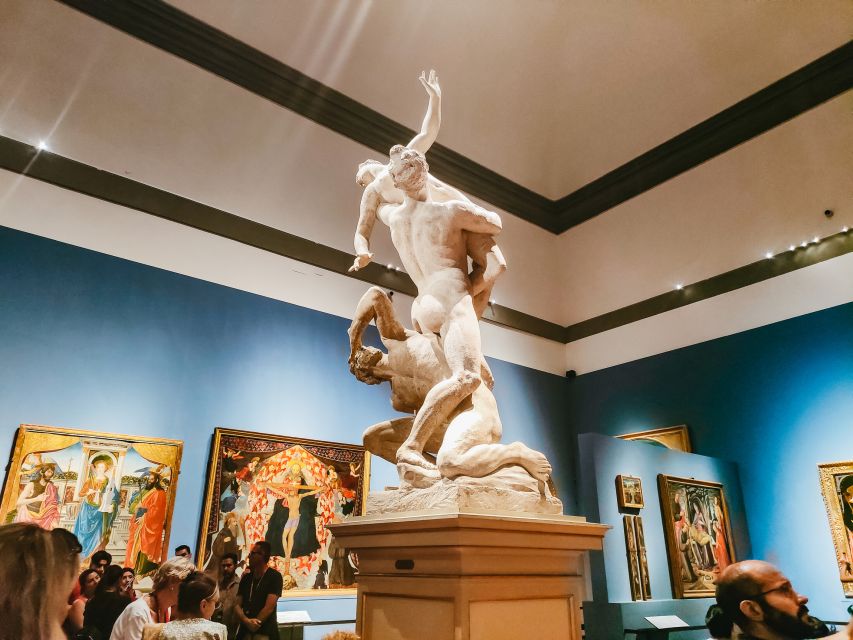
David receives the attention, but Michelangelo’s unfinished sculptures give the visit a second layer. These works appear to be emerging from the marble, with sections still marked by the sculptor’s tools.
The figures are often called the Prisoners or Slaves. Their incomplete state lets you see the contrast between rough stone and finished form. You can study the way a body seems to push forward from the block, and you can imagine how much material had to be removed before a finished figure appeared.
For many people, these works are more revealing than David. David shows the final result. The unfinished pieces offer a look at the physical process of carving, including the marks and rough surfaces left behind.
The room can become congested, so take a slow circuit if you want to look closely. If you have limited time, give priority to David and the unfinished sculptures before moving to the rest of the museum.
More ways to stand in front of the David:
- Florence: Michelangelo’s David Priority Ticket & Audio App
★ 4.4 · 6,812 reviews - Florence Accademia Gallery Tour with Entrance Ticket Included
★ 4.5 · 6,148 reviews - Florence: Accademia Gallery Guided Tour
★ 4.6 · 4,156 reviews - Skip the line: Uffizi and Accademia Small Group Walking Tour
★ 4.5 · 3,135 reviews
The Gipsoteca and Florentine sculpture
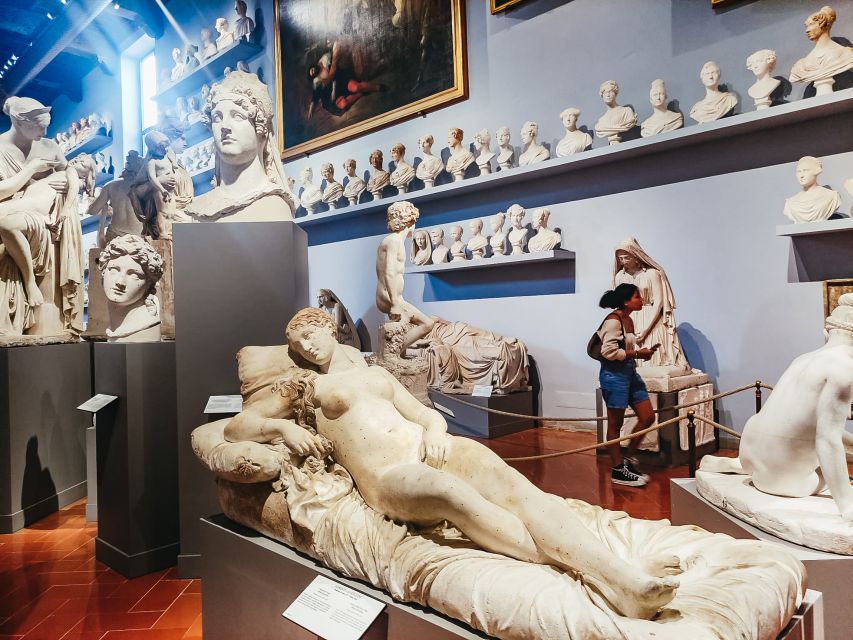
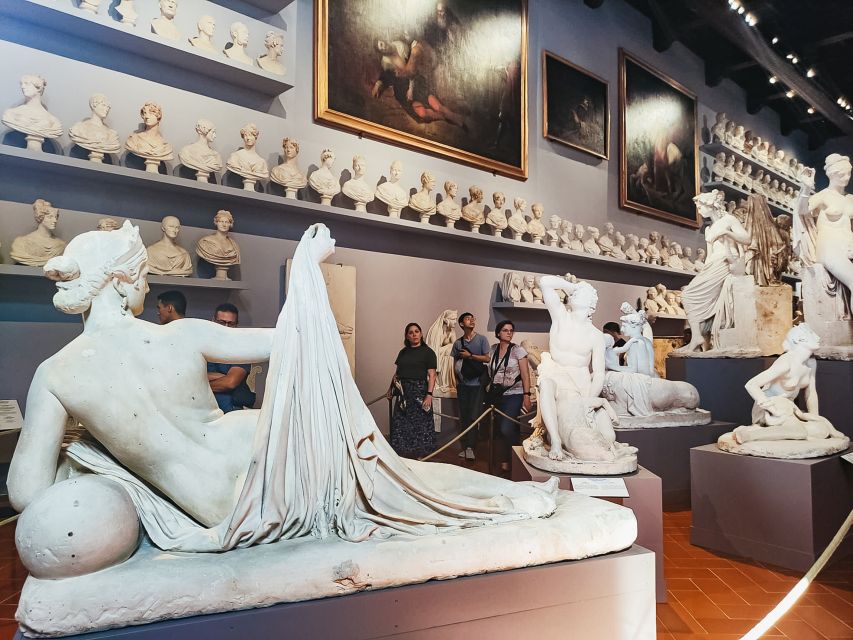
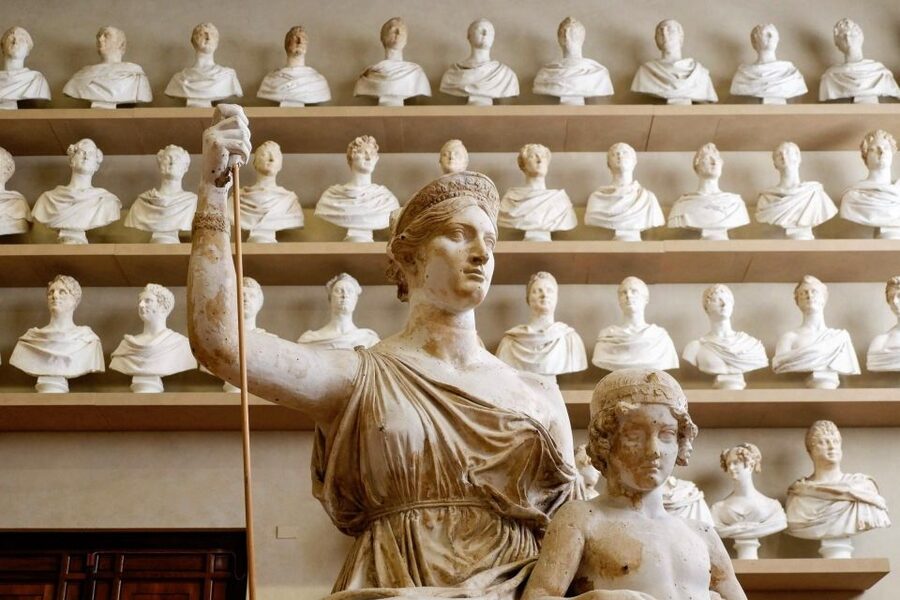
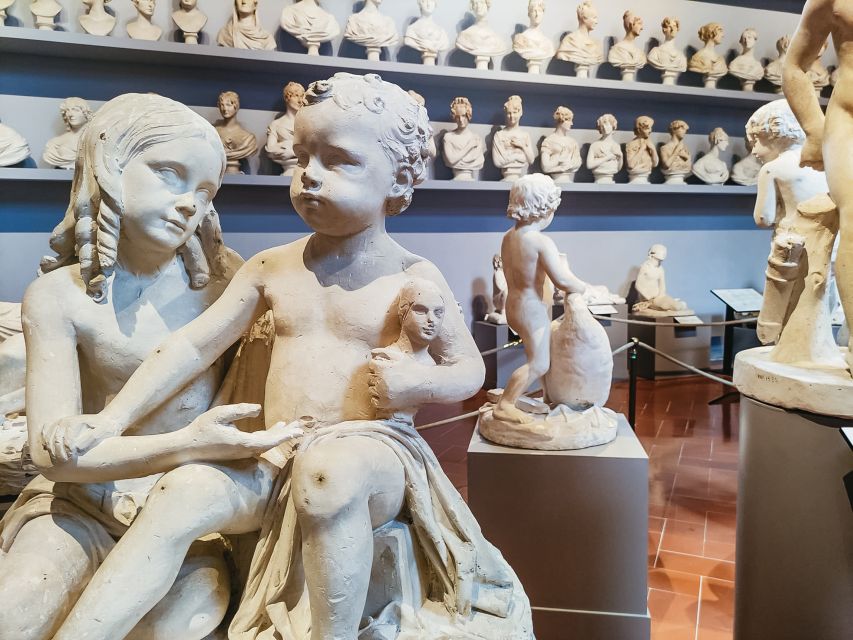
The Gipsoteca contains original plaster models made by 19th-century Florentine sculptors. It is a different experience from the dramatic main hall, with rows of pale figures and studies that show how sculptors developed larger finished works.
This section is easy to skip if you are focused only on David. I would not rush through it. The plaster models help you see sculpture as a working practice rather than just a finished object on a pedestal.
The room may appeal most to anyone interested in technique, anatomy, or the history of Florentine sculpture. If you are visiting with children, the large figures and varied poses can also provide a change of pace from the paintings.
Medici instruments and Stradivarius violins
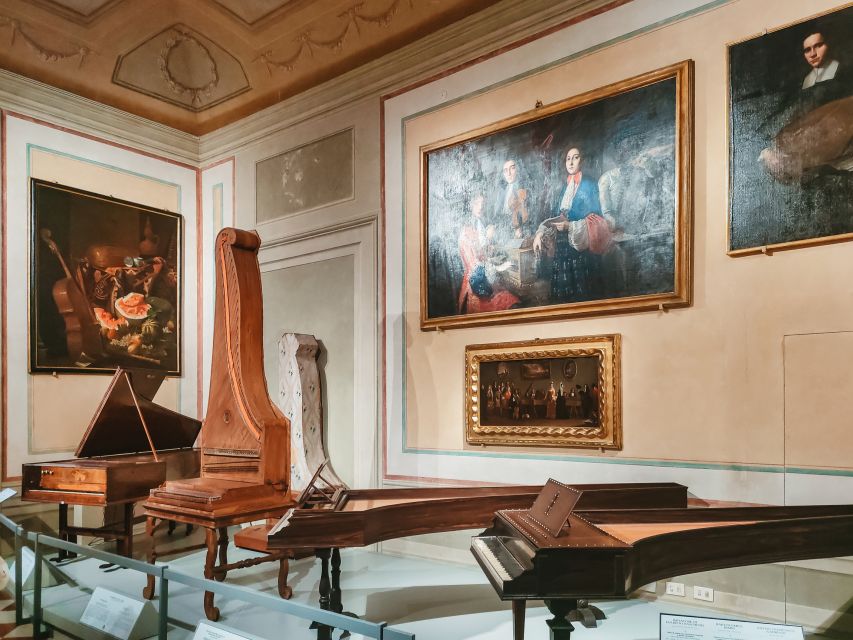
The museum also holds original musical instruments connected with the Medici family. Three of the instruments were made by Stradivarius.
This collection gives the Accademia a useful connection to court life in Florence. It is not only a sculpture museum. The instruments show the importance of music to the Medici world and broaden the visit beyond Michelangelo.
Do not expect a large music museum. This is one section within a fairly compact gallery. Still, the instruments are a worthwhile stop, especially if you have already seen David and want a quieter room with a different subject.
Medieval and Renaissance paintings
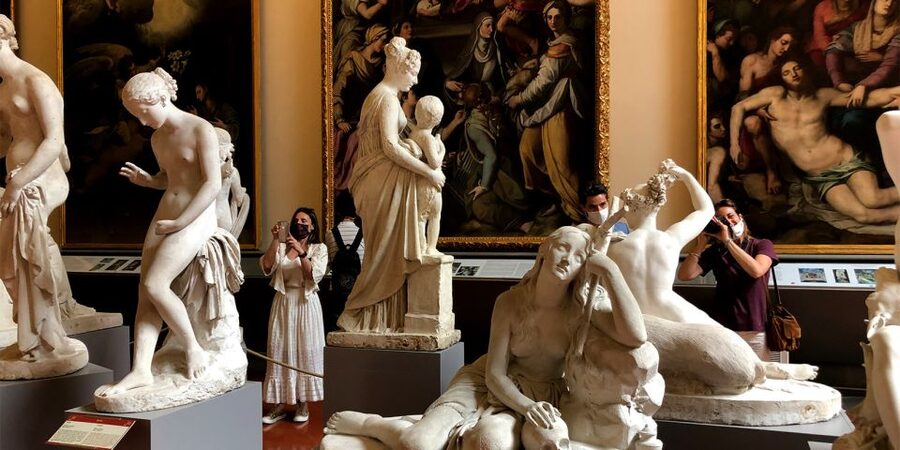
After the sculpture rooms, follow the painting galleries. Here you can see works by medieval and Renaissance artists including Giotto and Botticelli.
The paintings provide context for the art world that surrounded Michelangelo. They also show how Florentine art changed over time, from medieval religious imagery to the more natural figures and spatial treatment associated with the Renaissance.
The Accademia is not as large or as famous for painting as the Uffizi. That is an important expectation to set. If your main goal is a long painting tour, the Uffizi may deserve more of your time. At the Accademia, the paintings work best as part of a compact visit built around David.
The upper floor contains large medieval altarpieces. These works can be physically imposing, even when individual details are harder to study from a distance. If you have enough time, go upstairs rather than leaving after the main hall.
Using the ebook without a guide
The ebook is a PDF rather than live commentary from a guide. That gives you privacy and flexibility, but it also means you need to read as you go.
The material is concise and aimed at the main sights. It should help you understand what you are seeing without filling your visit with long blocks of information. You can read a section before entering a room, then look at the works with a clearer idea of what matters.
The guide is available in seven languages: English, Italian, Spanish, French, Portuguese, German, and Russian. Download it at the office, and make sure it is open on your phone before you enter. A charged phone is useful, since you may be checking the PDF while moving through the galleries.
If you prefer a detailed art lecture, this option may feel limited. There is no live guide included, and the ebook does not replace an in-depth tour. If you want to ask questions or hear a longer explanation of Michelangelo’s life and methods, choose a guided version instead.
For independent visitors, though, the short format works well. You can skip sections, revisit David, or stop reading altogether when the gallery gets crowded.
How long should you allow?
The official duration is listed as one day because the ticket is tied to your selected date and entry time, not because you need a full day inside the Accademia.
A focused visit can take about 30 minutes. That is enough to see David, the unfinished sculptures, and a few nearby rooms. I would allow one to two hours if you want to read the ebook, visit the Gipsoteca, see the musical instruments, and go upstairs to the medieval altarpieces.
The museum is relatively small, which is helpful if you are fitting it between other Florence sights. You can visit in the morning, have lunch nearby, and continue to the Duomo or another museum without giving up an entire day.
At the same time, a small museum can feel crowded quickly. If you want more space around David, an early time slot is the best choice based on the practical experience of this booking. Midday visits may involve more waiting and more people gathered in the main hall.
Is $37 a fair price?
At $37 per person, this is a convenience purchase rather than the cheapest possible ticket. One important tradeoff is that booking through this service can cost about 15 euros more per ticket than buying directly from the official museum site.
If official tickets are still available at your preferred time, buying direct is likely better value. You pay less and avoid the extra voucher exchange.
The calculation changes when the Accademia is sold out online. This service can provide access when the official website has no suitable slots, and that may be worth the premium if David is a priority during a short stay in Florence.
You are paying for three practical benefits:
- A reserved time slot
- Help locating the correct entrance
- A short ebook guide in your chosen language
The value is strongest for a first-time visitor with limited time, especially during a busy season. It is weaker for someone planning well in advance and able to secure a direct museum ticket.
Free cancellation up to 24 hours before the visit and the option to reserve now and pay later add flexibility. Children aged 5 and under do not need a ticket. Children aged 6 to 17 need photo ID with their birth date to receive the reduced price, or they may be charged the full adult price.
Who should book this Accademia experience?
I would choose this option if you are booking close to your Florence visit, the official site is sold out, or you want staff nearby to explain where to collect your ticket and which line to join.
It also suits you if you prefer a self-guided visit. You can use the ebook for basic context and then spend as much or as little time as you like in each room.
Families may find the arrangement practical because the visit is short, the museum is compact, and David is easy to reach once inside. Bring ID for children who qualify for reduced admission.
I would choose a guided tour instead if you want a detailed explanation, the chance to ask questions, or a fuller art lesson. I would also buy direct if a suitable official ticket is available and saving money matters more than last-minute convenience.
My verdict: useful backup, not the cheapest ticket
David is worth seeing, and timed entry can protect a valuable part of your Florence schedule. The nearby ticket office, helpful directions, luggage storage, and concise ebook make the process fairly simple.
The price is the main question. You may pay a noticeable premium over a direct museum reservation, and timed entry does not guarantee that you will walk straight inside without any wait.
Book it when access is difficult or your dates are tight. Skip it when the official site has a convenient ticket at a lower price. Either way, set aside at least an hour if you want to see more than David, and arrive early enough to exchange your voucher before the selected time.
FAQ
Is a tour guide included?
No. The ticket includes a downloadable PDF ebook, but not a live tour guide.
Where do I collect the paper ticket?
You exchange your voucher at the Florence Specialist office near the Accademia Gallery. The office is described as being opposite or only a short distance from the entrance.
Can I enter late?
You should arrive on time. If you miss your selected entry time, you may lose priority and need to join the general admission line.
How long does the museum visit take?
The ticket is valid for the selected date and time, while the time inside is flexible. A focused visit may take around 30 minutes, while allowing one to two hours gives you time for the ebook, paintings, instruments, plaster models, and upper-floor altarpieces.
What identification do children need?
Children aged 6 to 17 need a valid photo ID showing their date of birth to receive the reduced ticket. A digital copy is accepted. Children aged 5 and under do not need a ticket.
Is the Accademia Gallery wheelchair accessible?
Yes, the activity information states that the museum is wheelchair accessible.
Just added around Florence
- Walking Food Tour of Florence with Tastings and Wine★ 5.0 · 518 reviews
- Uffizi Gallery Timed Entry Admission Tickets★ 4.0 · 392 reviews
- Uffizi Gallery Small Group Tour with Guide★ 4.5 · 879 reviews
- Florence Accademia Guided Tour – Shared, Private & Combo Options★ 4.5 · 370 reviews
- Early Access Guided Uffizi Gallery Tour Skip-the-Line Small Group★ 4.5 · 707 reviews
- Uffizi and Accademia Small Group Guided Tour★ 4.5 · 449 reviews
- Florence Central Market Food Tour with Eating Europe★ 5.0 · 224 reviews
- Truffle Hunting Experience with Lunch in San Miniato★ 5.0 · 383 reviews
Accademia Gallery Tours, compared.

Michelangelo’s David Skip-the-Line Entry Ticket
Read our review →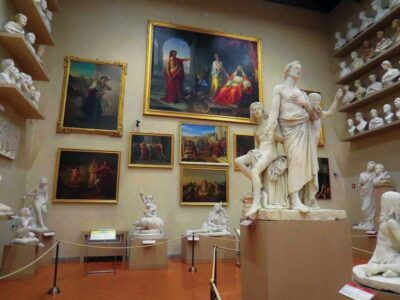
Michelangelo’s David Priority Ticket & Audio App
Read our review →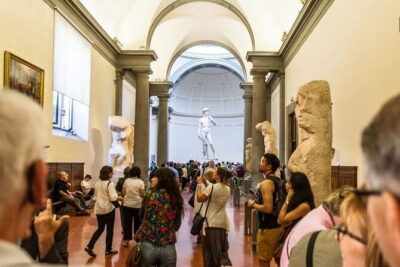
Florence Accademia Gallery Tour with Entrance Ticket Included
Read our review →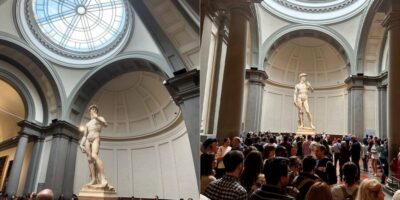
Skip the line: Uffizi and Accademia Small Group Walking Tour
Read our review →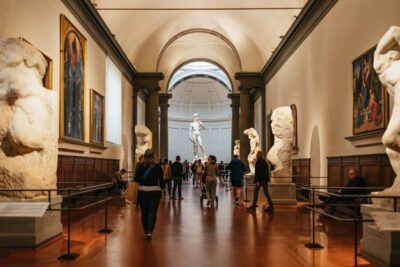
Accademia Gallery Guided Tour with Entry Ticket
Read our review →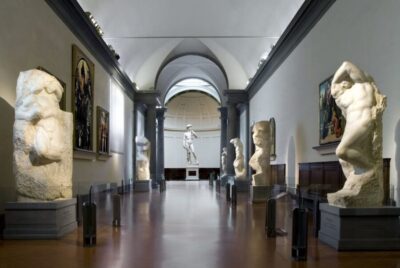
Uffizi Gallery and Accademia Gallery Guided Tour
Read our review →Browse the lists this tour appears in