
Reviewed · FOOD & DRINK
Catania: Street Food Guided Walking Tour
Catania’s best introduction may come in a paper cone, a flaky pastry, or a cold glass of granita. This three-hour street food walk links the Fish Market area with central monuments while you eat your way through local specialties rather than simply looking at them behind glass.
I like the mix of five substantial food stops and Catania stories told by local guides such as Luca, Allegra, Giuseppe, and Kate. I also like that the route includes both famous bites, such as arancini and cannoli, and everyday Catanese food such as cipollina and cartocciata. The main drawback is simple: the portions can be large, so you should arrive hungry and avoid planning a full meal beforehand.
Key points before you book
- Five food stops in three hours: Each stop is given roughly 30 minutes, so the pace leaves room to eat and listen rather than gulp everything down.
- A proper taste of Catania: Expect arancini, caponata, fried fish, cipollina, cartocciata, cannoli, and granita, though the exact selection may vary.
- Monuments between bites: The walk begins and ends at the Fountain of the Elephant and passes the cathedral, Roman Theater, Piazza dell’Università, and Roman Amphitheater.
- Guides who shape the experience: Luca, Allegra, Giuseppe, Kate, and other local guides explain food, customs, and Catania’s past in English or Italian.
- Good value for hungry eaters: The $56 price includes tastings, water, one alcoholic drink, and gelato or granita.
- Plan for a full stomach: The food is generous enough that you may want to save room, especially for the cannolo and final cold treat.
Why Catania food makes sense on foot
Catania’s cooking reflects two powerful forces: the Mediterranean Sea and Mount Etna. The sea supplies fish and seafood, while the volcanic soil around Etna supports crops used in many local dishes. Add centuries of Greek, Roman, Arab, Spanish, and other influence, and you get food that is practical, heavily seasoned, portable, and often designed to be eaten standing up.
That matters because street food gives you a more useful introduction to the city than a formal restaurant meal. You can taste how Catania eats during an ordinary day, then hear why a dish became part of local life. The guide connects the food to the streets, markets, churches, and Roman remains around you.
The tour also helps you order with more confidence later. After learning the difference between an arancino, a cipollina, and a cartocciata, you are less likely to point at a pastry and hope for the best. Catania’s food counters can be busy and visually confusing, so that small bit of guidance is worth something.
More Food Tours in Sicily
- Catania: Mount Etna Morning or Sunset Day Trip with Tasting
★ 4.8 · 4,028 reviews - From Catania: Mount Etna Sunset Tour with Tasting and Cave
★ 4.7 · 1,119 reviews - Catania: Etna Morning Excursion with Tasting and Pickup
★ 4.8 · 820 reviews
Starting at the Fountain of the Elephant
The meeting point is the Fountain of the Elephant, in the center of Piazza del Duomo. It is an easy place to recognize, and the route returns there at the end, which makes the tour useful on your first day in Catania.
This opening location also gives the guide a natural place to explain the city’s central layout. From here, you are close to the cathedral, the Fish Market, major squares, and several Roman remains. You will not spend the whole three hours walking without food. The route breaks the sightseeing into short stretches, with around 30 minutes devoted to each food stop.
Wear comfortable shoes. Catania is a walking city, and the tour uses historic-center streets rather than private transport. Leave large luggage and bulky bags behind, since they are not allowed. Pets are not permitted either.
The Fish Market and the first taste of Catania
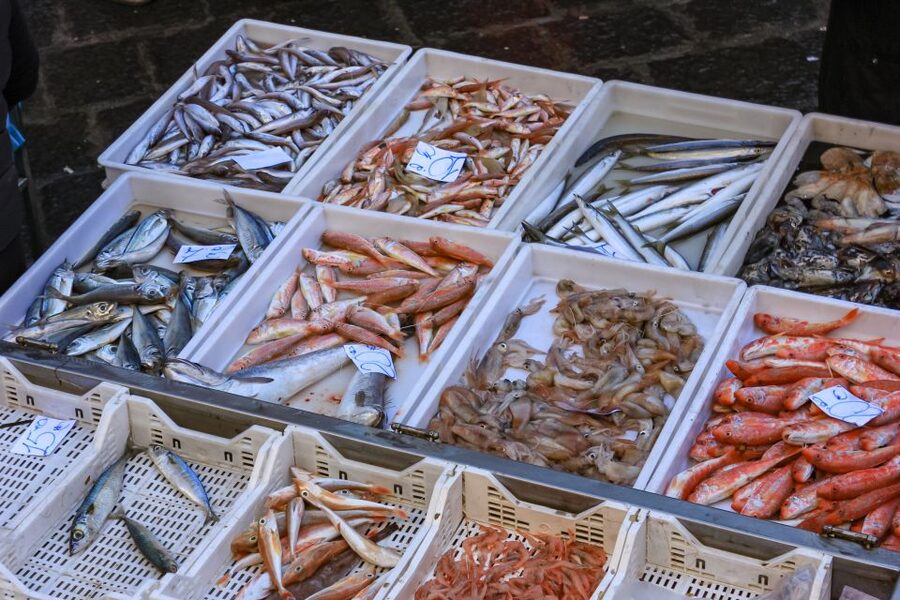
The Fish Market is one of the most important settings on this route. It shows the relationship between Catania and the sea more clearly than a restaurant menu can. The market area is noisy, colorful, and practical, with seafood at the center of the scene.
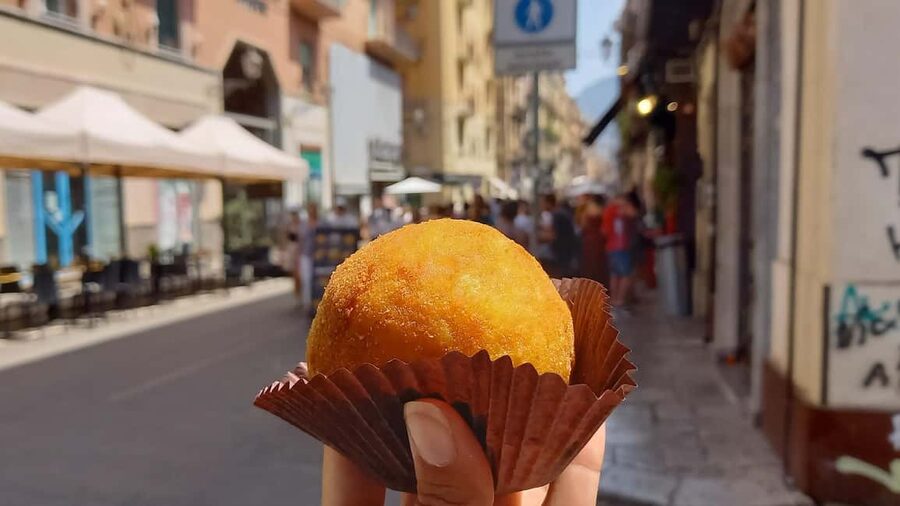
One of the signature tastings is a fried fish cone, filled with fish and seafood caught that day. It is a particularly good stop for anyone who wants to taste something connected to Catania’s coastal setting. The cone is casual and easy to share, though fried food can become filling quickly when combined with several more stops.
You may also receive one alcoholic drink with the tastings. That might pair naturally with fried seafood, but remember that only one alcoholic beverage is included. Water is provided, which is useful during a warm afternoon or a long evening of eating.
The Fish Market stop is more than a quick snack. It gives you a look at how food is sold, prepared, and discussed in Catania. The guide may explain local habits and ingredients while you eat, so pay attention before the food disappears.
Catania Cathedral and the first central food stop
The route includes Catania Cathedral, close to the opening point. This is a strong early stop because it places the food within the city’s grandest civic setting. You get monumental architecture outside, then a much more ordinary form of local life at the food counter.
Caponata is one of the listed tastings. This Sicilian dish usually combines fried eggplant with tomato, celery, onion, olives, capers, sugar, and vinegar. The sweet and sour balance is the key. It is not just a pile of vegetables, and it can be a useful contrast to the fried pastries and rice dishes served elsewhere on the walk.
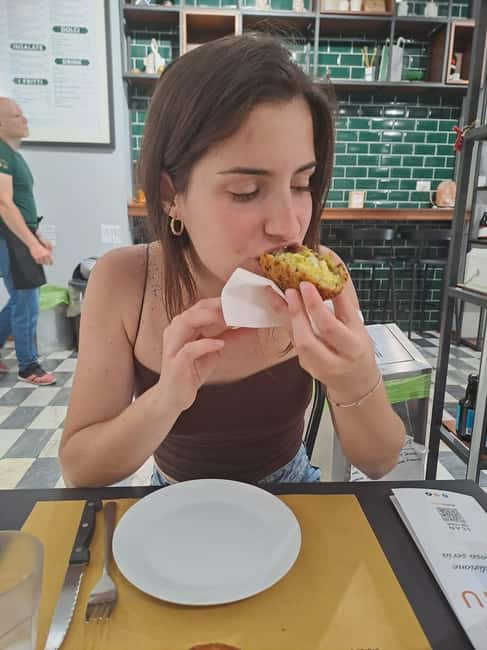
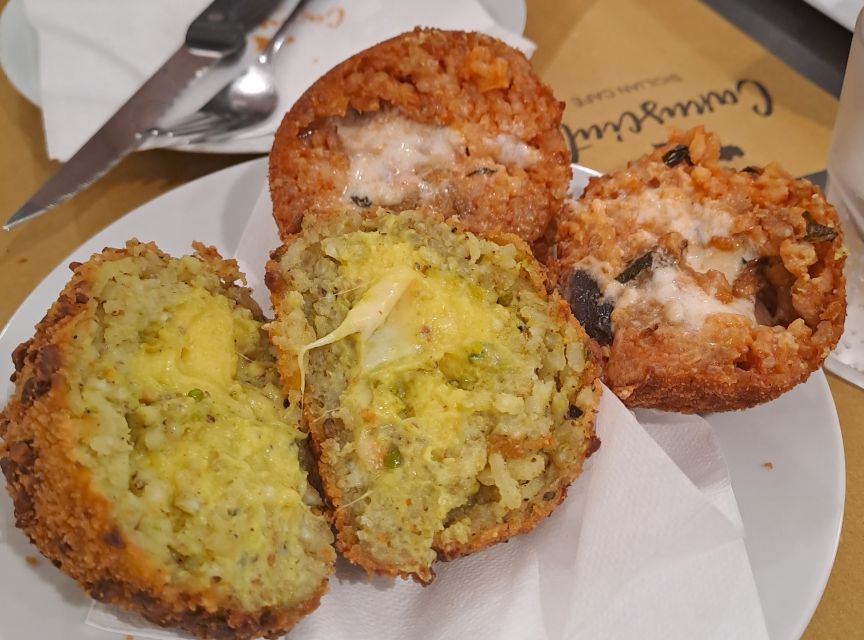
The guide may also introduce arancini here or at another stop. These fried rice balls can be filled with meat, ham, spinach, pistachios, eggplant, or other ingredients. In Catania, you may encounter the local preference for a pointed shape, while elsewhere in Sicily the shape and name can differ. The important point for you is to ask what is inside before biting in.
The cathedral area can feel more formal than the market, but the food keeps the experience grounded. You are not simply moving from one monument to another. You are learning how grand public spaces and everyday eating fit together in the same compact center.
More Guided Tours in Sicily
- Catania: Heart of the City Guided Walking Tour
★ 4.6 · 708 reviews - Catania: Underground Catania Tickets and Guided Tour
★ 4.6 · 536 reviews - Benedictine Monastery of Catania – English Guided Tour
★ 4.8 · 434 reviews - ETNA SUNSET: GUIDED TOUR OF ETNA WITH PICKUP FROM CATANIA
★ 5.0 · 371 reviews
Roman Theater and the story behind street food
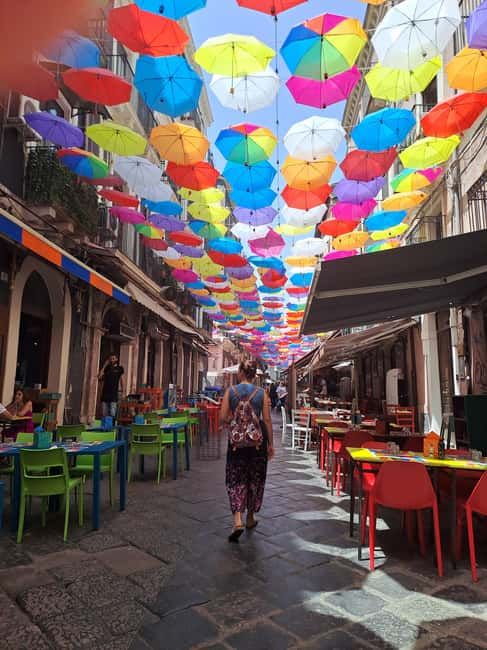
The Roman Theater of Catania brings an older layer of the city into the walk. The route uses the theater area as one of its food stops, giving you roughly 30 minutes to taste and hear more about the city’s past.
Catanian street food grew from repeated contact between different cultures. Greek, Roman, Arab, Spanish, Jewish, and other communities contributed ingredients, cooking methods, and habits of eating. A good guide makes this useful rather than turning it into a long lecture. The food becomes the evidence.
A baked pastry such as cartocciata is a good example. It is a soft, fragrant rustic pastry with a filling, somewhat like a small baked calzone, though its dough is softer and higher. Another Catanese specialty is cipollina, made with flaky pastry, fried onion, cooked ham, and melting cheese.
These dishes are especially helpful for understanding the city’s rotisserie culture. They are portable, warm, inexpensive foods that fit a quick lunch or snack. The crisp pastry and soft filling also give the tour a change of texture after rice, vegetables, or seafood.
The Roman Theater stop may appeal most to you if you like food with a story. It is not only about naming ingredients. It shows how local eating patterns survive alongside Roman ruins and later architecture.
Piazza dell’Università and Catania’s grand center
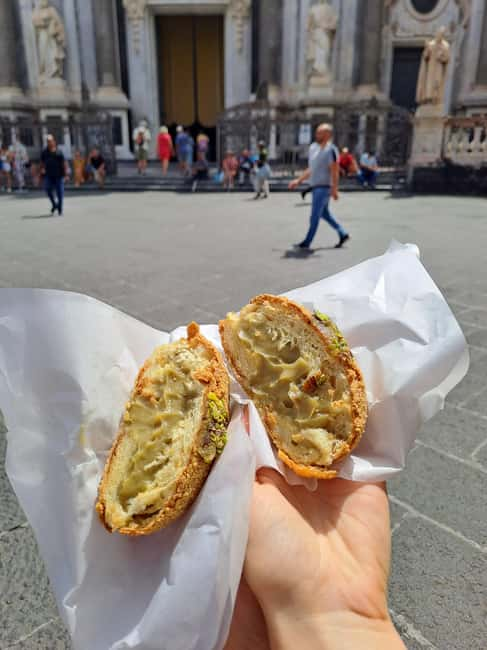
Piazza dell’Università is another route highlight. Its broad setting and historic buildings make it a pleasant place to pause between tastings. The guide can use the square to explain how central Catania works as a meeting place and how the city’s public spaces connect.
At this stage, you may encounter another savory item or a pastry. The exact order can change, but the food list includes both cipollina and cartocciata. Since the portions are reported to be generous, pace yourself here. It is easy to think of a small pastry as a minor snack, then find that it is warm, rich, and more filling than expected.
This is also where the tour’s social side becomes clear. The walks between stops give you time to ask questions, compare flavors, and get practical suggestions for the rest of your stay. Solo visitors are not left on the edge of the group, and smaller departures can feel quite personal, though group size is not fixed.
Guides such as Luca, Giuseppe, Allegra, and Kate are praised for being warm, engaging, and easy to talk with. Those qualities matter on a food tour because you need to feel comfortable asking basic questions. If you want to know how to order a certain pastry later, or which flavor of granita is typical, ask while the subject is right in front of you.
The Roman Amphitheater and the final savory bites
The Roman Amphitheater is another major point on the route. It adds a Roman setting to a walk already centered on the Fish Market, cathedral, and university square. The route does not treat the ruins as an isolated museum visit. Instead, they become part of a moving lesson about how Catania has changed while keeping old layers under and around the modern city.
The savory tastings should be handled strategically by this point. If you have eaten arancini, fried fish, caponata, and pastry, you may already feel close to full. The best approach is to take smaller bites, ask about ingredients, and resist the idea that you must rush to finish everything at once.
The food is not presented as a tiny sample menu. Several people have found the portions generous enough to save the cannolo for later. That is good value, but it also means the tour is not ideal for anyone who prefers light grazing.
The fifth food stop is included in the three-hour route, although the supplied details do not identify its exact location or fixed dish. The advertised selection may be spread across the stops, and the guide may adjust the order according to the day’s food availability.
Cannolo, granita, and a sweet finish
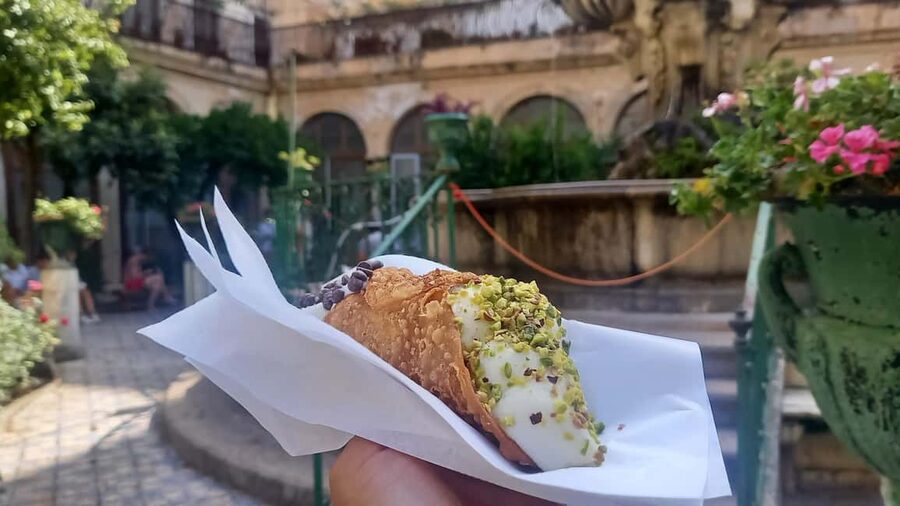
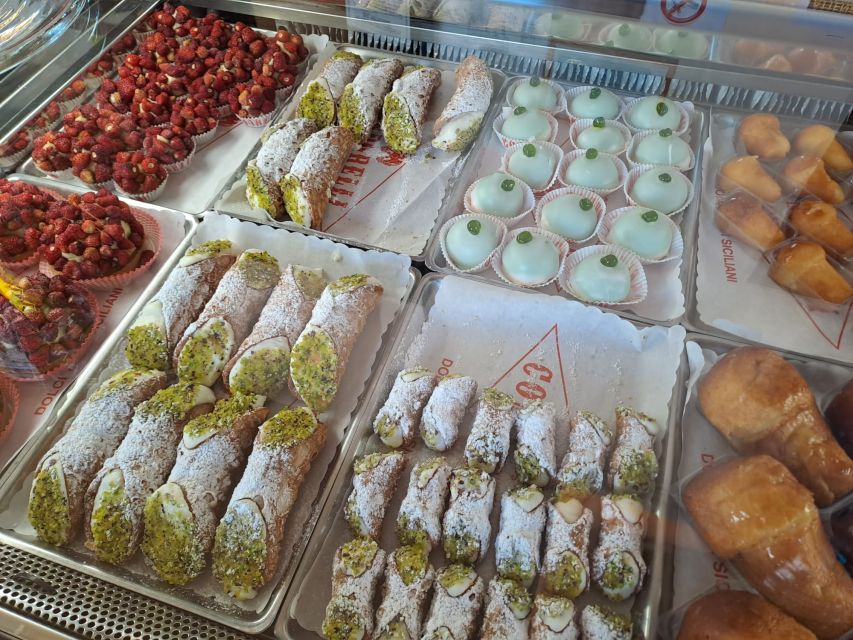
The sweet course is a major reason to reserve room. A Sicilian cannolo consists of a crisp shell filled with sweet ricotta, often finished with candied fruit, pistachios, or dark chocolate chips. The shell and filling create a clear contrast, and the pistachio version is especially tempting if it is available.
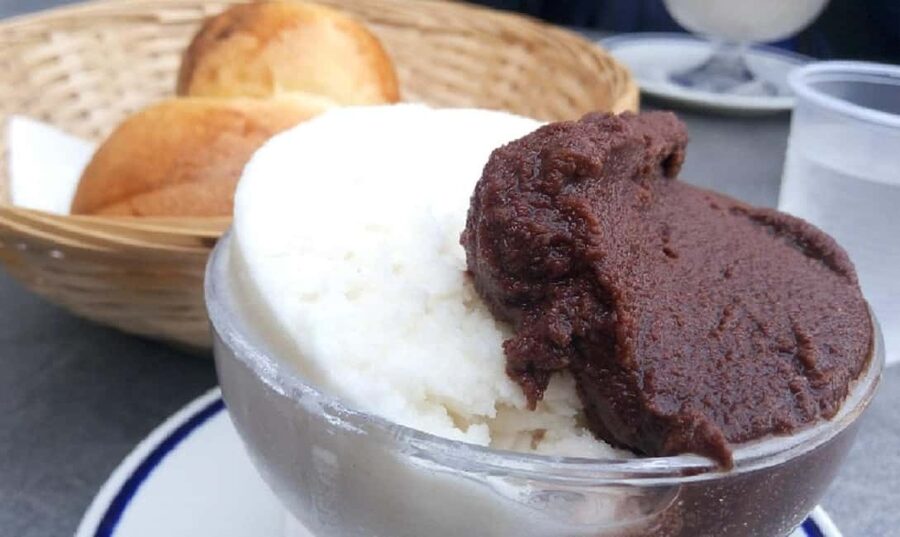
Granita offers a cooler ending. It is made with fruit, sugar, and ice, then served in a glass. Almond granita is a local favorite, and fruit flavors can be refreshing in warm weather. Gelato or granita is included, so the final stop gives the meal a proper finish rather than leaving you with only savory snacks.
Do not assume the dessert is a token spoonful. The food on this tour is meant to represent actual local specialties, and the sweet course can be substantial. If you have a late dinner booked, schedule it well after the walk or make it a very light one.
The final stretch returns to the Fountain of the Elephant. That makes the tour convenient for continuing into the center afterward, and it gives you a familiar landmark for finding your way back.
Guide style and language
The guide is central to the experience. English and Italian are available, but the guide may speak both languages during the walk. If your English is limited, or if you prefer a tour conducted only in English, keep this in mind before booking.
The strongest guide names associated with the experience include Luca, Allegra, Giuseppe, Kate, and Dora. Assignments vary, so you cannot select a particular person based on the published information. What you can expect is a local host who explains the food and gives context about Catania, Sicily, and local customs.
Luca is repeatedly singled out for enthusiasm, clear English, and a strong connection to his home city. Allegra is described as friendly and engaging, with a good command of the city’s stories. Giuseppe is praised for warmth, food knowledge, and making people feel part of the group. Kate is noted for creating a relaxed, welcoming atmosphere.
The best guides do more than recite facts. They explain why the food matters, leave you room to eat, and answer questions as the walk unfolds. That balance is important. You want information, but you also want to enjoy a hot pastry while it is still hot.
Is $56 a fair price?
At $56 per person, the tour is not the cheapest way to buy a snack in Catania. You are paying for more than the food, though. The price includes five tastings, one alcoholic drink, water, and gelato or granita, along with three hours of guiding through the historic center.
The value improves if you treat the tastings as a full meal. With arancini, caponata, seafood, pastries, cannolo, and granita in the mix, you may not need lunch or dinner immediately afterward. That is why I would compare the price with the cost of several separate snacks plus a guided city walk, not with the price of one arancino bought at a counter.
It is especially good value on a first day in Catania. You get your bearings, learn what local dishes are called, and receive food ideas for the rest of your stay. If you already know the city and prefer choosing your own restaurants, the guided element may be less important to you.
Vegetarian and other dietary needs are supported, but you must tell the provider when booking. Since the food includes seafood, dairy, meat, and pastries, do not wait until the first stop to explain a restriction.
Who should book this Catania food walk?
I would choose this tour if you are visiting Catania for the first time, enjoy trying several foods in one sitting, or want a local introduction before exploring restaurants on your own. It also suits solo visitors and couples who want a social activity without committing to a formal dinner.
It is a good pick for history fans who prefer short explanations tied to real places. The Roman Theater, Roman Amphitheater, cathedral, university square, and Fish Market give the route more substance than a simple sequence of food counters.
You may want to skip it if you dislike fried food, eat very lightly, or have strict dietary needs that require complete control over ingredients. The tour is also less suitable if you need to carry luggage, since large bags are not allowed.
Cancellation is flexible up to 24 hours before the start, with a full refund, and you can reserve while postponing payment. Starting times vary, so check availability for the date you want.
Should you book it?
Book this tour if you want Catania explained through what people eat. The combination of Fish Market seafood, arancini, caponata, Catanese pastries, cannolo, and granita gives you a broad first taste, while the short walks connect the food to the city’s Roman and historic center.
My practical advice is to book it early in your stay, arrive genuinely hungry, wear comfortable shoes, and keep dinner flexible. At $56, it is a sound choice for a filling meal plus local context. Just remember that this is a generous food tour, not a light tasting.
FAQ
How long does the Catania street food tour last?
The tour lasts three hours, including walking through the historic center and stopping at five food locations.
Where does the tour start and finish?
It starts and ends at the Fountain of the Elephant in central Catania.
What food is included?
The advertised tastings include arancini, Sicilian caponata, fried fish in a cone, Catanese cipollina, cartocciata, Sicilian cannolo, and Sicilian granita. The exact selection or order may vary.
Is a drink included?
Yes. The experience includes water and one alcoholic beverage. Gelato or granita is also included.
Are vegetarian and other dietary options available?
Yes. Vegetarian and other dietary needs are supported, but you should inform the activity provider when booking.
What languages are spoken on the tour?
The tour is offered in English and Italian. The guide may speak both languages during the walk.
More Walking Tours in Sicily
- Catania: City Highlights Walking Tour
★ 4.7 · 666 reviews - Syracuse, Ortigia and Noto walking tour from Catania
★ 5.0 · 273 reviews - Palermo: NO Mafia Walking Tour
★ 4.8 · 2,431 reviews - Palermo: Private Custom Walking Tour with Local Guide
★ 4.7 · 661 reviews
More Street Food Tours in Sicily
- The Original Catania Street Food and Market Tour by Streaty
★ 5.0 · 345 reviews - Catania: Guided Street Food Walking Tour
★ 4.7 · 300 reviews - Palermo Original Street Food Walking Tour by Streaty
★ 5.0 · 2,105 reviews - Palermo: Street Food and History Walking Tour
★ 4.9 · 1,294 reviews
Just added around Catania
- Syracuse, Ortigia and Noto walking tour from Catania★ 5.0 · 273 reviews
- The Godfather Movie Tour★ 5.0 · 275 reviews
- Tour Etna & Wine Tasting★ 5.0 · 317 reviews
- Etna, Wine and Alcantara Tour – From Taormina★ 5.0 · 464 reviews
- The Original Catania Street Food and Market Tour by Streaty★ 5.0 · 345 reviews
- Etna and Alcantara Gorges Excursion★ 4.5 · 256 reviews
- Etna Tour in 4×4★ 5.0 · 583 reviews
- Etna Morning Jeep Tour★ 4.5 · 241 reviews
Food & Drink, compared.
Small-Group Wine Tasting Experience in the Tuscan Countryside
Read our review →
Tuscany & Montepulciano Day Trip with Lunch & Wine Tasting
Read our review →
Winner 2025 Rome Twilight Trastevere Food Tour by Eating Europe
Read our review →
SMALL-GROUP Wine Safaris: Tuscan Wine Tasting Tours from Florence
Read our review →
Winner 2025 Florence Sunset Food & Wine Tour by Eating Europe
Read our review →
Cooking Class and Lunch at a Tuscan Farmhouse with Local Market Tour from Florence
Read our review →
San Gimignano, Siena, Monteriggioni, Chianti Day Trip with Lunch & Wine Tasting
Read our review →Browse the lists this tour appears in