
Reviewed · UFFIZI GALLERY TOURS
Florence: Uffizi Gallery Priority Ticket & Small-Group Tour
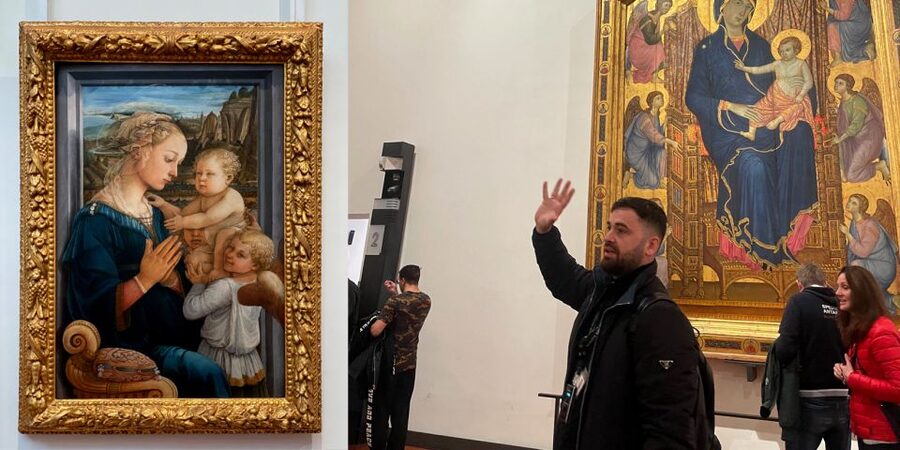
The Uffizi makes a short guided visit count. In 90 minutes, you move from Gothic art into the Florentine Renaissance, with the Medici family providing the thread that ties the rooms together. Botticelli’s Birth of Venus, works by Leonardo and Raphael, Michelangelo, and Piero della Francesca are the big draws.
I like the small group of no more than 10 people, which makes it easier to hear questions and follow the guide through crowded rooms. I also like the headsets and priority access, especially in summer when the outside queue can eat up hours.
The main caution is the admission price. The advertised cost is $87 per person, yet several bookings required an additional €30 gallery payment at the entrance. Confirm this point before paying, since that extra charge changes the value of the tour.
Key points at a glance

- A 90-minute route through Renaissance Florence: Focus on the Uffizi’s major paintings rather than trying to cover every room.
- Medici family stories give the art a clear setting: Learn how a government office building became one of the world’s earliest art galleries.
- Botticelli and Leonardo receive special attention: The guide explains both the paintings and the artistic changes behind them.
- Priority entry can save serious time: One booking entered within about 15 minutes, while another June visit avoided a queue said to be four hours long.
- Small groups make questions easier: The limit is 10 people, with headsets supplied.
- Check the ticket wording carefully: Several people had to pay €30 more in cash for gallery admission.
Why the Uffizi works best with a guide
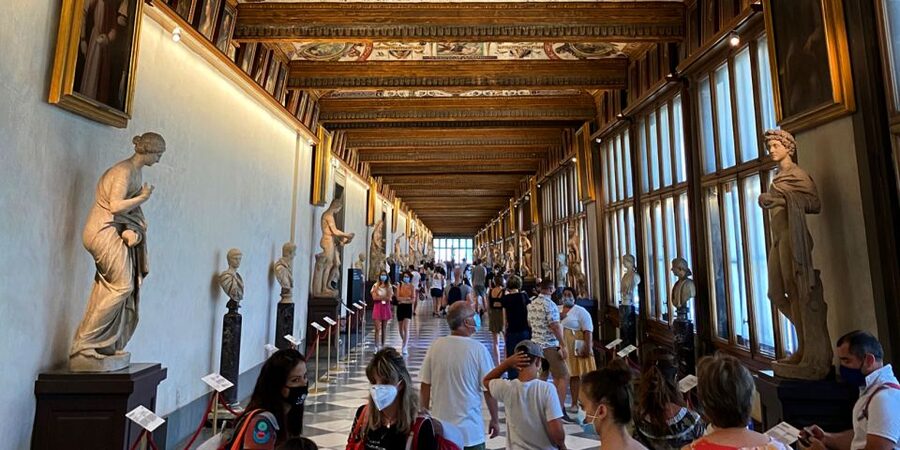
The Uffizi is not simply a room full of famous pictures. It is a long record of changing ideas about art, religion, power, and the human body. Without some direction, you can spend your energy finding the next celebrated painting instead of seeing how one style led to another.
This tour gives you that order. The route begins with Roman and Gothic material, then moves toward the Florentine Renaissance. You see how artists gradually handled space, perspective, skies, faces, and human movement with greater freedom.
That progression is one of the strongest parts of the experience. Instead of hearing isolated facts about Botticelli or Leonardo, you get a basic map of the period. One guide explained how artists influenced the next generation, while another pointed out the shift from formal religious images to more natural poses and settings.
The guides vary, but the strongest names attached to this experience include Victoria, Elvis, Vera, Anna, Elisa, Caterina, and Mirella. Victoria received repeated praise for her storytelling, clear English, and ability to handle detailed questions. Elvis was described as witty, personable, and particularly good at connecting Italian art with the wider story of Florence.
That matters in a museum where many paintings can look alike at first glance. A good guide helps you notice the small differences that matter.
More Entry Tickets in Florence
- Florence: Skip-The-Line Uffizi Gallery Timed Entry Ticket
★ 4.5 · 27,832 reviews - Florence: Timed Entrance Ticket to Michelangelo’s David
★ 4.6 · 16,983 reviews - Florence: Michelangelo’s David Skip-the-Line Entry Ticket
★ 4.5 · 12,764 reviews
Meeting the group at Door 3
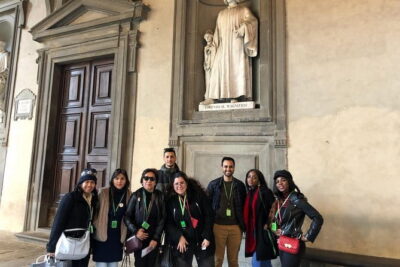
You meet at Door 3 of the Uffizi Gallery. This is important because the building has several entrances and busy pedestrian traffic around it. Give yourself enough time to locate the correct door rather than arriving at the last second.
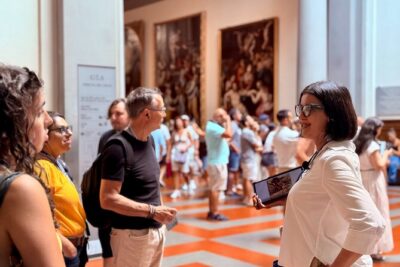
The tour is in English, and headsets are supplied so you can hear the guide while standing a few paces away from the group. That is useful in the Uffizi’s narrow rooms, where visitors gather around popular works and normal conversation can get lost.
The group limit is 10 people. That is not a private tour, but it is small enough for the guide to keep an eye on everyone and take questions. A group of six was described as especially comfortable, and very small departures sometimes allowed nearly one-to-one attention.
Bring a passport or identity card. A copy is accepted, and children need identification as well. Large bags and luggage are not allowed, so do not arrive with your full suitcase or an oversized day bag.
How priority entry changes the visit
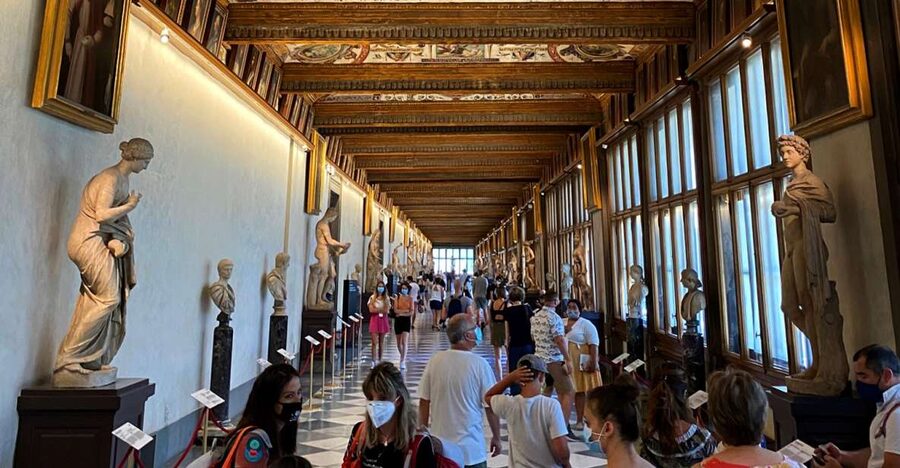
The headline practical benefit is separate priority access. You do not join the standard public queue, which can be a major advantage at the Uffizi.
Queue times vary by season and time of day, but the difference can be dramatic. One June booking avoided a line described as four hours long, while another person entered within roughly 15 minutes. Those figures are not a promise for every departure, but they show why timed access can be worth paying for in Florence.
Priority entry also protects the rest of your day. If you have booked the Accademia, Palazzo Vecchio, or another timed activity, losing hours outside the Uffizi can wreck your plans. The time saved is especially useful for families and for anyone visiting Florence on a short break.
You still need to arrive at the meeting point on time. Priority access does not mean you can wander in whenever you wish, and the group must enter together.
The Medici offices become an art gallery
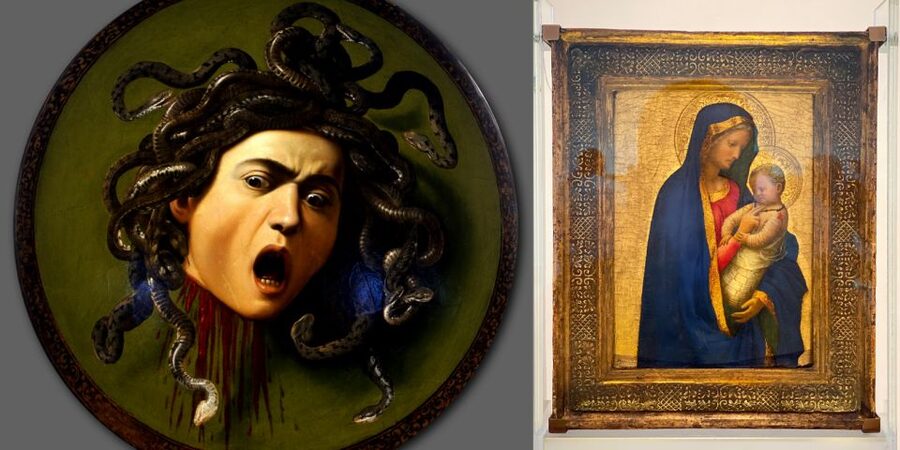
The building itself explains much about Florence. In 1560, Duke Cosimo I de’ Medici asked architect Giorgio Vasari to create a new home for 13 important government offices. These magistracies had been spread around the city, and the new building placed them close to the duke’s direct control.
The name Uffizi comes from the old word for offices. At first, this was a working administrative building, not a public museum. The polished corridors and grand views make more sense when you remember that the structure began as part of Medici government.
In 1581, Francesco I, Cosimo’s son, closed the loggia on the top floor and used it as a private gallery for his art collection. That decision is why the Uffizi is often described as the oldest museum in the world. It began as a family collection displayed in a government building, long before the modern idea of a public museum took shape.
The guide uses this story to connect political power with art. The Medici did not collect paintings only for decoration. Art helped display status, learning, and control. Once you understand that, the museum feels less like a random sequence of rooms.
More Museum Tours in Florence
- Florence: Leonardo Interactive Museum Entry Ticket
★ 4.5 · 11,763 reviews - Florence Accademia Gallery Tour with Entrance Ticket Included
★ 4.5 · 6,148 reviews - Uffizi Gallery Small Group Tour with Guide
★ 4.5 · 4,923 reviews - Florence: Accademia Gallery Guided Tour
★ 4.6 · 4,156 reviews
Botticelli, Venus, and the Florentine Renaissance
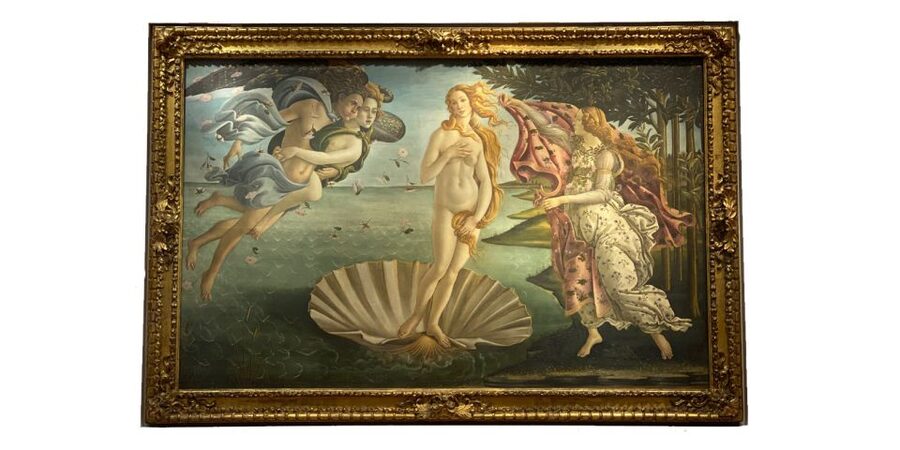
For many people, Botticelli is the reason to book the tour. His Birth of Venus and Primavera are among the Uffizi’s most famous works, and the guide explains the ideas, figures, and symbols that make them more than pretty pictures.
The question of who Botticelli’s Venus was adds a human angle, though the painting remains partly mysterious. Your guide can point out the pose, flowing hair, pale colors, and unusual treatment of the body, then place the work within the culture of Medici Florence.
You also examine how Renaissance artists created depth and perspective. One guide explained how to recognize the differences between a master’s hand and the work of assistants or followers. That kind of comparison gives you something practical to look for during the rest of your museum visit.
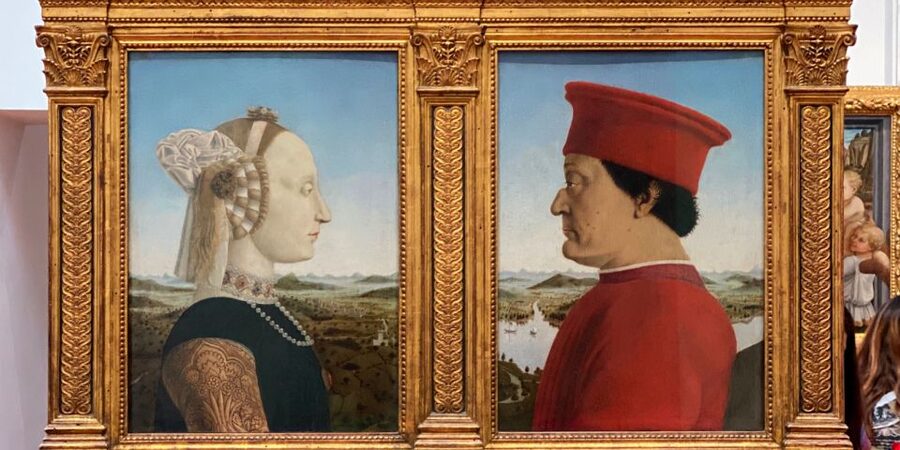
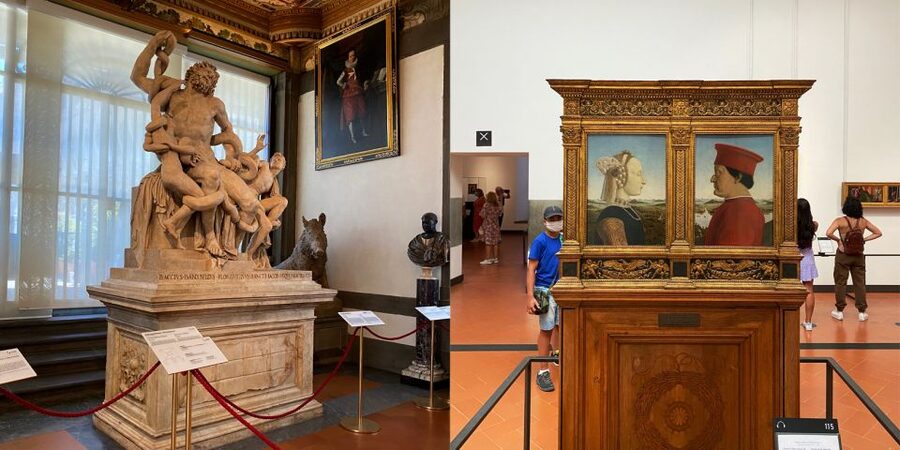
Michelangelo appears in the larger story of Florentine ambition and artistic freedom. Piero della Francesca helps show another direction in Renaissance painting, with careful structure and calm, measured figures. The tour does not treat the Renaissance as one single style. It shows the changes taking place across several generations.
Leonardo, Raphael, and the details you might miss
Leonardo’s works receive special attention, particularly his use of observation and his ability to make figures feel alive. The guide may point to subtle expressions, transitions of light, or the way a scene is arranged. These are details easy to miss when you are standing in a crowded room with a map in one hand and a camera in the other.
Raphael adds another important chapter. His paintings help explain the balance, clarity, and graceful figures associated with the High Renaissance. Hearing how artists borrowed from and responded to each other makes the collection easier to understand.
The best guides do not simply recite dates. They ask you to look at the painting first, then explain what your eyes are seeing. A guide may draw attention to the blue of a sky, the construction of depth, or the way a face differs from earlier religious images.
The information can come quickly. One person felt the opening section delivered a lot of facts at once. If you prefer a relaxed, unhurried look at each work, you may find the pace brisk. That is the tradeoff for seeing the major works in a 90-minute visit.
What the 90-minute route can and cannot cover
Ninety minutes is enough for a well-planned introduction, not a complete visit. The route focuses on significant works that explain the Renaissance story, and one guide led the group through the museum’s key features before allowing time to return independently.
A four-star assessment described the tour as useful but wished for more paintings and less detail on each one. Another person noted that the tour concentrated on the second floor. The exact path can depend on the guide, gallery access, crowding, and the interests of the group.
You should think of this as a guided orientation. It helps you understand what you are looking at, then leaves you with a clear plan for a longer self-guided visit. After the tour, you can return to paintings that caught your eye or explore rooms the group passed quickly.
Allow extra time if you want the full Uffizi experience. One person spent another two hours looking at works missed during the guided portion. The rooftop terrace was also a pleasant place to rest after the tour, though it is not part of the guided program.
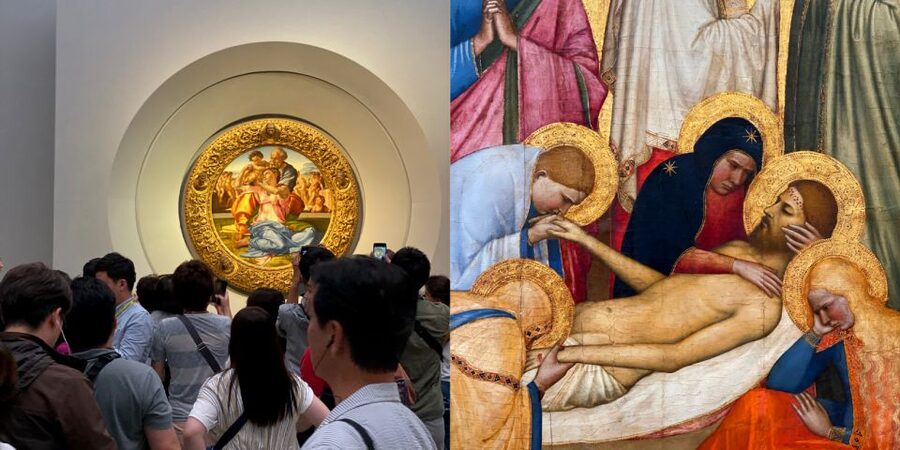
The museum can feel crowded and hot in some rooms. Popular paintings may have their own knots of people, and moving from one room to the next is not always smooth. If you dislike crowds, book at a quieter time if the schedule allows and be ready for a standing visit.
Is $87 a fair price?
At $87 per person, this is not a budget museum visit. You are paying for the guide, headsets, small-group format, and priority access, rather than just the art itself.
The value is strongest if you are short on time, visiting during a crowded period, or unsure how to read Renaissance painting. A good guide can make the difference between seeing famous names and understanding why those works matter. The saved queue time can also be worth a great deal in Florence.
The value is weaker if you already know the Uffizi well, prefer to set your own pace, or plan to spend several hours studying individual paintings. You may want the freedom to stop whenever you wish rather than follow a 90-minute route.
The extra admission fee needs careful attention. The activity details describe skip-the-line tickets as included, but several bookings required an additional €30 payment at the entrance, sometimes in cash. One person had to buy a separate ticket after arriving without cash. Since this changes the final cost considerably, ask the provider to confirm the total price and exactly what the $87 covers before booking.
Who will enjoy this Uffizi tour?
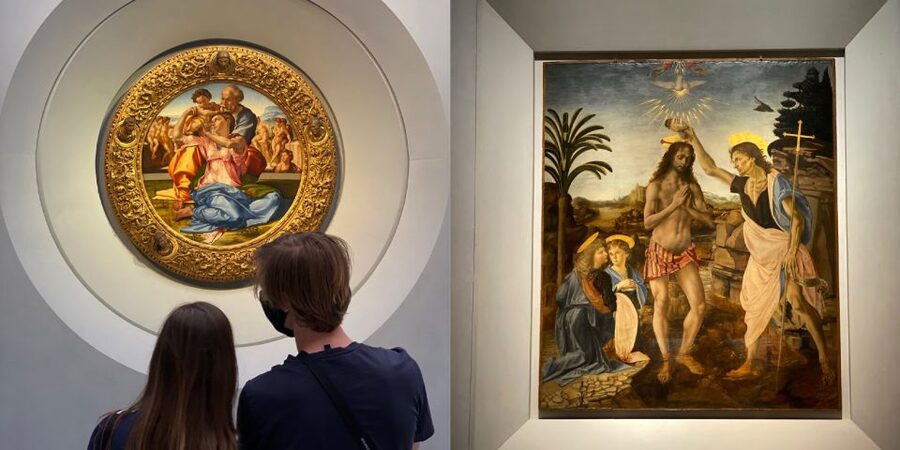
I would choose this tour for a first visit to the Uffizi, especially if you have only one day in Florence. The Medici story gives the paintings a clear setting, and the guide helps you move through a huge collection without spending half your visit wondering where to begin.
Families may also benefit. A guide who keeps a steady pace and explains the pictures as stories can help children stay engaged, though the dense art content may be tiring for younger children. One family found the pace manageable and appreciated that the guide answered questions.
Art students, museum fans, and repeat visitors should consider the tour if they want a historical framework or fresh observations. It is less suitable for anyone who wants silence, photography time, or a leisurely examination of every room.
The experience is wheelchair accessible. Hotel pickup and drop-off are not included, so you make your own way to the Uffizi and leave independently after the visit.
Cancellation is allowed up to 24 hours before the activity for a full refund, and you can reserve now and pay later. Those terms help if your Florence plans are still moving, but they do not remove the need to check the admission arrangement.
Should you book it?
Book this tour if you want the Uffizi’s major Renaissance works explained in plain English and you value getting past the main line. The small group, headsets, and strong guides, especially Victoria and Elvis, make the experience more useful than wandering in without a plan.
Skip it if you prefer to explore alone or want several hours with each painting. Most important, confirm the ticket cost before booking. If the €30 gallery admission is extra, add it to the advertised $87 and decide if the time saved and guiding are worth the full amount. For a first visit during a busy season, I think the organized entry and focused art history can justify the expense.
FAQ
How long does the Uffizi tour last?
The guided experience lasts 1.5 hours, or 90 minutes.
Where is the meeting point?
Meet at Door 3 of the Uffizi Gallery in Florence.
Is the tour conducted in English?
Yes. The live tour guide speaks English.
How large is the group?
The group is limited to 10 participants.
Are headsets provided?
Yes. Headsets are included so you can hear the guide clearly inside the gallery.
Does the tour include priority entry?
Yes. The activity provides separate priority access to help you avoid the main line.
Is the Uffizi admission ticket included in the price?
The activity information lists skip-the-line tickets as included, but several bookings required an additional €30 payment at the entrance. Confirm the exact admission arrangement before booking.
What identification should I bring?
Bring a passport or identity card. A copy is accepted, and children also need identification.
Can I bring luggage or a large bag?
No. Luggage and large bags are not allowed.
Is the tour wheelchair accessible?
Yes, the activity is listed as wheelchair accessible.
Can I cancel for a refund?
You can cancel up to 24 hours in advance for a full refund.
Is hotel transportation included?
No. Hotel pickup and drop-off are not included.
More Uffizi Visits
- Florence: Uffizi Priority Ticket & Masterpieces Audio App
★ 4.2 · 6,402 reviews - Florence: Skip-the-Line Uffizi Small Group Tour
★ 4.6 · 5,926 reviews - Skip the line: Uffizi and Accademia Small Group Walking Tour
★ 4.5 · 3,135 reviews - Florence: Uffizi Gallery and Accademia Gallery Guided Tour
★ 4.8 · 2,028 reviews
Just added around Florence
- Walking Food Tour of Florence with Tastings and Wine★ 5.0 · 518 reviews
- Uffizi Gallery Timed Entry Admission Tickets★ 4.0 · 392 reviews
- Uffizi Gallery Small Group Tour with Guide★ 4.5 · 879 reviews
- Florence Accademia Guided Tour – Shared, Private & Combo Options★ 4.5 · 370 reviews
- Early Access Guided Uffizi Gallery Tour Skip-the-Line Small Group★ 4.5 · 707 reviews
- Uffizi and Accademia Small Group Guided Tour★ 4.5 · 449 reviews
- Florence Central Market Food Tour with Eating Europe★ 5.0 · 224 reviews
- Truffle Hunting Experience with Lunch in San Miniato★ 5.0 · 383 reviews
Uffizi Gallery Tours, compared.
Skip-The-Line Uffizi Gallery Timed Entry Ticket
Read our review →
Uffizi Priority Ticket & Masterpieces Audio App
Read our review →
Skip the line: Uffizi and Accademia Small Group Walking Tour
Read our review →
Uffizi Gallery and Accademia Gallery Guided Tour
Read our review →
Uffizi Gallery Small-Group Guided Tour with Ticket
Read our review →
Michelangelo’s David, Accademia & Uffizi Small Group Tour
Read our review →Browse the lists this tour appears in