
Reviewed · UFFIZI GALLERY TOURS
Florence: Uffizi Gallery Priority Entrance and Tour
Florence’s Uffizi is so large that the smartest way to see it is not to charge through every room. This early-morning guided tour gives you a clear path through the collection, with major works by Botticelli, Michelangelo, Leonardo da Vinci, and Caravaggio placed in their artistic and political setting.
I like the small group of up to nine and the chance to stay inside after the 1.5-hour tour ends. I also like that the guide speaks through the museum in one language, with headphones provided on some departures, so you can look around without losing the commentary. The main drawback is simple: 1.5 hours can only cover a selection in a museum where you could spend half a day or more.
Key points to know before booking
- The best use of your time: A guide leads you directly to major works instead of leaving you to wander through hundreds of rooms.
- A small, personal group: The limit of nine makes it easier to hear the guide and ask questions.
- A strong Renaissance lineup: Expect Botticelli, Michelangelo, Leonardo da Vinci, Caravaggio, and important Florentine works.
- More than paintings: Roman emperors, busts, tombs, and classical sculpture add an older layer to the visit.
- Your museum time continues: After the guided portion, you may remain inside and see more on your own.
- Plan for practical limits: Large bags, luggage, pets, and smoking are not allowed, and you should bring valid identification.
Why the Uffizi works better with a guide
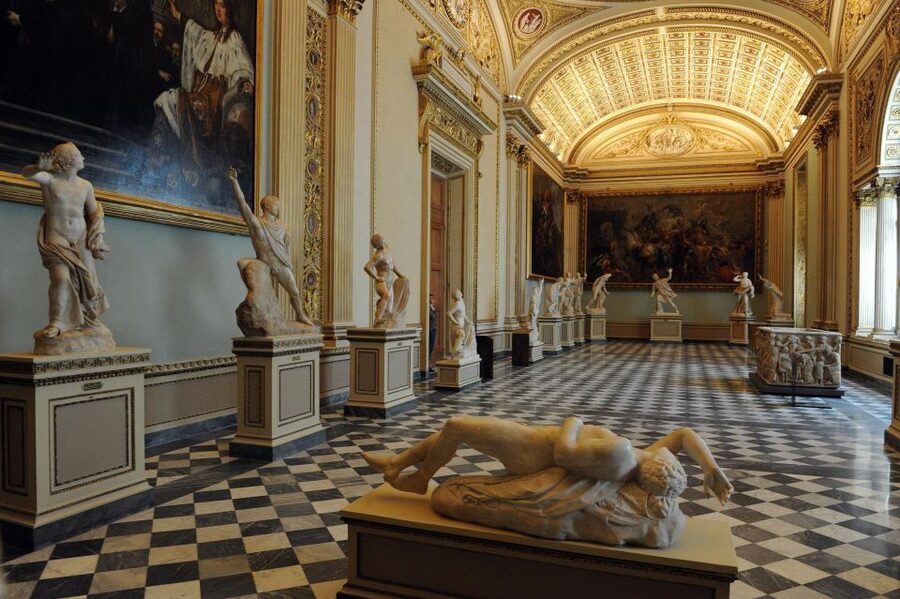
The Uffizi is not merely a room filled with famous pictures. It is the former home of the Medici collections, and the building’s long corridors connect art, family power, religion, scholarship, and Florence’s civic ambitions.
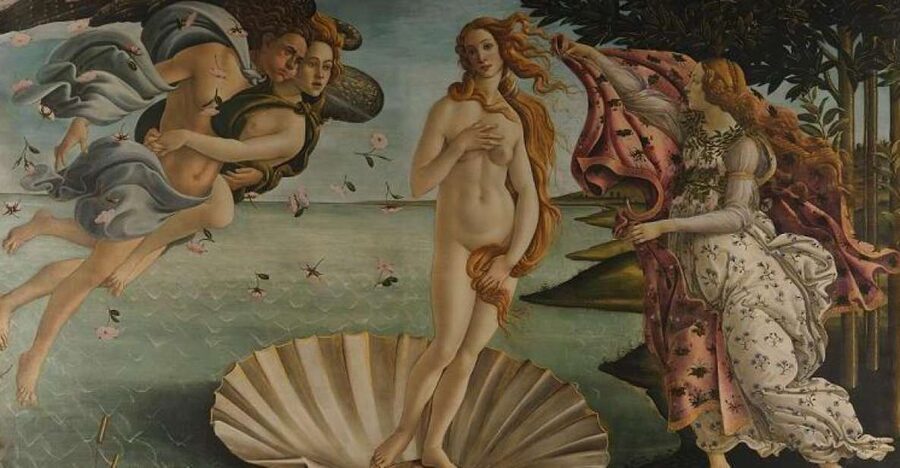
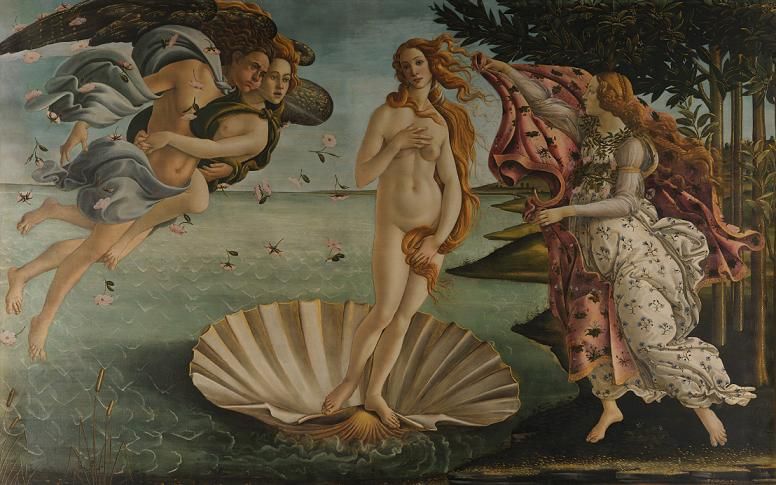
Without context, you can recognize Botticelli’s Birth of Venus and Primavera, then move on without understanding why they mattered to the Medici world. A good guide helps you notice the changes in artistic technique, the move toward mathematical perspective, and the relationship between religious subjects and the growing interest in human experience.
That is the real value here. You are not paying only to enter the museum. You are paying for a sensible route and an explanation of what your eyes are seeing.
Past guides on this experience have included Ivano, Gianna, Janna, Annette, Leonardo, Valentina, Riccardo, Viola, and Francesco. Guide assignments can change, but the pattern is clear: the strongest part of the tour is the live storytelling. Guides have used artist anecdotes, historical characters, humor, and comparisons between paintings to make the collection easier to follow.
This is especially useful if you do not usually visit art museums. You do not need a background in art history. The guide can point out why one painting feels flatter and more symbolic, while another uses perspective, volume, and more natural human figures.
More Museum Tours in Florence
- Florence: Skip-The-Line Uffizi Gallery Timed Entry Ticket
★ 4.5 · 27,832 reviews - Florence: Leonardo Interactive Museum Entry Ticket
★ 4.5 · 11,763 reviews - Florence Accademia Gallery Tour with Entrance Ticket Included
★ 4.5 · 6,148 reviews
Meeting beside Piazza della Signoria
The Uffizi sits beside Piazza della Signoria, one of Florence’s most central squares. Your exact meeting spot can vary with the option you book, so check your voucher carefully rather than assuming you simply walk to the main museum entrance.
Arrive early. A late arrival once caused real stress for a group, even though the staff and guide still managed to bring them in. That kind of flexibility cannot be guaranteed, and the Uffizi area has several entrances and meeting points. Give yourself time to locate the representative, especially for an early start.
Bring a passport or other valid identification. Comfortable shoes are sensible because you will be standing and walking through a large museum. Leave luggage and large bags elsewhere, since they are not permitted for this activity. Pets and smoking are also not allowed.
The early timing is one of the tour’s best features. Florence’s major museums fill quickly, and the first part of the day generally gives you a calmer start than a later visit. Priority entry means you skip the regular ticket line, but it does not mean every delay is impossible. Museum strikes or operational problems have caused waits in the past, so keep your schedule slightly flexible if you have a tight lunch reservation or another timed attraction.
The first rooms: Medici power and Roman sculpture
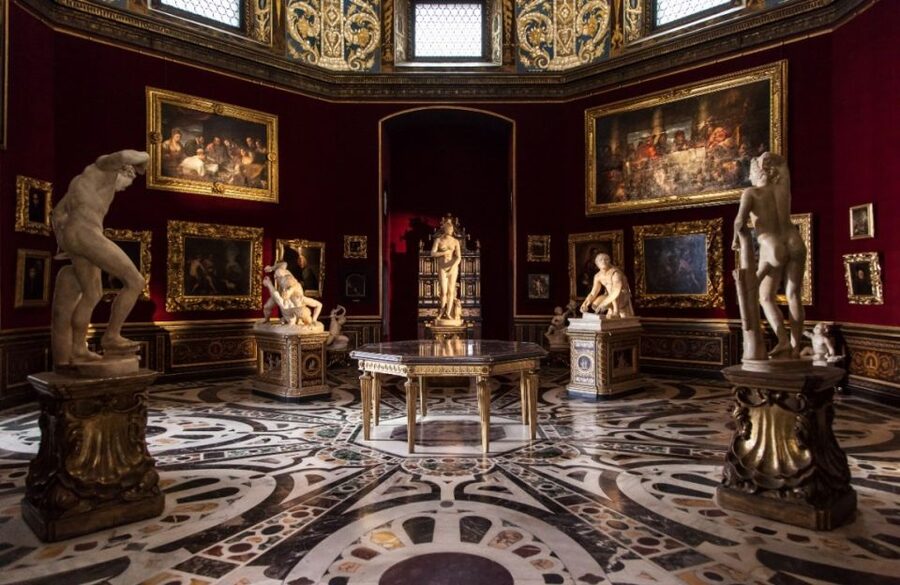
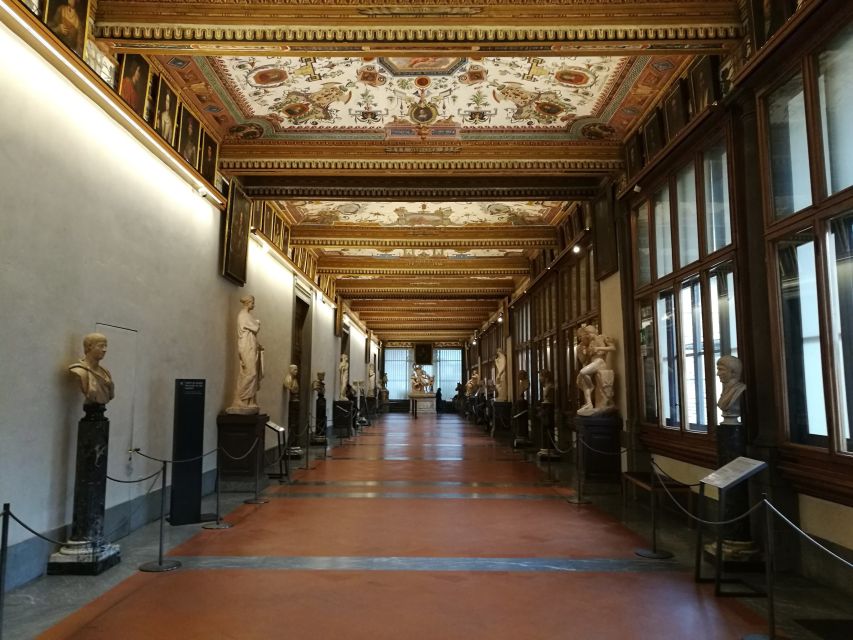
The Uffizi collection begins with more than Renaissance paintings. Classical Roman sculpture helps set the scene, including busts of emperors and Roman tombs. These pieces show the kind of ancient material that fascinated wealthy Italian families and shaped the artistic taste of later centuries.
Your guide may use the sculpture rooms to explain how the Medici collected and displayed art. The ancient world was not a distant subject for Renaissance artists. Roman models influenced poses, clothing, architecture, and the way rulers wanted to be seen.
This section also gives your eyes a break from painted panels. You can compare a carved face with a painted portrait and consider how each medium communicates power, age, and personality.
Do not expect to study every Roman artifact in detail during a 1.5-hour tour. The guide’s job is to select useful examples, not to provide a room-by-room catalog. If ancient sculpture is your main interest, plan to stay afterward and inspect more of this part of the collection on your own.
Botticelli and the Medici imagination
Botticelli is one of the main reasons many people come to the Uffizi. His graceful figures and mythological scenes are visually familiar, but seeing them in person reveals details that reproduction often flattens: the fine lines, delicate expressions, and unusual relationship between the figures and the surrounding space.
The guide can explain why mythological paintings mattered in a city still shaped by Christian belief. The Medici court could support religious art while also celebrating stories from ancient Greece and Rome. That mix of old mythology, new humanist thinking, and family prestige is central to understanding Florence in this period.
You will likely spend more time on a few important works than on every painting in the room. That is a good trade. A rushed list of titles is less useful than a close look at composition, gesture, symbolism, and patronage.
The collection can feel crowded even in the morning, particularly around the most famous paintings. A small group helps, but it will not give you a private gallery. Stay close enough to hear the guide, and use the quietest moments to look after the explanation ends.
More Uffizi tickets and guided visits:
- Florence: Uffizi Priority Ticket & Masterpieces Audio App
★ 4.2 · 6,402 reviews - Florence: Skip-the-Line Uffizi Small Group Tour
★ 4.6 · 5,926 reviews - Uffizi Gallery Small Group Tour with Guide
★ 4.5 · 4,923 reviews - Skip the line: Uffizi and Accademia Small Group Walking Tour
★ 4.5 · 3,135 reviews
Leonardo, Michelangelo, and changing ideas about art
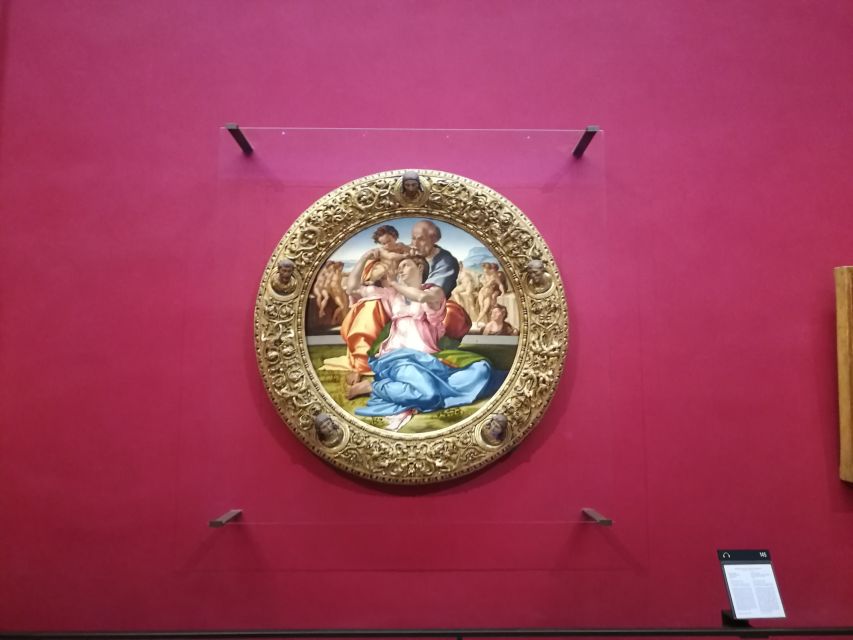
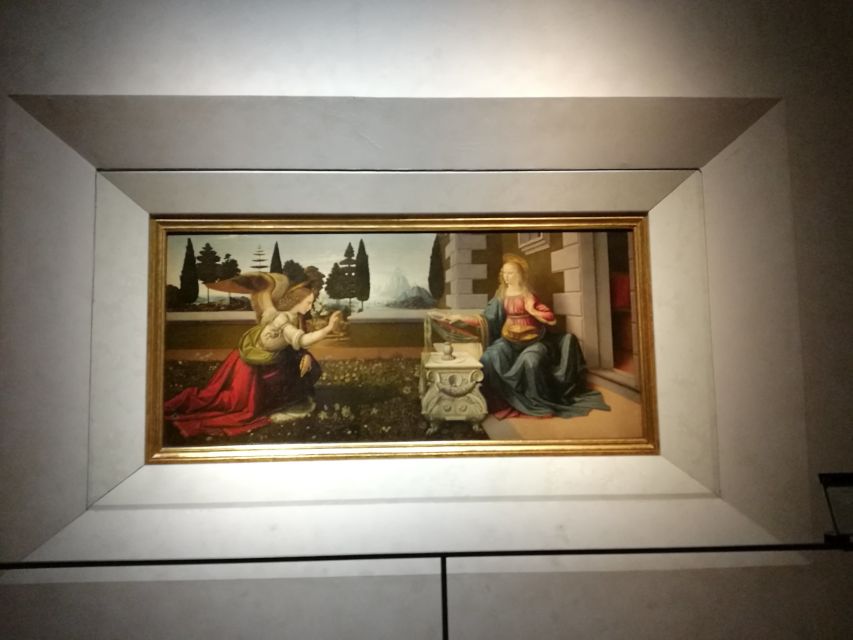
Leonardo da Vinci and Michelangelo help mark a major shift in Western painting and sculpture. The interest here is not just in famous names. It is in how artists began to treat the human body, space, movement, and emotion with new ambition.
Your guide may compare the handling of anatomy, light, and perspective across different works. These comparisons make the museum easier to understand than a string of isolated facts. You start to see art as a conversation, with one generation responding to the problems and successes of the previous one.
This is where a strong guide matters most. Several guides associated with the tour have been praised for explaining the evolution of art in plain language and for answering questions without losing control of the group. Some have adjusted their presentation to the interests of the people standing in front of them, which is valuable in a group that may include an art teacher, a first-time museum visitor, and someone who simply wants to see the famous pictures.
If you already know Renaissance art well, you may find the pace too introductory. The tour is designed as an overview, not a specialist seminar. You can use the free time afterward to return to the works that caught your attention.
Caravaggio and the move toward drama
Caravaggio brings a different mood. His paintings use strong light, forceful figures, and a direct emotional charge that can feel far removed from the elegance of Botticelli.
A guide can show you how the treatment of religious subjects changes over time. The stories may be familiar, but the presentation becomes more physical and immediate. Faces, hands, shadows, and ordinary human reactions pull the viewer into the scene.
This contrast is one of the best reasons to take a guided route through the Uffizi. You see that the collection is not one long block of Renaissance style. It covers changing ideas about beauty, faith, realism, patronage, and theatrical effect.
Again, expect selected highlights rather than a complete survey. The official activity lasts 1.5 hours, though older departures described in the tour material sometimes ran closer to two hours. Treat the stated 1.5 hours as the reliable planning figure, then enjoy the museum independently afterward.
What the small group changes
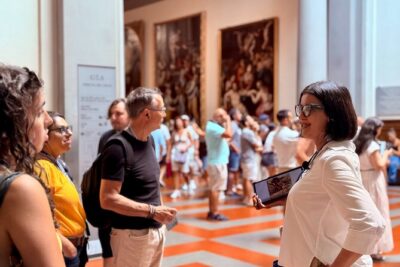
A group limited to nine people is a useful middle ground. You receive live guidance without the scale of a large procession moving from room to room.
Small groups make it easier to hear names, dates, and visual details. They also give you a better chance to ask why a work matters or where to find something not included in the main route. One guide even directed a visitor to another painting after the formal portion ended.
Some departures provide headphones, allowing you to stand a little apart while still following the explanation. That is helpful in busy rooms, though you should not drift so far that you lose the group.
The small size does not remove every practical problem. Other early groups may be in the same galleries, and famous works can draw a crowd. The benefit is that your guide can manage nine people more easily than a large party and can keep the explanation focused.
Staying after the guided portion
The tour ends inside the museum, which is a major advantage. You do not have to leave just as you begin to understand the layout.
Use the remaining time to revisit the paintings that interested you most. You can also look for rooms the guide skipped, inspect Roman sculpture, or move at a slower pace without trying to keep up with a group.
The Uffizi is large enough that it helps to make a small plan. Choose two or three priorities before you begin. If Botticelli is your main goal, return to those rooms first. If you prefer sculpture or later painting, ask the guide where to continue.
You may also find a café on the upper level with views over Florence, as noted by past visitors to the museum. Treat that as a possible museum amenity rather than a guaranteed part of the tour, and do not let it replace time with the collection if your schedule is short.
Is $99 a fair price?
At $99 per person, this is not a budget museum entry. The price includes the priority entrance ticket, a live guide, and the guided visit. It does not include an all-day private tour or a personal guide for your entire Florence stay.
For many first-time visitors, the price is reasonable because the Uffizi can be confusing and the most famous rooms are easy to approach without a plan. You also receive the option to stay inside after the guided section, so the value is greater if you use that extra time.
The price is harder to justify if you already know the collection well, prefer to read labels quietly, or want to spend several hours on only a few artists. In that case, an entry ticket and a self-guided plan may suit you better.
I would also factor in the small group. A large guided visit at a lower cost can save money, but it may be harder to hear and less adaptable. Here, you are paying for a compact group and a focused route as much as for the ticket itself.
Who should book this Uffizi tour?
I would choose this experience for a first visit to Florence, especially if you have limited museum time or feel unsure where to begin. It works well for couples, families with older children, and adults who want the art explained without taking a full art-history course.
It is also a good fit if you like stories about artists and patrons. Guides such as Giacomo and Francesco have been described as using personal details, humor, and side stories to make the facts easier to remember. That approach can turn a formal museum visit into something more human.
You should think twice if you dislike fixed schedules or want to photograph every room at your own pace. The guide chooses the route, and the short duration means the visit has a clear focus. You can stay afterward, but the guided portion itself will not cover everything.
Final verdict: book it if you want a clear start
Book this Uffizi tour if you want to see the essential Renaissance works, understand why they matter, and avoid spending your first hour lost among corridors. The early start, small group, priority entry, and stay-afterward option give it solid practical value.
Skip it if you already have a detailed plan, prefer complete independence, or want a long specialist visit focused on one artist. For most first-time visitors, though, the guided selection is the sensible choice. The Uffizi is simply too large to approach casually, and a good guide helps you see the collection as a connected story rather than a wall of famous names.
FAQ
How long does the Uffizi tour last?
The stated duration is 1.5 hours. After the guided tour, you may remain inside the museum and continue exploring at your own pace.
What does the price include?
The $99 price includes a priority entrance ticket to the Uffizi Gallery, a tour guide, and the guided museum tour.
How many people are in the group?
The group is limited to nine participants.
Which languages are available?
Live tours are available in English, Italian, and French.
Where does the tour meet?
The meeting point is at or near the Uffizi Gallery beside Piazza della Signoria, but it may vary depending on the option you book. Check your booking details carefully.
Can I skip the regular ticket line?
Yes. Priority entrance and ticket-line access are included, though unexpected museum delays can still occur.
Can I stay in the Uffizi after the tour?
Yes. You may remain inside after the guided portion and continue viewing the collection independently.
What identification should I bring?
Bring a valid passport or ID card.
Can I bring luggage or a large bag?
No. Luggage and large bags are not allowed for this activity.
Can I cancel for a refund?
You can cancel up to 24 hours in advance for a full refund. The reserve-now, pay-later option is also available.
Just added around Florence
- Walking Food Tour of Florence with Tastings and Wine★ 5.0 · 518 reviews
- Uffizi Gallery Timed Entry Admission Tickets★ 4.0 · 392 reviews
- Uffizi Gallery Small Group Tour with Guide★ 4.5 · 879 reviews
- Florence Accademia Guided Tour – Shared, Private & Combo Options★ 4.5 · 370 reviews
- Early Access Guided Uffizi Gallery Tour Skip-the-Line Small Group★ 4.5 · 707 reviews
- Uffizi and Accademia Small Group Guided Tour★ 4.5 · 449 reviews
- Florence Central Market Food Tour with Eating Europe★ 5.0 · 224 reviews
- Truffle Hunting Experience with Lunch in San Miniato★ 5.0 · 383 reviews
Uffizi Gallery Tours, compared.
Skip-The-Line Uffizi Gallery Timed Entry Ticket
Read our review →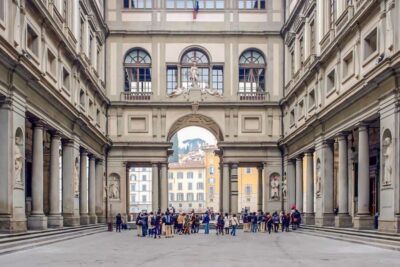
Uffizi Priority Ticket & Masterpieces Audio App
Read our review →
Skip the line: Uffizi and Accademia Small Group Walking Tour
Read our review →
Uffizi Gallery and Accademia Gallery Guided Tour
Read our review →
Uffizi Gallery Small-Group Guided Tour with Ticket
Read our review →
Michelangelo’s David, Accademia & Uffizi Small Group Tour
Read our review →Browse the lists this tour appears in