
Reviewed · ACCADEMIA GALLERY TOURS
Florence: Accademia and David Skip-the-Line Entry Ticket
Michelangelo’s David is the reason most people come to Florence’s Accademia, and the five-meter marble figure earns the attention. I like the simple ticket setup and the chance to see the museum at my own pace. I also like that the ticket covers every museum section, not only the David room.
The main catch is that this is not a guided tour. You meet a host at an office on Via Guelfa, receive or collect your entry ticket, and are led toward the proper queue. Once inside, you are on your own, and the separate meeting point takes a little planning.
Key points to know
- Michelangelo’s David is the main event: See the colossal 1501 to 1504 marble sculpture in the Tribune, a hall designed to frame it.
- The ticket covers the whole Accademia: Visit the Michelangelo sculptures, medieval and Renaissance paintings, musical instruments, and plaster casts.
- The meeting point is not at the museum: Go to Via Guelfa 12 Red, opposite the Via Guelfa McDonald’s and next to Via Guelfa 2.
- Expect a host, not a tour guide: The host helps you reach the correct entrance, then you explore independently.
- Skip-the-line access is most useful at busy times: The regular queue can be long, especially around 10 a.m.
- The listed price is $36 per person: It makes the most sense when saving substantial waiting time matters to you.
Why David deserves the Accademia visit
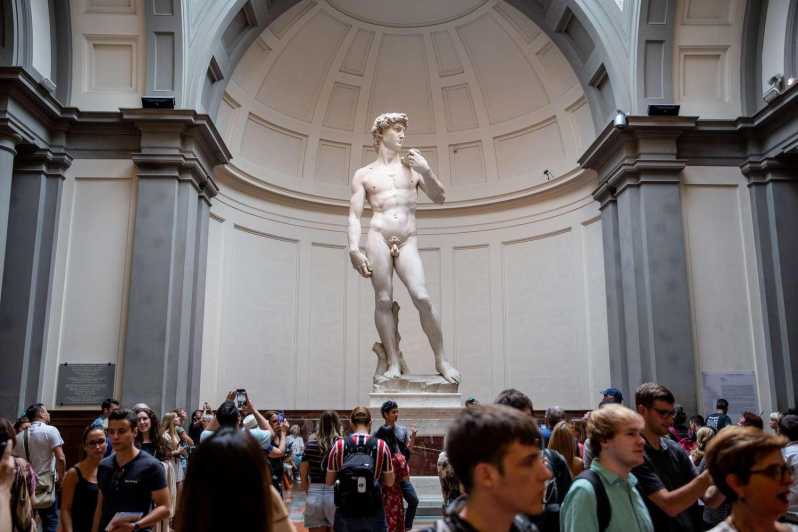
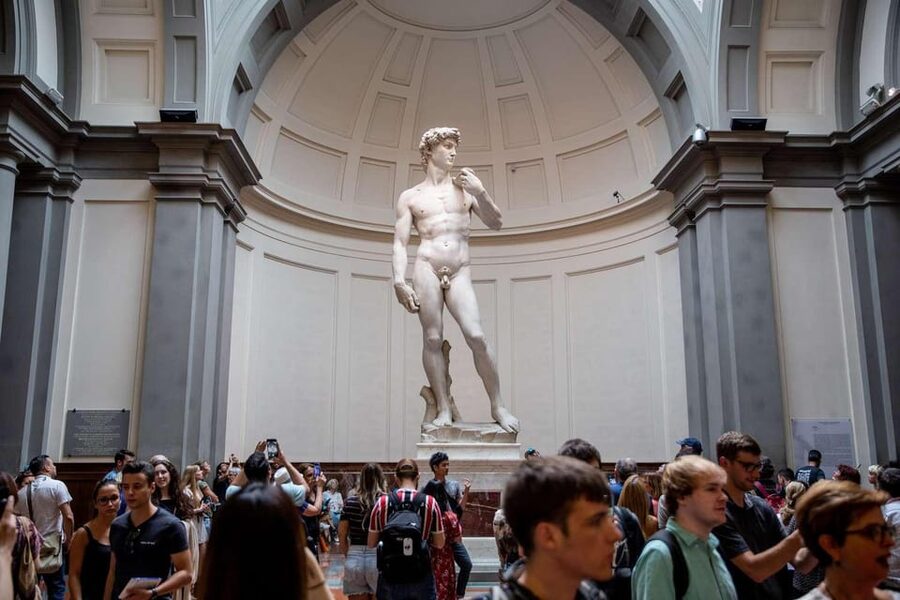
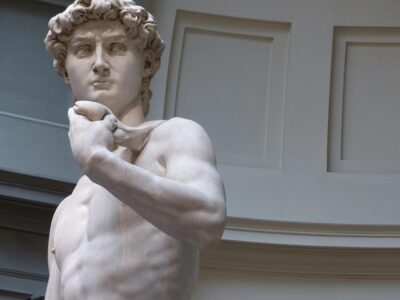
Florence has no shortage of famous art, but David is unusually direct. Michelangelo carved him from a single block of marble between 1501 and 1504, showing the biblical hero before his fight with Goliath. The figure is more than five meters tall, so photographs rarely convey his actual scale.
The statue’s position in the Tribune gives you room to walk around it and see how Michelangelo handled the body, hands, face, and stance. You can look closely at the tension in David’s muscles and the alert expression that makes him seem ready for action.
I find the most rewarding part is not simply checking off a famous statue. It is seeing how the sculpture works from different angles. The front view is the familiar one, but the side and rear views reveal the careful balance of the figure and the visual force of the marble.
The room can feel crowded, especially at popular entry times. You may not get a quiet, private audience with David. Still, the sculpture is large enough to see from several points around the Tribune, and the experience remains worthwhile for anyone interested in Renaissance art.
More Entry Tickets in Florence
- Florence: Skip-The-Line Uffizi Gallery Timed Entry Ticket
★ 4.5 · 27,832 reviews - Florence: Timed Entrance Ticket to Michelangelo’s David
★ 4.6 · 16,983 reviews - Florence: Michelangelo’s David Skip-the-Line Entry Ticket
★ 4.5 · 12,764 reviews
Meeting the host on Via Guelfa
Your visit begins at Via Guelfa 12 Red, at the Florence and Global Tours Company office. The meeting point is opposite the Via Guelfa McDonald’s and next to Via Guelfa 2.
This detail matters. You do not simply walk to the Accademia entrance and show a booking confirmation. You first need to find the office, meet the host, and collect the ticket or voucher needed for entry. Allow enough time to locate the office before your scheduled start.
The host or greeter may speak Arabic, English, German, Italian, or Spanish. The process is designed to be practical rather than educational. The host directs you to the appropriate access point and helps you avoid the main public line.
Once you have entered, the host leaves you to explore. That arrangement suits me because I can linger where I want, but it will disappoint you if you expect a proper explanation of David or the other works.
The activity ends back at the meeting point according to the stated arrangement, though your museum visit itself is independent. Since the ticket gives you access to all sections, you are not limited to a short escorted walk through one room.
How the skip-the-line process works
Skip-the-line access is the clearest practical benefit here. You use a separate entrance route rather than waiting in the full public queue, though you still need to follow museum entry procedures and pass security.
The process can include a short wait with other ticket holders. One practical estimate is around 15 to 20 minutes when joining the next entry queue. That is much better than facing a long line outside, but skip the line does not mean walking through every checkpoint without waiting.
Early morning appears to be the best time to keep the process simple. An 8 a.m. arrival has been described as easy, while the line can be especially long around 10 a.m. The precise wait depends on the entry time and crowd level.
The host may escort you to the correct line and handle the ticket collection. This is useful if you are unsure which queue applies to your booking. It also explains why you must arrive at the correct office rather than heading straight to the museum.
Flexibility has been a strong point. A late arrival has sometimes been accepted at a later time, but you should not build your plans around that kindness. Aim to reach Via Guelfa before the scheduled start, with your confirmation ready.
The Tribune and Michelangelo’s unfinished sculptures
After David, look for Michelangelo’s other works. The Prisoners, also called the Slaves, are unfinished figures that appear to push or struggle their way out of the marble.
These sculptures offer a useful contrast with David. David looks complete and controlled. The Prisoners retain rough stone around parts of the body, letting you think about the physical labor of carving and the choices involved in removing material.
You can also see the St. Matthew, another unfinished Michelangelo sculpture. Its incomplete surface makes the creative process visible in a way a polished statue cannot. Rather than seeing only the final ideal form, you see marble in transition.
The Pietà of Palestrina is also included among the works associated with Michelangelo in the museum. Attribution and art history around famous works can be complicated, but the sculpture remains part of the Accademia visit and adds another point of comparison with the better-known David.
Give these pieces time instead of rushing straight from David to the exit. The museum is not large enough to require an entire day for most people, but the extra sculptures help turn the visit into more than a single-statue stop.
More Skip-the-Line Tickets in Florence
- Florence: Skip-the-Line Uffizi Small Group Tour
★ 4.6 · 5,926 reviews - Skip the line: Uffizi and Accademia Small Group Walking Tour
★ 4.5 · 3,135 reviews - Florence: Skip-the-Line Accademia Guided Tour
★ 4.5 · 2,327 reviews - Florence: Accademia Gallery & David Skip-the-Line Ticket
★ 4.6 · 1,905 reviews
Florentine painting from Cimabue to the Renaissance
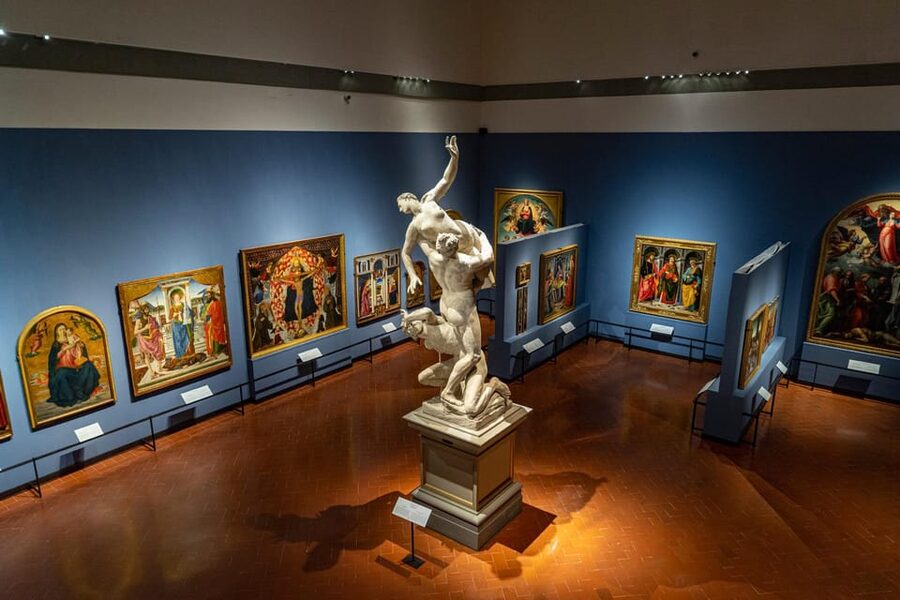
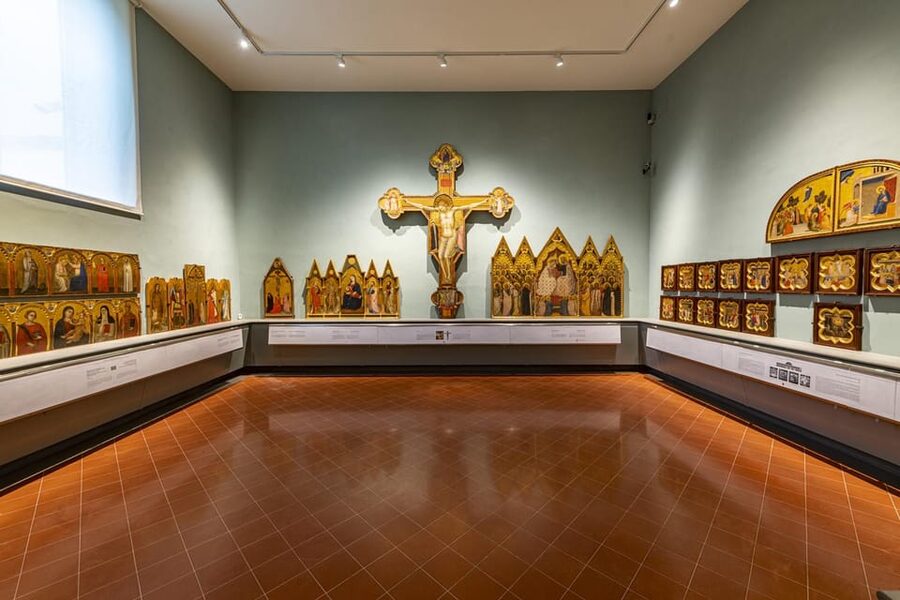
The Accademia also traces the development of Florentine painting from the 13th through the 16th century. You can see works connected with Cimabue, Giotto, Fra Angelico, Lorenzo Monaco, Botticelli, and Ghirlandaio.
These paintings help place Michelangelo in a longer artistic story. Earlier works often use formal religious compositions, gold backgrounds, and carefully arranged figures. Later paintings show changes in space, anatomy, expression, and the handling of light.
You do not need to know every artist’s biography to get something from this section. Look for the gradual movement from symbolic presentation toward figures that occupy more convincing space and show more individual presence.
Botticelli and Ghirlandaio are particularly useful names to watch for if your Florence plans already include the Uffizi. The Accademia is not a substitute for Florence’s larger painting collections, but it gives you a compact look at the city’s artistic development.
The drawback is that the painting rooms can receive less attention than David. If you arrive with only one famous statue in mind, it is easy to miss the way these paintings explain the culture that produced Michelangelo.
Medici instruments from violins to pianos
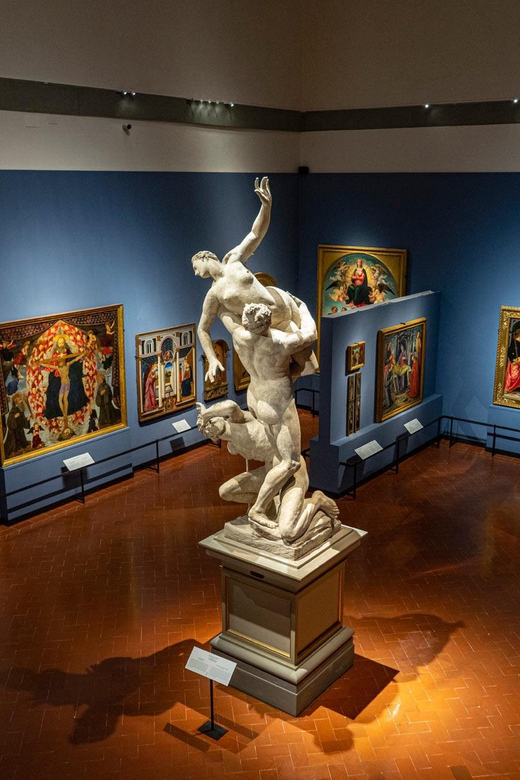
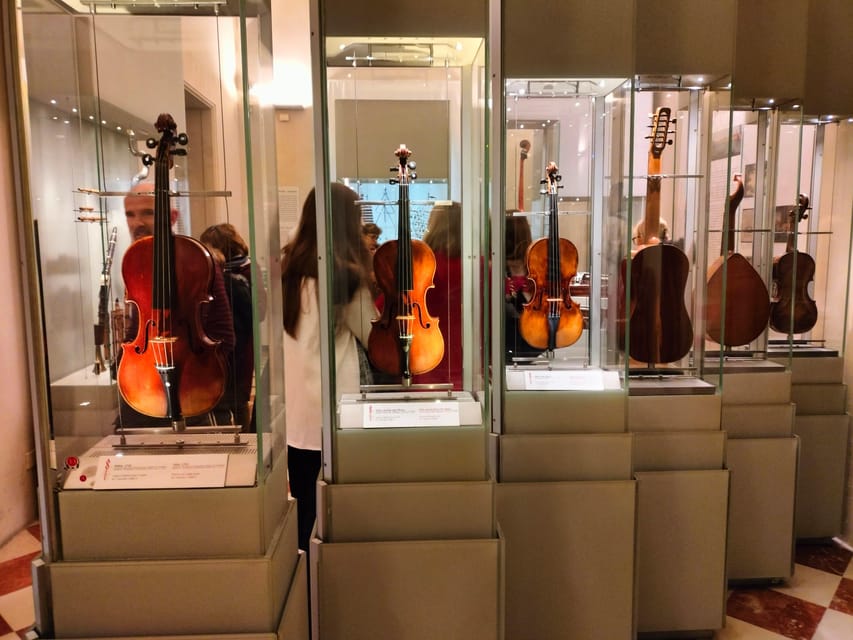
The musical instrument collection is one of the museum’s more unusual sections. It includes rare instruments connected with the Medici family, dating from the 17th to the 19th century.
You can see violins, harpsichords, and pianos. This section adds sound and court life to a museum otherwise dominated by marble and painted panels. The instruments also show how artistic craftsmanship extended beyond sculpture and painting.
For many people, this will be a short stop rather than the main reason for entry. I still recommend visiting it, especially if you have already seen David and want a change of pace. It is also a useful reminder that Florence’s cultural world included music, performance, collecting, and technical skill.
The plaster cast gallery and its teaching purpose
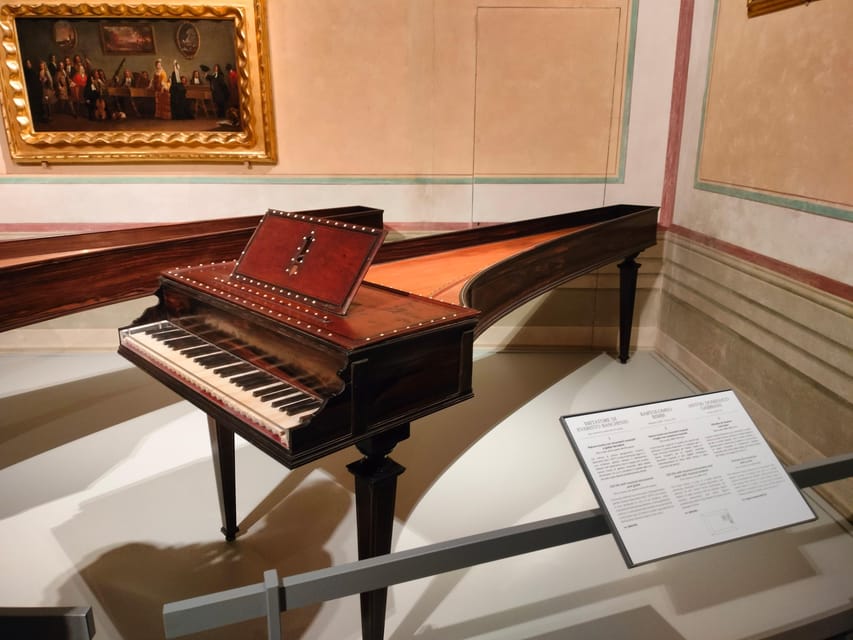
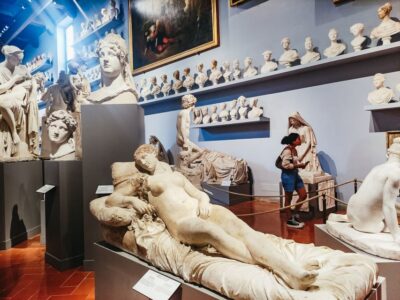
The plaster cast gallery contains copies of sculptures from antiquity through modern times. These casts were used as teaching tools for art students.
Do not expect another hall of original masterpieces. The value here is educational. You can see the kinds of forms and poses students studied, and you get a better sense of how artists learned by copying established examples.
The gallery may appeal most to you if you like the practical side of art training. It also offers a different mood from the Tribune. David is a finished masterpiece meant to impress; the plaster casts show a working environment built around study and repetition.
Because these are copies, some people may find the room less exciting. I would treat it as an optional but worthwhile section, particularly if your interest extends beyond the headline attraction.
Is $36 good value?
At $36 per person, this is a convenience purchase as much as an art ticket. The value depends on how much you dislike standing in line and how crowded Florence is during your visit.
If the regular queue is long, paying more for a timed entry route can protect a useful part of your day. The Accademia visit itself is listed as one hour, but the ticket gives access to all museum sections, so you can stay longer if your schedule and the museum’s rules allow it.
The price is easier to justify when you have a tight Florence itinerary. Saving a substantial wait may give you time for another museum, a church, or a walk through the historic center. If you are visiting in a quiet period and find a short public queue, the added cost may feel less necessary.
You should also remember what is not included. There is no guided tour and no audio guide. The museum may offer an audio guide for purchase, but that is an extra decision and cost.
For me, the price makes sense for convenience, not instruction. You are paying for organized entry and time saved, not for a specialist who explains Michelangelo’s technique as you walk.
Timing, security, and what to bring
The stated activity duration is one hour, with starting times available during booking. Choose a time that leaves room to find Via Guelfa 12 Red before the appointment.
The museum requires security screening. A bag check can slow entry even after you have bypassed the main queue, so keep your belongings compact and easy to inspect.
Bring your booking details and allow time for the host to issue or confirm your ticket. Do not assume that reaching the museum door at the exact start time is enough.
The experience is wheelchair accessible according to the activity information. If you need accessibility support, confirm the current route and arrangements when booking, since the meeting point and museum entrance process are separate parts of the visit.
Cancellation is free up to 24 hours before the scheduled activity, and you can reserve now and pay later. Those terms are useful when your Florence plans are still shifting, but the practical issue remains the same: you must get to the meeting point on time.
Who should book this Accademia ticket?
I would choose this experience if David is high on your Florence list and you want a straightforward visit without committing to a guide. It suits first-time visitors, couples, families, and solo sightseers who prefer to set their own pace.
It is also a good fit if you have only a short stay in Florence. The separate host meeting and skip-the-line route can save time when the museum entrance is crowded.
You may prefer another option if you want detailed commentary. Since the host is there to organize entry rather than conduct a museum tour, you will need to read the labels, buy the optional audio guide, or arrange your own background before arriving.
Art specialists may also want more time than the one-hour listing suggests. David can be seen quickly, but the Prisoners, paintings, instruments, and plaster casts reward a slower visit.
Should you book it?
Book it if you want David, dislike queues, and are happy to explore independently. The separate Via Guelfa meeting point is a minor chore, but the host-led entry process is simple once you find the office. The biggest advantage is time saved when the public line is long.
Skip it if your main goal is a guided art lesson or if you are unwilling to pay $36 for queue management. For everyone else, this is a practical way to see Florence’s most famous sculpture while still leaving room for the Accademia’s less famous but worthwhile collections.
FAQ
Where do I meet for the Accademia ticket?
Meet at the Florence and Global Tours Company office at Via Guelfa 12 Red. It is opposite the Via Guelfa McDonald’s and next to Via Guelfa 2.
Is this a guided tour?
No. A host or greeter helps you collect the ticket and reach the appropriate entrance, but you explore the museum independently. A museum audio guide is available to purchase separately.
What does the ticket include?
The ticket includes skip-the-line entry to the Accademia Gallery and access to all sections of the museum.
How long does the activity last?
The listed duration is one hour. You can check available starting times when booking, and the ticket provides access to the museum’s sections during your visit.
Which languages are available from the host or greeter?
Host assistance is available in Arabic, English, German, Italian, and Spanish.
Can I cancel or pay later?
You can cancel up to 24 hours in advance for a full refund. You can also reserve your place and pay later.
More Time With the David
- Florence: Michelangelo’s David Priority Ticket & Audio App
★ 4.4 · 6,812 reviews - Florence Accademia Gallery Tour with Entrance Ticket Included
★ 4.5 · 6,148 reviews - Florence: Accademia Gallery Guided Tour
★ 4.6 · 4,156 reviews - Florence: Timed Entry Ticket to Michelangelo’s David & eBook
★ 4.6 · 4,049 reviews
Just added around Florence
- Walking Food Tour of Florence with Tastings and Wine★ 5.0 · 518 reviews
- Uffizi Gallery Timed Entry Admission Tickets★ 4.0 · 392 reviews
- Uffizi Gallery Small Group Tour with Guide★ 4.5 · 879 reviews
- Florence Accademia Guided Tour – Shared, Private & Combo Options★ 4.5 · 370 reviews
- Early Access Guided Uffizi Gallery Tour Skip-the-Line Small Group★ 4.5 · 707 reviews
- Uffizi and Accademia Small Group Guided Tour★ 4.5 · 449 reviews
- Florence Central Market Food Tour with Eating Europe★ 5.0 · 224 reviews
- Truffle Hunting Experience with Lunch in San Miniato★ 5.0 · 383 reviews
Accademia Gallery Tours, compared.

Michelangelo’s David Skip-the-Line Entry Ticket
Read our review →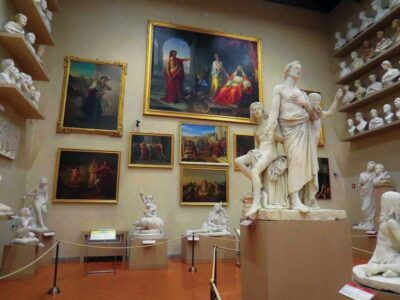
Michelangelo’s David Priority Ticket & Audio App
Read our review →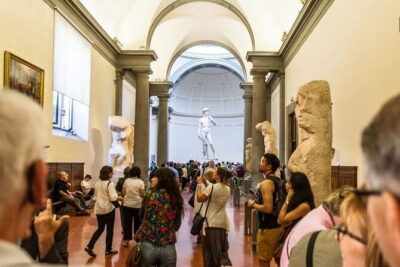
Florence Accademia Gallery Tour with Entrance Ticket Included
Read our review →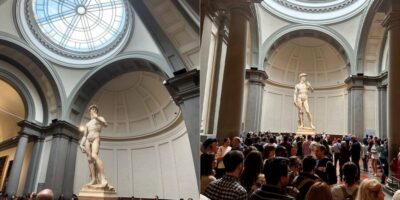
Timed Entry Ticket to Michelangelo’s David & eBook
Read our review →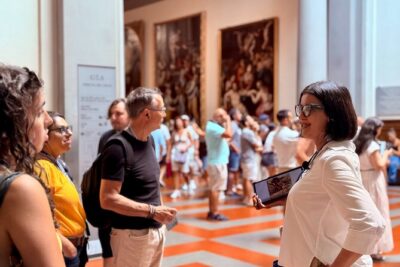
Skip the line: Uffizi and Accademia Small Group Walking Tour
Read our review →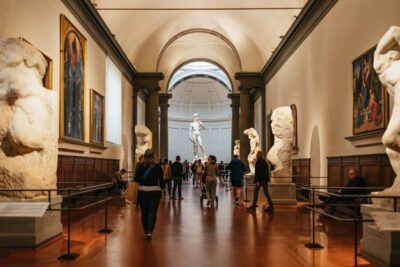
Accademia Gallery Guided Tour with Entry Ticket
Read our review →Browse the lists this tour appears in