
Reviewed · VATICAN TOURS
Vatican Museums, Sistine Chapel Tour and Basilica Access
The great appeal here is simple: you can see the Vatican’s major sights in about three hours without spending the day wandering its enormous corridors alone. Skip-the-ticket-line entry gets you into the museums, while a guide points out the works most worth your time, from the Apollo Belvedere to Michelangelo’s ceiling.
I like the focus on famous highlights, especially the Gallery of Maps, Raphael Rooms, and Sistine Chapel. I also like the headsets, which matter when a group of up to 20 people is moving through crowded rooms. The catch is the pace: three hours is efficient, not leisurely, and unexpected chapel or Basilica closures can change the plan.
Key points to know before booking
- About three hours: You will see major Vatican sights, but not every room or collection in detail.
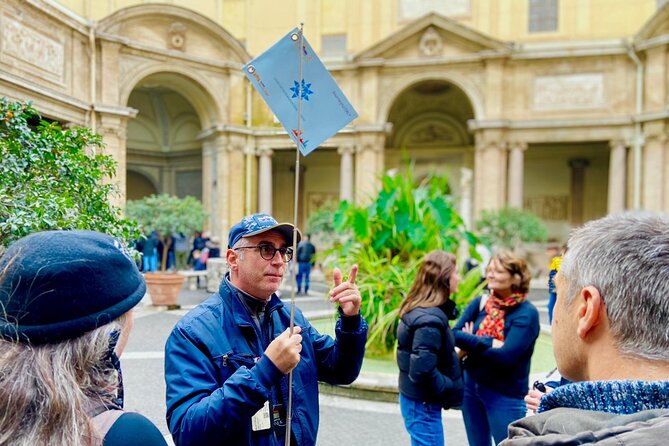
- Maximum group size of 20: Headsets help you follow the guide through crowded galleries.
- Strong guide element: Guides such as Antonio, Lora, Laura, Patrick, Patricio, and Paola M have received especially warm praise for clear explanations and lively stories.
- Basilica access is an option: It is not the same as a guaranteed fast entrance through security, and the Basilica may close without notice.
- Strict meeting time: Late arrivals may be refused entry with no refund, so arrive early at Via Vespasiano, 26 or 28.
- Dress for the Vatican: Shoulders and knees must be covered, and you need photo identification for security.
Why this Vatican tour works for a first visit
The Vatican Museums are not a single museum in the usual sense. They are a vast series of galleries, courtyards, chapels, and former papal spaces filled with sculpture, paintings, maps, woven hangings, and ancient objects.
That scale is both the thrill and the problem. You can spend hours here and still leave without seeing everything. I like this tour because it gives you a clear route through the most famous sections, rather than asking you to make sense of the place on your own.
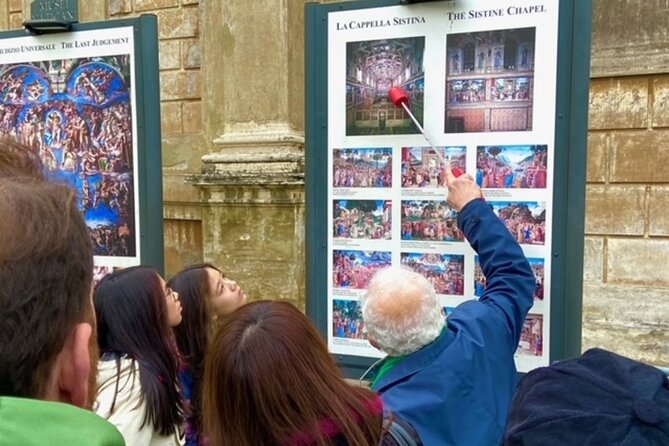
The guide’s job is to help you sort the important from the merely abundant. A good guide might explain why the Apollo Belvedere matters, point out the drama of the Laocoön, and give you a visual key for understanding the Sistine Chapel before you enter it. Guides named Antonio, Lora, Laura, Patrick, Patricio, and Paola M have been praised for strong storytelling and clear art explanations, though the person leading your departure will depend on the day.
The tour is offered in English. Headsets are compulsory inside the Vatican and are included, which is useful when you are standing several yards behind the guide or surrounded by other groups.
More Museum Tours in Rome
- Vatican: Museums & Sistine Chapel Entrance Ticket
★ 4.5 · 144,003 reviews - Vatican Museums & Sistine Chapel Tour with Optional Basilica
★ 4.3 · 67,413 reviews - Vatican Museums, Sistine Chapel & St Peter’s Basilica Guided Tour
★ 4.5 · 39,149 reviews
Starting at Via Vespasiano and entering Vatican City
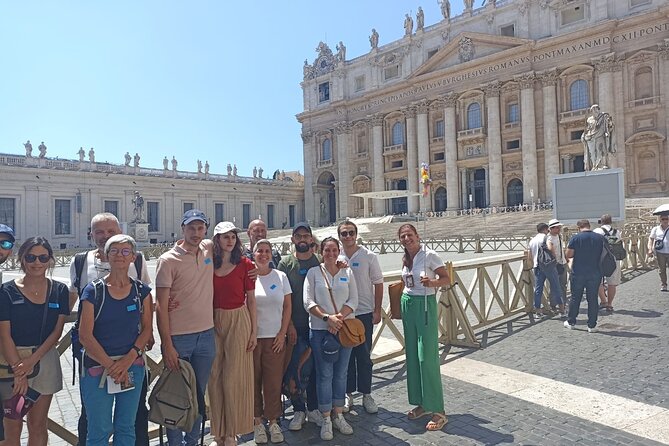
The meeting point is at Via Vespasiano, 26 or 28, near public transportation. A support team helps organize the group before entry, and free Wi-Fi is available at the meeting point.
Do not treat the start time casually. Vatican Museums tickets are tied to strict entry periods. Arrive early enough to find the office, check in, collect your headset, and pass through the initial procedures without panic. A late arrival may mean no entry and no refund.
You will need a photo ID for the security check. Dress conservatively from the start. Sleeveless tops, shorts, miniskirts, and low-cut clothing can cause problems because shoulders and knees must be covered.
The route begins within Vatican City, the world’s smallest independent state by area and population. The brief introduction helps put the visit in context: Vatican City became independent from Italy under the Lateran Treaty in 1929 and is governed as the territorial center of the Holy See.
Two hours among the Vatican Museums
Most of the tour is spent in the Vatican Museums. The official itinerary allows about two hours here, though the exact pace can shift with crowd levels, Vatican controls, and the group’s movement.
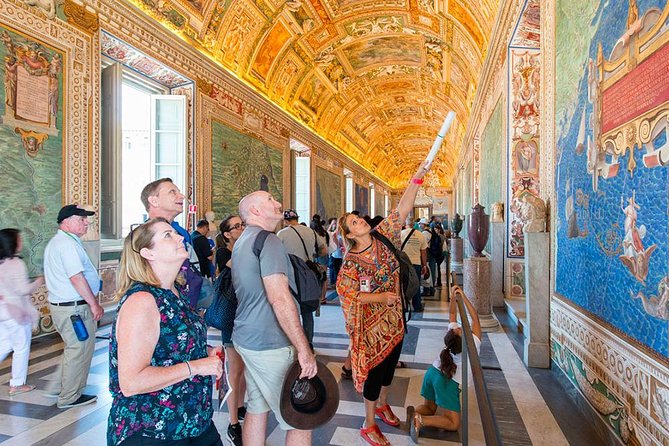
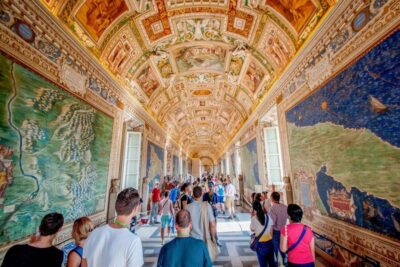
You will pass through several grand galleries, including the Galleries of Candelabra, Maps, and woven hangings. These corridors are not just passageways to the Sistine Chapel. Their ceilings, floors, ancient sculpture, and painted decoration deserve attention, even when the crowd is moving quickly.
The museums can feel physically demanding. There is considerable walking, stairs, and very little chance to stop wherever you please. If you have limited mobility or tire easily, note your needs when booking so the operator can arrange appropriate help and free entry where applicable.
A guide makes the museum easier to read, but this is not a private art seminar. The group must follow the Vatican’s prescribed flow. If you want to stop for long periods at individual paintings or explore lesser-known rooms, a self-guided visit or a slower private tour may suit you better.
The Pine Courtyard and the Pio Clementine Museum
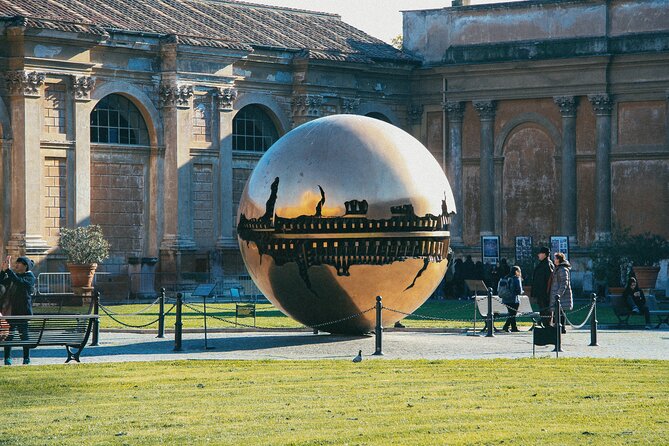
The Pine Courtyard, or Cortile della Pigna, offers a brief open-air pause. Its name comes from the large bronze pinecone sculpture at the center, associated with Bramante’s courtyard design.
The courtyard gives you a moment to look up, reset, and understand the scale of the complex. The scheduled stop is only about ten minutes, so do not expect a long break. It is also a useful place to gather the group before moving into more crowded galleries.
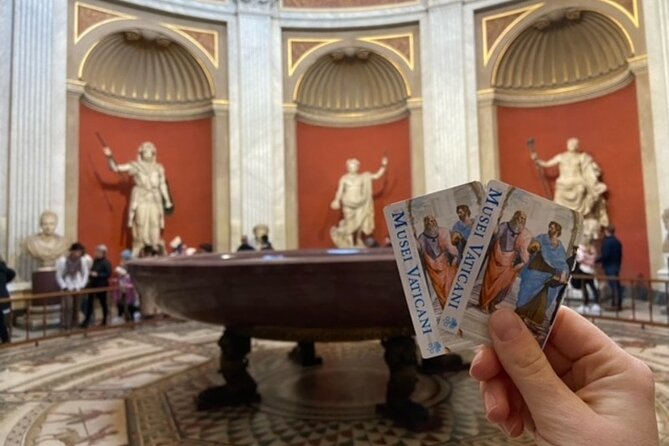
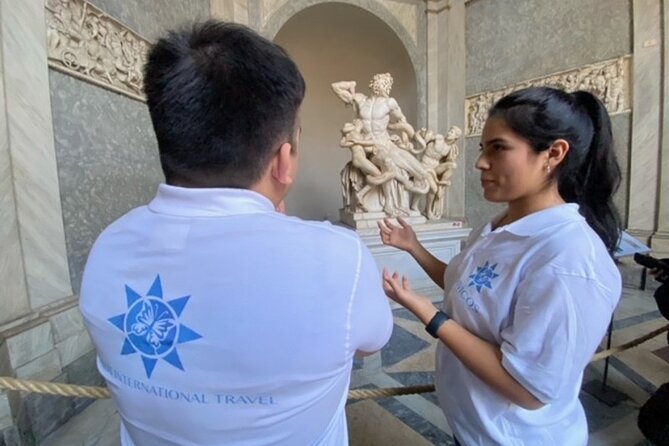
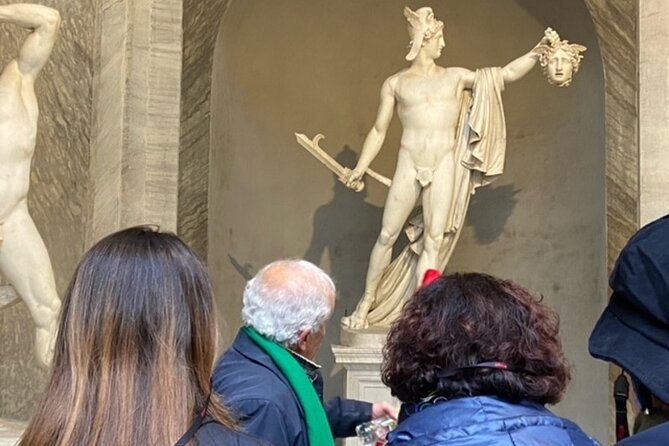
The Pio Clementine Museum follows as part of the wider museum route. This section contains major ancient sculpture, including the Apollo Belvedere and the Laocoön. You may also see the so-called Nero’s bathtub and the Room of the Muses.
These objects provide some of the strongest visual moments of the tour. The Laocoön, with its twisting figures and intense expression, shows why ancient sculpture became such a powerful model for Renaissance artists. The Apollo Belvedere offers a calmer, idealized image of the human body. A good guide will connect these works to the artistic world that later produced Raphael and Michelangelo.
More Vatican and Sistine Chapel entries:
- Rome: Vatican Museums, Sistine Chapel & Basilica Tour
★ 4.3 · 13,872 reviews - Vatican Museums & Sistine Chapel Skip-the-Line Entry Ticket
★ 4.4 · 13,838 reviews - Rome: Vatican Museums, Sistine Chapel & Basilica Tour
★ 4.7 · 13,217 reviews - Skip-the-Line Group Tour of the Vatican, Sistine Chapel & St. Peter’s Basilica
★ 4.5 · 12,779 reviews
The Gallery of Candelabra
The Gallery of Candelabra is a long corridor lined with large marble candelabra, ancient sculpture, sarcophagi, classical columns, and painted vaulted ceilings.
The name may sound less exciting than the Sistine Chapel, but this gallery is one of the places where the Vatican’s sheer scale becomes clear. You are walking through a ceremonial display of ancient art, not simply checking off a hallway.
The allotted time is about 15 minutes. Look above you as well as at eye level. The ceiling decoration can disappear if you focus only on the sculptures and the people around you.
The main drawback is the crowd. The gallery can become a moving stream of tour groups, and you may need to keep pace instead of standing in one spot. Your headset should let you hear the guide while you continue walking.
The Gallery of Maps
The Gallery of Maps is one of the tour’s most memorable sections. Its walls display hand-painted maps of regions across Italy, combining geographic information with decorative art.
You can treat the gallery as a visual history lesson. It shows how Italy was understood and represented before modern mapping tools, while the ceiling adds another layer of decoration overhead.
The planned stop is about 15 minutes. That is enough to appreciate the main corridor, but not enough to study every map closely. I suggest looking ahead before the group moves on, then turning your attention to the ceiling. The long perspective makes this one of the best places to understand why the Vatican Museums can feel almost theatrical.
Raphael Rooms and the Renaissance rivalry
The Raphael Rooms bring the focus from ancient sculpture to Renaissance painting. Raphael and his workshop decorated these rooms for the papal apartments, and the paintings reveal his balanced compositions, expressive figures, and careful use of space.
The tour connects Raphael’s work with Michelangelo’s nearby Sistine Chapel. Their artistic rivalry is one of the most useful stories here. Michelangelo was known primarily as a sculptor when he worked on the Sistine ceiling, while Raphael was producing paintings celebrated for their grace and order.
The rivalry should not replace the art itself, but it helps you look more closely. Compare the way figures occupy space, how gestures guide your eye, and how each artist creates drama. The guide can give you a framework that makes the rooms easier to understand, especially if you do not usually visit art museums.
This is also where the pace can frustrate you. Several people have found the route rushed, especially when crowd levels are high or the Sistine Chapel is scheduled to close early. You may receive useful explanations but have little time to stand quietly with the paintings.
Michelangelo’s Sistine Chapel
The Sistine Chapel is the emotional center of the visit. Michelangelo’s ceiling is famous for good reason, but the space can be hard to experience calmly. Large numbers of people may be present, and talking is restricted, so the guide normally explains the major points before you enter or through the approved system.
Look first at the overall structure. The ceiling is not one flat painting. It is a carefully planned series of scenes, figures, and architectural illusions, with The Creation of Adam among the most familiar images.
Then look toward the altar wall for The Last Judgment. The scale and density of the fresco can be overwhelming, and a guide’s preparation helps you know where to focus.
You may have about ten minutes listed for the chapel, but actual time can change. The Sistine Chapel sometimes closes without warning, and the guide may redirect the group to other museum sections. One afternoon closure caused a group to hurry through the museum in an effort to reach the chapel before the doors shut.
That possibility is important. If seeing the Sistine Chapel is the main purpose of your Rome visit, accept that access is subject to Vatican operations. No tour company can guarantee entry during an unexpected closure.
St. Peter’s Basilica access and the important catch
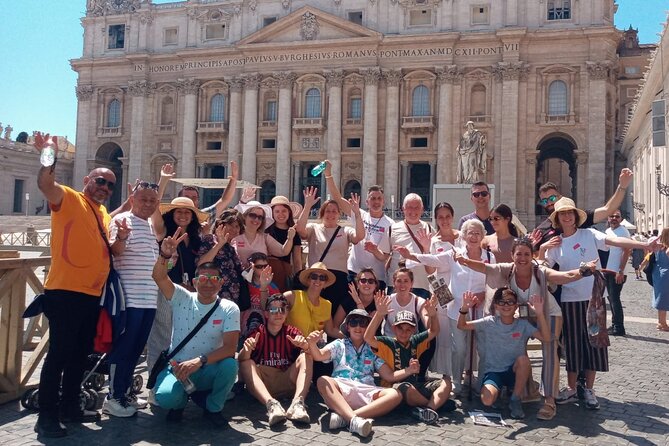
St. Peter’s Basilica is available only if you choose the appropriate option. This is where the tour description requires careful reading.
The Basilica may be reached through a connection from the museums in some circumstances, but that passage is closed on Wednesday afternoons and in some afternoon departures. You may instead need to enter from St. Peter’s Square on your own.
Access to the Basilica is also not the same as skipping the security line. All visitors must pass through Vatican security, and during busy periods that line can take a long time. One included access option does not guarantee instant entry or a private escort into the church.
The Basilica can close for religious ceremonies and events, sometimes without advance notice. It is closed on Wednesdays and certain religious holidays. If it is essential to you, check the date carefully and keep your expectations flexible.
The Basilica itself deserves time. This tour gives you a way to add it to a compact Vatican day, but it may not provide the slow, independent visit you want. If you care most about studying the church, its chapels, or its major monuments, plan for the possibility that you will need to visit separately.
Pace, crowds, and physical demands
This is an active three-hour outing. You will walk through long museum corridors, stand during explanations, manage stairs, and stay with a group in crowded spaces.
A group of up to 20 is manageable, but it is not intimate. Some guides are especially good at answering questions and keeping everyone involved. Others may move quickly to meet the Vatican schedule. Your experience depends partly on the guide and partly on how crowded the museums are that day.
Comfortable walking shoes are a wise choice. If you are traveling with older family members, children, or anyone who needs frequent pauses, consider the pace carefully. A guide can help you see the main works efficiently, but this is not a relaxed afternoon in a quiet gallery.
The headset is one of the tour’s practical strengths. It prevents the common problem of hearing only fragments while the guide speaks ahead of you. Still, stay alert at turns and doorways. A separated group can be difficult to rejoin in the Vatican’s crowded corridors.
Is $74.70 good value?
At $74.70 per person, the price is reasonable if you value timed museum entry and a guide who can give structure to a huge collection. The Vatican’s long lines can consume a large part of your day, so avoiding the main ticket queue has real value.
You are also paying for interpretation. The best guides turn unfamiliar names and objects into a story you can follow. The tour has received especially strong praise for guides who explain art in plain language and add historical details without assuming that you already know Renaissance painting.
The price is less attractive if you mainly want to wander alone or spend a long time in the galleries. You will see highlights, not every room, and the pace may leave you wishing for more time.
St. Peter’s Basilica access should be judged separately. Read the selected option carefully and remember that mandatory security can still mean a long wait. The tour is best value when you want a guided introduction and efficient museum entry, not when you expect a private escort through every part of the Vatican complex.
Free cancellation is available until 24 hours before the start time. After that, changes and cancellations are not accepted for a refund.
Who should book this Vatican experience?
I would choose this tour for a first visit to Rome, especially if you want the Vatican’s main sights without spending a full day planning the route. It suits anyone who likes a guide’s context but does not need a private experience.
It is also a sensible choice for people who worry about missing the famous works. The guide can point you toward the Apollo Belvedere, Laocoön, Gallery of Maps, Raphael Rooms, and Michelangelo’s frescoes in one organized visit.
I would think twice if you are a serious art student, need a slow pace, or want long periods of quiet observation. A private or self-guided plan may give you more control.
Should you book it?
Book this tour if your priorities are efficient museum entry, clear highlights, and a guide-led introduction. The skip-the-ticket-line museum access is useful, the headset keeps the commentary audible, and the route covers the Vatican’s essential artistic landmarks.
Before booking, confirm the Basilica option, check the date for Wednesday or religious-holiday restrictions, and leave extra time after the tour in case security or crowd control slows you down. Arrive early, bring photo ID, cover your shoulders and knees, and expect a brisk walk.
If you can accept those limits, this is a practical way to meet the Vatican’s greatest works in a short visit. If you want a quiet, detailed study of the museums and Basilica, choose a slower format instead.
FAQ
How long does the Vatican tour last?
The tour lasts approximately three hours.
Is skip-the-line entry included?
Skip-the-ticket-line entry to the Vatican Museums and Sistine Chapel is included. This does not remove mandatory security checks.
Is St. Peter’s Basilica included?
Access to St. Peter’s Basilica is available if you select the appropriate option. Basilica entry can be affected by security procedures, ceremonies, religious events, and unexpected closures.
Is the tour offered in English?
Yes. The tour is offered in English.
How large is the group?
The group can include a maximum of 20 people.
Where does the tour start?
The meeting point is Via Vespasiano, 26 or 28, in Rome.
Where does the tour end?
The listed end point is the Sistine Chapel in Vatican City. If the Basilica connection is closed, you may need to reach St. Peter’s Basilica separately through St. Peter’s Square.
What should I wear?
Your shoulders and knees must be covered. Sleeveless tops, shorts, miniskirts, and low-cut clothing are not allowed.
What happens if I arrive late?
Late arrivals may not be admitted, and no refund is provided for late arrival or nonattendance. The Vatican enforces strict timed entry, so arrive early.
Just added around Rome
- Boat excursion to Gaeta with a stop for swimming and snorkeling 2 HOURS★ 5.0 · 240 reviews
- Palatine Hill and Roman Forum Tour with Fast-Track Entrance★ 4.2 · 417 reviews
- Tivoli: Villa D’Este & Villa Adriana Pass & App Audioguide★ 4.4 · 364 reviews
- Tivoli: Villa D’Este Entry Ticket and App Audio Guide★ 4.3 · 191 reviews
- From Rome: Villa D’Este & Villa Adriana Day Trip with Lunch★ 4.4 · 289 reviews
- Vatican Museums & Sistine Chapel Skip-the-Line Guided Tour★ 4.6 · 254 reviews
- Rome: Capitoline Museums and Centrale Montemartini Tickets★ 4.4 · 328 reviews
- Rome: The Three Tenors at St. Paul’s Church Concert Ticket★ 4.7 · 699 reviews
Vatican Tours, compared.
Vatican: Museums & Sistine Chapel Entrance Ticket
Read our review →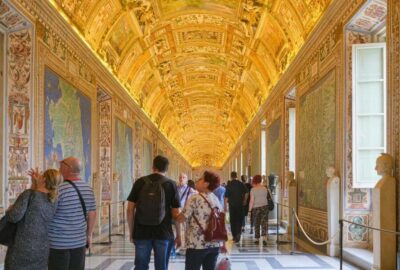
Vatican Museums & Sistine Chapel Tour with Optional Basilica
Read our review →
Vatican Museums, Sistine Chapel & St Peter’s Basilica Guided Tour
Read our review →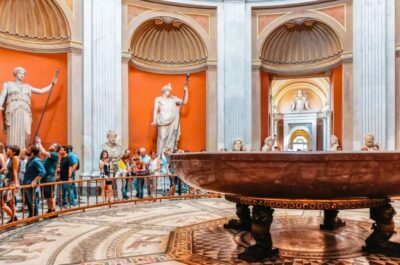
Vatican Museums, Sistine Chapel & Basilica Tour
Read our review →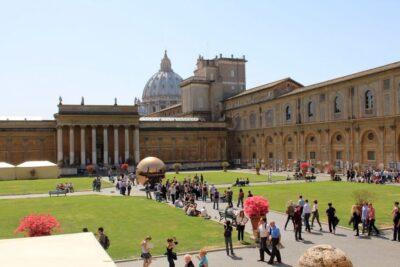
Vatican Museums & Sistine Chapel Skip-the-Line Entry Ticket
Read our review →Vatican Museums, Sistine Chapel & Basilica Tour
Read our review →
Skip-the-Line Group Tour of the Vatican, Sistine Chapel & St. Peter’s Basilica
Read our review →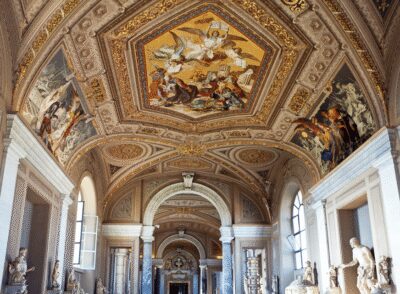
Vatican Museums & Sistine Chapel Guided Tour
Read our review →Browse the lists this tour appears in