
Reviewed · TRAIN EXPERIENCES
Ancient Ostia Antica Semi-Private Day Trip from Rome by Train with Guide
Ostia Antica gives you something Rome itself rarely can: a chance to walk through an entire ancient city. Along its broad main street, you pass apartment blocks, taverns, baths, temples, shops, and an amphitheater, all spread across a site large enough to make four hours feel useful rather than rushed.
I like two things right away. The train ride is simple, with your guide handling the round-trip tickets, and the small group keeps the outing more personal than a large coach trip. I also like the focus on ordinary Roman life, not just emperors and gladiators. The main consideration is physical: expect uneven ground, stairs, plenty of walking, and a guide-led pace that may not suit everyone.
Key points at a glance
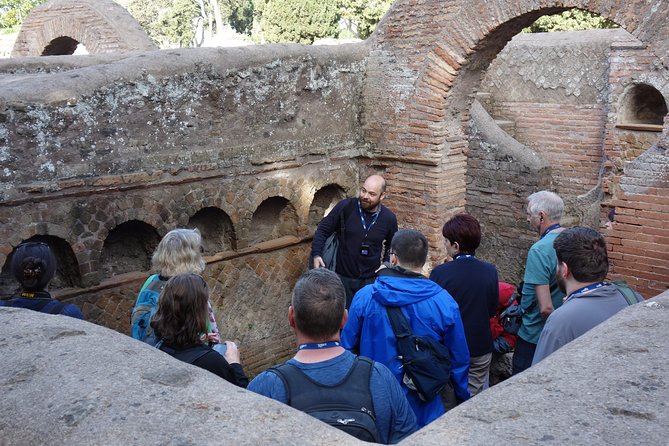
- A full ancient port city: Walk the Decumanus Maximus, the Baths of Neptune, the Forum of the Corporations, taverns, apartments, and the theater district.
- Easy transport from Rome: Meet near Piramide metro station, then ride the train with your guide to Ostia Antica.
- Small group size: The tour accepts a maximum of 12 people, giving you more room for questions and easier contact with the guide.
- A strong Pompeii alternative: Ostia is closer to Rome and offers a broad look at everyday Roman life without requiring a full-day outing.
- About 2.5 hours at the ruins: The guided walk covers the main sights, with some time afterward to continue exploring independently.
- Good value at $59.26: Train tickets, site admission, and an English-speaking guide are included, so the price is fairly clear from the start.
Why Ostia Antica is worth leaving central Rome
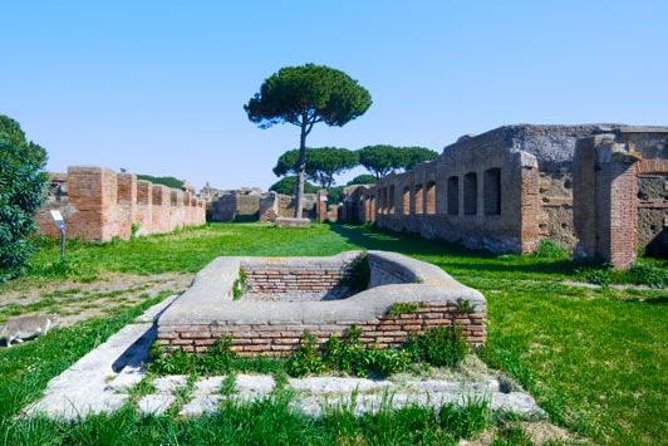
Many ancient sites show you one monument at a time. Ostia Antica lets you see how a Roman town worked as a whole. You walk down a street, turn into a public bath, pass a bakery or shop, and then find yourself beside an apartment block or temple.
That change of scale matters. Rome can make ancient history feel grand and distant. Ostia brings it down to street level. You can picture people living above shops, meeting in public spaces, bathing, worshipping, trading, and watching performances.
Ostia began as Rome’s port city and grew into a major settlement. The ruins date as far back as the 4th century BC, and the town once supported more than 100,000 people. Its location near the coast helped connect Rome with goods and people arriving from across the Mediterranean.
The site is sometimes compared with Pompeii, but it offers a different experience. Pompeii is famous for its sudden destruction and dramatic preserved details. Ostia is especially useful for understanding the daily structure of a Roman city. It is also much easier to reach from Rome, making it a smart choice when you want ancient ruins without giving up a full day.
More Day Trips in Rome
- Tivoli Full Day Trip from Rome: Hadrian’s Villa and Villa D’Este
★ 4.5 · 1,730 reviews - Rome: 1 Day Vatican & Colosseum Tour
★ 4.5 · 1,081 reviews - Hadrian’s Villa and Villa d’Este Half-Day Trip from Rome
★ 3.5 · 808 reviews
Meeting near Piramide and riding out by train
The experience begins at Piazza Ostiense, near the Piramide metro station. You do not receive hotel pickup, so you need to make your own way to the meeting point. Allow extra time. One practical tip is to arrive about 20 minutes early and check your messages on the morning of the tour for any final meeting instructions.
Your guide provides the train tickets, then the group boards together for the ride southwest from Rome. This is not a luxury transfer. It is ordinary public transport, which is part of the appeal. You get a look at the practical side of moving around Rome, and you avoid the cost and hassle of arranging the trip alone.
The ride also helps the half-day plan work. You are not spending a large part of the outing in a coach or waiting for a private vehicle. The train takes you close to the archaeological park, and your guide keeps the group together during the transfer.
The return journey follows the same general plan. The tour ends back at the original meeting point in Rome. Since public transport and site visits can occasionally take longer than planned, avoid booking a tight appointment immediately afterward.
The Decumanus Maximus sets the scene
At Ostia Antica, the guided walk lasts about 2.5 hours. The first major feature is the Decumanus Maximus, the broad main road that runs through the settlement. This is an excellent place to begin because it gives you a sense of the town’s size and organization.
Your guide uses the street to explain how Ostia functioned as a working port. You are not simply looking at scattered stones. You are following the route people used to move through town, conduct business, visit public buildings, and reach entertainment venues.
Roman statues still line parts of the walkways, and the preserved street plan helps you read the ruins. The site does not present everything in a polished, modern package, so a guide is useful here. Without context, a low wall may look like just another ruin. With an explanation, it can become part of a shop, home, bath, or public building.
Guides vary by departure, but several names have received particularly warm praise for their delivery and care, including Alberto, Barbara, Cat, Laura, Rob, Roberto, Alfredo, Caterina, Liv, and Eduardo. Do not assume a particular guide will lead your departure, but expect the experience to depend heavily on who is assigned.
Mosaics at the Baths of Neptune
The Baths of Neptune are one of the tour’s clearest visual highlights. Their large mosaic shows Neptune, the Roman god of the sea, riding behind a four-horse chariot. It is the sort of detail that rewards a slower look.
The baths also show how much Roman public life revolved around shared facilities. They were not merely places to wash. Bath complexes were social and civic spaces, and their scale gives you a useful sense of the resources available in a major port town.
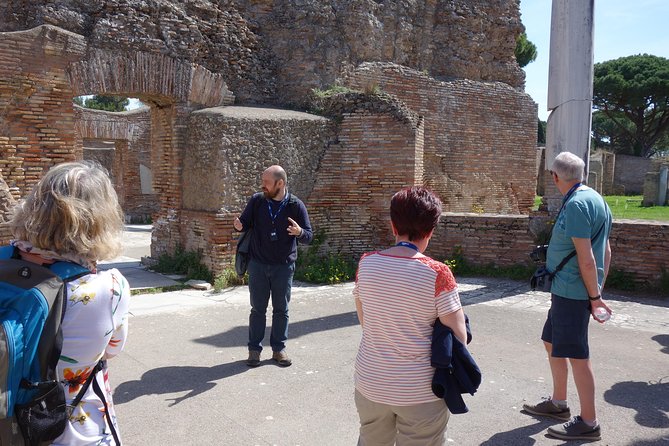
This is one place where a guide can add real value. The mosaic is easy to admire on your own, but an explanation of its subject, setting, and role within the bath complex helps you connect art with daily life.
Hot weather deserves attention here. The ruins offer exposed walking, and one group described temperatures near 95 degrees Fahrenheit. Good guides have adjusted stops toward shade and pointed out places to refill water bottles, but conditions can still be demanding. Bring water, wear a hat, and use shoes suited to uneven surfaces.
More Private Tours in Rome
- Rome by Golf Cart Private Tour: Beyond the Landmarks
★ 5.0 · 4,361 reviews - Early Morning Vatican, Sistine, St. Peter’s Semi or Private Tour
★ 5.0 · 3,779 reviews - Rome on a Golf Cart Semi-Private Tour Max 6 with Private Option
★ 5.0 · 2,502 reviews - Rome Private Arrival Transfer: Fiumicino Airport to Hotel in Rome
★ 4.5 · 2,492 reviews
The amphitheater and the Forum of the Corporations
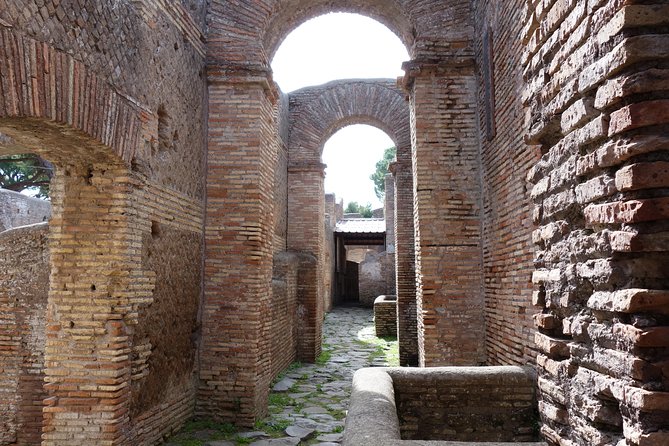
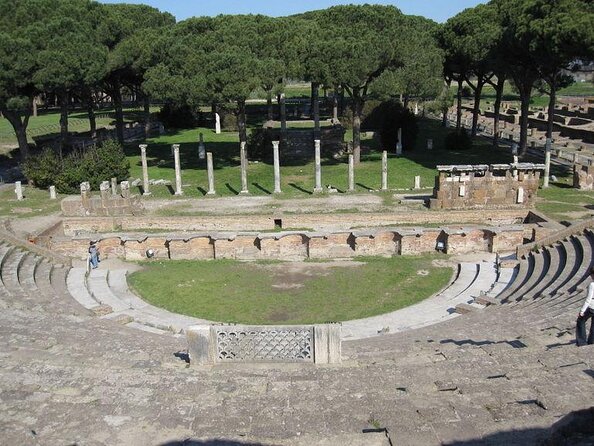
Ostia’s amphitheater dates to 12 BC and held about 3,500 spectators. Sitting or standing inside it gives you a pleasing change of viewpoint. Instead of looking at the theater from below as an isolated monument, you can understand how it fit into the town around it.
The amphitheater is large enough for good photographs, but do not expect a private setting. School groups and other organized parties can appear at the site, especially during busy periods. A small tour group helps, but it does not remove the need to share the ruins.
Nearby, the Forum of the Corporations offers another look at Ostia’s commercial life. The name points to the town’s business associations and port connections. Your guide can help you see how trade shaped the city and why Ostia was important to Rome.
The Collegiate Temple adds a religious note to the route. The combination of commercial buildings, sacred spaces, public baths, and entertainment venues is what makes this site so useful. You are not ticking off unrelated monuments. You are seeing the parts of an ancient town working together.
Shops, apartments, and ordinary Roman routines
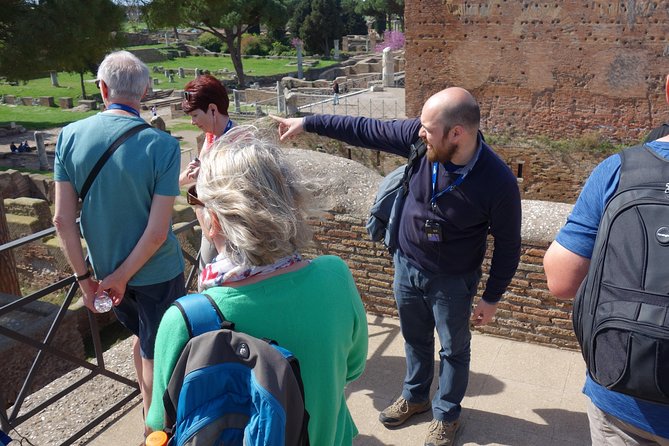
I find the smaller buildings as important as the famous monuments. Shops and apartments line parts of the route, offering clues about how people lived above or beside commercial spaces.
These structures make Ostia feel more personal. A grand monument tells you what Roman officials wanted to display. A cramped living space or storefront tells you more about the routines of people who worked, rented, sold goods, cooked, and raised families.
The guides praised most warmly, including Alberto and Laura, were able to connect the ruins with daily routines in clear, memorable ways. That is the real reason to choose a guided visit. You are not paying only for directions through the park. You are paying for someone to help turn the remains into a readable town.
Still, the quality can vary. Some departures have had guides who were less expressive or moved too quickly for people with mobility limits. That does not make the site less worthwhile, but it is a fair caution. If you need extra time, use a cane, or find stairs difficult, tell the guide at the beginning and consider whether a self-guided visit would let you move more comfortably.
What the $59.26 price really covers
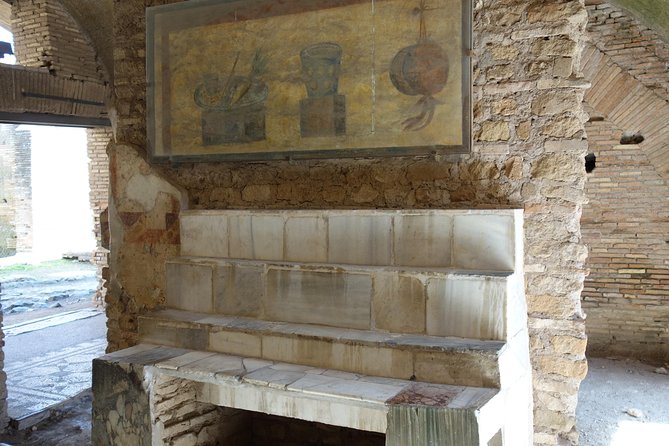
At $59.26 per person, the price is reasonable for a four-hour experience because three costs are bundled together: the train tickets, the Ostia Antica admission, and the English-speaking guide.
You could reach Ostia on your own, buy admission, and use an audio guide. That option gives you more freedom and may cost less depending on current transport and ticket prices. It also leaves you to find the right train, understand the site layout, and decide what deserves your time.
The paid tour makes more sense if you want a clear route and historical explanation. Ostia is big enough to overwhelm first-time visitors. A guide takes you to the major features during the 2.5-hour walk, then you may have the option to continue exploring after the formal tour. The museum has also been praised as a worthwhile extra stop for those who remain longer.
The maximum group size is 12, although one account described a group under 15. The stated limit is 12, so that is the figure to use when judging the experience. This is small enough for questions and easier movement, but it is still a group tour, not a private visit.
Who should book this half-day outing
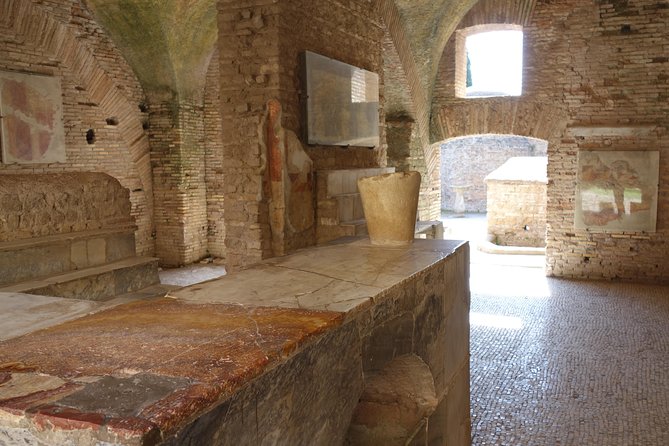
This tour suits you if you like ancient history but want more than Rome’s headline monuments. It is especially good for people curious about ordinary Roman life, urban planning, trade, and architecture.
Families can do well here, particularly when the guide keeps the stories lively. One guide was praised for making the visit work for a child, and the shorter format can be easier for teenagers than a full day at Pompeii. You can also continue by train toward the beach afterward, according to practical advice shared by past participants, though that continuation is not part of the tour itself.
The trip is less suitable if you want a slow, unstructured archaeological visit. The guide leads the group at a set pace, and four hours includes the train journey in both directions. You will see the key areas, but you will not examine every building.
It may also be a poor fit for anyone who struggles with stairs, uneven paths, or extended walking. The site requires moderate physical fitness. If heat is forecast, take the conditions seriously. There may be shade breaks, but much of the park is open.
Practical details that improve the day
Wear sturdy, comfortable shoes. The ruins include uneven ground and stairs, and sandals with thin soles may make the walk harder.
Bring water, sun protection, and a hat. The site can be hot, and shade is not available at every stop. A refillable bottle is useful because guides may point out water stations.
Keep the meeting details handy. The start point is Piazza Ostiense 11, 00154 Rome, near the Piramide metro area. The activity ends back there, and hotel pickup and drop-off are not included.
Children under 18 may be asked to show identification at the archaeological site. Bring an ID card for each child.
The tour requires good weather and a minimum number of participants. If poor weather or insufficient bookings cancel the outing, you are offered another date or a full refund. Otherwise, cancellation is free up to 24 hours before the start time. Changes or cancellations inside that window are not accepted and are not refundable.
Should you book the Ancient Ostia train tour?
I would book it if you want a guided introduction to one of Rome’s most rewarding archaeological sites and prefer a half-day outing over a full-day trip to Pompeii. The included train fare, admission, and small group make the $59.26 price easy to understand, while the site itself offers a strong look at Roman life beyond famous monuments.
Book it with sensible expectations. The guide will shape the experience, and the walking can be tiring in heat. If you need a very gentle pace or want to study every ruin at leisure, go independently with an audio guide instead.
For most visitors, though, Ostia Antica is a smart use of four hours. You get out of central Rome, see a port city rather than another imperial showpiece, and return with a clearer picture of how Roman people actually lived.
FAQ
How long does the Ancient Ostia Antica tour last?
The experience lasts about four hours in total. Around 2.5 hours are spent walking through the archaeological site, with the remaining time used for the train journey and meeting arrangements.
Where does the tour start?
It starts at Piazza Ostiense 11, 00154 Rome, near the Piramide metro station. The meeting point is in Rome, and the activity ends back there.
Are train tickets included?
Yes. The guide provides tickets for the train journey to Ostia Antica and the return trip to Rome.
Is the Ostia Antica entrance ticket included?
Yes. Admission to the archaeological site is included in the tour price.
How large is the group?
The tour has a maximum of 12 people. It is described as a semi-private small-group experience.
Is the tour conducted in English?
Yes. An English-speaking guide leads the tour.
Is the tour suitable for people with limited mobility?
The tour requires a moderate level of physical fitness. Expect stairs, uneven ground, train transfers, and a considerable amount of walking. Anyone with mobility concerns should consider carefully whether the pace and terrain will be suitable.
Can I cancel for a full refund?
You can cancel for a full refund at least 24 hours before the scheduled start time. Cancellations or changes made less than 24 hours in advance are not accepted or refunded. If poor weather or an insufficient number of bookings cancels the experience, you are offered another date or a full refund.
Just added around Rome
- Boat excursion to Gaeta with a stop for swimming and snorkeling 2 HOURS★ 5.0 · 240 reviews
- Palatine Hill and Roman Forum Tour with Fast-Track Entrance★ 4.2 · 417 reviews
- Tivoli: Villa D’Este & Villa Adriana Pass & App Audioguide★ 4.4 · 364 reviews
- Tivoli: Villa D’Este Entry Ticket and App Audio Guide★ 4.3 · 191 reviews
- From Rome: Villa D’Este & Villa Adriana Day Trip with Lunch★ 4.4 · 289 reviews
- Vatican Museums & Sistine Chapel Skip-the-Line Guided Tour★ 4.6 · 254 reviews
- Rome: Capitoline Museums and Centrale Montemartini Tickets★ 4.4 · 328 reviews
- Rome: The Three Tenors at St. Paul’s Church Concert Ticket★ 4.7 · 699 reviews
Train Experiences, compared.
Bernina Red Train, Swiss Alps & St Moritz From Milan
Read our review →
Swiss Alps Bernina Red Train and St.Moritz Tour from Milan
Read our review →
Rome to Pompeii Guided Tour with Wine & Lunch by High Speed Train
Read our review →
Small-Group Lake Como & Lugano by Swiss Train + Boat Cruise
Read our review →
From La Spezia: Shore Excursion to Cinque Terre by Train
Read our review →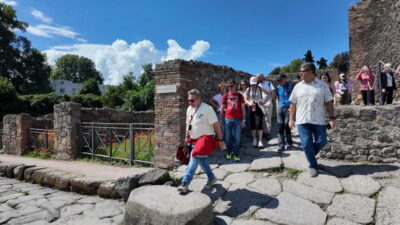
From Naples: Guided tour of Pompeii skip-the-line and round-trip train
Read our review →
Intimate Small-Group Bernina UNESCO Scenic Train on Swiss Alps
Read our review →Browse the lists this tour appears in