
Reviewed · BOLOGNA TOURS
Guided Tour of Mosaic Tiles in Ravenna
Ravenna’s mosaics are not small decorative details. They cover entire walls and domes in gold, blue, marble, and glass, turning early Christian churches into glowing storybooks. This walking tour links the art to the rulers, bishops, and religious changes that shaped the city.
I like that admission is included, so you can move through the main monuments without sorting out several tickets yourself. I also like the way guides such as Elisabetta, Chiara, Marco, Francesca, and Serena bring in Dante, Byzantine emperors, and the meaning behind the images. The main caution is practical: groups can reach about 28 people, audio equipment is not always perfect, and a planned 2 to 3 hours can run longer.
Key points to know before booking
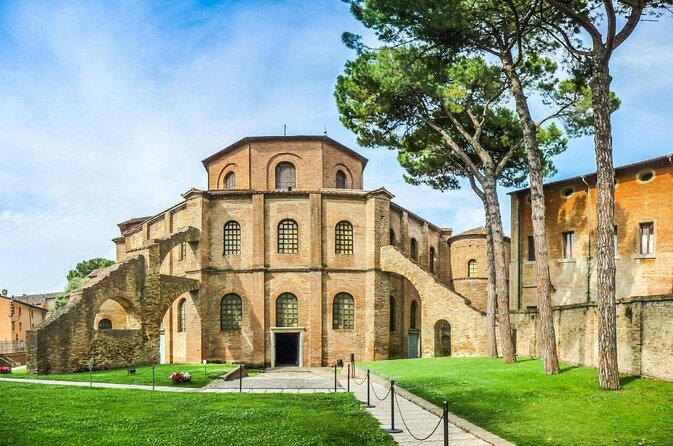
- Three essential monuments are named: the Mausoleum of Galla Placidia, Basilica di San Vitale, and Neonian Baptistery.
- Some routes include about five mosaic sites, making this a strong introduction to Ravenna’s major religious art.
- Entry is included at the listed monuments, which helps justify the $33.86 price.
- The tour is mostly on foot, with plenty of standing inside churches and monuments.
- A radio and earpiece may be provided for larger groups, but clear sound depends on the equipment and the guide.
- Allow extra time: the advertised duration is 2 to 3 hours, though the visit can last closer to four hours.
Why Ravenna’s mosaics deserve a guided visit
Ravenna is easy to underestimate. Its streets can feel quiet and modest, yet several unassuming brick buildings contain some of Italy’s most important early Christian art. Inside, tiny glass pieces catch the light and form emperors, saints, apostles, stars, animals, plants, and scenes from the Bible.
You can visit these monuments on your own, but a guide helps you read what you are seeing. The images are not simply pretty patterns. They reflect the politics of the Roman Empire, the growth of Christianity, the influence of Byzantium, and the way rulers used church decoration to show power.
That context is the main reason to book this experience. Guides explain how architecture and religion work together, then point out details you might otherwise miss. The strongest guides, including Elisabetta, Chiara, Marco, Francesca, and Serena, have been praised for keeping the story lively while still covering art, architecture, society, and religious ideas.
The tour also gives you a sensible first look at Ravenna. Instead of spending half a day finding the right entrances and deciding which monuments matter most, you follow a planned route through the center. For a first visit, that focus is useful.
A few more Bologna half-days worth a look
- Bologna: City Center Walking Tour
★ 4.5 · 3,478 reviews - Ravenna: UNESCO Monuments and Mosaics Guided Tour
★ 4.8 · 3,108 reviews - Maranello: Ferrari Museum Entrance Ticket
★ 4.6 · 1,505 reviews
Starting at Piazza San Francesco
The meeting point is Piazza San Francesco 7, at the Tourist Information Office. This detail matters because the street address alone can be unclear. You need to enter the information office and check in there before the visit begins.
The tour is offered in English and uses a mobile ticket. Confirmation arrives at booking, and the starting point is near public transportation. The activity ends somewhere different from the starting point, so do not plan to retrieve anything from the meeting location afterward.
Plan to arrive with comfortable shoes. This is a walking tour, not a coach excursion, and the route links several monuments through Ravenna’s streets. You will also spend time standing inside religious buildings, often while looking upward.
Group size can reach 28 people. That is not a small private walk, but the radio system helps you hear the guide while standing a little apart from the main cluster. It also lets you look closely at a mosaic without pressing into the group.
The audio system deserves a realistic note. It works well when the equipment is functioning and the guide speaks clearly. On one difficult visit, the sound was poor and a strong accent made the commentary hard to follow. If you cannot hear, say so early rather than waiting until the group has moved on.
The starry ceiling of Galla Placidia
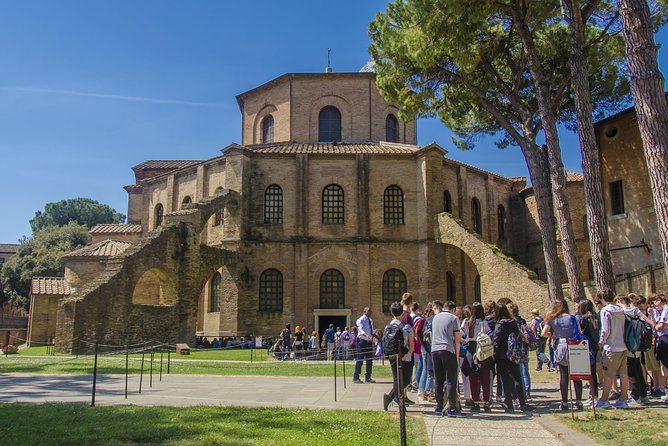
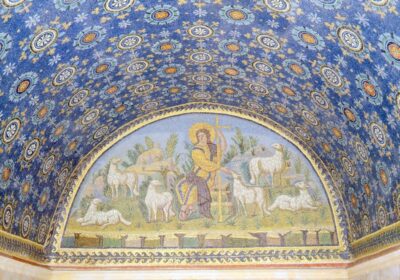
The Mausoleum of Galla Placidia is a small Latin-cross building with a plain exterior. That modest shell makes the interior reveal more dramatic. Once inside, your attention goes straight to the mosaic-covered surfaces and the famous ceiling filled with stars.
Galla Placidia ruled the Western Roman Empire in the fifth century, and the mausoleum was built at her direction around the middle of that century. The building is compact, so ten minutes can be enough for a guided introduction, though you may want to linger for a closer look.
The starry dome has held people’s attention for centuries. Dante Alighieri was especially moved by it and drew inspiration from the stars for lines in the Divine Comedy. That connection gives the room a literary link beyond its religious purpose.
This is a place where a guide’s interpretation helps. At first glance, you may simply see a field of blue and gold stars. With explanation, the ceiling becomes a meditation on light, heaven, and the hope of eternal life.
The drawback is that the mausoleum can feel crowded. It is small, and the visit is brief. You may need to share the best viewing positions with other people, so keep your eyes moving and listen carefully while the guide explains the room.
The imperial spectacle inside San Vitale
Basilica di San Vitale is the largest and most visually forceful stop on the named route. Built in the sixth century, it has an octagonal plan and clear eastern influence. Its size, height, and layered decoration give you more room to take in the art than at Galla Placidia.
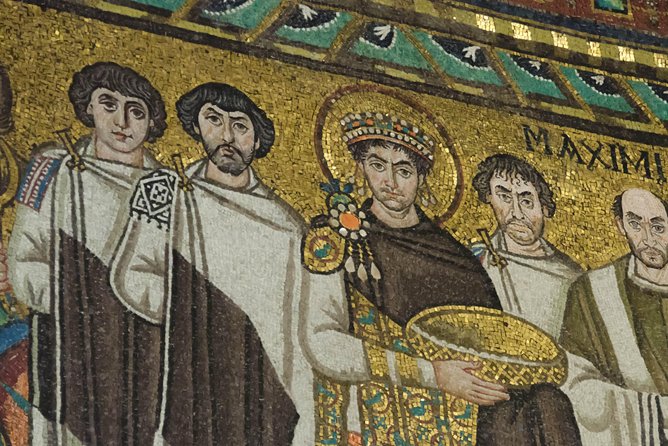
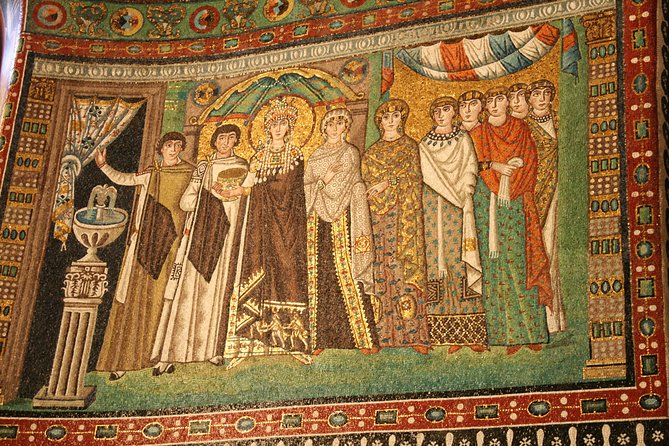
The apse mosaics are the main event. Look for the famous imperial portraits of Justinian and Theodora, shown with their processions. These are not casual portraits. They present the Byzantine rulers as powerful Christian leaders connected to the church and its ceremonies.
A guide can explain the relationship between the emperor, the empress, the clergy, and the sacred space. This is where Ravenna’s political story becomes especially clear. The decoration is religious, but it also communicates who holds authority.
The basilica’s large interior can make it easier to lose track of the group. That is another reason the radio receiver matters. You can look from floor to ceiling and still follow the commentary, provided the audio is working.
The listed visit lasts about 30 minutes. That is a useful amount of time for a guided overview, though not enough to inspect every panel. If you already have a strong interest in Byzantine art, you may want to return later and look at the details at your own pace.
San Vitale is also the best place to judge the guide’s style. A strong explanation covers symbolism, construction, architecture, and power without turning the visit into a lecture. The most praised guides have done that by mixing clear history with humor and practical pacing.
More Guided Tours in Bologna:
- Bologna: Walking Food Tour with a Local Guide
★ 4.8 · 882 reviews - Ferrara: City Highlights Walking Tour with Local Guide
★ 4.6 · 219 reviews - Colosseum, Roman Forum & Palatine Guided Tour
★ 4.7 · 63,148 reviews - Vatican Museums, Sistine Chapel & St Peter’s Basilica Guided Tour
★ 4.5 · 39,149 reviews
The blue dome of the Neonian Baptistery
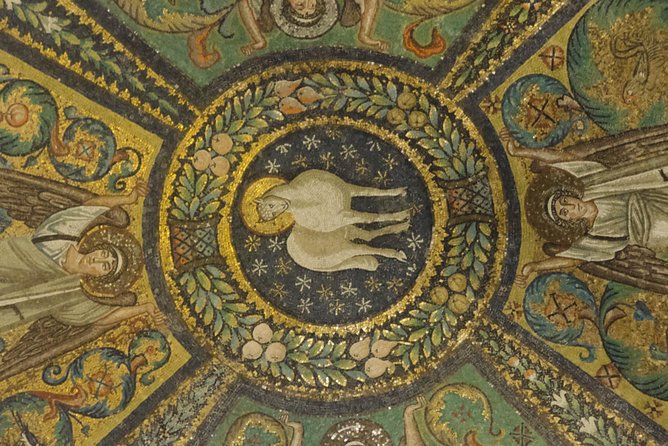
The Baptistery of the Orthodox, also called the Neonian Baptistery, is among Ravenna’s oldest monuments. The outside is simple brick, but the interior brings together marble, stucco, and mosaics with strong Hellenistic and Roman influence.
The dome shows the Baptism of Christ at its center. Around it, the twelve Apostles move in procession against a bright blue background made of small glass tesserae. It is a compact scene, but the circular design gives it energy as your eyes follow the figures around the dome.
The baptistery was commissioned by Bishop Neone in the middle of the fifth century. Its octagonal plan reflects the symbolism of renewal and the Christian ritual once performed here. The interior also holds a Renaissance baptismal font and preserves a fifth-century ambo.
This stop lasts about ten minutes. The building is not large, but the ceiling demands a slow look. If you have trouble standing and looking upward, take your time and use the walls and open space to find a comfortable position.
The baptistery also shows why Ravenna is best understood through several sites rather than one spectacular church. Each building has a different scale and mood. Galla Placidia feels intimate, San Vitale feels imperial, and the baptistery feels focused on ritual and initiation.
A route that can include five mosaic sites
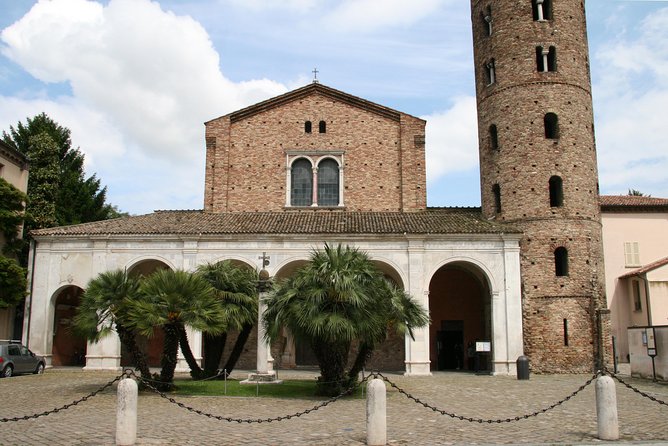
The named itinerary lists three principal monuments, while descriptions of the walking experience refer to visits to about five mosaic sites. The exact number can depend on the day’s route and access arrangements, so check the current schedule when you book.
That difference matters if you are planning the rest of your day. The tour is described as lasting roughly 2 to 3 hours, but a busy entrance, a larger group, or extra stops can push it longer. One visit lasted nearly four hours, and the extra time became difficult in cold weather.
The advantage of a longer route is clear. You get a broader view of Ravenna’s art instead of seeing only one church and one baptistery. The tradeoff is less control over your pace. You may not have much time to sit, sketch, photograph, or study every surface.
The tour moves through religious monuments, so the guide must keep the group quiet inside churches. In a group of 20 to 28 people, that can make it harder to hear every sentence. Stay near the guide when possible, and keep the earpiece in place even when you step aside to look at a wall.
What the guide adds to the experience
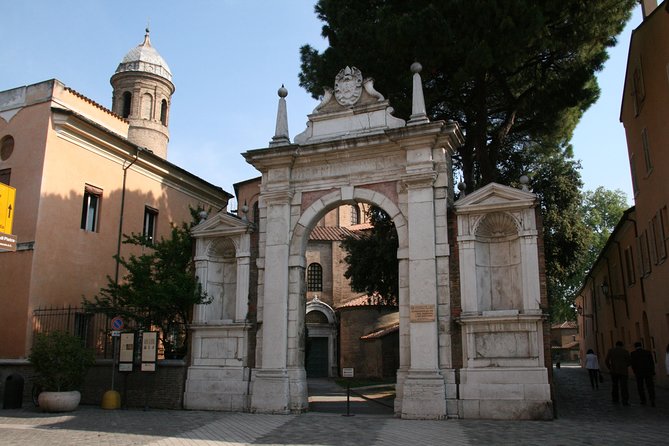
The most important part of this tour is not simply getting through the doors. It is learning how to interpret the scenes once you are inside.
The guides named in the feedback include Elisabetta, Chiara, Marco, Francesca, Serena, Silvia, Assunta, and Bardo. Their strongest shared role is to connect the images with Ravenna’s rulers, religious changes, architecture, and social life.
You may hear about Dante and the stars of Galla Placidia. You may also hear how imperial authority shaped religious decoration, especially in San Vitale. At the baptistery, the explanation can link the dome’s design to baptism and the structure of the building.
The best guides also answer questions and keep the route moving. That balance matters. Too much detail at one stop can leave the group rushed at the next, while too little context reduces the mosaics to attractive surfaces.
Guide quality can vary from day to day. A strong accent or weak microphone can make even a good explanation difficult to follow. This is not a reason to reject the tour, but it is a reason to stay alert and speak up if the sound cuts out.
Price, timing, and practical value
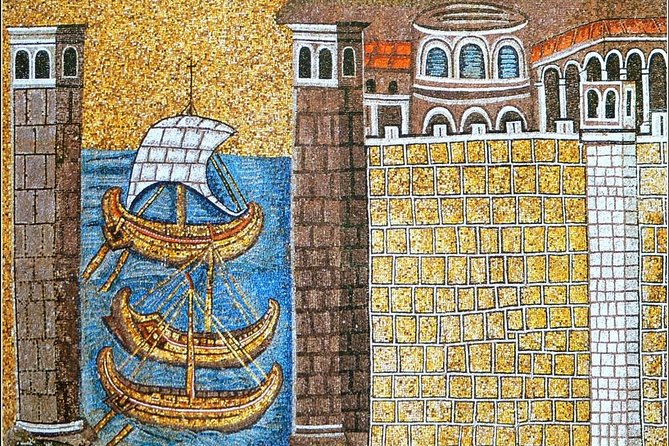
At $33.86 per person, the tour offers fair value if you want a structured introduction and the listed entrance fees. The price includes admission to the named monuments, so you are paying for both access and the guide’s interpretation.
I would book it for a first visit, especially if Ravenna is a day trip from Bologna and your time is limited. The tour helps you cover the major sights without wasting time on ticket planning or second-guessing the route.
The value is lower for someone who prefers long, quiet visits or already knows early Christian and Byzantine art well. You may want to enter independently, stay as long as you wish, and return to the mosaics at your own pace.
The tour is usually booked about 30 days ahead, so reserve early if your schedule is fixed. Free cancellation is available until 24 hours before the start time. Changes or cancellations inside that window are not accepted, and a minimum number of participants is required for the tour to operate.
Dress for the conditions. Religious buildings can feel cold, even when the weather outside is mild. A warm layer is a smart choice, especially if you are visiting in colder months or if the tour runs beyond its planned duration.
Who should book this Ravenna mosaic walk
I recommend it most strongly to first-time visitors, day-trippers, and anyone who wants the major monuments explained in plain English. It suits people who like history, religious art, architecture, and short walks with a clear purpose.
It is also a good choice if you want the meaning behind the images. The mosaics are beautiful enough to reward a quick look, but their full impact comes from understanding why emperors, bishops, saints, and apostles appear where they do.
Families and older visitors can participate, since most visitors can join, but the route includes walking and standing. If you need frequent sitting breaks, the 2 to 3 hour format may require some planning.
I would be cautious if you dislike groups, audio devices, or fixed timing. A group of up to 28 people can feel crowded in a small monument, and the tour may run longer than planned.
Should you book it?
Book this tour if you want to see Ravenna’s best-known mosaics and understand the religious and political ideas behind them without handling several entrances on your own. The $33.86 price is reasonable because admission is included and the guide gives structure to a remarkable but sometimes hard-to-read collection of monuments.
Skip it only if you prefer complete independence or need a tightly fixed schedule. For most first visits, this is an efficient and worthwhile introduction, especially when you get a clear guide such as Chiara, Elisabetta, Marco, Francesca, or Serena and a working radio system.
FAQ
Where does the tour begin?
The tour begins at Piazza San Francesco 7 in Ravenna, at the Tourist Information Office. Enter the office and check in there before the visit.
Where does the tour end?
The activity ends at a different location from the starting point. The provided details do not specify the exact ending address.
How long does the tour last?
The planned duration is approximately 2 to 3 hours. It can run longer, with one reported visit lasting close to four hours.
What monuments are included?
The named stops are the Mausoleum of Galla Placidia, Basilica di San Vitale, and Neonian Baptistery, also called the Baptistery of the Orthodox. Some descriptions of the route refer to about five mosaic sites.
Is admission included?
Yes. Admission is included for the listed monument visits.
Is the tour offered in English?
Yes. The experience is offered in English.
How large can the group be?
The tour can have a maximum of 28 participants. A radio device and earpiece may be used for larger groups.
Can I cancel for a full refund?
Yes, if you cancel at least 24 hours before the experience start time. Cancellations or changes made less than 24 hours in advance are not accepted for a refund.
Just added around Bologna
- Bologna Private Highlights & Hidden Gems Tour with a Local★ 5.0 · 359 reviews
- Bologna on the plate, Cooking Class with Alessia★ 5.0 · 260 reviews
- Bologna: Full meal Food Tour with Local Delights by Do Eat Better★ 5.0 · 541 reviews
- Bologna Local Pasta Cooking Class, Ragu, Spritz, Wine & Gelato★ 5.0 · 527 reviews
- Pastamama, Home Cooking Classes at Grace’s Home★ 5.0 · 521 reviews
- Bologna Private Food Tour with 6 or 10 Tastings★ 4.5 · 344 reviews
- Bologna Food Tour by Taste Bologna: Intimate Group (Max 10)★ 5.0 · 424 reviews
- Bologna: Pasta and Tiramisu Small Group Cooking Class with Wine★ 5.0 · 409 reviews
Bologna Tours, compared.

Bologna Food & Market Tour with 6 Tastings, Pasta, Wines & More
Read our review →
Bologna Food Experience: Factory tours & Family-Style Lunch
Read our review →
Maranello and Modena: Ferrari Museums Combo Tickets
Read our review →
Browse the lists this tour appears in