
Reviewed · ANCIENT RUINS
Agrigento: Valley of the Temples Ticket & App Audioguide
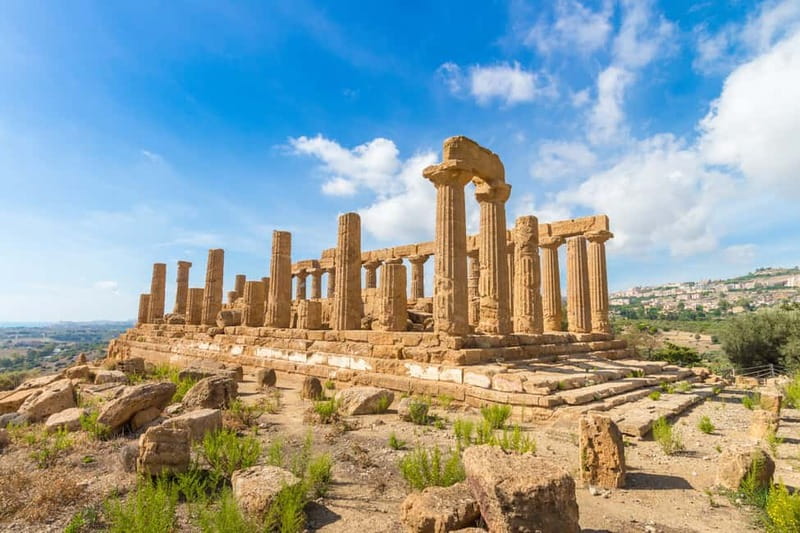
Agrigento’s Valley of the Temples gives you ancient Greece in Sicily, not behind museum glass but spread across a broad archaeological site with temples, aqueducts, stone terraces, and views toward the coast. The Temple of Concordia is the star, but the long walk between monuments is part of the experience.
I like the one-day flexibility and the chance to explore at your own pace with an app audioguide rather than being tied to a group. I also like the Pemcards souvenir feature, which lets you turn a digital photo into a real postcard. The catch is that skip-the-line does not always mean walk straight in: you must exchange the voucher for a paper ticket, and the audioguide arrangements can be awkward.
Key points to know before you book
- Start at the Temple of Juno entrance: Your voucher can only be exchanged at the ticket office near the Temple of Juno on Via Panoramica Valle dei Templi.
- Expect a long outdoor walk: The site covers about 1,300 hectares, with little shade and warm conditions in summer.
- The temples are the main event: Look for the Temple of Zeus, Temple of Concordia, and Temple of Heracles, along with aqueducts and the ancient gymnasium.
- The audioguide is digital, not live: Some people find the app useful, while others prefer the paid audio option available at the site.
- Plan your timing carefully: Early morning or late afternoon is more comfortable, and sunset can make the illuminated temples especially striking.
- Check the price before paying: At $19 per person, the ticket may be convenient, but some visitors find that buying at the entrance or choosing a combined museum ticket offers better value.
What the Agrigento ticket actually gives you
This is a self-guided entry ticket to the Valley of the Temples, not a guided tour. You receive fast-track access, a digital audioguide, and admission to the I Tesori d’Italia exhibition through December 31, 2025.
The ticket is valid for one day, but it allows only one entry. That matters because you cannot simply leave for lunch and return later on the same ticket. The site is large enough that you should plan your visit as one continuous outing.
At the listed price of $19 per person, the main value is convenience. You can arrange entry before reaching Agrigento, avoid the regular ticket queue when lines are long, and have historical commentary ready on your phone. The value is less clear during quiet periods, when there may be no meaningful queue and standard admission can cost less.
Some visitors also find a combined ticket with the museum a better deal. If the museum is part of your plan, compare the total cost before booking this ticket alone.
More Ancient Ruins in Sicily
- Agrigento: Valley of the Temples Skip-the-Line Sunset Tour
★ 4.5 · 1,512 reviews - Palermo: Agrigento and the Valley of the Temples Day Tour
★ 4.2 · 1,240 reviews - Agrigento: Valley of the Temples E-Scooter Tour
★ 4.6 · 557 reviews
Starting at the Temple of Juno entrance
The meeting point is important. You must go to the Temple of Giunone, or Temple of Juno, ticket office near Via Panoramica Valle dei Templi. This is the only place where the voucher can be exchanged.
Do not assume that another gate will accept the QR code. If you arrive at a different entrance, you may need to make your way to the correct office before entering. Build a little extra time into your arrival, especially if you are driving, arriving by taxi, or visiting at a busy hour.
The fast-track arrangement is useful, but it is not always instant entry. You still need to show or scan the voucher, receive the actual admission ticket, and pass through security. At busy times, this can still save time. On a quiet day, the advantage may be small.
A reduced-price ticket requires valid identification. Bring it with you rather than hoping the digital booking confirmation will be enough.
Following the ancient road through Akragas
Once inside, you are walking through the remains of Akragas, the Greek colony founded in the sixth century BC. It later became an important Greco-Roman center, and the site’s terraces show how public life once occupied these levels.
The scale is what makes this visit different from seeing one isolated temple. You move through an open archaeological area where monuments appear along a long route, with stonework, paths, trees, farmland, and distant views adding to the sense of place.
The audio commentary can help explain what you are seeing, especially if ancient Greek architecture is new to you. The ruins are impressive, but without context, several blocks of fallen stone can start to look alike. Use the map and signs to keep your bearings, and pause at the main monuments rather than trying to listen to every stop while walking.
The app audioguide is the weakest part of the package for some people. Technical problems, unclear scanning instructions, or only one person in a group being able to activate the audio can reduce its usefulness. If you mainly want historical explanation, check how the digital guide works before leaving the ticket office.
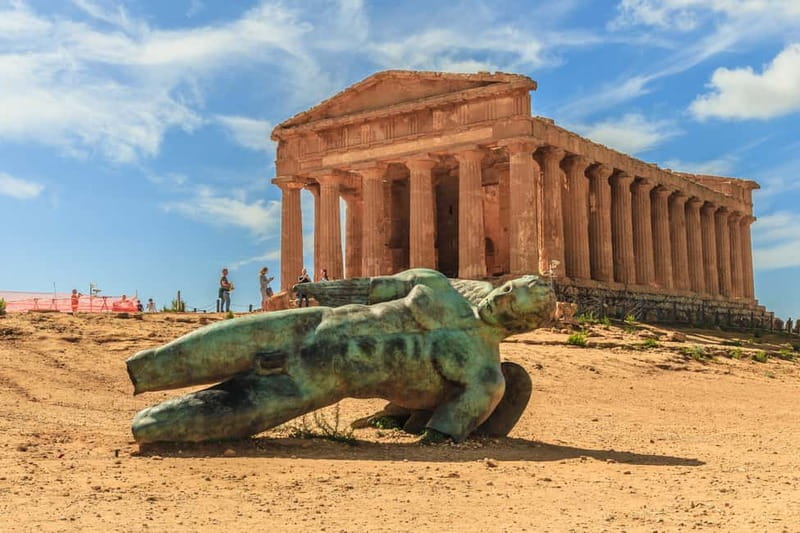
Temple of Concordia, the site’s great survivor
The Temple of Concordia is usually the emotional high point. Its Doric columns and strong proportions make it easy to picture the ancient building, even though the surrounding city has disappeared.
This is also one of the best places to slow down. Walk around it, look at the surviving structure from different angles, and notice how the temple sits within the wider valley. The contrast between the orderly columns and the broken remains elsewhere helps you understand how much of Akragas has been lost.
The site is often compared with Greece, and that comparison makes sense in the Doric architecture. Yet the setting is distinctly Sicilian. You get ancient stone, open countryside, and distant coastal views rather than a dense urban museum setting.
Photography is easy here, but the bright sun can flatten the details. Morning and late afternoon usually give the monuments a softer appearance. If you choose a late visit, the changing light can add a lot to the experience.
More Entry Tickets in Sicily
- Palermo: Hop-on Hop-off Bus Tour 24-hour Ticket
★ 3.9 · 2,410 reviews - Taormina: Ancient Theater Skip-the-Line Ticket & Audio Guide
★ 4.5 · 1,701 reviews - Mount Etna: Roundtrip Cable Car and 4×4 Bus Ticket
★ 4.3 · 1,602 reviews - Catania: Underground Catania Tickets and Guided Tour
★ 4.6 · 536 reviews
The Temple of Zeus and the fallen giants
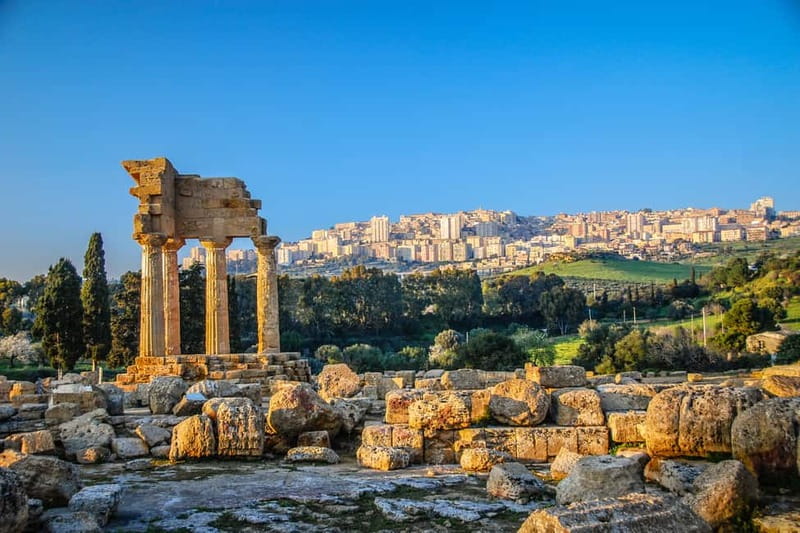
The Temple of Zeus is a different sight. It is known through massive fallen pieces and scattered remains rather than a complete row of standing columns. The scale still gives you a sense of the original ambition.
This part rewards patience and a little imagination. You are not looking at a complete temple, so the audioguide or site signs are helpful in explaining the plan and the size of the structure. It is also a reminder that the Valley of the Temples is not simply a collection of perfectly preserved buildings.
The route continues through other archaeological remains, including the Temple of Heracles. You will see enough surviving Doric elements to make the architectural pattern clear, but each monument has a different level of preservation. That variety keeps the walk from feeling repetitive.
Aqueducts, terraces, and the ancient gymnasium
The aqueducts add another layer to the visit. Temples attract the eye, but water systems reveal how the settlement functioned day to day. They help shift your attention from grand religious buildings to the practical work needed to support a large ancient city.
The gymnasium is also worth seeking out. It was used for athletic, educational, and recreational activities, so it gives you a glimpse of public life beyond worship and monuments. The remains may not have the instant impact of the Temple of Concordia, but they help fill in the human side of Akragas.
Use the map as you go. The site is extensive, and signs are not always as clear as they could be. A self-guided visit gives you freedom, but it also means you are responsible for choosing your route and deciding how much time to give each area.
How hard is the walk?
The walking is not described as strenuous, but there is plenty of it. You are outdoors, often on uneven archaeological paths, and the route includes changes in level. Anyone who dislikes long walks should plan pauses rather than trying to cover the whole area quickly.
There is limited shade, which makes heat the main practical problem. Summer afternoons can be especially tiring. Carry water, wear comfortable shoes, and bring sun protection. Some drinking fountains may be working, but you should not depend on finding one exactly when you need it.
The site is wheelchair accessible, although ancient paths and archaeological surfaces can still affect how easily you move through individual areas. If mobility is limited, the shuttle service mentioned in the visitor information can help with the return from the temple area to the entrance. It costs extra, so allow for that in your budget.
Families can manage the visit, but young children may lose patience with the distance and heat. A stop at the café halfway through the valley can provide a useful break. The most important choice is timing: an early start or late-day visit is kinder to everyone.
The best time to visit
Early morning is the safest choice for cooler temperatures and fewer queues. It also gives you more energy for the longer route. If you are visiting in summer, this is the timing I would favor.
Late afternoon can be even more memorable. A visit around sunset lets you see the temples in daylight, then watch the colors change as evening arrives. After dark, some temples are lit, giving them a different and more dramatic appearance.
One visitor chose a 6 p.m. entry in September and saw the site move from late sunlight to evening illumination. That timing does depend on the season and the available entry slot, so check the schedule before you book. The ticket is valid for one day, but the booking system still asks you to select from available starting times.
Avoid assuming that an afternoon ticket will be comfortable simply because the temperature is manageable at home. Agrigento’s open setting offers little protection from direct sun.
Is the digital audioguide worth using?
The audioguide is included, which makes it a reasonable extra if it works well on your phone. It can provide the historical framework that the signs may not always offer, and it lets you stop and start at your own pace.
The experience is not as personal as having a live guide. There is no guide accompanying you, and no one is available to answer questions as you walk. If you want a story-driven visit with conversation and local interpretation, this product may feel limited.
There can also be a second layer of confusion. You exchange the voucher for entry tickets, then deal with the audio arrangements separately. Some people find the process unnecessarily complicated, and others report trouble activating the audio on more than one phone.
If you are comfortable exploring independently, bring headphones and make sure your phone is charged. If the app proves awkward, the signs and map still allow you to see the major monuments without it. A paid audio option at the site may be preferable for some visitors, but it is not included in this booking.
Pemcards and the I Tesori d’Italia exhibition
The Pemcards feature is a pleasant extra. You can select a digital photo from your visit and send it as a real postcard to an address anywhere in the world. It is more personal than leaving with another standard souvenir photo.
There is one practical warning: locate the Pemcards stand before you leave. It may not be obvious, and staff may not always know where it is. Since the feature is part of the attraction offered with the ticket, it is worth checking early rather than searching for it at the end when you are tired.
Admission also includes the I Tesori d’Italia exhibition until December 31, 2025. The supplied details do not specify its exact size or route, so treat it as an added stop rather than the main reason to buy the ticket. The temples remain the central experience.
Getting there and managing the day
Transportation is not included. You need to make your own way to Agrigento and to the Temple of Juno entrance.
If you arrive by train, you will need a taxi to the archaeological site. A typical taxi cost mentioned by visitors is about 10 to 15 euros, though the exact fare can vary. If you are driving, parking is available, and some visitors find it good value. Another practical option is to park near Gate V and use the taxi service to reach the upper entrance, then walk downhill through the site.
That downhill approach can make a big difference. The route is still long, but walking down is easier than finishing the day with a climb. Confirm the current gate and shuttle arrangements locally, since transport within a large archaeological area can change.
Agrigento also works as a day trip from other parts of Sicily. A drive from Catania can take about two hours, so you should allow a full day rather than trying to squeeze the Valley of the Temples into a short stop.
Who should book this ticket?
I would choose this option if you want to arrange entry in advance, prefer a self-guided visit, and expect the ticket office to be busy. It suits independent visitors who want freedom to stop for photos, skip sections, or linger at the Temple of Concordia.
It is also a sensible choice if you value flexible cancellation up to 24 hours before the visit and the option to reserve now and pay later. The booking is wheelchair accessible, though the outdoor archaeological setting still calls for realistic expectations about surfaces and distance.
I would pause before booking if you are visiting in a quiet period, traveling with children who qualify for free admission, or planning to see the museum as well. In those cases, the $19 price may not be the best deal. Buying at the entrance, choosing a combined ticket, or using the site’s own audio option may cost less or work more simply.
Should you book the Agrigento Valley of the Temples ticket?
Yes, if your priority is seeing one of Sicily’s finest ancient sites with advance entry and no fixed live-tour schedule. The temples, aqueducts, gymnasium, and wide views make the visit worth the effort, and sunset is a particularly good target.
Book with clear expectations. The fast-track benefit may only save time when queues are long, the audioguide is not flawless, and the voucher exchange adds a step. If you arrive early, carry water, start at the Temple of Juno office, and allow several hours for the walk, this ticket can make a major archaeological site easier to manage.
FAQ
Where do I exchange the voucher?
Exchange it at the Temple of Giunone ticket office near the Temple of Juno on Via Panoramica Valle dei Templi. This is the only entrance where the voucher can be exchanged.
How long is the ticket valid?
The ticket is valid for one day. It allows a single entry into the Valley of the Temples.
Is a live guide included?
No. The package includes a digital audioguide, but it does not include a live guide.
Is transportation included?
No. You must arrange your own transportation to the archaeological site. Transportation within or around the site is also not included in the ticket price.
Do I need to pass through security?
Yes. You must pass a security check before entering the Valley of the Temples.
What should I bring for a reduced-price ticket?
Bring a valid ID if you selected a reduced-price ticket.
Can I cancel the booking?
Yes. You can cancel up to 24 hours in advance for a full refund. You can also reserve now and pay later, according to the booking conditions.
Just added around Sicily
- Syracuse, Ortigia and Noto walking tour from Catania★ 5.0 · 273 reviews
- The Godfather Movie Tour★ 5.0 · 275 reviews
- Tour Etna & Wine Tasting★ 5.0 · 317 reviews
- Etna, Wine and Alcantara Tour – From Taormina★ 5.0 · 464 reviews
- The Original Catania Street Food and Market Tour by Streaty★ 5.0 · 345 reviews
- Etna and Alcantara Gorges Excursion★ 4.5 · 256 reviews
- Etna Tour in 4×4★ 5.0 · 583 reviews
- Etna Morning Jeep Tour★ 4.5 · 241 reviews
Ancient Ruins, compared.
From Naples: Pompeii Ruins & Mount Vesuvius Day Tour
Read our review →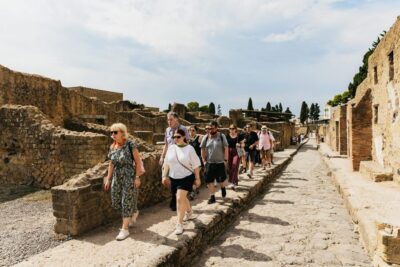
Herculaneum: Skip-the-Line Guided Tour with Archaeologist
Read our review →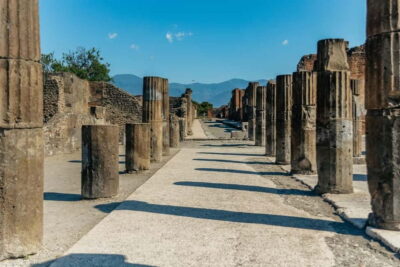
Archaeological Park Tour with Ticket on request
Read our review →
Discover the Ancient Ruins of Pompeii: Day Trip from Rome
Read our review →
Discover Matera, the ancient city – English tour
Read our review →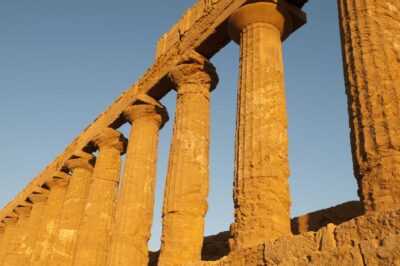
Agrigento: Valley of the Temples Skip-the-Line Sunset Tour
Read our review →
Agrigento and the Valley of the Temples Day Tour
Read our review →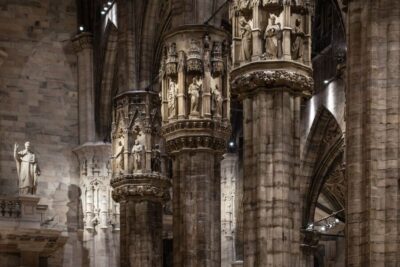
Cathedral, Archeological Area and Museum Ticket
Read our review →Browse the lists this tour appears in