
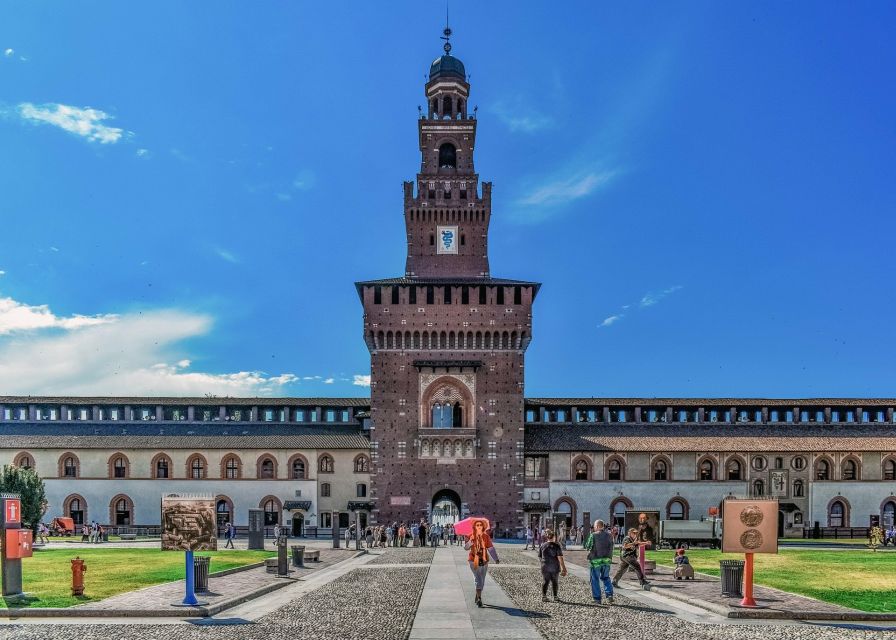
Reviewed · MILAN TOURS
Milan: Sforza Castle and Michelangelo’s Pietà Rondanini Tour
Michelangelo’s Pietà Rondanini is the heart of this tour. It is not polished like his earlier sculptures. The elongated figures and rough marble make it feel private and unfinished, as if the artist was still searching for the right form near the end of his life. I like that the guide gives this difficult work time and context instead of treating it as a quick museum stop.
I also like the tour’s compact size and its focus on the castle’s courtyards, Leonardo da Vinci, and Milan’s ruling families. Guides such as Giorgio, Fabio, Stefania, and Simone have been praised for clear storytelling and useful answers. The main drawback is simple: 90 minutes goes quickly, and a few people have found that museum sections, including the archaeological displays, receive only a brief look.
Key points to know
- Michelangelo’s final sculpture: Study the unfinished Pietà Rondanini and its unusually spare, elongated figures.
- Leonardo’s Milan home: Hear how Leonardo worked at the Sforza court as an engineer and architect, not only as a painter.
- Castle courtyards: Walk through the Corte Ducale and Cortile della Rocchetta, two of the castle’s most important spaces.
- Small-group feel: Groups can be very small, sometimes only three or four people, though larger groups use headphones.
- Useful central meeting point: Meet beneath the Filarete clock tower in Piazza Castello, outside the castle courtyards.
- Good value for art lovers: At $47 per person, the price pays for a guide, museum entry, and a focused introduction to a huge complex.
Why the Pietà Rondanini deserves the first look
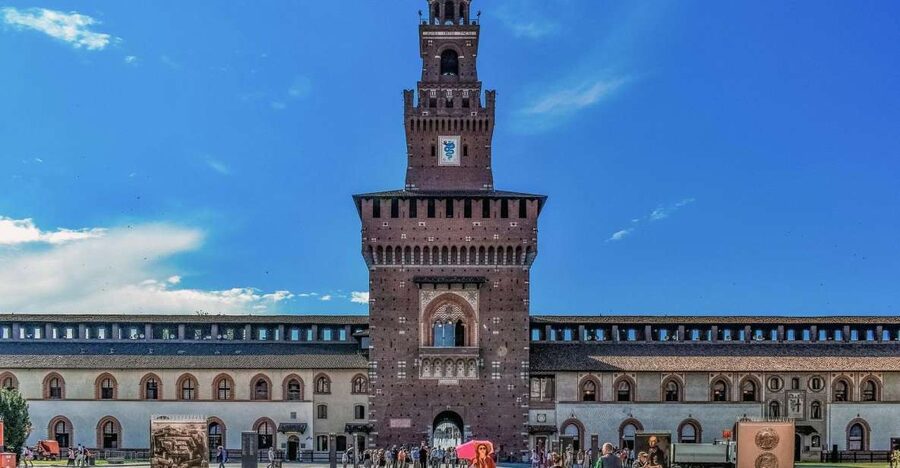
Milan is often sold as a city of fashion, design, and modern business. Sforza Castle gives you the older Milan, the city of dukes, court painters, military towers, and political maneuvering. Yet the most affecting moment here is not a grand room or a sweeping fortress wall. It is a quiet encounter with Michelangelo’s last sculpture.
The Pietà Rondanini shows Mary supporting the body of Christ. The work is unfinished, and that matters. You can see the rough surface of the marble and the long, almost weightless bodies. The figures do not have the muscular perfection associated with Michelangelo’s earlier work. Instead, they seem to lean into one another in grief.
Your guide explains why this change is important. Michelangelo worked on the sculpture until only days before his death at age 89. The piece becomes more than an example of Renaissance technique. It is also an artist’s late meditation on mortality, faith, and the limits of the human body.
I find this kind of interpretation especially useful because the sculpture can puzzle you at first. If you expect another David, you may wonder why the figures look so thin and incomplete. A good explanation helps you see that the roughness is part of the work’s emotional force, not simply a sign that the artist ran out of time.
The museum setting also gives the visit a focused mood. You are not trying to absorb every object in a large gallery. You are looking closely at one final work and learning how it fits into Michelangelo’s life. That concentration is a strong reason to choose a guided visit rather than walk into the castle with no plan.
A few more Milan half-days worth a look
- Milan: Cathedral and Duomo’s Terraces Entrance Ticket
★ 4.6 · 61,054 reviews - Milan: City Sightseeing Hop-On Hop-Off Bus with Audio Guide
★ 4.0 · 6,256 reviews - Milan Cathedral: Duomo Terraces Ticket (No Church Access)
★ 4.6 · 6,111 reviews
Entering Sforza Castle through the Filarete Tower
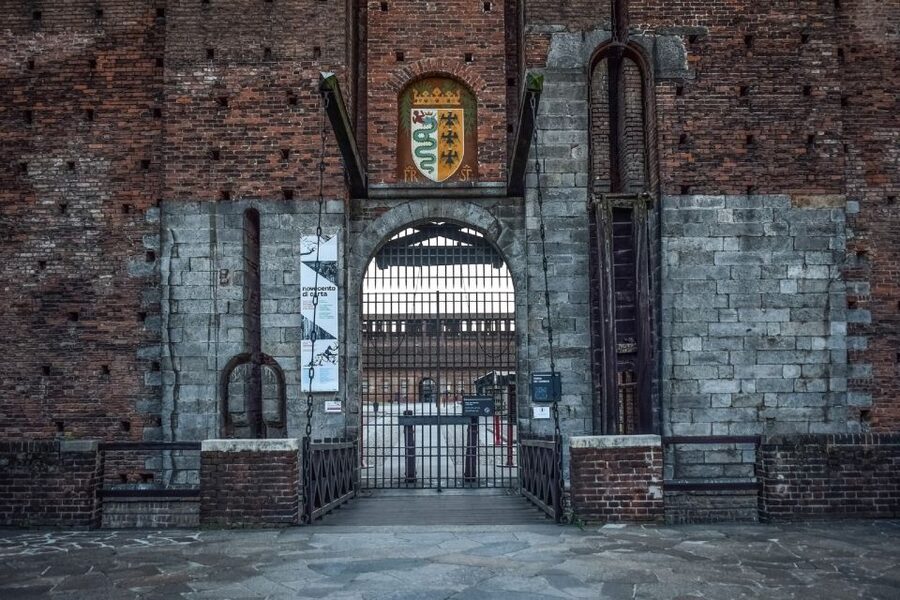
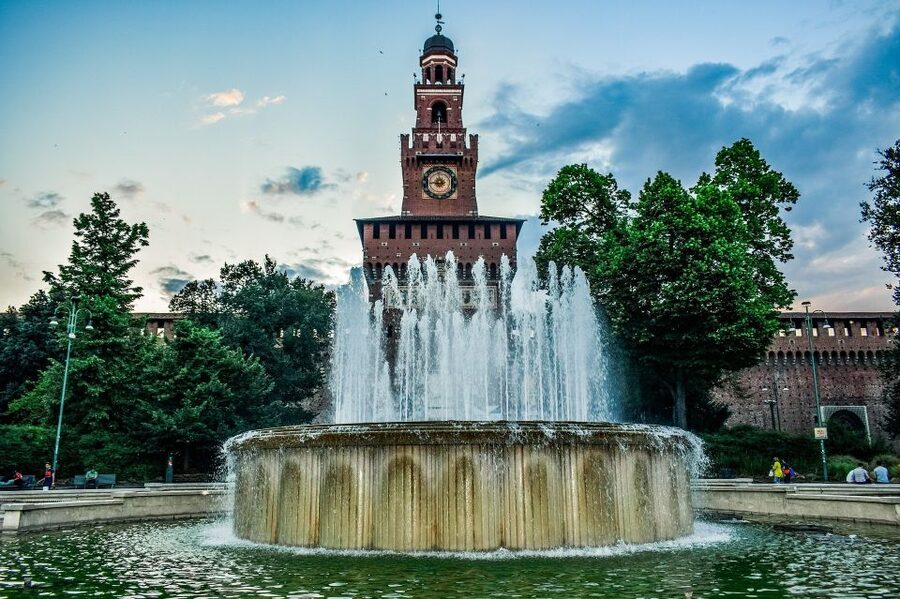
The meeting point is in Piazza Castello, beneath the Filarete clock tower, in front of Sforza Castle. You do not meet inside the courtyards. Look for the guide holding the purple Hidden Experiences flag or board.
This detail matters. The castle is large, and a first-time visitor can easily head too far inside while searching for the group. Arrive with enough time to find the tower and the guide before the start. The meeting point is open and easy to identify once you know you should remain outside the courtyard entrance.
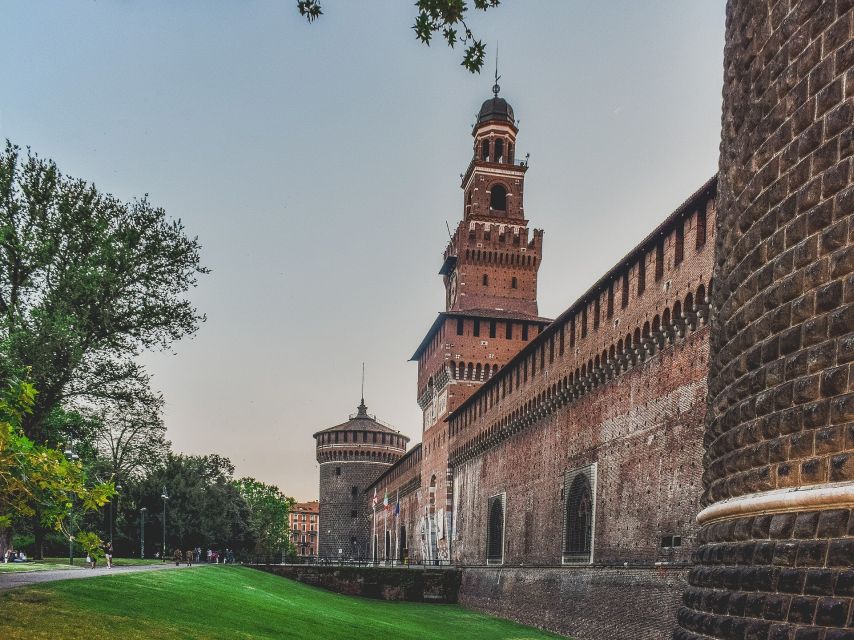
The Filarete Tower gives you an immediate sense of the castle’s scale. It is the main visual marker at the front of the complex, and the guide uses it to introduce the building’s military purpose and later transformation. The castle was first connected with the Visconti family and later became the seat of the Sforza dynasty.
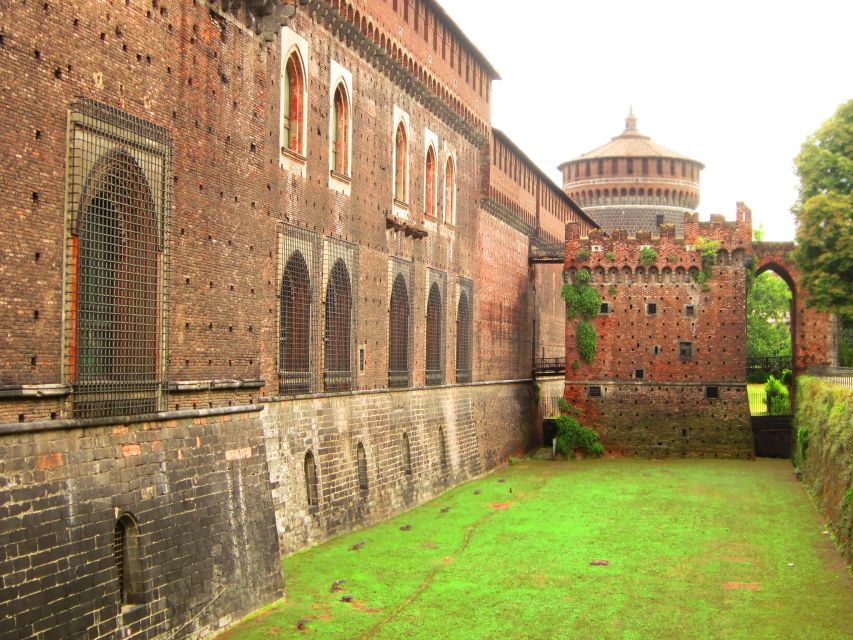
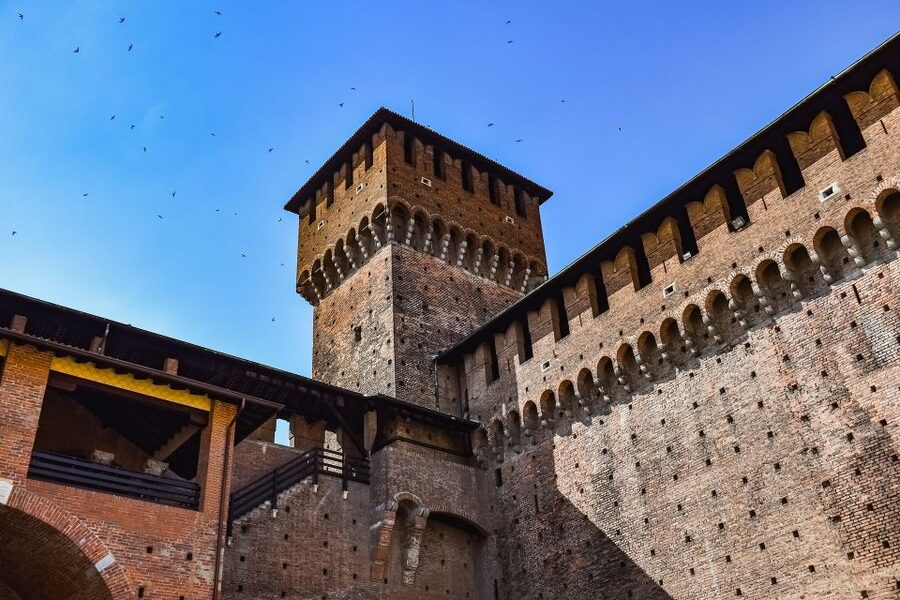
The story is not simply about a handsome Renaissance palace. Sforza Castle began as a defensive stronghold and carried the weight of Milanese power. Its thick walls, towers, and large internal spaces reflect a city that needed both protection and ceremony.
The guide helps you read the building in layers. You see the fortress, the ducal residence, the court associated with Leonardo, and the museum complex that exists today. That progression gives the walk a clear shape and keeps the castle from feeling like a collection of unrelated rooms.
Walking the Corte Ducale and Cortile della Rocchetta
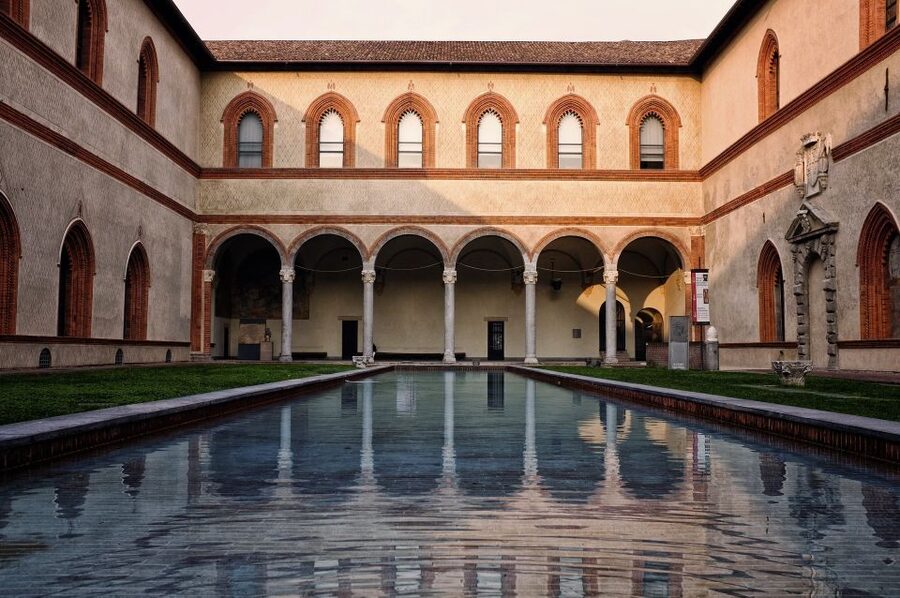
The internal courtyards are among the best reasons to choose this tour. They give you room to appreciate the castle’s architecture before you begin sorting through museum objects.
The Corte Ducale, or Ducal Courtyard, is linked with the refined court of Ludovico il Moro. This is where the military structure met the public theater of ducal life. The guide points out how the architecture served power, ceremony, and status.
The Cortile della Rocchetta offers a different mood. Its enclosed layout helps you understand how the castle functioned as a protected compound. As you move through these spaces, the guide connects the visible brick and stone to the people who controlled Milan.
I like this part because it prevents the tour from becoming a standard list of famous names. You hear about the Visconti and Sforza families, but also about the practical business of ruling. The castle housed ambitious men, noblewomen, artists, administrators, and soldiers. Their decisions shaped Milan’s culture as much as the better-known artworks did.
The guide may also explain the Biscione, the serpent emblem associated with Milan and the Visconti family. It is a small detail, but useful. Once you know what the symbol means, you begin to notice how family identity and political authority were displayed.
The courtyards are also a good place to ask questions. Several guides, including Stefania, Fabio, and Giorgio, have been praised for answering questions clearly and linking small details to the larger story of Milan. A private group or very small group gives you more room for that sort of exchange.
Leonardo da Vinci at the Sforza court
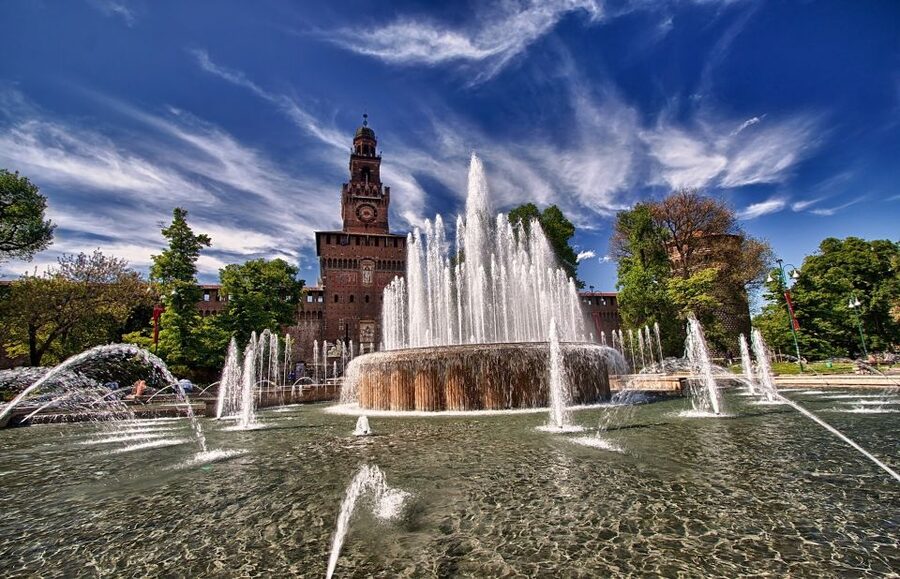
Leonardo da Vinci is one of the tour’s strongest links to Milan. Many people know the city through The Last Supper, but this experience shows a different side of Leonardo’s work.
Leonardo lived and worked in Milan for nearly 20 years. At the Sforza court, he was not only a painter. He worked as an engineer, architect, and court problem-solver. The guide explains his relationship with the Sforza family and points out the castle’s connections to his work.
That wider view is valuable. Leonardo’s Milanese career involved design, military engineering, stage spectacles, architecture, and court service. You begin to see why a Renaissance ruler valued him as more than an artist working on a wall painting.
The castle is not a substitute for seeing The Last Supper. That masterpiece is visited elsewhere, and this tour does not promise entry to it. Instead, Sforza Castle helps you understand the world that employed Leonardo and the kind of work expected from a court intellectual.
Some guides are particularly good at making these connections. Lore was praised for her explanations of Leonardo and Milan’s cultural past, while other guides have been noted for using lesser-known facts to keep the walk lively. The quality of the experience depends partly on the individual guide, but the repeated praise for clear storytelling is a strong sign that the historical material is handled well.
Same city, a completely different sort of day:
- Milan: Milan Cathedral Direct Entrance – Terrace Excluded
★ 4.5 · 5,782 reviews - Milan: Guided Walking Tour & Last Supper Visit with Ticket
★ 4.7 · 5,409 reviews - Milan: Fast-Track Milan Cathedral and Terraces Guided Tour
★ 4.7 · 5,240 reviews - Milan: Navigli Canal Boat Cruise
★ 3.3 · 4,502 reviews
A short tour with a deliberate focus
The stated duration is 1.5 hours. That is long enough for a useful introduction, but not long enough to see every museum and corner of the castle.
This is important when you set expectations. You are not buying a full-day museum visit. You are choosing a guided route through the main architectural spaces, with special attention to the Pietà Rondanini, Leonardo, and Milan’s ruling families.
The focused format works well if you want orientation early in your Milan visit. After the tour, you can return to the castle on your own and spend more time with displays that caught your attention. It also fits neatly before or after other central Milan sights.
The drawback is that the castle contains more than the guide can cover. One person found the archaeological museum was handled too quickly. Another felt the tour ran slightly long, though still considered the extra time worthwhile. These comments point to the same practical truth: the guide may need to choose between detail and coverage.
If you want to see every museum room at a slow pace, visit independently and allow much more time. If you want someone to select the most important material and explain its meaning, 90 minutes is a sensible compromise.
The walk may involve standing and moving between courtyards and museum spaces. The experience is listed as wheelchair accessible, but you should still tell the operator about any specific needs when booking. Guides have also been praised for adapting to conditions, including seeking shade during hot weather.
Guide quality and the small-group advantage
The strongest part of this experience is the guide. Across the available feedback, names such as Giorgio, Fabio, Stefania, Simone, Lorella, Simon, Chiara, and Nina appear with praise for clear explanations, warmth, and strong command of art and Milanese history.
You cannot choose which guide leads your departure unless a private arrangement says otherwise. Still, the range of positive comments suggests a well-established guiding team. The best guides do more than recite dates. They explain why the castle mattered, how Michelangelo’s final sculpture differs from his earlier work, and where Leonardo fit into court life.
Group size also affects the experience. It is sold as a small-group tour, and some departures have been as tiny as three or four people. One group of six was described as an especially comfortable size. At other times, you may have a larger group, and headphones are provided from 11 participants.
A small group makes a real difference inside a historic building. You can hear questions, stay close to the guide, and pause at details without waiting for a large crowd to gather. It also creates a more conversational feel. If your group becomes a private tour by chance, you may receive even more time for questions, but that is not something to count on.
The guides also offer practical Milan tips in some cases. That can be useful if you take this tour near the beginning of your stay. You may leave with a better sense of what else to see, not just a list of facts about the castle.
Is $47 a fair price?
The cost is $47 per person. That includes entry to the castle and museum, a certified guide, and headphones when the group reaches 11 participants. Food, drinks, and hotel transfers are not included.
I consider this a fair price if you care about art and history but do not want to spend hours researching the castle before arrival. Sforza Castle is a large site with several museums, and an unguided visit can leave you looking at attractive rooms without understanding their purpose.
The value comes from selection and explanation. You are paying someone to choose the key parts, build a timeline, and make the Pietà Rondanini easier to read. If the guide is strong, the tour turns a short visit into a clear introduction to Milan’s Renaissance power.
The price is less attractive if you mainly want to wander the courtyards, take photographs, and move at your own pace. You will still receive museum entry, but the fixed route and time limit may feel restrictive. In that case, an independent visit may suit you better, especially if you want to linger in the archaeological sections.
For most first-time visitors with limited time, I think the guided option earns its price. You get context that is hard to pick up from the building alone, and the Pietà Rondanini is much more rewarding when you understand why its unfinished form matters.
Who should book this Sforza Castle tour?
I would choose this experience if you enjoy art, Renaissance politics, or Leonardo da Vinci and want a compact introduction. It is also a good fit if you are visiting Milan for only a few days and need a structured way to see the castle.
Families can benefit from the stories about dukes, symbols, court life, and Leonardo’s many jobs. The tour also suits visitors who prefer a live explanation to reading labels. Guides have been described as patient and easy to understand, with clear English among the available language choices.
You should think twice if you dislike guided pacing or want to study every museum display. The castle is too large for a full museum survey in 90 minutes. Treat this as a strong first visit, not the final word on the complex.
The tour is offered in Italian, English, German, French, and Spanish. Private groups are available. Cancellation is free up to 24 hours ahead, and you can reserve now and pay later, which helps if your Milan schedule is still changing.
Should you book it?
Book this tour if you want Michelangelo’s Pietà Rondanini explained properly, a clear introduction to Sforza Castle, and a useful look at Leonardo’s court life. The small-group format, museum admission, and repeated praise for guides such as Giorgio, Fabio, Stefania, and Simone make the $47 price reasonable for many visitors.
Skip it if you prefer a slow, unstructured museum visit or already know the castle well. For everyone else, this is a smart way to give Milan’s Renaissance center of power a human story, rather than simply walking past its walls.
FAQ
How long does the Sforza Castle tour last?
The tour lasts 1.5 hours.
What does the tour include?
The price includes entrance fees to Sforza Castle and its museum, a certified tour guide, and headphones for groups of 11 participants or more.
What is the main artwork covered?
The main artwork is Michelangelo’s Pietà Rondanini, his final unfinished sculpture.
Where do I meet the guide?
Meet in Piazza Castello under the Filarete clock tower, in front of Sforza Castle. The meeting point is outside the courtyards. Look for the purple Hidden Experiences flag or board.
Which languages are available?
Live tours are available in Italian, English, German, French, and Spanish.
Is the tour wheelchair accessible?
Yes, the experience is listed as wheelchair accessible.
Can I book a private group?
Yes, a private group option is available.
Can I cancel the tour?
You can cancel up to 24 hours in advance for a full refund. You can also reserve now and pay later.
Just added around Milan
- Canyoning “Gumpenfever” – beginner Canyoningtour for everyone★ 5.0 · 391 reviews
- Bergamo: Digital guide made by a local for your walking tour★ 5.0 · 184 reviews
- Milan: City Highlights Walking Tour with The Last Supper★ 4.9 · 195 reviews
- Milan: The Milan Pass City Card★ 4.0 · 655 reviews
- Milan: Duomo & Rooftop Tour with Optional Hop-On Hop-Off Bus★ 4.5 · 262 reviews
- Milan: Skip-the-Line Guided Walk and “The Last Supper”★ 4.5 · 606 reviews
- Milan: Duomo and The Last Supper Skip-the-Line Guided Tour
- Milan: Leonardo’s Last Supper and Michelangelo’s Pietà Tour★ 4.6 · 559 reviews
Milan Tours, compared.
Cathedral and Duomo’s Terraces Entrance Ticket
Read our review →
City Sightseeing Hop-On Hop-Off Bus with Audio Guide
Read our review →
Milan Cathedral: Duomo Terraces Ticket (No Church Access)
Read our review →
Milan Cathedral Direct Entrance – Terrace Excluded
Read our review →
Guided Walking Tour & Last Supper Visit with Ticket
Read our review →
Fast-Track Milan Cathedral and Terraces Guided Tour
Read our review →

Serravalle Designer Outlet Roundtrip Bus Transfer
Read our review →Browse the lists this tour appears in