
Reviewed · VATICAN TOURS
Rome: Vatican, Sistine Chapel, St. Peter Early Morning Tour
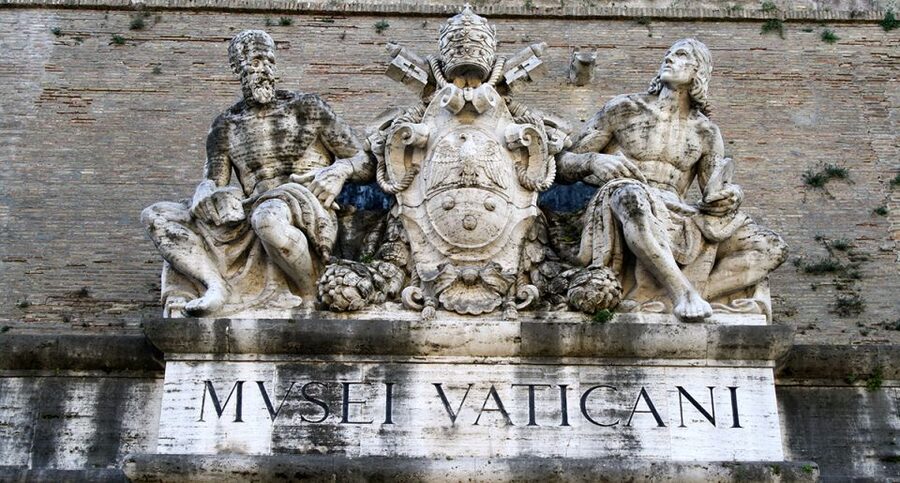
The best reason to take this Vatican tour is simple: you get inside early, before the museum corridors become a slow-moving human river. In a small group of about six, you’ll see ancient sculpture, the Gallery of Maps, the Raphael Rooms, the Sistine Chapel, and St. Peter’s Basilica in one tightly planned visit.
I like the personal attention from the guide and the route through major highlights without asking you to spend an entire day in the Vatican Museums. I also like the time set aside for the Sistine Chapel, where you can look up at Michelangelo’s ceiling before the biggest crowds arrive.
The main drawback is the price, $225.44 per person. That is a serious spend for a two to three-and-a-half-hour tour, and access to the Raphael Rooms or St. Peter’s Basilica can change because of crowd control, religious events, or the 2025 Jubilee.
Key points to know before booking
- Early entry matters: The first hours give you a better chance at calmer galleries and a more focused Sistine Chapel visit.
- Small group size: Groups may be limited to six, making it easier to hear the guide and ask questions.
- Strong guide presence: Guides including Massimo, Claudia, Max, Sarah, Simona, and Valentina are praised for clear explanations, humor, and good crowd management.
- A long art-history lesson in a short visit: You’ll move from Greek sculpture to Renaissance painting and Baroque architecture in one morning.
- St. Peter’s is not guaranteed: Basilica access may change because of liturgical events, sudden closures, or Jubilee arrangements.
- Dress and security rules matter: Cover your shoulders and knees, bring government-issued ID, and leave backpacks behind.
Why the early start is worth considering
The Vatican Museums are not a quiet place for long. Even a well-planned morning can involve tight corridors, tour groups, school groups, and people stopping suddenly in front of famous paintings. Starting early does not make the Vatican empty, but it gives you a better chance to see the first galleries with some breathing room.
That matters most in the Sistine Chapel. The chapel is the emotional center of the visit, but it can be hard to appreciate when you are tired, packed into a crowd, or being moved along by staff. This tour aims to get you there before the largest surge of the day.
You should still expect museum procedures, security checks, and rules inside the chapel. Silence is required in the Sistine Chapel, and photography is forbidden there. Flash photography is not allowed elsewhere in the museums.
The tour lasts between two and three-and-a-half hours, depending on the starting time and the route on the day. That is enough for the major sights, but not enough to explore every room. The Vatican Museums are too large for that. This experience works best if you want a guided introduction to the essential sights rather than an exhaustive museum visit.
More Vatican and Sistine Chapel entries:
- Vatican: Museums & Sistine Chapel Entrance Ticket
★ 4.5 · 144,003 reviews - Vatican Museums & Sistine Chapel Tour with Optional Basilica
★ 4.3 · 67,413 reviews - Vatican Museums, Sistine Chapel & St Peter’s Basilica Guided Tour
★ 4.5 · 39,149 reviews
Meeting near Caffè Vaticano
You meet in front of Caffè Vaticano, across from the Vatican Museums entrance. Bring a passport or government-issued photo ID. The entry requirement is not a minor detail, since every person in the group needs identification to guarantee admission.
The early start means you should plan your morning carefully. The meeting point is close to the museum entrance, but arriving late can be costly when timed entry and group access are involved. The provided meeting information says the activity ends back near the meeting point, while the planned route also includes St. Peter’s Square and Basilica access. Confirm the exact end point and starting time when you book.
Your English-speaking guide will gather the group and explain the route. A small group gives the guide room to adjust the pace, answer side questions, and keep everyone together through busy rooms. Several guides, including Max, Massimo, Claudia, Laura, Gabriella, and Simona, have been singled out for making the information clear and keeping the tone lively.
That personal style matters here. The Vatican can feel like a sequence of famous names and grand rooms unless someone helps connect the pieces. A good guide gives you the thread between ancient Roman taste, papal collecting, Renaissance ambition, and the power of the Catholic Church.
Ancient sculpture in the Pinecone and Octagonal Courtyards
The tour begins with the Pinecone Courtyard and Octagonal Courtyard, near the historic core of the Vatican Museums. These open spaces help you get your bearings before entering the long succession of galleries.
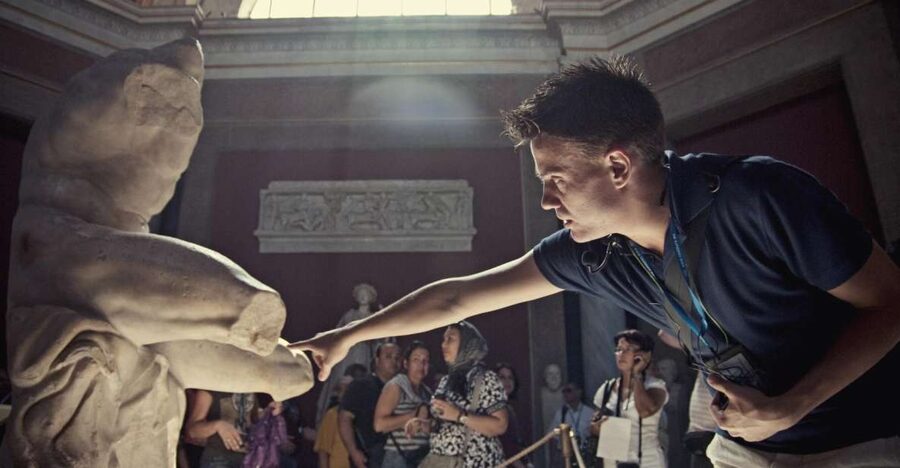
The focus here is ancient sculpture. You’ll see the Laocoön, Apollo Belvedere, and Belvedere Torso, along with the Muses Room. These are not just old statues placed in attractive rooms. They shaped the way later artists studied anatomy, movement, emotion, and the ideal human body.
The Laocoön is especially useful for a guided visit because its composition can be difficult to read at a glance. The twisting figures, physical struggle, and dramatic expressions reward a few minutes of explanation. The Apollo Belvedere offers a different model of classical beauty, while the damaged Belvedere Torso shows how even a fragment could influence generations of artists.
This is one of the tour’s strongest features. You are not only ticking off famous objects. You are seeing the works that helped Renaissance artists and patrons decide what great art should look like.
The possible downside is pace. With so many important statues in a small area, you may wish for more time. The guide has to keep the group moving, since the Vatican route becomes harder to manage as more people arrive.
The Gallery of Maps and Gallery of Tapestries
Next come the Gallery of Candelabra, Gallery of Maps, and Gallery of Tapestries. These long corridors can feel like passageways between the bigger attractions, but they deserve attention.
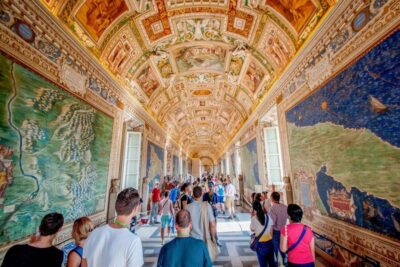
The Gallery of Maps is the visual showstopper. Painted maps cover the walls, creating a grand view of Italy as understood in the late sixteenth century. You’ll want to look up as well as ahead, since the ceiling and architectural decoration are part of the experience.
The Gallery of Tapestries offers a different kind of display. Instead of painted walls and ceilings, you see elaborate woven scenes designed to be read at close range. The changing textures and stories provide a useful contrast with the stone sculpture and frescoed rooms earlier in the route.
A guide is helpful in these galleries because the rooms can blur together. You may remember the bright maps and long corridors, but the guide can point out why the decoration was made, how the rooms served the papal collection, and what details deserve a second look.
Still, do not expect to stop at every map or tapestry. The Vatican Museums contain far more than a short tour can cover. If you already know you want a slow, object-by-object museum visit, you may prefer to return independently on another day.
A few more Rome half-days worth a look
- Early Morning Vatican, Sistine, St. Peter’s Semi or Private Tour
★ 5.0 · 3,779 reviews - Rome: Complete Early Morning Vatican Tour | Small Group
★ 5.0 · 1,990 reviews - Rome: Early-Morning Vatican Museums and Sistine Chapel Tour
★ 4.7 · 1,778 reviews - Rome Morning Vespa Sidecar Tour in Rome with Cappuccino
★ 5.0 · 1,771 reviews
The Raphael Rooms and the School of Athens
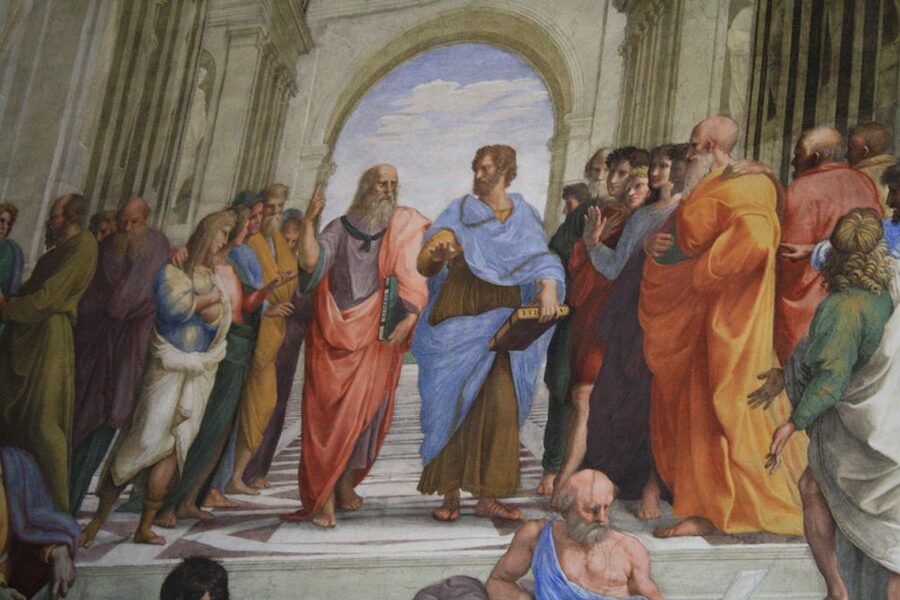
The Raphael Rooms bring you into the apartments decorated for the pope by Raphael and his workshop. The most famous work here is The School of Athens, a painting filled with philosophers, gestures, architecture, and references to classical learning.
A guide can make this room much easier to read. Without help, you may recognize the painting but miss the way Raphael arranged the figures, the role of the surrounding decoration, and the larger message about philosophy, reason, and learning.
The planned visit to the Raphael Rooms lasts about 15 minutes. That is enough to identify the main works and understand their purpose, but it is not a leisurely study session. Access also depends on crowd levels, timing, and routes controlled by museum staff. The rooms may not be available on every departure.
That uncertainty is worth taking seriously. If the Raphael Rooms are your single reason for booking, ask about current access before you commit. The guide may alter the route to keep the visit moving and protect the quality of the experience.
The Sistine Chapel with time to look up
The Sistine Chapel gets about 30 minutes in the planned schedule, though the overall timing can change. This is the part of the tour where the early start has its clearest payoff.
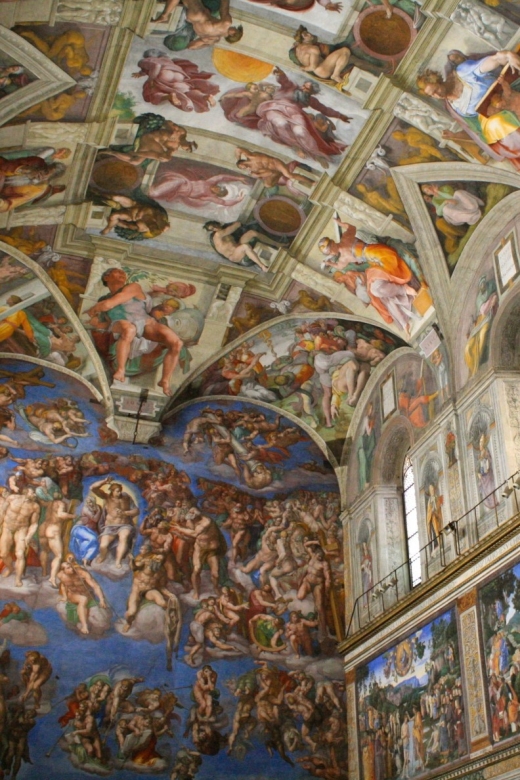
Michelangelo’s ceiling is easy to underestimate. Reproductions are everywhere, but they do not convey the scale, the height, or the effect of seeing the scenes spread across the ceiling above you. The Last Judgment on the altar wall creates a different mood, with its crowded figures and powerful central image.
Your guide will explain the chapel before you enter, since guides cannot conduct a normal spoken explanation inside. Once inside, you must remain silent. You cannot take photographs, and the chapel staff enforce the rules.
The preparation is valuable. A guide such as Claudia may use visual material beforehand to show you what to look for, so the ceiling becomes easier to understand once you are inside. You can then spend your time looking rather than trying to remember a list of names.
The chapel may open late for religious reasons. If that happens, the museum portion is extended, but the Basilica portion can still be affected by later closures. The tour provider does not offer compensation if St. Peter’s cannot be visited because of a closure.
St. Peter’s Basilica and Michelangelo’s Pietà
The planned route continues into St. Peter’s Basilica through a separate entrance. This can save time and avoids sending you back through the main museum exit before reaching the church.
Inside, the scale changes again. The basilica is vast, formal, and heavily decorated, with major works spread across a space that can be hard to take in without direction. The guide focuses on Michelangelo’s Pietà and Bernini’s bronze Baldacchino, two of the essential stops.
The Pietà gives you a chance to see Michelangelo’s handling of marble at close range. Bernini’s Baldacchino shifts the mood from intimate sculpture to grand Baroque theater, rising over the main altar. Seeing both in one visit shows how artistic taste and church design changed over time.
Your guide will also explain the Papal Tombs and tell you how to access the dome of St. Peter’s. Dome access is not included in this tour, so treat that information as useful planning help rather than part of the booking.
St. Peter’s may close for liturgical events, and the 2025 Jubilee brings another source of uncertainty. If the Basilica is closed, the guide revises the museum route to preserve the value of the visit. That is a practical safeguard, but it does not replace seeing the church in person.
A guide makes the Vatican easier to read
The most praised part of this experience is the guide. That is not surprising. The Vatican’s size and layered art make it difficult to build a sensible visit alone, especially if this is your first time.
Massimo is praised for humor, remembering names, and keeping the group engaged. Max is described as both funny and informative, with a personal approach that helped a small group feel connected. Claudia is praised for answering questions and explaining details that many first-time visitors would miss.
Other guides, including Laura, Sarah, Gabriella, Patrizia, Vera, Valentina, Simona, and Dominika, are noted for enthusiasm, clear stories, and strong command of the art. Their approaches will vary, since this is not a recorded audio tour and you are assigned a guide based on availability.
The best guides do more than recite dates. They explain why an object matters, point out details you might miss, and keep the group moving when the corridors tighten. That combination is especially useful in the Vatican, where you can otherwise spend ten minutes staring at a famous work without knowing what you are seeing.
Is $225.44 good value?
At $225.44 per person, this is one of the more expensive ways to visit the Vatican. You are paying for early access, a small group, a live English-speaking guide, skip-the-line entry through a separate entrance, and a route that includes the museums, Sistine Chapel, and planned Basilica visit.
I think the price makes sense for three types of visitors. First, it suits you if your Rome schedule is tight and you want the major Vatican sights in one morning. Second, it suits you if the thought of navigating the museum alone feels stressful. Third, it suits you if you value questions, context, and a small group more than the lowest possible price.
It is harder to justify if you have a large budget-conscious family, want several hours inside the museums, or are happy to read up and explore at your own pace. The tour is short compared with the size of the collection, and Basilica access is not guaranteed.
Free cancellation is available up to 24 hours before the tour, and you can reserve now and pay later. That gives you some flexibility, but the most important practical points remain the early meeting time, government ID, dress code, and closure risks.
Clothing, bags, and access rules
Dress modestly. Your shoulders and knees must be covered, so avoid shorts, short skirts, and sleeveless shirts. These rules apply to the Vatican Museums and St. Peter’s Basilica, and unsuitable clothing can create an avoidable problem at entry.
Backpacks are not allowed in the museum. Pack lightly and bring only what is permitted. Photography is allowed in parts of the museums, but flash is prohibited, and the Sistine Chapel does not allow photography at all.
The tour is not suitable for wheelchair users because the regular route may not provide the right access. Wheelchair users should book a private tour with an accessible route instead. If a disability may qualify you for free Vatican access, tell the provider before booking.
Who should book this Vatican tour?
Book it if you want a guided first visit with the major artistic highlights, a small group, and the best available chance at a calmer early-morning experience. It is especially useful for first-time visitors who want the Vatican explained rather than simply entered.
Families, couples, and art-minded visitors will likely appreciate the compact route. The guide can adjust explanations, answer questions, and help you focus on the famous works without losing an entire day to the museum.
Think twice if you dislike early mornings, need guaranteed access to every listed room, or want to linger for hours. The Raphael Rooms may be closed on the day, St. Peter’s may be unavailable for religious reasons, and the price is high for a short visit.
My call: book this tour if time, guidance, and early access matter more to you than saving money. The Vatican is easier to enjoy when someone helps you read the art and manage the route, and a group of six gives that help a personal feel.
FAQ
How long does the Vatican tour last?
The activity lasts between two and three-and-a-half hours. Starting times vary, so check availability for the departure that fits your schedule.
Where does the tour meet?
The meeting point is in front of Caffè Vaticano, across the street from the Vatican Museums entrance.
What sights are included?
The planned route includes the Pinecone Courtyard, Octagonal Courtyard, Belvedere Palace area, Muses Room, Belvedere Torso, Laocoön, Apollo Belvedere, Gallery of Candelabra, Gallery of Maps, Gallery of Tapestries, Raphael Rooms, The School of Athens, Sistine Chapel, St. Peter’s Basilica, Bernini’s Baldacchino, and St. Peter’s Square.
Is the Raphael Rooms visit guaranteed?
No. Access depends on crowd levels, timing, and routes controlled by museum guards. The guide may change the route if necessary.
Is St. Peter’s Basilica always open during the tour?
No. The Basilica may close for liturgical events or because of the 2025 Jubilee. If it closes, the guide revises the visit, and no refund is provided for the closure.
What should I wear?
Your shoulders and knees must be covered. Shorts, short skirts, and sleeveless shirts are not allowed.
Can I take photos in the Sistine Chapel?
No. Photography is not allowed inside the Sistine Chapel. Flash photography is also prohibited elsewhere in the Vatican Museums.
Just added around Rome
- Boat excursion to Gaeta with a stop for swimming and snorkeling 2 HOURS★ 5.0 · 240 reviews
- Palatine Hill and Roman Forum Tour with Fast-Track Entrance★ 4.2 · 417 reviews
- Tivoli: Villa D’Este & Villa Adriana Pass & App Audioguide★ 4.4 · 364 reviews
- Tivoli: Villa D’Este Entry Ticket and App Audio Guide★ 4.3 · 191 reviews
- From Rome: Villa D’Este & Villa Adriana Day Trip with Lunch★ 4.4 · 289 reviews
- Vatican Museums & Sistine Chapel Skip-the-Line Guided Tour★ 4.6 · 254 reviews
- Rome: Capitoline Museums and Centrale Montemartini Tickets★ 4.4 · 328 reviews
- Rome: The Three Tenors at St. Paul’s Church Concert Ticket★ 4.7 · 699 reviews
Vatican Tours, compared.
Vatican: Museums & Sistine Chapel Entrance Ticket
Read our review →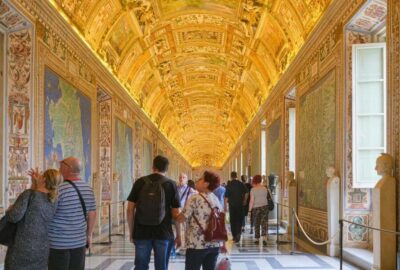
Vatican Museums & Sistine Chapel Tour with Optional Basilica
Read our review →
Vatican Museums, Sistine Chapel & St Peter’s Basilica Guided Tour
Read our review →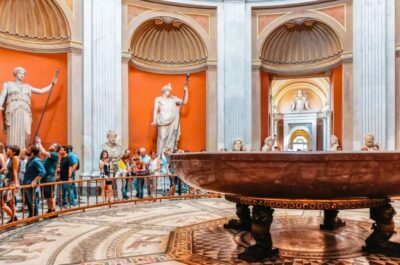
Vatican Museums, Sistine Chapel & Basilica Tour
Read our review →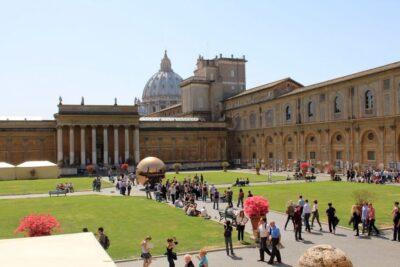
Vatican Museums & Sistine Chapel Skip-the-Line Entry Ticket
Read our review →Vatican Museums, Sistine Chapel & Basilica Tour
Read our review →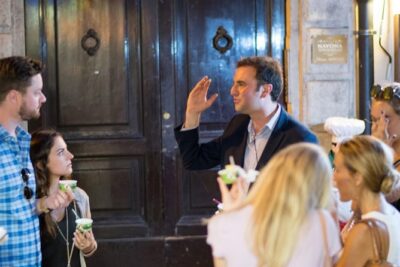
Skip-the-Line Group Tour of the Vatican, Sistine Chapel & St. Peter’s Basilica
Read our review →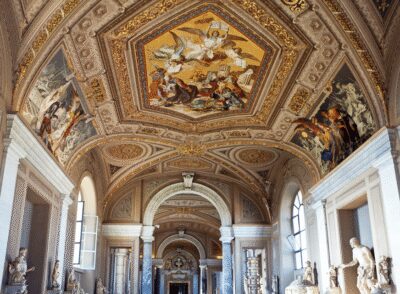
Vatican Museums & Sistine Chapel Guided Tour
Read our review →Browse the lists this tour appears in