
Reviewed · VATICAN TOURS
Rome: Vatican Museums and Sistine Chapel Skip-the-Line Entry
The clever part of this Vatican visit is simple: you spend your limited Rome time looking at art instead of standing outside in a long ticket queue. Once inside, you can set your own pace through ancient sculpture, Renaissance rooms, historic maps, and the Sistine Chapel.
I like the freedom to explore without a guide, especially if you already know what you want to see. I also like the practical WhatsApp delivery, which has given many visitors their PDF tickets before arrival. The main drawback is that this is not a guided tour, and the Vatican can be so crowded that the art sometimes gets pushed into the background.
Key points to know
- Skip the ticket line: The $66 entry can save a large amount of waiting time during busy periods.
- Self-guided visit: You decide how long to spend with the Laocoön, Raphael’s Rooms, Michelangelo, or the map galleries.
- Two to three hours inside: Enough for the main sights, but not enough for every corridor and collection.
- Tickets by WhatsApp: Instructions may arrive on the day or shortly before your time slot, so provide the correct number.
- Strict clothing rules: Your shoulders and knees must be covered to enter the Vatican Museums and Sistine Chapel.
- Crowds are part of the deal: Skip-the-line entry gets you through the ticket queue, not away from the people inside.
Why skip-the-line entry matters at the Vatican
The Vatican Museums are one of Rome’s busiest sights. The difference between having a reserved entry and arriving without one can be the difference between a useful morning and a frustrating wait on the street.
This experience costs $66 per person. That is not a bargain ticket in the usual sense, but the price needs to be judged against your time in Rome. If you have only a few days, saving a long stretch of waiting can make the cost worthwhile. One visitor received entry within a few minutes, while another said the ticket became clearly valuable after seeing the physical queues.
The pass covers the ticket line. You still need to follow the museum’s entry process, and the building itself may be crowded. This is important: skip the line does not mean you will have an empty museum or a private route through the galleries.
The visit lasts about two to three hours. That is a sensible window for the major rooms and the Sistine Chapel, though you could easily spend longer if you stop often. Since the visit is self-guided, you are not tied to a group’s timetable.
More Museum Tours in Rome
- Vatican: Museums & Sistine Chapel Entrance Ticket
★ 4.5 · 144,003 reviews - Vatican Museums & Sistine Chapel Tour with Optional Basilica
★ 4.3 · 67,413 reviews - Vatican Museums, Sistine Chapel & St Peter’s Basilica Guided Tour
★ 4.5 · 39,149 reviews
Getting your ticket and finding the entrance
There are two possible starting arrangements, and the exact meeting point can vary with the option you book. One listed location is Via Vittor Pisani, 10, near the Vatican Museums.
Your instructions and ticket may be sent through WhatsApp. Some people received a PDF the day before, while others received tickets early on the morning of their visit. That system can work very well, but it places one task firmly on your shoulders: enter the correct phone number when booking and check your messages before heading out.
Do not assume you will meet a guide carrying a large sign. This is an entry service, not a tour with a person leading you from room to room. The host or greeter language is English, but the actual museum visit is unguided.
A small planning tip matters here. Save the ticket on your phone before you reach the entrance, and make sure your phone has enough battery. If the message has not arrived by the stated time, contact the provider promptly. Communication has usually been described as quick and helpful, but one booking ran into trouble when the entry information was not sent correctly.
Ancient sculpture: start with the Laocoön and Belvedere Torso
Inside, you can choose your own route through the collections. Two of the major ancient works to watch for are the Laocoön and His Sons and the Belvedere Torso.
The Laocoön is a powerful marble group showing a father and his sons caught in terrible struggle. Even without a guide, the work is easy to read: twisting bodies, strained faces, and a sense of motion carved into stone. It is one of those pieces that deserves more than a quick photograph.
The Belvedere Torso is less complete but no less striking. Its damaged form became highly important to Renaissance artists, including Michelangelo. Look closely at the force held in the torso. The sculpture has no complete head or limbs, yet it feels full of energy.
A self-guided visit works well in these rooms if you prefer to stop when something catches your eye. A formal guide can give context and point out details, but you avoid being hurried past a work you find interesting. One visitor specifically preferred choosing personal stopping points rather than listening to a guide discuss every object.
The tradeoff is obvious. Without a guide, you need to bring your own background or use the museum’s information. If you want the story behind every room, this ticket alone may feel thin.
Raphael’s Rooms and the High Renaissance
Raphael’s Rooms are among the Vatican’s most important interiors. Raphael and his workshop decorated these rooms with large frescoes, and the paintings show the confidence and ambition of High Renaissance art.
The best approach is to resist rushing. The rooms contain large scenes that can look impressive at first glance but reward a slower look. Pay attention to how figures are arranged, how gestures guide your eye, and how painted architecture creates a sense of order.
You may see the famous School of Athens, though the exact route and crowd flow can affect how long you can stand in front of it. The supplied information confirms Raphael’s Rooms as a central part of the visit, but it does not promise a private viewing area or a quieter time.
Crowds matter here. You may find yourself looking over shoulders or moving with the flow of people. That can make it hard to appreciate the frescoes as individual works. If you are serious about art, choose an early time if available and take advantage of any open space rather than trying to see everything at equal length.
More Skip-the-Line Tickets in Rome
- Vatican Museums & Sistine Chapel Skip-the-Line Entry Ticket
★ 4.4 · 13,838 reviews - Skip-the-Line Group Tour of the Vatican, Sistine Chapel & St. Peter’s Basilica
★ 4.5 · 12,779 reviews - Rome: Vatican Museums & Sistine Chapel Skip-The-Line Ticket
★ 4.2 · 11,708 reviews - Vatican, Sistine Chapel & St. Peter’s Skip-the-Line Tour
★ 4.5 · 7,770 reviews
The Gallery of Maps and Flemish textile displays
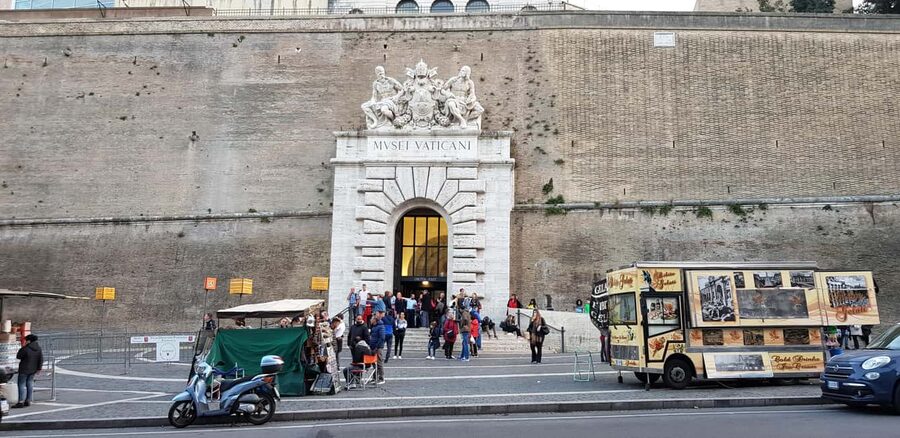
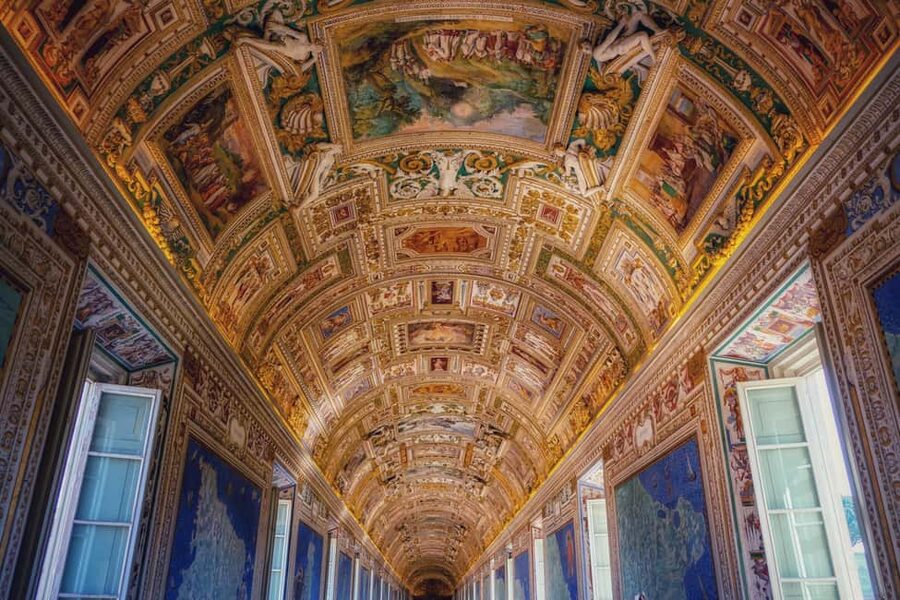
The Vatican Museums are not only about famous paintings. The Gallery of Maps gives you a long, visually busy corridor filled with historic maps. Even if you are not a map enthusiast, the room helps show how geography and power were represented in the past.
Look up as well as ahead. The ceiling and wall decoration compete for attention, and the corridor is designed for a broad visual effect. It is easy to walk through while focusing only on the next room, so pause where the crowd allows.
The Gallery of Tapestries adds another kind of decoration, with large Flemish textile works and scenes made for grand interiors. These pieces are easy to underestimate because they do not have the instant recognition of Michelangelo. Give them a moment. Their scale, color, and fine detail show how much effort went into furnishing important rooms before modern wall decoration.
These galleries are also useful when you need a change from sculpture and frescoes. The Vatican route keeps shifting between ancient objects, painted rooms, maps, and textiles. That variety is one reason the visit feels larger than a simple trip to see the Sistine Chapel.
Michelangelo’s Sistine Chapel ceiling
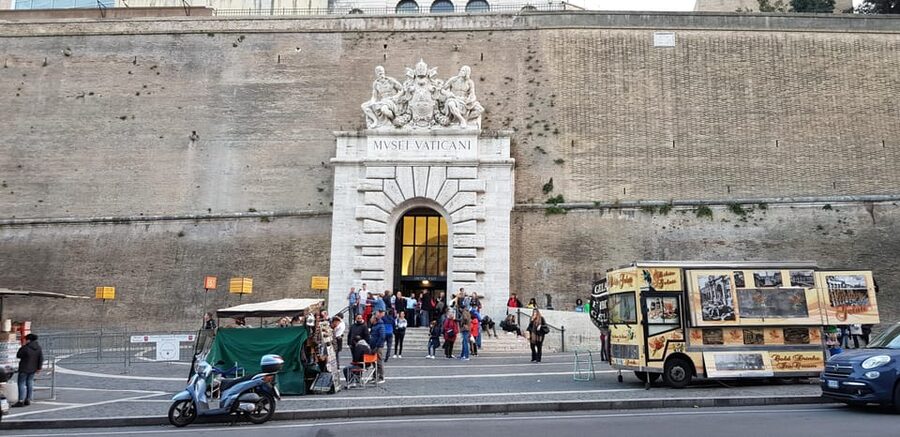
The Sistine Chapel is the main reason many people book this visit. Michelangelo’s ceiling and the enormous scene on the back wall are among the most famous works in Western art.
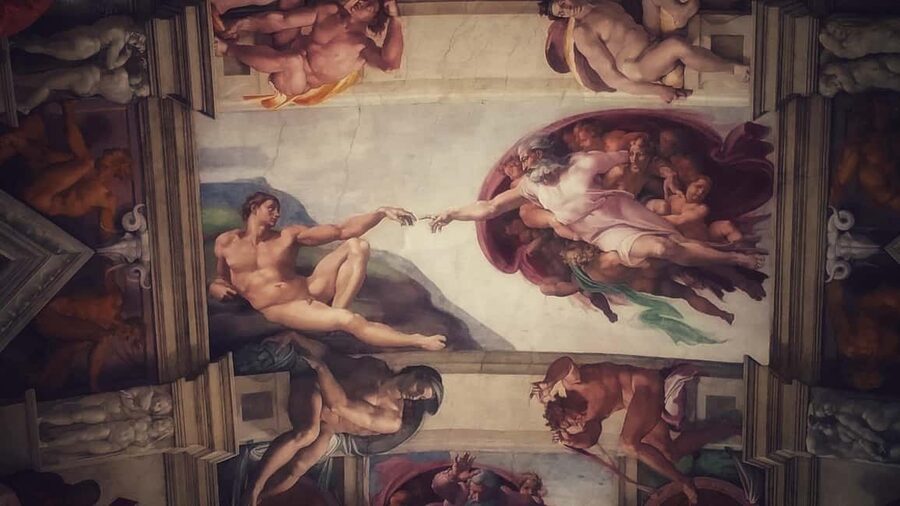
The ceiling is not a single picture. It is a large program of scenes, figures, prophets, and architectural elements. The Creation of Adam attracts the most attention, but it is only one part of the whole. Look across the ceiling before settling on the famous detail.
The scale can be hard to grasp from reproductions. Painted figures fill the curved space overhead, and the composition asks you to keep looking upward. If you have time, stand near the edge of the room rather than directly under the densest group of people. You may get a better sense of how the ceiling works as one design.
Michelangelo’s painting on the back wall, The Last Judgment, has a different mood. It fills the wall with movement and figures, and it feels heavier than the ceiling scenes. The two works together show different stages of Michelangelo’s career and different ways of using the chapel’s architecture.
The chapel is also where expectations need managing. It is a sacred space and a major tourist sight, so you may be sharing the room with a large crowd. You are there to look, but the visit may not feel quiet or reflective. Give yourself room to look up, and do not expect to linger easily in the center.
Two hours or three hours?
The stated duration is two to three hours. I would treat two hours as a brisk visit focused on the main works, while three hours gives you time to pause.
For a two-hour route, put your attention on:
- The Laocoön and His Sons
- The Belvedere Torso
- Raphael’s Rooms
- The Gallery of Maps
- The Gallery of Tapestries
- The Sistine Chapel
You can move more quickly through repeated rows of sculpture and less familiar displays. The Vatican contains far more than can be absorbed in one visit, and trying to inspect every object will leave you tired before the Sistine Chapel.
With three hours, you can slow down in the ancient sculpture rooms and spend longer with Raphael. You can also stop for the details that catch your eye rather than treating the museum as a checklist.
The lack of a guide makes the time more flexible. That is a real benefit for independent visitors. It is less helpful if you need someone to keep you moving or explain why one room matters more than another.
What to wear and what to leave behind
The dress code is strict: shoulders and knees must be covered. Plan your clothing before you leave your hotel, especially in warm weather. A visit can become stressful if you reach the entrance and discover that your outfit is not suitable.
Drinks, backpacks, alcohol, drugs, baby strollers, and baby carriages are not allowed according to the supplied information. The details about bags are especially important because many people arrive at museums carrying more than they need.
Bring a passport or ID card. You may be asked for identification as part of entry. Babies under one year and wheelchair users are listed as unsuitable for this activity, so check carefully before booking if either issue applies to your group.
Is $66 a fair price?
At $66, this is best viewed as a time-saving ticket rather than a low-cost museum admission. The value is strongest during busy periods, when the standard ticket queue can consume a large part of your day.
It is also useful for visitors who do not want a guided group. You can walk at your own speed, spend longer with the works you care about, and move on from rooms that do not interest you. That flexibility is worth paying for if you prefer independent sightseeing.
The price is harder to justify if you expect personal explanations, a named art specialist, or a small group. No guide is included. You are paying for entry arrangements and convenience, not a lesson in Renaissance art.
The overall rating is 4 out of 5 from 234 reviews, with repeated praise for quick entry, clear communication, and WhatsApp ticket delivery. The less favorable experience came from a communication error and the crowds inside. Those are useful warnings, not reasons to dismiss the option.
Who should book this Vatican visit?
I would choose this for a first-time Rome visitor who wants to see the Vatican’s major works without committing to a guided group. It suits independent sightseers, couples, families with older children, and anyone working with a tight schedule.
It is also a good fit if you already know the basics of Michelangelo and Raphael. You can spend your time looking rather than listening to a long explanation about every statue.
I would choose a guided experience instead if you want detailed art history, help with navigation, or someone to explain the symbolism in the Sistine Chapel. The museums are huge, and a guide can give structure to what might otherwise feel like a long procession of rooms.
The crowds may also be a problem if you want calm, close study of the art. Skip-the-line entry solves the outside queue, not the density inside the museum.
FAQ
Does this ticket include a tour guide?
No. This is not a guided tour. You explore the Vatican Museums and Sistine Chapel on your own.
How long does the visit last?
The stated duration is two to three hours. The visit includes walking through the Vatican Museums and time in the Sistine Chapel.
What does the ticket include?
The package includes skip-the-ticket-line entry to the Vatican Museums and Sistine Chapel.
How will I receive my ticket?
Instructions and tickets are sent to your WhatsApp number. The ticket may arrive the day before or on the day of the visit, depending on the booking.
What should I wear?
Your shoulders and knees must be covered. This dress rule applies to entry at the Vatican Museums and Sistine Chapel.
Can wheelchair users or babies under one year join?
The activity is not suitable for wheelchair users or babies under one year. Baby strollers and baby carriages are also not allowed.
Should you book it?
Book this experience if your main goal is to avoid the Vatican ticket queue and explore without a guide. At $66, it makes the most sense when your Rome schedule is tight and you are comfortable choosing your own route.
Do not book it expecting a quiet museum, a private Sistine Chapel visit, or expert commentary. You will face crowds, and you must manage the visit yourself. But with the right expectations, this is a practical way to see Laocoön, Raphael, the map galleries, and Michelangelo without spending your morning waiting outside.
More Vatican and Sistine Chapel Entries
- Rome: Vatican Museums, Sistine Chapel & Basilica Tour
★ 4.3 · 13,872 reviews - Rome: Vatican Museums, Sistine Chapel & Basilica Tour
★ 4.7 · 13,217 reviews - Rome: Vatican Museums & Sistine Chapel Guided Tour
★ 4.3 · 12,117 reviews - Vatican Museums & Sistine Chapel Skip-the-Ticket-Line Tour
★ 4.3 · 10,486 reviews
Just added around Rome
- Boat excursion to Gaeta with a stop for swimming and snorkeling 2 HOURS★ 5.0 · 240 reviews
- Palatine Hill and Roman Forum Tour with Fast-Track Entrance★ 4.2 · 417 reviews
- Tivoli: Villa D’Este & Villa Adriana Pass & App Audioguide★ 4.4 · 364 reviews
- Tivoli: Villa D’Este Entry Ticket and App Audio Guide★ 4.3 · 191 reviews
- From Rome: Villa D’Este & Villa Adriana Day Trip with Lunch★ 4.4 · 289 reviews
- Vatican Museums & Sistine Chapel Skip-the-Line Guided Tour★ 4.6 · 254 reviews
- Rome: Capitoline Museums and Centrale Montemartini Tickets★ 4.4 · 328 reviews
- Rome: The Three Tenors at St. Paul’s Church Concert Ticket★ 4.7 · 699 reviews
Vatican Tours, compared.
Vatican: Museums & Sistine Chapel Entrance Ticket
Read our review →
Vatican Museums & Sistine Chapel Tour with Optional Basilica
Read our review →
Vatican Museums, Sistine Chapel & St Peter’s Basilica Guided Tour
Read our review →
Vatican Museums, Sistine Chapel & Basilica Tour
Read our review →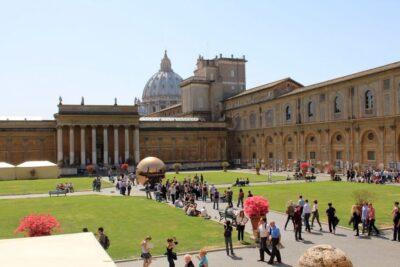
Vatican Museums & Sistine Chapel Skip-the-Line Entry Ticket
Read our review →Vatican Museums, Sistine Chapel & Basilica Tour
Read our review →
Skip-the-Line Group Tour of the Vatican, Sistine Chapel & St. Peter’s Basilica
Read our review →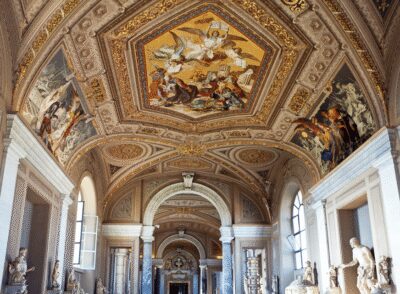
Vatican Museums & Sistine Chapel Guided Tour
Read our review →Browse the lists this tour appears in