
Reviewed · WALKING TOURS
Rome: Under the Moonlight Evening Walking Tour
Rome changes character after sunset. The stone glows, fountains sound louder, and the day’s heat and crowds begin to ease. This 2 to 2.5 hour evening walk links Piazza Navona, the Pantheon, Trevi Fountain, the Imperial Fora, and the Colosseum, giving you a useful first look at central Rome.
I like the route for two clear reasons: it combines famous sights with easy-to-miss corners such as Galleria Sciarra and the Church of Sant’Ignazio, and the guides bring plenty of personality. Vlad, Sila, Csenge, Dan, Domenica, Sharon, and others are praised for warm storytelling, good humor, and practical tips. The main drawback is simple: this is a long walking finish to your day, with little time to sit.
The best parts of Rome Under the Moonlight
- The Colosseum after sunset: See the ancient amphitheater lit against the dark sky, without entering the monument.
- A smart central Rome route: Connect Piazza Navona, the Pantheon, Trevi Fountain, Trajan’s Column, and the Roman Forum in one outing.
- Small details beyond the headline sights: Look for Galleria Sciarra, the Madonnelle, unusual obelisk details, and Rome’s public drinking fountains.
- Guides with different strengths: Vlad is known for humor and energy, while Sila brings attention to overlooked symbols and city details.
- A useful first-night orientation: You get a broad sense of Rome and ideas for places to return to during daylight.
- Good value at $28: For a live guide and a route covering so many major sights, the price is modest, though food, drinks, and monument entry are not included.
Why Rome works so well after dark
Rome is built for an evening walk. Its grand squares, fountains, columns, and churches are close enough to connect on foot, yet each stop feels different once the lights come on.
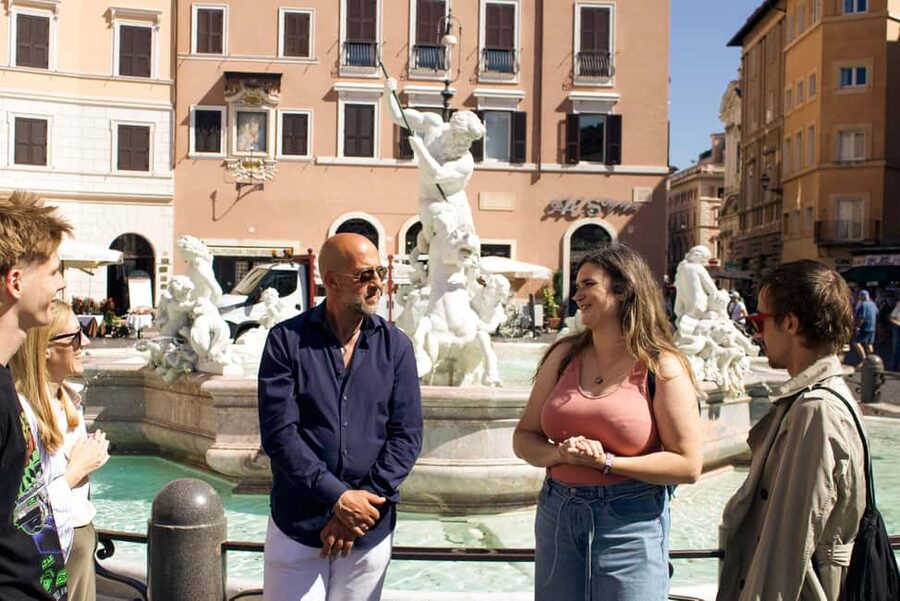
Piazza Navona is a strong place to begin. The Fontana dei Quattro Fiumi gives the opening minutes a calm soundtrack, while the long oval shape of the square helps you see how Rome layers Baroque architecture over an older urban plan.
The route then moves through streets where the city feels less formal. You pass from broad piazzas to narrower lanes, with the guide pointing out details that are easy to miss when you are focused only on the next famous monument.
The night setting matters here. You will not get a silent Rome, and busy squares can still have plenty of people. But the route avoids some of the daytime rush, and the lit monuments offer a different view than the one you get under the hard midday sun.
More Evening Tours in Rome
- Rome: City Highlights Open-Top Bus Night Tour
★ 4.1 · 2,038 reviews - Rome: Paranormal Night Walking Tour & Secret Backstreets
★ 4.9 · 1,921 reviews - Vespa Sidecar Tour By Night with Pickup
★ 5.0 · 1,803 reviews
Meeting in Piazza Navona or near Piazza d’Aracoeli
The exact starting point depends on the option you book. Possible meeting points include Piazza d’Aracoeli and Piazza di Pasquino, while the route itself includes Piazza Navona early in the evening.
Check the meeting point carefully before leaving your hotel. Central Rome has several piazzas with similar names, and a few minutes of confusion can make a late-evening start stressful.
Guides speak English or Spanish. The strongest part of the experience is likely to be the guide’s way of making the route feel connected rather than treating each monument as a separate lecture. Past guide names include Mary, Vladimir, Csenge, Domenica, Dan, Alina, Amanda, Sila, Rheb, Sharon, Sarah, and Max.
That variety matters. Some guides are praised for jokes and easy conversation, while others focus on symbols, architecture, or historical detail. You cannot choose a specific guide from the information provided, but the repeated pattern is clear: expect a live, conversational presentation rather than an audio-guide style recital.
Piazza Navona: fountains, space, and a gentle start
Piazza Navona is one of Rome’s most enjoyable public spaces, and the tour gives it about 20 minutes of guided attention. The central Fontana dei Quattro Fiumi provides an immediate visual anchor, with water, sculpture, and architecture all working together under the evening lights.
This stop is less about checking off a single monument and more about learning how Rome uses public space. You can take in the scale of the piazza, listen to the fountain, and settle into the walking pace before the route becomes more concentrated around the major sights.
The square can still be busy. That is part of the setting, but it means you should not expect a private, empty piazza. Keep your group in sight when moving from the meeting point to the first explanation.
The Pantheon and Sant’Ignazio: two different kinds of Rome
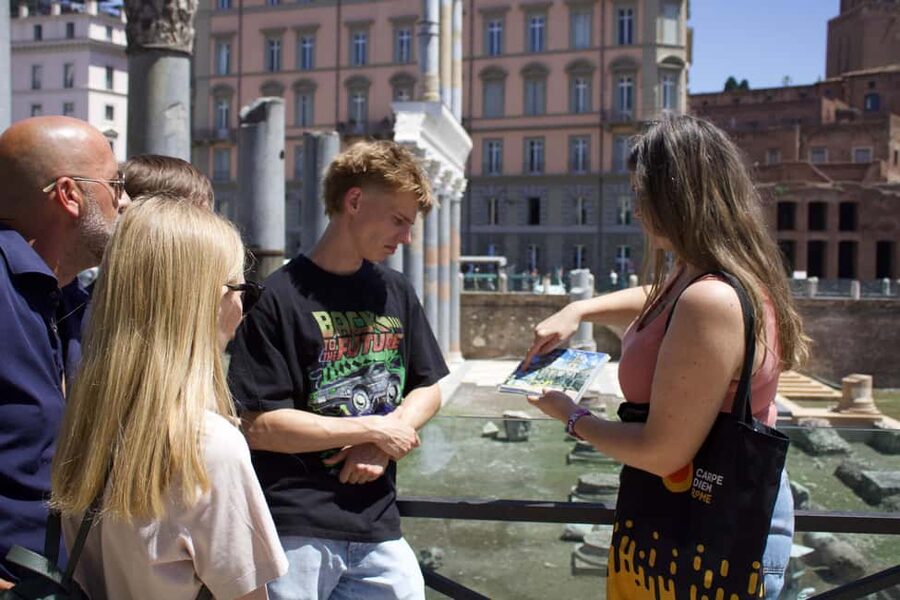
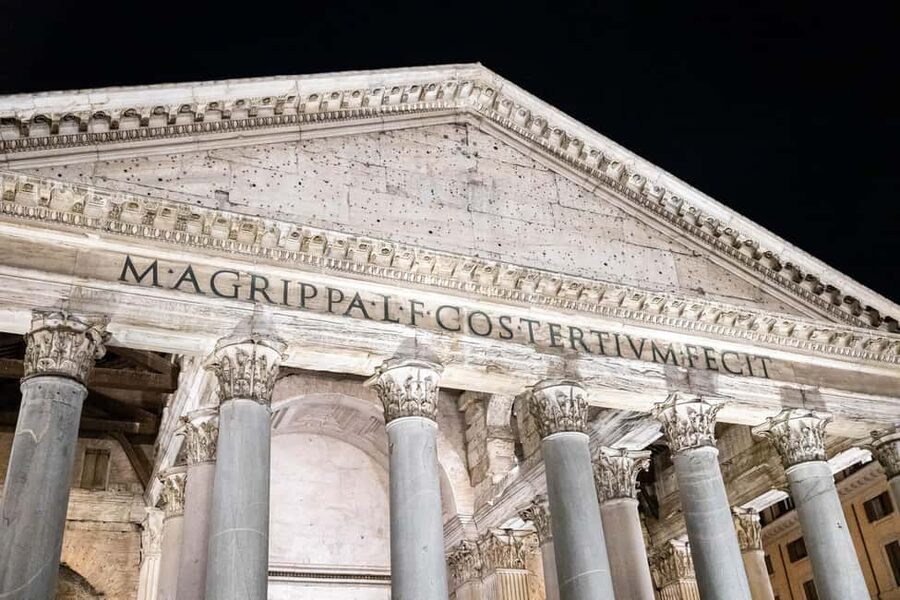
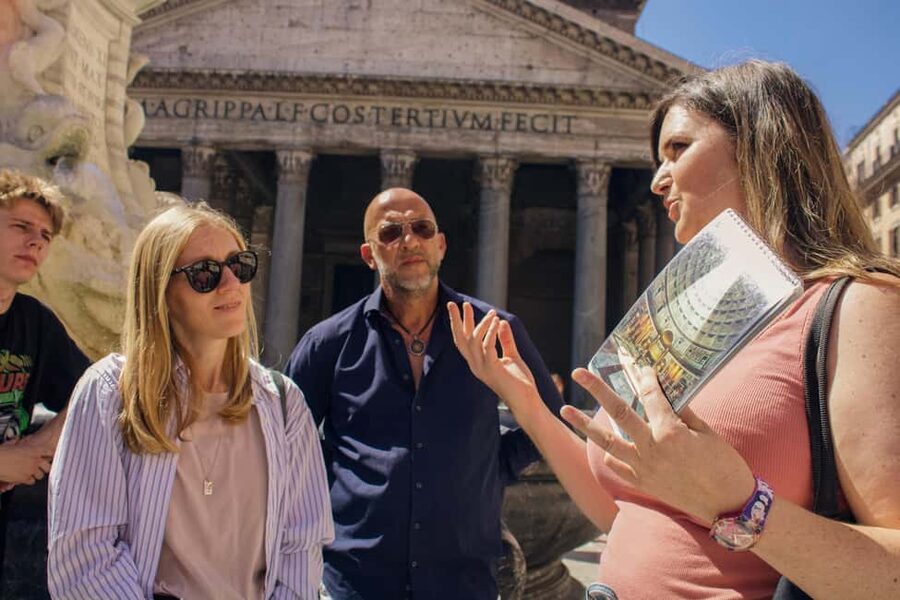
The Pantheon is listed as a pass-by stop, with about 20 minutes in the area. Even from outside, its massive portico and ancient columns make a strong impression. The building was commissioned by Emperor Hadrian as a monument to the gods and is one of the best-preserved monuments from ancient Rome.
Because the tour does not include a formal interior visit in the stated itinerary, you should not book this walk expecting time inside the Pantheon. The value is the exterior setting and the guide’s explanation of the building’s place in Rome.
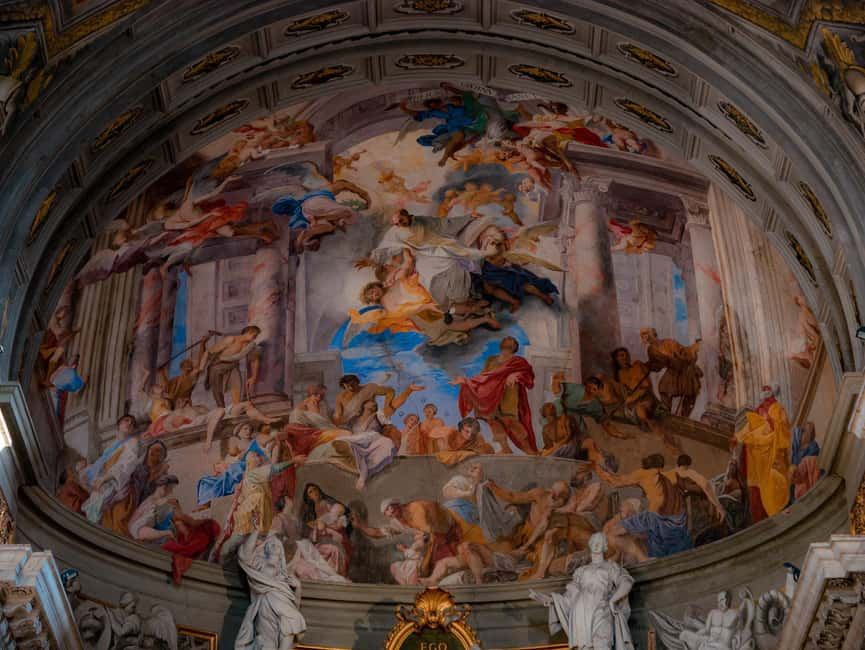
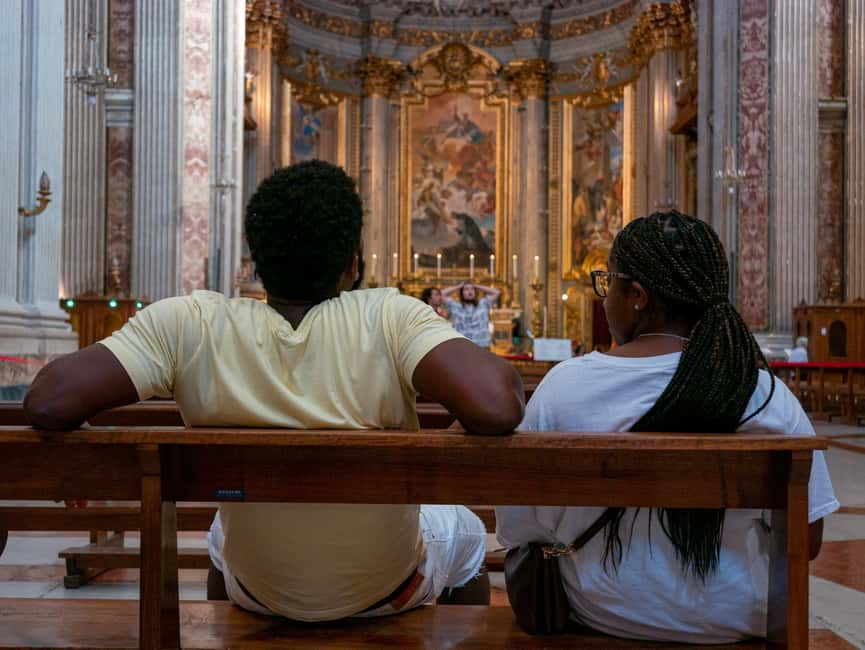
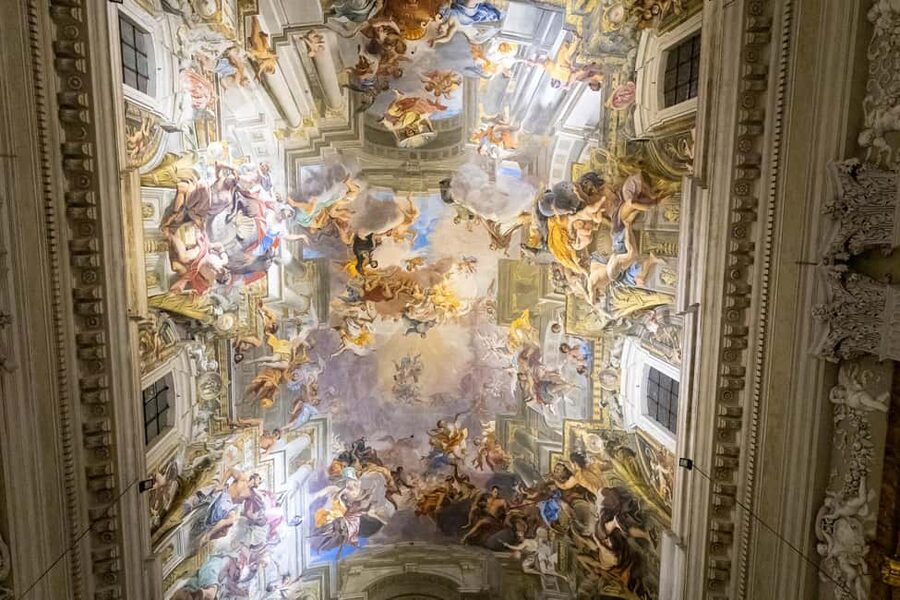
The Church of Sant’Ignazio di Loyola receives a longer guided visit of about 30 minutes. This is one of the route’s useful contrasts: the Pantheon represents ancient Roman engineering, while Sant’Ignazio brings you into Rome’s later religious and artistic world.
The church is also a good example of why a walking tour can add value beyond a map. A guide can direct your attention to details you might otherwise pass without understanding. If your guide is Sila, you may hear the sort of explanation she is praised for, including the meanings behind overlooked features and city symbols.
More Walking Tours in Rome
- Rome: Trastevere & Campo de Fiori Street Food Walking Tour
★ 4.9 · 2,768 reviews - Rome by Night Walking Tour – Legends & Criminal Stories
★ 4.5 · 1,003 reviews - Rome: Guided City Center Evening Sightseeing Walking Tour
★ 4.4 · 953 reviews - Best of Rome Walking Tour including Trevi Fountain
★ 4.5 · 923 reviews
Galleria Sciarra and Rome’s overlooked details
Galleria Sciarra gets around 20 minutes of guided attention. It is a quieter architectural pause compared with the headline sights, and its decorative interior offers a change of mood from ancient stone and open piazzas.
This is the kind of stop I appreciate on a first visit. Rome can make you feel as though every major road leads to a famous monument, but some of its character sits in courtyards, passages, facades, and small decorative details. The tour makes room for those places instead of rushing only between the Pantheon, Trevi Fountain, and Colosseum.
The supplied route description also points to details such as the Madonnelle, Rome’s small street shrines, and ways to distinguish authentic obelisks from later copies. These observations help turn an ordinary walk into a lesson in how the city developed.
One guide also highlights Rome’s public drinking water. That may sound minor beside the Colosseum, but it is exactly the sort of local detail that makes a city easier to understand and use. Take note of the fountains you pass, though no food or drink is included in the tour.
Trevi Fountain: the busiest stop on the route
The tour allows about 30 minutes at Trevi Fountain. This is the point where the route may feel most crowded, even in the evening, so keep your expectations realistic.
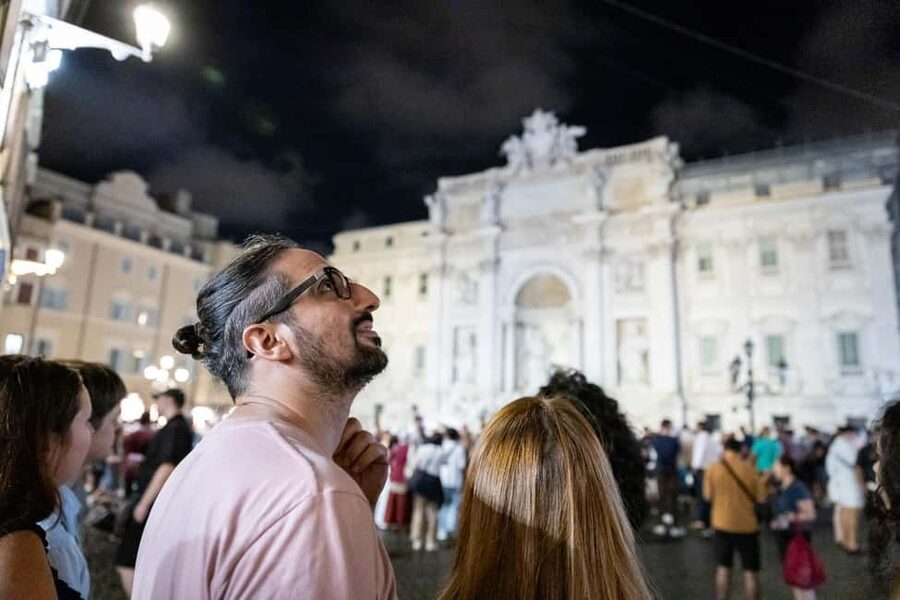
You will have time to see the fountain, take atmospheric photographs, and toss in a coin for the traditional wish. The guide can give you the setting and stories behind the monument, but you will still need patience if people are gathered around the best viewing spots.
Trevi is worth seeing at night because the lighting brings out the water and white stone in a way that daytime glare can flatten. It is also a practical photo stop, but watch your belongings and avoid blocking the flow of people.
The route’s timing is sensible. Thirty minutes is enough to appreciate the fountain without allowing it to swallow the entire evening. If you want extensive photography, you may need to return on your own.
Piazza Venezia and Trajan’s Column: Rome’s grand urban stage
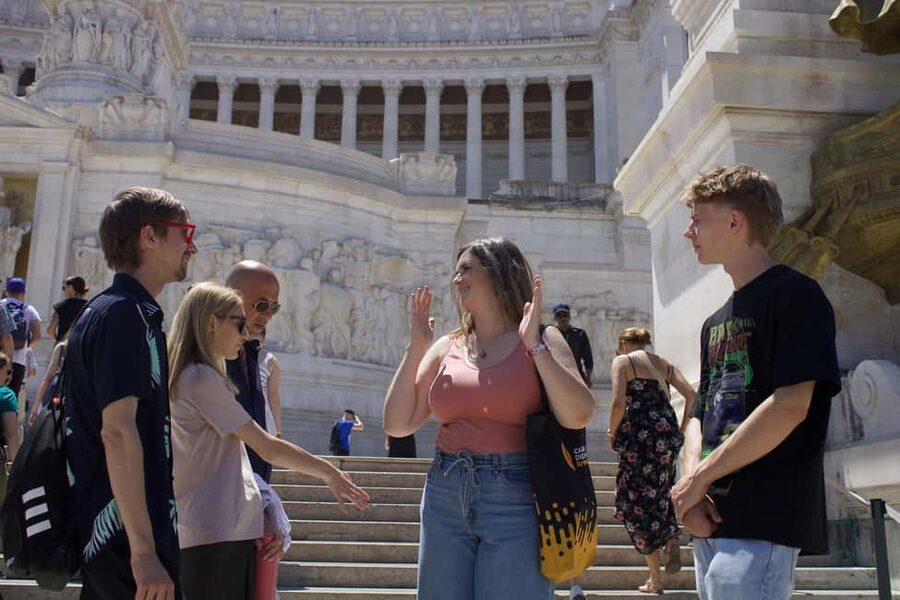
After Trevi Fountain, the walk continues toward Piazza Venezia and Trajan’s Column. Piazza Venezia receives about 20 minutes of guided time, and its broad scale makes it feel very different from the small lanes and enclosed squares earlier in the route.
This area helps you understand Rome as a city of changing political eras. Ancient columns and imperial monuments sit near later civic buildings and major roads. The guide can connect those layers while you take in the city’s more dramatic nighttime views.
Trajan’s Column receives another 20 minutes. The column’s carved spiral tells a military story in stone, and its location near the Imperial Fora places it among some of the clearest reminders of ancient Rome’s political power.
Do not expect a museum visit here. The experience is an outdoor explanation with time to look, listen, and photograph. That makes comfortable shoes especially important, since the route continues through historic streets and open stone-paved areas.
The Roman Forum and the glowing Colosseum
The route passes through the Roman Forum area with about 20 minutes of guided attention. The Forum can be hard to read without help. At night, its ruins can appear atmospheric but confusing, with broken columns and fragments spread across a broad space.
A guide gives you a basic framework for understanding what you are seeing. You will not tour every ruin in detail, and this is not an archaeological site visit with interior access. Instead, you get a nighttime view and a short explanation of how the Forum fit into Roman public life.
The final major sight is the Colosseum. The itinerary gives you time to walk around it as the exterior glows under the evening lighting. This is one of the tour’s strongest visual moments.
The Colosseum is not entered on this experience. That distinction matters if you are comparing it with a ticketed Colosseum tour. Still, seeing the amphitheater from outside at night gives you a memorable finish, especially after following the route through the Forum and past the ancient columns.
The tour can end at several points, including Piazza Navona, Piazza del Colosseo, and the Colosseum. Confirm your exact drop-off point when booking, since that affects how you plan the rest of your evening.
What the $28 price really buys you
At $28 per person, the tour offers solid value if you want orientation, stories, and a well-planned route rather than paid entry to monuments.
You are paying for a local guide, a city walking tour, historical context, and practical recommendations. You are not paying for meals, drinks, or admission to the Pantheon, Colosseum, or other sites. The value comes from covering a large number of central landmarks in one evening without arranging the route yourself.
A private group is available, which may suit families or friends who want a more personal pace. The standard experience is still best judged as a shared walking tour unless your booking specifically says private.
The rating is 4.8 from 852 reviews, and the most repeated praise centers on guide quality. Names such as Vlad, Sila, Csenge, Dan, Domenica, and Sharon come up for their humor, warm manner, clear explanations, and useful suggestions. That matters because a route like this depends heavily on delivery. The monuments are already impressive, but a good guide helps you notice why they matter.
The walking effort and how to prepare
This is a city walk, not a short photo loop. One detailed assessment described the finish as athletic, and that is useful advice. You will cover several neighborhoods and major sites over more than two hours, mostly on foot.
Wear comfortable shoes and comfortable clothing. Bring a phone or camera if you want night photographs, but keep your attention on the guide during explanations and on your footing along stone streets.
The late timing can work well for a first day in Rome. You get a broad introduction without giving up a full daytime block for a museum or excavation. It can also help you choose where to return later, since the route shows you the location of many central sights.
I would not choose this tour for someone who wants a slow dinner, long photo sessions, or detailed interior visits. The pace is designed to connect many places, so each stop receives a limited amount of time.
Who should book this evening walk
I would recommend it to first-time visitors who want a clear introduction to central Rome, couples looking for a scenic evening activity, solo visitors who prefer a guide, and anyone with limited daytime hours.
It also works well for people who enjoy stories and city details. The route includes the famous sights, but the strongest moments may come from the smaller observations about shrines, fountains, obelisks, and overlooked architecture.
Families with older children may enjoy the changing scenery and the nighttime setting, though each person should be ready to walk for at least two hours. If you have mobility concerns, the provided information does not specify accessibility arrangements, so ask the operator before booking.
The tour is offered in English and Spanish. If a private group matters to you, select that option when available rather than assuming the standard booking is private.
Should you book Rome Under the Moonlight?
Book it if you want to see Rome’s main central sights after dark, hear stories from a lively guide, and cover a lot of ground for $28. The Colosseum lighting, Trevi Fountain, Piazza Navona, and the less obvious stops make the route feel broader than a simple monument checklist.
Skip it if you want interior access, a short walk, or a slow evening built around food. For most first visits, though, this is a practical way to get your bearings fast and leave with a list of places worth exploring again in daylight.
FAQ
How long does the Rome Under the Moonlight tour last?
The tour lasts about 2 to 2.5 hours. Starting times vary, so check availability for the date you want.
How much does the tour cost?
The listed price is $28 per person.
Which languages are available?
The live tour is available in English and Spanish.
Where does the tour start?
The meeting point can vary by booking option. Possible starting points include Piazza d’Aracoeli and Piazza di Pasquino.
Where does the tour end?
The activity ends back at the meeting point or at one of the stated drop-off points, including Piazza Navona, Piazza del Colosseo, and the Colosseum. Check your selected option for the exact arrangement.
Does the tour include entry to the Colosseum or Pantheon?
The stated experience is a walking tour. The Pantheon is listed as a pass-by stop, and the Colosseum is viewed from outside. Monument admission is not listed as included.
What should I bring?
Bring comfortable shoes and comfortable clothes. Food and drinks are not included.
Just added around Rome
- Boat excursion to Gaeta with a stop for swimming and snorkeling 2 HOURS★ 5.0 · 240 reviews
- Palatine Hill and Roman Forum Tour with Fast-Track Entrance★ 4.2 · 417 reviews
- Tivoli: Villa D’Este & Villa Adriana Pass & App Audioguide★ 4.4 · 364 reviews
- Tivoli: Villa D’Este Entry Ticket and App Audio Guide★ 4.3 · 191 reviews
- From Rome: Villa D’Este & Villa Adriana Day Trip with Lunch★ 4.4 · 289 reviews
- Vatican Museums & Sistine Chapel Skip-the-Line Guided Tour★ 4.6 · 254 reviews
- Rome: Capitoline Museums and Centrale Montemartini Tickets★ 4.4 · 328 reviews
- Rome: The Three Tenors at St. Paul’s Church Concert Ticket★ 4.7 · 699 reviews
Walking Tours, compared.

Guided Walking Tour & Last Supper Visit with Ticket
Read our review →
Rialto Bridge & Offbeat Unusual Venice Walking Tour
Read our review →
Private 3 hrs Venice Tour: St Mark’s, Walking tour & Boat tour
Read our review →
Skip the line: Uffizi and Accademia Small Group Walking Tour
Read our review →Browse the lists this tour appears in