
Reviewed · COLOSSEUM TOURS
Rome: Colosseum, Roman Forum, and Palatine Hill Tour
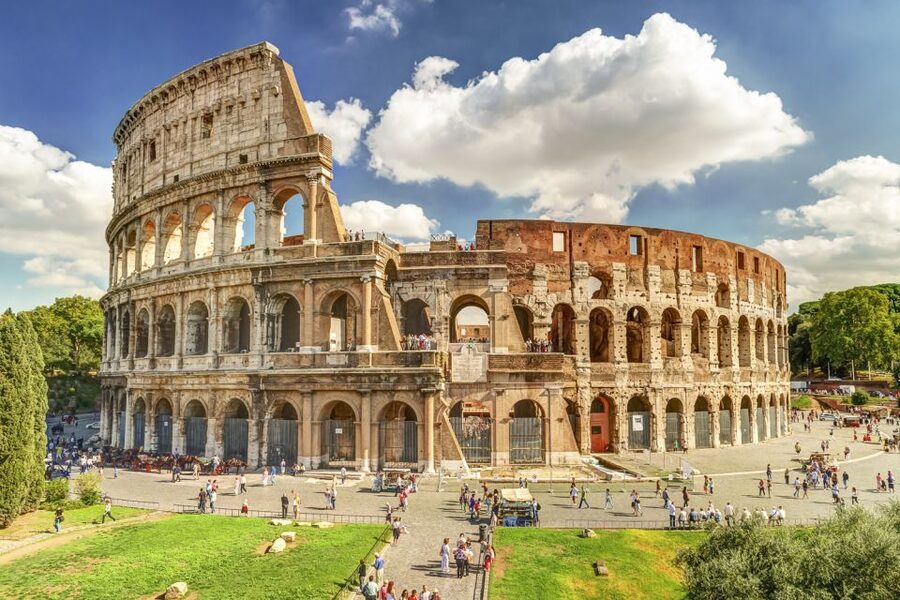
The best part of this tour is its three-part view of ancient Rome: the Roman Forum, where public life unfolded; Palatine Hill, with its fine views and imperial ruins; and the Colosseum, where Rome staged its famous public games. The route gives you a story rather than three disconnected photo stops.
I like the way the guides turn broken stone into a picture of daily life, and I like the chance to continue exploring the Forum and Palatine Hill after the guided portion. Guides such as Elena, Lorenzo, Sonia, Francesca, and Mario have been praised for clear explanations and good humor. The main drawback is the pace: three hours on uneven ground in the Roman sun can feel long, especially since you will walk quite a bit and must pass security.
Key points to know before booking
- Three major ancient sites in one tour: The Colosseum, Roman Forum, and Palatine Hill are covered in roughly 2.5 to 3 hours.
- The Forum comes alive through stories: Your guide explains its political, legal, economic, and social roles instead of simply naming ruins.
- Palatine Hill adds the best broad views: Look across the Colosseum, Forum, and Circus Maximus while learning about imperial palaces and Rome’s foundation legend.
- Arena access may be available: Choose the option with Arena-floor entry for a closer view and a less crowded perspective.
- Expect strict entry procedures: Arrive 30 minutes early, bring your passport or ID, and allow 5 to 30 minutes for security.
- This is a walking tour: Comfortable shoes, water, and light luggage matter more here than fancy camera gear.
Why this ancient Rome tour works
Rome’s ancient center is huge, confusing, and easy to misread. A column may mark a temple, a courthouse, or a memorial, but without context it can look like one more pile of stones. This tour gives you a guide to the vanished city and links the sites in a sensible order.
The exact order can change. You might begin in the Forum and climb Palatine Hill before entering the Colosseum, or start with the amphitheater and finish among the ruins. That flexibility is normal, but it means you should not plan a meal or timed attraction based on a guaranteed final stop.
The experience lasts about 2.5 to 3 hours. That is enough time to see the main areas and ask questions, though not enough for every corner of the archaeological park. One of the tour’s strengths is efficiency. Several people have praised guides for keeping the group moving without making the visit feel hurried.
At $105 per person, this is not the cheapest way to enter the ancient city. You are paying for admission, an official guide, route planning, and help with one of Rome’s busiest sightseeing zones. I think the price makes the most sense if you want the ruins explained and prefer not to spend your first visit figuring out what each structure once did.
More ways into the Colosseum and the Forum:
- Colosseum, Roman Forum & Palatine Guided Tour
★ 4.7 · 63,148 reviews - Rome: Colosseum, Palatine Hill and Roman Forum Guided Tour
★ 4.8 · 32,814 reviews - Rome: Guided Tour of Colosseum, Roman Forum & Palatine Hill
★ 4.7 · 27,897 reviews
Starting in the Roman Forum
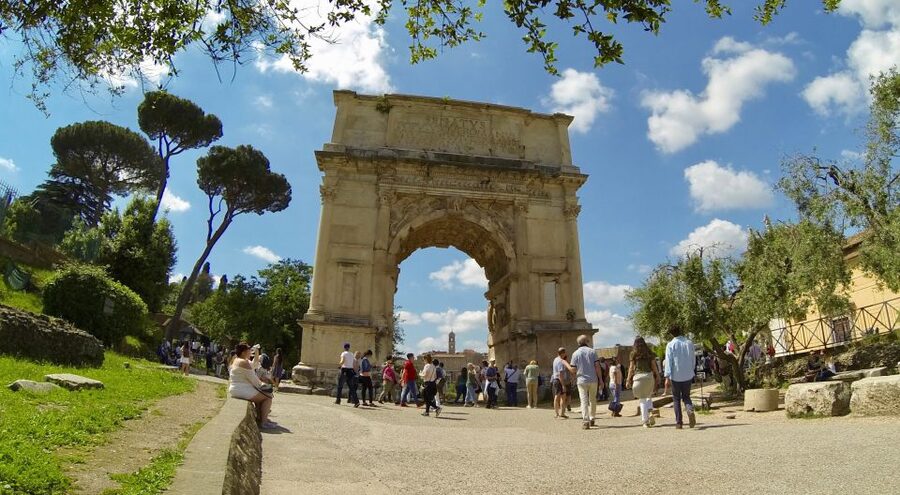
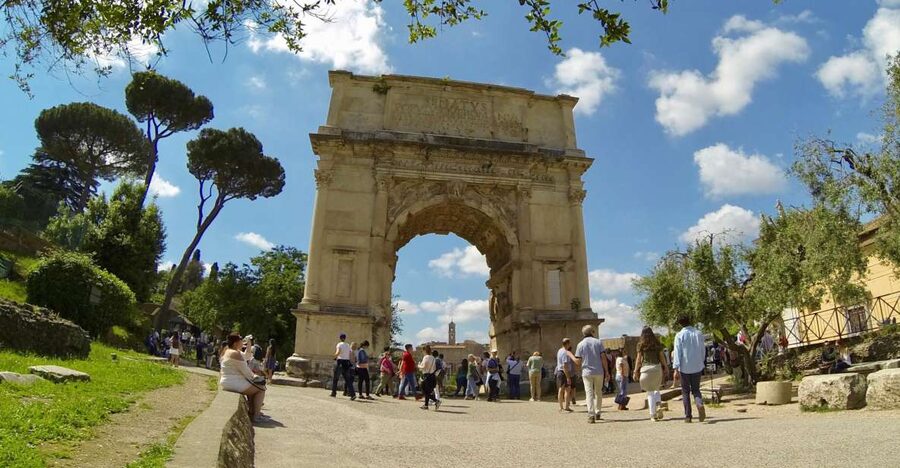
If your group begins in the Forum, you will meet near the Colosseum, receive a short introduction, and walk into the ancient city with your guide. The Forum was the center of Roman public life, so this is where the tour can give you the strongest sense of ordinary activity in an extraordinary place.
Your guide discusses the Forum as a place of business, politics, law, religion, and social contact. That range matters. Ancient Rome was not only emperors and gladiators. It was also speeches, court cases, elections, trade, ceremonies, and people moving through the city on daily business.
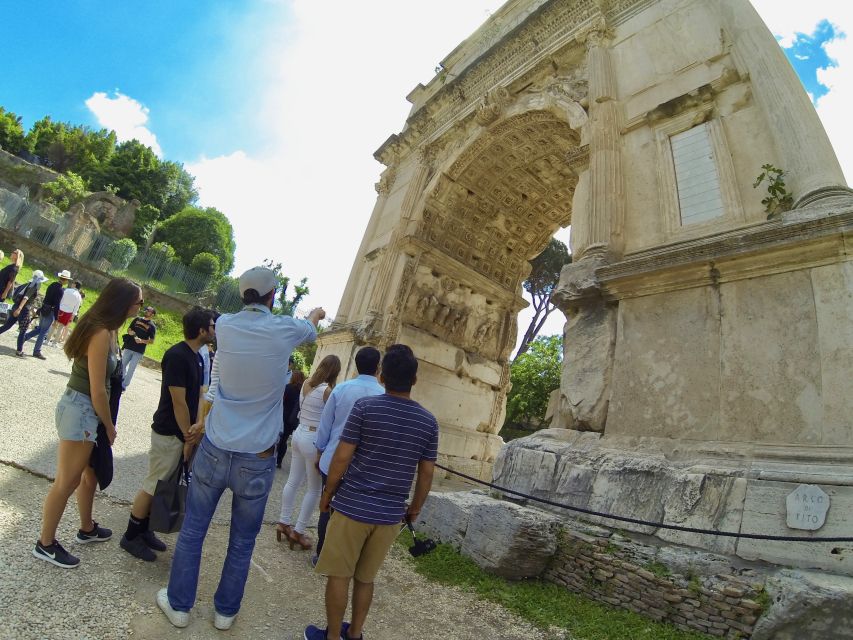
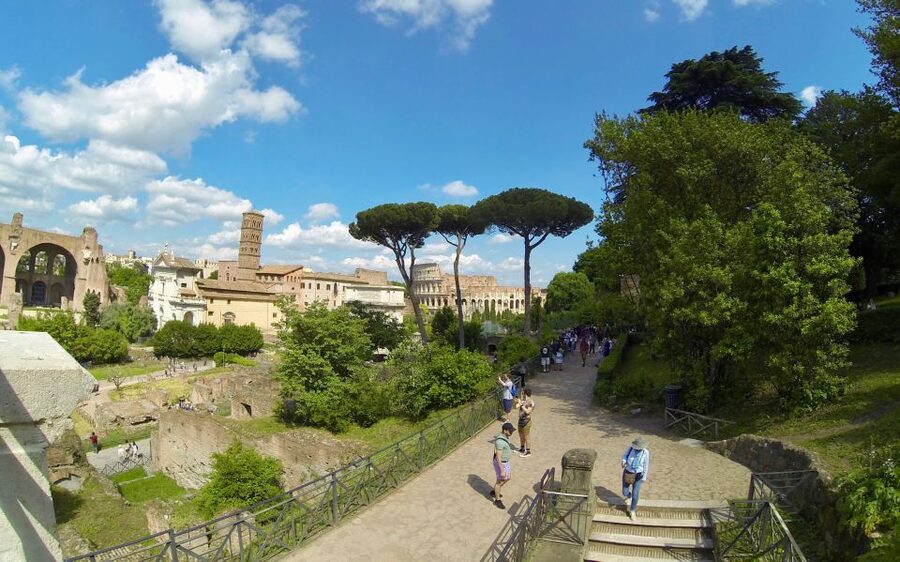
The remains are scattered across an open archaeological area. You will see fragments of temples, arches, streets, and public buildings, but the original city plan is not always easy to read from ground level. A good guide helps you connect the ruins to the people who used them. Guides named Elena, Mario, and Sonia have been singled out for making the setting easier to understand through stories and practical explanations.
Bring patience for uneven paving and changing levels. The route is outdoors, and the heat can build quickly. One guest needed to slow down because of the summer heat, so do not feel that you must keep a fast pace just to stay with the group. Tell your guide if you need a short pause.
Palatine Hill and the views over Rome
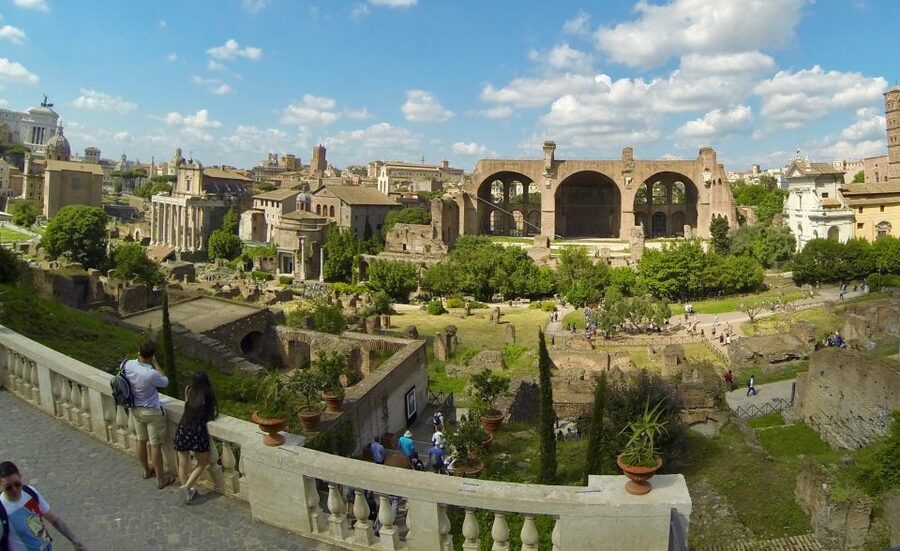
From the Forum, the route may continue uphill to Palatine Hill. This is one of Rome’s seven hills and the place connected with the legend of the city’s founding. The setting feels different from the Forum. Instead of being surrounded by dense ruins at street level, you get open space, gardens, imperial remains, and views across the ancient center.
The outlook toward the Colosseum, Circus Maximus, and Forum is one of the tour’s most useful photo stops. It also helps you understand the geography of ancient Rome. From above, the sites begin to fit together as one urban center rather than separate attractions.
Palatine Hill was associated with elite Roman residences, including imperial palaces. Your guide explains the remains and the role of the hill while you walk through the park-like setting. The beauty here is quieter than the Colosseum’s drama, but the combination of ruins and views gives the tour breathing room.
This part requires an uphill walk, and there is little reason to wear anything but comfortable shoes. The tour is not wheelchair or stroller accessible. Large bags, backpacks, and trolleys are not allowed, so pack lightly before you leave your hotel.
Entering the Colosseum
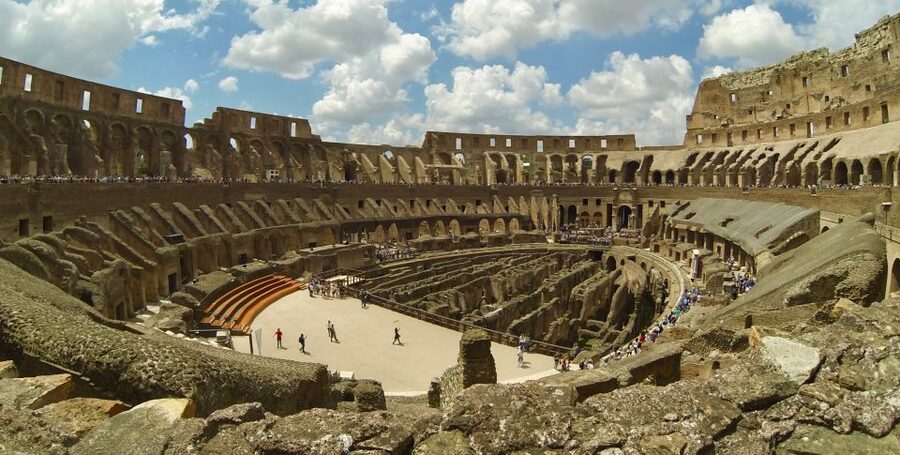
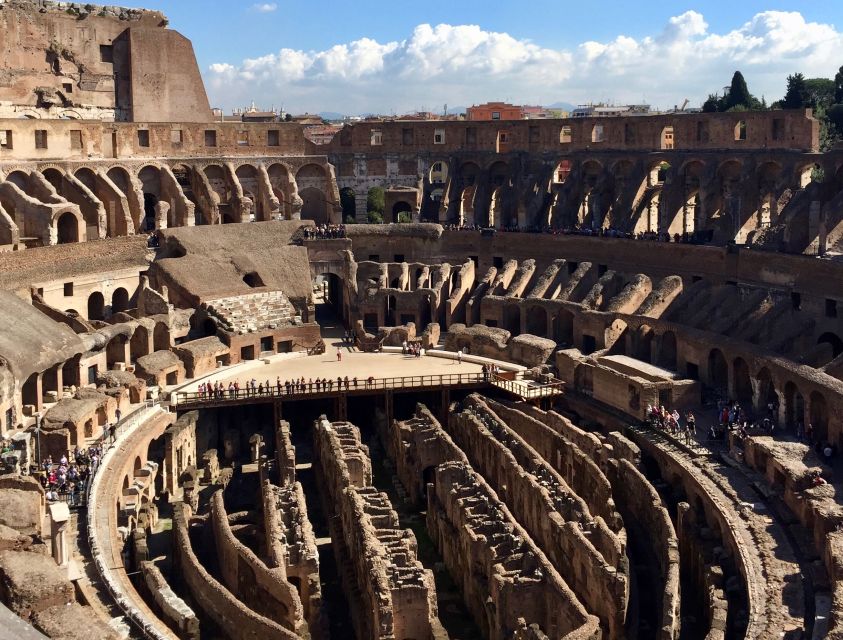
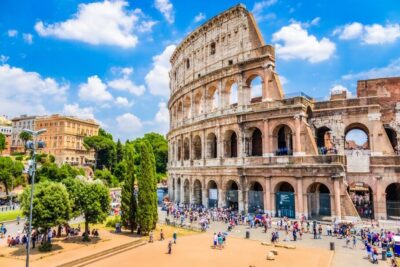
The Colosseum is the grand finale on some departures and the opening act on others. Either way, walking inside changes the scale of the monument. From outside, you see a massive oval wall. Inside, you begin to understand the tiers, passageways, arena, and engineering that allowed tens of thousands of people to enter, watch, and leave.
The guide covers why the amphitheater was built, the political and social motives behind its construction, and the types of games held there. This is useful because the Colosseum is often reduced to gladiators. The building also served as a public statement about power, generosity, and control.
Ancient engineering gets proper attention. You hear how Roman builders created and operated an enormous amphitheater, then consider how the structure survived earthquakes, stone removal, and centuries of change. The guide’s job here is not just to point out arches. It is to explain how the building functioned and why it mattered.
Some booking options include access to the Arena floor. I would consider this upgrade if you want a closer, lower viewpoint and a less crowded perspective of the interior. Read the option details carefully, since Arena access is not presented as part of every version of the tour.
The Colosseum can be crowded even when the tour itself is well organized. Security is mandatory, and the wait can take 5 to 30 minutes. A privileged entrance may help with the entry process, but it does not mean you skip every checkpoint or walk into an empty monument.
A few more Rome half-days worth a look
- Vatican: Museums & Sistine Chapel Entrance Ticket
★ 4.5 · 144,003 reviews - Vatican Museums & Sistine Chapel Tour with Optional Basilica
★ 4.3 · 67,413 reviews - Vatican Museums, Sistine Chapel & St Peter’s Basilica Guided Tour
★ 4.5 · 39,149 reviews - Rome: Colosseum & Forum with Audio Guide App -Optional Arena
★ 4.2 · 24,770 reviews
How the guides shape the experience
The guide is the main reason to book this rather than simply buying an entry ticket. The ruins require interpretation, and the strongest guide makes room for questions, photographs, and a little humor while keeping the schedule on track.
Several guides have received especially warm praise. Elena has been described as upbeat, patient, and attentive, including when the heat slowed someone down. Lorenzo was praised for being personable and well informed. Francesca was noted for her passion and care, while Sonia brought an archaeologist’s perspective and a strong interest in the site.
Those names do not guarantee who will lead your departure. The experience is offered in English, French, Portuguese, Spanish, Italian, and German, so select your language carefully when booking. Private groups are also available if you want more control over the pace or prefer to ask many questions without a larger group around you.
Group size can affect the feel of the tour. A small group of eight was particularly appreciated because it made questions easier and helped the guide move through crowded areas. A private option costs more, but it may suit families or groups with different walking speeds.
Time, heat, crowds, and the best departure
The schedule matters here. Morning departures can give you more time afterward to continue sightseeing, but they may coincide with busy periods at the monuments. A later departure can feel cooler and, at times, less crowded. One evening visit was especially appreciated for its cooler air, illuminated ruins, and quieter mood, although you may have less time to explore independently afterward.
Do not assume every departure has the same atmosphere. Rome’s heat, rain, local crowds, and monument procedures can change the experience from one day to the next. The guide can control the route and explanations, but not the weather or security line.
Arrive 30 minutes before the stated start time. Meeting points vary by the option you choose, and directions can be confusing if you approach on foot. One useful warning: map applications may send walkers toward the metro station above the actual meeting area. Check the precise meeting instructions before leaving, not while you are already racing toward the Colosseum.
The tour does not include hotel pickup or drop-off. Plan your own way to the meeting point and leave time for the walk from public transport or your accommodation.
What to bring and what to leave behind
Bring your passport or ID card. The ticket information must match the name on the identity document, so check spelling before you finalize the booking.
Wear shoes suited to prolonged walking on old paving and uneven ground. Bring water, especially in warm months. Rome has public drinking fountains, and carrying a refillable bottle is practical, since one guide specifically encouraged guests to refill during the walk.
Large bags are a problem. Backpacks, luggage, and trolleys are not allowed inside, and the site also prohibits pets, drones, selfie sticks, professional cameras, glass objects, sprays, aerosols, weapons, and sharp items. A small personal bag is the safer choice, but follow the current instructions tied to your booking.
This is not a wheelchair or stroller-accessible tour. If anyone in your party has limited mobility, the hills, uneven surfaces, stairs, and long walking time deserve serious thought before booking.
Is $105 a fair price?
The $105 fee buys more than access. It includes entry tickets, a walking tour, and an official guide through three of Rome’s most important ancient sites. The value comes from the explanation and the time saved, not from luxury transportation or a relaxed, private sightseeing style.
I would compare it with the cost of separate entry, the effort of arranging timed access, and the risk of wandering through the Forum without understanding what you are seeing. If you enjoy researching every monument in advance, you may prefer to visit independently. If you want someone to organize the sequence and explain the political and social setting, the fee is easier to justify.
The optional Arena-floor access can change the value for you. It offers a different angle inside the Colosseum and may reduce the sense of being packed into the standard viewing areas. Check exactly what your chosen option includes before paying, since the Arena is not automatic.
The non-refundable policy also matters. Do not book this casually if your schedule is uncertain. Pick a departure that fits your day and remember that the route order can change.
Who should book this tour?
I would recommend it to a first-time visitor who wants the essential ancient Rome sites explained in one outing. It suits couples, families with older children, and anyone who wants a clear introduction before returning to the Forum or Colosseum independently.
It is also a good match for people who enjoy history but do not want a lecture. The best guides keep the facts moving with stories, humor, and chances to stop for photographs. The tour has received strong praise for being informative without feeling overloaded.
I would hesitate if you dislike groups, cannot walk uphill for several hours, or want a slow visit with extensive time inside every structure. A private group may solve the first problem, but it will not remove the heat, uneven ground, security checks, or walking distance.
Should you book it?
Book this tour if you want the ancient center of Rome to make sense, not just look impressive. The Forum gives you daily life and public power, Palatine Hill gives you space and views, and the Colosseum supplies the unforgettable final image.
Choose a smaller or private group if questions and pace matter to you. Consider the Arena-floor option if the Colosseum is your top priority. Arrive early, carry water, pack lightly, and leave room in your schedule for a 30-minute security wait.
For a first visit, $105 is a reasonable price for three major sites and a guide who can turn scattered ruins into a readable story. Just come prepared for a serious walk rather than a quick photo stop.
FAQ
How long does the tour last?
The tour lasts approximately 2.5 to 3 hours.
Which sites are included?
The tour includes the Colosseum, Roman Forum, and Palatine Hill.
Can I choose which site I visit first?
The order may change. The tour can begin in the Roman Forum and Palatine Hill before the Colosseum, or begin at the Colosseum and finish in the Forum area.
Is Arena-floor access included?
Arena-floor access is available with a specific booking option. Check the option details before booking because it is not included in every version.
What languages are available?
Live tours are offered in English, French, Portuguese, Spanish, Italian, and German.
How early should I arrive?
Arrive at the meeting point 30 minutes before the tour begins.
Will I need to pass through security?
Yes. Security checks are mandatory for the Colosseum and Roman Forum. The security process may take 5 to 30 minutes.
Is the tour wheelchair accessible?
No. The tour is not wheelchair or stroller accessible.
Just added around Rome
- Boat excursion to Gaeta with a stop for swimming and snorkeling 2 HOURS★ 5.0 · 240 reviews
- Palatine Hill and Roman Forum Tour with Fast-Track Entrance★ 4.2 · 417 reviews
- Tivoli: Villa D’Este & Villa Adriana Pass & App Audioguide★ 4.4 · 364 reviews
- Tivoli: Villa D’Este Entry Ticket and App Audio Guide★ 4.3 · 191 reviews
- From Rome: Villa D’Este & Villa Adriana Day Trip with Lunch★ 4.4 · 289 reviews
- Vatican Museums & Sistine Chapel Skip-the-Line Guided Tour★ 4.6 · 254 reviews
- Rome: Capitoline Museums and Centrale Montemartini Tickets★ 4.4 · 328 reviews
- Rome: The Three Tenors at St. Paul’s Church Concert Ticket★ 4.7 · 699 reviews
Colosseum Tours, compared.
Colosseum, Roman Forum & Palatine Guided Tour
Read our review →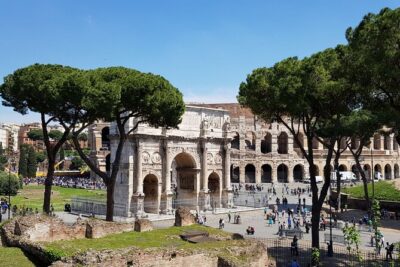
Colosseum, Palatine Hill and Roman Forum Guided Tour
Read our review →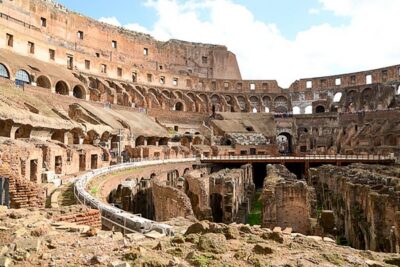
Guided Tour of Colosseum, Roman Forum & Palatine Hill
Read our review →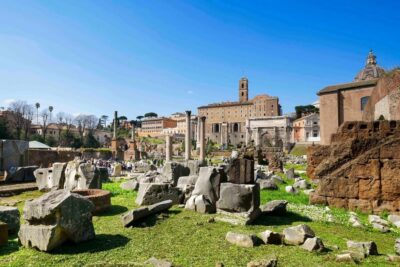
Colosseum & Forum with Audio Guide App -Optional Arena
Read our review →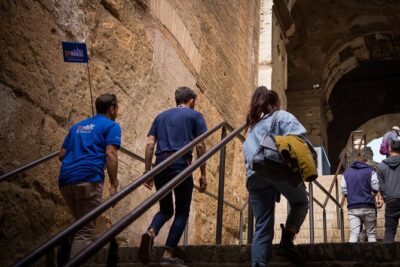
Colosseum, Roman Forum and Palatine Hill Guided Tour
Read our review →
Colosseum, Forum & Palatine Hill Tour & Optional Arena
Read our review →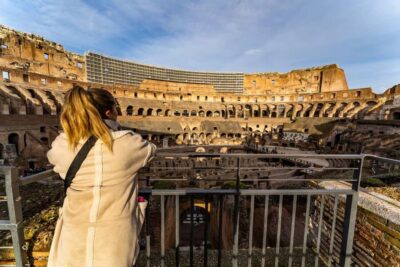
Colosseum, Roman Forum, Palatine with Multimedia Video
Read our review →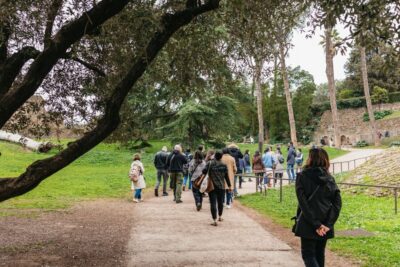
Colosseum, Palatine Hill & Roman Forum Guided Tour
Read our review →Browse the lists this tour appears in