
Reviewed · VATICAN TOURS
Rome: Skip the line Vatican Museums & Sistine Chapel Tour
The biggest reason to book this Vatican tour is simple: it gets you past the ticket line and gives you a clear route through one of Rome’s most confusing museums. Inside, Michelangelo’s Sistine Chapel ceiling is the finale, but the earlier rooms, especially the Gallery of Maps and Raphael Rooms, deserve serious attention too.
I like the three-hour structure because it covers the essential works without asking you to plan the route yourself. I also like the headsets, which let you hear guides such as Lorena, Alessandra, and Marco even when the corridors are crowded. The main drawback is that this is still a busy group visit, and three hours of walking and standing can feel long.
Key points to know before booking
- Skip-the-line entry saves time, but every visitor still passes through airport-style security.
- Michelangelo’s Sistine Chapel receives about 30 minutes, with no photography allowed inside.
- The Raphael Rooms, Laocoön, and Gallery of Maps give the tour more substance than a quick chapel visit.
- Groups can be around 20 people or larger, so the headset is important in crowded galleries.
- St. Peter’s Basilica is not included, and access to it should not be assumed.
- Dress for a place of worship: shoulders and knees must be covered, and large bags are not allowed.
Why the Vatican needs a guided route
The Vatican Museums are not a quick stroll from one famous painting to the next. You move through long corridors, sculpture courts, frescoed rooms, and galleries packed with objects from different periods. Without a plan, it is easy to spend too much time on the first rooms and reach the Sistine Chapel tired or rushed.
This tour gives you a route with a beginning, middle, and end. You start near the Belvedere Courtyard, move through major museum galleries, see the Raphael Rooms, and finish in the Sistine Chapel. That order matters. It helps you see how Renaissance artists developed ideas about anatomy, geography, perspective, and religious storytelling before you reach Michelangelo’s best-known work.
The guide is not there only to point at famous paintings. A good guide explains what to look for, why a detail matters, and how one room connects to the next. The strongest feedback for this experience centers on guides who were clear, friendly, and well prepared. Lorena received repeated praise for her storytelling and attention to detail. Alessandra, Alexandra, and Marco were also singled out for making the visit easy to follow.
The listed languages are English and Spanish. You should check the selected option carefully when booking, since the available language and meeting point can vary.
More Museum Tours in Rome
- Vatican: Museums & Sistine Chapel Entrance Ticket
★ 4.5 · 144,003 reviews - Vatican Museums & Sistine Chapel Tour with Optional Basilica
★ 4.3 · 67,413 reviews - Vatican Museums, Sistine Chapel & St Peter’s Basilica Guided Tour
★ 4.5 · 39,149 reviews
Starting near Viale Giulio Cesare
The listed meeting location is on Viale Giulio Cesare, with two starting options shown at the same address. Your exact meeting point can depend on the option you book, so read the confirmation closely rather than walking straight to the museum entrance on your own.
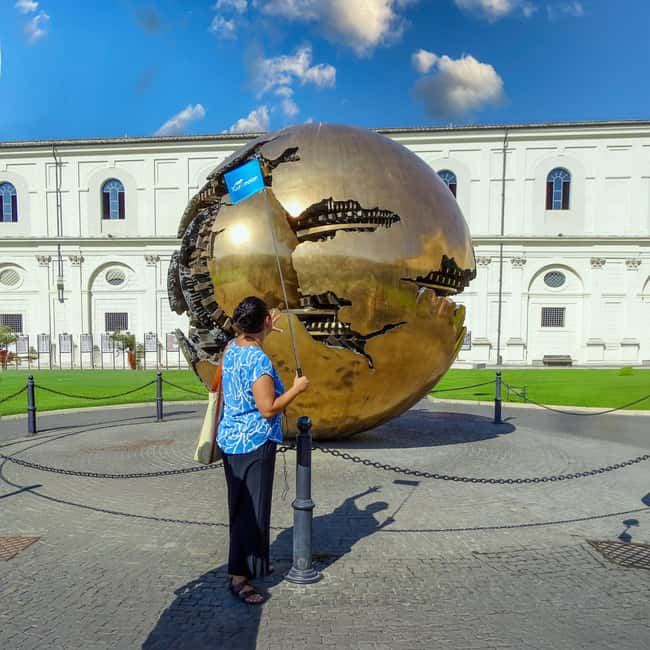
This is one of those moments when arriving early pays off. The Vatican area can be confusing, and tour groups may be using flags or other signs to gather their members. One guide specifically reminded the group to look for her flag and only her flag, a useful detail when several operators are assembling nearby.
Transfers are not included. You make your own way to the meeting point and leave the tour near Piazza Pio XII, close to St. Peter’s Square. That makes the experience easy to add to a day in central Rome, but you should allow time for transport and security rather than treating the three-hour duration as your total door-to-door commitment.
Belvedere Courtyard and the ancient sculptures
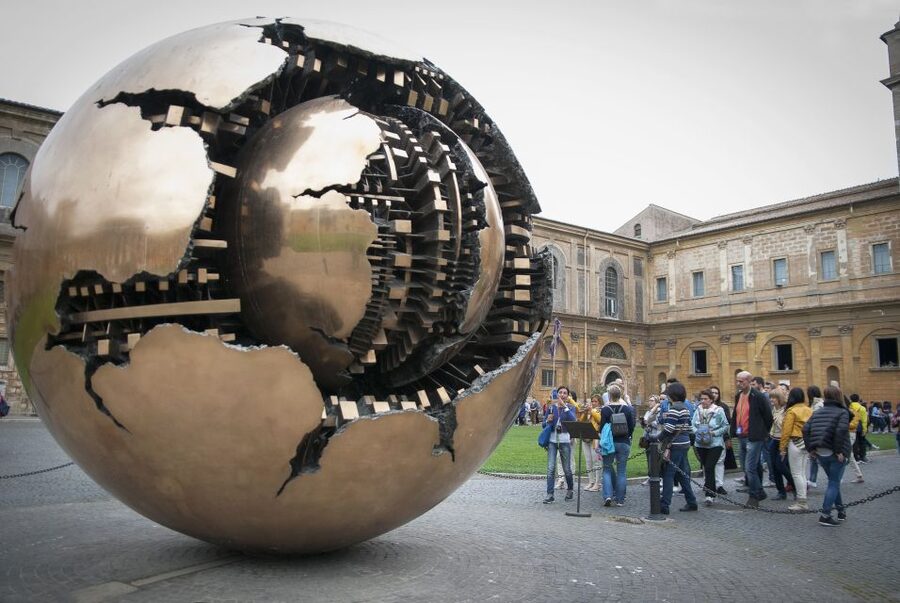
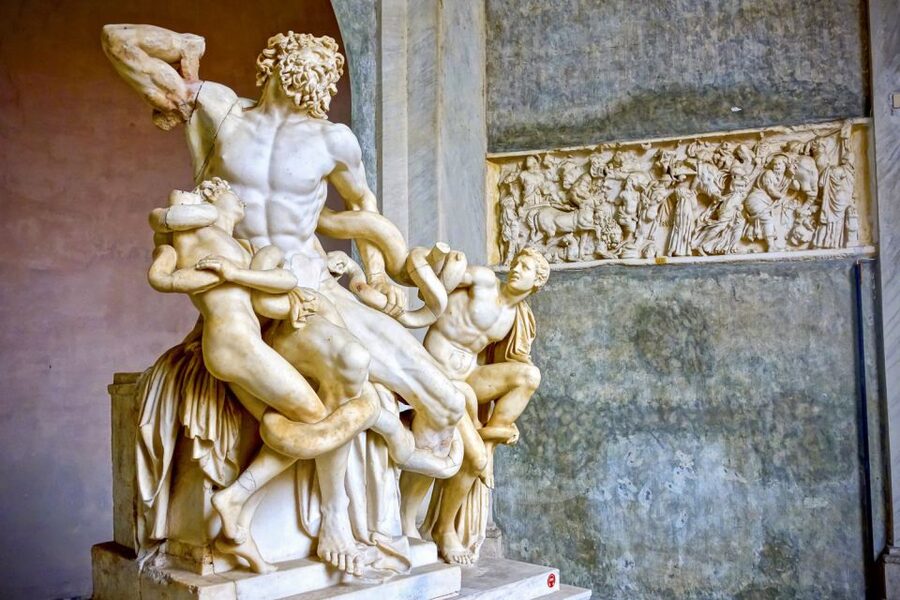
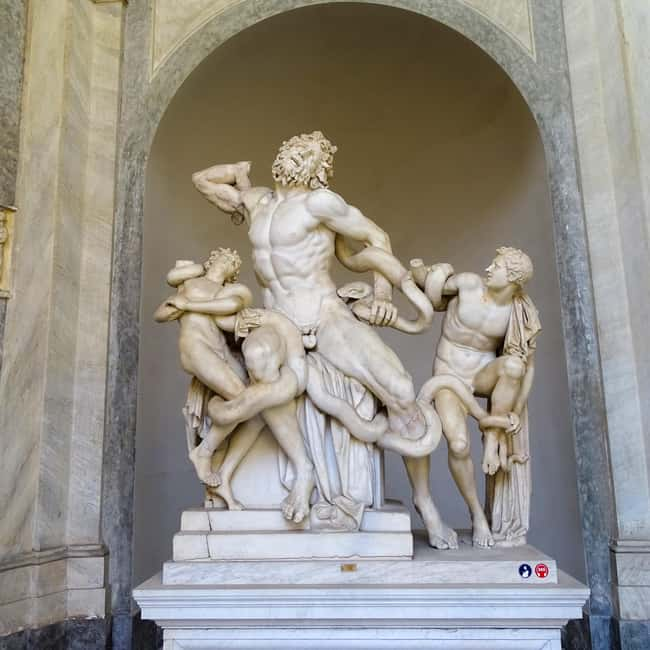
The first major stop is the Cortile del Belvedere, where the guide introduces ancient sculpture in an open courtyard setting. This is where you encounter famous works such as Laocoön and His Sons and the Belvedere Torso.
Laocoön is powerful even if you know nothing about classical art. The twisting bodies and strained expressions make the sculpture feel active rather than static. A guide can help you notice how later artists studied its movement and emotional force.
The Belvedere Torso is especially important for understanding Michelangelo. Its incomplete, muscular form influenced his approach to the human body. Seeing it before the Sistine Chapel gives you a useful connection: the anatomy beneath Michelangelo’s painted figures did not appear from nowhere. He studied the ancient works around him and transformed those lessons into monumental frescoes.
You should not expect a quiet museum experience here. The Vatican is heavily visited, and the group may need to keep moving. Still, this opening stop is worthwhile because it gives the rest of the tour an artistic foundation.
The Gallery of Maps: Italy before modern mapping
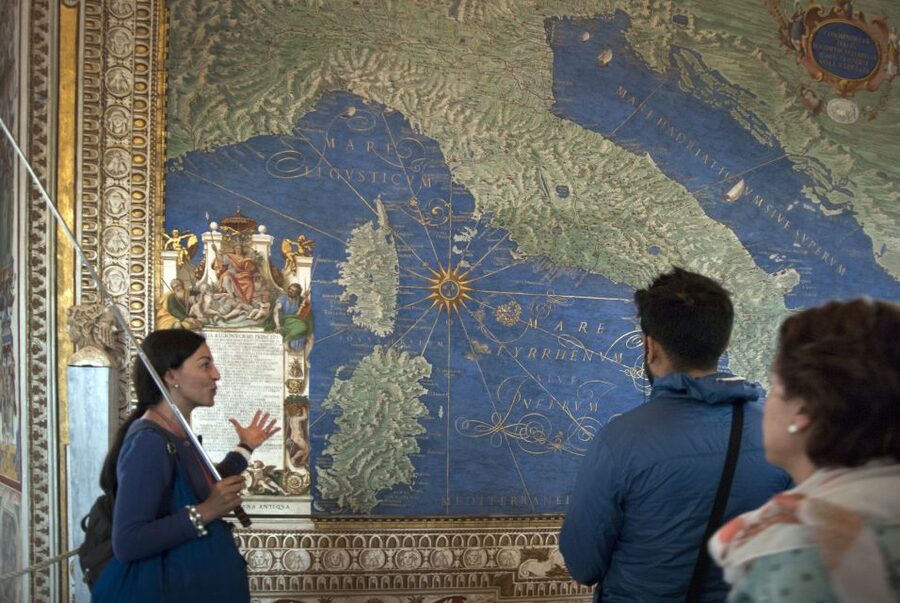
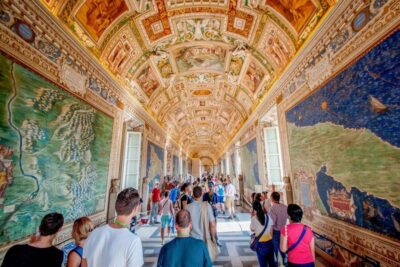
The Gallery of Maps is one of the most visually memorable sections of the route. Its walls display large painted maps of Italy, created in the 16th century, long before digital maps or satellite images.
The attraction is not just the subject. Look up and across the walls to see how geography became decoration. The maps combine place names, coastlines, mountains, and decorative details in a long corridor designed to impress. Your guide can point out how artists represented the country with the information available to them at the time.
This room can be difficult to appreciate alone because there is so much to look at. You might notice a painted town or coastline without understanding why it is there. A guide gives you a framework, then helps you choose a few details instead of trying to inspect every inch.
The corridor is also a good example of the tour’s basic tradeoff. You see a great deal in a short time, but you will not study every map at leisure. If cartography is your main interest, plan to return independently if your ticket and schedule allow. For most people, the guided introduction is a sensible use of limited time.
More Skip-the-Line Tickets in Rome
- Vatican Museums & Sistine Chapel Skip-the-Line Entry Ticket
★ 4.4 · 13,838 reviews - Skip-the-Line Group Tour of the Vatican, Sistine Chapel & St. Peter’s Basilica
★ 4.5 · 12,779 reviews - Rome: Vatican Museums & Sistine Chapel Skip-The-Line Ticket
★ 4.2 · 11,708 reviews - Vatican, Sistine Chapel & St. Peter’s Skip-the-Line Tour
★ 4.5 · 7,770 reviews
The woven-textile gallery and Renaissance decoration
The next section displays large woven works created for grand interiors. These pieces are easy to pass quickly, but they reward a closer look at the figures, gestures, and illusion of space.
The gallery shows how Renaissance artists carried painted scenes into another medium. Details that seem flat from a distance can suggest depth, movement, and drama when you stand close. Your guide may also draw your attention to how the works were designed to be read from a room rather than examined like a small painting.
This part of the visit adds variety. You are not looking at wall frescoes the entire time. After ancient stone sculpture and painted maps, the woven works show another way the Vatican used art to communicate religious and political power.
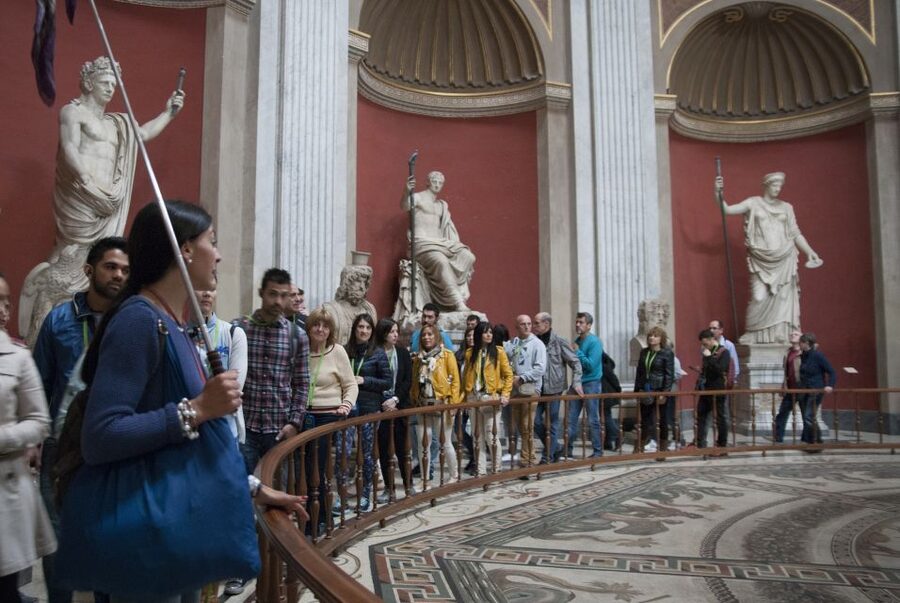
Crowds can make this corridor feel tight. Stay close enough to hear your guide, use the supplied earphones, and avoid bringing anything bulky. The museum does not permit large backpacks or luggage, and a small bag is the practical choice.
Raphael Rooms and the School of Athens
For many people, the Raphael Rooms are the artistic high point before the Sistine Chapel. These rooms contain major frescoes by Raphael and his workshop, including The School of Athens and The Fire in the Borgo.
The School of Athens is famous for its arrangement of philosophers in an idealized architectural setting. The pleasure here comes from looking beyond the obvious central figures. The guide can explain the use of perspective, identify figures, and show how gestures and placement create a sense of order.
The Room of the Fire in the Borgo offers a different mood. Its story and historical meaning give the guide room to discuss how religious scenes also carried messages about authority, leadership, and the church.
I like having these rooms explained before the Sistine Chapel because they prepare you to look at composition rather than simply count famous names. You begin noticing how an artist directs your eye, balances a scene, and uses architecture to make painted figures appear part of a larger space.
The drawback is time. Three hours sounds generous, but the Vatican is enormous. You will see selected highlights, not every room. If Raphael is your priority, stay attentive here and do not spend all your energy trying to photograph or inspect earlier displays.
The Sistine Chapel: a quiet final half-hour
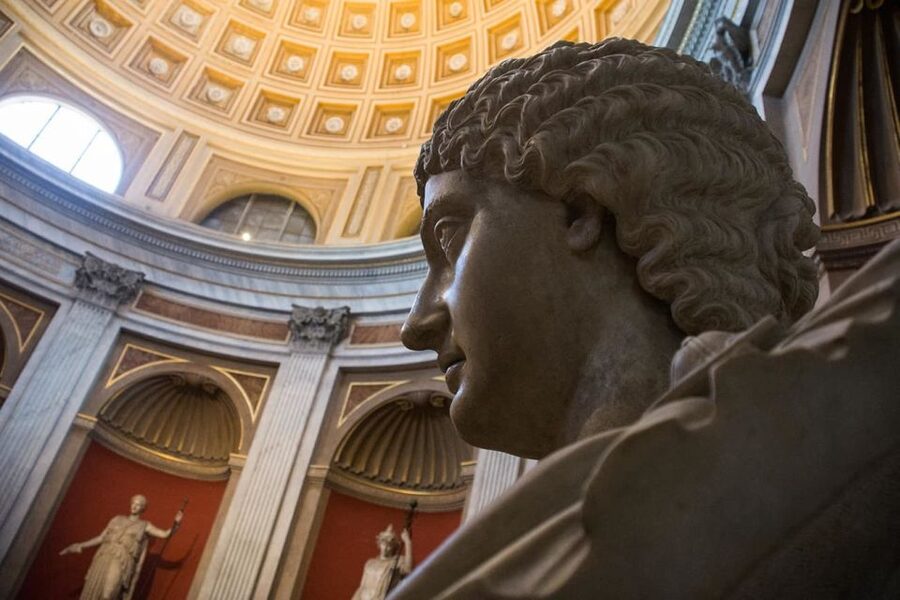
The tour allocates about 30 minutes to the Sistine Chapel. That is enough to stand beneath Michelangelo’s ceiling, locate The Creation of Adam, and study The Last Judgment on the altar wall. It is not enough for an unhurried art seminar.
Silence inside the chapel changes the experience. After the noise and movement of the museum corridors, the room asks you to slow down. Look first at the overall arrangement, then at individual figures. The ceiling is not simply a single picture. It is a large sequence of scenes, framed figures, prophets, and architectural illusions.
The Creation of Adam attracts most attention, naturally. Still, do not ignore the surrounding panels. The guide’s earlier explanations about anatomy, perspective, and religious storytelling help you see the ceiling as a complete program rather than one famous pair of hands.
The Last Judgment has a different force. It fills the altar wall with movement and figures, and it feels more dramatic than the ordered scenes above. Your guide can provide context, but the chapel has strict rules. You must remain quiet, and photography is not permitted.
This is also where expectations need adjusting. Some people will wish for more time, especially if they have waited years to see the chapel. The 30-minute visit is enough for a strong first encounter, but not for close study of every panel.
How the skip-the-line benefit really works
The tour includes admission to the Vatican Museums and the Sistine Chapel, with skip-the-ticket-line access. That can be worth a large part of the $71 price, especially during the high season when an ordinary queue can consume a major part of your day.
Skip-the-line does not mean skip all waiting. Every visitor must pass through airport-style security, and the wait can reach 30 minutes at busy times. You are avoiding the ticket line, not the security process.
This distinction matters because some people arrive expecting to walk straight inside. Bring your passport or ID card, including identification for children, and follow the guide’s instructions. The tour provider also includes earphones, assistance, and a helpline, which gives you some practical support if you have trouble finding the group.
Is $71 a fair price?
At $71 per person, this is not the cheapest way into the Vatican Museums. You are paying for admission, skip-the-ticket-line handling, a live guide, earphones, and a planned route through the major highlights.
I think the value is strongest if you are visiting Rome for a short time, dislike museum logistics, or want context for the art. The guide can save you from wandering and help you understand why the Belvedere sculptures, Gallery of Maps, Raphael Rooms, and Sistine Chapel belong together.
The value is weaker if you already know the Vatican well or prefer to move at your own pace. A group tour cannot stop for every painting, and the route is shaped around a shared schedule. You also pay for a guide even if you mainly want to sit quietly in the chapel.
The group size deserves attention. One visit had about 20 people, while another was described as larger and included young children. That is still more manageable than a huge official group in some cases, but you should not assume a private or truly intimate tour. The headsets are a real help, particularly in crowded rooms.
Clothing, bags, and walking demands
Dress for a place of worship. Your shoulders and knees must be covered, so shorts, short skirts, and sleeveless shirts are not suitable. This is not the place to test the dress code and hope for leniency.
Wear comfortable shoes. You will walk and stand for much of the three hours, and the museum route can feel tiring in hot weather or heavy crowds.
Leave large luggage at your accommodation or another permitted storage point. Large backpacks are not allowed on the tour, and narrow corridors become harder to manage with bulky belongings. The experience is not suitable for wheelchair users, strollers, or people with significant mobility difficulties.
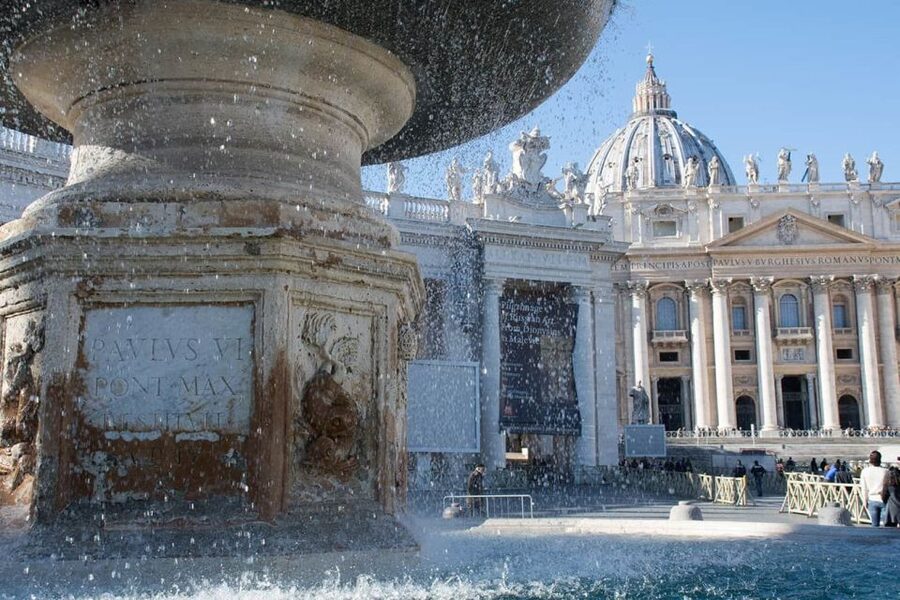
You should also know that St. Peter’s Basilica is not included. The tour ends near Piazza Pio XII, but you should not assume that museum admission gives you entry to the basilica. One past booking appears to have gained access afterward, but that is not part of the listed inclusions.
Who should book this Vatican tour?
I would choose this tour if you have one Vatican visit, want the major works explained, and value a clear three-hour plan. It suits first-time visitors, couples, families with older children who can manage the walking, and anyone who does not want to navigate the museum alone.
It is also a good fit for people who want English or Spanish guidance and appreciate practical help at a crowded entrance. The strongest guides, including Lorena and Alessandra, have been praised for warmth, clarity, humor, and careful timing.
I would think twice if you need a wheelchair or stroller, dislike group schedules, or want long stretches of quiet looking. Families with very young children should consider the crowded corridors and the chapel’s strict atmosphere. The experience can work with children, but it is not designed around strollers or short attention spans.
Free cancellation is available up to 24 hours before the start time, and the reserve-now, pay-later option gives you some flexibility. Extraordinary museum closures or restrictions can change the route without a refund, so keep that limitation in mind.
Should you book it?
Book this Vatican tour if you want the essential rooms, a guide who can connect the art, and a better chance of avoiding the main ticket queue. At $71, the package is reasonable when your Rome schedule is tight and you would rather spend your time looking at art than sorting out museum logistics.
Skip it if you want a slow, solitary visit or expect guaranteed access to St. Peter’s Basilica. The tour covers a lot, but it moves at a steady pace, and the Sistine Chapel portion may feel brief. For most first-time visitors, though, the organized route, earphones, and guide make the Vatican far easier to understand and enjoy.
FAQ
Does the tour include the Vatican Museums and Sistine Chapel?
Yes. The price includes entrance to the Vatican Museums and access to the Sistine Chapel, along with a live guide and earphones.
Does the tour include St. Peter’s Basilica?
No. Access to St. Peter’s Basilica is not included in the listed tour.
How long does the tour last?
The tour lasts three hours. The guided visit to the Sistine Chapel is listed as approximately 30 minutes.
What languages are available?
The tour is offered in English and Spanish. Check the option you select for the language available at your chosen time.
Can I bring a large backpack or luggage?
No. Large bags and luggage are not allowed. Bring only a small backpack or bag, and wear clothing that covers your shoulders and knees.
Is the tour suitable for wheelchair users or strollers?
No. The experience is not suitable for wheelchair users, strollers, or people with mobility issues. You should also expect considerable walking and standing.
More Vatican and Sistine Chapel Entries
- Rome: Vatican Museums, Sistine Chapel & Basilica Tour
★ 4.3 · 13,872 reviews - Rome: Vatican Museums, Sistine Chapel & Basilica Tour
★ 4.7 · 13,217 reviews - Rome: Vatican Museums & Sistine Chapel Guided Tour
★ 4.3 · 12,117 reviews - Vatican Museums & Sistine Chapel Skip-the-Ticket-Line Tour
★ 4.3 · 10,486 reviews
Just added around Rome
- Boat excursion to Gaeta with a stop for swimming and snorkeling 2 HOURS★ 5.0 · 240 reviews
- Palatine Hill and Roman Forum Tour with Fast-Track Entrance★ 4.2 · 417 reviews
- Tivoli: Villa D’Este & Villa Adriana Pass & App Audioguide★ 4.4 · 364 reviews
- Tivoli: Villa D’Este Entry Ticket and App Audio Guide★ 4.3 · 191 reviews
- From Rome: Villa D’Este & Villa Adriana Day Trip with Lunch★ 4.4 · 289 reviews
- Vatican Museums & Sistine Chapel Skip-the-Line Guided Tour★ 4.6 · 254 reviews
- Rome: Capitoline Museums and Centrale Montemartini Tickets★ 4.4 · 328 reviews
- Rome: The Three Tenors at St. Paul’s Church Concert Ticket★ 4.7 · 699 reviews
Vatican Tours, compared.
Vatican: Museums & Sistine Chapel Entrance Ticket
Read our review →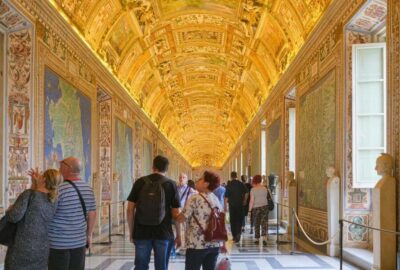
Vatican Museums & Sistine Chapel Tour with Optional Basilica
Read our review →
Vatican Museums, Sistine Chapel & St Peter’s Basilica Guided Tour
Read our review →
Vatican Museums, Sistine Chapel & Basilica Tour
Read our review →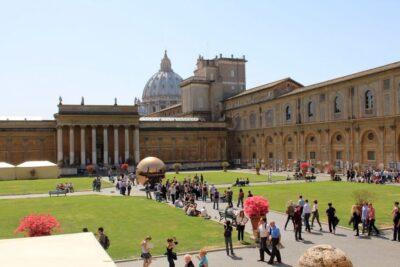
Vatican Museums & Sistine Chapel Skip-the-Line Entry Ticket
Read our review →Vatican Museums, Sistine Chapel & Basilica Tour
Read our review →
Skip-the-Line Group Tour of the Vatican, Sistine Chapel & St. Peter’s Basilica
Read our review →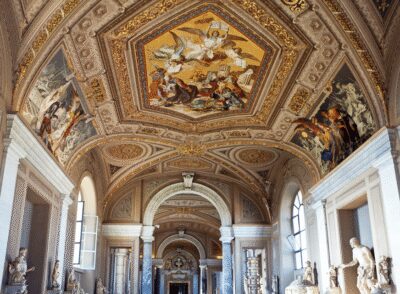
Vatican Museums & Sistine Chapel Guided Tour
Read our review →Browse the lists this tour appears in