Reviewed · ROME TOURS
Rome: Domus Aurea Tour with Virtual Reality Experience
The most striking part of this tour comes when the dark, half-buried rooms of Nero’s palace are rebuilt before your eyes in 3D virtual reality. A few minutes earlier, you are looking at brick vaults and faded frescoes. Then the headset-style presentation shows the Golden House with grand porticoes, gardens, fountains, and the private lake that once occupied the site where the Colosseum now stands.
I like two things especially: the tour now includes the newly reopened west wing, and the guide gives the building a proper historical setting instead of treating it as a pile of old walls. The frescoes, the unusual octagonal room, and the Roman engineering make much more sense once you understand Nero’s ambitions and the palace’s later burial beneath Trajan’s baths.
The main drawback is practical. The meeting point can be hard to find, and the outside introduction may feel long if you are eager to get underground. Inside, a large group can make it difficult to hear every explanation. Bring patience, good shoes, and a jacket.
Key points to know before you book
- The west wing is now part of the visit: You see both the east and recently reopened west sections, including vaulted halls and restored decoration.
- The VR section supplies the missing palace: The ruins show fragments, while the digital reconstruction gives you the grand scale, gardens, porticoes, and lake.
- You receive two layers of guiding: An Open Mind Tours guide generally introduces Nero and the site outside, followed by a Domus Aurea guide inside.
- The octagonal room is a major highlight: This extraordinary space points to the technical skill and theatrical design of Nero’s architects.
- The tour lasts about two hours: The guided portion inside the palace is listed at 105 minutes, with the rest used for meeting and orientation.
- The site is cool, restricted, and physically demanding: Large bags, tripods, selfie sticks, and professional cameras are not allowed, and the visit is not suitable for wheelchair users or people with mobility impairments.
Why the Domus Aurea feels different from Rome’s famous monuments
The Colosseum is broad, open, and easy to read from a distance. The Domus Aurea is the opposite. You enter a buried palace through a protected archaeological site, walk through shadowy corridors, and gradually piece together an enormous imperial complex from surviving walls and painted fragments.
That hidden quality is part of the appeal. The palace was not left standing as a proud monument. After Nero’s death, later emperors erased much of it, filled the rooms with earth, and built over the site. The result is an unusual visit where preservation has kept you close to the ancient fabric, but also makes the original grandeur hard to imagine without help.
I find the Domus Aurea especially useful for understanding how Roman emperors used architecture to shape their public image. Nero’s palace was not simply a private home. It was a statement about power, taste, art, engineering, and the emperor’s right to occupy an extraordinary amount of central Rome.
The tour also pushes back against the cartoon version of Nero as a foolish tyrant who played music while the city burned. That does not mean the emperor escapes criticism. It means you get a more complicated picture of a ruler with strong artistic interests, unusual ideas, political weaknesses, and an appetite for display.
A few more Rome half-days worth a look
- Vatican: Museums & Sistine Chapel Entrance Ticket
★ 4.5 · 144,003 reviews - Vatican Museums & Sistine Chapel Tour with Optional Basilica
★ 4.3 · 67,413 reviews - Colosseum, Roman Forum & Palatine Guided Tour
★ 4.7 · 63,148 reviews
Meeting the guide near the buried palace
Your meeting point is outside the Domus Aurea at the listed coordinates, 41.89113235473633, 12.495589256286621. Look for a guide holding an OPEN MIND TOURS sign. The voucher on your phone is not the entrance ticket, because the guide carries the ticket for the group.
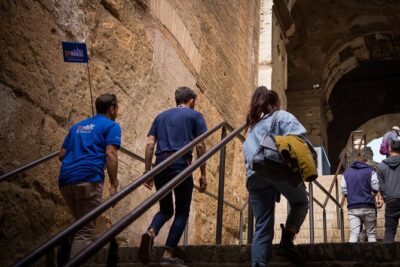
Allow extra time to locate the entrance. One person had trouble because the address information was not clear, and the site entrance is easy to confuse with the surrounding paths around Oppian Hill. If you arrive early, use the time to check your route rather than assuming the palace entrance will be obvious.
The guide usually begins with an outdoor talk before the group goes inside. Alexei has been praised for a warm, punctual introduction to Roman history, and Rosario has been described as a strong storyteller who explains Nero’s place in the larger story of the city. Yev has also led a particularly detailed visit, with a calm and helpful approach.
These names may change with the schedule, so do not book solely hoping for one particular guide. The useful point is that the first guide gives you a framework before the archaeology begins. You learn why the palace was built, what happened after Nero, and how Rome later turned the site into a symbol of imperial excess.
The official entry takes place at least 20 minutes after the scheduled guide presentation. That gap is worth knowing. If you expect to walk straight through the door at your booking time, you may become impatient. The pause is part of the tour format.
Nero, the fire, and the palace that followed
The history lesson centers on the fire of July 64 AD, one of the great turning points in imperial Rome. The fire destroyed large parts of the city and killed thousands among a population estimated at about one million.
The tour presents Nero as a ruler who opened his gardens to people made homeless, distributed supplies, reduced the price of grain, and introduced new building rules. These rules included more space between structures and greater use of brick and stone instead of wood. At the same time, Nero was accused of responding too slowly and failing to provide enough money for rebuilding.
The traditional story also blames Nero for starting the fire. The guide argues against that version, pointing to Nero’s location at a seaside villa outside Rome when the disaster began. You should hear this as part of the tour’s effort to separate later legend from historical evidence, not as a simple excuse for every action that followed.
Nero did use the cleared areas to enlarge his palace complex. The Domus Aurea, or Golden House, spread across central Rome and included an artificial lake, gardens, porticoes, fountains, and lavish interior rooms. That scale helps explain why public anger rose. In a city struggling to recover, the emperor was creating a private world of luxury.
Nero eventually lost political support and took his own life in June 68 AD. The next emperor, Vespasian, filled the lake and began the Colosseum there. This was practical building and political messaging at the same time. A public arena for popular games replaced the private imperial lake, signaling a new relationship between emperor and people.
About fifty years later, Trajan built a huge bath complex over the palace. The Domus Aurea disappeared beneath the earth for roughly 1,500 years. Renaissance artists rediscovered its rooms in the 1500s, and the strange paintings influenced European art. That later chapter gives the site another layer: you are not only seeing Nero’s palace, but also the place where Renaissance artists recovered forgotten Roman designs.
The east and west wings, room by room
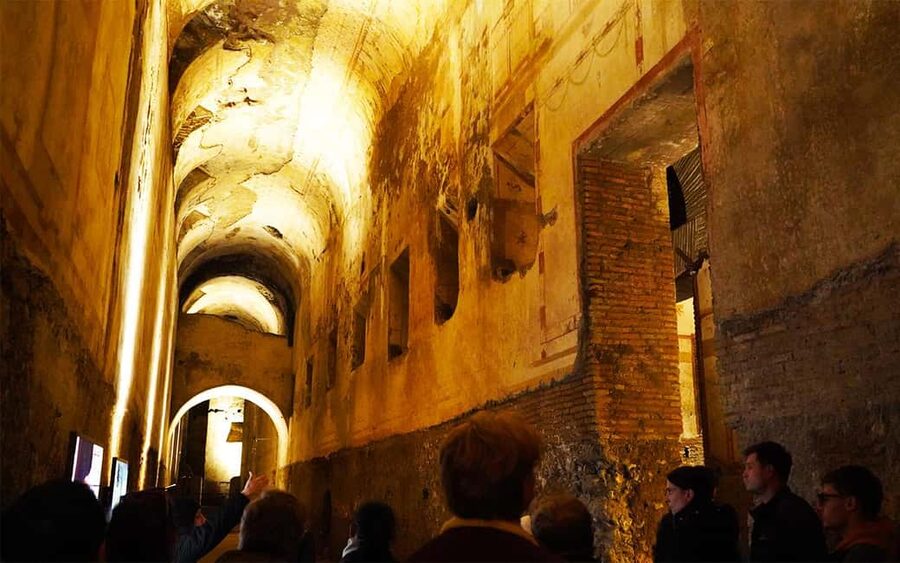
The guided visit takes about 105 minutes inside the complex. You move through roughly 30 frescoed halls, including parts of both the east and west wings. The exact route can depend on conservation work and site conditions, but the tour focuses on the surviving rooms, wall paintings, vaulted ceilings, and passageways.
The newly reopened west wing is an important reason to consider this version of the visit. It expands your sense of the palace beyond the better-known eastern rooms and gives a clearer idea of how far the complex extended. If you visited years ago, the west wing may make the site feel substantially different.
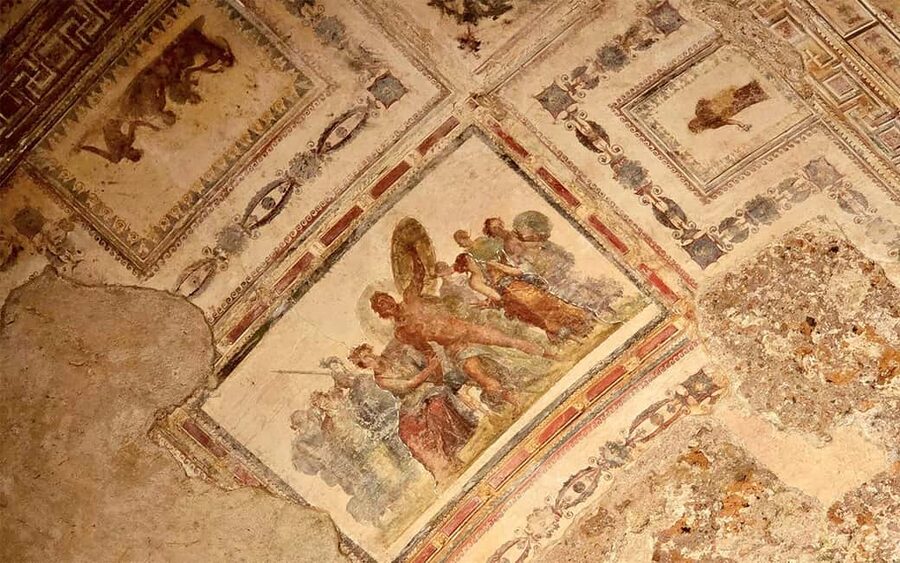
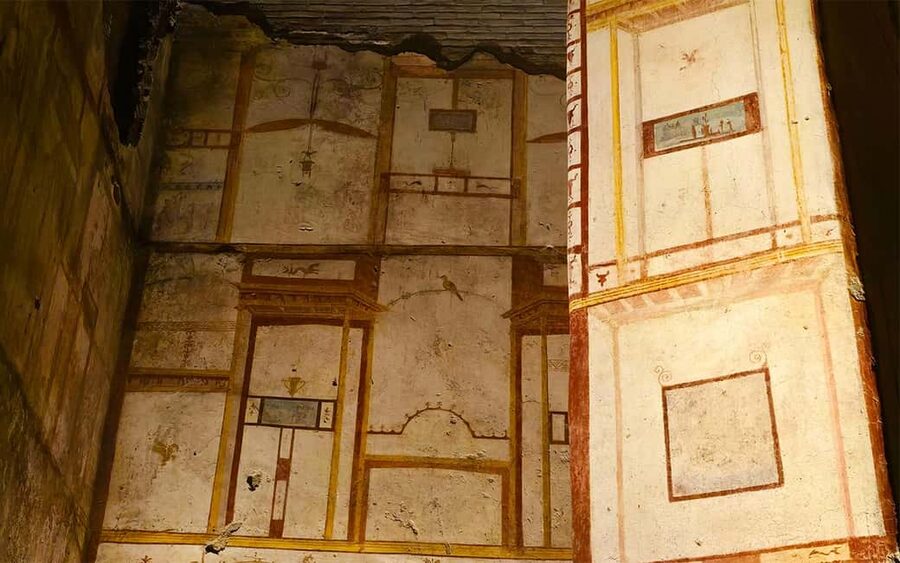
The rooms can look plain at first glance. Many walls are exposed brick or pale plaster, and the palace is not filled with reconstructed furniture. Look up and look closely. The shapes of the vaults, the surviving colors, and the patterned fresco fragments reveal how carefully these rooms were designed.
Nero’s decorations included bizarre figures, delicate borders, and mythological scenes. The guide connects these images to Nero’s artistic interests and eccentric taste rather than presenting them only as signs of madness. The result is a more useful way to read the art. You see a ruler who wanted his surroundings to surprise and entertain, and architects who knew how to control light, movement, and perspective.
The palace was designed around a combination of enclosed rooms and outdoor elements. Porticoes, fountains, and gardens brought light and movement into a complex that now feels underground and enclosed. The contrast is powerful. What you see today is cool, dim, and protected, while the original palace was designed to feel open, bright, and theatrical.
Same city, a completely different sort of day:
- Vatican Museums, Sistine Chapel & St Peter’s Basilica Guided Tour
★ 4.5 · 39,149 reviews - Rome: Colosseum, Palatine Hill and Roman Forum Guided Tour
★ 4.8 · 32,814 reviews - Rome: Guided Tour of Colosseum, Roman Forum & Palatine Hill
★ 4.7 · 27,897 reviews - Rome: Colosseum & Forum with Audio Guide App -Optional Arena
★ 4.2 · 24,770 reviews
The octagonal room and Roman engineering
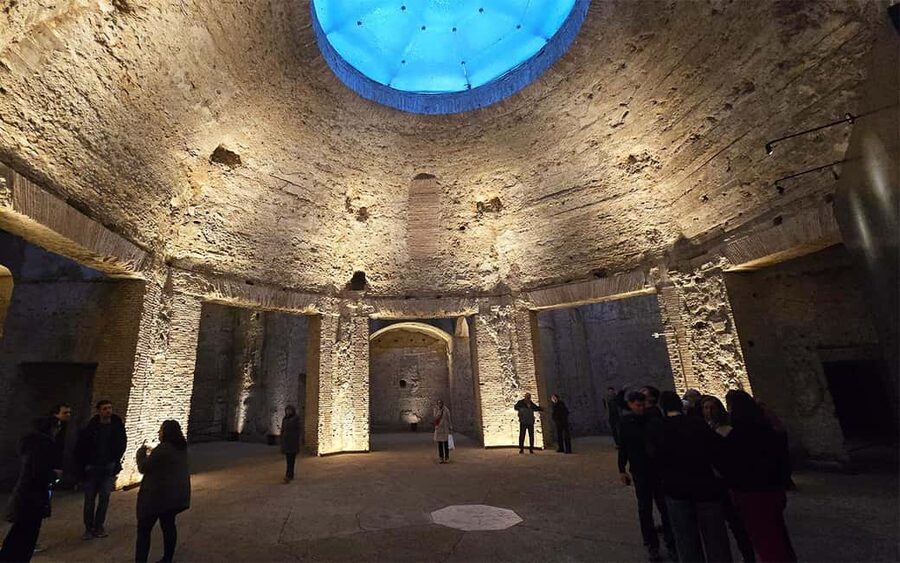
The octagonal room is one of the tour’s strongest stops. Its unusual shape and large central opening or ceiling arrangement reveal how far Roman builders were willing to push concrete, geometry, and controlled light.
The possibility of a rotating ceiling is often linked to this space, though the exact mechanism remains part of the site’s mystery. Even without accepting every dramatic theory, the room makes one fact clear: Roman imperial architecture was not limited to straight corridors and heavy stone blocks.
If you enjoy construction, materials, or engineering, allow time here. One visitor with a background in heavy construction found the ancient systems and preserved artwork particularly compelling. You do not need technical training to appreciate the point. The building combines structure and spectacle so closely that the engineering becomes part of the entertainment.
The guide’s explanation matters because the remains are incomplete. Without context, you may see a clever room but miss its role in a larger sequence of halls, gardens, and ceremonial spaces. Listen for how the building directed visitors from one visual surprise to the next.
The VR reconstruction fills in the missing palace
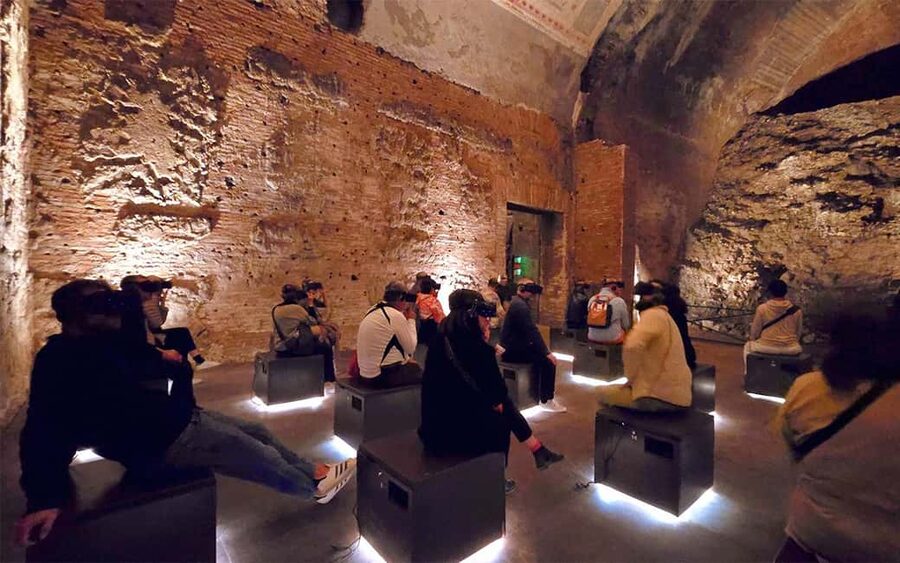
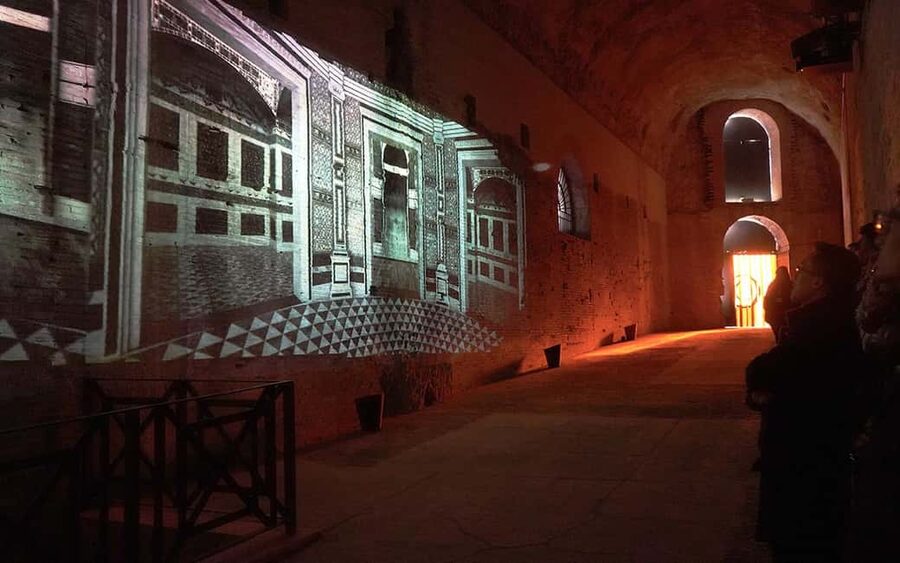
The virtual reality section is the emotional high point for many people. You sit during this part of the visit, so it gives your feet a short rest after walking through the halls. Look around in every direction. The reconstruction is designed to show more than a single forward-facing scene.
The digital version rebuilds the palace at its peak, including decorated halls and an extravagant outside portico. It also helps you picture the gardens, fountains, and lake that cannot be recovered by simply looking at the ruins.
This is where the visit earns its place beside more conventional Rome tours. A guide can tell you that the Domus Aurea covered a huge area, but the VR presentation gives your eyes a usable scale. You see why the palace was admired by some and resented by others.
The technology is not a substitute for archaeology. It is an interpretation, and the original palace was not fully complete when Nero died. Still, it works because the real rooms remain visible in your memory. You can compare the bare surviving structure with the proposed decoration instead of watching a digital spectacle with no connection to the site.
If you are sensitive to virtual reality, the seated format is helpful. The supplied information does not specify the equipment or any medical guidance, so ask the tour staff if you have concerns before beginning.
How much time and money the experience is worth
The full activity takes two hours, which is a sensible length for the site. The underground rooms require concentration, and a much longer visit could become tiring, especially if you are moving slowly on uneven surfaces or standing with a large group.
The value comes less from the number of rooms than from the combination of access, guiding, and reconstruction. A direct entry option may cost less if you only want to see the archaeology, but you would lose the organized introduction and the historical link between Nero, Vespasian, Trajan, and the Renaissance rediscovery.
The separate entrance and arranged ticket handling also reduce some of the uncertainty around a restricted archaeological site. That convenience matters in Rome, where a missed entry time can disrupt the rest of your day.
I would compare the total price with the official Domus Aurea admission available for your date. If the tour supplement is modest, the guide and VR section make it worthwhile. If you are already well read on Nero and prefer to move at your own pace, direct booking may be better value.
The tour does not include a city walk or a visit to the Colosseum. Think of it as a focused archaeological experience, not a general introduction to ancient Rome.
Practical advice for a smoother visit
Wear comfortable shoes. You are walking through an archaeological site rather than a polished museum, and the route may feel demanding for anyone with limited mobility. The experience is not suitable for wheelchair users or people with mobility impairments.
Bring a jacket. The underground rooms can feel cool even in Rome’s summer heat, and one person specifically appreciated the lower temperature during a hot-weather visit.
Leave large bags and restricted items behind. Weapons, sharp objects, drones, pets except assistance dogs, selfie sticks, professional cameras, tripods, sprays, aerosols, and glass objects are not allowed. Large luggage is also prohibited, so do not plan to arrive with your main suitcase.
The tour is in English. Some visitors found the indoor guide excellent and easy to follow, while others had trouble hearing when the group spread out or when the guide spoke before everyone had gathered. Stay close, position yourself where you can see the guide, and ask for a repeat if a room is crowded.
The outside presentation can be useful but lengthy. If you already know the basic story, treat it as a short orientation rather than the main event. The indoor visit and VR reconstruction are the parts that justify the booking.
Who should book the Domus Aurea tour?
I would choose this tour for you if you have already seen the Colosseum and Roman Forum and want something less familiar. It is also a strong choice if you enjoy archaeology, Roman architecture, painting, or the way modern technology can explain ancient spaces.
Families with older children may like the VR presentation, though the dark rooms, walking, and historical detail may not suit very young children. Art and history students will find the Renaissance rediscovery especially interesting, while anyone fascinated by construction should pay close attention to the vaults and octagonal room.
I would hesitate if you need step-free access, dislike guided groups, or want to photograph everything. The rules are strict, the site is delicate, and the tour’s value depends on listening as much as looking.
The overall rating is 4.5 from 222 bookings, and the strongest praise centers on the guides, the unusual site, and the VR reconstruction. The main complaints concern the meeting point, a long introduction, and occasional difficulty hearing inside. Those are manageable issues if you arrive early and stay close to the guide.
Should you book it?
Book this Domus Aurea tour if you want to understand what Nero’s Golden House was trying to be, not just walk through its surviving shell. The newly reopened west wing adds a useful reason to go now, while the VR presentation supplies the scale and color that the ruins cannot.
Choose a direct site visit instead if you prefer independence, already know the political story, or find group guiding frustrating. For most first-time visitors who want context and a clearer picture of the lost palace, the two-hour format offers good value and one of Rome’s most unusual archaeological experiences.
FAQ
How long does the Domus Aurea tour last?
The complete activity lasts about two hours. The guided visit inside the Domus Aurea takes about 105 minutes, with additional time for the meeting and introduction.
What language is the tour conducted in?
The live tour guide speaks English.
Where do I meet the guide?
Meet outside the Domus Aurea at the listed coordinates, 41.89113235473633, 12.495589256286621. Look for a guide holding an OPEN MIND TOURS sign.
Is the GetYourGuide voucher the entrance ticket?
No. The voucher is not the entry ticket. The guide carries the ticket for the group.
How long after the guide presentation do you enter the Domus Aurea?
Entrance takes place at least 20 minutes after the scheduled guide presentation.
Does the tour include the west wing?
Yes. The route includes the east wing and the recently reopened west wing, subject to the site’s operating conditions.
Is the virtual reality section seated?
Yes. The VR presentation takes place during a seated part of the tour.
What should I bring?
Bring comfortable shoes and a jacket. The underground site can feel cool.
Is the tour suitable for wheelchair users?
No. The activity is not suitable for wheelchair users or people with mobility impairments.
Just added around Rome
- Boat excursion to Gaeta with a stop for swimming and snorkeling 2 HOURS★ 5.0 · 240 reviews
- Palatine Hill and Roman Forum Tour with Fast-Track Entrance★ 4.2 · 417 reviews
- Tivoli: Villa D’Este & Villa Adriana Pass & App Audioguide★ 4.4 · 364 reviews
- Tivoli: Villa D’Este Entry Ticket and App Audio Guide★ 4.3 · 191 reviews
- From Rome: Villa D’Este & Villa Adriana Day Trip with Lunch★ 4.4 · 289 reviews
- Vatican Museums & Sistine Chapel Skip-the-Line Guided Tour★ 4.6 · 254 reviews
- Rome: Capitoline Museums and Centrale Montemartini Tickets★ 4.4 · 328 reviews
- Rome: The Three Tenors at St. Paul’s Church Concert Ticket★ 4.7 · 699 reviews
Rome Tours, compared.
Vatican: Museums & Sistine Chapel Entrance Ticket
Read our review →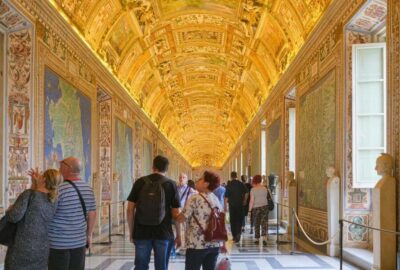
Vatican Museums & Sistine Chapel Tour with Optional Basilica
Read our review →
Colosseum, Roman Forum & Palatine Guided Tour
Read our review →
Vatican Museums, Sistine Chapel & St Peter’s Basilica Guided Tour
Read our review →
Colosseum, Palatine Hill and Roman Forum Guided Tour
Read our review →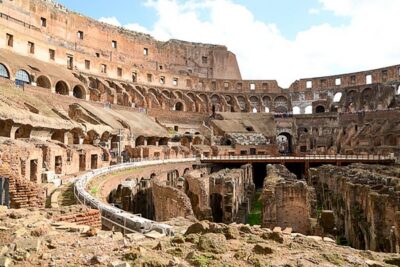
Guided Tour of Colosseum, Roman Forum & Palatine Hill
Read our review →
Colosseum & Forum with Audio Guide App -Optional Arena
Read our review →