
Reviewed · FOOD & DRINK
Rome: Eat Like a Roman Ghetto & Campo de’ Fiori Food Tour
Rome’s best food lesson may come in small portions: a crisp supplì, a panino packed with porchetta, a slice of Roman pizza, and a fried artichoke in the Jewish Ghetto. This 2.5-hour walk links those bites with Campo de’ Fiori, Largo di Torre Argentina, the Pantheon, and lesser-known lanes near Piazza Navona.
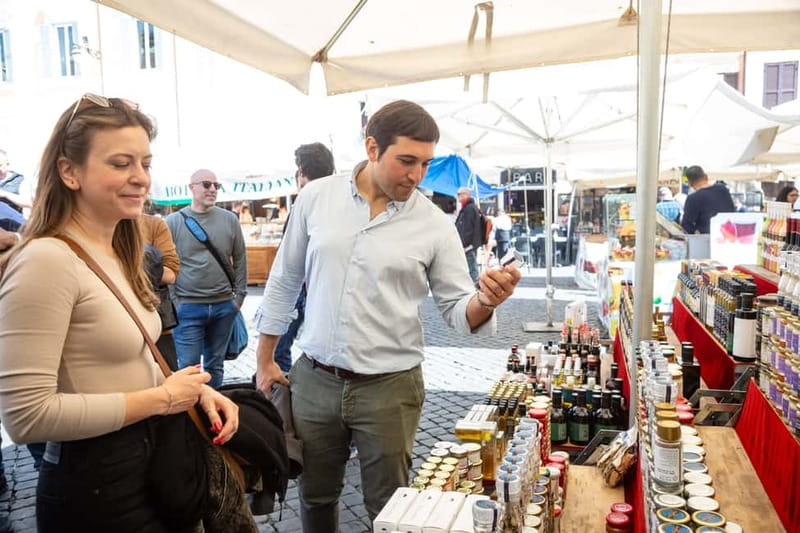
I like the mix of food and history, which keeps the walk from feeling like a string of restaurant stops. I also like the morning option, when you can see Campo de’ Fiori’s produce market and taste olive oils, truffle products, and vinegars.
The main consideration is appetite and diet. Five tastings can add up, but the tour is not suitable for vegans or people with gluten intolerance, and drinks cost extra.
Key points to know before booking
- Morning tours include Campo de’ Fiori market time, plus olive oil, truffle, and vinegar tastings.
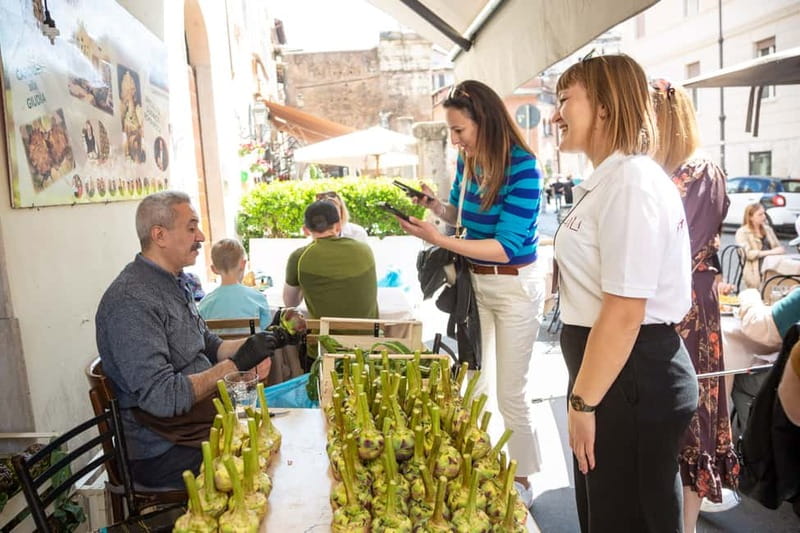
- Roman specialties arrive one after another, including supplì, porchetta, pizza, Jewish-style fried artichokes, and gelato.
- The Jewish Ghetto is more than a food stop, with the Portico d’Ottavia, Turtle Fountain, and a strong cultural connection to Roman cooking.
- History appears along the route, from the talking statue near Piazza Navona to Julius Caesar’s assassination site.
- Guide quality is central to the experience, with Julia, Fiammetta, Claudio, Daniele, and others praised for clear stories and personal recommendations.
- The $36 price is strong value if you want several tastings and a guided look at central Rome in one compact walk.
Why this Rome food walk works
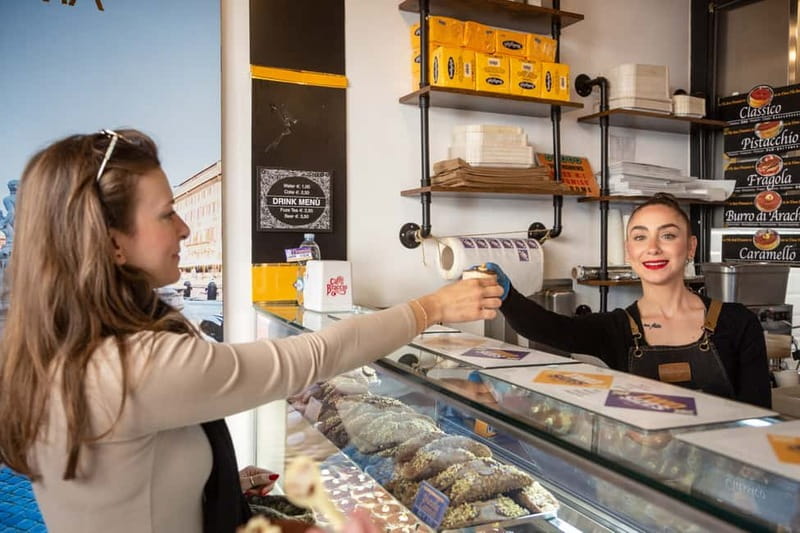
This is not a formal cooking class or a sit-down meal. It is a moving meal through central Rome, with a local guide explaining what you are eating and why it belongs to the city.
The route begins at the fountain in Piazza di San Simeone, close to Piazza Navona. From there, you walk through the historic center toward Campo de’ Fiori and the Jewish Ghetto, with food stops spaced between landmarks. The walking is manageable, but you should still wear comfortable shoes. Rome’s center has uneven paving, and the tour keeps moving rather than settling in one place.
The English-speaking guide is the key to the experience. Julia is frequently praised for her friendly manner, clear explanations, and ability to connect food with Roman history. Fiammetta is noted for bringing extra energy to the walk and for making the market stop especially engaging. Claudio has been singled out for tailoring the conversation to the group and giving useful restaurant suggestions for later in your stay. Guides such as Daniele, Angie, Alessandria, and Sylvia have also been praised for mixing local food with stories about the neighborhoods.
Because guides vary, your exact style may differ. Some may focus more on history, while others may spend longer discussing ingredients and local customs. Either way, the format gives you a useful introduction to foods you might otherwise pass without recognizing.
More Food Tours in Rome
- Winner 2025 Rome Twilight Trastevere Food Tour by Eating Europe
★ 5.0 · 5,157 reviews - Rome: Trastevere or Jewish Quarter Street Food Tour
★ 4.8 · 3,839 reviews - Rome Food Tour: Unlimited Tastings with Fine Wine & Barolo
★ 5.0 · 3,365 reviews
Starting near Piazza Navona and the Bramante cloister
Meet your guide at the fountain in the center of Piazza di San Simeone. This is a small, practical meeting point rather than a major monument, so arrive with enough time to locate the fountain and your group.
The first part of the walk passes near the Chiostro del Bramante. You do not receive a full visit inside, but the route gives you a taste of Rome’s habit of hiding serious art and architecture behind ordinary-looking streets. The nearby lanes around Piazza Navona also set the mood for the tour: grand churches, old stone facades, small businesses, and busy pedestrian routes all sit close together.
One enjoyable feature is the way the guide can point out details that are easy to miss when you are focused on reaching the next famous square. The tour also includes a reference to Rome’s talking statues, a playful part of the city’s political folklore that delighted families and teenagers on previous departures.
Campo de’ Fiori and the morning market
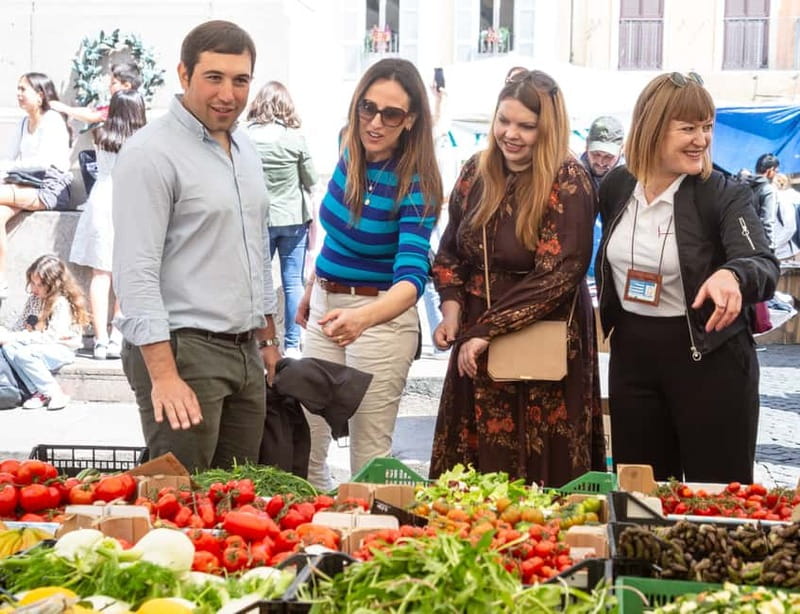
Campo de’ Fiori is one of the route’s most useful stops, especially on a morning departure. Its open-air market adds color, smells, and local produce to the food lesson. You can see fruit and other products before tasting several Italian pantry staples.
Morning tours include sampling olive oils, truffle products, and vinegars. This is a small detail, but it adds value because you are not only eating finished street food. You get a chance to compare ingredients and hear how they are used in Italian kitchens.
The market is also a good place to keep your expectations realistic. Campo de’ Fiori is a historic city market in a very central location, not a quiet village market untouched by tourism. Its appeal comes from the setting and the chance to connect everyday ingredients with the dishes you eat later.
If your schedule allows, I would choose the morning departure for this reason alone. Afternoon or evening tours can still cover the main food stops, but they do not include the full market experience or the oil, truffle, and vinegar tasting.
Supplì, porchetta, and Roman street food
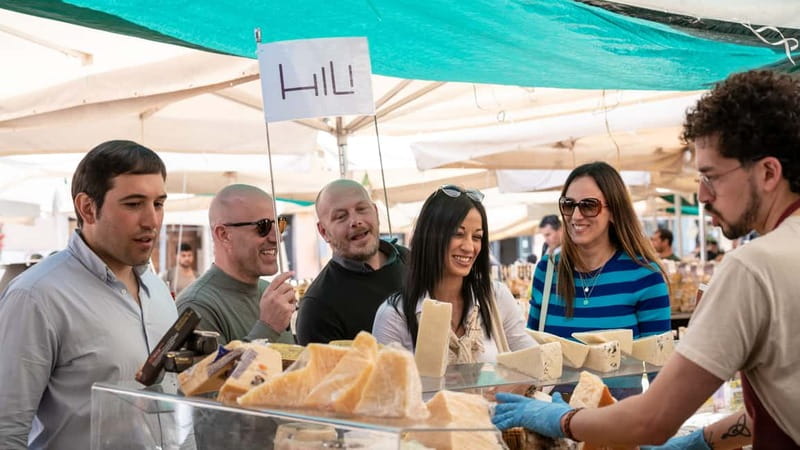
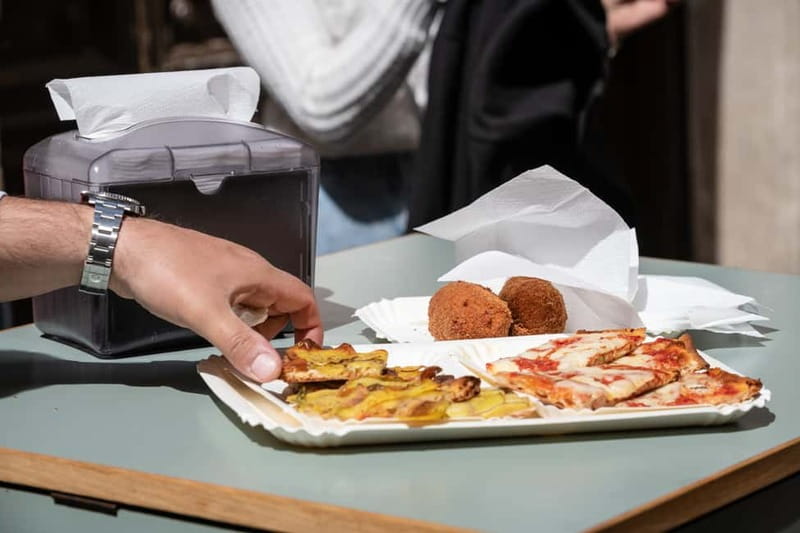
The food stops are spread across small local restaurants, bakeries, and other casual places. One early tasting is supplì, a deep-fried rice ball with a crisp outside and a hot, savory center. It is one of Rome’s classic snack foods and a good introduction to the city’s preference for food that is simple, filling, and easy to eat on the go.
Next comes a panino with porchetta, the famous roasted pork seasoned with herbs. This is a heavier bite, so pace yourself. The tour gives you several foods in a short time, and it is easy to treat each portion as a full meal if you are not careful.
Roman-style pizza follows. Expect a local bakery or casual food counter rather than a long restaurant meal. This stop helps show the difference between a quick Roman slice and the round pizzas served at a table. Your guide can explain the style as you eat, which is more useful than simply being handed a piece and moving on.
The food is one of the strongest parts of the tour because it covers different textures and formats: fried rice, roast pork, baked dough, vegetables, and cold dessert. You are not eating five versions of the same thing.
Same city, a completely different sort of day:
- Vatican: Museums & Sistine Chapel Entrance Ticket
★ 4.5 · 144,003 reviews - Vatican Museums & Sistine Chapel Tour with Optional Basilica
★ 4.3 · 67,413 reviews - Colosseum, Roman Forum & Palatine Guided Tour
★ 4.7 · 63,148 reviews - Vatican Museums, Sistine Chapel & St Peter’s Basilica Guided Tour
★ 4.5 · 39,149 reviews
The Jewish Ghetto and carciofo alla giudia
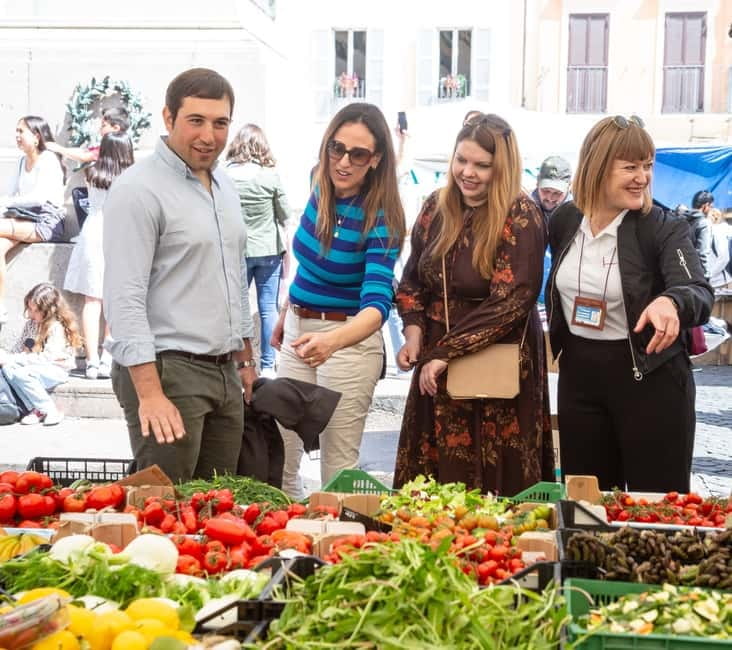
The walk into Rome’s Jewish Ghetto gives the tour its most distinctive cultural section. Here, food and neighborhood history are closely connected. The area around the Portico d’Ottavia includes important Roman remains and streets shaped by a long Jewish presence in the city.
The signature tasting is carciofo alla giudia, a Jewish-style fried artichoke. The artichoke is prepared so it opens out and becomes crisp, making it very different from the softer artichoke dishes you may find elsewhere in Italy.
This stop is especially worthwhile if you are curious about how Rome’s food traditions developed through different communities. A good guide will explain the dish without turning the visit into a lecture, then give you time to appreciate the texture and seasoning.
The Jewish Ghetto is also one of the places where the tour feels less like a checklist of famous sights. You still see major landmarks, but the food gives you a reason to slow down and notice the neighborhood. At the same time, this is not a dedicated Jewish heritage tour. If your main interest is religious or social history, you will want a more specialized visit elsewhere.
Caesar, Teatro Marcello, and the walk between bites
The route passes Largo di Torre Argentina, associated with the assassination of Julius Caesar. The guide uses this site to connect the modern street scene with one of Rome’s most famous political turning points.
You also pass Teatro Marcello, another reminder that ancient Rome is woven into the ordinary city rather than kept only inside a single archaeological park. The itinerary does not present a full archaeological tour, so think of these landmarks as well-timed history stops between tastings.
The Pantheon appears near the end of the walk, and the tour finishes at Piazza di Sant’Eustachio. These sights help you orient yourself in central Rome. I especially like this aspect for a first or second day in the city. You learn where several major landmarks sit in relation to one another, then can return on your own later.
The history is presented in short sections, which suits a food walk. You get enough context to make the streets more meaningful without spending twenty minutes standing still while your food gets cold.
Finishing with gelato near the Pantheon
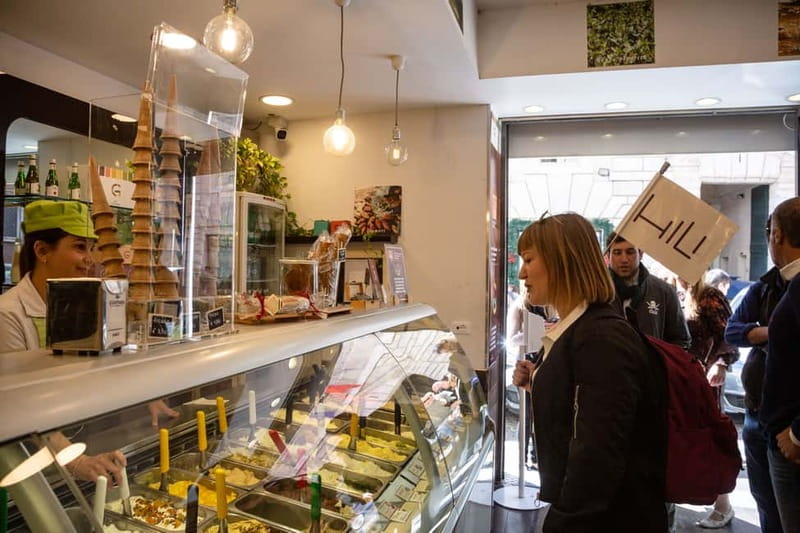
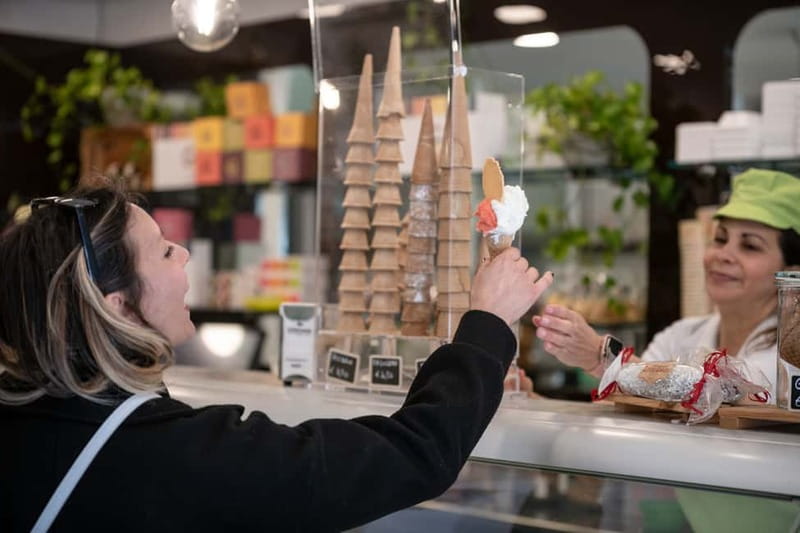
The final tasting is artisanal gelato at Gunther Gelateria. After fried food, porchetta, pizza, and an artichoke, a cold dessert provides a clean finish.
The gelato stop is more than a sweet reward. It gives your guide a chance to explain what to look for in a good gelateria and to recommend flavors or places you might try later. The walk ends at Piazza di Sant’Eustachio, close to the Pantheon and other central sights, so you are well placed to continue sightseeing or find a nearby café.
One practical note: the listed five tastings cover the main food experience, but the exact portion size and sequence can vary with the day and the venues. This is enough food for many people to count as lunch, especially when the porchetta and pizza are included. If you are planning a large meal immediately afterward, leave some room in your schedule and appetite.
What the $36 price really buys
At $36 per person, the tour offers good value for Rome if you want both food and orientation. You receive a 2.5-hour guided walk, five food tastings, access to a local English-speaking guide, and stops across several central neighborhoods.
The value is not only in the amount of food. You are paying to avoid guesswork. A guide selects the stops, explains the dishes, and shows how Campo de’ Fiori, the Jewish Ghetto, Largo di Torre Argentina, Teatro Marcello, and the Pantheon fit into one walk.
Compared with booking a restaurant meal, the tour gives you more variety and more context. Compared with a longer dinner tour, it is shorter and less expensive, but you should not expect drinks or a seated multi-course meal. Drinks are not included, so budget for water or another beverage separately.
I would book it near the start of your Rome stay. Several guides, including Julia and Claudio, are praised for giving restaurant suggestions and practical food advice. Those tips are more useful when you still have several days left to use them.
Who should book this tour
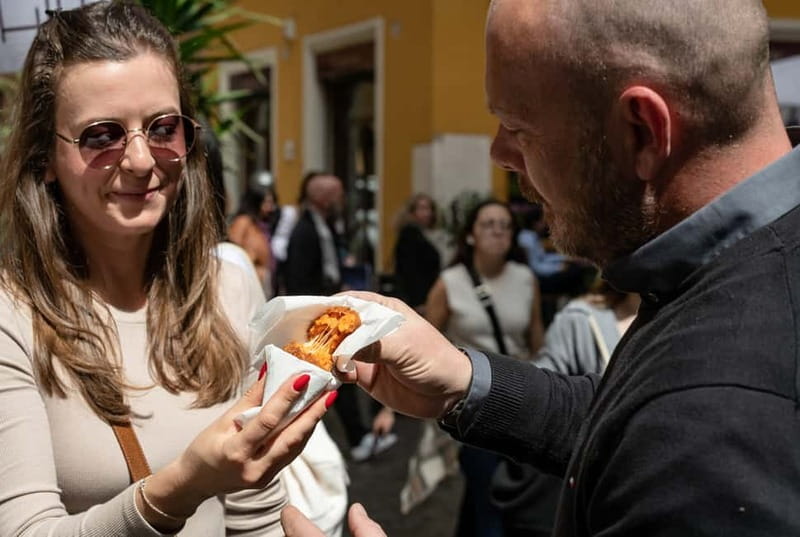
This experience suits first-time Rome visitors, food-focused sightseers, couples, families, and teenagers who may not want a long museum tour. One family found that teenagers who were uncertain about a food tour ended up naming it among their favorite activities, which makes sense: the walking is broken up by frequent tastings and visual landmarks.
It also suits anyone who likes trying unfamiliar dishes. Supplì and carciofo alla giudia may not be foods you would confidently order without guidance, and the tour removes much of that uncertainty.
Vegetarians can join because vegetarian options are available, but you should tell the operator about allergies or dietary needs in advance. The tour is not suitable for vegans or people with gluten intolerance. Meat eaters will have the broadest access to the listed tastings, especially the porchetta.
The activity is wheelchair accessible, though Rome’s historic center can still involve crowded streets and uneven paving. If mobility is a concern, contact the provider before booking so your needs are clear.
Helpful timing and booking advice
Choose a morning start if the Campo de’ Fiori market matters to you. Morning tours also include the olive oil, truffle, and vinegar tasting, making that departure more food-focused.
Choose this tour early in your visit rather than on your final day. You can use the guide’s suggestions for later meals, return to landmarks you only passed, and recognize Roman foods when you see them elsewhere.
The activity runs in English and lasts 2.5 hours. Free cancellation is available up to 24 hours before the start, and you can reserve now and pay later. Those terms are useful if your Rome schedule is still changing, but the key planning issue is simpler: arrive hungry, wear good walking shoes, and do not schedule a large lunch too close to the tour.
Should you book the Campo de’ Fiori and Ghetto food tour?
Book it if you want a compact introduction to Roman street food with enough history to give the route meaning. The strongest reasons are the variety of tastings, the Jewish Ghetto stop, the morning market option, and the chance to get practical food advice from guides such as Julia, Fiammetta, or Claudio.
Skip it if you want a long sit-down meal, wine pairings, or a tour built mainly around ancient monuments. It is also a poor fit for vegans and anyone avoiding gluten.
For most first visits, I would choose the morning departure near the start of a Rome stay. You get a useful map of central Rome, several foods worth seeking out again, and a friendly introduction to the city’s cooking traditions for a reasonable price.
FAQ
Where does the tour start?
Meet your guide at the fountain in the center of Piazza di San Simeone.
Where does the tour finish?
The walk finishes at Piazza di Sant’Eustachio, near the Pantheon area.
How long does the tour last?
The tour lasts 2.5 hours. Starting times depend on availability.
What food is included?
The tastings include panini with porchetta, supplì, Roman-style pizza, fried artichokes known as carciofo alla giudia, and artisanal gelato. Morning tours also include olive oil, truffle, and vinegar tasting.
Are vegetarian options available?
Yes, vegetarian options are available. The tour is not suitable for vegans.
Is the tour suitable for people with gluten intolerance?
No. The activity is listed as not suitable for people with gluten intolerance. You should also tell the provider about allergies or other dietary restrictions.
Are drinks included?
No. Drinks are not included in the tour price.
Just added around Rome
- Boat excursion to Gaeta with a stop for swimming and snorkeling 2 HOURS★ 5.0 · 240 reviews
- Palatine Hill and Roman Forum Tour with Fast-Track Entrance★ 4.2 · 417 reviews
- Tivoli: Villa D’Este & Villa Adriana Pass & App Audioguide★ 4.4 · 364 reviews
- Tivoli: Villa D’Este Entry Ticket and App Audio Guide★ 4.3 · 191 reviews
- From Rome: Villa D’Este & Villa Adriana Day Trip with Lunch★ 4.4 · 289 reviews
- Vatican Museums & Sistine Chapel Skip-the-Line Guided Tour★ 4.6 · 254 reviews
- Rome: Capitoline Museums and Centrale Montemartini Tickets★ 4.4 · 328 reviews
- Rome: The Three Tenors at St. Paul’s Church Concert Ticket★ 4.7 · 699 reviews
Food & Drink, compared.
Small-Group Wine Tasting Experience in the Tuscan Countryside
Read our review →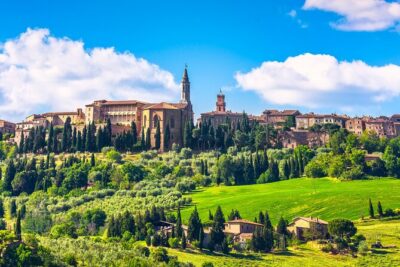
Tuscany & Montepulciano Day Trip with Lunch & Wine Tasting
Read our review →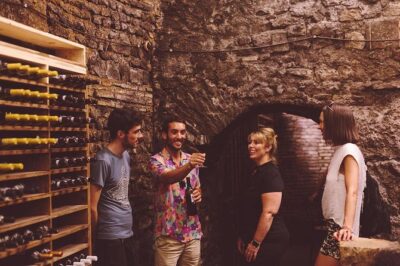
Winner 2025 Rome Twilight Trastevere Food Tour by Eating Europe
Read our review →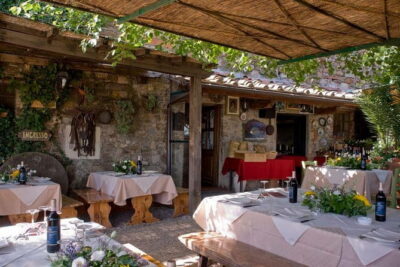
SMALL-GROUP Wine Safaris: Tuscan Wine Tasting Tours from Florence
Read our review →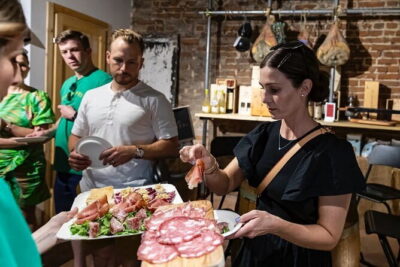
Winner 2025 Florence Sunset Food & Wine Tour by Eating Europe
Read our review →
Cooking Class and Lunch at a Tuscan Farmhouse with Local Market Tour from Florence
Read our review →
San Gimignano, Siena, Monteriggioni, Chianti Day Trip with Lunch & Wine Tasting
Read our review →Browse the lists this tour appears in