
Reviewed · UMBRIA TOURS
Orvieto: Pozzo della Cava Entry Ticket
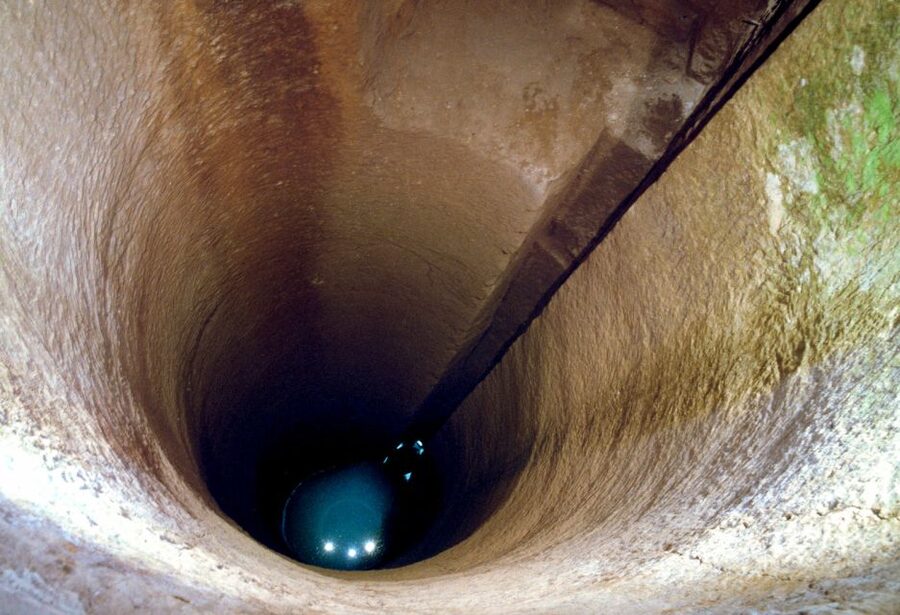
The oldest part of Pozzo della Cava is an Etruscan water well, not just a dark hole beneath the street. Your $5 ticket leads through nine underground caverns where water systems, burial remains, medieval work spaces, and Renaissance alterations sit below Orvieto’s oldest district.
I like the freedom to move at your own pace, and I like the clear signs in Italian, English, and French. The cool underground air is a real treat on a hot day. The main drawback is its size: you may finish in 30 minutes, and some people will prefer the larger underground tour near the Duomo.
Key points
- Nine underground caverns: Follow a compact route beneath Orvieto’s Cava neighborhood.
- Etruscan beginnings: See the oldest section, including a cistern lined with cocciopesto plaster.
- Three historical layers: The route moves from Etruscan remains to medieval basements and Renaissance excavations.
- Self-guided visit: Read the panels and stop where you like, without joining a guided group.
- Useful in hot weather: The caves offer a cool break from Orvieto’s summer sun.
- Strong value at $5: It is inexpensive, though the visit may take only 30 to 60 minutes.
What Pozzo della Cava reveals beneath Orvieto
Orvieto is famous for its hilltop cathedral, painted chapels, and handsome medieval streets. But the town’s story continues below your feet. At Pozzo della Cava, the ground drops into an underground complex shaped by people over roughly twenty-eight centuries.
This is not a polished museum with long galleries and a large staff. It is a compact archaeological site cut into the volcanic rock beneath the Cava neighborhood. You walk from chamber to chamber, reading panels that explain how each space was made and used.
The attraction works best if you enjoy seeing how ordinary needs shaped old towns. Water had to be collected. Homes needed storage and work areas. Builders reused and altered spaces as the centuries passed. The caves preserve those changes in a way that a street-level monument cannot.
You will not receive a guided tour. Instead, the route is self-guided, with explanations in Italian, English, and French. That arrangement suits independent visitors who like to pause, reread a panel, or move quickly through a section that interests them less.
A few more Umbria half-days worth a look
- From Rome: Bagnoregio & Orvieto Day Trip with Wines & Lunch
★ 4.6 · 1,075 reviews - Assisi and Orvieto Guided Day Tour from Rome with Lunch
★ 4.0 · 1,031 reviews - Perugia: Entry Ticket and Guided Tour of Perugia Underground
★ 4.6 · 579 reviews
Entering the Etruscan well and oldest chamber
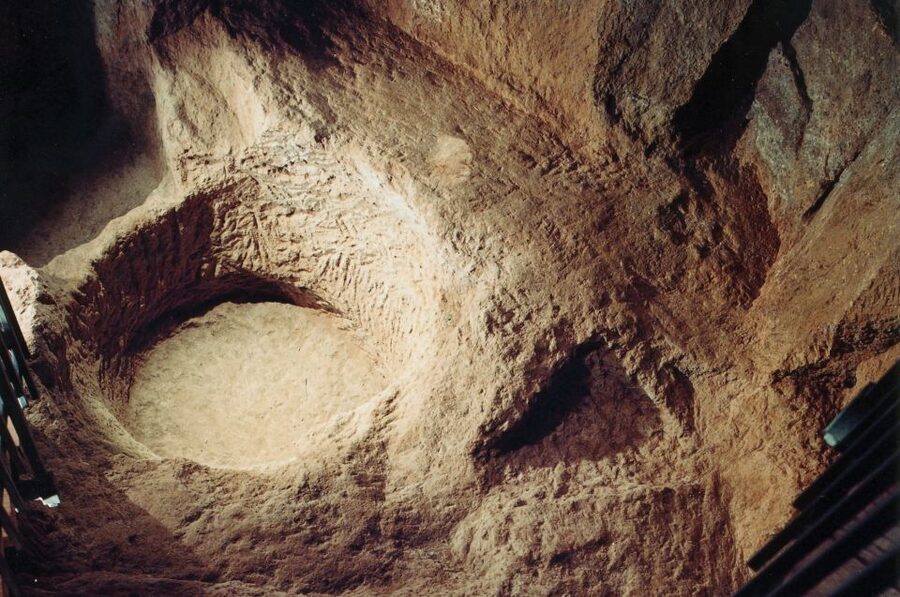
Begin with the earliest part of the site, where the focus is on water and Etruscan engineering. The well is linked to Orvieto’s first spring water system, and the chamber includes a cistern coated with cocciopesto plaster.
Cocciopesto is a waterproof plaster made with crushed pottery mixed into mortar. You do not need a technical background to appreciate its purpose: ancient builders needed a way to hold water without constant leakage, and this material helped them do it.
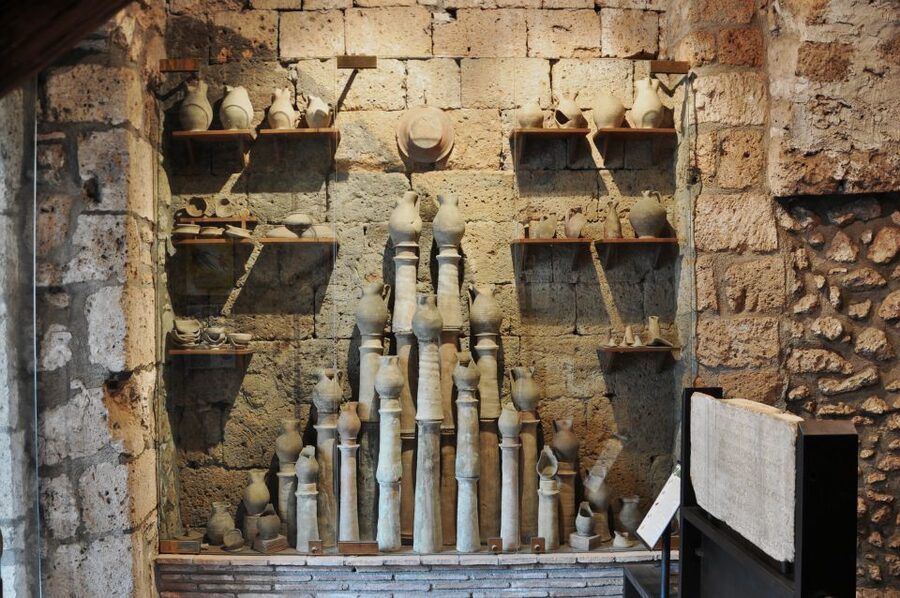
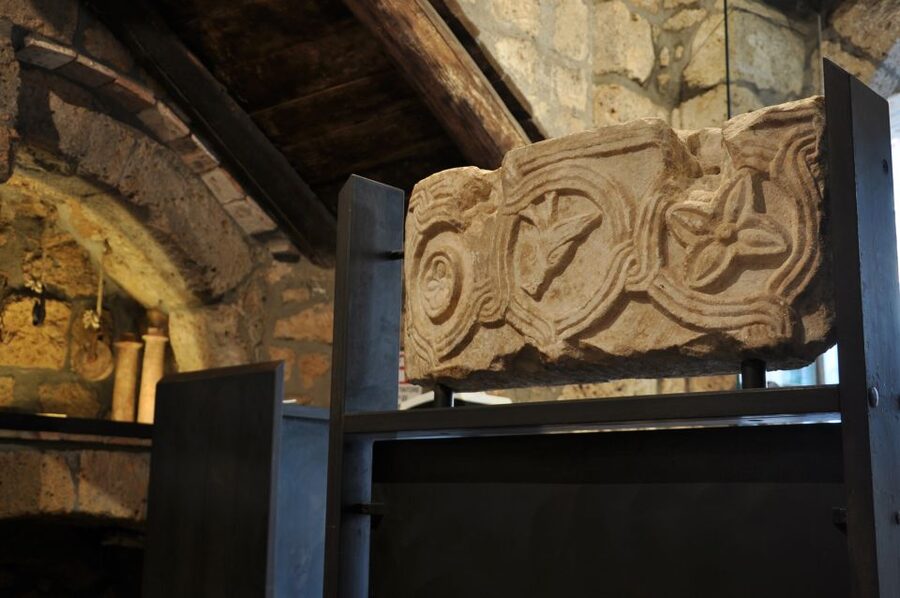
The first chamber also includes ancient Etruscan burial remains and other archaeological traces. These pieces give the visit a human scale. You are not simply looking at a hole cut into stone. You are seeing evidence of people who lived, worked, stored supplies, gathered water, and buried their dead in this area long before Orvieto became the medieval town you see today.
The underground setting matters here. Artifacts found beneath the streets remain tied to the places where earlier residents used or left them. The site does not try to separate the objects from their surroundings. You see the well, the stone, the plaster, and the confined working space together.
Take your time at the beginning. It establishes the main idea of the whole visit: Orvieto’s history is layered rather than neatly divided into separate periods.
Following the medieval maze below Urbs Vetus
The next part takes you into the underground maze of Urbs Vetus, the medieval name for Orvieto. Here, the most striking feature is the relationship between the caves and the homes above them.
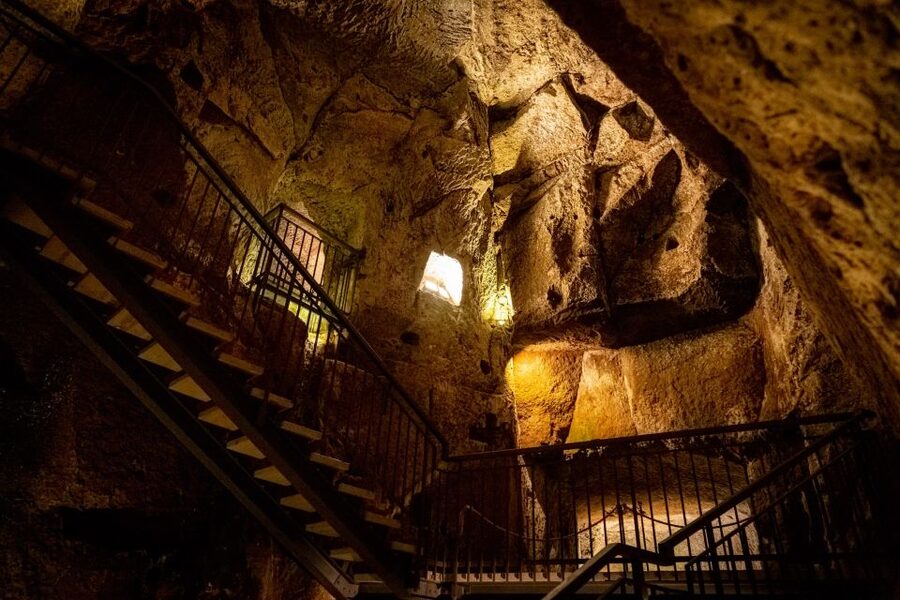
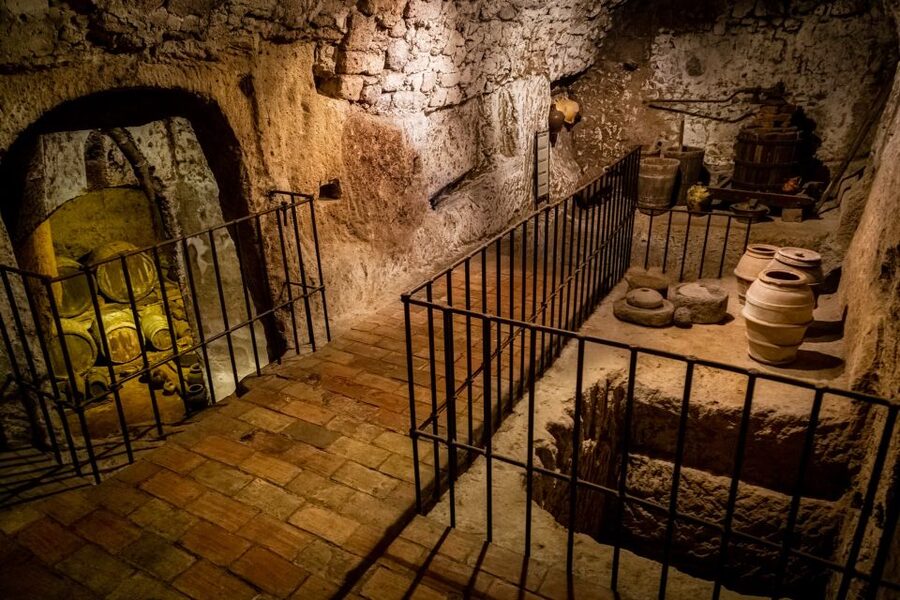
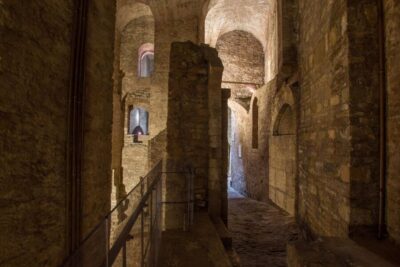
The complex preserves sections of three-story underground basements. That detail helps explain how crowded medieval towns made use of every available space. A house could occupy the street level, while storage, workshops, wells, and other practical areas extended downward.
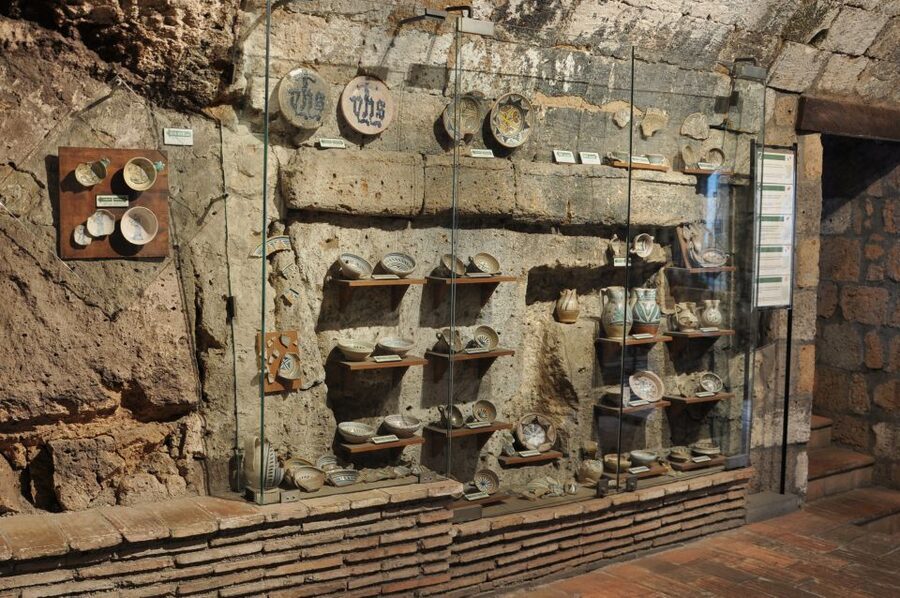
The route is not a long underground expedition. It is a short, contained walk through connected chambers. Still, the changes from one room to the next make the visit feel more substantial than the ticket price suggests. You see how the underground spaces were altered over time rather than built all at once.
The information panels are important because the bare stone alone does not explain much. The signs set the chambers within the daily life of different periods. You can stop to consider how residents used the space and how the needs of a medieval household differed from those of the Etruscan settlement that came before it.
This is also the section most likely to interest families. The child-friendly itinerary presents the material in a more approachable way, and the route is easy to follow. Younger visitors may not read every panel, but the low ceilings, stairs, stone walls, and underground rooms give the history a physical quality that a standard display case lacks.
Seeing the Renaissance changes in the final cave
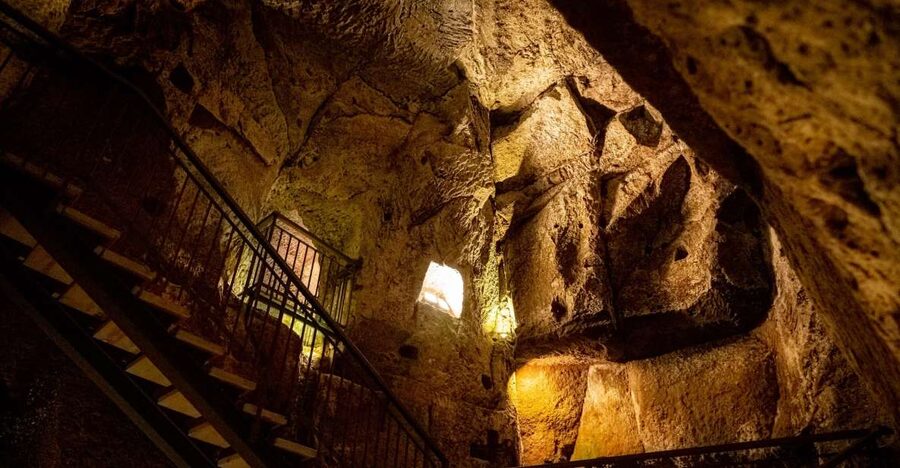
The final section shows how the site continued to change during the Renaissance. By this point, the story is no longer only about preservation of the old. It is also about new excavation and adaptation.
The most recent parts of Pozzo della Cava were cut during the Renaissance, adding another layer to the complex. The final cave preserves traces of changes made across the site’s long history. This gives the route a clear ending: you begin with Etruscan water engineering and finish with later builders reshaping the underground spaces.
I find this sequence helpful because it gives the visit a natural order. You are not just wandering through unrelated rooms. The route moves from the oldest remains to medieval expansion and then to Renaissance work.
The final chamber is also where the idea of twenty-eight centuries becomes most concrete. Each age left something behind, removed something, or changed the function of an existing space. The result is not a single monument from one perfect period. It is a working archaeological record of repeated use.
More Entry Tickets in Umbria:
- Vatican: Museums & Sistine Chapel Entrance Ticket
★ 4.5 · 144,003 reviews - Milan: Cathedral and Duomo’s Terraces Entrance Ticket
★ 4.6 · 61,054 reviews - Venice: Doge’s Palace Reserved Entry Ticket
★ 4.6 · 42,716 reviews - Florence: Skip-The-Line Uffizi Gallery Timed Entry Ticket
★ 4.5 · 27,832 reviews
A self-guided route with clear explanations
The visit is designed for independent exploration. You receive entry to the underground complex, but no guided tour is included. A host or greeter is available in Italian, English, or French, while the main interpretation comes from signs and panels along the route.
That format has two clear benefits. You can move at your own speed, and you do not have to wait for a group to gather before continuing. If a panel catches your attention, you can stop. If you have already spent a full morning in museums, you can keep the visit brief.
The signs are available in multiple languages, including English. This is especially useful at an archaeological site, where a few labels such as well or cistern would not be enough to explain the changing purpose of each chamber.
Do not expect an app or a spoken presentation. The experience is deliberately simple. You read, walk, look closely, and make your way through the caves. That may feel basic to anyone seeking a formal tour, but it keeps the $5 admission affordable.
The route is also suitable for children because a special itinerary is provided. The attraction does not promise a full educational program or a costumed presentation. Instead, it offers a more accessible way for children to follow the underground story.
How long the visit takes
Plan on roughly 30 minutes to one hour inside the complex. The shorter timing works if you read only the main panels and keep moving. Allow closer to an hour if you pause often, study the archaeological details, or visit with children.
The official ticket is valid for one day, but this does not mean the attraction requires a full-day commitment. It means you have a flexible window for using the admission during your day in Orvieto. The underground route itself is compact.
That short length is both a strength and a limitation. You can fit Pozzo della Cava between the Duomo, lunch, and a walk through the medieval streets. You are unlikely to feel trapped in a long tour if the subject turns out not to be your favorite.
On the other hand, do not book it expecting a major half-day archaeological experience. The site is smaller than the underground tour near the Duomo, and the two attractions are not the same. One visitor mistakenly expected the Duomo-area underground tour and found Pozzo della Cava much smaller, though still worthwhile as a separate visit.
If you are curious about Orvieto below ground, seeing both can make sense. They offer different underground spaces and help you compare how the town has been used beneath its streets.
Location and the best time to visit
Pozzo della Cava is in the Cava neighborhood, one of Orvieto’s oldest districts. It is on the far side of town from the Duomo, but still close enough to reach on foot.
That location affects your planning. If your day is built around the cathedral, you will need to walk across more of Orvieto rather than simply step into a nearby attraction. The walk is not presented as a major obstacle, but it is worth checking your route before buying a timed activity elsewhere.
The caves are especially appealing during hot weather. Underground temperatures provide a cool change from the streets, and the site can work well as a midday pause. It is not a substitute for planning around the sun, but it is a practical place to cool off while continuing your sightseeing.
Early morning can be a smart choice if you want a quiet visit. The route is small, so a crowd would matter more here than it would in a large museum. The attraction is also easy to fit into a first stop before the rest of the historic center becomes your main focus.
Is $5 a good value?
At $5 per person, Pozzo della Cava is an inexpensive addition to an Orvieto day. The price is particularly fair if you are already interested in Etruscan engineering, medieval town life, or archaeology.
The value comes from the combination of a real underground setting, preserved artifacts, multilingual explanations, and freedom to explore independently. You are not paying for a long guided production. You are paying for access to a compact archaeological complex that would be difficult to understand from the street above.
The main question is not cost. It is interest. If you want a large attraction with many rooms, dramatic displays, or a guide telling stories throughout, this may feel too brief. If you have 30 minutes to spare and want something that shows how Orvieto developed below street level, the price is easy to justify.
The ticket also includes a skip-the-ticket-line benefit. That may save a little time, although the site can be quiet, especially outside the busiest periods. I would still reserve ahead if your schedule is tight, since the booking allows you to pay later and cancel up to 24 hours in advance for a full refund.
Who will enjoy Pozzo della Cava most?
I would choose this visit for several types of visitors:
- History-minded visitors who want to see Etruscan, medieval, and Renaissance layers in one place.
- Independent sightseers who prefer panels and personal pacing to a scheduled guide.
- Families who want a short activity with a child-friendly route.
- Summer visitors looking for a cool indoor stop.
- Budget-conscious visitors who want a low-cost attraction with real archaeological substance.
- Repeat visitors to Orvieto who have already seen the Duomo and want a different view of the town.
I would be more cautious if you have limited time and can visit only one major attraction in Orvieto. The Duomo and the larger underground tour near it may deserve priority, depending on your interests. Pozzo della Cava works best as a focused extra, not as the sole reason to visit the town.
Practical details before you go
The activity is offered in Italian, English, and French. Explanatory material is available in those languages, and the host or greeter can also assist in them.
No guided tour is included. Plan to read the panels and follow the route yourself. You do not need an app for the visit, and the available information is designed to make the caves understandable without one.
The ticket is valid for one day, and availability depends on the selected starting time. You can reserve now and pay later, which is useful when you are fitting several stops into an Orvieto itinerary.
Free cancellation is available up to 24 hours before the activity for a full refund. Keep that option in mind if your day in Umbria includes uncertain transport or weather plans.
Should you book Pozzo della Cava?
Book it if you want an affordable, self-guided look at Orvieto’s underground past. The Etruscan well, cocciopesto-lined cistern, medieval basements, and Renaissance caves create a clear story in a short visit. The multilingual panels and child-friendly route make it easy to use without a guide.
Skip it if you want a long tour or if your schedule is so tight that reaching the Cava neighborhood would force you to miss the Duomo. For most people with an extra 30 to 60 minutes, though, $5 buys a cool, thoughtful stop with more substance than its modest size suggests.
FAQ
Where is Pozzo della Cava located?
Pozzo della Cava is in Orvieto’s Cava neighborhood, one of the oldest districts of the town. It is on the far side of Orvieto from the Duomo but remains within walking distance.
What does the ticket include?
The ticket includes entry to the underground Pozzo della Cava complex, multilingual explanations, and a special itinerary for children.
Is a guided tour included?
No. The visit is self-guided, with written explanations throughout the underground route.
Which languages are available?
Information and host or greeter assistance are available in Italian, English, and French.
How many underground caverns are there?
The complex includes nine underground caverns.
How long does the visit take?
The visit can take about 30 minutes to one hour, depending on how long you spend reading the panels and examining the chambers.
What historical periods are represented?
The complex includes Etruscan, medieval, and Renaissance remains and alterations. The site preserves traces of changes made over roughly twenty-eight centuries.
Is there a child-friendly option?
Yes. A special itinerary for children is included as part of the experience.
Does the ticket allow you to skip the ticket line?
Yes. The activity includes skip-the-ticket-line access.
Can I cancel my reservation?
Yes. You can cancel up to 24 hours in advance for a full refund. You can also reserve now and pay later.
Just added around Umbria
- Small Group Tour of Assisi and St. Francis Basilica★ 5.0 · 187 reviews
- Professional hot air balloon rides at Assisi, Trasimeno in Umbria★ 5.0 · 206 reviews
- Hands on Italian Cooking Classes★ 5.0 · 313 reviews
- Assisi: Panoramic Tuk Tuk Tour★ 4.9 · 220 reviews
- Assisi: Walking Tour with St. Francis Basilica Visit★ 4.8 · 259 reviews
- From Florence: Orvieto and Perugia Tour with Church Visits★ 4.3 · 216 reviews
- Perugia: Old Town Walking Tour, Piazza IV Novembre★ 4.8 · 304 reviews
- Assisi: Private Walking Tour with St. Francis Basilica★ 4.8 · 201 reviews
Umbria Tours, compared.

From Rome: Bagnoregio & Orvieto Day Trip with Wines & Lunch
Read our review →
Assisi and Orvieto Guided Day Tour from Rome with Lunch
Read our review →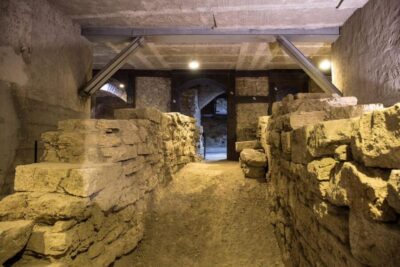
Entry Ticket and Guided Tour of Perugia Underground
Read our review →

Heart of Italy Day Trip: Visit Perugia and Assisi from Florence
Read our review →
Browse the lists this tour appears in