
Reviewed · UMBRIA TOURS
Perugia: Entry Ticket and Guided Tour of Perugia Underground
Beneath Perugia’s cathedral, a short stairway leads you into the layers of a city built and rebuilt for more than 2,500 years. The underground route reaches about 15 meters below the present cathedral level, passing Etruscan, Roman, and medieval remains in one compact archaeological walk.
I like the way the tour links real masonry to Perugia’s story, and I especially like the virtual reality finale, which helps you picture how the city looked in earlier periods. Guides such as Beatrice and Lorenzo have been praised for their warmth and clear explanations. The main drawback is language: the live tour is in Italian, with a tablet and headphones for English, and some visitors find it hard to read along at the guide’s pace.
Key points to know before booking
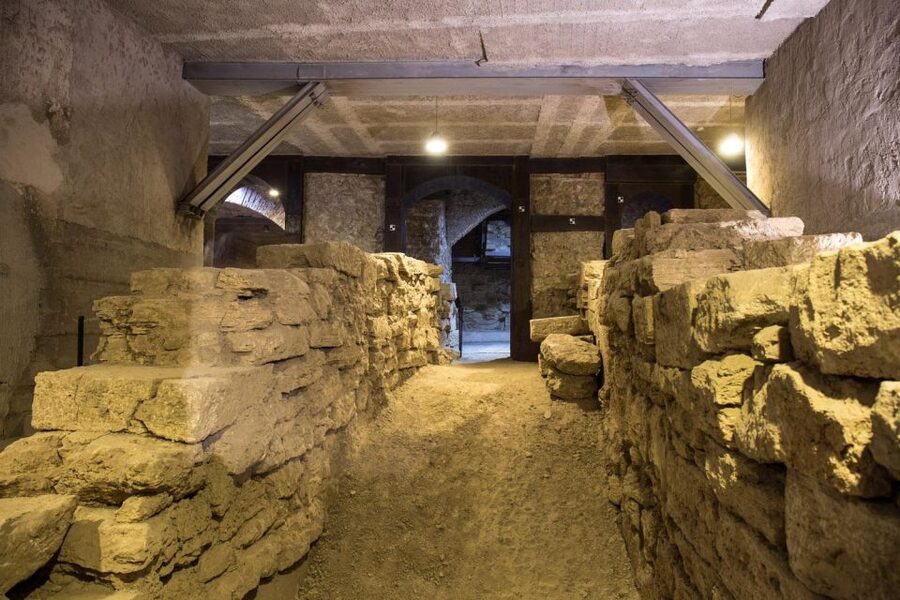
- A city beneath the cathedral: Start in the cloister of Saint Lawrence Cathedral, then descend through archaeological layers hidden below modern Perugia.
- Three major periods in 50 minutes: The route covers Etruscan construction, Roman streets and buildings, and medieval changes.
- Italian guide with English support: The spoken tour is in Italian. A tablet provides translated material when needed.
- VR gives the ruins context: The final virtual presentation helps you imagine how parts of Perugia once appeared.
- Expect stairs and a cooler temperature: The route is not suitable for wheelchair users, strollers, or people with significant mobility difficulties.
- Good value at $14: The price includes entry, a guide, translation support, and the VR presentation.
Starting beneath Saint Lawrence Cathedral
You begin in the cloister of Saint Lawrence Cathedral, in the heart of Perugia near Piazza IV Novembre. Look for the large portal beside Libreria delle Volte. The ticket office and meeting point are in the cloister, not simply somewhere in the open square.
That detail matters. The square is busy, and it is easy to look around for a guide without realizing that you need to enter through the cathedral complex. Give yourself enough time to find the portal and reach the ticket desk before the scheduled start.
The setting provides a fine opening to the visit. You are not being taken to a separate archaeological park outside town. The route begins inside one of Perugia’s central religious buildings and then moves downward through the hill. The city’s past is literally under your feet.
The tour lasts about 50 minutes. That makes it easy to fit between other sights in central Perugia, but it also means the pace can feel brisk. You get a clear account of the main periods and structures, not an unhurried museum visit with time to examine every stone.
A few more Umbria half-days worth a look
- From Rome: Bagnoregio & Orvieto Day Trip with Wines & Lunch
★ 4.6 · 1,075 reviews - Assisi and Orvieto Guided Day Tour from Rome with Lunch
★ 4.0 · 1,031 reviews - Assisi & Orvieto Day Trip from Rome
★ 4.5 · 341 reviews
Etruscan construction below the modern city
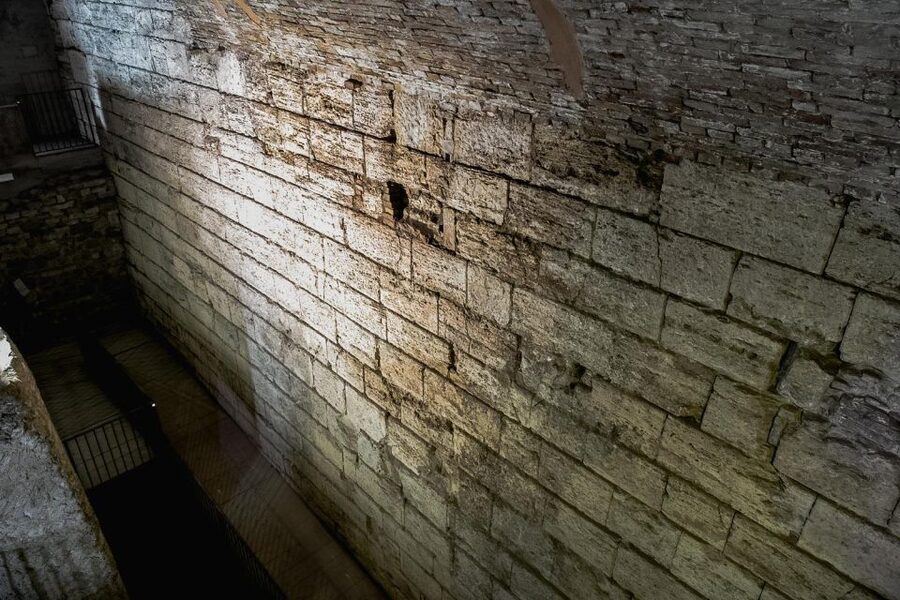
The first major lesson is Perugia’s Etruscan foundation. The remains show that the city’s early builders were not working with simple village techniques. Their command of stone construction and their ability to shape the hill are among the most memorable parts of the visit.
This is one reason the underground area is worth your time. Above ground, Perugia can look like a medieval and Renaissance city. Below ground, the story begins much earlier. The route lets you see how the old settlement occupied and shaped the hill long before the cathedral took its present role.
Your guide explains the surviving structures as you move through the site. The point is not just to see old walls. It is to understand that the same urban space has been reused by different communities, with newer buildings placed over older streets and foundations.
Some of the details can be difficult to absorb at speed, especially when you are also watching your footing. The archaeological remains are important, but this is not a large hall packed with objects and display cases. The experience depends heavily on the guide’s explanation and your ability to connect the fragments in front of you with the larger story.
Roman roads, houses, and the siege of Perugia
The Roman section adds another layer. You can see evidence of Roman roads and domestic structures, giving you a more concrete sense of how the city functioned after the Etruscan period. The guide also places Perugia in the wider Roman story, including figures such as Julius Caesar and Gaius Octavius Caesar Augustus.
The route touches on the siege of Perugia and the city’s changing fortunes. It also connects the underground remains with the Gate of Augustus, one of the city’s better-known ancient landmarks. That link is useful because it encourages you to view Perugia above ground with more attention. The monumental gate is not an isolated relic. It belongs to the same long sequence of urban change that you are tracing below the cathedral.
I like this part because the explanations turn scattered masonry into evidence. A road surface, a wall line, or a change in level can seem modest on its own. Put together, these features show how Roman planning occupied an earlier Etruscan city.
If you have already visited Perugia’s ancient gates, the tour gives them extra meaning. If you have not, the visit provides a reason to seek them out after you leave. The tour itself is contained within the Saint Lawrence complex, but its subject reaches across the city.
Medieval layers under the cathedral
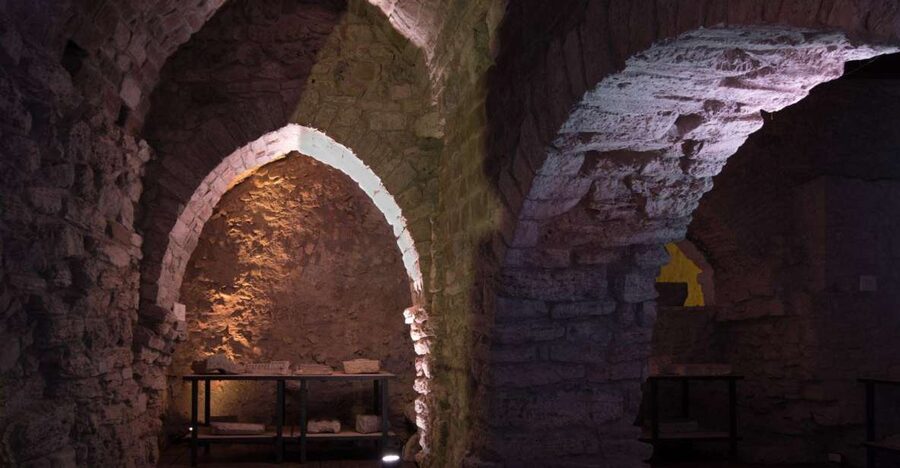
The underground route does not stop with antiquity. Medieval remains complete the story and show how Perugia continued to grow, change, and build over what came before.
This is the most useful lesson of the whole visit: Perugia is not just a city with a few ancient pieces placed among later buildings. It is a city made from successive levels. The cathedral complex sits above earlier urban remains, and the archaeological route makes that physical relationship clear.
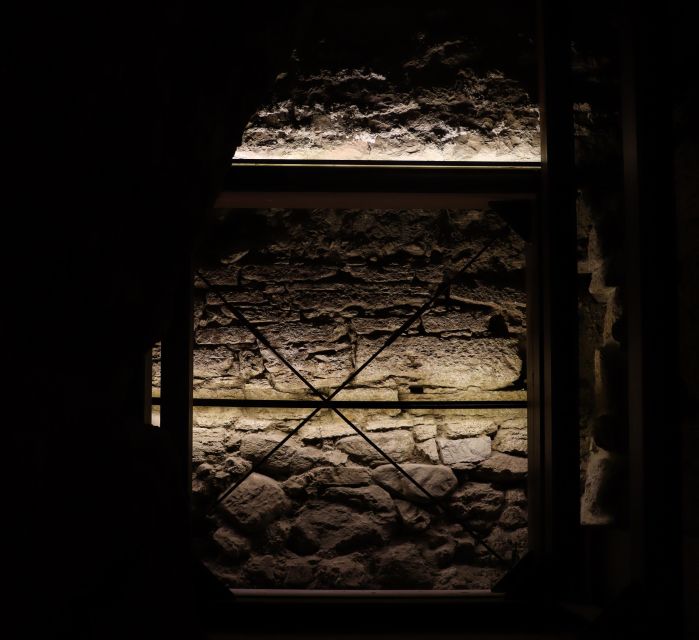
You will move through areas where the distinction between archaeology and architecture can feel subtle. A wall may belong to a different period from the surface beside it, and the guide’s explanation helps separate those stages. Pay attention to changes in stonework, floor level, and the way the route follows the hill.
The short time limit has both an advantage and a cost. You get a lively overview without committing half a day. On the other hand, people who want a detailed account of every excavation finding may wish for more objects, labels, and time. The route is strongest as an introduction to Perugia’s long development.
More Entry Tickets in Umbria:
- Orvieto: Pozzo della Cava Entry Ticket
★ 4.4 · 188 reviews - Vatican: Museums & Sistine Chapel Entrance Ticket
★ 4.5 · 144,003 reviews - Milan: Cathedral and Duomo’s Terraces Entrance Ticket
★ 4.6 · 61,054 reviews - Venice: Doge’s Palace Reserved Entry Ticket
★ 4.6 · 42,716 reviews
The Italian guide and English tablet system
The live guide speaks Italian. If you need English, you receive a tablet with translation and headphones. This arrangement allows people who do not speak Italian to follow the content, but it is not quite the same as having a guide speak directly to the whole group in English.
You may need to divide your attention between the screen, the remains, and the guide’s movement through the site. The translated audio or text can lag behind the spoken presentation, so you may occasionally need to move forward before finishing a section. If you prefer a slow, uninterrupted explanation, this is the tour’s clearest weakness.
The system still works well enough for many visitors, particularly if you are comfortable reading while walking. It also means you can receive information even when the guide’s Italian is too fast for you to follow. Check whether the tablet has been set up for your language before the group leaves each area.
The guides can make a big difference. Beatrice has been praised for a warm, welcoming presentation, while Lorenzo has been noted for clear explanations and helpful answers. Individual guide assignments can change, so treat those names as examples rather than a promise. The important point is that the visit depends on a live guide who adds meaning to the remains, with technology filling the language gap.
Why the VR finale earns its place
The final VR presentation is more than a flashy extra. Archaeological remains are often incomplete, low, and hard to picture as working buildings. The virtual sequence helps you imagine how parts of Perugia may have looked in earlier periods.
This is why I would pay attention during the presentation rather than treating it as a quick add-on. The earlier sections give you physical evidence. The VR section gathers that evidence into a visual explanation. It helps connect streets, structures, and levels that can feel fragmented during the walk.
Some visitors would prefer to see this larger picture at the start. That is a fair point. If you knew the overall shape of the ancient city before descending, individual walls and road remains might be easier to understand. As arranged, the VR comes at the end and works as a recap.
For many people, it will be the most memorable part. It is especially useful for children and for anyone who finds archaeological sites difficult to read. It also makes the tour a helpful introduction to other underground sights in Perugia, including Rocca Paolina, which you can visit independently.
Temperature, stairs, and practical comfort
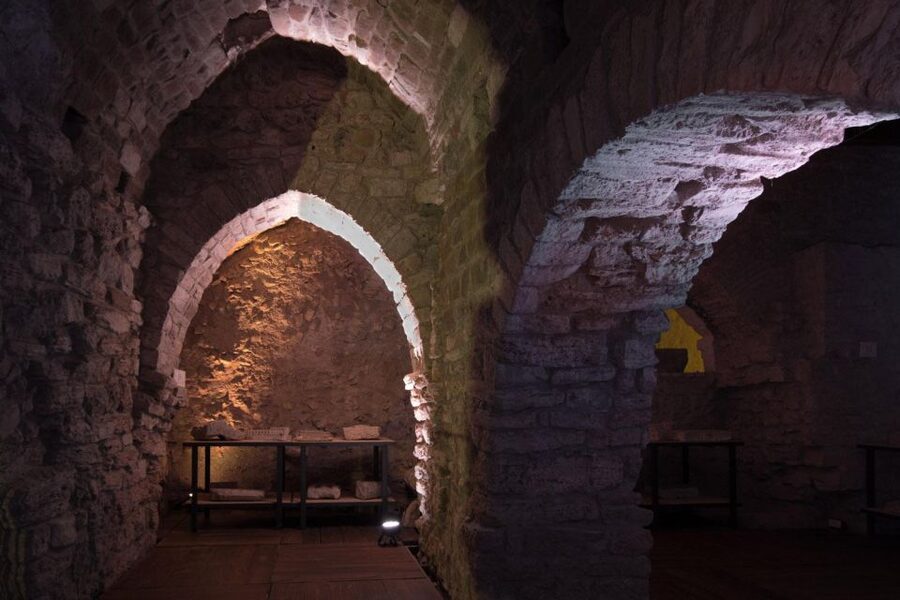
The underground area has a slight change in temperature. Bring a light layer, even on a warm day. You do not need heavy outdoor gear, but a cardigan or thin jacket will make the visit more comfortable.
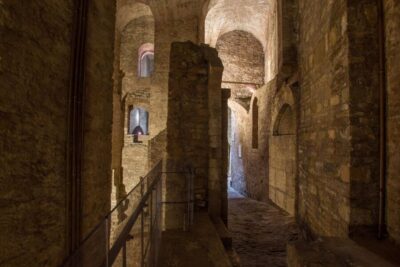
There are flights of stairs along the route. The site is not suitable for wheelchair users, strollers, or people with significant mobility difficulties. If stairs are a serious concern, choose another Perugia activity rather than assuming the route can be adapted.
Food and drinks are not allowed inside, and pets are not permitted. Baby strollers cannot be used on the route. These rules are easy to manage, but they matter if you are visiting with small children or planning a longer walking day around the historic center.
Wear sensible shoes. The route is short, but you are walking through an archaeological area with changing levels and stairs. The main challenge is not distance. It is moving safely while listening, reading, and looking at the remains.
Is $14 a fair price?
At $14 per person, this is a good-value introduction to Perugia’s underground archaeology. The fee includes the entrance ticket, a guided visit, the translation tablet when needed, and the VR presentation. You are paying for interpretation as much as access.
The price is especially fair if you want a compact activity between major sights. A 50-minute visit gives you useful background without taking over your day. It also provides context for ancient gates, the cathedral complex, and other historic parts of Perugia.
The value is lower if you expect a large collection of excavated objects or a long specialist lecture. The route is short, and the physical remains can be limited compared with a major archaeological museum. Much of the benefit comes from the guide’s storytelling and the final visual reconstruction.
Free cancellation up to 24 hours before the visit and the option to reserve now and pay later make it easier to fit into an uncertain schedule. Check the available start times when booking, since the activity runs at set times rather than functioning as an all-day open entry.
Who will enjoy this Perugia tour most?
I would choose this experience if you like archaeology, urban history, or places where different periods occupy the same ground. It is also a smart choice for a first visit to Perugia because it explains why the city feels layered and steep.
The tour suits adults and older children who can manage stairs and stay attentive for a guided presentation. The VR segment adds visual interest, while the real remains give the activity substance.
It may not suit you if you want a fully English-speaking guide, a slow photography stop, or a large museum display. The tablet can require concentration, and holding it while taking photographs is awkward. If your priority is independent exploration, the short guided format may feel restrictive.
I would also avoid scheduling it when you are already rushing between appointments. The route is brief, but the information comes quickly. Give yourself time to listen, look, and descend and climb without turning the visit into a race.
Should you book Perugia Underground?
Book it if you want a concise, well-priced explanation of how Perugia developed from an Etruscan settlement into a Roman and medieval city. The most rewarding combination is the real underground remains, a capable Italian-speaking guide, and the VR presentation at the end.
Think twice if stairs are difficult or if you need a live tour in English. The translation tablet is useful, but it can feel rushed because it does not always match the guide’s pace.
For most visitors who have 50 minutes free in central Perugia, I would include it. It gives you a stronger sense of the city beneath the streets and makes the cathedral area, ancient gates, and later underground sites easier to understand.
FAQ
Where does the Perugia Underground tour start?
The ticket office and meeting point are in the cloister of Saint Lawrence Cathedral. Enter through the large portal in Piazza IV Novembre, beside Libreria delle Volte.
How long does the tour last?
The scheduled duration is about 50 minutes. Some visits may run slightly longer depending on the guide and group.
What languages are available?
The live guide speaks Italian. A tablet with translation and headphones is provided when needed for visitors who require another language.
Is the tour available in English?
English support is available through the tablet and headphones. The spoken presentation itself is in Italian.
How far below the cathedral does the route go?
The route reaches about 15 meters below the current level of Saint Lawrence Cathedral.
What historical periods does the tour cover?
The visit covers Etruscan, Roman, and medieval remains, taking you from more than 2,500 years ago toward the present day.
Is the VR experience included?
Yes. The virtual reality presentation is included in the activity and takes place at the end of the visit.
Is the route suitable for wheelchair users or strollers?
No. The route includes flights of stairs and is not suitable for wheelchair users, strollers, or people with significant mobility difficulties.
Can I cancel the booking?
You can cancel up to 24 hours in advance for a full refund. You can also reserve your place and pay later, which keeps your plans flexible.
Just added around Umbria
- Small Group Tour of Assisi and St. Francis Basilica★ 5.0 · 187 reviews
- Orvieto: Pozzo della Cava Entry Ticket★ 4.4 · 188 reviews
- Perugia: Old Town Walking Tour, Piazza IV Novembre★ 4.8 · 304 reviews
- Assisi: Private Walking Tour with St. Francis Basilica★ 4.8 · 201 reviews
- Heart of Italy Day Trip: Visit Perugia and Assisi from Florence★ 4.0 · 287 reviews
- Professional hot air balloon rides at Assisi, Trasimeno in Umbria★ 5.0 · 206 reviews
- Hands on Italian Cooking Classes★ 5.0 · 313 reviews
- Assisi: Panoramic Tuk Tuk Tour★ 4.9 · 220 reviews
Umbria Tours, compared.

From Rome: Bagnoregio & Orvieto Day Trip with Wines & Lunch
Read our review →
Assisi and Orvieto Guided Day Tour from Rome with Lunch
Read our review →

Heart of Italy Day Trip: Visit Perugia and Assisi from Florence
Read our review →
Browse the lists this tour appears in