
Reviewed · LAST SUPPER TOURS
Milan: Da Vinci’s Last Supper Guided Tour
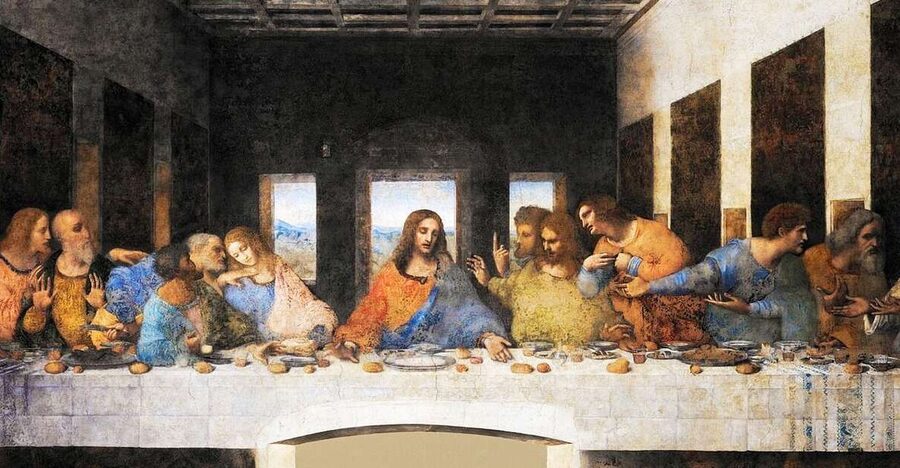
Leonardo’s Last Supper is not simply a painting you stroll past. It is a carefully controlled visit into the old refectory of Santa Maria delle Grazie, where you get 15 minutes with one of the world’s most famous wall paintings. The short viewing time makes a guide especially useful, since you arrive ready to look instead of spending those precious minutes wondering what matters.
I like two things here: the guide puts the painting into its setting as part of a Dominican monastery, and the headsets make it easier to follow the explanation without crowding around one speaker. Guides such as Marco Antonio, Elisabetta, Serena, and Luciana have been praised for clear storytelling and strong command of the subject.
The main drawback is the price. At $75 for one hour, this is not a cheap museum stop, and only 15 minutes are spent inside the refectory. Still, Last Supper tickets can be difficult to secure, and the guided context gives the visit more weight than a quick look on your own.
Key points to know before you book
- Only 15 minutes in the refectory: The timed viewing is brief, so listen closely and use the guide’s explanation to focus your attention.
- A guide makes a real difference: You hear about perspective, composition, materials, Leonardo’s work, and the painting’s survival rather than simply seeing the image.
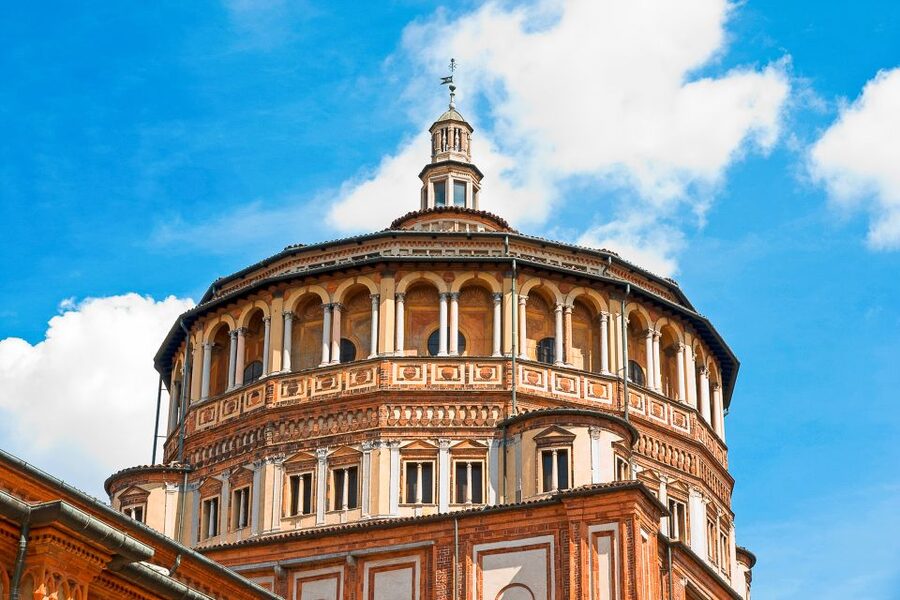
- The setting is part of the experience: Santa Maria delle Grazie and its refectory belong to a former Dominican complex listed by UNESCO.
- Meet at the ticket office: Go to Piazza di Santa Maria delle Grazie and look for the guide in front of the ticket office.
- Bring matching identification: Your first and last name, and those of everyone in your group, must be supplied for identification.
- Pack light: Food, drinks, backpacks, large bags, and luggage are not allowed, though small lockers are available at the ticket office.
Why the Last Supper needs a guide

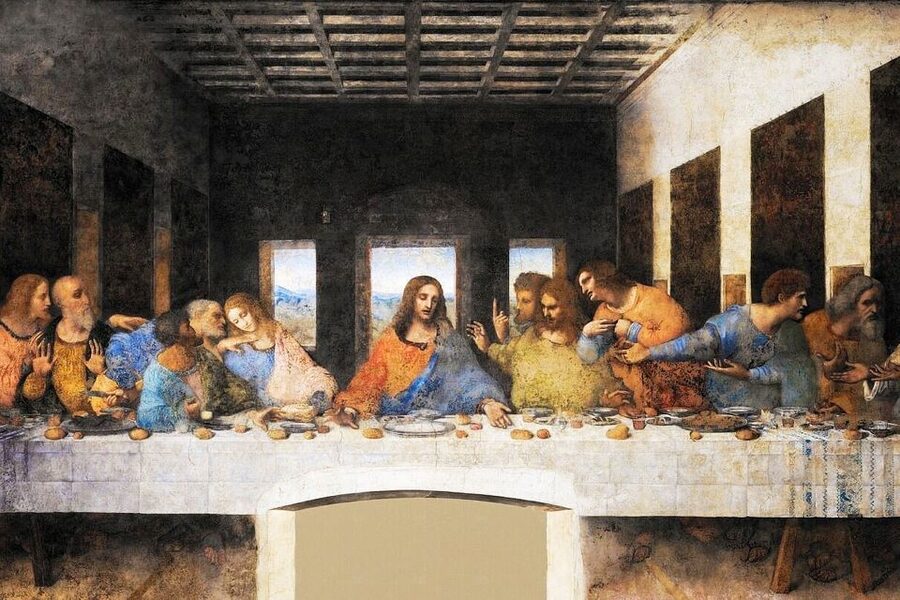
You probably already know the basic image: Christ at the center, the apostles reacting around him, and Leonardo’s name attached to one of the most discussed works in Western art. What you do not get from a postcard or a quick internet image is the way the scene is organized across the wall.
A good guide directs your eye to the perspective and composition. You learn how Leonardo arranged the figures, how the lines lead attention toward the central figure, and how each reaction contributes to the drama. The tour also explains the artistic method and the difficult history of the work, subjects that are easy to miss when you are standing quietly in a room full of people.
The guide’s role matters because the painting is not in a standard gallery. It remains in the refectory where it was made, surrounded by the architecture and religious purpose that shaped its original setting. The room helps explain why this was such an important commission and why the painting belongs to the history of the monastery as much as to the story of Leonardo.
This is also a place where a little preparation pays off. The actual viewing period is fixed at 15 minutes. You will not have time to read a long guidebook afterward, compare several paintings, or return later in the day. The live explanation gives you the essentials before and during the visit, leaving you free to look closely.
More Guided Tours in Tuscany
- Milan: Guided Tour of Leonardo da Vinci’s ‘The Last Supper’
★ 4.6 · 1,281 reviews - Milan: Da Vinci’s Last Supper and Guided Walking Tour
★ 4.8 · 683 reviews - Da Vinci’s Last Supper Express Semi-Private Guided Tour
★ 4.8 · 427 reviews
Meeting at Santa Maria delle Grazie
The tour begins in Piazza di Santa Maria delle Grazie, in front of the ticket office. This is a practical meeting point, but do not treat the appointment casually. The visit is tied to an admission time, and entering the refectory is not like joining an open-ended walking tour.
Look for the guide and follow the instructions for the group. Several people have specifically appreciated clear directions, signs, and an easy-to-find meeting arrangement. If you are staying elsewhere in Milan, allow enough time to reach the piazza without cutting it close. One person managed to arrive a minute late, but that should not be your plan.
Before entry, identification is important. You must provide your first and last name, along with the names of other participants if they are joining you. The same name cannot be entered multiple times on one reservation, so check the booking details before you go.
You will also need a passport or ID card. This is one of those small requirements that can ruin a carefully planned museum visit if forgotten, so keep it accessible rather than buried in a large bag.
From Dominican monastery to UNESCO site
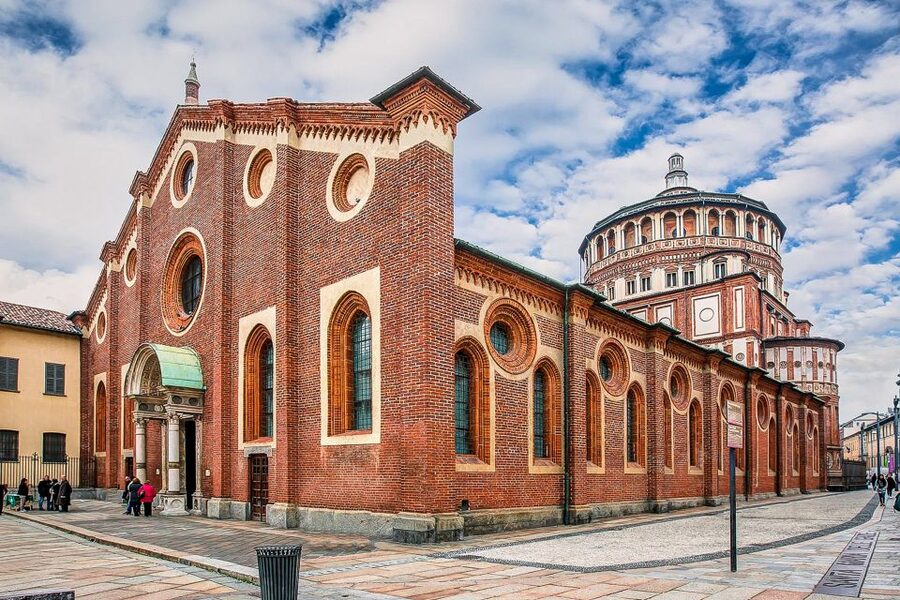
Santa Maria delle Grazie and the adjoining refectory formed part of a large Dominican monastic complex. The church and refectory have been listed as a UNESCO World Heritage site since 1980, and that designation helps explain the care surrounding the visit.
The tour is not just an appointment with a famous painting. It places the work inside a religious complex built for prayer, community life, and meals. The refectory was a working space for the monks, which gives the painting a direct connection to the daily purpose of the room.
Your guide discusses the history of the site as well as Leonardo’s work. That broader setting is one of the strongest reasons to choose the guided option. You are not simply looking at an isolated image on a wall. You are seeing a work created for a particular room, institution, and audience.
The church itself may be part of the visit, but it cannot always be guaranteed because religious services or other events may take priority. If seeing the church interior is essential to your plans, treat it as a possible extra rather than the main promise of the booking. The Last Supper visit is the dependable core.
Entering the refectory and seeing the painting
The approach to the refectory has a controlled, almost theatrical rhythm. Groups move through the entry process, with doors opening and closing as you proceed. That arrangement is practical conservation work, but it also builds anticipation before you finally see the painting.
Once inside, you have 15 minutes with the Last Supper. That may sound short, but it is enough time to study the work if you already know what to look for. Your guide uses the period to explain the figures, visual structure, historical background, and artistic choices.
I recommend standing where you can see the whole wall first. Do not begin by chasing individual details. Let the overall arrangement settle in, then follow the guide’s attention toward the central figure, the groups of apostles, and the elements of the composition that give the scene its energy.
The painting may look different from the grand image you have built up in your mind. Reproductions often sharpen colors and make every detail easy to read. The actual work has endured centuries of wear and restoration, and some people may find it less immediately dazzling than expected. Its importance becomes clearer as you consider its scale, setting, survival, and design.
That is not a reason to skip it. It is a reason to arrive with the right expectation. You are seeing a fragile historic wall painting in its original room, not a freshly painted canvas in perfect condition.
More Last Supper viewings:
- Milan: Guided Walking Tour & Last Supper Visit with Ticket
★ 4.7 · 5,409 reviews - Milan’s Must See: Half-Day Tour of Last Supper, Duomo & La Scala
★ 4.0 · 4,193 reviews - Milan: Last Supper Guided Visit
★ 4.7 · 2,854 reviews - Milan Duomo & The Last Supper Skip-the-Line Small Group Tour
★ 4.5 · 2,761 reviews
What your English-speaking guide adds
The tour includes a live English-speaking guide and an English audio headset. The headset is useful because it lets you hear the explanation without standing shoulder to shoulder with the guide. Several guides have been praised for speaking at a comfortable pace, using humor, answering questions, and making complicated points understandable.
Marco Antonio is repeatedly noted for his passion, storytelling, and ability to make the limited time count. Elisabetta, also spelled Elizabetta in some accounts, is praised for combining art knowledge with a clear and engaging delivery. Serena, Luciana, and Zenopizzo have also received warm comments for their friendly and well-organized presentations.
You should not book expecting one particular guide unless your confirmation says so. The names give you a useful sense of the guiding style: animated, informed, and focused on making the painting readable rather than reciting dates.
The best guides do more than list facts. They explain why the painting looks the way it does, how Leonardo’s choices affect your view, and why the work has such a complicated story. That is valuable here because your time in front of the wall is fixed. You want the explanation to help you see more, not merely fill the silence.
The 15-minute limit and how to use it
Fifteen minutes goes quickly. I would listen carefully during the guide’s introduction, then use the viewing period in three passes.
First, look at the entire wall. Notice how the figures are grouped and how the room’s lines direct your attention. Second, inspect the central area and the gestures around it. Third, spend a few moments on smaller details your guide has identified.
Do not try to photograph every second. Flash photography is prohibited, and the rules are designed to protect the painting. Even non-flash photographs may not be the best use of your time. You can find countless reproductions later, but you have only one short appointment in the room.
The controlled system has a benefit: the room does not become an uncontrolled crowd. A limited number of people are allowed in at once, and the entry sequence helps keep the visit orderly. The tradeoff is that you cannot linger until the painting suddenly reveals itself at your own pace.
For art lovers, that restriction may feel frustrating. For most people, it provides a clear focus. Listen, look, and accept that this is a concentrated visit rather than an afternoon spent wandering through a museum.
Is $75 a fair price?
At $75 per person, this is a premium ticket for a one-hour experience. You are paying for entry, a licensed guide, the reserved access system, and the convenience of having the painting explained in English.
The value depends on your priorities. If you are comfortable studying art on your own and already have a confirmed admission ticket, you may not need this particular format. But if you have not secured entry, the price becomes easier to justify because access to the Last Supper is limited and the booking includes the ticket.
I see the strongest value in the guide. A basic admission can put you in the room, but it does not necessarily help you understand the perspective, technique, composition, and history in a short period. Here, the explanation is built around the 15-minute viewing limit.
This is also a good choice for a first visit to Milan when your schedule is tight. One hour is easy to fit between other sights, and the meeting point is central to a major cultural stop. It is less appealing if you want a slow, unstructured art day or are trying to keep every admission cost low.
Free cancellation is available up to 24 hours before the activity, and you can reserve now and pay later. Those terms help if your Milan plans are still moving around, but they do not change the basic question: are you willing to pay for a short, tightly managed visit with expert explanation?
Practical rules for a smoother visit
Pack only what you need. Food and drinks, luggage, large bags, backpacks, and flash photography are not allowed. Small lockers are available in the ticket office, but it is wiser to arrive with as little as possible rather than depend on storage space.
The activity is wheelchair accessible. Children aged 12 months and older require an adult ticket, so include every eligible child when booking and provide each person’s correct name.
Wear clothing that suits your wider plans in Milan. The church visit is not always guaranteed because of religious events, and the supplied information does not require special church clothing for the Last Supper visit itself. If you hope to enter the church afterward, check the situation on arrival and dress respectfully.
The tour language is English. An audio headset is included, which helps if the group is large or the surrounding space is noisy. You should still stay close enough to follow the guide’s movement through the entry process.
Who will get the most from this tour?
I would choose this experience if the Last Supper is one of your Milan priorities and you want more than a photograph. It suits first-time visitors, people with limited time, and anyone who prefers a clear explanation from a licensed local guide.
It is particularly useful for anyone who does not have an art background. The guide explains the painting without requiring you to arrive with specialist knowledge, and the short format keeps the visit from becoming a lecture.
Families can also manage the one-hour duration, though children need adult tickets from 12 months onward. The 15-minute room visit may be easier for younger attention spans than a long museum tour, but adults should explain in advance that the group cannot stay longer.
I would hesitate if your main goal is to spend a long time examining every mark. The viewing period is fixed, the church interior is not always assured, and the $75 price may feel high for a short appointment. Those are real limits, not minor footnotes.
Should you book the Last Supper guided tour?
Book it if you want reliable access, a licensed English-speaking guide, and useful context packed into one hour. The strongest part is not simply seeing Leonardo’s painting. It is having someone point out how the scene works before your 15 minutes are over.
Marco Antonio, Elisabetta, Serena, Luciana, and Zenopizzo are examples of the lively guiding style associated with this experience, but your assigned guide may differ. The consistent practical advantages are the entry ticket, headsets, clear meeting point, and focused explanation.
Skip it if you already have admission and prefer to study independently, or if $75 feels too steep for a short visit. For most people placing the Last Supper high on a Milan itinerary, though, the cost buys exactly what this difficult-to-see masterpiece needs: access, structure, and enough guidance to make the limited time count.
FAQ
How long does the Last Supper guided tour last?
The full activity lasts about one hour. Only 15 minutes are allowed inside the refectory with the Last Supper.
Where do I meet the guide?
Meet the guide at Piazza di Santa Maria delle Grazie, in front of the ticket office.
Is the tour conducted in English?
Yes. The live guide speaks English, and an English audio headset is included.
Is the Last Supper entry ticket included?
Yes. The activity includes the entry ticket for the Last Supper, a licensed guide, and audio headsets.
Do I need to bring identification?
Yes. Bring a passport or ID card. You must also provide the first and last names of every participant, and the same name cannot be used more than once in a reservation.
Can I take photographs inside the refectory?
Flash photography is not permitted. Food, drinks, luggage, large bags, and backpacks are also not allowed.
Is the visit wheelchair accessible?
Yes, the activity is listed as wheelchair accessible.
Is a visit to the church guaranteed?
No. Religious events may mean that access to the church cannot always be guaranteed. The Last Supper visit remains the main part of the activity.
Just added around Last Supper
- Milan: City Highlights Walking Tour with The Last Supper★ 4.9 · 195 reviews
- Milan: Skip-the-Line Guided Walk and “The Last Supper”★ 4.5 · 606 reviews
- Milan: Duomo and The Last Supper Skip-the-Line Guided Tour
- Milan: Leonardo’s Last Supper and Michelangelo’s Pietà Tour★ 4.6 · 559 reviews
- Milan: Guided Tour of The Last Supper★ 4.7 · 664 reviews
- Milan: Leonardo’s Last Supper Guided Tour★ 4.6 · 685 reviews
- Milan: The Last Supper & Sforza Castle Guided Tour★ 4.6 · 610 reviews
- Milan: Last Supper Guided Tour and Entry Ticket★ 4.7 · 1,171 reviews
Last Supper Tours, compared.
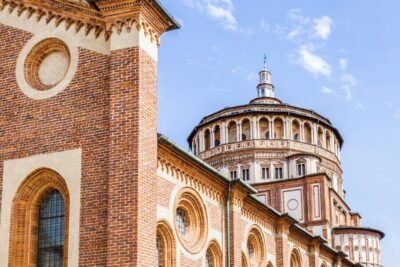
Guided Walking Tour & Last Supper Visit with Ticket
Read our review →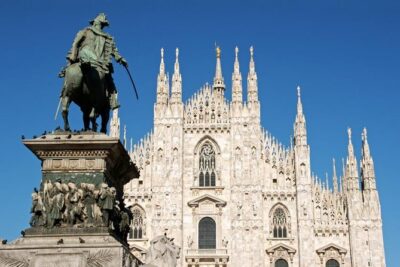
Milan’s Must See: Half-Day Tour of Last Supper, Duomo & La Scala
Read our review →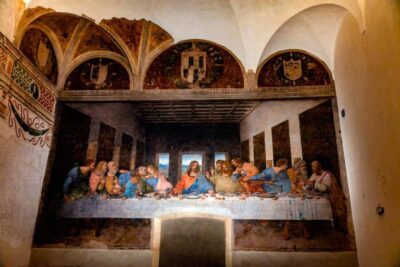
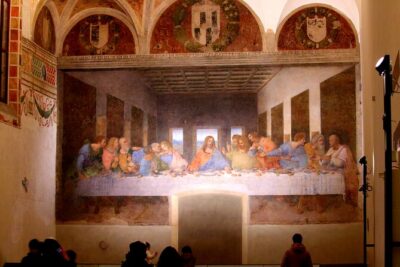
Milan Duomo & The Last Supper Skip-the-Line Small Group Tour
Read our review →
Da Vinci’s Last Supper & Milan Sightseeing Tour
Read our review →
Historic Milan Tour with Skip-the-Line Last Supper Ticket
Read our review →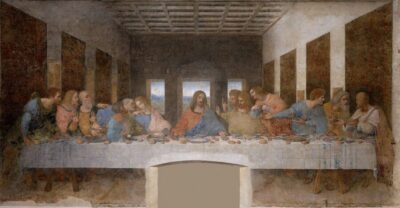
Best of Milan Experience Including Da Vinci’s The Last Supper and Milan Duomo
Read our review →Browse the lists this tour appears in