
Reviewed · WALKING TOURS
Florence: Private Walking Tour of Florence’s Hidden Gems
Florence reveals itself best on foot, and this private two-hour walk gives you a useful first map of the old city. You move from Santa Croce and Piazza della Signoria across Ponte Vecchio, then return past Pitti Palace, Via Tornabuoni, Piazza della Repubblica, and the Duomo. I like the broad route, and I like that your guide can adapt the conversation to your questions rather than reciting a fixed speech.
I also like the human touch reported by several guests, including guides such as Giacomo, Claudia, Manuela, Marco, and Natalia. Some guides have finished with gelato or coffee and offered tips on restaurants and leather goods. The main drawback is simple: the monuments are viewed from outside, so this is an orientation walk, not a substitute for visiting the Uffizi, cathedral interior, or Pitti Palace.
Key points at a glance
- A private route across both sides of the Arno: You see Santa Croce, the historic center, Ponte Vecchio, and the Oltrarno in one compact walk.
- Strong first-day value: The tour helps you understand where Florence’s museums, churches, squares, and shopping streets fit together.
- Exterior sightseeing only: You get explanations and photo stops, but admission to the Uffizi, Bargello, churches, palace, and cathedral is not included.
- Guides bring different strengths: Past guides named by guests include Giacomo, Claudia, Marco, Manuela, Ilaria, and Giulio.
- A practical route for families: Several guides have kept children engaged, though the pace and street conditions still require attention.
- Bring proper shoes: Florence’s stone streets, bridges, and crowded lanes make comfortable footwear essential.
What this Florence walk is really designed to do
This is not an art-gallery tour with long time inside one building. It is a city orientation with historical commentary, built around Florence’s most important public spaces and façades.
In two hours, you cover a lot. That is the appeal, but it also means the tour moves at a steady clip. You stop, listen, take photographs, and continue. If you want to study every statue or enter each church, you will need to return on your own.
I would schedule it near the beginning of your stay. The route gives you a working sense of Florence’s layout, especially the relationship between the historic center and the Oltrarno district. Afterward, you can decide which places deserve a longer visit.
The private format is useful for couples, families, or friends who want to ask questions as they go. The group can be small, and past bookings have sometimes ended up with only a few people. That makes it easier to pause for a child, ask about Medici politics, or request advice on what to see next.
More Private Tours in Florence
- Florence Private Transportation in Rickshaw
★ 5.0 · 730 reviews - Florence: Private Uffizi Gallery Discovery Tour with Ticket
★ 4.5 · 657 reviews - Florence Exclusive PRIVATE Food Tour with 6 or 10 Tastings
★ 4.5 · 654 reviews
Starting near the Medici Chapel
The stated meeting information includes Door 8 at Accord Tours, with another listed starting option near Piazza di Madonna degli Aldobrandini. Because the itinerary can change with the meeting point, confirm the exact start address before setting out.
If your walk begins near the Medici Chapel, you are already in one of Florence’s most revealing areas. The chapel connects the Medici family with art, ceremony, and political power. On this tour, it is an exterior introduction rather than an indoor visit, so do not expect time among Michelangelo’s sculptures or the chapel’s marble decoration.
That distinction matters. The Medici Chapel is one of the places you may want to book separately if art is your main reason for coming to Florence. Here, the guide uses it as part of the city story: you see how religious buildings and family power worked together in Renaissance Florence.
Santa Croce and the city’s great names
The first major stop is the Church of Santa Croce, one of Florence’s most important churches. Its fame comes from both its art and its tombs. It is associated with figures such as Michelangelo, Galileo, and Machiavelli, making it a useful place to discuss the people who shaped Italian culture and politics.
Again, the tour remains outside. Your guide can point out the church and explain its importance, but you will not inspect the chapels or artworks inside during these two hours.
I like this stop because it gives Florence a personal scale. The city is not only about domes and palace fronts. It is also about the writers, artists, scientists, and political families remembered in its churches. A good guide can connect those names to the streets you are walking through.
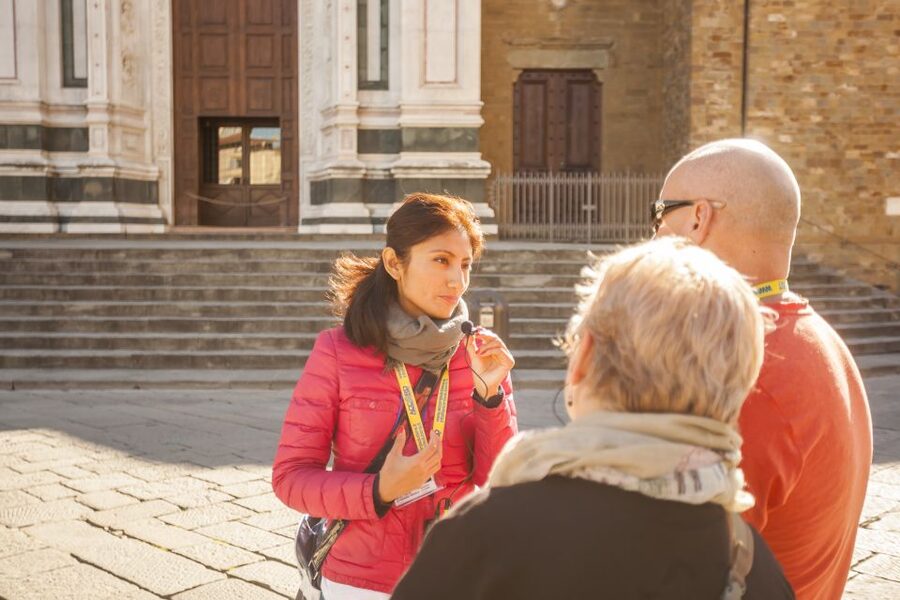
Several guests have praised guides for making complex history clear and entertaining. That matters here, since Florence’s story can become a blur of Medici relatives, rival families, artists, and popes. The best guides, including those praised for their teaching style, explain the links without turning the walk into a lecture.
Bargello, Piazza della Signoria, and political Florence
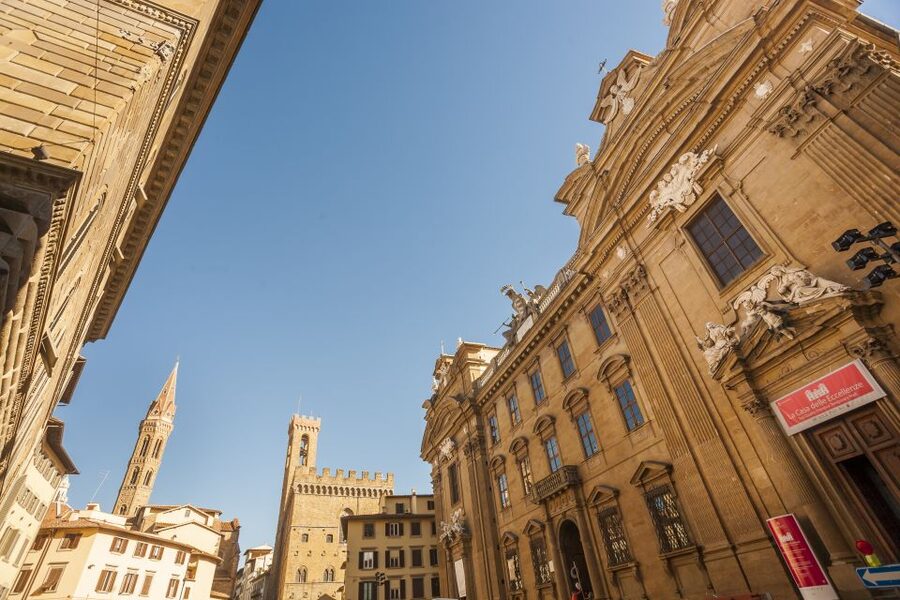
From the opening area, the route also takes in the Bargello, once a seat of civic power and now the National Museum of Bargello. The building’s severe medieval appearance contrasts with Florence’s later Renaissance palaces.
The museum is viewed from outside on this tour. If sculpture is a priority, plan a separate visit. The Bargello holds major works, but this walk only gives you the setting and background needed to decide if you want to go in later.
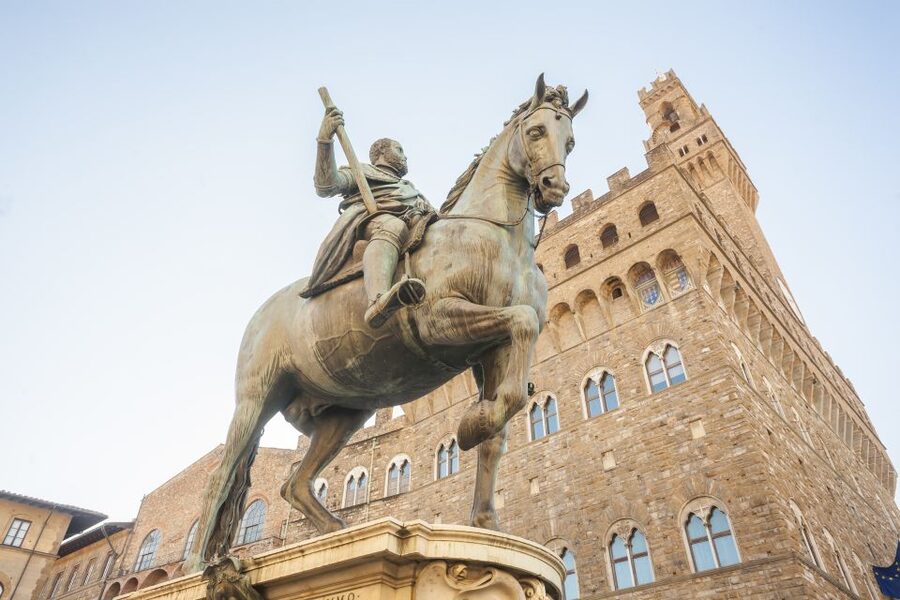
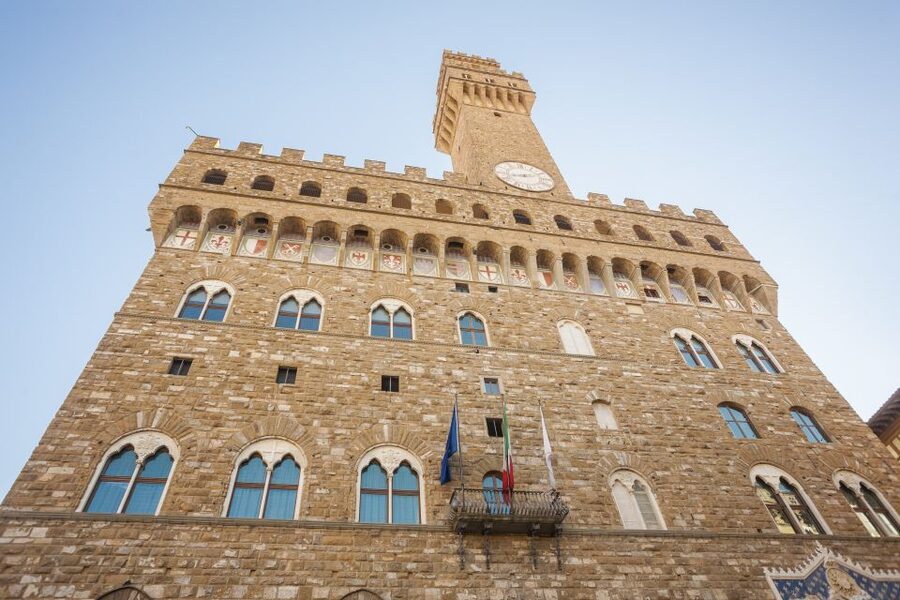
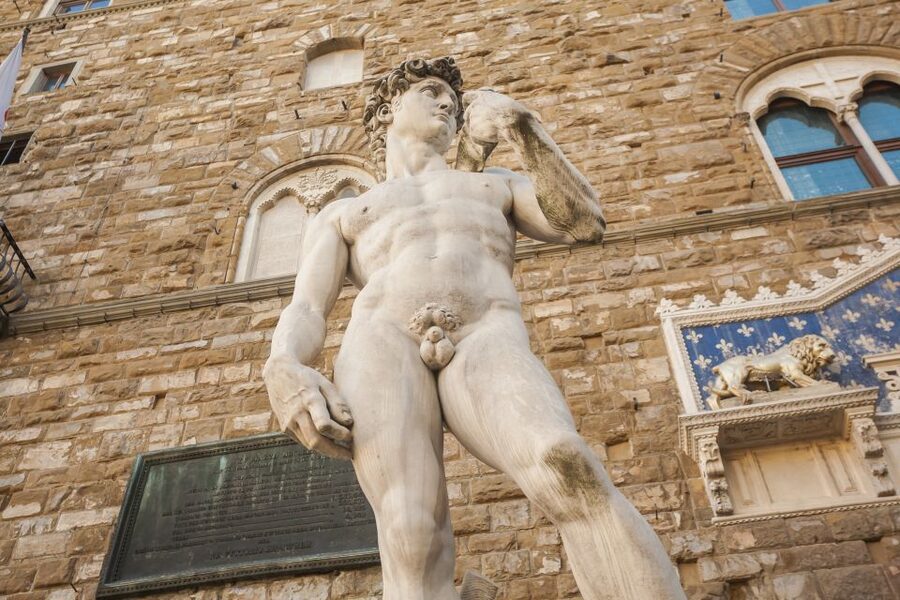
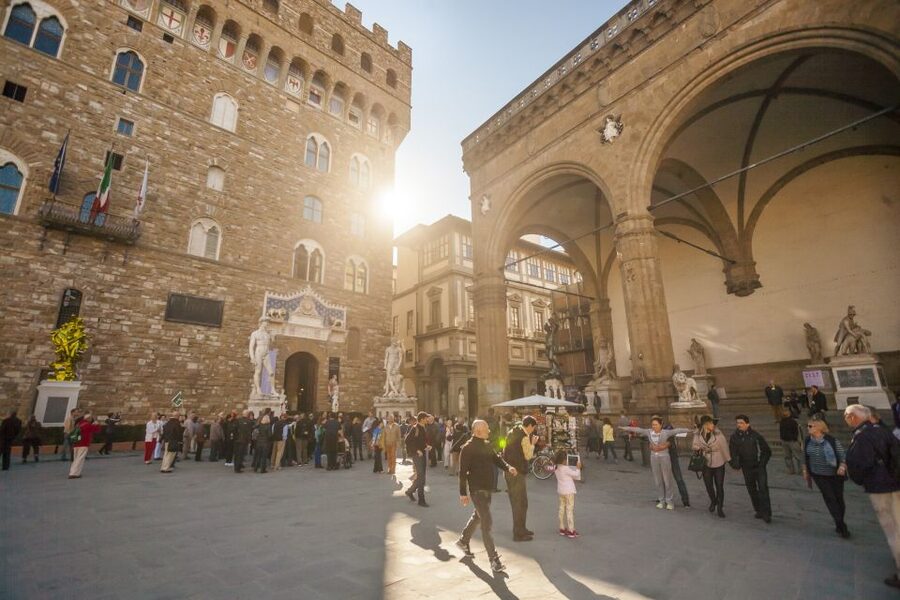
Next comes Piazza della Signoria, Florence’s great outdoor political room. Here you see Palazzo Vecchio, the former seat of government, along with the statues and arcades that made the square a stage for public life.
This is one of the most rewarding sections of the route because the buildings are close together and the history is easy to picture. Your guide may explain how the square reflected Medici authority and civic power, while also pointing out details you could easily pass without noticing.
The Neptune Fountain receives a short photo stop. It is a quick pause, not a long art lesson, so use the moment to frame photographs and listen for the guide’s explanation of the square.
More Walking Tours in Florence
- Florence: Guided Walking Tour
★ 4.5 · 3,334 reviews - Skip the line: Uffizi and Accademia Small Group Walking Tour
★ 4.5 · 3,135 reviews - Florence: Guided Walking Tour
★ 4.6 · 1,602 reviews - Florence: Renaissance and Medici Tales Guided Walking Tour
★ 4.8 · 1,549 reviews
The Uffizi from the outside
The Uffizi Gallery is another major landmark on the route. The exterior tells part of the story: this was not originally built simply as a public art museum. Its name and architecture connect to Florentine government and Medici administration.
The tour gives you an outside view and a short explanation. It does not include entry, reserved admission, or time among works by Botticelli, Leonardo, Michelangelo, or Caravaggio.
That is not a flaw if you see the walk as a primer. In fact, a short introduction can make a later museum visit less confusing. But if you expect to see paintings, buy an Uffizi ticket separately and allow several hours. Do not assume the ten-minute guided stop is an abbreviated museum visit.
Crossing Ponte Vecchio
Ponte Vecchio is the route’s natural midpoint and one of Florence’s most memorable crossings. This medieval stone bridge carries you over the Arno and past its famous gold jewelry shops.
The bridge can be crowded, and the shopfronts leave little room for a relaxed stroll at busy times. Your guide helps you keep moving and explains how the bridge fits into the city’s past. You will have time for photographs, but this is not the place for an unhurried shopping session.
I like the bridge because it changes the feel of the walk. You leave the grand civic spaces behind and cross into the Oltrarno, the district on the opposite bank. That shift helps you understand Florence as a living city rather than a line of separate monuments.
If you are interested in jewelry, ask the guide for context before buying. The route also passes through streets known for crafts and shops, and past guides have offered practical suggestions about quality leather goods. Treat such advice as a starting point, not a guarantee of a particular shop.
Pitti Palace and Piazza Pitti
On the far side of the Arno, the route reaches Pitti Palace and Piazza Pitti. The palace was later associated with the Medici family and became one of the grand residences that displayed their authority.
The broad square gives you a chance to appreciate the scale of the building from outside. It is a good place for a short explanation of how Florence’s ruling family used palaces, streets, and public ceremonies to project power.
The palace interior is not part of this walk. If you want its galleries, royal apartments, or gardens, arrange another visit. The tour is better at showing how Pitti fits into the city’s geography than at exploring the palace itself.
This Oltrarno section is also a useful balance to the more famous sights across the river. You see a different side of Florence’s historic center, even though the route remains focused on headline monuments.
Via Maggio, Santa Trinita, and Via Tornabuoni
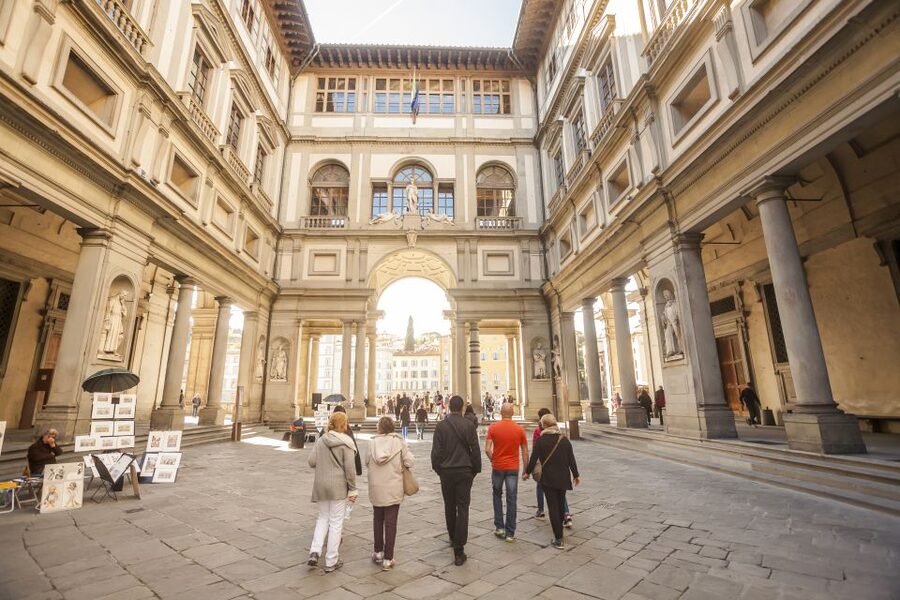
The return route follows Via Maggio and crosses back toward the center at Ponte Santa Trinita. These streets connect the palace district with the shopping and commercial heart of Florence.
Via Tornabuoni is the polished fashion street, lined with well-known boutiques. You may not be shopping, but the street helps show how Florence’s old wealth and modern luxury sit beside one another.
Ponte Santa Trinita also provides another view toward the Arno and Ponte Vecchio. Your guide can help you read the riverfront as part of the city’s design rather than as a simple photo backdrop.
This stretch is where a private guide can add useful local judgment. You can ask where to return for shopping, which streets are worth exploring after dark, or how to avoid spending your limited time on shops that do not interest you.
Strozzi Palace and Piazza della Repubblica
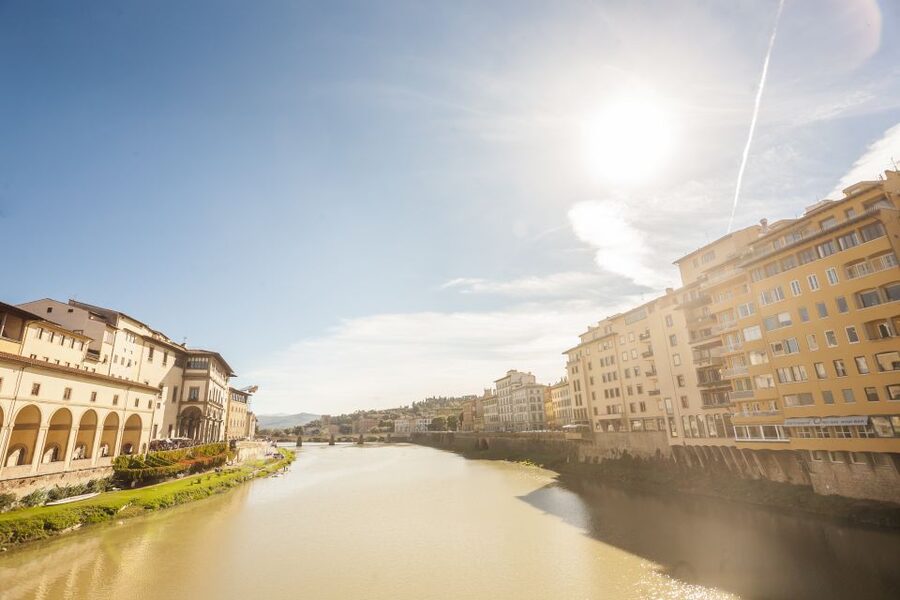
Palazzo Strozzi is a fine example of Renaissance palace design. Its heavy stone exterior, orderly windows, and strong geometric form show how wealthy families turned private homes into statements of status.
The palace is another exterior sight, but it is especially worthwhile for visitors who want to understand Renaissance architecture. The guide can point out the design features instead of leaving you to admire the façade without context.
The walk then reaches Piazza della Repubblica, a large central square built over an area shaped by Florence’s later urban changes. Cafés, shops, and open space make it feel different from the tighter medieval lanes.
The square is a convenient place to get your bearings. From here, the Duomo area is close, and the route begins to gather the main threads of the city: Roman and medieval foundations, Renaissance power, modern commerce, and religious authority.
Ending at Florence Cathedral
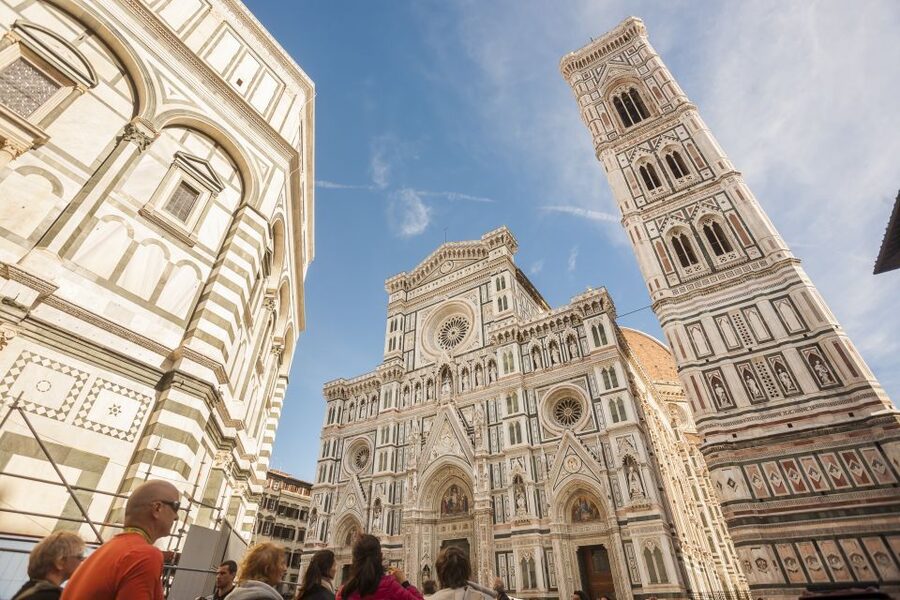
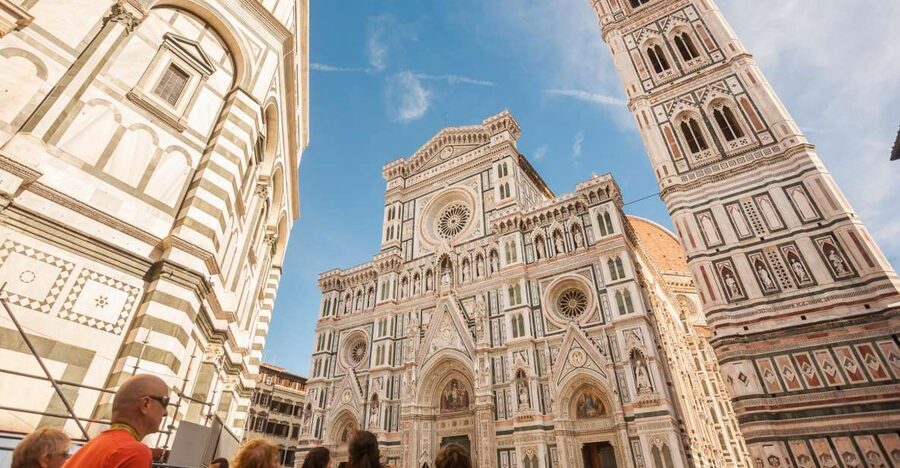
The final major sight is the Duomo complex, including the cathedral’s famous exterior. The colored marble, enormous dome, bell tower, and baptistery create the visual finish most people expect from a first walk through Florence.
The guide explains the complex from outside and gives you a better sense of how its parts relate to one another. You can then return for a closer look or arrange separate admission to the areas you want to enter.
The cathedral has a dress rule: shorts and sleeveless tops are not allowed inside. Since this tour views the cathedral from outside, the rule may not affect the walk itself, but it matters if you plan to enter afterward. Dress with that possibility in mind.
The Duomo is also where the value of the tour becomes clear. A photograph shows the façade and dome, but a guide can explain why the complex took shape over time and how it became Florence’s defining landmark. The amount of detail depends on your guide and the pace of your group, so ask questions if a particular part interests you.
Guide quality and the private format
The most consistent strength of this experience is the guide’s ability to explain Florence in an approachable way. Past guides named in the feedback include Giacomo, Claudia, Giulio, Ilaria, Isabella, Olesia, Riccardo, and Marco.
Some guides have been especially good with families. Claudia, for example, directed explanations toward children aged seven and ten, while other guides kept six- and nine-year-olds involved. That does not mean every guide will use the same approach, but a private group gives you a better chance to request a family-friendly pace.
Guests have also appreciated guides who answered questions beyond the basic facts, including advice about restaurants, gelato, cappuccino, and leather shopping. A gelato stop has sometimes been part of the finish, but do not treat it as a guaranteed inclusion. One person also noted that a gelato voucher was no longer accepted, so check any voucher details before relying on them.
The main caution is sound quality. One guest found that the guide’s audio equipment picked up too much street noise. In a private group, simply ask the guide to pause in a quieter spot or speak closer to the group.
Pace, walking conditions, and access
The tour lasts two hours and covers a large portion of central Florence. You walk on historic streets, across bridges, through squares, and along busy shopping routes. Wear comfortable shoes, and expect some uneven stone surfaces and crowded areas.
The activity is listed as wheelchair accessible, but it is also marked as not suitable for people with mobility impairments. Those details do not fully agree, so contact the provider before booking if you use a wheelchair, walker, or need frequent rest stops.
The route is not a museum crawl, so there are no long indoor breaks. In hot weather, the two-hour length can still feel demanding, especially when the streets are crowded. Past guests have found an ice cream stop welcome in warm conditions, but it should be viewed as a possible guide choice rather than a promised part of the tour.
What value should you expect?
No price is provided here, so I cannot judge the exact cost. The right comparison is with a standard group orientation walk plus the time you would spend finding these places yourself.
A private tour can be good value if you want personal questions answered, have a family with different interests, or are visiting Florence for the first time. You are paying for the guide’s route, interpretation, and flexibility, not for museum admission.
It is weaker value if your main goal is to enter the Uffizi, climb the Duomo, see the Bargello collection, or tour Pitti Palace. You will still need separate tickets and additional time for those activities.
The flexible cancellation policy, with a full refund available up to 24 hours before the start, is useful when your schedule may change. Reserve now and pay later is also offered, which helps if you are arranging several Florence activities at once.
Should you book this Florence walking tour?
Book it if you want a well-rounded first look at Florence, especially on your arrival day. The route covers the city’s big sights, crosses the Arno, and gives you enough historical context to choose your next museums and churches.
I would choose it for couples, families, and first-time visitors who value conversation over a scripted group experience. Ask at the start for the subjects that matter most to you, such as Medici politics, Renaissance art, shopping, architecture, or family-friendly stops.
Skip it if you want substantial indoor sightseeing. Since every listed monument is exterior only, art lovers should pair this walk with separate tickets for the Uffizi, the cathedral complex, the Bargello, or Pitti Palace. Used as a city introduction rather than a full museum tour, it offers a sensible and enjoyable way to get oriented.
FAQ
How long does the walking tour last?
The tour lasts two hours.
Is the tour private?
Yes. It is offered for a private group.
Which languages are available?
The live guide speaks English or Italian.
Does the tour enter the Uffizi Gallery?
No. The Uffizi stop is an exterior visit with a short guided explanation.
Can I go inside Florence Cathedral during the tour?
No. The listed monument visits include exteriors only.
Does the route include Ponte Vecchio?
Yes. The tour crosses Ponte Vecchio and includes a guided stop there.
Does the tour visit Pitti Palace?
The route reaches Pitti Palace and Piazza Pitti, but the palace visit is exterior only.
Where does the tour meet?
The meeting information gives Door 8 at Accord Tours, with coordinates provided. Another listed starting option is near Piazza di Madonna degli Aldobrandini. Confirm the exact meeting point because the route can change with the starting location.
What should I bring?
Bring comfortable shoes. If you plan to enter the cathedral afterward, avoid shorts and sleeveless tops.
Can I cancel the booking?
Yes. You can cancel up to 24 hours in advance for a full refund. Reserve now and pay later is also available.
Just added around Florence
- Walking Food Tour of Florence with Tastings and Wine★ 5.0 · 518 reviews
- Uffizi Gallery Timed Entry Admission Tickets★ 4.0 · 392 reviews
- Uffizi Gallery Small Group Tour with Guide★ 4.5 · 879 reviews
- Florence Accademia Guided Tour – Shared, Private & Combo Options★ 4.5 · 370 reviews
- Early Access Guided Uffizi Gallery Tour Skip-the-Line Small Group★ 4.5 · 707 reviews
- Uffizi and Accademia Small Group Guided Tour★ 4.5 · 449 reviews
- Florence Central Market Food Tour with Eating Europe★ 5.0 · 224 reviews
- Truffle Hunting Experience with Lunch in San Miniato★ 5.0 · 383 reviews
Walking Tours, compared.

Guided Walking Tour & Last Supper Visit with Ticket
Read our review →
Rialto Bridge & Offbeat Unusual Venice Walking Tour
Read our review →
Private 3 hrs Venice Tour: St Mark’s, Walking tour & Boat tour
Read our review →
Skip the line: Uffizi and Accademia Small Group Walking Tour
Read our review →Browse the lists this tour appears in