
Reviewed · WALKING TOURS
Florence: Renaissance and Medici Tales Guided Walking Tour
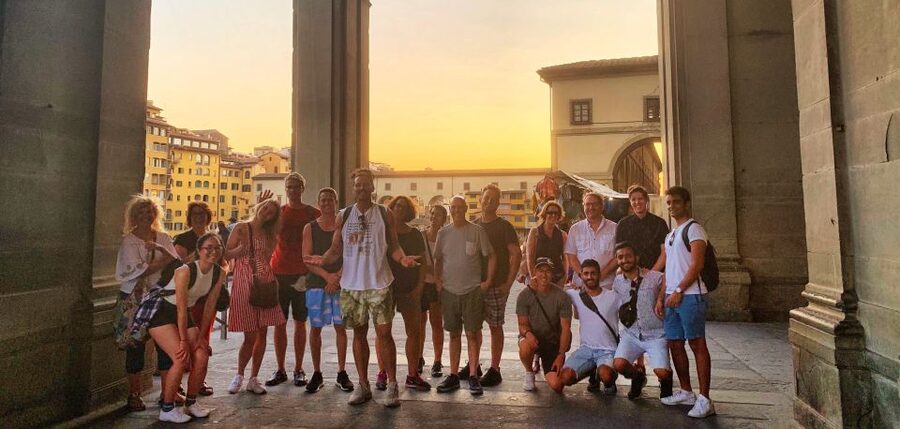
Florence’s Renaissance story makes more sense when you follow the Medici trail on foot. This tour links San Lorenzo, the Medici palace, the Duomo, Palazzo Vecchio, and the Uffizi, turning a collection of famous buildings into a tale of money, family power, artists, and political maneuvering. Along the way, your guide also explains the symbols carved and painted around the city.
I like the strong storytelling, especially the way guides such as Chiara, Michele, Glenda, and Angela make figures like the Medici, Dante, and Michelangelo easier to place in time. I also like the practical ending: your guide shares suggestions for food, drinks, shopping, and later sightseeing. The main consideration is that this is an outside walking tour, so you will not enter the museums or climb the Dome.
Key points to know
- A Medici-focused route: Follow the family’s influence from San Lorenzo and Palazzo Medici Riccardi toward Palazzo Vecchio and the Uffizi.
- A useful first-day orientation: The route connects many central sights and helps you understand where Florence’s main monuments sit.
- Story-led history: Guides use tales of power, intrigue, art, and family rivalry rather than delivering a dry list of dates.
- Exterior sightseeing: You see the Duomo, Giotto’s Bell Tower, Brunelleschi’s Dome, and other landmarks from outside.
- Local advice at the finish: Expect tips about where to eat, drink, shop, and continue exploring.
- Good value with a tipping custom: The booking price is listed at $2.36 per person, but this operates in the style of a free walking tour, so bring cash for a tip.
Why the Medici story works best on foot
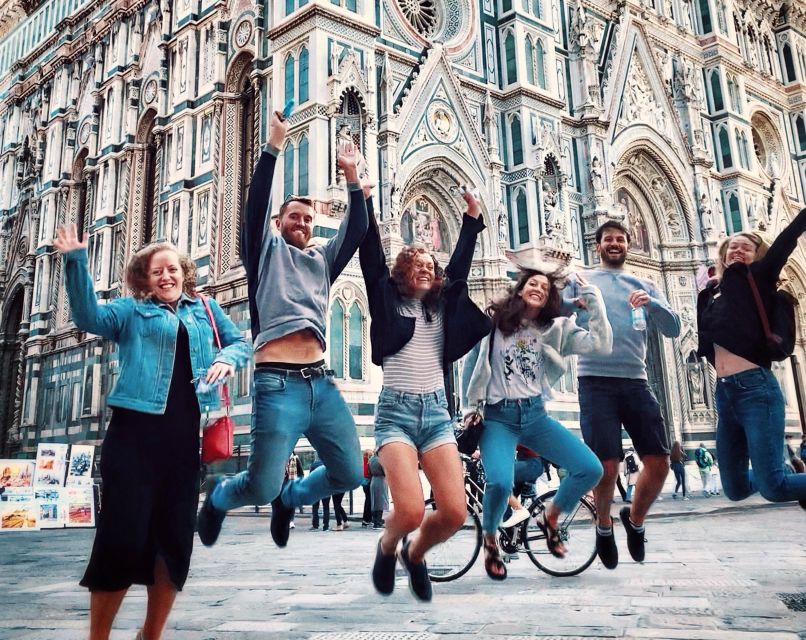
The Medici family can seem like a long list of names until you see how closely their story is tied to Florence’s streets. Banking wealth, political control, church connections, art patronage, and family competition all left physical marks on the city.
This route gives you that connection. You are not simply told that the Medici supported artists. You see the places where their family lived, worshipped, governed, and shaped the city’s public image. That makes the history easier to hold onto.
The best guides give the story a human edge. Michele is praised for a warm, funny delivery and for keeping people interested throughout the full walk. Chiara is repeatedly singled out for clear storytelling and practical city advice. Glenda is described as detailed and easy to follow, while Angela has a knack for putting the Medici story into a wider view of Florence’s past.
Guide assignments can change, so you should not book expecting one particular person. Still, the range of positive comments about Chiara, Michele, Glenda, Fabio, Ricardo, and others suggests that the activity has a consistent focus on lively explanation rather than scripted sightseeing alone.
More Guided Tours in Florence
- Florence: Duomo Cathedral Guided Tour
★ 3.9 · 5,970 reviews - Florence: Accademia Gallery Guided Tour
★ 4.6 · 4,156 reviews - Florence: Duomo Guided Tour with Optional Dome Climb Upgrade
★ 4.1 · 3,706 reviews
Meeting under the green umbrella at San Lorenzo
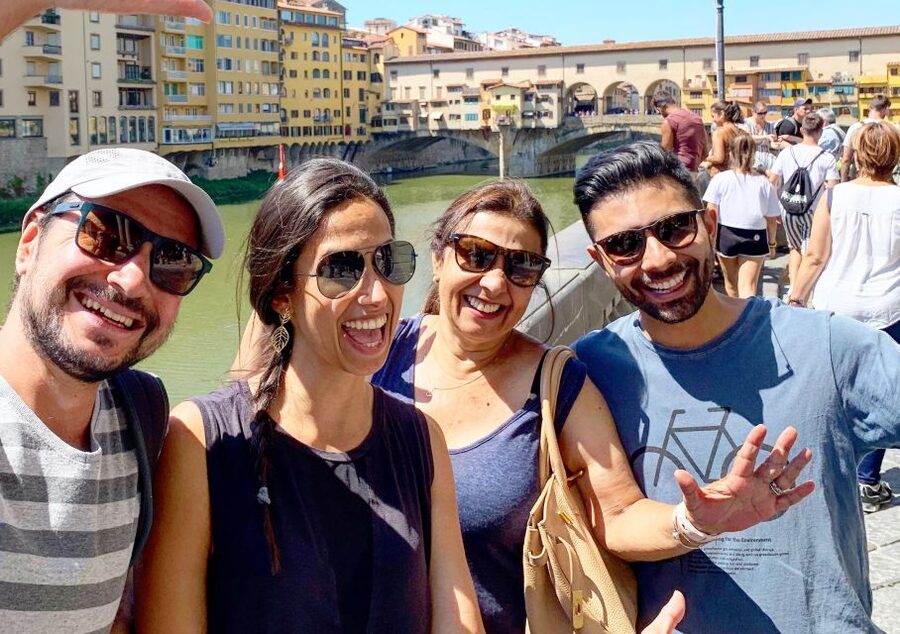
The tour begins at Florence Free Tour-Tale, in front of the stairs leading to the main entrance of the Basilica of San Lorenzo. Look for the green umbrella.
San Lorenzo is a good starting point because it gives you an immediate lesson in Florence’s mixed past. The basilica combines Renaissance and Romanesque elements, and its setting introduces the close relationship between religion, wealth, architecture, and the Medici family.
The location is central, but Florence’s streets can be confusing when you first arrive. Give yourself time to find the church and the correct stairs. The meeting point is outside, so arrive prepared for sun, cold, or rain.
This is a walking tour in the literal sense. Wear comfortable shoes, carry water, and use weather-appropriate clothing. The activity runs rain or shine. A camera is useful, though the main souvenir is the context you gain for the buildings you will see again and again during your stay.
San Lorenzo and Palazzo Medici Riccardi
From San Lorenzo, the route turns toward Palazzo Medici Riccardi. This is one of the most useful stops for understanding how the Medici moved from wealthy merchants into the center of Florentine power.
Your guide explains the family’s influence through the buildings connected with different generations. The emphasis is not only on who lived where, but on how architecture could send a message. A grand palace, an imposing public building, or a carefully chosen symbol could show status without a speech.
You should expect a guided look from outside rather than an interior visit. That matters if you want to see rooms and artworks inside the palace. For a first walk through Florence, though, the exterior discussion gives you enough background to decide which museums and historic buildings deserve your time later.
This part of the route is especially useful for families and teenagers. Several guides are praised for making complicated history memorable for younger listeners. The stories of money, rivalry, and political maneuvering give the past a bit of drama without turning the tour into a lecture.
Reading the Duomo, Bell Tower, and Dome
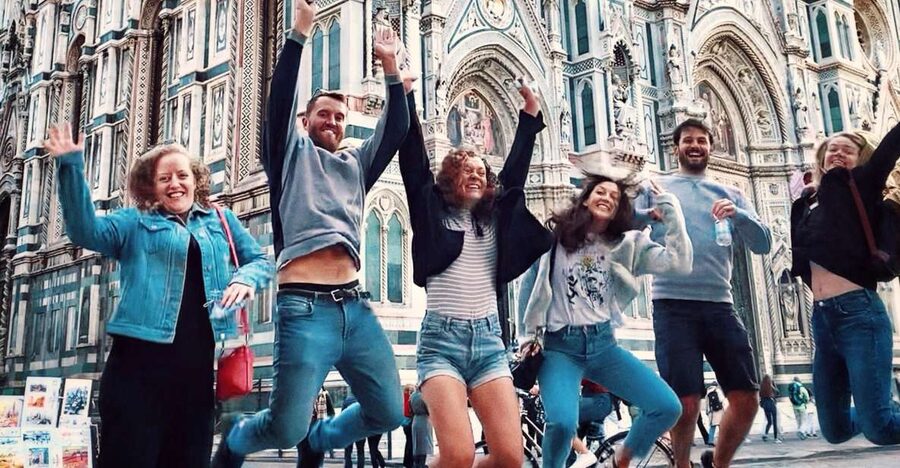
The Florence Duomo complex is the visual centerpiece of the walk. You see the Cathedral of Santa Maria del Fiore, Giotto’s Bell Tower, and Brunelleschi’s Dome, while your guide explains how the buildings fit into Florence’s artistic and civic ambitions.
The Dome is more than a famous roof. It represents a major moment in the city’s drive to prove its skill, wealth, and place among Italy’s leading powers. Your guide also points out symbols encountered along the way, helping you look beyond the postcard view.
The tour does not include entry to the cathedral complex, the Bell Tower, or the Dome. You will not climb the Dome during this activity. That is a limitation, but it also keeps the walk focused on orientation and storytelling rather than timed admission.
If you plan to visit the Dome later, take notes about what your guide points out. The walk can help you see the complex with more purpose when you return for an interior visit or climb. Since access arrangements can vary, treat this tour as a companion to those visits, not a substitute for them.
More Walking Tours in Florence
- Florence: Guided Walking Tour
★ 4.5 · 3,334 reviews - Skip the line: Uffizi and Accademia Small Group Walking Tour
★ 4.5 · 3,135 reviews - Florence: Guided Walking Tour
★ 4.6 · 1,602 reviews - Florence: Uffizi & Accademia Small Group Walking Tour
★ 4.7 · 1,380 reviews
Dante, symbols, and the older Florence
The route continues toward the House of Dante. The stop helps widen the story beyond the Medici and Renaissance artists. Florence was also the city of Dante, whose work and connection to the city remain part of its cultural identity.
The tour’s treatment of symbols is another reason to pay attention. Florence is full of emblems, carved details, family marks, and religious references. A guide can point out meaning that is easy to miss when you are moving through the city on your own.
This is where a good guide earns the walking tip. You can photograph a building without knowing why a particular figure, animal, shield, or pattern appears on it. With an explanation, the street becomes easier to read. The activity is not only about collecting famous sights. It teaches you what to look for.
The House of Dante is presented as part of the route’s historical story. Do not expect a long museum visit as part of the two-hour walk. The value here is the connection between a person, a city, and the way Florence remembers its past.
Palazzo Vecchio and Piazza della Signoria
Palazzo Vecchio brings the tour into Florence’s political center. Here, the guide connects public space with power, government, and the continuing influence of prominent families.
Piazza della Signoria gives you one of the most rewarding open-air stops on the route. You can take in the building, statues, and surrounding facades while hearing how this part of Florence functioned as a stage for civic life.
The nearby Loggia dei Lanzi adds more sculpture to the walk. The open arcade is easy to view without a ticket, though the square can be crowded and noisy. Keep close enough to hear your guide, especially if the group uses a microphone or listening devices. One guide, Chiara, has used a microphone and earpieces to help people follow along in narrow, busy streets.
The route can feel full at this point. You are covering several major sights in a short time, and the guide must balance explanation with movement. That is useful for a first visit, but it is not the format for slow architectural study. If you want every statue explained in detail, plan a separate visit.
Ponte Vecchio and the walk to the Uffizi
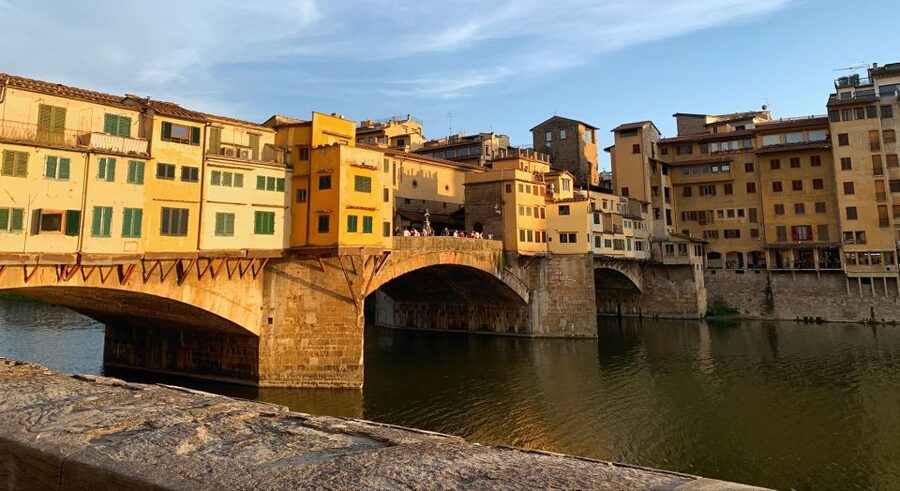
The route reaches Ponte Vecchio before finishing outside the Uffizi Gallery. The bridge is one of Florence’s most recognizable places, but the stop has more value when it comes after the Medici story.
Your guide can help connect the bridge and the wider city to the family’s long reach. You also get a sense of how Florence’s historic center fits together on foot. San Lorenzo, the Duomo, Piazza della Signoria, Ponte Vecchio, and the Uffizi are not isolated postcard stops. They form a compact route through the city’s religious, political, artistic, and commercial heart.
The tour ends outside the Uffizi rather than inside it. This is a smart place to finish because you are positioned near one of Florence’s major art collections, but you will need a separate ticket and visit if you want to see the galleries.
Use the final conversation well. Guides are specifically asked to offer suggestions for eating, drinking, and shopping. Michele, Chiara, and others are praised for giving useful local recommendations. Ask for advice that fits your plans, such as a casual meal, a place for a drink, or a good area for browsing.
What the two-hour format really gives you
The activity is advertised as two hours, while the route details describe a guided tour lasting about 2.25 hours. Allow a little extra time rather than planning a tight appointment immediately afterward.
That length is enough for a solid first look at central Florence. You get a clear route, a basic timeline, and a set of stories that help the city make sense. You do not get long interior visits, extended photography stops, or a specialist lecture on every artwork.
I would use this tour early in a Florence stay. It gives you a map in your head and helps you decide where to return. Several guides also suggest places to eat and shop, which is more useful before you have already made all your dining choices.
The pace is generally described as comfortable rather than rushed. Still, you are on your feet and moving through central streets. Bring water, wear shoes you can walk in, and do not assume every stop will have space for the entire group to pause comfortably.
Price, tips, and overall value
The listed price is $2.36 per person, an unusually low amount for a two-hour guided walk. The activity also uses a free-tour model, and the amount paid at booking may not be the full financial picture.
Plan to carry cash for a tip. The amount is your choice, but the tipping custom is an important part of the format. One practical comment specifically advises bringing cash, and another points out that significant tips are expected even though the walk is described as free. Think of the booking price as access to the reservation, with the guide’s tip forming the main payment for the service.
At that cost, the tour offers strong value if you want orientation, history, and local suggestions. It is less useful if you are looking for admission to the Duomo, a museum tour, or a private guide. Those are different products and would require extra payment.
The free-tour setup also means your final cost depends on how much you choose to tip. I recommend deciding in advance what the storytelling, time, and advice are worth to you. That keeps the arrangement simple and fair.
Who should book this Florence walk
I would recommend it to first-time visitors who want to get their bearings fast. The route covers enough famous ground to make the center feel less confusing, and the Medici theme gives the walk a clear thread.
It also suits families with older children and teenagers. The strongest guides use humor, human stories, and family rivalry to explain history. That can work better than sending young visitors through several silent galleries on their first day.
Art and architecture fans will appreciate the background on the Dome, public symbols, and major buildings, but should remember that the experience is mainly external. If your priority is seeing paintings inside the Uffizi or architectural details inside the Duomo, book those visits separately.
You might also enjoy it if you have been in Florence for several days. One person who had spent a month in the city still found the route useful for learning more about its past and finding places to eat and drink. The stories can add meaning to streets you have already crossed.
The tour is wheelchair accessible, according to the activity details. Because the route passes through central streets and public squares, you should still check the meeting point and current conditions if you have specific mobility needs.
Should you book the Renaissance and Medici Tales walk?
Book it if you want a lively introduction to Florence, especially on your first day. The best reasons are the Medici-centered route, the clear storytelling, the practical local advice, and the chance to see the city’s main landmarks in one connected walk.
Skip it if you want interior access, a small private group, or a detailed art lecture at every stop. This is an orientation tour, not a museum admission package.
For most visitors, the low booking price and flexible cancellation up to 24 hours before the start make it an easy choice. Bring comfortable shoes, water, rain protection if needed, and cash for a tip. Meet at the green umbrella by San Lorenzo, then let the streets, palaces, symbols, and family dramas give you a useful first lesson in Florence.
FAQ
How long does the Florence Renaissance and Medici Tales tour last?
The activity is listed as lasting two hours. The route details describe the guided walk as about 2.25 hours, so allow a little extra time.
Where does the walking tour meet?
Meet at Florence Free Tour-Tale, in front of the stairs leading to the main entrance of San Lorenzo Church. Look for the green umbrella.
Where does the tour finish?
The walk finishes outside the Uffizi Gallery.
Does the tour enter the Duomo, Uffizi Gallery, or other monuments?
No entrance is included. The tour provides guided viewing and explanation from outside the listed sights.
What languages are available?
The live tour guide is available in English and Spanish.
What should I bring?
Bring comfortable shoes, water, a camera, and clothing suited to the weather. The tour operates rain or shine.
Just added around Florence
- Walking Food Tour of Florence with Tastings and Wine★ 5.0 · 518 reviews
- Uffizi Gallery Timed Entry Admission Tickets★ 4.0 · 392 reviews
- Uffizi Gallery Small Group Tour with Guide★ 4.5 · 879 reviews
- Florence Accademia Guided Tour – Shared, Private & Combo Options★ 4.5 · 370 reviews
- Early Access Guided Uffizi Gallery Tour Skip-the-Line Small Group★ 4.5 · 707 reviews
- Uffizi and Accademia Small Group Guided Tour★ 4.5 · 449 reviews
- Florence Central Market Food Tour with Eating Europe★ 5.0 · 224 reviews
- Truffle Hunting Experience with Lunch in San Miniato★ 5.0 · 383 reviews
Walking Tours, compared.

Guided Walking Tour & Last Supper Visit with Ticket
Read our review →

Rialto Bridge & Offbeat Unusual Venice Walking Tour
Read our review →
Private 3 hrs Venice Tour: St Mark’s, Walking tour & Boat tour
Read our review →
Skip the line: Uffizi and Accademia Small Group Walking Tour
Read our review →Browse the lists this tour appears in