
Reviewed · GUIDED TOURS IN VENICE
The Majestic Teatro La Fenice: Guided Tour in Venice
La Fenice is more than a pretty opera house. Its gilded auditorium, royal box, and long list of premieres tell the story of Venice as a major European music center. In one hour, you move from the theatre’s grand public rooms to the details that make a performance work.
I like the clear historical storytelling and the chance to see the royal box, which gives you a striking view of the auditorium. I also like that you can stay inside after the tour, visit the Maria Callas exhibition, and spend more time with the building instead of being hurried out.
The main drawback is that access can change during rehearsals, lighting tests, or theatre preparation. The guide may need to adjust the route, and backstage areas are not part of the standard visit. The tour is also not suitable for wheelchair users.
Key points about the La Fenice guided visit
- Theatre history in the actual rooms: Hear about Rossini, Bellini, Stravinsky, Britten, and the theatre’s repeated rebuilding while standing inside La Fenice.
- A view from the royal box: See the auditorium from one of its most special vantage points, when access is available.
- A focused one-hour tour: The short format fits neatly into a day of sightseeing in central Venice.
- English-speaking guides: Guides including Sara, Nicole, Marina, Matilda, and Sabin have led visits praised for clear explanations and friendly delivery.
- Time to look around afterward: Your ticket allows you to remain inside after the guided portion, with a small café and the Maria Callas exhibition available.
- A few practical limits: The tour is not wheelchair accessible, and rehearsals or technical work may restrict parts of the building.
Why Teatro La Fenice matters in Venice
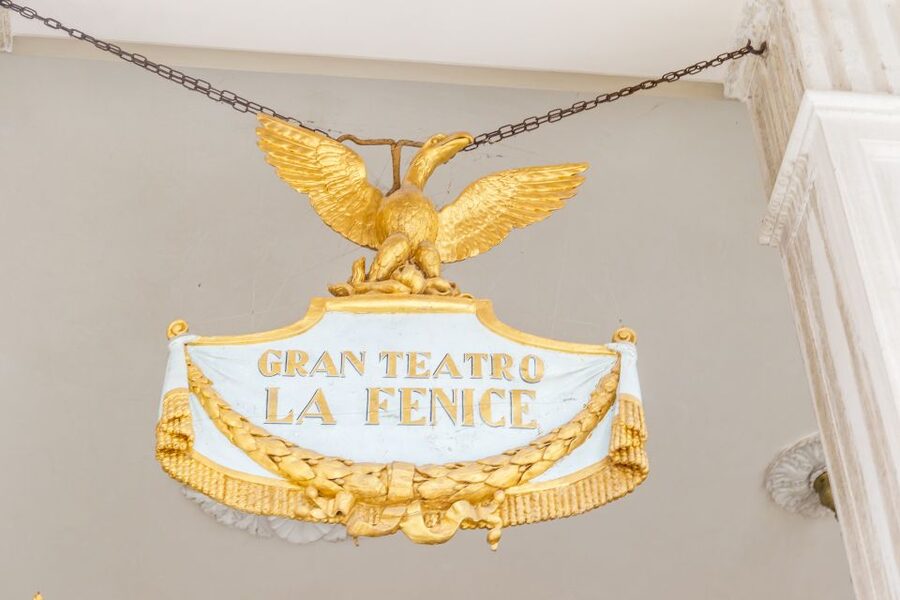
La Fenice means The Phoenix, an apt name for a theatre that has risen again after serious fires. It was founded near the end of the 18th century and quickly became one of Italy’s leading opera houses.
That past is not presented as a dry list of dates. Your guide connects the building to the operas first performed here, including Rossini’s Tancredi, Sigismondo, and Semiramide. Bellini’s The Capulets and the Montagues and Beatrice di Tenda also belong to La Fenice’s story.
This matters because the theatre was not simply a place where famous music happened to be performed. It helped shape the opera world of its time. As you look across the auditorium, you can picture new works being introduced to Venetian audiences, with singers, musicians, composers, and theatre patrons all gathered under the same ornate ceiling.
La Fenice has not been frozen in the past. The theatre has also hosted major modern productions, including world premieres of Stravinsky’s The Rake’s Progress and Britten’s The Turn of the Screw. That newer direction gives the visit more range than a tour focused only on 18th and 19th-century decoration.
More Guided Tours in Venice
- Venice Islands: Murano Glass & Burano Colors Guided Visit
★ 4.5 · 4,581 reviews - From Venice: Murano & Burano Guided Tour by Private Boat
★ 4.7 · 4,170 reviews - Venice: Street Food Tour with a Local Guide and Tastings
★ 4.8 · 2,613 reviews
Meeting your guide outside the theatre
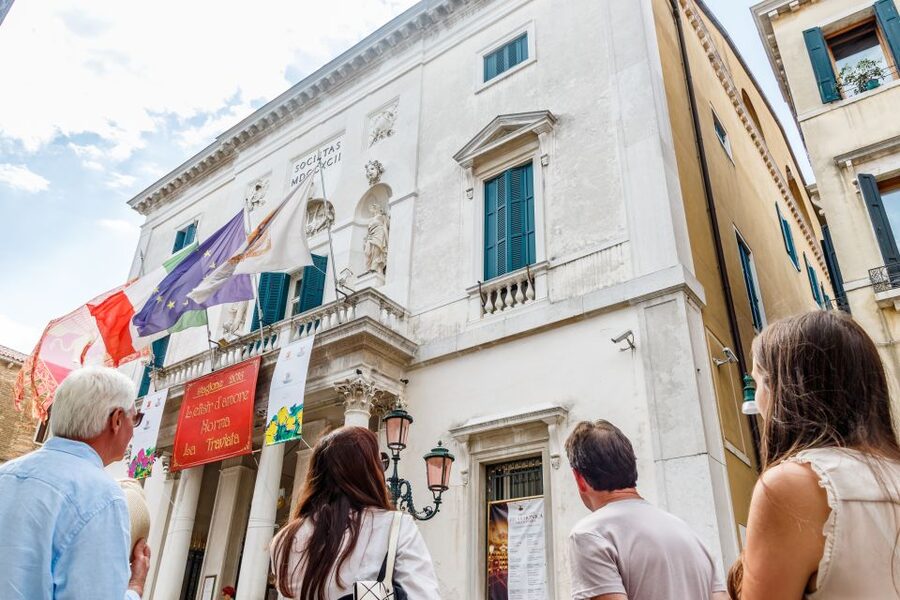
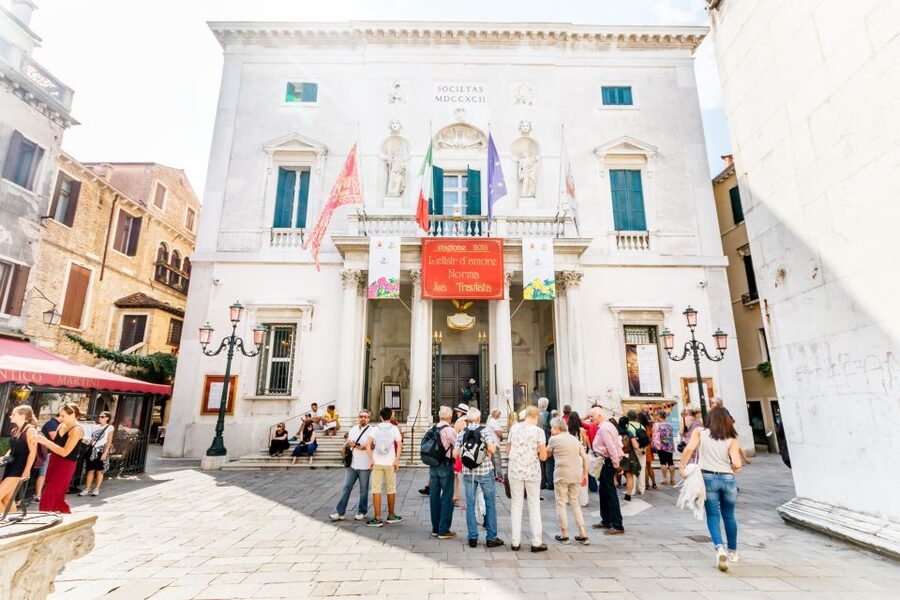
The meeting point is directly in front of the Teatro La Fenice entrance. Plan to arrive a little early. The hostess meets you there, then gives the main explanation inside the theatre rather than during a walk through Venice.
This distinction is useful. You are not paying for a city walk or a general introduction to Venetian opera. The visit is centered on the theatre itself, and the storytelling begins once you are inside.
A few people have had trouble finding the entrance, so use the theatre’s name and entrance as your fixed landmark. If you are late, you may have to catch up with the group. One guide waited for a group that arrived about ten minutes late, but that should not be treated as guaranteed.
The tour is conducted in English. The guides generally speak clearly and take questions. Sara has been singled out for her engaging storytelling, while Nicole, Marina, Matilda, and Sabin have also led visits praised for friendly and well-organized explanations. Guide assignments can change, so book this for the setting and subject rather than for a particular person.
The grand auditorium and the royal box
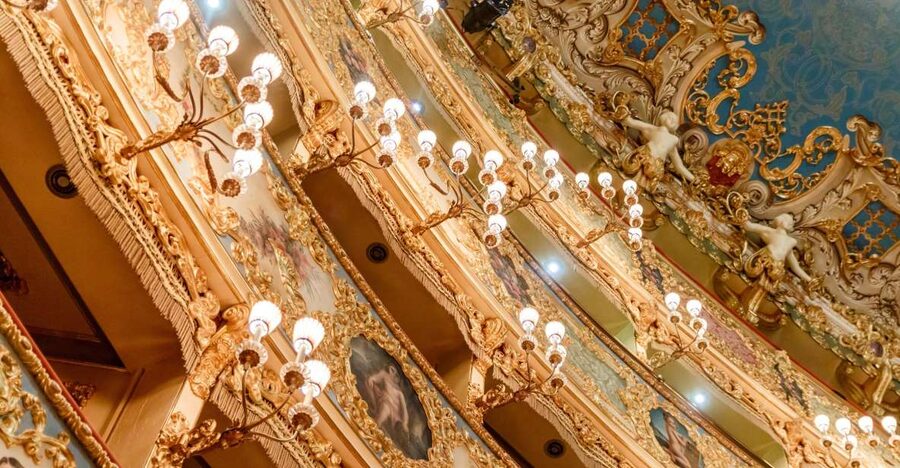
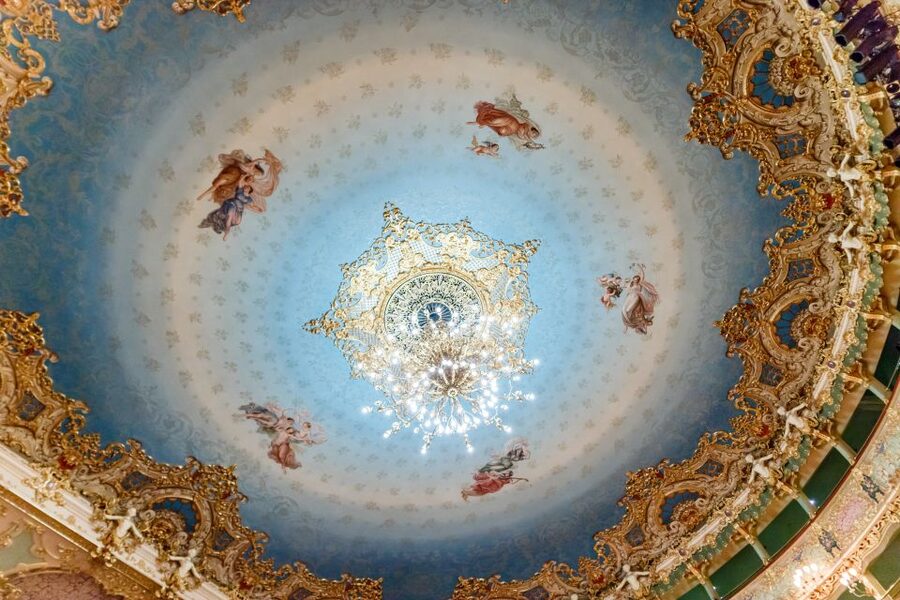
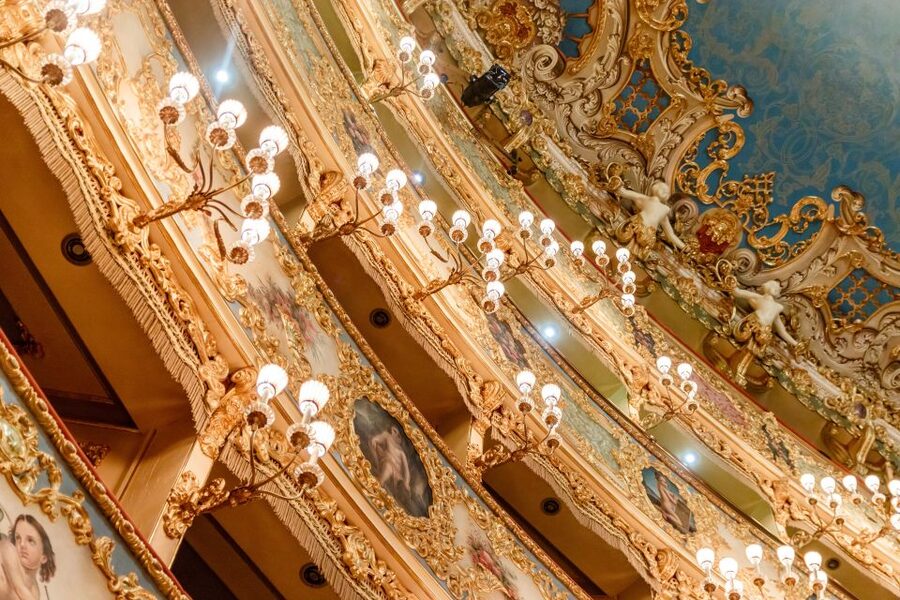
The main payoff comes when you enter the auditorium. La Fenice is decorated in the theatrical style you hope to find in a famous Venetian opera house: gilded details, formal boxes, rich ornament, and a strong sense of ceremony.
Your guide explains how the theatre is organized and how performances are arranged. That can include the relationship between the stage, orchestra, chorus, boxes, and audience. La Fenice has seating for more than 1,000 people, a 98-member orchestra, and a 66-person opera chorus. These numbers help you understand the scale of the operation behind a single performance.
The royal box is one of the most memorable stops when it is open for the route. From there, you see the auditorium from a privileged angle and gain a better sense of how the theatre was designed for both spectacle and social display.
Look up as well as across. The ceiling, with its unusual clock, is a detail worth lingering over. This is the sort of feature that can disappear during a quick self-guided visit, especially when the room is full of visual distractions.
The theatre itself may be the best reason to book a guide rather than simply enter and wander. You can admire the decoration on your own, but an explanation gives meaning to the separate rooms, the boxes, and the way the building has been used over time.
A story shaped by fire and rebuilding
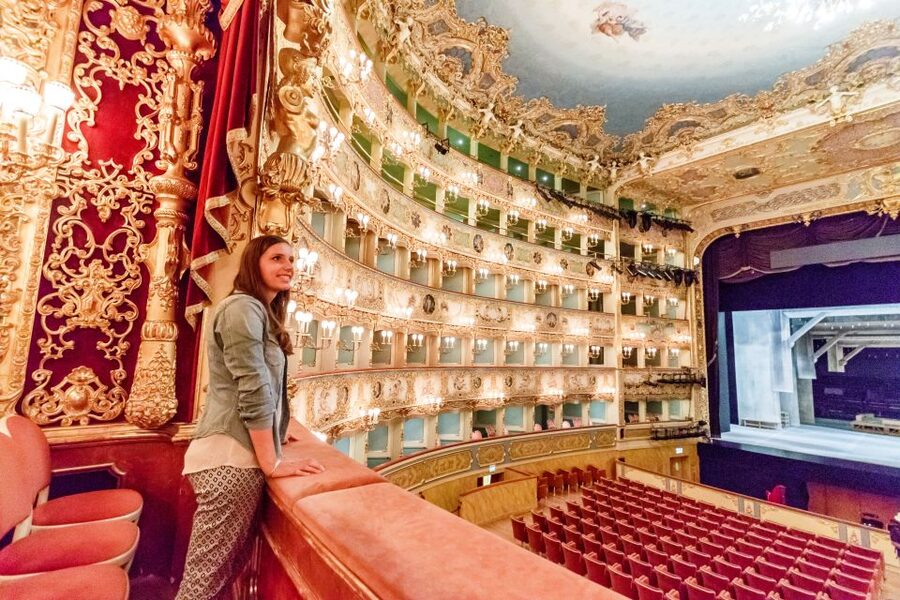
La Fenice’s past includes destruction and rebuilding, which explains why the theatre carries such emotional weight in Venice. The building’s name already points to renewal, and the repeated restoration is central to the way guides explain it.
You will hear about the theatre’s many changes and the work required to bring it back into use. This is especially helpful if you are looking at a room that seems perfectly preserved. La Fenice’s appearance reflects both its original theatrical style and later efforts to recover its character.
One guide may focus more on architectural details, while another may spend more time on composers and performances. The strongest visits balance both. The building should not feel like a shell decorated with famous names, and the opera story should not float free from the rooms where it unfolded.
Technical work can affect the visit. Lighting tests, rehearsals, or preparations for a production may close or alter parts of the theatre. In those cases, the guide adjusts the route and explains what is possible. That can be disappointing if you expected every room, but it is also a reminder that La Fenice remains a working theatre rather than a museum set.
A few more Venice half-days worth a look
- Venice: Doge’s Palace Reserved Entry Ticket
★ 4.6 · 42,716 reviews - Venice: Grand Canal Gondola Ride with App Commentary
★ 4.1 · 18,908 reviews - Boat Trip: Glimpse of Murano, Torcello & Burano Islands
★ 4.3 · 15,699 reviews - Venice: Grand Canal by Gondola with Live Commentary
★ 4.1 · 13,681 reviews
Maria Callas and the wider opera story
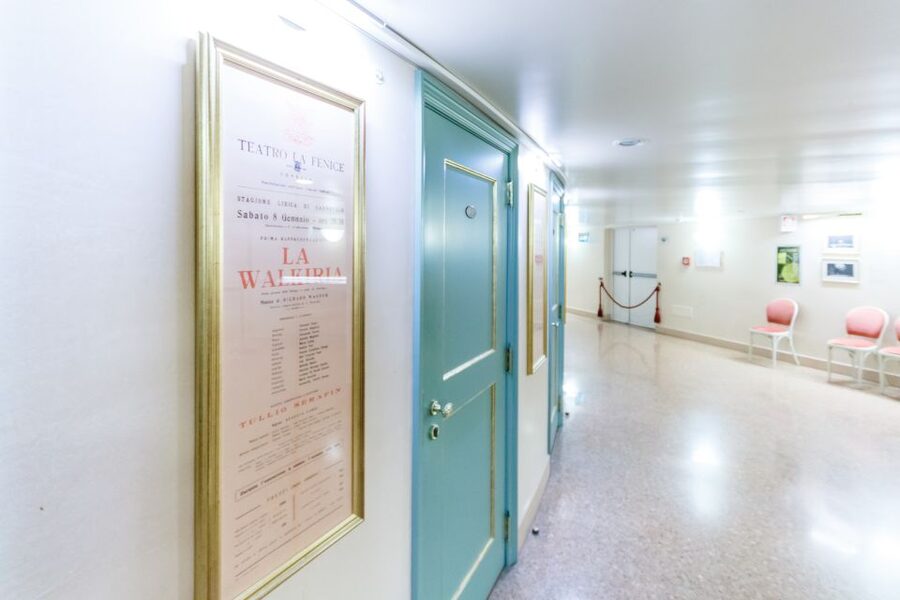
The Maria Callas exhibition adds a personal thread to the tour. Callas is closely linked with the great performance tradition of Italian opera, and the display gives you something more specific to look at after hearing about composers and productions.
The exhibition is especially useful if you do not already know much about opera. It shifts the focus from the building to the performers who gave these spaces their power. You may find that the display helps connect the formal auditorium with the human work of singing, acting, rehearsal, and stagecraft.
The tour also works for people who are not opera experts. You do not need to know the difference between every voice type or recognize every composer’s style. Guides answer questions and explain the theatre in plain terms. One guide handled several questions from someone with little opera background, which is exactly the kind of help that makes this visit more approachable.
If you already have tickets for an opera at La Fenice, schedule the tour before the performance if possible. Seeing the auditorium in daylight and hearing how the theatre works can make the evening feel more connected to the building’s past.
What the one-hour format gives you
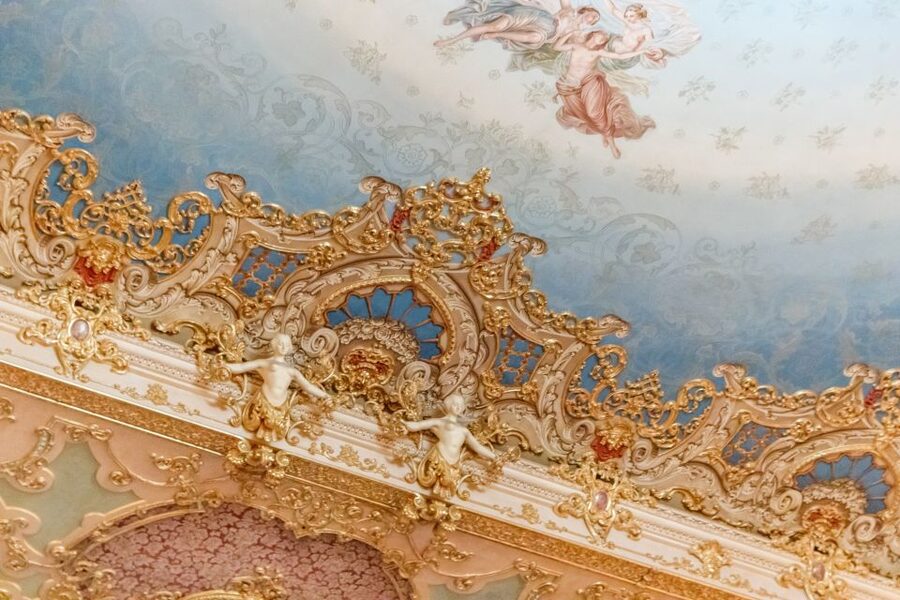
The tour lasts about one hour. That is enough time for a guided look at the main interiors and the theatre’s story, but not enough for a full study of every decorative detail.
I see the short duration as a strength for most Venice itineraries. You can fit it between other sights without giving up half a day. It also keeps the presentation focused. Guides cover the building, opera premieres, rebuilding, performance organization, and newer productions without asking you to spend hours in a single interior.
The tradeoff is that you may want more time afterward. Fortunately, you can remain inside after the guided portion, giving you a chance to revisit the auditorium, look at the exhibition, or stop at the small café.
Do not expect a backstage tour. The standard visit centers on public rooms and accessible areas of the theatre. If backstage access is important to you, this experience may feel limited.
Is $28 a fair price?
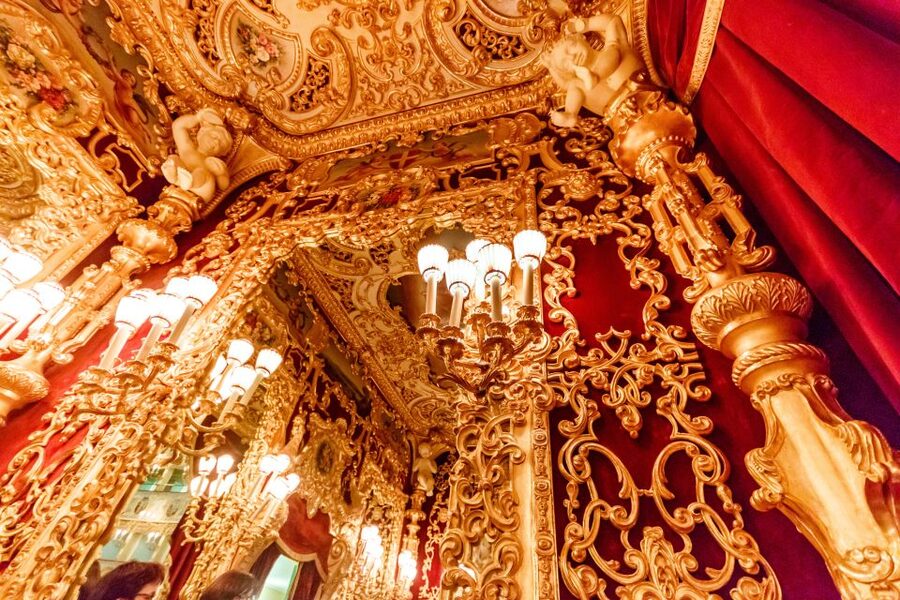
At $28 per person, the value depends on how much you want context with the building. If you only want to step into an ornate theatre, a self-guided admission option, when available, may be enough. If you want the composers, premieres, restoration, royal box, and performance details tied together, the guided format earns its price more easily.
The tour is also a practical way to see La Fenice without spending hours working out what you are looking at. A good guide points out details you might miss and answers questions as they come up. Several guides have been praised for being clear, friendly, and thorough, though one issue has been that a guide occasionally began speaking before the whole group had gathered.
The value improves if you stay afterward. Take advantage of the extra time rather than treating the guided hour as the entire visit. The Maria Callas exhibition, ceiling, auditorium, and royal box all reward a slower look.
Who will enjoy this tour most?
I would choose this visit if you enjoy architecture, music, theatre, or the less obvious side of Venice. It suits first-time visitors who want a manageable cultural stop, as well as people attending an opera later that day.
It is also a good choice if you know little about opera. The guides make the subject accessible, and you can ask questions without needing specialist knowledge.
You may want to skip it if you dislike guided visits, need full wheelchair access, or specifically want backstage areas. The theatre’s beauty is easy to appreciate on your own, but the standard experience does not promise access to every working part of the building.
The visit is conducted in English, and the meeting point is outside the theatre. The activity ends back at that same point, though you can remain inside after the guided portion.
Practical tips for a smoother visit
Arrive early enough to identify the entrance and meet the hostess without rushing. The explanation begins inside, so do not expect an introductory talk during the walk from another part of Venice.
Keep your schedule somewhat flexible. La Fenice may be preparing a performance, testing lights, or holding a rehearsal. That can change the route or limit what you see, though the guide will work around it.
Listen for the small architectural details. The ceiling clock, the royal box, the arrangement of the auditorium, and the way the theatre was rebuilt tell as much of the story as the famous composers.
If you have an opera ticket for that evening, bring the theatre visit forward in your day. If not, plan a little extra time after the tour for the exhibition and café.
Cancellation is free up to 24 hours before the activity, and you can reserve now and pay later. Those terms are useful if your Venice schedule is still shifting.
Should you book Teatro La Fenice?
Yes, if you want more than a quick photograph of a beautiful opera house. The one-hour English tour gives you a clear introduction to La Fenice’s composers, fires, restorations, performers, and present-day program without taking over your day.
Book it with realistic expectations. You may not see backstage areas, the route can change during theatre work, and wheelchair users will need another option. For everyone else, the royal box, Maria Callas exhibition, ornate auditorium, and strong historical explanation make this a worthwhile cultural stop at a reasonable price.
FAQ
Where does the Teatro La Fenice tour start?
The tour starts directly in front of the Teatro La Fenice entrance, where the hostess meets you.
Where does the tour end?
The guided activity ends back at the meeting point in front of the theatre.
How long does the guided visit last?
The guided visit lasts one hour.
What language is the tour conducted in?
The live tour guide speaks English.
Is admission inside the theatre included?
Yes. The activity includes a guided visit inside Teatro La Fenice.
Can I stay inside after the guided tour?
Yes. Your ticket allows you to remain inside after the guided portion.
Is there anything else to see after the tour?
Yes. You can visit the Maria Callas exhibition and spend time in the theatre’s small café.
Can I see the royal box?
The royal box is included among the areas that may be visited, subject to theatre access and ongoing preparations.
Is the tour suitable for wheelchair users?
No. The activity is listed as not suitable for wheelchair users.
Can I cancel the booking?
Yes. You can cancel up to 24 hours in advance for a full refund. You can also reserve now and pay later.
Just added around Venice
- Boat Tour at Devil’s Saddle: 4 Swim Stops, Snorkeling & Prosecco★ 5.0 · 263 reviews
- Catamaran tour stops bathing and snorkeling toast with prosecco★ 5.0 · 214 reviews
- St Mark’s Basilica and Doge’s Palace Priority Entry Ticket★ 4.2 · 885 reviews
- Venice: Lords of the Night Prison’s Palace Cells & Tortures★ 4.0 · 1,067 reviews
- Venice: Hard Rock Cafe with Set Menu for Lunch or Dinner★ 4.4 · 1,102 reviews
- Venice: Doge’s Palace and St. Mark’s Basilica Guided Tour★ 4.6 · 458 reviews
- Venice: Walking tour, Doge Palace, & St. Mark’s Basilica★ 4.5 · 884 reviews
- Punta Sabbioni: Murano, Burano & Torcello Guided Boat Tour★ 4.3 · 236 reviews
Guided Tours in Venice, compared.

Venice Islands: Murano Glass & Burano Colors Guided Visit
Read our review →
From Venice: Murano & Burano Guided Tour by Private Boat
Read our review →
Street Food Tour with a Local Guide and Tastings
Read our review →
Doge’s Palace, Bridge of Sighs & Prisons Guided Tour
Read our review →
Skip the Line: St. Mark’s Basilica Guided Tour
Read our review →
Skip-the-Line: Doge’s Palace & St. Mark’s Basilica Fully Guided Tour
Read our review →
Browse the lists this tour appears in