
Reviewed · COOKING CLASSES
Levanto: Pesto-Making Class
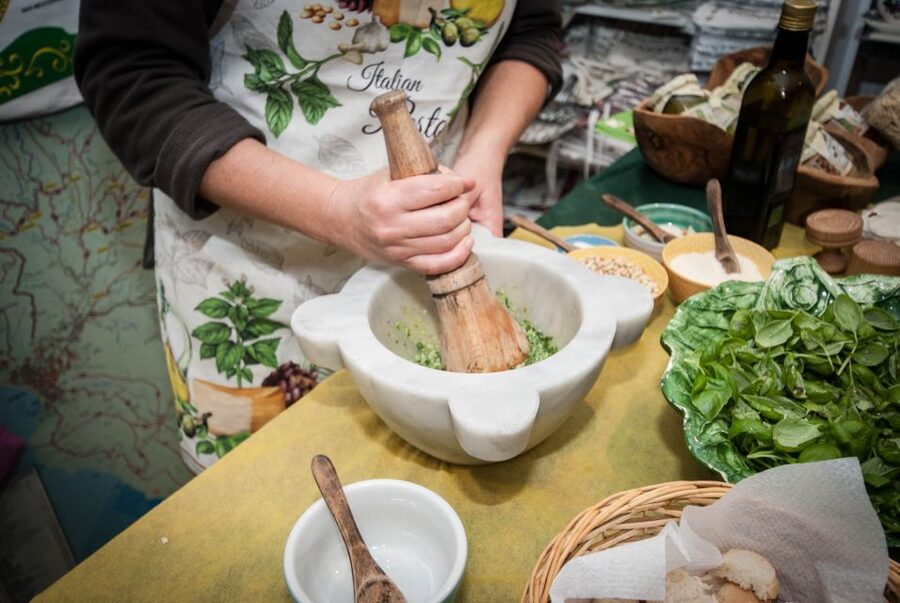
The best part of this Levanto experience is that you do not simply watch pesto being made. You grind your own basil, garlic, pine nuts, salt, cheese, and olive oil with a real mortar, then eat the result with local food and wine. The shop has been making pesto in Levanto since 1976, so the lesson has a strong local connection.
I like the clear, hands-on teaching, especially the way Georgia guides each person through the process. I also like the generous tasting side of the class: sparkling wine, olive oil on bruschetta, several pestos, olives, anchovies, lemon cake, and limoncino may all appear during the session. The main consideration is simple: at 1.5 hours and $52, this is a tasting lesson rather than a full meal, and children under 10 are not considered suitable for the activity.
Key points at a glance
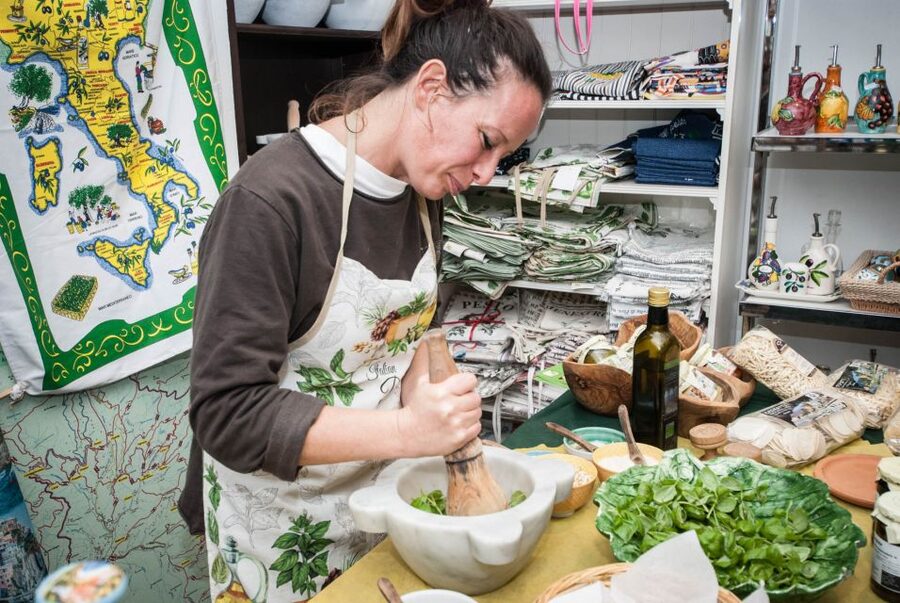
- Make pesto with a traditional mortar: Wash and dry basil, then pound it with salt, pine nuts, and garlic before adding cheese and olive oil.
- Meet Georgia at a shop dating to 1976: The class takes place at Il Laboratorio del Pesto in Levanto’s historical center.
- Taste more than your own batch: Expect local olive oil, bruschetta, wine, olives, anchovies, and often sweet treats such as lemon cake and limoncino.
- Small groups keep it personal: The advertised group limit is eight people, giving you a real chance to work rather than only watch.
- A useful rainy-day choice: The class is indoors and fits neatly into a Levanto or Cinque Terre itinerary.
- Budget $52 per person: The price makes sense if you value instruction, tastings, and a local food experience, but it does not replace lunch or dinner.
Entering Il Laboratorio del Pesto in Levanto
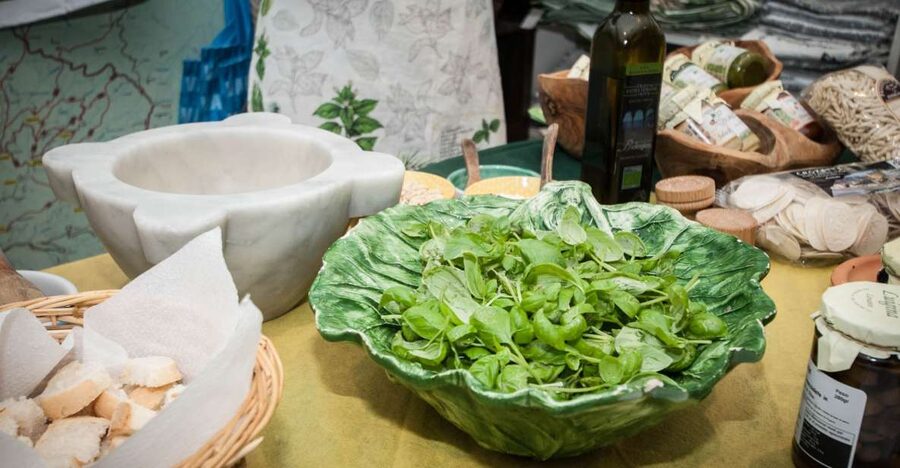
You meet your instructor at Il Laboratorio del Pesto, a shop in Levanto’s historical center. The setting matters. This is not a generic cooking studio placed outside town. You make the sauce in a working pesto shop that has called Levanto home since 1976, close to the center and only about a block from the beach.
That location makes the class easy to pair with a day in town. You can schedule it around a walk, beach time, or a train trip through the Cinque Terre area. The experience lasts 1.5 hours, so it asks for a modest slice of your day without requiring a full afternoon.
The class is offered in Italian and English. The host most often identified in the experience is Georgia, also written as Giorgia in one account. She leads the demonstration, answers questions, and helps each participant through the steps. The teaching style is practical rather than formal. You put on an apron, handle the ingredients, and make the sauce yourself.
The group limit is eight people. That is an important detail for a hands-on class. With a small group, you have a better chance to ask about salt, garlic, texture, or substitutions instead of standing behind a crowd while someone else does all the work.
More Cooking Classes in Cinque Terre:
- Florence: Pasta Cooking Class with Unlimited Wine
★ 4.9 · 10,285 reviews - 3 in 1 Cooking Class near Navona: Fettuccine, Ravioli & Tiramisu
★ 5.0 · 7,376 reviews - Florence Pizza or Pasta Class with Gelato Making at a Tuscan Farm
★ 5.0 · 6,801 reviews
Starting with sparkling wine and olive oil
The class begins with a tasting rather than a lecture. You may receive a glass of sparkling wine along with local extra virgin olive oil served on bruschetta. This gives you a quick introduction to two basic parts of Ligurian food: good oil and simple ingredients handled with care.
The olive oil tasting is more useful than it might sound. Pesto is not just basil and cheese. The oil affects the sauce’s aroma, texture, and finish. Tasting it on bread lets you notice the oil on its own before it is mixed with other strong flavors.
You then taste pesto made with a modern method. This creates a helpful comparison before you use the mortar. A blender or food processor is faster and easier, but it can produce a different texture and release flavors in another way. The point is not that modern pesto is forbidden. It is that you can taste the difference between a quick preparation and a traditional method.
Several people especially enjoy this comparison because it gives context to the recipe. Instead of hearing that handmade pesto is better, you can decide what you notice in the bowl. You may prefer a smoother sauce, or you may like the rougher, more fragrant texture produced by hand.
Washing basil and working the mortar
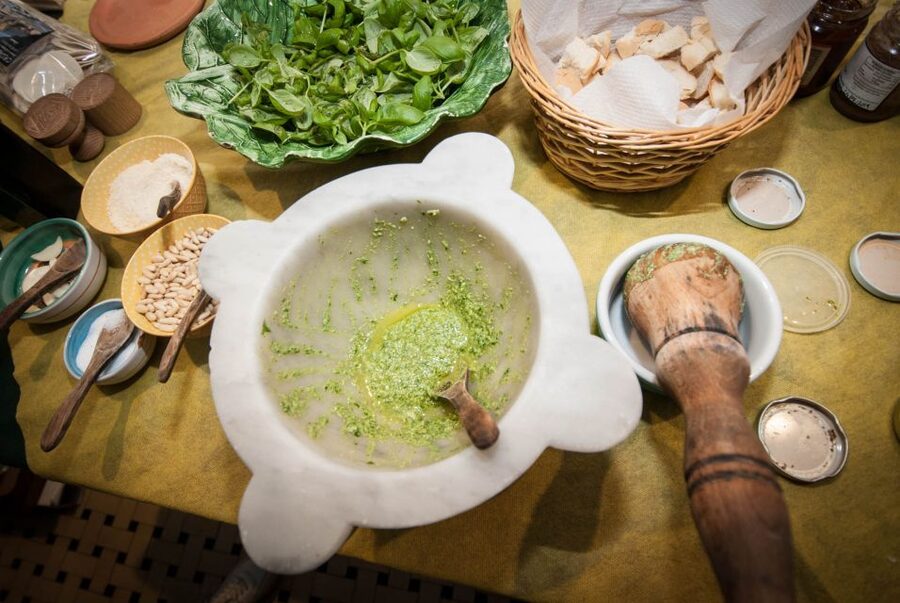
The central part of the lesson is the traditional preparation. You wash and dry the basil leaves, then work them with salt, pine nuts, and garlic in a mortar. Drying the basil matters because excess water can thin the sauce and soften its flavor.
The order of ingredients is part of the lesson. You do not simply throw everything into a container at once. The basil is pounded with the salt, pine nuts, and garlic first. Parmigiano cheese and extra virgin olive oil are added afterward, producing a thick, fragrant pesto.
Using a mortar gives you a much better sense of the work involved. It is slower than pressing a button, and that is precisely why it makes a good travel activity. You are not only collecting a recipe. You are learning how the ingredients change as you crush and combine them.
This is also where the class becomes social. Each person makes a batch, and the group can taste how small changes affect the result. One participant may use more garlic, while another adds less salt. Those differences turn an abstract cooking lesson into something you can taste immediately.
You should expect some physical effort. Pounding basil and nuts is not hard, but it is more active than watching a demonstration. If you want a completely passive tasting, this may feel like too much participation. If you want to take part, the mortar is the reason to book.
Tasting the finished pesto with Ligurian bites
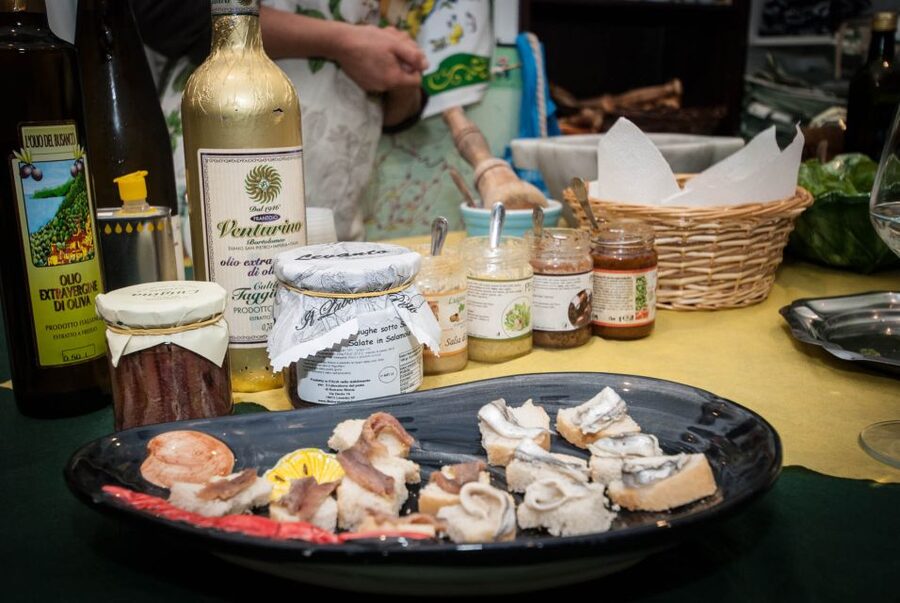
Once your pesto is ready, you taste it with a glass of white wine and local products. Bruschetta with anchovies and olives are specifically included among the savory bites. The combination gives you a useful idea of how pesto works at the table, not just in a recipe bowl.
The food served with the class can extend beyond the listed items. Accounts of the experience include lemon cake and limoncino, as well as extra sparkling wine and different pesto samples. These additions make the session feel more like a generous aperitivo than a narrow demonstration.
Still, keep your expectations in check. Lunch or dinner is not included. The tastings are enough to make the class satisfying, but you should plan another meal if you are hungry. Think of this as a food lesson with snacks, not a restaurant replacement.
I like this format because pesto can be difficult to judge on its own. Bread, anchovies, olives, wine, and dessert show how it fits into the local food culture. You leave with a better idea of what to buy and how to serve your own pesto at home.
A few more Cinque Terre half-days worth a look
- Cinque Terre Day Trip with Optional Hiking or Pisa
★ 5.0 · 8,486 reviews - Florence: Cinque Terre Day Trip with Optional Hike
★ 4.8 · 4,178 reviews - Florence: Cinque Terre Park Day Trip with Optional Street Food
★ 4.5 · 3,593 reviews - La Spezia: Cinque Terre Tour by Boat
★ 4.4 · 2,611 reviews
Why the traditional method adds value
At first glance, $52 per person may seem high for a sauce that takes only part of an afternoon. The value depends on what you want from the activity. You are paying for instruction, ingredients, tastings, wine, a small group, and access to a shop with a long connection to pesto making in Levanto.
The price is easier to justify if you are already planning to spend time in the area and want something beyond another scenic walk. The class gives you a practical skill and a food memory you can repeat at home. You also taste several products that would cost money to sample separately.
The value is weaker if your only goal is to learn a basic blender recipe. You can find a similar formula in many cookbooks, and the class does not include a full meal. It is also not designed as an advanced culinary course. You will learn the traditional process, but not spend hours on several complex dishes.
For me, the strongest value is the combination of local setting and direct participation. You are not simply buying a jar of pesto in a shop. You are learning why the sauce tastes different when made slowly and then testing your work with regional food.
A good plan for a rainy day in Levanto
The class is especially useful when weather disrupts outdoor plans. Levanto and the Cinque Terre area invite walks, boat trips, and time by the water, but rain can change the day quickly. An indoor food class gives you a worthwhile alternative without sending you back to your hotel.
One participant specifically used the class as a rainy-day activity and found the shop welcoming. That makes sense, since the experience does not depend on views or outdoor conditions. You can still have a local afternoon when the weather is poor.
It also works well for solo visitors. A solo participant found the group accommodating, and the small format gives you an easy way to meet people without committing to a long group tour. The activity suits couples, friends, and families with older children, too.
The age guidance deserves attention. The stated requirement says the activity is not suitable for children under 10. One older account describes children aged seven and nine enjoying the class, but that does not change the current stated guidance. If you are traveling with younger children, confirm the rule before booking rather than relying on an old exception.
What kind of food experience is this?
This is a focused introduction to Genovese pesto, not a broad survey of Ligurian cooking. You will not prepare pasta, a main course, or dessert from scratch. The lesson stays with pesto and the products that help you understand it.
That focus is a strength. In 1.5 hours, you get a clear beginning, middle, and end: taste the ingredients, compare modern and traditional pesto, make your own, and eat it with local accompaniments. You do not lose time moving between several unrelated recipes.
The tasting also helps you recognize quality. Jarred pesto often has a smoother texture and a different balance of basil, garlic, cheese, and oil. After this class, you have a reference point for shopping. You can also return home with a better idea of why handmade pesto may taste fresher and more aromatic.
The lesson includes recipes and variations, according to one detailed account. That is useful because pesto is adaptable. You can remember the traditional Ligurian version while adjusting garlic or salt to suit your own kitchen. The important thing is that the instructor explains the choices rather than treating the recipe as a fixed formula.
Practical details before you reserve
The advertised cost is $52 per person. The activity includes the pesto-making class, a glass of wine, local appetizers, and an olive oil tasting. More wine and small sweets such as lemon cake or limoncino may be part of the tasting experience, but do not book it expecting a full lunch or dinner.
You can cancel up to 24 hours in advance for a full refund. The reserve-now, pay-later option also gives you some flexibility while planning a trip with changing weather or train schedules.
The activity is wheelchair accessible. Instruction is available in Italian and English. The listed group limit is eight people, though one older account described a group of 10, so group size may vary in practice. If a very small group is essential to you, check the current availability before paying.
The meeting point is Il Laboratorio del Pesto. You should allow time to find the shop in Levanto’s historical center and arrive ready to participate. The experience is indoors, hands-on, and food-focused, so comfortable clothing is sensible.
Who will enjoy this most?
You should consider booking if you enjoy local food, want a simple skill to take home, or need a strong indoor plan in Levanto. It is also a good choice if you like meeting people in a small group and prefer an activity where you do something rather than only listen.
It suits pesto fans, but you do not need to be an expert. In fact, the comparison between different pestos is useful if you normally buy the sauce in jars. The class shows you what changes when the ingredients are fresh and the basil is worked by hand.
Families should pay close attention to the age rule. The stated guidance excludes children under 10, even though an older experience included younger children. For adults and older children, the class offers enough action to keep the session moving.
You might skip it if you dislike wine, have no interest in food preparation, or want a substantial meal. The wine and tasting are part of the experience, and the class is built around eating what you make.
Should you book the Levanto pesto class?
I would book this if you have 1.5 hours in Levanto and want an activity with a clear local identity. The mortar work, friendly instruction, and generous tasting make the experience more than a simple cooking demonstration.
At $52, it is a fair buy for a small-group lesson with wine, olive oil, local bites, and a recipe you can repeat at home. Just plan another meal, check the age guidance for children, and remember that the attraction is participation rather than a large food spread. If that sounds like your kind of afternoon, Il Laboratorio del Pesto is an easy choice, especially on a rainy day or between Cinque Terre outings.
FAQ
Where does the pesto-making class take place?
The class takes place at Il Laboratorio del Pesto in Levanto’s historical center.
How long does the experience last?
The stated duration is 1.5 hours.
How much does the class cost?
The price is $52 per person.
What does the class include?
It includes the pesto-making lesson, a glass of wine and local appetizers, and an olive oil tasting.
Will I make pesto myself?
Yes. You wash and dry basil, then use a mortar to combine it with salt, pine nuts, garlic, Parmigiano cheese, and extra virgin olive oil.
What food and drink are served?
The experience includes wine, local olive oil on bruschetta, olives, and bruschetta with anchovies. Lemon cake and limoncino may also be served during the tasting.
Is the class available in English?
Yes. The instructor speaks Italian and English.
Is the activity suitable for young children?
The stated guidance says it is not suitable for children under 10.
Just added around Cinque Terre
- Pisa and Cinque Terre Day Trip from Florence in a Small Group★ 4.5 · 418 reviews
- Cinque Terre and Pisa Full Day Tour from Florence★ 5.0 · 449 reviews
- From Florence: Cinque Terre & Pisa Day Trip★ 4.5 · 727 reviews
- Cinque Terre Experience From Florence★ 4.5 · 220 reviews
- Best of Cinque Terre Day Trip from Florence★ 5.0 · 1,004 reviews
- Portovenere: Isola Palmaria, Tino, and Tinetto Boat Tour★ 4.8 · 308 reviews
- From Florence: Pisa and Cinque Terre Day Tour – Small Group★ 4.5 · 373 reviews
- Monterosso al Mare: Monterosso Kayak and Snorkeling Tour★ 4.9 · 208 reviews
Cooking Classes, compared.
3 in 1 Cooking Class near Navona: Fettuccine, Ravioli & Tiramisu
Read our review →
Florence Pizza or Pasta Class with Gelato Making at a Tuscan Farm
Read our review →
Pasta & Tiramisu Cooking Class with Unlimited Wine
Read our review →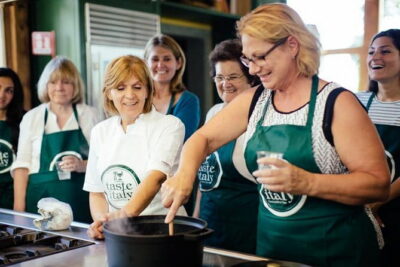
Cooking Class and Lunch at a Tuscan Farmhouse with Local Market Tour from Florence
Read our review →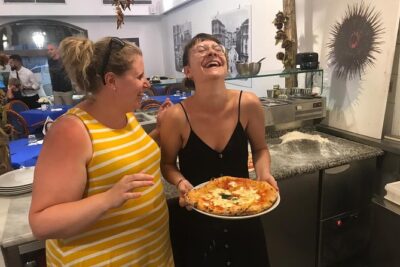
Authentic Pizza Making Class in Naples with Appetizers and Drink
Read our review →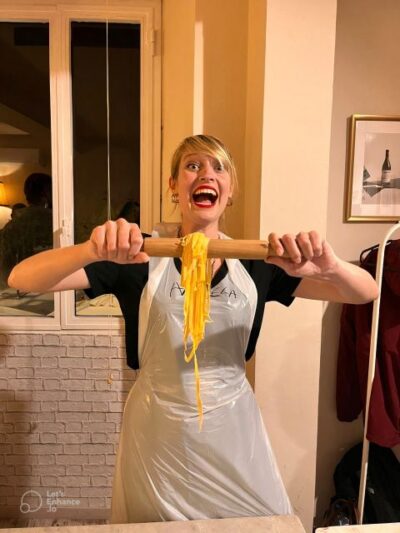
Pasta Making Class with Wine, Limoncello, and Dessert
Read our review →Browse the lists this tour appears in