
Reviewed · HISTORICAL TOURS
Genoa: Historic Guided Tour of Christopher Columbus’ House
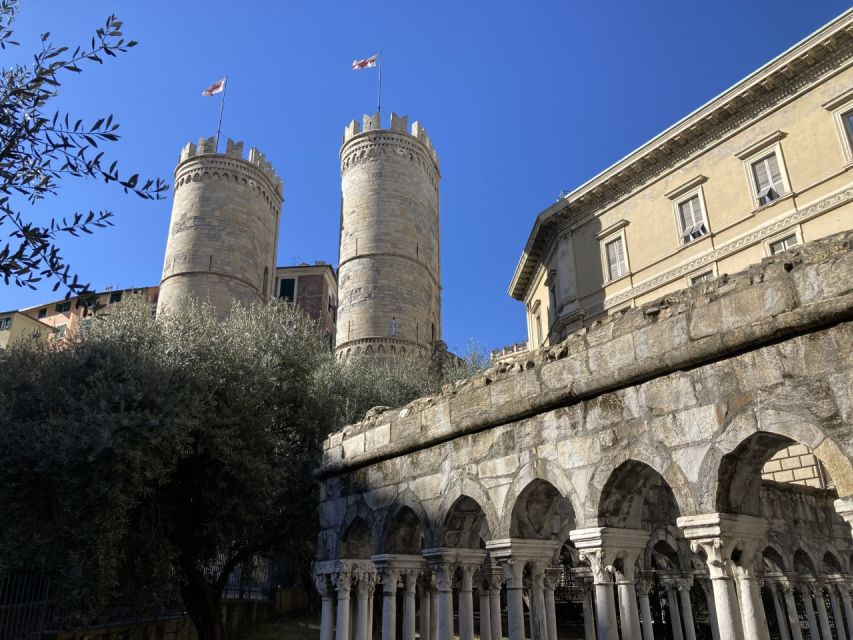
The most interesting part of this $12 Genoa tour is its setting. Casa di Colombo sits just outside Porta Soprana, beside the medieval walls, and the visit connects one modest family home with the older city around it. You see where Christopher Columbus lived as a boy, then step into the Cloister of Sant’Andrea and the medieval heart of Genoa.
I like the small groups of up to six, since a short tour works much better when you can hear every explanation and ask a question. I also like that the guide discusses the building itself, not just Columbus, including the former ground-floor workshop and the house’s rebuilding. The main drawback is the short advertised duration of 20 minutes, although some visits run 30 minutes or much longer.
Key points at a glance
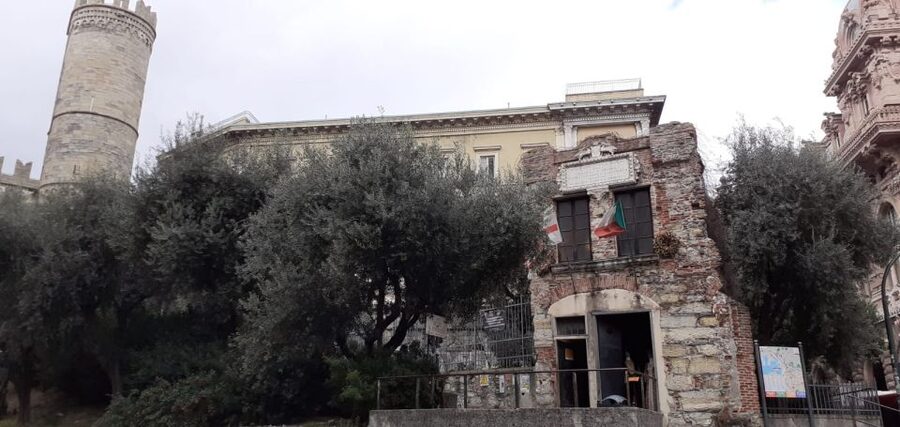
- A childhood home near Porta Soprana: Casa di Colombo sits just outside Genoa’s ancient medieval walls.
- A workshop below the family rooms: The ground floor once served as a working space, while private rooms occupied the upper level.
- The Cloister of Sant’Andrea is included: The visit continues beyond the house, adding an important nearby monument.
- Small groups make a difference: With no more than six participants, you should hear the guide clearly.
- English and Italian tours are available: Guides explain the house and surrounding area in either language.
- Best for a quick history stop: At $12, it fits easily before or after exploring Porta Soprana and central Genoa.
Why Casa di Colombo is worth your time
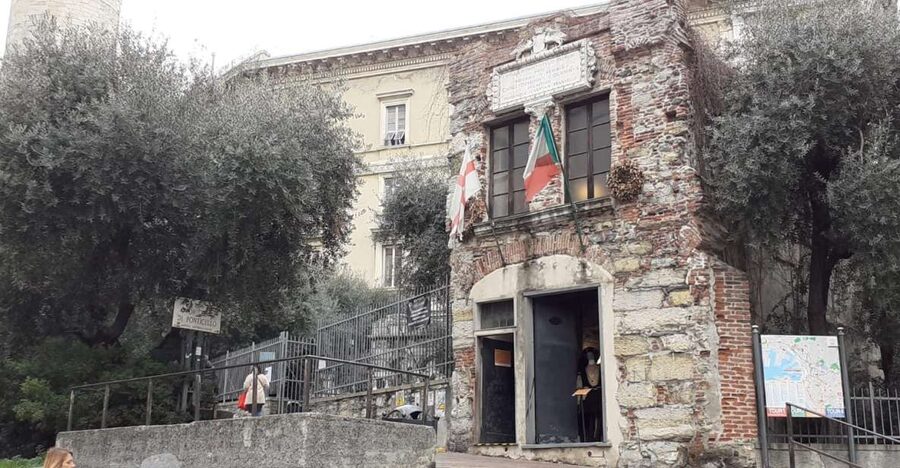
Casa di Colombo is not a grand palace. That is part of its appeal. The house gives you a more ordinary setting for the early life of a famous figure, with a workshop below and living quarters above. You are looking at a family home connected to trade and daily work, rather than a monument built to celebrate Columbus later in life.
According to archival documents, Columbus’ father, Domenico Colombo, moved to the house in 1455, when Christopher was four years old. That detail gives the visit a clear focus. You are not being asked to accept a vague claim that Columbus once passed through Genoa. The tour presents the house as a place where he lived during his youth.
The location adds a second layer. Casa di Colombo is near Porta Soprana, one of the best-known surviving gateways in Genoa’s old defensive walls. The house, the gate, the cloister, and the nearby medieval streets can be understood together. That makes this more useful than a stand-alone room visit, especially if you are still trying to get your bearings in the city.
I would not book this as your main Genoa history experience. It is too brief for that. I would use it as a focused stop during a walk through the old city, when you want a little context before continuing through the medieval streets.
More History Tours in Genoa:
- Genoa: 2-Hour Guided Walking Tour of the Historical Center
★ 4.2 · 605 reviews - Venice: St. Mark Basilica Ticket, Audioguide+History Gallery
★ 3.9 · 4,780 reviews - Venice’s Best: Basilica, Doge’s Palace, Gondola & History Gallery
★ 4.5 · 2,478 reviews
What you see inside the two-level house
The visit begins at Casa di Cristoforo Colombo. The guide takes you through the house and explains its layout, construction, and connection to the Colombo family. The building is small, so the emphasis is on close observation and explanation rather than a long sequence of rooms.
The ground floor was used as a workshop. That is one of the most useful details because it shows how the building functioned as a working family home. An attic with wooden beams separated the workshop from the upper floor, where the private rooms were located.
Look closely at the structure as the guide speaks. The wooden beams and division between work and family space help you picture how the house operated. The tour is not simply about pointing out a room and attaching Columbus’ name to it. It also explains how the building was arranged and how its physical form changed over time.
The house has been rebuilt, and that matters. Some guides focus closely on the structure and the evidence behind its reconstruction. One guide, Georgia, was praised for explaining both the Columbus family and the building itself, while another guide, Luisa, was described as thorough and clear. The strongest part of this experience is often the careful attention to archaeology and architecture.
Because the space is compact, a small group is especially helpful. With a maximum of six people, you are less likely to miss a short explanation or find yourself standing too far away to see what the guide is indicating.
Columbus, family life, and careful interpretation
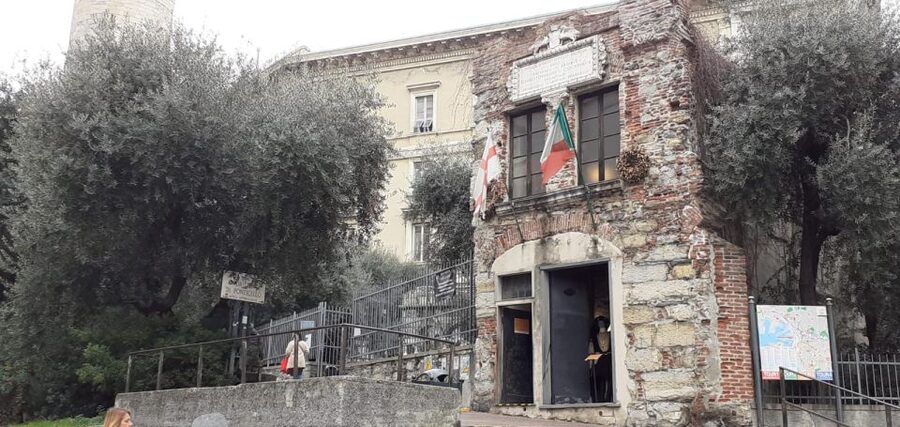
The tour keeps Columbus’ early life at the center, but it does not need to turn the visit into a grand celebration of his later voyages. The house gives you a narrower and more personal subject: a boy growing up in Genoa in a working household.
That narrower focus is useful. You can understand Columbus as part of the city before considering him as an explorer. The family connection, the workshop, and the house’s position beside the medieval walls all place him in the setting of Genoese daily life.
The guides appear to take care with the evidence. One guide was praised for examining historical data without forcing an interpretation. Another had an archaeological background, which added useful detail about the structure and the area. That approach suits this site. The house is small, and its importance depends on what can reasonably be learned from documents, construction, and location.
You should also keep your expectations in check. This is not a museum packed with personal objects or a large exhibition about the voyages to the Americas. The value comes from the guide’s explanation of the place. If you want extensive material about Columbus’ later career, you will need another attraction or a longer history tour.
The Cloister of Sant’Andrea and the medieval setting
The visit does not end at the front door. Your guide also takes you to the Cloister of Sant’Andrea, rebuilt in the area behind Casa di Colombo and Porta Soprana. This extra stop gives the short tour more substance.
The cloister helps you see how several periods of Genoa’s past meet in a small area. You have the medieval walls and gate, the house linked to Columbus’ youth, and the rebuilt religious structure. A guide can point out details that are easy to miss when you walk through on your own.
This is where the tour feels more useful than a simple admission ticket. You receive a short explanation of the area rather than looking at the house in isolation. One guide also included the Barbarossa Wall, and another pointed out details in the cloister that would likely have gone unnoticed without help.
The exact order and length can vary. The official duration is 20 minutes, while the stated house visit is also described as 15 to 20 minutes. Several accounts of the experience lasted about 30 minutes, and one extended close to an hour because the guide continued through the nearby monuments and answered questions.
That variation is worth noting. If you are catching a train or working around a tightly timed museum reservation, allow more than 20 minutes. If the visit ends quickly, you can continue exploring. If the guide has time and the group is engaged, you may receive a longer explanation.
A few more Genoa half-days worth a look
- Genoa: Aquarium of Genoa Entry Ticket
★ 4.5 · 10,075 reviews - Genoa: Full-Day Tour to Camogli, San Fruttuoso & Portofino
★ 4.4 · 3,295 reviews - Genoa: Hop-on Hop-off Tour Ticket
★ 4.0 · 1,524 reviews - Genoa: Aquarium of Genoa with Lunch
★ 4.3 · 1,449 reviews
The guide makes the short format work
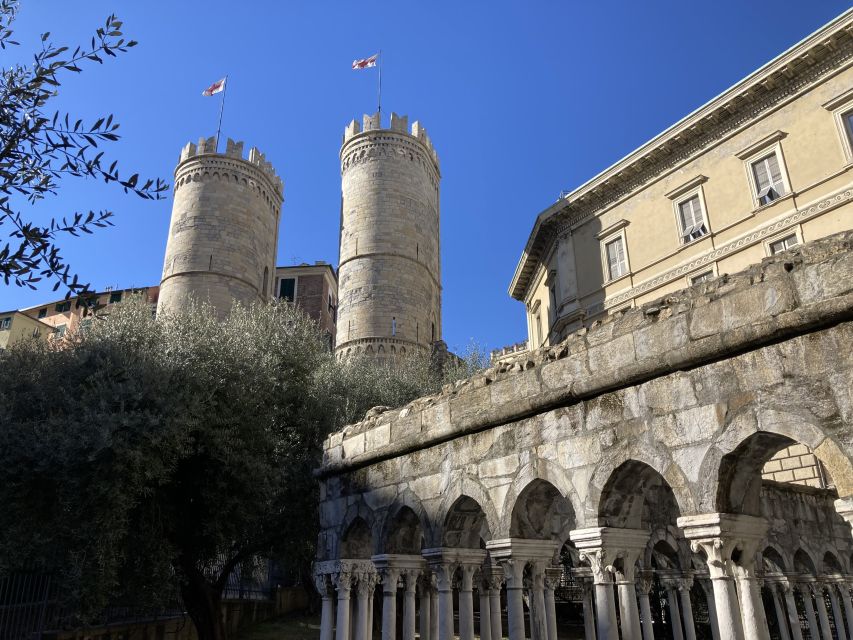
A 20-minute tour leaves little room for a slow presentation. The guide has to select the useful details and keep the visit moving. That is why the quality of the guide matters more here than at a large museum where you can wander after the introduction.
The strongest feedback centers on the guides’ command of Genoa’s history, archaeology, and the building’s structure. Luisa is described as thorough and well informed, while Georgia gave a longer explanation covering the house, the walls, and the cloister. Guides have also adjusted the visit to the interests of the group, taking extra time when participants wanted more detail.
The language choice is straightforward. Live tours are offered in English and Italian. If you book in English, you can expect an explanation of the home, the family connection, the reconstruction, and the surrounding medieval area.
The small-group limit of six is a real advantage. You should be able to hear without strain, and the guide can respond to questions without holding up a large crowd. It also makes the experience feel more like a short guided walk than a formal lecture.
One practical warning: meet the guide inside the venue. Do not wait outside or in the nearby area. This instruction is easy to overlook, and one participant specifically found it could have been made clearer. Arrive with enough time to enter and locate the meeting point inside Casa di Colombo.
Is $12 good value in Genoa?
At $12 per person, this is an easy purchase to justify if you already plan to visit Porta Soprana. The price includes entry and a guided explanation of Casa di Colombo, the Cloister of Sant’Andrea, and the nearby medieval setting.
The value comes from the guide rather than the size of the house. You are paying for access plus context. A self-guided look at a small historic building might take only a few minutes, while the guide explains why the building is arranged as it is and how it fits into Genoa’s past.
The tour is also inexpensive enough to combine with other sightseeing. You can place it between walks through the old city, rather than giving up half a day. If your visit lasts only 20 minutes, the cost remains modest. If the guide spends 30 minutes or more on the house and surrounding monuments, the value improves.
I would not choose it solely because of the Columbus name if you are hoping for a major museum. The house is compact, and the visit depends on the spoken explanation. For anyone interested in medieval Genoa, architecture, and the roots of a famous local figure, the price is well judged.
Who should book this experience?
I would recommend it to first-time visitors who want a quick introduction to the area around Porta Soprana. It is also a good fit for families, couples, and solo visitors who prefer a short guided stop rather than a full city tour.
History and archaeology enthusiasts will get the most from the building details. The guides can explain the house’s structure, rebuilding, and connection to the medieval setting. If you enjoy noticing how a site was made and used, rather than simply collecting famous names, this visit has enough substance.
It also suits a flexible walking day. You can visit Casa di Colombo, continue through the cloister and old walls, then keep exploring Genoa’s central streets. The short format means you are not tied up for long, though you should allow extra time in case the guide continues beyond the basic schedule.
I would be more cautious if you have limited mobility. The experience is listed as unsuitable for people with mobility impairments and wheelchair users. The provided details do not describe the exact steps or surfaces, so you should not assume the historic buildings are fully accessible.
Booking details that matter
The ticket is valid only on the date booked. You can cancel up to 24 hours in advance for a full refund, and the reserve-now, pay-later option lets you hold a place without paying immediately.
Starting times depend on availability. Since the group is limited to six people, it is sensible to check the schedule before building the rest of your day around the visit.
Keep the timing flexible. The advertised duration is 20 minutes, but the practical visit may last around 30 minutes or longer if the guide covers the cloister, Porta Soprana, and nearby walls in detail. The longer format is useful, but it can matter if you have a timed reservation elsewhere.
Should you book the Columbus House tour?
Book it if you want an affordable, tightly focused look at Columbus’ youth and medieval Genoa. The best reasons are the small group, the English or Italian guide, and the addition of Sant’Andrea Cloister and Porta Soprana. The building itself is modest, but the explanation can make its workshop, upper rooms, and reconstruction meaningful.
Skip it if you want a large museum, extensive material about Columbus’ voyages, or a fully accessible attraction. Also skip it if your schedule allows no room beyond the stated 20 minutes.
For most visitors already walking near Porta Soprana, I think the decision is easy. At $12, this is a short stop with real local context, and the guide can help you see far more in the house and cloister than you would on your own.
FAQ
How much does the tour cost?
The experience costs $12 per person.
How long does the tour last?
The advertised duration is 20 minutes. The house visit is also described as taking 15 to 20 minutes, though some visits last around 30 minutes or longer when the guide continues through the cloister and nearby monuments.
What does the tour include?
It includes entry and a guided tour of Casa di Colombo, the Cloister of Sant’Andrea, and the nearby Porta Soprana area.
Where does the tour begin?
The starting location is Casa di Cristoforo Colombo in Genoa.
Where should I meet the guide?
Meet the guide inside the venue. Do not wait outside or in the nearby area.
Is the tour available in English?
Yes. Live guided tours are offered in English and Italian.
How large is the group?
The tour is limited to six participants.
Is the ticket valid on another date?
No. The ticket is valid only on the date booked.
Can I cancel for a refund?
Yes. You can cancel up to 24 hours in advance for a full refund.
Is the tour suitable for wheelchair users?
No. The experience is listed as unsuitable for wheelchair users and people with mobility impairments.
Just added around Genoa
- City Sightseeing Genoa Hop-On Hop-Off Bus Tour★ 3.0 · 259 reviews
- Genoa: Impossible Museum Entry Ticket★ 4.2 · 226 reviews
- Genova: Segway Tour★ 4.9 · 275 reviews
- Genoa: Aquarium, Galata Museum and Submarine Entry Tickets★ 4.6 · 190 reviews
- Genoa: The City of Children and Young Museum Entry Ticket★ 4.1 · 303 reviews
- Genoa: Biosfera Entrance Ticket★ 3.9 · 283 reviews
- Genoa: Food and Wine Tasting Walking Tour★ 4.9 · 215 reviews
- Genoa: Aquarium & Christopher Columbus’ House Entry Tickets★ 4.4 · 258 reviews
Historical Tours, compared.
St. Mark Basilica Ticket, Audioguide+History Gallery
Read our review →
Venice’s Best: Basilica, Doge’s Palace, Gondola & History Gallery
Read our review →
Historic Milan Tour with Skip-the-Line Last Supper Ticket
Read our review →

Ancient History and Colosseum Underground Tour
Read our review →
Forbidden History Walking Tour & Pub Crawl with Drinks
Read our review →Browse the lists this tour appears in