
Reviewed · GUIDED TOURS IN FLORENCE
Florence: 1.5-hour Santa Croce Guided Experience
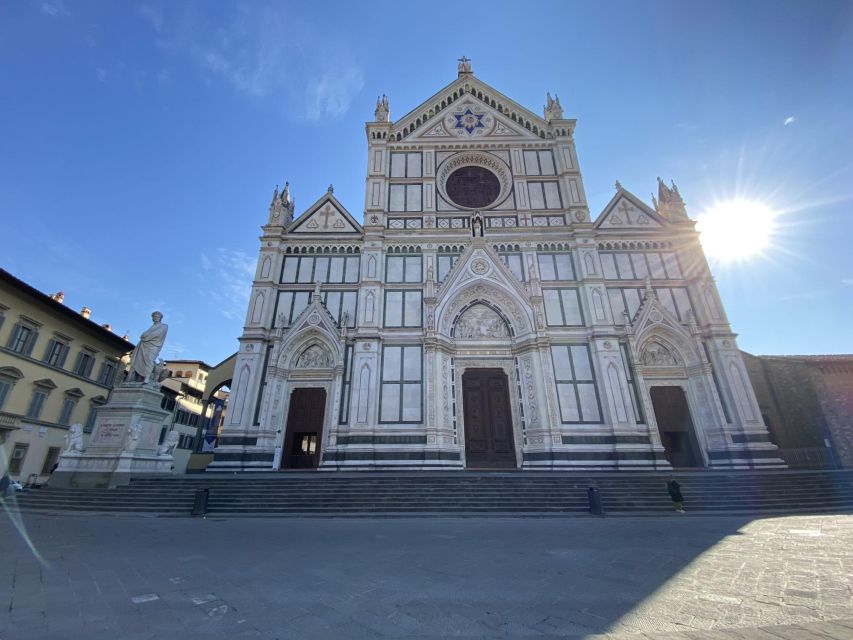
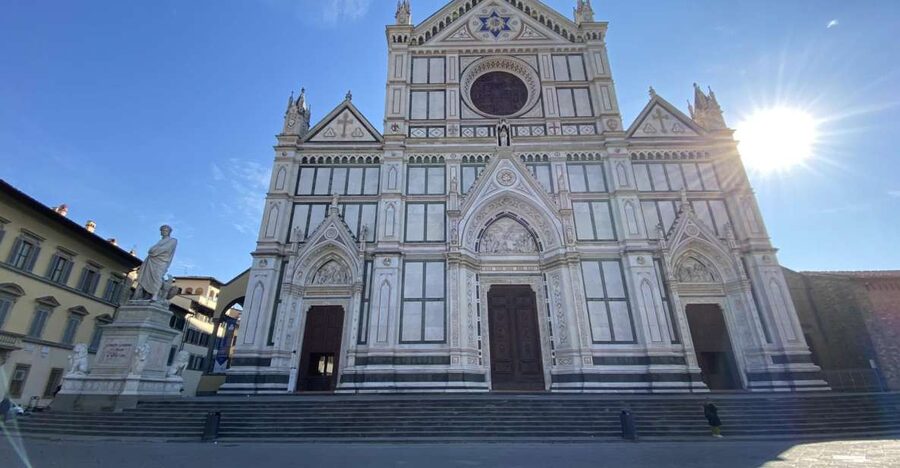
Santa Croce is Florence’s Hall of Fame in stone. Inside this grand Franciscan basilica, art, religion, politics, and national memory sit side by side. You’ll see Giotto’s frescoes, major chapels, and monuments to figures such as Michelangelo, Galileo Galilei, and Machiavelli, all while a certified guide explains why this church matters.
I like the small-group format, which makes it easier to hear and ask questions, and the way the tour connects paintings and tombs to Florence’s wider story. I also like the 90-minute length: enough time for the main sights without turning a church visit into an all-day lecture.
The main drawback is the strict meeting policy. You must find the guide by Dante’s statue and arrive on time, since latecomers will not be accepted. The interior can also feel hot in summer, and sleeveless shirts are not allowed.
Key points to know before you go
- A church full of famous names: See memorials and tombs linked to Michelangelo, Galileo Galilei, Machiavelli, and other major Italian figures.
- Art with a guide’s explanation: Giotto’s frescoes, the Bardi Chapel, Medici Chapel, Pazzi Chapel, Donatello’s work, and Brunelleschi’s architecture are easier to appreciate with context.
- Fast-track entry included: Your guide holds the tickets, so you avoid the ticket line.
- A practical 90-minute visit: The tour gives you a focused introduction rather than an exhausting survey of every corner.
- Guides who adapt well: Guides named Francesca, Annette, Ivan, Marta, Silvia, Steffi, and Emanuela have been praised for clear storytelling, humor, patience, and answering questions.
- Wheelchair accessible: Accessibility is listed, though the meeting point includes steps in front of the basilica, so confirm the exact arrangement if needed.
Why Santa Croce deserves a place on your Florence list
Many people come to Florence for the Uffizi, the Duomo, and Michelangelo’s David. Santa Croce offers a different kind of visit. It is not only a place to admire art. It is also a record of the people Florence and Italy chose to remember.
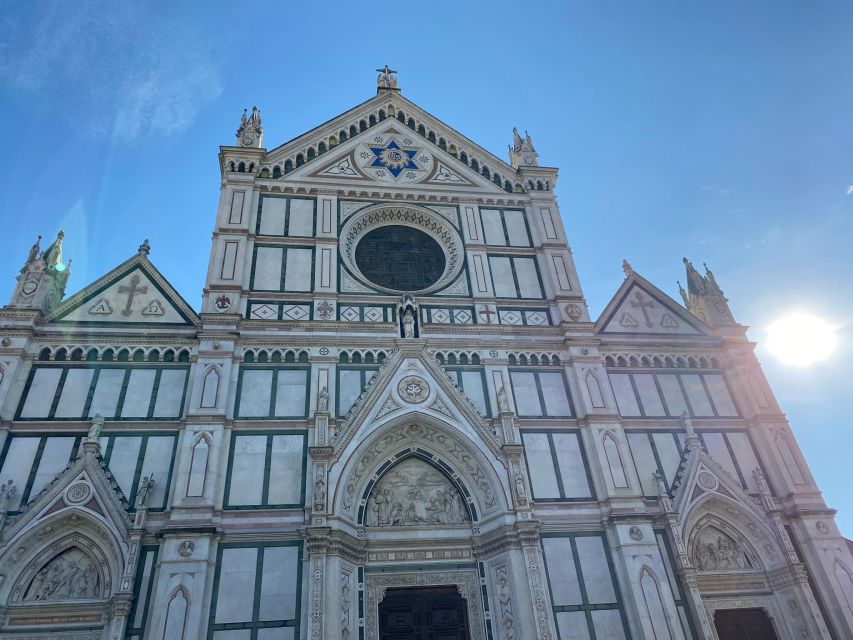
The basilica began in the 13th century as Florence’s main Franciscan church. That gives the building a religious role, but its later identity reaches well beyond worship. The chapels preserve major art, while the tombs and memorials turn the church into a kind of national pantheon.
That combination is what makes a guided visit useful. On your own, you can admire the scale of the nave and the painted walls. You can also walk past a tomb without knowing why it matters. A guide links the art to the people, the people to Florence, and Florence to the political and cultural changes that shaped Italy.
The 1.5-hour tour is built around that connection. You are not simply shown a list of masterpieces. You are given a way to read the building.
More Guided Tours in Florence
- Florence: Duomo Cathedral Guided Tour
★ 3.9 · 5,970 reviews - Florence: Accademia Gallery Guided Tour
★ 4.6 · 4,156 reviews - Florence: Duomo Guided Tour with Optional Dome Climb Upgrade
★ 4.1 · 3,706 reviews
Meeting Dante before entering the basilica
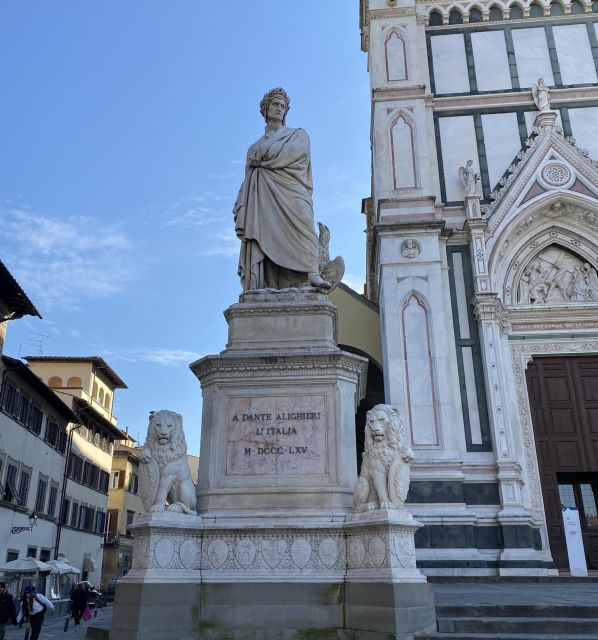
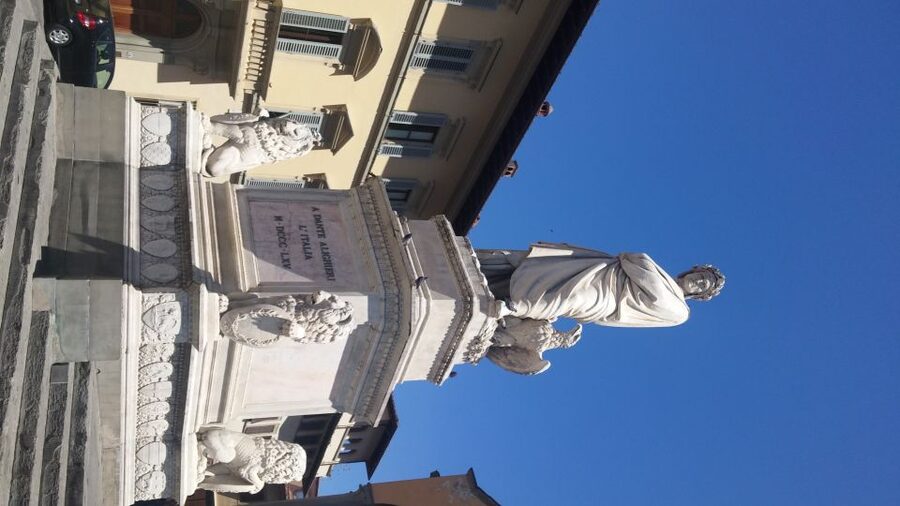
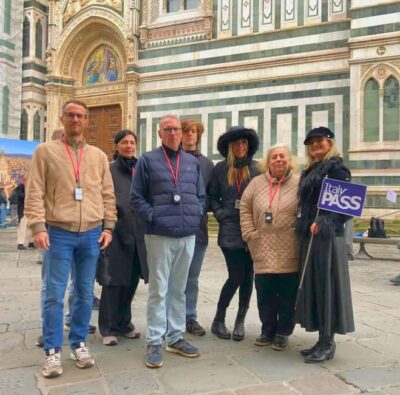
The meeting point is the statue of Dante Alighieri, on the steps in front of Santa Croce. Look for a guide carrying a purple Hidden Experiences flag or sign.
This is easy to understand, but it is not a place to arrive casually at the last minute. The instructions are firm: latecomers will not be accepted. Give yourself enough time to reach Piazza Santa Croce, find the statue, and identify the guide before the scheduled start.
Your guide has the entrance tickets, so you do not need to collect them elsewhere. That is a small but useful detail, especially in a busy part of Florence where several groups may gather around the basilica.
The meeting point itself has steps. The tour is listed as wheelchair accessible, but if someone in your group uses a wheelchair, contact the provider ahead of time to confirm the best meeting arrangement. One recent tour included a wheelchair user, and the guide made a point of keeping that person comfortable and involved.
Inside Santa Croce: Gothic space and Franciscan purpose
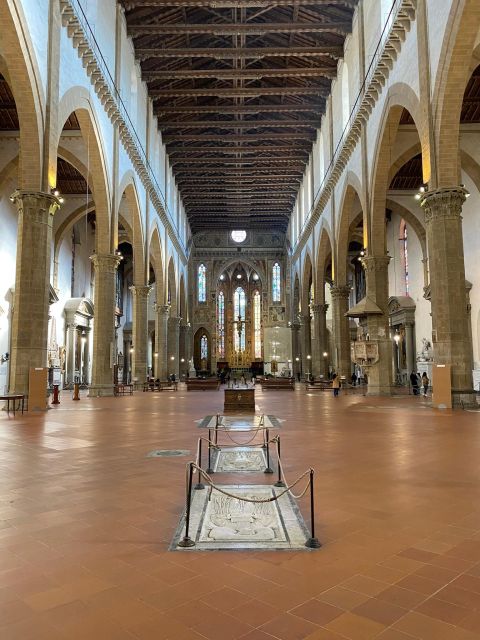
Once inside, take a moment to notice the basic shape of the building before focusing on individual works. The Gothic architecture gives Santa Croce a strong vertical feel, while the broad interior allows the chapels and wall paintings to command attention.
Your guide explains the church’s foundation and its place in Florentine religious life. This context matters because Santa Croce is not an art gallery that happens to contain religious pictures. Its works were made for chapels, worship, family memory, and public display.
The guide also helps you understand how much of the church is tied to powerful Florentine families. The Bardi and Medici chapels are not random rooms filled with attractive decoration. Their names point to the families who commissioned or supported work within the church.
A good guide makes these links clear without burying you in dates. That balance is one of the strongest features of this experience. Several guides, including Francesca, Annette, and Marta, have been praised for giving plenty of information while keeping the explanations easy to follow.
Giotto’s frescoes and the Bardi Chapel
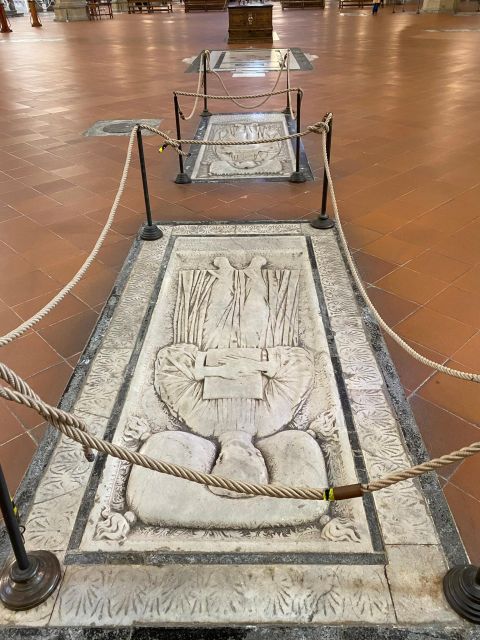
Giotto’s frescoes are among the main artistic reasons to visit Santa Croce. The guide points out the painted scenes and explains what you are seeing, rather than leaving you to guess at faded figures and crowded compositions.
You’ll look at the Bardi Chapel, where the paintings reward a closer inspection. Frescoes can be difficult to read at first. Faces, gestures, symbols, and sections of damaged color may not make sense from a distance. A guide can direct your attention to the details that matter and explain how the scenes fit together.
This is also where a live guide earns the tour price. The ticket gets you through the door, but it does not tell you why one chapel matters more than another or how the paintings relate to Franciscan devotion. The explanations give the art a human purpose.
If you already know Giotto well, the visit may feel introductory. For most people, though, the guided approach makes the chapel more rewarding than a quick walk-through.
A few more Florence half-days worth a look
- Florence: Skip-The-Line Uffizi Gallery Timed Entry Ticket
★ 4.5 · 27,832 reviews - Florence: Timed Entrance Ticket to Michelangelo’s David
★ 4.6 · 16,983 reviews - Florence: Michelangelo’s David Skip-the-Line Entry Ticket
★ 4.5 · 12,764 reviews - The Best tour in Florence: Renaissance & Medici Tales – guided by a STORYTELLER
★ 5.0 · 12,316 reviews
The Medici and Pazzi chapels
The tour also includes the Medici Chapel and Pazzi Chapel. These spaces show how different patrons and artistic aims shaped the basilica.
The Medici connection is especially useful for anyone interested in Florence’s ruling family. One private tour ended up focusing more closely on the Medici because that was the participant’s main interest. This suggests that the guides can adjust the emphasis when the group is small and questions lead in a particular direction.
The Pazzi Chapel adds another layer, with architecture associated with Brunelleschi. Rather than seeing it as just another decorated room, you can consider how its design fits into Florence’s move toward Renaissance ideals.
The exact amount of time spent at each chapel depends on the guide and group size. That is both a benefit and a limitation. A small group may receive more attention and discussion, but a larger group may need a more fixed pace.
Donatello, Brunelleschi, and the wider art collection
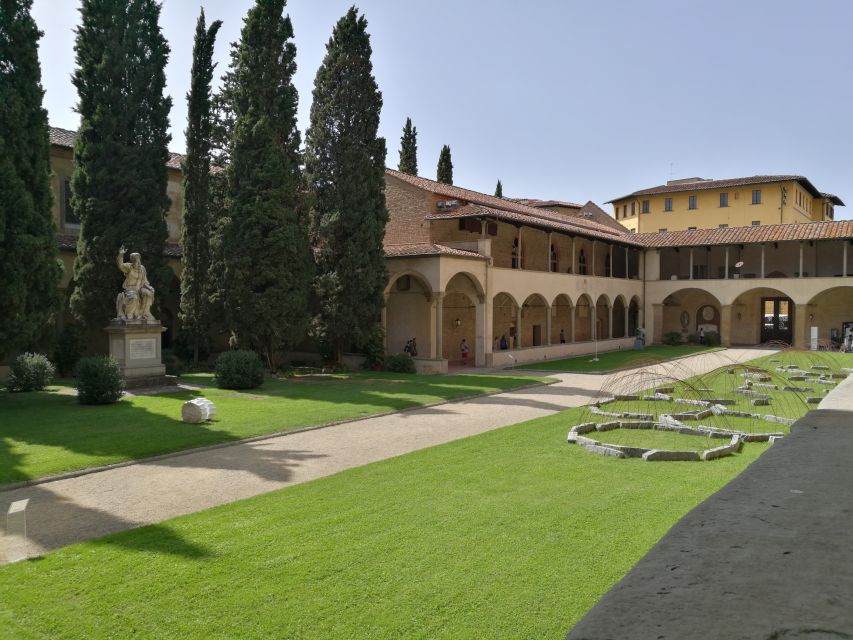
Santa Croce contains work linked to several major artists, including Donatello and Brunelleschi. The value of having a guide here is not simply hearing famous names. It is learning how sculpture, architecture, fresco painting, and religious use work together inside the church.
You’ll see how one building can hold very different artistic voices. Some works draw attention through painted stories. Others depend on sculpture, structure, or the design of a chapel. A guide can help you shift your attention from the overall grandeur to the small details that are easy to miss.
The experience is not presented as a specialist art-history class. It is better suited to someone who wants a clear introduction with enough substance to make the visit memorable. Guides have been praised for making explanations accessible to families and teenagers, which is useful if your group has mixed interests.
The tour language options are English, Spanish, and Italian. If more than seven people join, headphones are provided so you can hear the guide more clearly.
The tombs of Michelangelo, Galileo, and Machiavelli
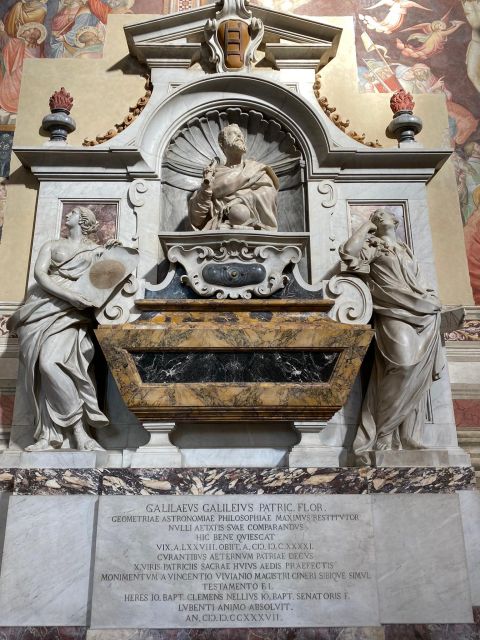
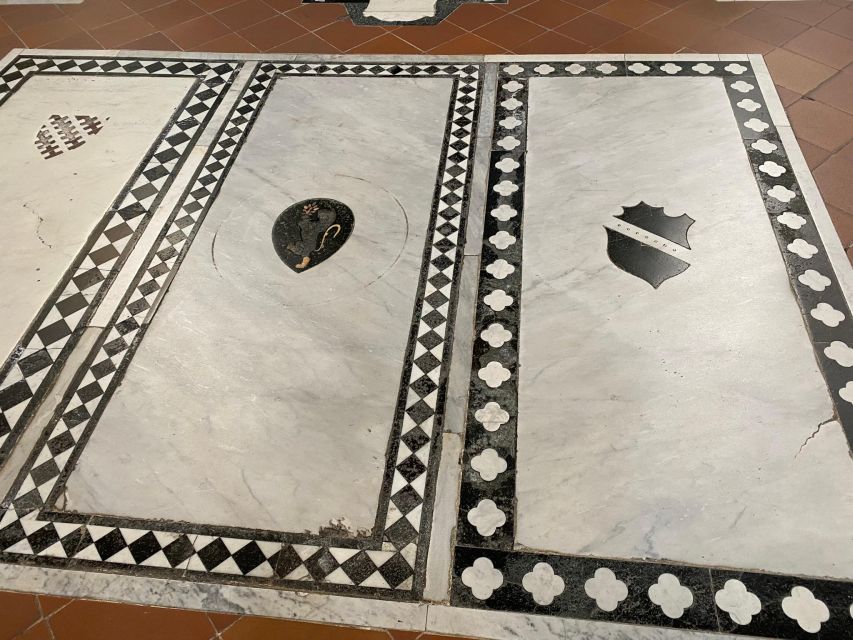
The famous tombs are the emotional center of the visit. Santa Croce is associated with Michelangelo, Galileo Galilei, and Niccolò Machiavelli, among other major Italian figures.
These monuments are not plain markers. They are works of art in their own right, designed to shape how each person would be remembered. Your guide explains the people, the monuments, and the reasons these figures belong to Santa Croce’s long story.
Michelangelo brings the Renaissance into the church through his fame as an artist. Galileo represents scientific thought and the tension between new ideas and established authority. Machiavelli brings politics and statecraft into the same space. Seeing them together makes the basilica feel less like a single-period monument and more like a record of changing Italian values.
The church also includes memorials connected with other important figures. One guide discussed Florence Nightingale, who is memorialized there, along with the men and women associated with the basilica. Ask questions if you have a particular interest. The guides are used to handling inquiries about the people, politics, and art tied to Santa Croce.
What the guides do especially well
The strongest part of this experience is the guiding. Names such as Francesca, Annette, Ivan, Marta, Silvia, Steffi, Emanuela, Viola, and Lorenzo appear often in praise for clear and engaging tours.
That does not mean every tour will feel identical. Guides have their own personalities and areas of interest. But the consistent pattern is useful: expect someone who can explain the art, answer questions, and connect the basilica to Florence’s political history.
Ivan has been described as funny and thoughtful, with a gift for bringing the people in the tombs to life. Annette has been praised for keeping children and teenagers involved. Francesca is noted for giving the right amount of information without making the visit feel dry. Marta and Silvia have also been praised for warmth and strong explanations.
Small groups make this style of guiding work better. You can ask about the Medici, a particular fresco, or a person buried in the church without holding up a large crowd. In some departures, the group may be as small as two or four people. In others, you should expect a standard small-group setting.
Price, timing, and the question of value
At $42 per person, this is not the cheapest way to enter Santa Croce. You are paying for the ticket, fast-track access, and 90 minutes with a certified guide.
I think the price is fair if you care about art, Italian history, or getting more from famous sights than a quick look. The guide’s interpretation is the main value. Without it, you may recognize Michelangelo and Galileo but miss the larger idea of Santa Croce as a place where Italy chose to honor its cultural memory.
The tour is also a good fit for a tight Florence schedule. Ninety minutes leaves room for lunch, another museum, or a walk through the surrounding streets. You do not need to arrange transport because there is no hotel pickup or drop-off. Meet at the basilica and continue on foot afterward.
Food and drinks are not included, so plan those separately. Wear suitable clothing too. Sleeveless shirts are not allowed, and the church is an active religious site as well as a historic monument.
Summer heat is worth considering. One July visit was noticeably hot inside, although the guide worked to keep the group comfortable. If you dislike warm interiors, a cooler part of the day may be preferable when available.
Who should book this Santa Croce tour
I would recommend it to first-time visitors who want a clear introduction to Florence’s art and major historical figures. It is also useful if you have visited Santa Croce before but felt you missed the meaning behind the paintings and tombs.
Families can benefit from the short format and approachable storytelling. The guides have shown they can explain the church in a way children and teenagers can follow, while still giving adults enough history and politics to stay interested.
Art lovers who want a specialist-level study of every fresco may need a longer or more focused tour. This experience covers a lot in 90 minutes, so it is designed for a broad overview rather than exhaustive analysis.
It also suits visitors who prefer a personal group setting. Private groups are available, and a small shared group can sometimes feel nearly private when attendance is low.
Should you book it?
Book this tour if you want Santa Croce to make sense, not just look beautiful. The best reason to go is the link between the basilica’s chapels, frescoes, architecture, and famous tombs.
The tour is especially good value for visitors who do not already know Florence’s religious and political history. Arrive early, dress appropriately, and choose it with realistic expectations: this is a focused introduction, not a complete art course. For most people, the combination of fast entry, a short schedule, and strong guide-led storytelling makes Santa Croce time well spent.
FAQ
How long does the Santa Croce experience last?
The guided experience lasts 1.5 hours, or 90 minutes.
How much does the tour cost?
The listed price is $42 per person.
What languages are available?
The tour is available in English, Spanish, and Italian.
Where is the meeting point?
Meet at the statue of Dante Alighieri on the steps in front of the Basilica of Santa Croce.
How do I identify the guide?
Look for a guide holding a purple Hidden Experiences flag or sign.
Are entrance tickets included?
Yes. Fast-track entry tickets are included, and the guide has the tickets.
Are headphones provided?
Headphones are provided when more than seven people participate.
Can latecomers join the tour?
No. Latecomers will not be accepted, so arrive at the meeting point on time.
Is the tour wheelchair accessible?
The activity is listed as wheelchair accessible. Since the meeting point is on steps in front of the basilica, confirm the exact meeting arrangement if needed.
What clothing is not allowed?
Sleeveless shirts are not allowed inside the basilica.
Is hotel pickup included?
No. Hotel pickup and drop-off are not included.
Can I cancel for a refund?
You can cancel up to 24 hours in advance for a full refund. Reserve now and pay later is also available.
Just added around Florence
- Walking Food Tour of Florence with Tastings and Wine★ 5.0 · 518 reviews
- Uffizi Gallery Timed Entry Admission Tickets★ 4.0 · 392 reviews
- Uffizi Gallery Small Group Tour with Guide★ 4.5 · 879 reviews
- Florence Accademia Guided Tour – Shared, Private & Combo Options★ 4.5 · 370 reviews
- Early Access Guided Uffizi Gallery Tour Skip-the-Line Small Group★ 4.5 · 707 reviews
- Uffizi and Accademia Small Group Guided Tour★ 4.5 · 449 reviews
- Florence Central Market Food Tour with Eating Europe★ 5.0 · 224 reviews
- Truffle Hunting Experience with Lunch in San Miniato★ 5.0 · 383 reviews
Guided Tours in Florence, compared.
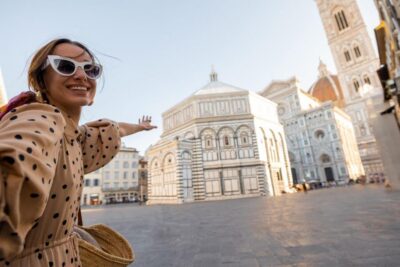
Duomo Guided Tour with Optional Dome Climb Upgrade
Read our review →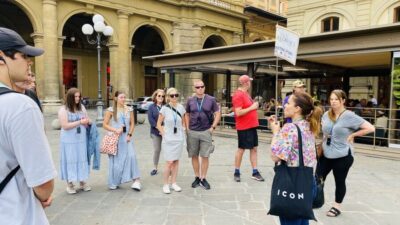
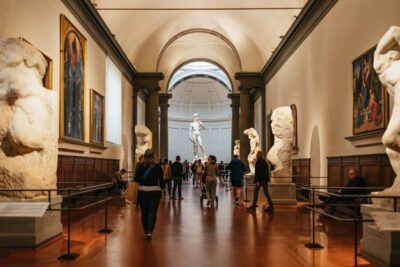
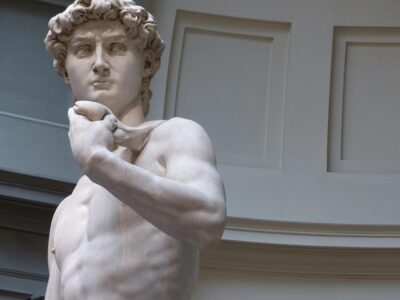
Accademia Gallery Guided Tour with Entry Ticket
Read our review →
Uffizi Gallery and Accademia Gallery Guided Tour
Read our review →
Uffizi Gallery Small-Group Guided Tour with Ticket
Read our review →Browse the lists this tour appears in