
Reviewed · MOUNT ETNA TOURS
Etna Volcano: South Side Guided Summit Hike
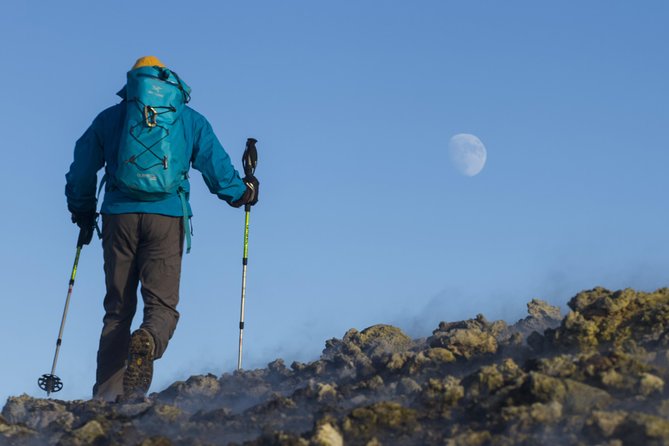
Mount Etna is not a tame mountain with a tidy path to the top. It is an active volcano, and this six-hour hike takes you through black ash, old lava flows, gas vents, and summit craters where conditions can change quickly. With a certified volcanological guide, you climb from about 2,800 meters toward Etna’s high craters, then descend through the Barbagallo craters and a lava-flow channel.
I like the strong geology focus and the practical equipment provided, including hiking boots, poles, and a helmet. I also like that guides such as Antonio, Max, Fabio, and Massimo combine safety instructions with clear explanations of lava, sulfur, eruptions, and the benefits of volcanic soil. The main consideration is the physical demand: the route covers roughly 8 to 10 kilometers on steep, loose, slippery ground, often in fierce wind and cold.
What makes this Etna hike worth considering
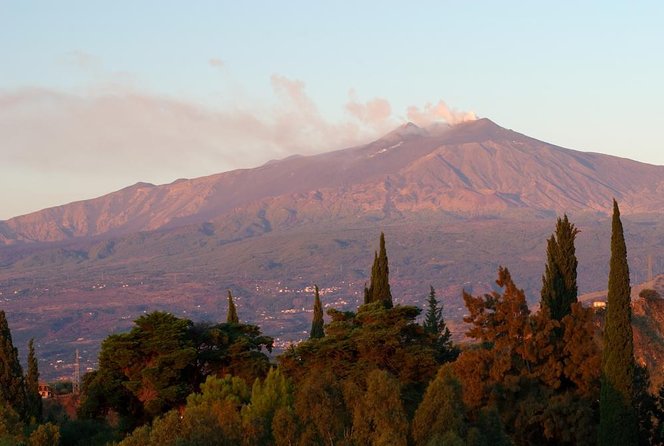
- You walk on an active volcano: Gas emissions, volcanic bombs, lava flows, and sulfur-colored ground make this more than a scenic mountain walk.
- The summit route begins high: A cable car and 4×4 vehicle take you to about 2,800 or 2,900 meters, saving your legs for the upper hike.
- Guides explain what you see: The best part is not simply reaching a high point, but understanding how Etna’s craters and eruptions formed.
- Gear is supplied: Helmets, trekking boots, and poles are included, though you still need warm clothing and sturdy personal layers.
- Conditions can change the route: High gas activity, wind, poor visibility, or other volcanic hazards may prevent access to the summit craters.
- The group can be as large as 20: That keeps the price reasonable, but it may be harder to hear the guide when everyone gathers around a crater.
Starting at Rifugio Sapienza at 8 a.m.
You meet the Ashàra Etna & Stromboli Guides team at Piazzale Rifugio Sapienza on Etna’s south side. The activity ends at the same place, which is useful if you are driving or arranging your own transport. Pickup from Catania is not included, so you need to reach the refuge yourself or arrange a separate transfer.
The 8 a.m. start gives you a full morning and afternoon on the mountain. It also means you should arrive ready to move. You need water, food, warm layers, and enough time to collect any rented equipment before the group heads upward.
The meeting point sits at roughly 1,900 meters, so conditions may already feel cooler than in Catania. At the summit, the difference is much sharper. One day can begin in a T-shirt and turn cold and windy higher up. Pack gloves, a hat, long trousers, and a warm windproof layer even if the weather below looks sunny.
The company supplies helmets, trekking boots, and walking poles. The details also list a windbreaker among the equipment, while the exclusions say a wind jacket is not included, so I would not rely on the operator for your outer layer. Bring your own waterproof or windproof jacket.
More Hiking Tours in Sicily
- Mount Etna: North Upper Craters Guided Tour by 4×4 with Trek
★ 4.6 · 243 reviews - Mount Etna: Guided Volcano Summit Hiking Tour with Cable Car
★ 4.7 · 3,784 reviews - Mount Etna: Trek to 3000m with cable car and jeep
★ 4.7 · 1,978 reviews
Paying for the cable car and 4×4 ride
The advertised price is $78.64 per person, but it does not cover the cable car and 4×4 transport. The stated local charge is €65 per person. This is a major part of the true cost, so include it when comparing tours.
The cable car lifts you from the lower station to the upper area, and a 4×4 vehicle continues toward the trail at around 2,800 to 2,900 meters. This transport is not a shortcut in the lazy sense. It lets you start the serious walking close to the high volcanic zone, where the air is thinner and the terrain becomes more exposed.
The exact sequence can depend on the day’s operating conditions and the active route. The guide handles the local ticket purchase according to the supplied information, but you should still arrive with funds for the extra charge.
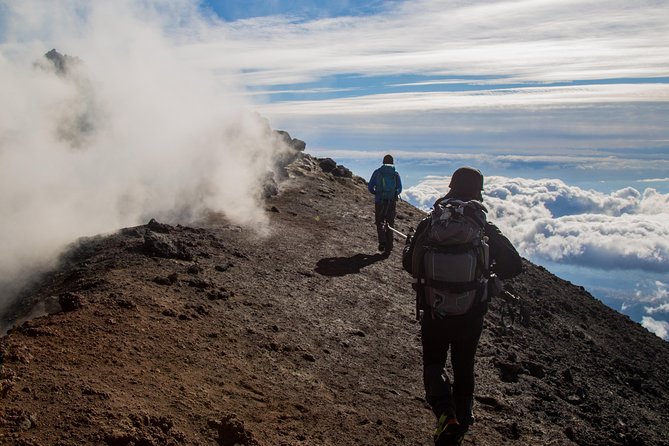
At the top station, you are not stepping onto a paved summit path. You begin walking across ash, gravel, old lava, and uneven volcanic ground. The loose surface makes the climb tiring, and the descent can be harder than expected because your feet slide in the fine black material.
Climbing through Etna’s lunar terrain
The upper walk toward the summit craters takes about two hours, with regular rest stops. The scenery is stark and unusual: dark slopes, lava ridges, old crater rims, and broad views over Sicily. The ground can show colors caused by gases and the sublimation of elements, especially sulfur.
A guide adds real value here. Without explanation, a red or yellow patch may look like a simple stain in the rock. With a volcanologist beside you, it becomes evidence of chemical activity and heat below the surface. You also learn to distinguish different volcanic forms, such as lava bombs, spatter cones, lava tubes, and channels.
The climb is described as medium-high in difficulty. That phrase should be taken seriously. You need good general fitness and to be in strong physical condition. One account describes about 10 kilometers of walking over uneven ground, while another puts the total closer to 8 kilometers. The exact distance depends on the route and safety changes.
I would not book this as a gentle sightseeing trip. You stop often, and the pace is controlled, but the loose ash, steep sections, altitude, cold, and wind make it strenuous. Hiking poles are useful, especially on the way down. The supplied poles are one of the practical touches that can make a real difference.
Reaching the summit craters
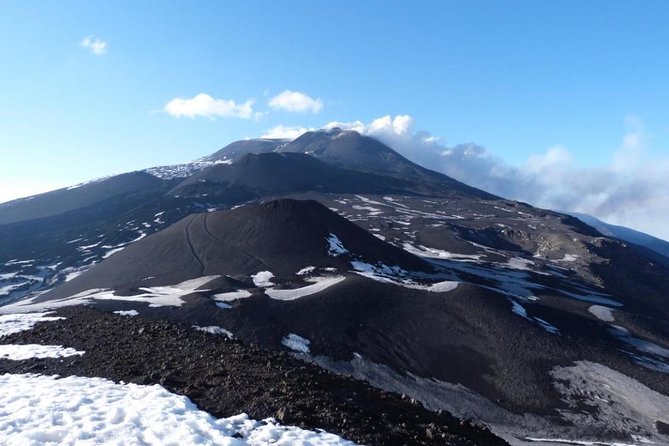
The main goal is the Etna Summit Craters. When conditions allow, the route reaches the rim of the Central Crater, passes near the dramatic Northeast Crater, and offers views toward the Southeast Crater. The Southeast Crater has produced some of Etna’s most recent and impressive eruptions.
You should understand the limits of the word summit here. This is an active volcano, not a fixed attraction. High gas levels, unstable conditions, wind, or poor visibility can force the guide to stop short or use a different route. One reported outing could not reach the summit because of heavy vapor and gas from the main crater, yet still included craters, lava flows, lava lakes, tubes, bombs, and spatter cones.
That is an important point. You are paying for a guided volcanic experience, not a guaranteed photograph from one exact rim. The guide’s safety decision matters more than the planned route. A day that misses the highest crater may still offer a close look at older eruptions and fresh volcanic features.
The summit zone can also feel surprisingly cold. A sunny view from lower Etna tells you little about conditions near 3,000 meters. Wind can be severe, and the combination of ash, cold, and altitude calls for a hat, gloves, scarf or neck covering, and a good jacket.
More Etna craters, caves and jeep days:
- Catania: Mount Etna Morning or Sunset Day Trip with Tasting
★ 4.8 · 4,028 reviews - Catania: Sunset Jeep Tour of Mount Etna and Lava Flow Caves
★ 4.8 · 2,113 reviews - Sicily: Etna and Alcantara Gorges Full-Day Tour with Lunch
★ 4.8 · 1,766 reviews - Catania: Etna Sunset Tour with Pickup and Drop-off
★ 4.8 · 1,348 reviews
Valle del Bove and the Barbagallo craters
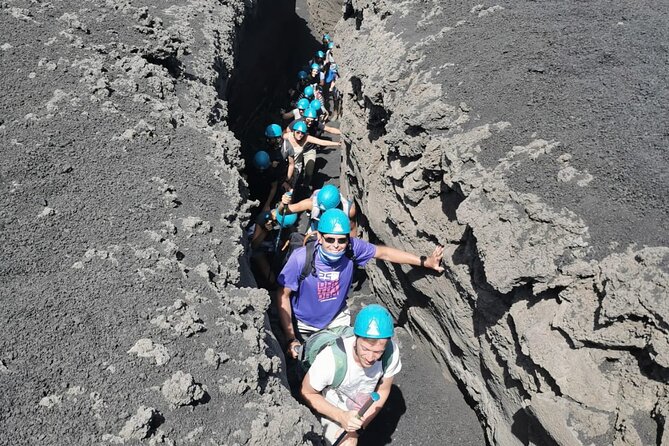
The route includes the Valle del Bove area, one of Etna’s major volcanic features. The valley gives the mountain a wider sense of scale. From high ground, you can see the broad volcanic depression and the layers created by repeated eruptions.
The return route includes the Barbagallo craters. These are a good reminder that Etna is built from many separate eruptions, not one smooth cone. Walking around smaller craters gives you a closer look at loose scoria, black sand, hardened lava, and the changing colors of volcanic rock.
The descent also crosses a lava-flow channel. This part can be especially interesting because it shows how molten rock moved across the mountain. It is also where good footwear matters most. Fine gravel slides underfoot, and the surface is uneven. Taller socks and long trousers are sensible because ash can work its way into your boots and clothing.
Some people find the downward walk more difficult than the climb. The slope and loose soil can make you work your legs constantly to stay balanced. Take your time instead of trying to keep up with the fastest person in the group.
The guides make the difference
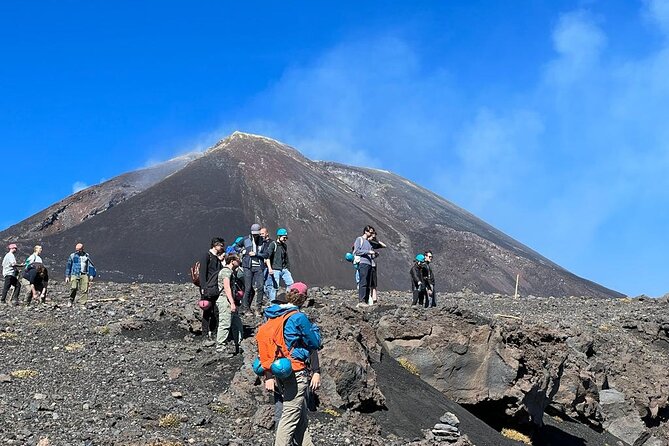
The company uses certified mountain and volcano guides, and the strongest part of the experience is the combination of supervision and explanation. Antonio is praised for making volcanology accessible while keeping the group moving. Max is described as professional, engaging, and attentive to safety. Fabio and Massimo also receive strong praise for their explanations and care with slower hikers.
The guide’s role is not just to point out a crater. You need someone who can judge gas, weather, terrain, and group ability. At times, the guide may keep you farther from an active crater than you expected. That is a feature, not a failure.
A group of up to 20 people keeps the cost manageable, but it has one drawback. When everyone gathers around a crater, you may need to move near the front to hear the explanation. Stay close to the guide during stops, especially when the wind is loud.
The group setting can also add to the day. You meet people from different countries and share a demanding activity rather than a quick photo stop. Still, if you prefer quiet walking or one-to-one instruction, a private guide would be a better format, though no private option is specified here.
What to bring for a safer, more comfortable day
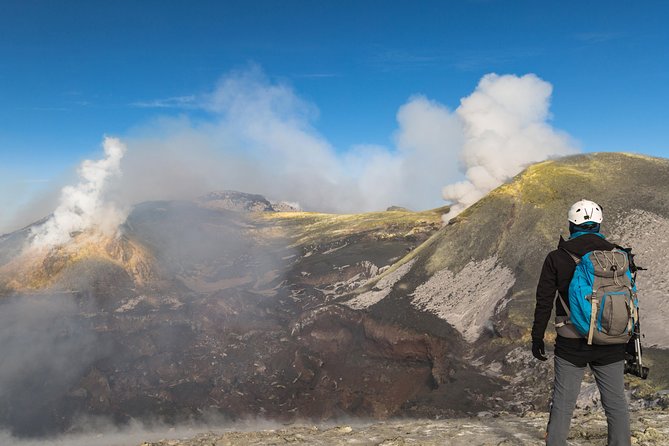
The provided equipment covers some important gaps, but it does not replace your own preparation. I would pack:
- Plenty of water
- A substantial lunch or snacks
- A windproof and warm jacket
- Hat, gloves, and a scarf or neck covering
- Long trousers and tall socks
- Sunglasses and sun protection
- A phone or camera with a secure pocket
Food is not included. You may be able to buy a sandwich or similar food at Rifugio Sapienza before starting, but carrying your own lunch is the safer plan. There is a break near the upper part of the hike, and food will help you manage the final climb and descent.
Wear dark clothing if you want to avoid showing every trace of black volcanic dust. Strong shoes are important even though trekking boots are supplied. If your usual footwear is uncomfortable, say so early and make sure the supplied pair fits properly.
You also need to prepare for fast weather changes. The mountain can shift from clear views to cloud, wind, cold, or high gas activity. Good clothing is not just about comfort. It helps you stay focused and steady on difficult ground.
Price, timing, and cancellation details
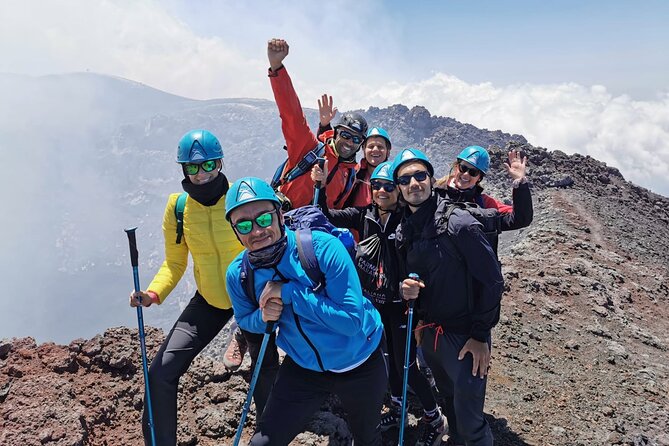
At $78.64, the base price is reasonable for a six-hour guided outing that includes a certified guide, insurance, helmet, trekking boots, and poles. Once you add the €65 cable car and 4×4 cost, plus food and transport to Rifugio Sapienza, the full day costs more than the headline figure suggests.
I still see value here if you want a serious introduction to Etna rather than a short cable car ride and a quick walk. The guide, safety oversight, and volcanic interpretation are the parts that justify the price. If you mainly want views with minimal effort, this is not the right product.
The activity is offered in English and accepts mobile tickets. Confirmation is provided at booking. Free cancellation is available up to 24 hours before the 8 a.m. start, but changes or cancellations inside that window are not accepted for a refund. Poor weather or a failure to reach the minimum number may lead to a new date, another experience, or a full refund.
Who should book this summit hike
I would choose this outing if you want to understand Etna as a living volcanic system and are ready for a medium-high mountain walk. It suits active adults, hikers who are comfortable on uneven ground, and visitors who prefer a guide with a science background.
I would hesitate if you have limited fitness, dislike steep loose surfaces, struggle at around 3,000 meters, or need a guaranteed summit viewpoint. The route can change, and even a fit person may find the wind and descent tiring.
Families should judge each participant honestly. The supplied information requires a good physical condition, and the length, altitude, and exposed terrain make this unsuitable for anyone expecting an easy stroll.
Should you book Etna South Side Guided Summit Hike?
Book it if you want the most informative version of a high Etna visit, and if you accept that the volcano decides how close you get to the summit. The mix of cable car, 4×4 ride, hard walking, crater rims, lava channels, gas, and clear volcanic explanation gives you a memorable day with real substance.
Skip it if you want a relaxed excursion, a fixed route, or a cheap all-in price. For the right person, the extra cable car charge and physical effort are worthwhile. Bring serious clothing, food, water, and patience, then let the guide put safety ahead of the planned finish.
FAQ
Where does the Etna summit hike begin?
The meeting point is Ashàra Etna & Stromboli Guides at Piazzale Rifugio Sapienza, 95030 Nicolosi, on Etna’s south side.
What time does the activity start?
The scheduled start time is 8 a.m.
How long does the experience last?
The tour lasts approximately six hours.
Is the cable car included in the price?
No. Cable car and 4×4 jeep tickets are paid locally. The stated cost is €65 per person.
What equipment is included?
A helmet, trekking boots, insurance, volcanological guides, and trekking poles are included.
Is a windbreaker included?
The equipment details mention windbreakers, but the exclusions also say a wind jacket is not included. Bring your own warm windproof jacket to avoid relying on the supplied clothing.
How difficult is the hike?
The activity requires moderate to strong physical fitness and is described as medium-high in difficulty. Expect steep, uneven, loose, and sometimes slippery volcanic ground.
Can the route change?
Yes. Etna is an active volcano, so gas, weather, and safety conditions can lead to route changes or prevent access to a planned crater.
What happens if bad weather cancels the activity?
You will be offered a different date or a full refund if poor weather causes the cancellation.
Just added around Catania
- Syracuse, Ortigia and Noto walking tour from Catania★ 5.0 · 273 reviews
- The Godfather Movie Tour★ 5.0 · 275 reviews
- Tour Etna & Wine Tasting★ 5.0 · 317 reviews
- Etna, Wine and Alcantara Tour – From Taormina★ 5.0 · 464 reviews
- The Original Catania Street Food and Market Tour by Streaty★ 5.0 · 345 reviews
- Etna and Alcantara Gorges Excursion★ 4.5 · 256 reviews
- Etna Tour in 4×4★ 5.0 · 583 reviews
- Etna Morning Jeep Tour★ 4.5 · 241 reviews
Mount Etna Tours, compared.
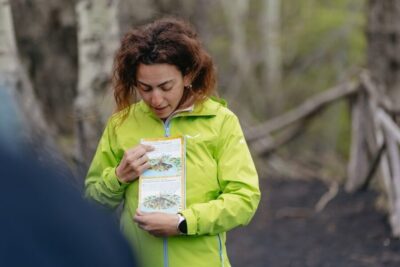
Mount Etna Morning or Sunset Day Trip with Tasting
Read our review →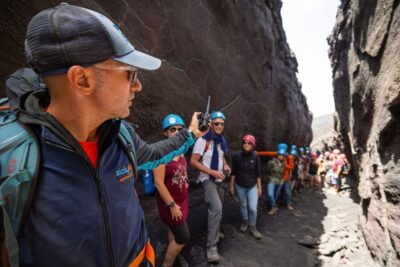
Mount Etna: Guided Volcano Summit Hiking Tour with Cable Car
Read our review →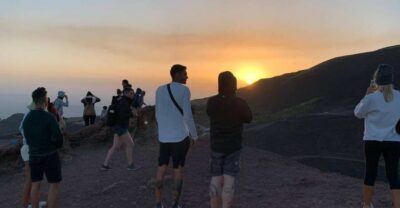
Sunset Jeep Tour of Mount Etna and Lava Flow Caves
Read our review →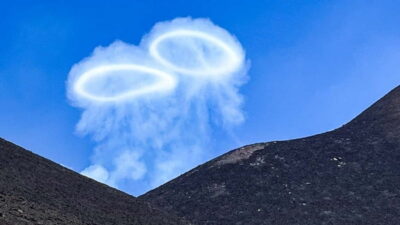
Mount Etna: Trek to 3000m with cable car and jeep
Read our review →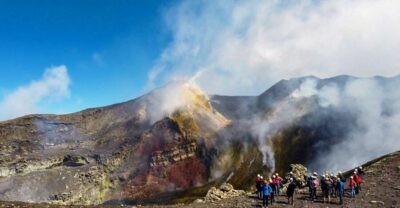
Mount Etna: Summit Crater Trek with Cable Car
Read our review →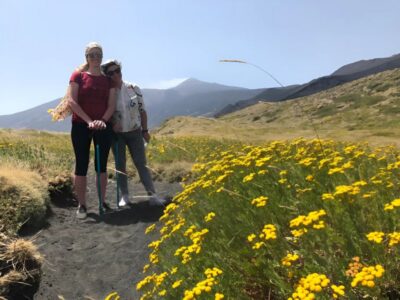
Sicily: Etna and Alcantara Gorges Full-Day Tour with Lunch
Read our review →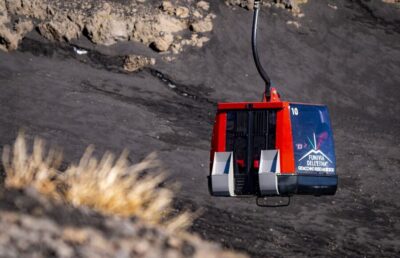
Mount Etna: Roundtrip Cable Car and 4×4 Bus Ticket
Read our review →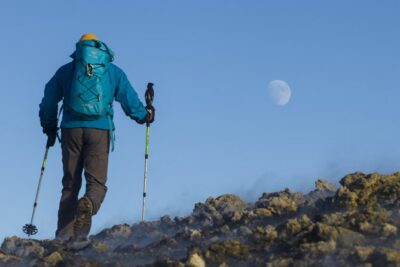
Browse the lists this tour appears in