
Reviewed · TRAIN EXPERIENCES
Cagliari: Conti Vecchi Salt Flats Train and Tour
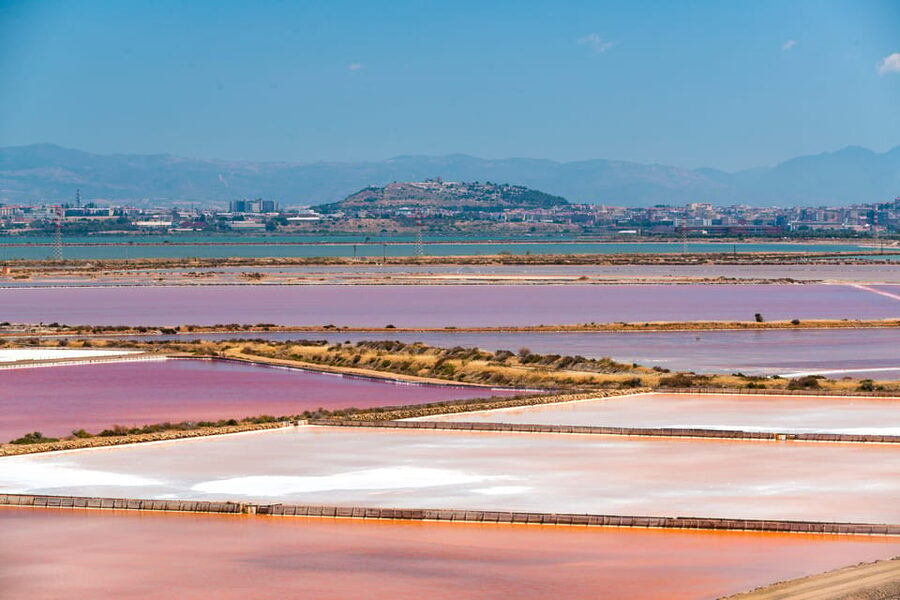
Pink flamingos, pink water, and huge white piles of salt make the Conti Vecchi Saltworks one of Cagliari’s more unusual outings. This is not just a nature trip. It combines a working industrial site, an old salt village, a museum, and a train ride through the Santa Gilla Basin.
I like the way the tour connects salt production with Cagliari’s economic growth, rather than treating the salt pans as a pretty photo stop. I also like the low price, about $14, which gets you the museum, old buildings, films, guide, and one-hour train ride. The main drawback is language: the live tour is in Italian, and some English-speaking visitors have found the train commentary too brief or hard to hear.
Quick points before you book
- Flamingos in their natural setting: The Santa Gilla Basin is an important wetland, and the train gives you a good chance to spot pink flamingos among the salt pans.
- A working salt plant: You see an active industrial site, not only preserved ruins or a museum display.
- A one-hour train ride: The small train carries you through the salt flats and natural area, with views of salt mountains and the production process.
- A strong local story: Luigi Conti Vecchi’s work helps explain how the salt industry supported jobs and economic growth around Cagliari.
- Italian-led touring: The guide speaks Italian, so English speakers should use the English-subtitled film and read any available information carefully before the train departs.
- Easy access by car: Free parking is available in the industrial area at Assemini and Macchiareddu, followed by a short walk to the bookshop and entrance.
Why the salt flats are worth your time
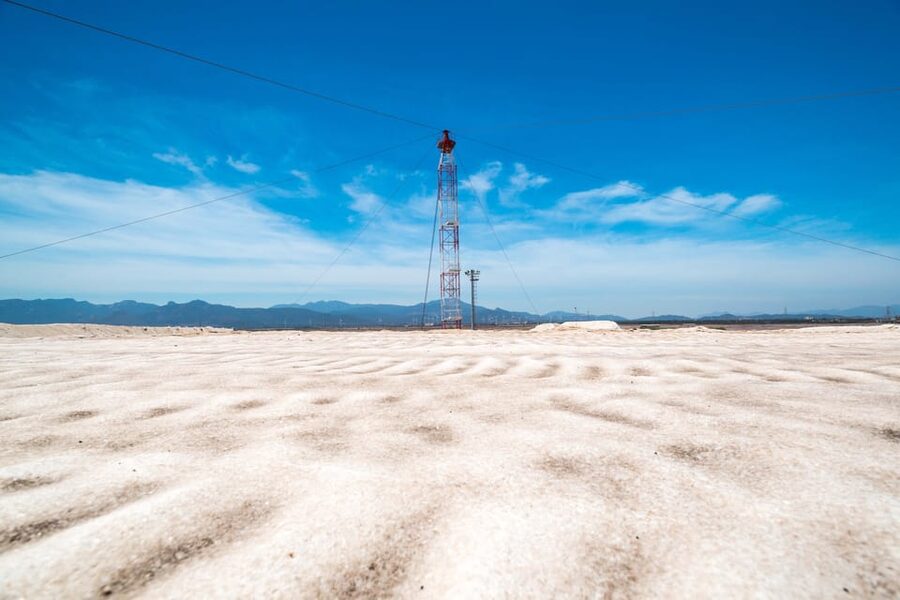
Cagliari is often sold through beaches, old streets, and seafood. The Conti Vecchi Saltworks gives you a different view of southern Sardinia. Here, the scenery comes from evaporation ponds, drainage channels, machinery, warehouses, and mountains of harvested salt.
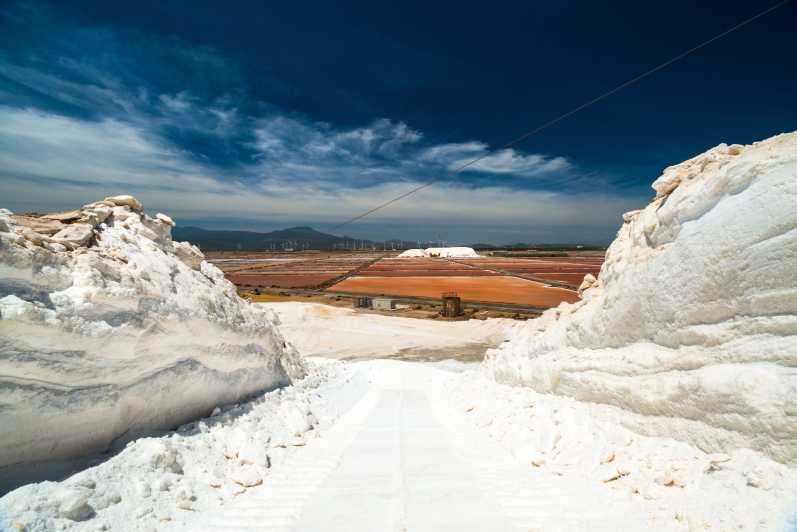
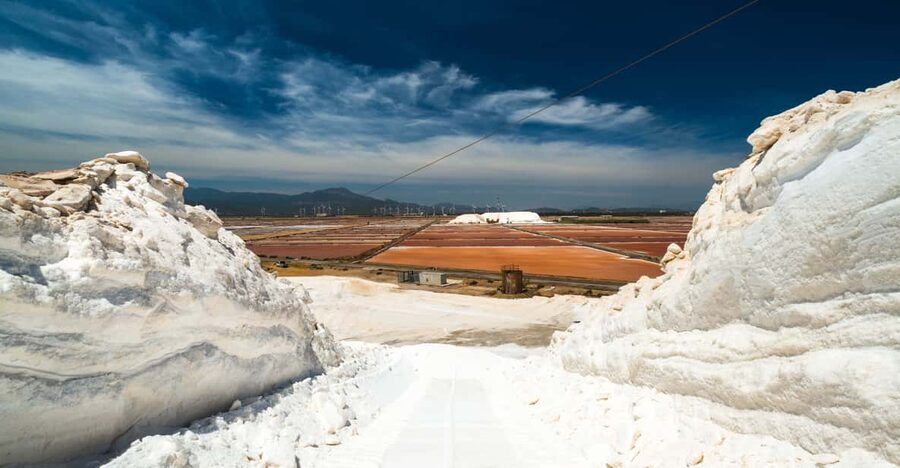
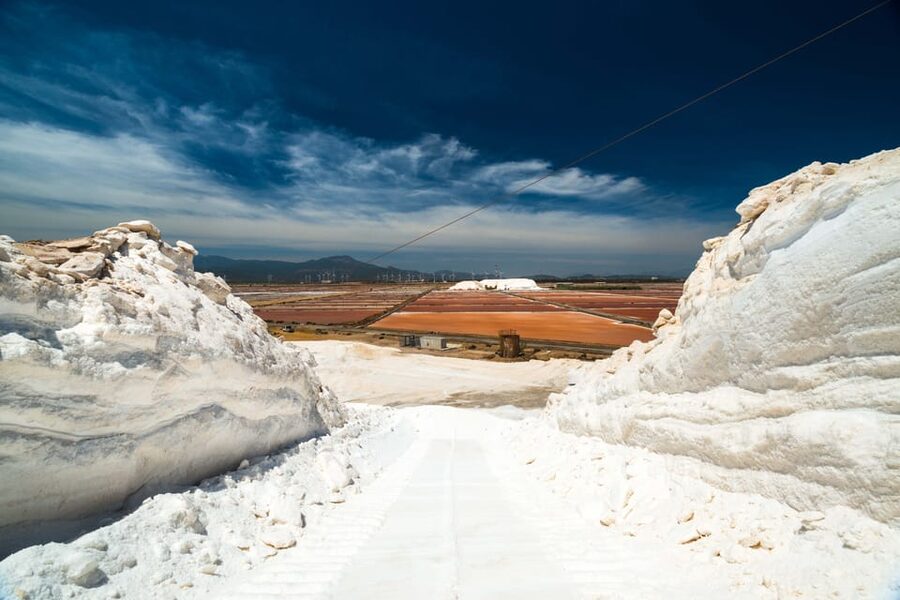
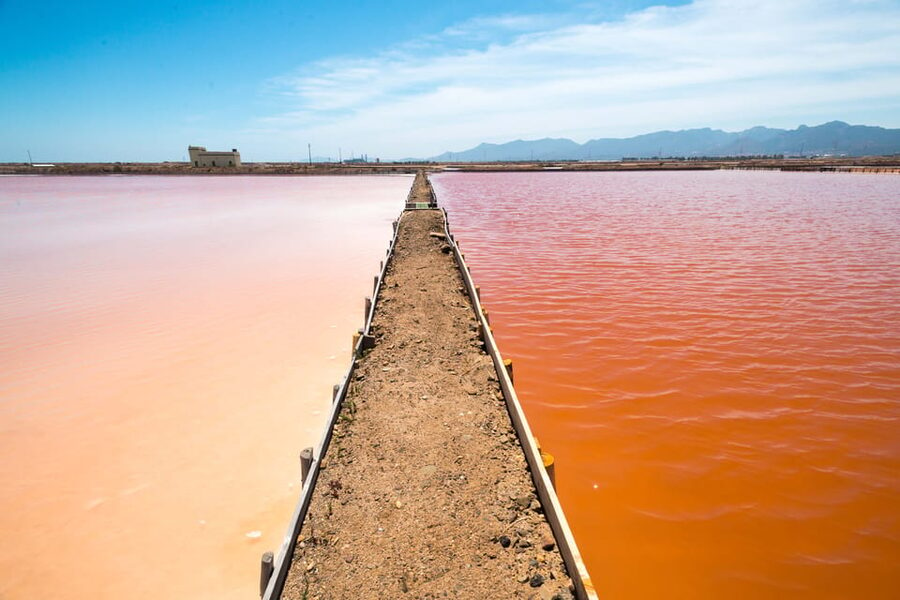
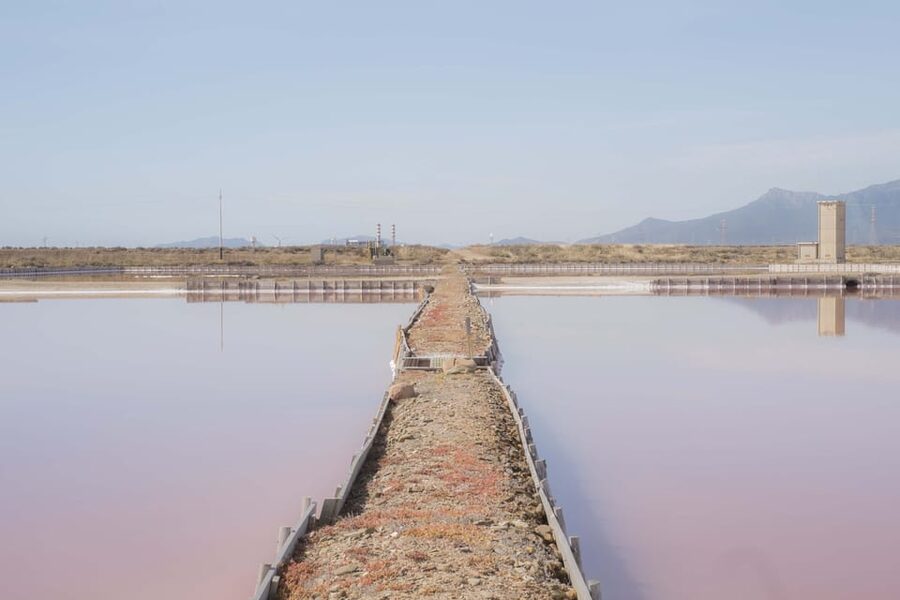
The setting can look stark at first. Bright white salt piles sit beside shallow pools that may appear pink or red, with birds moving across the wetland. That contrast is the appeal. You get a place shaped by both engineering and nature, where an industrial process now provides food and shelter for wildlife.
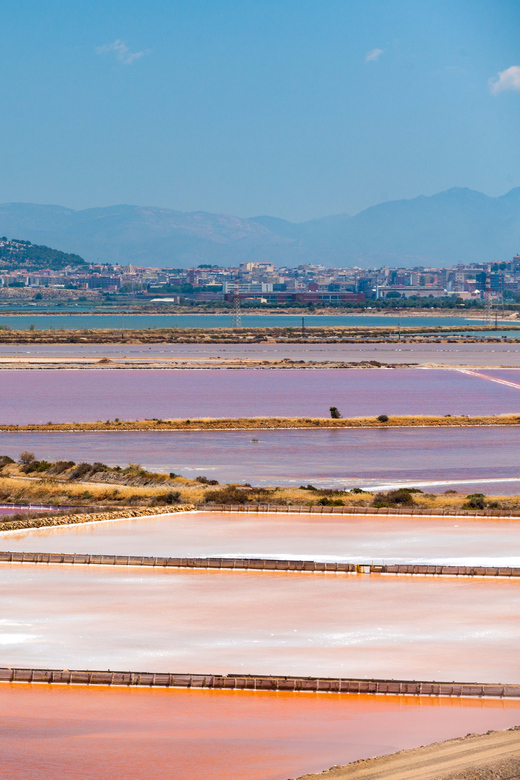
The site is in the Santa Gilla Basin, Sardinia’s most important wetland. It is close to Cagliari, but it feels removed from the city. The industrial surroundings are part of the story, so do not expect a polished park or a typical sightseeing train. You are visiting an operating saltworks with preserved buildings and a natural area woven together.
More Train Trips in Cagliari:
- Bernina Red Train, Swiss Alps & St Moritz From Milan
★ 5.0 · 2,954 reviews - Swiss Alps Bernina Red Train and St.Moritz Tour from Milan
★ 4.5 · 2,369 reviews - Sorrento: Skip-the-Line Pompeii Express Tour by Train
★ 4.8 · 2,038 reviews
Arriving at Assemini and Macchiareddu
The saltworks sit in the industrial area known as Assemini and Macchiareddu, outside central Cagliari. You drive into the industrial zone, leave your car in the free parking area, and walk to the bookshop at the main entrance.
This location matters when you plan your day. Hotel pickup and drop-off are not included, and the activity is not presented as a city-center excursion. If you are staying in Cagliari without a car, check your transport plans carefully before booking.
At the entrance, the visit begins with the old buildings and museum material. The site has wheelchair-accessible areas, with the old building accessible on the first floor. The train is also wheelchair accessible. That makes this a more practical choice than many rural or wildlife outings, although the full site experience may still depend on which areas are open during your visit.
The museum, films, and salt-worker story
The first part helps you understand what you are seeing outside. You can examine documents, tools, a vintage workshop, and a restored chemical laboratory. These objects give the saltworks a human scale. Instead of seeing only piles of salt, you begin to picture the people who measured, processed, transported, and managed it.
The story centers on Luigi Conti Vecchi, an engineer whose work helped push the salt industry forward and supported wider economic development in the region. Salt was once known as white gold because it was valuable, useful, and difficult to produce on a large scale. The tour explains how that value affected the daily lives of local workers.
Two films add background before the train ride. One film gives a broader look at Sardinia and the saltworks, and an English-subtitled version has been available. This is especially useful if you do not speak Italian, since the visual material can explain the setting more clearly than a short spoken introduction.
Allow yourself enough attention for this indoor section. It may be tempting to hurry toward the flamingos, but the museum is what makes the rest of the visit meaningful. Once you see the tools and documents, the salt pans feel less like scenery and more like a workplace with a long local story.
The train through Santa Gilla Basin
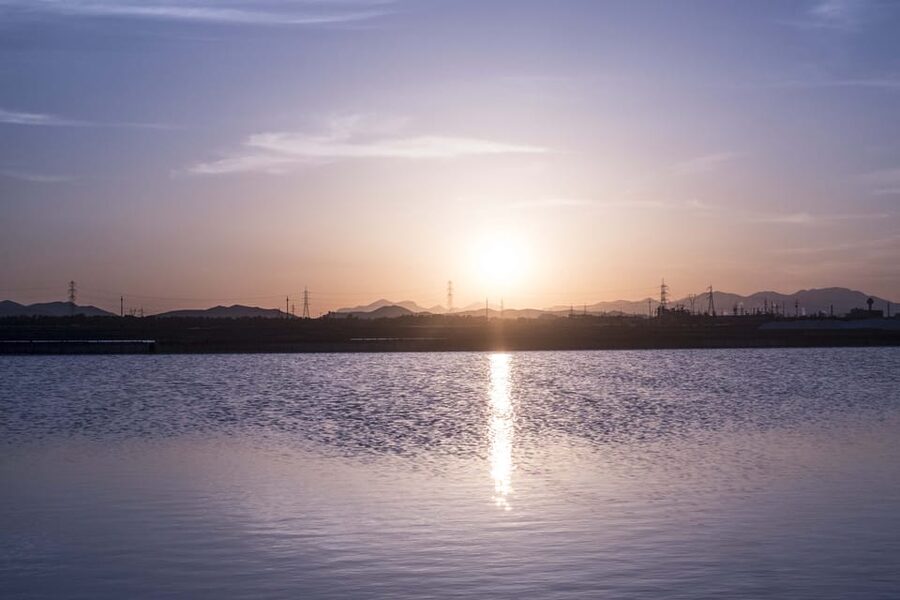
The train ride lasts about one hour and is the main outdoor part of the visit. It carries you into the Santa Gilla Basin, past salt pans, processing areas, natural spaces, and the broad white piles created by salt harvesting.
This is a gentle sightseeing ride rather than an adventure. You remain on the train for most or all of the route, so the best way to enjoy it is to watch closely and keep your camera ready. One practical limitation is that you may not get a chance to step off and walk directly among the salt pans. If you want a hands-on visit to the salt itself, this tour may feel more observational than active.
The train brings you close to the production process. You can see how different pools and stages fit together, while the guide explains the work and the role of the saltworks. In the second carriage, the speaker can be difficult to hear because of the train’s movement and noise. If you are choosing a seat, staying near the guide or the front of the train may help.
The live commentary is in Italian. That is the clearest issue for English-speaking visitors. Some parts of the visit, especially the building tour, can be easier to follow through visual displays and films. The outdoor commentary may be shorter in English or delivered after the train has passed the feature being discussed. If understanding every detail is important to you, use the film and written material as your main preparation, then treat the train ride as a visual tour.
A few more Cagliari half-days worth a look
- Cagliari: Underground Cagliari Walking Tour
★ 4.7 · 2,329 reviews - Cagliari: Devil’s Saddle Boat Tour with Spritz and Chips
★ 4.9 · 1,193 reviews - Cagliari: Boat Tour with 4 Swim Stops, Snorkeling & Prosecco
★ 4.9 · 865 reviews - Cagliari: Walking Tour of the Old City
★ 4.8 · 560 reviews
Flamingos, pink water, and white salt mountains
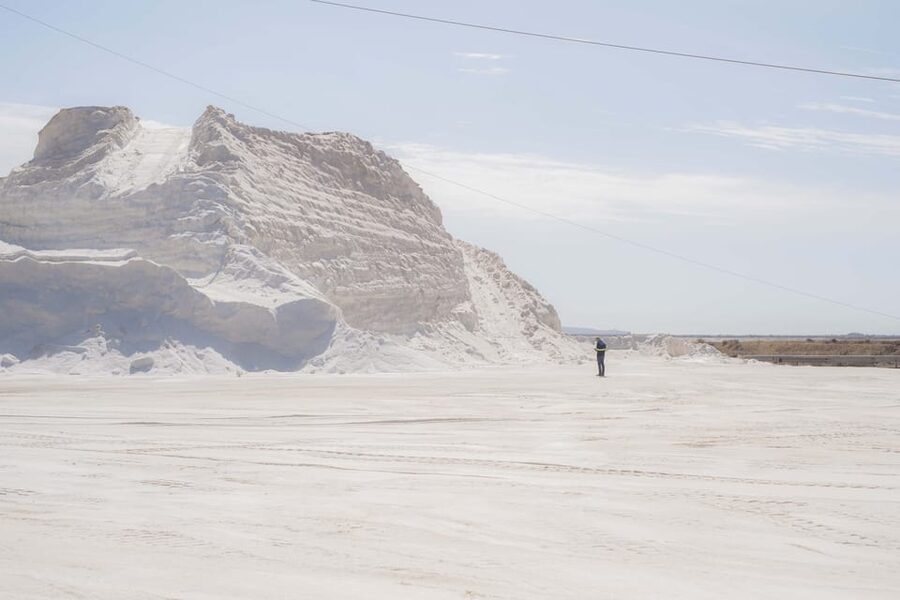
The wildlife is the tour’s biggest visual reward. Flamingos gather in the wetland, often appearing as small pink shapes at a distance before you notice their long legs and curved necks. Their presence feels especially striking against the pale salt piles and industrial equipment.
Bring patience. This is a natural area, so bird viewing depends on conditions and timing. A storm can shorten the outdoor route, and poor weather may mean seeing fewer flamingos. One thunderstorm forced a train group to return early, leaving little time for bird watching. That is not a flaw in the site, but it is a reminder that this is an open wetland, not a guaranteed wildlife show.
You may also see other bird species around the basin. The train gives you a broad view, but it is not designed as a long bird-watching session. If birds are your main reason for booking, you might wish for more time to stop and observe. If you are happy with a combination of wildlife, industrial scenery, and local history, the balance works well.
The colors change with the light and the salt concentration in the ponds. Bright white heaps, pale water, and occasional pink tones make this a particularly good stop for photography. Keep your expectations realistic, though. You may not see the same colors or number of flamingos on every departure.
Macchiareddu and the lives behind the industry
The old salt-mining village of Macchiareddu adds an important human element. The tour does not treat salt as an abstract product. It shows how an industry shaped work, settlement, and local prosperity.
The preserved buildings, tools, documents, and workshop help you understand the daily routines behind the salt trade. The restored chemical laboratory is a particularly useful detail because it shows that this was not only physical labor. Salt production depended on testing, processing, engineering, and careful control of the water and evaporation stages.
That mix makes the visit work for different interests. You might come for the flamingos and salt mountains, then find yourself more interested in the old documents. Or you may enjoy the engineering and industrial archaeology while treating the birds as a bonus.
How much value do you get for $14?
At about $14 per person, this is a strong-value outing if you want more than a short photo stop. The price includes entry to the saltworks, the guide, the museum and old buildings, two films, and an hour-long train ride. A two-hour visit gives you a full half-day-sized stop without taking over your schedule.
The value is strongest for visitors with a car who are already exploring the Cagliari area. Since there is no hotel transportation, you avoid paying for a bundled transfer, but you also need to arrange your own way there.
The price also makes the language limitation easier to accept. If you need a long, detailed English explanation on the train, the tour may not match your ideal. If you are comfortable learning from films, displays, scenery, and a shorter live explanation, the cost is modest for the amount of ground covered.
Free cancellation up to 24 hours before the start and a reserve-now, pay-later option make it easier to fit into a changing Sardinia itinerary. Starting times vary, so check availability before planning other activities around it.
Who will enjoy this tour most?
I would recommend the saltworks to several kinds of visitors:
- Families: The train ride keeps the outing easy and adds movement to what could otherwise be a museum visit.
- Bird and nature fans: Flamingos and wetland scenery are the main outdoor draw, though sightings are not guaranteed.
- History and engineering enthusiasts: The industrial process, chemical lab, tools, and Luigi Conti Vecchi story provide real substance.
- Repeat visitors to Cagliari: This is a good way to see a less familiar side of the area.
- Photographers: The white salt mountains, pink water, birds, and machinery create unusual images.
- Visitors with limited mobility: The train is wheelchair accessible, and the old building is accessible on the first floor.
I would be more cautious if you want a fully English-speaking tour, a long walk on the salt flats, or guaranteed close-up wildlife viewing. The train is the main way to see the outdoor area, and some visitors have wished for more time outside the carriage.
Practical ways to get more from the visit
Arrive ready for two different kinds of sightseeing. The museum section rewards close attention to objects and films, while the train ride rewards looking out at the ponds, birds, and machinery.
If you do not speak Italian, watch the English-subtitled film carefully. It gives useful background before the train leaves. You can also ask where the English information is available at the entrance, since the live guide may not provide the same amount of detail in English.
Keep your camera ready during the train ride, but do not spend the full hour looking through a screen. Flamingos can blend into the wetland, and the best views may pass quickly. If bird watching is your priority, ask whether there is a suitable place to focus on the birds before boarding.
The tour lasts about two hours, but give yourself extra time for arrival and parking. The saltworks are in an industrial zone, so follow the entrance directions carefully and walk from the parking area to the bookshop.
Should you book the Conti Vecchi Salt Flats tour?
Book it if you want an inexpensive, unusual outing that combines industrial archaeology, wetland wildlife, and a scenic train ride. The flamingos and salt mountains provide the memorable pictures, while the museum and Macchiareddu story give the visit lasting value.
Think twice if you need detailed live commentary in English or want to walk freely among the salt pans. For everyone else, the $14 price is easy to justify, especially if you have your own transport and are curious about the working side of Sardinia. It is a thoughtful change from the usual beach-and-old-town circuit, with enough visual appeal to keep the whole family interested.
FAQ
Where is the Conti Vecchi Saltworks?
The saltworks are in the industrial area of Cagliari known as Assemini and Macchiareddu, near the Santa Gilla Basin.
Is parking available?
Yes. You can leave your car in a free parking area inside the industrial zone, then walk to the bookshop at the main entrance.
How long does the visit last?
The activity lasts about two hours, including the museum visit and the one-hour train ride through the salt flats and natural area.
Is the tour conducted in English?
The live guide speaks Italian. An English-subtitled film has been available, but the live train commentary may be limited for English-speaking visitors.
Are flamingos guaranteed?
No. The Santa Gilla Basin is a natural wetland, so flamingo sightings depend on conditions and timing.
Is the train wheelchair accessible?
Yes. The train is wheelchair accessible.
Is the old building wheelchair accessible?
Yes. The old building is wheelchair accessible on the first floor.
What does the price include?
The approximately $14 price includes the guide, entry to the Conti Vecchi Salt Flats, access to old buildings, two videos, and the one-hour train ride.
Can I cancel the booking?
Yes. You can cancel up to 24 hours in advance for a full refund. A reserve-now, pay-later option is also available.
Just added around Cagliari
- Small-Group Food and Wine Tour from Cagliari★ 5.0 · 237 reviews
- Boat Tour at Devil’s Saddle: 4 Swim Stops, Snorkeling & Prosecco★ 5.0 · 263 reviews
- 4×4 Mountains And Beaches – Chia area★ 5.0 · 330 reviews
- Catamaran tour stops bathing and snorkeling toast with prosecco★ 5.0 · 214 reviews
- Cagliari Vintage Tour★ 5.0 · 185 reviews
- Guided Electric Bicycle Tour in Cagliari★ 5.0 · 320 reviews
- Cagliari: Sailing Tour with 4 Stops, Snorkeling and Prosecco★ 4.8 · 341 reviews
- Cagliari: Walking Tour of the Old City★ 4.8 · 560 reviews
Train Experiences, compared.
Bernina Red Train, Swiss Alps & St Moritz From Milan
Read our review →
Swiss Alps Bernina Red Train and St.Moritz Tour from Milan
Read our review →
Rome to Pompeii Guided Tour with Wine & Lunch by High Speed Train
Read our review →
Small-Group Lake Como & Lugano by Swiss Train + Boat Cruise
Read our review →
From La Spezia: Shore Excursion to Cinque Terre by Train
Read our review →
From Naples: Guided tour of Pompeii skip-the-line and round-trip train
Read our review →
Intimate Small-Group Bernina UNESCO Scenic Train on Swiss Alps
Read our review →Browse the lists this tour appears in