
Reviewed · PASTA
Bologna: Pasta Tagliatelle al Ragu Cooking Class with Wine
The best part of this Bologna pasta class is that you work in a real home, not a polished culinary school. Irene guides you through three kinds of handmade pasta, then you sit down with the group to eat what you made, along with local wine, dessert, and coffee. The family setting gives the lesson a warm, personal feel.
I like the patient, practical teaching and the chance to leave with recipes you can use at home. I also like the small-group spirit when numbers are modest, since it is easy to ask questions and get help with rolling, folding, and filling the dough. The main drawback is space: larger groups can make the apartment kitchen feel cramped, and the meeting point is a little outside central Bologna and can be hard to find.
Key points to know before booking
- Three kinds of handmade pasta: You may prepare tagliatelle, tortellini, tortelloni, or ravioli, depending on the class and the group.
- A real Bologna home: The setting feels personal and informal, with the host and family sometimes helping serve the meal.
- Irene is the main host: She teaches in clear English and Italian, with a calm, encouraging manner.
- You eat your own work: The class ends with a full pasta meal, wine, dessert, coffee, and often extra family-made treats.
- Outside the city center: Allow time for a bus, taxi, or bike ride, and check the exact meeting instructions before setting out.
- Good value at $70: Three hours of instruction, food, wine, dessert, coffee, and recipes make this more than a short demonstration.
Why this pasta class feels different from a restaurant meal
Bologna is famous for food, but a restaurant table only shows you the finished dish. This experience takes you into the process. You see how a simple mix of flour and eggs becomes sheets of pasta, ribbons of tagliatelle, and filled shapes that look far more complicated than they really are.
The class takes place in a typical home near Bologna rather than in a formal cooking studio. That matters. You may find the kitchen smaller and less tidy than a professional school, but you also get the ordinary details of family life: a home dining table, stories about learning pasta from older relatives, and food served in a relaxed setting.
Irene is the host most often associated with the class. She explains each step in English and Italian, gives plenty of encouragement, and keeps the mood easy. Other sessions have been led by hosts named Gabriela, Lidia, and Antonio, so the exact host may depend on the date you choose.
The strongest part of the experience is the human contact. You are not simply watching a demonstration while someone else does the work. You mix, roll, cut, shape, and fill the dough yourself. You also share the table with other participants, which makes this a good choice if you enjoy meeting people while you eat.
More Cooking Classes in Bologna
- Bologna Local Pasta Cooking Class, Ragu, Spritz, Wine & Gelato
★ 5.0 · 527 reviews - Pastamama, Home Cooking Classes at Grace’s Home
★ 5.0 · 521 reviews - Bologna: Pasta and Tiramisu Small Group Cooking Class with Wine
★ 5.0 · 409 reviews
Three hours of dough, filling, and folding
The class begins with the dough. You learn the basic proportions and how to bring the flour and eggs together, then work the mixture until it becomes smooth enough to roll. This is the point where hands-on teaching counts. Pasta dough can look simple, but the texture tells you when it needs more work or a little adjustment.
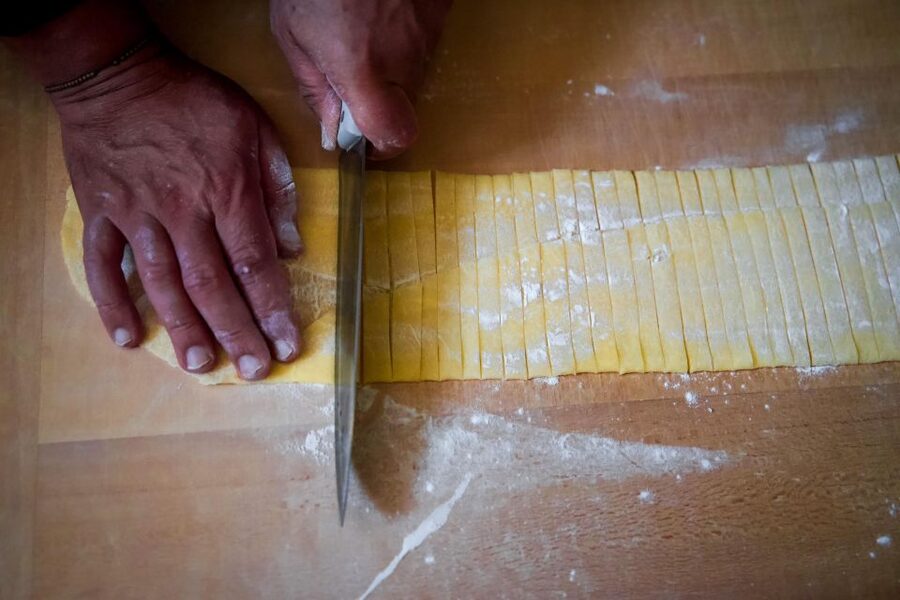
Next comes rolling. You flatten the dough and turn it into thin sheets for tagliatelle or filled pasta. The work is physical but not demanding, and Irene helps you understand how thin the dough should be. You will also learn how to cut the sheets into Bologna-style ribbons.
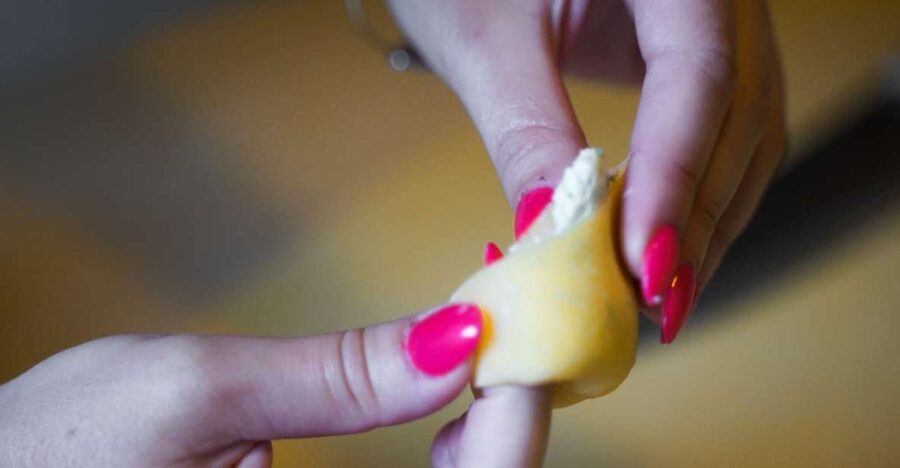
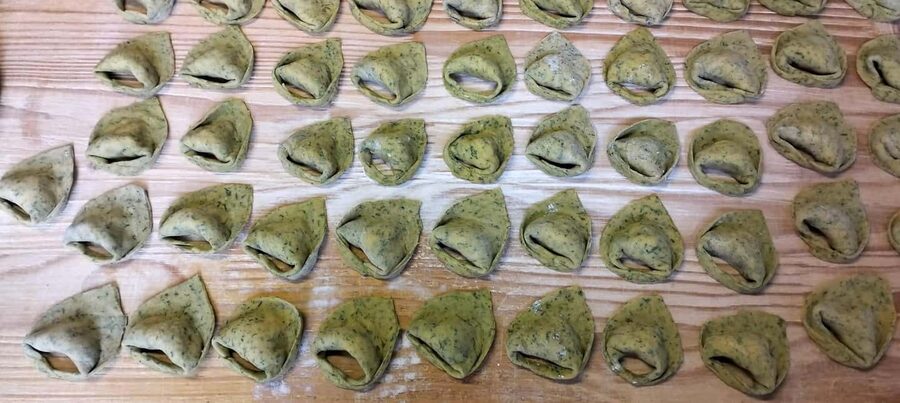
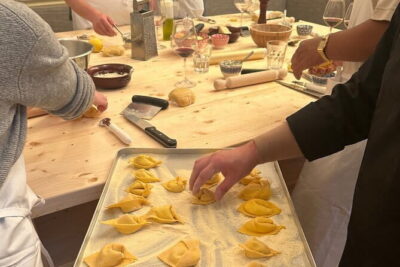
The filled pasta portion adds another skill. Depending on the session, you might make tortellini, tortelloni, or ravioli. You learn how to place the filling, seal the edges, and shape the pasta without letting it split. This is one of the most useful parts of the class because the technique can be repeated at home with different fillings.
The activity usually covers three types of pasta. The exact combination can change. Some groups have prepared tagliatelle plus several filled shapes, while others have made four varieties to accommodate different diets. If you have a preference, ask the host before the class begins, but do not expect a fixed professional-school syllabus.
One useful point: you may not cook every sauce or filling from scratch. The pasta work is the main lesson, while some sauces, fillings, ragù, focaccia, or dessert may already be prepared by the host or family. That is why I would call this primarily a pasta-making class with a meal, rather than a full course in every part of Italian cooking.
What you actually eat at the table
After the pasta is shaped, it is cooked and served as part of a shared meal. The food you eat is tied directly to the work you have just done, which gives the final course more meaning than a standard lunch. You can see the difference between freshly made pasta and dried pasta right away.
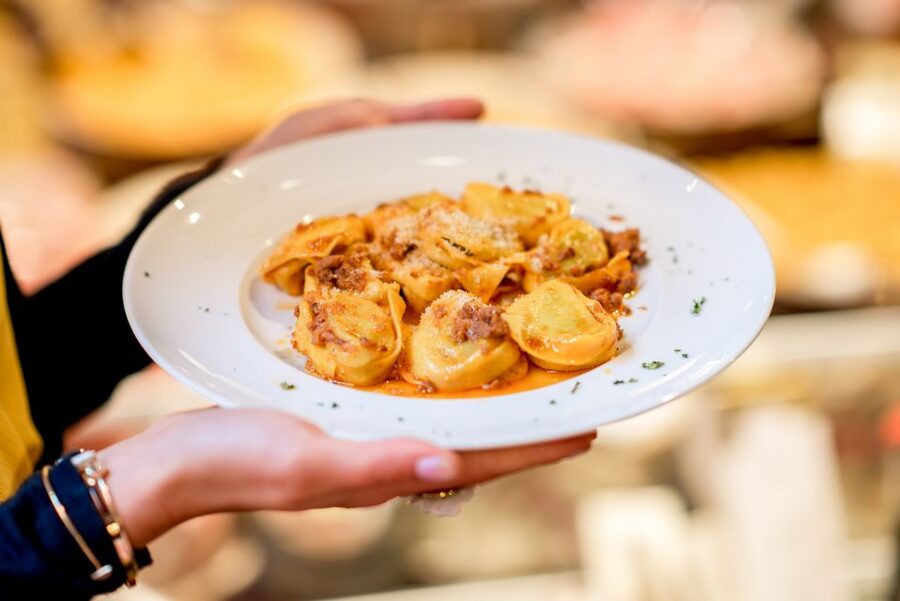
Tagliatelle is served in the Bologna style, commonly with ragù. The sauce is a major part of the meal, and Irene’s ragù has received especially warm praise. Some of the ragù may be prepared by the host or by a family member, including a grandmother’s recipe, so this is not always a lesson in making the sauce yourself.
Filled pasta may be served with its own sauce or filling. The meal can also include family-made focaccia, cake, cookies, fresh fruit, or other sweets, depending on seasonal availability. The details vary, but the overall format is generous: three pasta preparations followed by dessert and coffee.
Local wine is included. It is served during the meal and helps turn the class into a social lunch or dinner rather than a quick lesson at a workbench. Sparkling water has also been served at some sessions.
Portions have been described as substantial, so plan this as a main meal. If you are booking an evening session, you probably will not need another large dinner afterward.
The home setting, including its limits
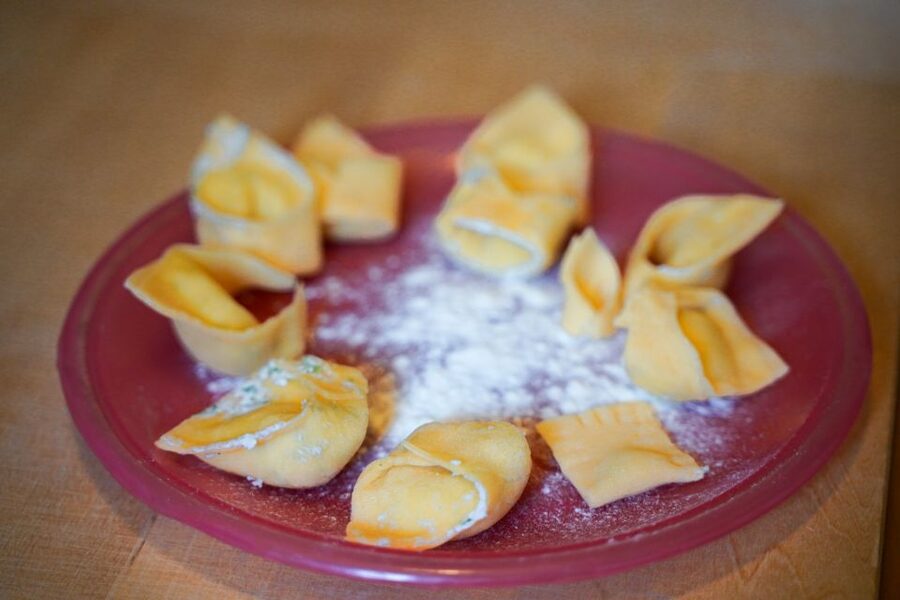
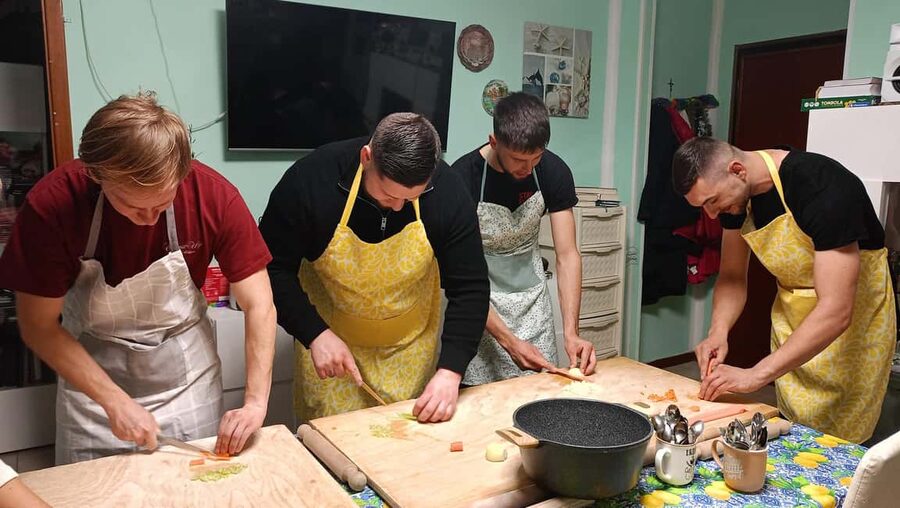
The apartment setting is the reason to book this activity, but it is also the reason to set realistic expectations. You are entering someone’s home, not a restaurant kitchen built for tour groups. That gives the class character, yet it can mean a tight work area and a crowded table.
Group size matters. A small group of four feels comfortable and allows the teacher to give each person attention. Larger groups can reach 14 people, and that number has been considered too many for the small room. If the booking platform shows the group size, check it before paying. If it does not, contact the host or supplier.
The home may include pets. Cute cats have been part of the atmosphere at some sessions. That could be a bonus for animal lovers, but it is worth keeping in mind if someone in your party has allergies or dislikes cats.
Standards are informal. The working table is reported to be clean, but the rest of an apartment may look cluttered or less polished than a commercial kitchen. I would not book this expecting a sleek cooking studio, professional equipment, or a formal restaurant service.
Instead, think of it as being welcomed into a local family home for a food lesson. The setting feels genuine because it is ordinary. You are there for the host’s knowledge, stories, food, and company, not for a designed backdrop.
More Wine Tours in Bologna:
- Bologna Food & Market Tour with 6 Tastings, Pasta, Wines & More
★ 5.0 · 1,328 reviews - Bologna: City Center Guided Wine Walking Tour
★ 4.9 · 210 reviews - Tuscany Day Trip from Florence: Siena, San Gimignano, Pisa and Lunch at a Winery
★ 5.0 · 21,634 reviews - Florence: Pasta Cooking Class with Unlimited Wine
★ 4.9 · 10,285 reviews
Irene’s teaching style and the social side
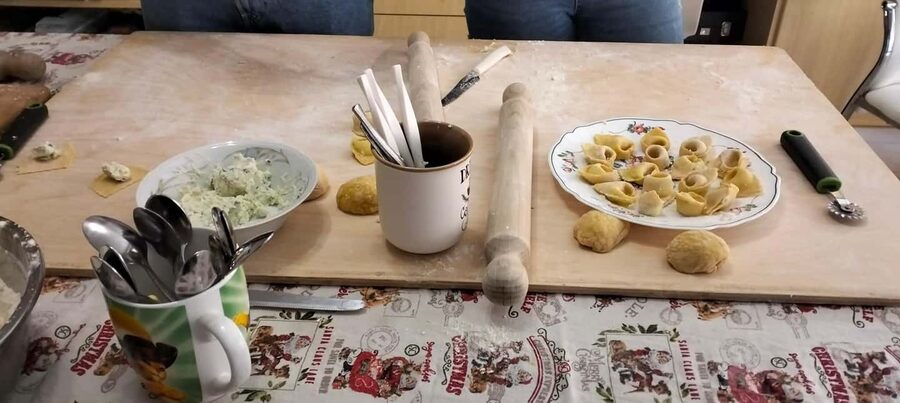
Irene’s main strength is her encouragement. Beginners are not expected to arrive with pasta-making skills, and the lesson moves step by step. She gives praise freely, which is useful when your first tortellini looks more like a small pouch than a neat ring.
Her English is clear enough for the instructions, and Italian is also available. She explains the process in a way that works for families, couples, solo participants, and mixed-age groups. Children have been kept involved during past sessions, though the activity still requires patience and careful handwork.
You may share the class with a small family, another couple, or a group of international visitors. That social element is part of the appeal. You work side by side, compare pasta shapes, and then sit together for the meal.
Solo participants can fit in well. One person has attended alone and received close attention from the host. Families can also make good use of the three-hour format, since the activity gives children something practical to do rather than asking them to sit through a food lecture.
The class can feel intimate at first because you are meeting in a stranger’s home. A warm host makes a big difference, and Irene’s welcoming approach helps. Still, if you prefer a formal venue with clear boundaries between teacher and student, this may feel more personal than expected.
Getting to the meeting point near Bologna
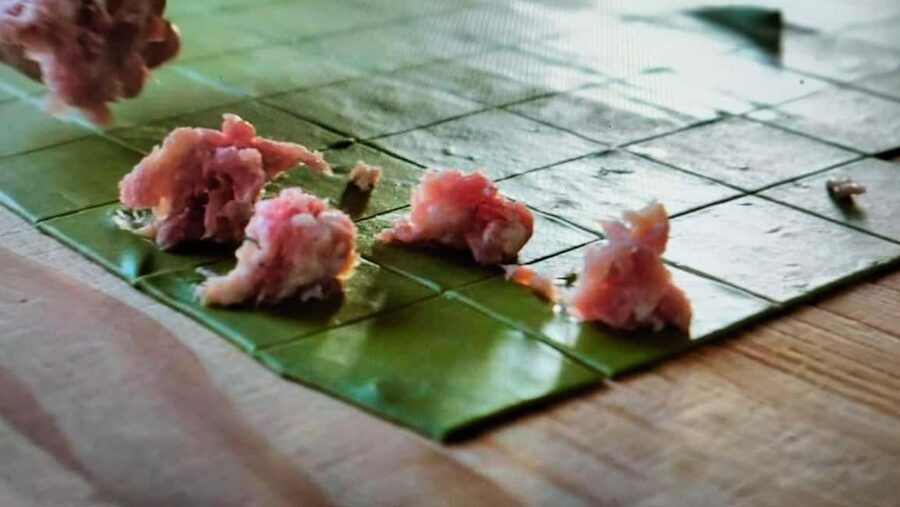
The meeting point is listed as Buzz Mattioli, but the apartment location has not always been easy to identify. Past participants have found it a few miles outside central Bologna, with access by bus, taxi, or bike.
Give yourself extra time. The building number and floor have caused confusion, and one participant noted that the number 60 and first-floor location were not clear enough. A phone with mobile data is useful so you can call the host if needed.
Do not assume this is a short walk from Piazza Maggiore or the central railway station. Check the route before class day, especially if you are carrying luggage or planning to arrive directly from another activity.
A taxi is the simplest choice if your schedule is tight. Public transport can work, but you should confirm the return route as well. The host has helped arrange taxis after the meal, which is useful if the class finishes later in the day.
The location is not a dealbreaker, but it changes the time commitment. Add transport time to the three-hour class, and avoid placing a timed museum entry or train departure immediately afterward.
Is $70 a fair price?
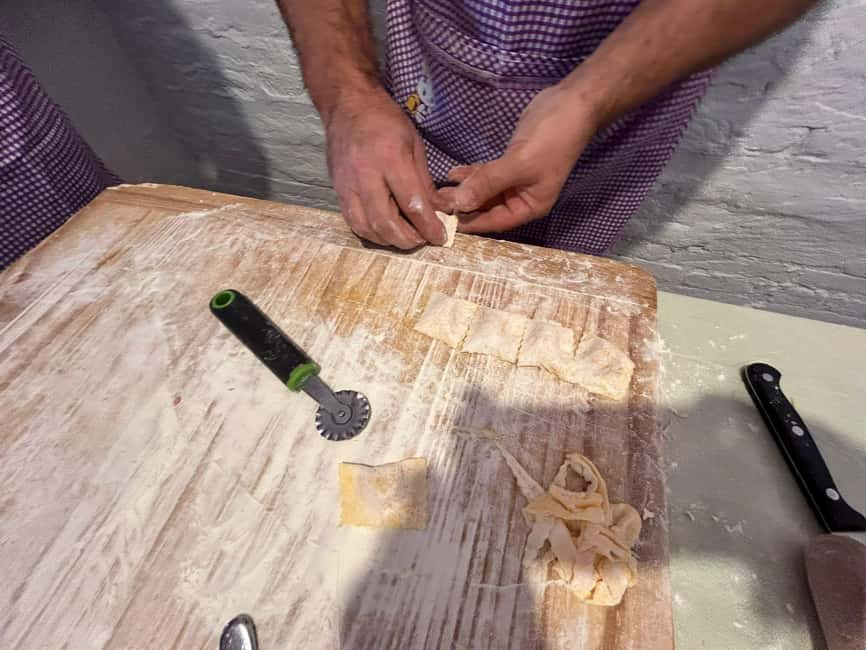
At $70 per person, this is a solid value if you want a meal and an activity in one booking. You receive roughly three hours of instruction, three pasta preparations, a full meal, wine, dessert, coffee, and recipes to take home.
A standard pasta lunch in Bologna could cost a fair portion of that price without giving you any practical skill. Here, you pay for instruction and food together. The recipes make the value last beyond the day, provided you actually try them at home.
The value is strongest for first-time pasta makers. You get direct help with dough consistency, rolling, shaping, and sealing, which can save you a lot of trial and error in your own kitchen.
It is less compelling if you are already an experienced cook looking for advanced sauce work, professional tools, or a detailed regional-food lecture. Since sauces and fillings may be prepared in advance, the class focuses on fresh pasta rather than the complete cooking process.
The reserve-now, pay-later option and free cancellation up to 24 hours before the activity make the booking fairly flexible. Starting times vary, so check availability for your date.
Who should book this experience
I would recommend it most strongly to:
- First-time pasta makers who want clear, practical instruction.
- Families with children who can take part in mixing, rolling, and shaping.
- Couples and friends looking for a shared meal with a personal setting.
- Solo visitors who enjoy joining a small social group.
- Food-focused visitors who want to connect a Bologna meal with local family traditions.
- Vegetarians, provided you tell the host in advance so the pasta and fillings can be adjusted.
The class is not ideal for someone who wants a quiet private lesson, a large professional kitchen, or a fixed menu with every ingredient prepared by the participant. It can also be awkward for very large groups because of the limited apartment space.
If you have food allergies, ask for details before booking. The supplied information confirms that vegetarian adjustments have been made, but it does not give a complete allergy policy or list of ingredients.
What to bring and how to prepare
Wear comfortable clothes and shoes. You will be working with dough and flour, and you may spend much of the class standing or leaning over the work surface.
Arrive with an appetite. The final meal includes the pasta you make, wine, dessert, coffee, and sometimes extra family baking. You do not need to plan a separate lunch or dinner around it.
Save the recipes when you receive them. Several pasta shapes can be difficult to remember after one lesson, and having the instructions at home is part of the point.
If you have dietary needs, state them before the activity rather than waiting until the meal. The hosts have adapted the pasta selection for vegetarian participants, but advance notice gives the kitchen more room to plan.
Finally, confirm the address, building number, floor, and best transport route. This is the one practical weakness that comes up repeatedly. The cooking is straightforward to follow, but finding the apartment may not be.
Should you book the Bologna pasta class?
Book it if you want to make pasta with your hands, eat a generous homemade meal, and meet a local host in a real home. Irene’s patient teaching, the three pasta shapes, the wine, and the recipes make this a strong choice for beginners and families.
Think twice if you need a spacious professional kitchen, want to prepare every sauce yourself, or dislike informal home settings. Also check the group size and route before booking, since a crowded room and unclear directions can take some shine off the afternoon.
For most visitors, the appeal is simple: you leave with a full stomach, a few useful pasta skills, and recipes that can bring a little Bologna into your own kitchen.
FAQ
How long does the Bologna pasta class last?
The activity lasts three hours. Starting times vary, so check availability for your chosen date.
What kinds of pasta will I make?
You will learn to make three types of homemade pasta. These may include tagliatelle, tortellini, tortelloni, or ravioli, depending on the session.
Is the meal included?
Yes. The experience includes a three-course meal centered on the fresh pasta you prepare, along with dessert, coffee, and local wine.
Are recipes provided?
Yes. Recipes are included so you can repeat the pasta-making techniques at home.
Is the class offered in English?
Yes. The host or greeter can conduct the activity in English or Italian.
Is the cooking class in central Bologna?
The class takes place in a typical home a few miles outside Bologna city center. You may need a bus, taxi, or bike to reach it.
Can I cancel the booking?
You can cancel up to 24 hours in advance for a full refund. A reserve-now, pay-later option is also available.
More Pasta-Making in Bologna
- Bologna: Pasta Tagliatelle Ragu Cooking Class with Spritz
★ 4.9 · 407 reviews - Bologna: Food Tour with Pasta Tasting & Local Specialties
★ 4.8 · 312 reviews - Florence Pizza or Pasta Class with Gelato Making at a Tuscan Farm
★ 5.0 · 6,801 reviews - Florence: Pasta & Tiramisu Cooking Class with Unlimited Wine
★ 4.9 · 6,708 reviews
Just added around Bologna
- Bologna Private Highlights & Hidden Gems Tour with a Local★ 5.0 · 359 reviews
- Bologna on the plate, Cooking Class with Alessia★ 5.0 · 260 reviews
- Bologna: Full meal Food Tour with Local Delights by Do Eat Better★ 5.0 · 541 reviews
- Bologna Local Pasta Cooking Class, Ragu, Spritz, Wine & Gelato★ 5.0 · 527 reviews
- Pastamama, Home Cooking Classes at Grace’s Home★ 5.0 · 521 reviews
- Bologna Private Food Tour with 6 or 10 Tastings★ 4.5 · 344 reviews
- Bologna Food Tour by Taste Bologna: Intimate Group (Max 10)★ 5.0 · 424 reviews
- Bologna: Pasta and Tiramisu Small Group Cooking Class with Wine★ 5.0 · 409 reviews
Pasta, compared.
Florence Pizza or Pasta Class with Gelato Making at a Tuscan Farm
Read our review →
Pasta & Tiramisu Cooking Class with Unlimited Wine
Read our review →
Pasta & Tiramisu Class with Fine Wine by the Vatican
Read our review →
Pasta Making Class with Wine, Limoncello, and Dessert
Read our review →
Fettuccine Pasta Cooking Class in Rome’s City Center
Read our review →Browse the lists this tour appears in