
Reviewed · HISTORICAL TOURS
Verona: History and Hidden Gems Guided Walking Tour
Verona’s best stories are often tucked beside the sights everyone comes to see. This two-hour walk connects the Arena, Roman gateways, medieval palaces, river views, and Shakespeare’s Verona, while pointing out details you could easily miss on your own. Guide Fabio Massimo Rapanà, a licensed Veronese who was born and raised here, gives the city a strong local voice.
I like the small groups of up to 10 and the headsets, which let you hear the guide clearly without crowding around him. I also like the mix of famous places and quiet lanes, especially the route through the old market area and along the Adige.
The main consideration is pace. You cover a lot in two hours, with many short photo stops rather than long visits inside monuments. If you want extended time at the Arena, Juliet’s House, or a church, plan to return afterward.
Key points at a glance
- A local guide with lifelong ties to Verona: Fabio explains the city through its streets, buildings, customs, and changing eras.
- A compact route with wide coverage: You see the Arena, Porta Borsari, Piazza delle Erbe, Piazza dei Signori, the Scaliger tombs, Juliet’s House, and more.
- Small groups and headsets: The group limit is 10, and the audio equipment helps in noisy squares and busy streets.
- History beyond the headline sights: Roman walls, medieval government buildings, old fountains, churches, and overlooked architectural details all get attention.
- Good first-day orientation: The walk helps you understand Verona’s layout and gives you a better eye for details during the rest of your stay.
- Practical for many visitors: The route is wheelchair accessible, runs rain or shine, and is offered in English, German, Italian, and Spanish.
Starting beneath the Italian flag in Piazza Bra
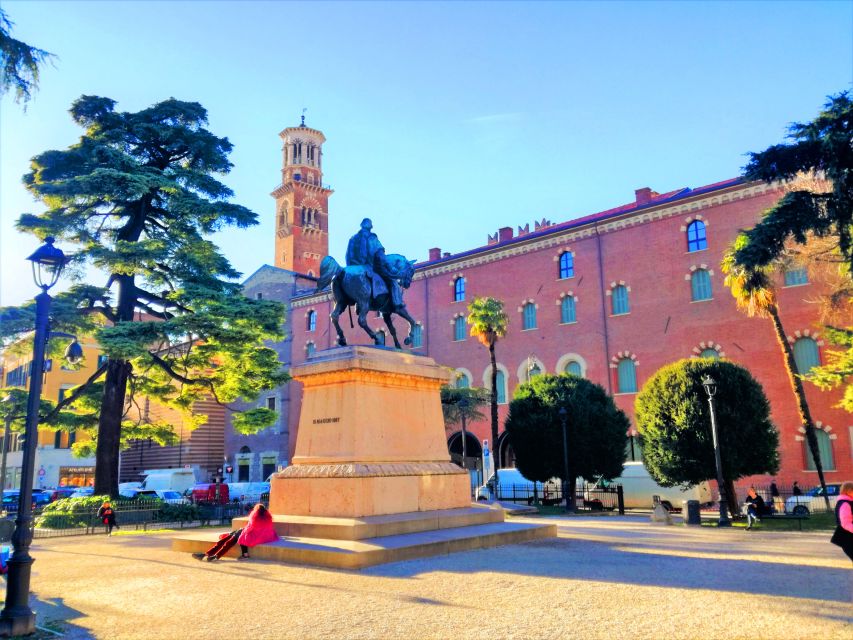
The meeting point is beneath the Italian flag at Verona’s Town Hall, Palazzo Barbieri, in Piazza Bra. This is an easy place to find, but give yourself enough time to reach the square. The tour begins with a short look at Piazza Bra before moving toward Verona’s most famous Roman monument.
Piazza Bra is more than a waiting area. It gives you a first sense of Verona’s scale, with the Arena, broad paving, historic façades, and the constant movement of people heading into the old center. Fabio uses this opening to place the city in time and space before the walk gets into smaller streets.
The tour is designed for a small group, with no more than 10 people. That matters here. Verona’s center can be busy, and a small group is easier to keep together when the guide stops beside a narrow street or points out a detail above your head.
More Walking Tours in Verona
- Verona: Small Group Guided Walking Tour with Arena Tickets
★ 4.9 · 848 reviews - Verona Highlights Walking Tour in Small-group
★ 5.0 · 493 reviews
The Arena, Roman walls, and the old route toward Corso
The Verona Arena is the first major stop. You learn about the gladiator contests held here and get time for photographs, but this is not a full interior visit. Entry fees are not included, so you should treat the Arena stop as an introduction rather than a substitute for seeing the amphitheater inside.
The Arena’s size and pinkish stone make it an obvious landmark, yet a guide adds useful context. Fabio connects the monument to Ancient Rome and to the later growth of Verona around it. That broader story is one of the walk’s strengths: you are not simply collecting famous buildings, you are seeing how one period left its mark on the next.
From here, the route follows foundations of the early medieval city walls toward the Corso, one of Verona’s oldest streets. This is the sort of detail many people walk past without noticing. The stones do not demand attention like the Arena does, but they help you picture the edge of the earlier city.
You then reach Porta Borsari, a Roman-era gateway once known as Porta Jovia. It is a quick stop, mainly for photographs and explanation. The remains are particularly useful for understanding that Verona was once a Roman town with formal entrances, roads, and defenses, not just a medieval city decorated with Roman ruins.
Porta Borsari and the Adige River views
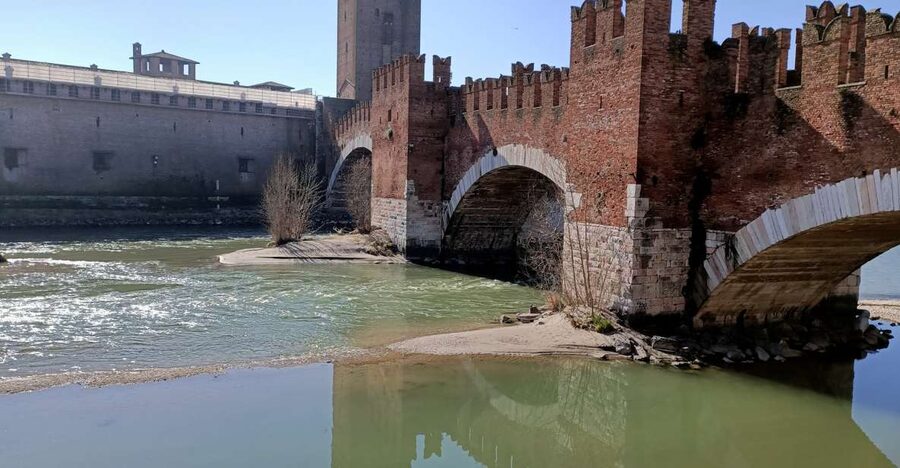
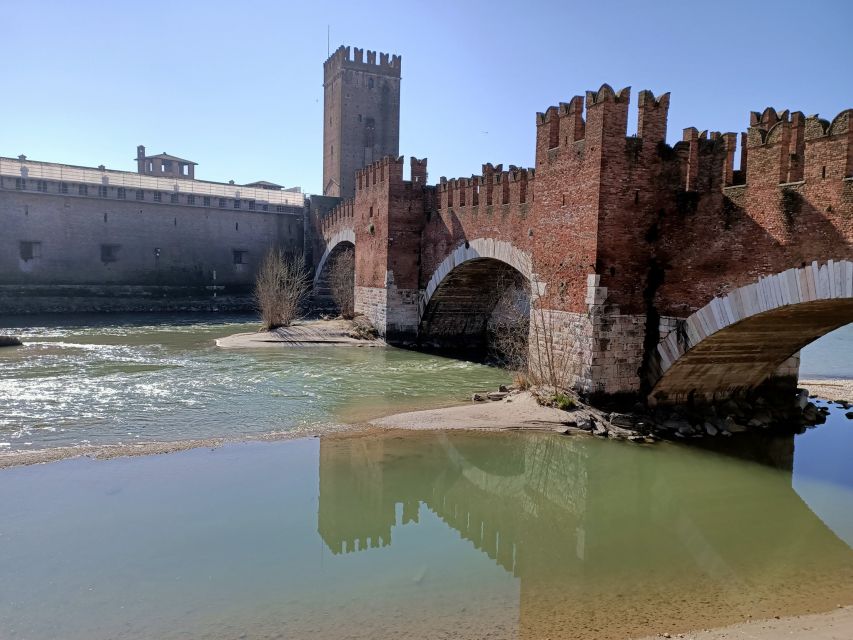
The route continues toward Riva San Lorenzo, where the walk opens up with views toward Castelvecchio and the Ponte Scaligero over the Adige River. This change of scenery is welcome after the tighter streets around the Corso.
The Ponte Scaligero belongs to Verona’s medieval Scaliger period and is closely tied to Castelvecchio, the former fortress and residence of the ruling family. You see the bridge from the river area rather than spending time inside the castle. That choice keeps the walk moving, while giving you a good reason to return later if Castelvecchio interests you.
Several short stops follow. Some are marked as secret or overlooked locations, and others are simply places to pause and look closely. Expect the guide to point out architecture, old street patterns, and connections between buildings rather than offer a long formal stop at each location.
This part suits people who enjoy the small evidence of a city’s past. It is less about ticking off a major attraction and more about learning to notice a fragment of wall, a side street, or the relationship between a church and the older street grid.
Piazza delle Erbe and Verona’s old market
Piazza delle Erbe is one of the central highlights. The square occupies the site of the Roman forum and later became the city’s main market. You see the historic fountain, described as the oldest in Verona, along with decorated façades and townhouses surrounding the square.
Fabio explains how the market shaped the square’s identity. That context helps you read the space differently. Instead of seeing only cafés, souvenir stalls, and colorful façades, you can picture the square as a working civic center that changed use over centuries.
The stop lasts about 10 minutes, which is enough for an explanation and photographs but not for lingering over every building. You may want to return later, especially if you want to study the façades or spend time in the square at a slower pace.
The route through nearby streets includes the Church of San Giovanni in Foro and several smaller pauses. These stops are brief, but they break up the walk with useful details. You may notice how Verona’s churches and civic buildings sit within a compact center, often sharing space with ordinary shops and residential streets.
More History Tours in Verona:
- Venice: St. Mark Basilica Ticket, Audioguide+History Gallery
★ 3.9 · 4,780 reviews - Venice’s Best: Basilica, Doge’s Palace, Gondola & History Gallery
★ 4.5 · 2,478 reviews - Historic Milan Tour with Skip-the-Line Last Supper Ticket
★ 4.5 · 1,976 reviews - Venice: City Center Historical Guided Walking Tour
★ 4.2 · 1,873 reviews
Piazza dei Signori and the world of the Scaligers
From Piazza delle Erbe, the walk enters Piazza dei Signori. This quieter square is surrounded by important public buildings, including Palazzo della Ragione, Palazzo della Scala, and Palazzo del Capitano.
The square helps explain medieval Verona’s political structure. Fabio discusses the Scaliger period and points out the city’s tallest tower, giving you a clearer picture of the power held by Verona’s ruling family. The buildings are not just attractive backdrops. They show how government, wealth, and family authority were presented in the medieval city.
This is one of the better stops for architecture fans. The buildings around the square have different roles and styles, yet they form a connected civic setting. You get a useful lesson in reading a plaza as a record of power.
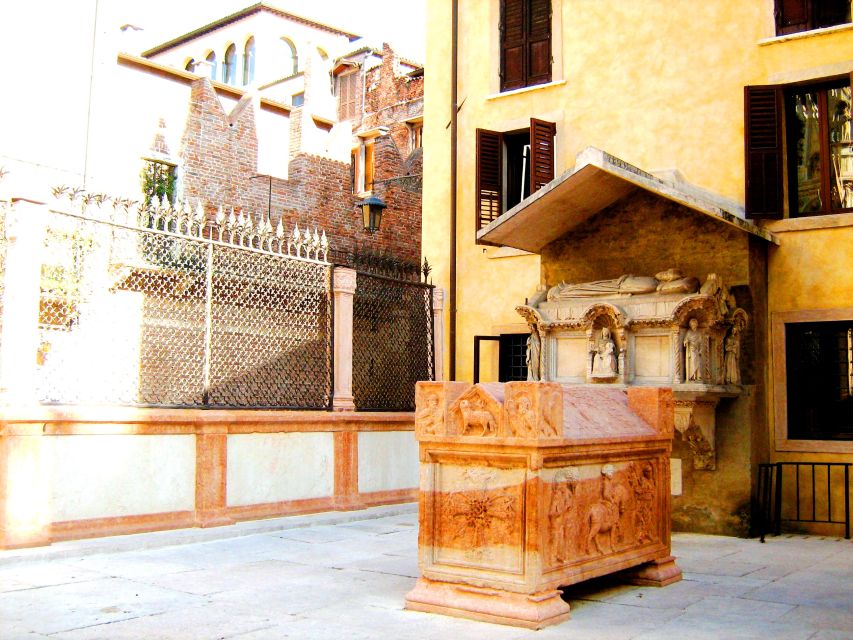
The tour also passes the Arche Scaligere, the dramatic tombs of the Scaliger family. Their elaborate Gothic forms are among Verona’s most memorable sights, and the short stop gives you time to take photographs and hear why these mausoleums mattered.
Do not expect to enter the tomb enclosure on this walk. The point is to understand what you are seeing and decide if you want to come back for a closer look.
Santa Anastasia and the city’s religious architecture
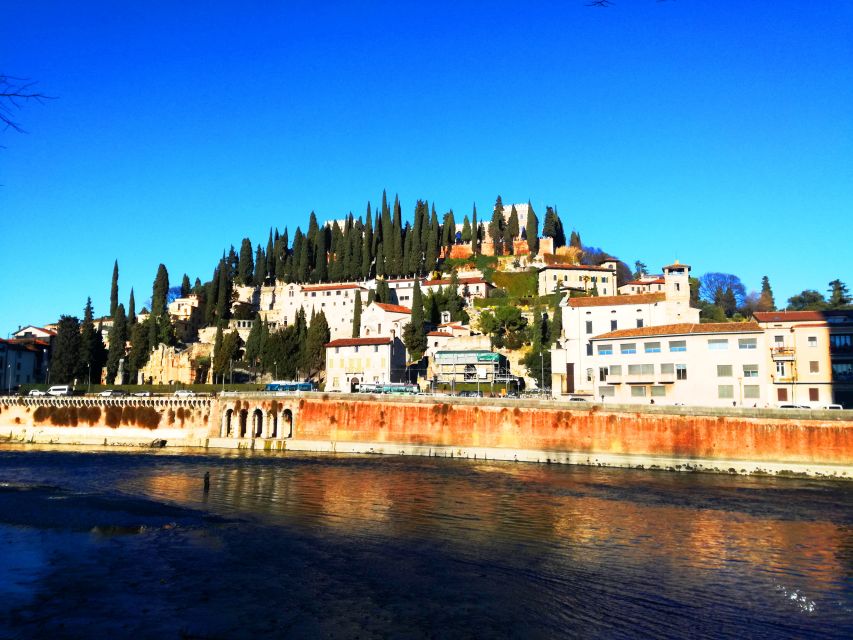
The route continues past the Basilica of Santa Anastasia. The stop is mainly exterior, so you will not receive an extended church visit as part of the tour. Even so, the basilica adds an important religious layer to the story of Verona.
After Roman monuments and medieval government buildings, Santa Anastasia shows how the city’s public identity was also shaped by religious institutions. The church’s presence in the surrounding streets helps you see how close together Verona’s major civic, religious, and aristocratic spaces are.
The walk then reaches Piazzetta Bra Molinari, another place where the route offers scenic views and a chance to pause. It is a reminder that the tour is not restricted to the postcard center. You move through smaller spaces that connect the best-known squares, and Fabio uses them to explain how the city fits together.
On warm days, the route’s practical handling matters. Several people who took the walk appreciated that Fabio looked for shade, allowed pauses, and directed the group toward places to refill water. Still, bring your own water and wear comfortable shoes. The tour takes place outdoors and continues in rain or shine.
Romeo, Juliet, and the real Verona behind the romance
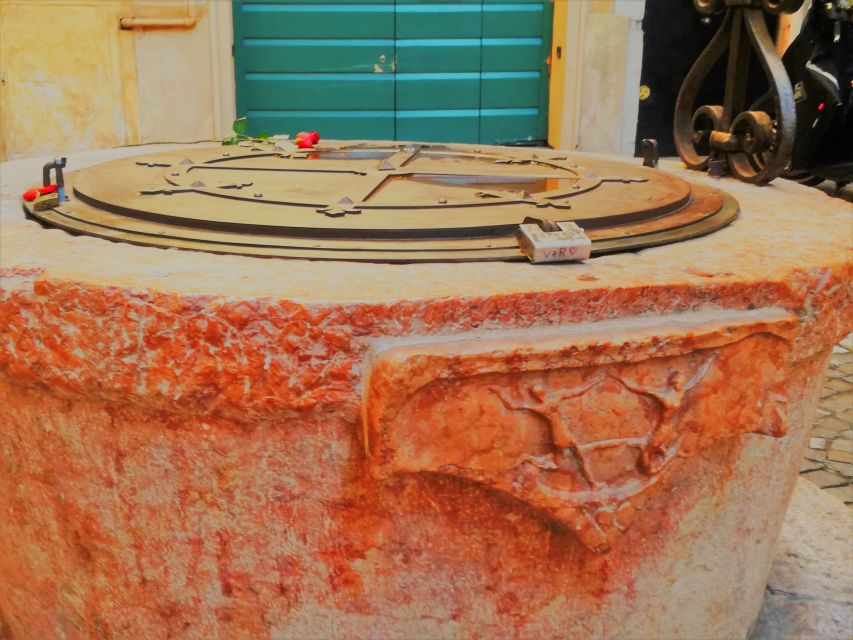
The walk includes Casa di Romeo and then the Arche Scaligere before reaching Piazza Indipendenza and Juliet’s House. This sequence is useful because it places the Shakespeare story inside Verona’s medieval setting rather than treating it as a separate romantic attraction.
Juliet’s House and the balcony are a short photo stop, not a full museum visit. Entry is not included, and the tour does not promise time inside. If the balcony is a major reason for your visit, return afterward with a separate plan.
Fabio explains the historical inspiration behind Shakespeare’s tragedy and helps separate the literary story from the actual city. That is the right approach in Verona. You can enjoy the romance while also recognizing that the city’s history is broader, older, and more complicated than the famous family feud.
The route near Juliet’s House can be busy. The small group and headsets are useful here, since you can listen without needing to stand directly beside the guide. The audio equipment is worn as an external earpiece, and it has been especially helpful for people who find it difficult to hear guides in crowded streets.
Old markets, Jewish heritage, and overlooked corners
The walk continues through the Courtyard of the Old Market and near Verona’s synagogue. These stops expand the story beyond Roman ruins, noble families, and Shakespeare.
The old market area gives you another view of Verona as a practical working city. Courtyards and passages can be easy to overlook when you move between the Arena and Piazza delle Erbe, but they reveal how commerce and daily life shaped the historic center.
The synagogue stop is brief, yet its inclusion is valuable. It reminds you that Verona’s story includes different communities and traditions, not only the ruling families and major churches. The tour does not present this as a long specialist visit, but it adds another thread to the city’s cultural past.
You also pass the former Convent of Saint Mary della Scala of the Servants of Mary and several smaller sites around Via Dietro Anfiteatro. These are short photo or pass-by stops. Their value comes from the connections Fabio makes between them, rather than from any one stop lasting a long time.
The tour finishes back near Palazzo Barbieri. That makes the route practical for a first day, since you end where you began in the center of Verona.
What the two-hour format does well
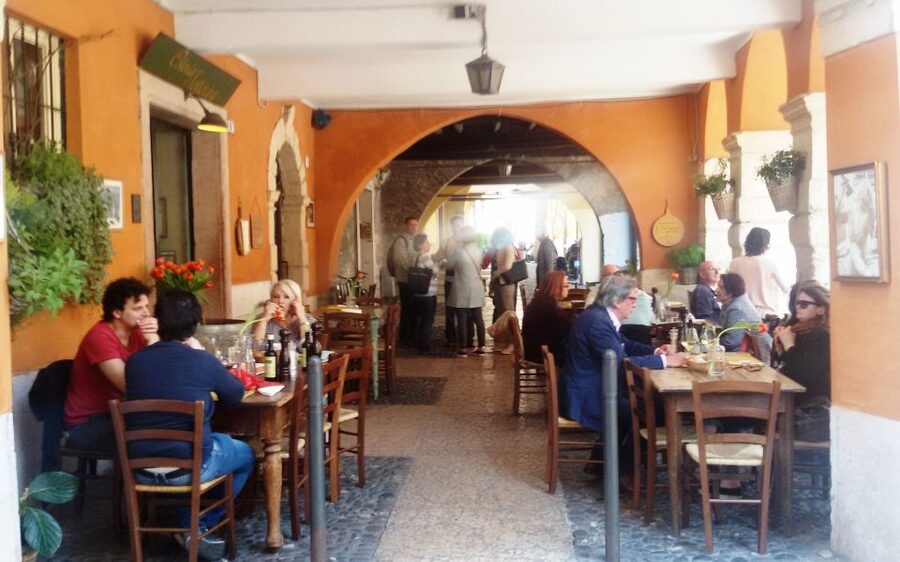
Two hours is a useful length for an introduction. You get a clear sweep from Ancient Rome through the medieval period and into modern Verona without giving up half a day. The route also gives you a list of places to revisit at your own speed.
The tradeoff is density. With more than 30 points along the route, many stops last only two to five minutes. You will hear plenty of background, but you will not study every façade or enter every monument.
That format suits you if you want orientation, context, and a strong first look. It is less suitable if you prefer one museum, church, or archaeological site explored at length.
Fabio’s style is another major part of the experience. He mixes dates and architecture with stories, local perspective, humor, and links to wider European history. He also answers questions carefully and has been praised for remembering names and where people come from, a small touch that makes a group walk feel more personal.
Is $41 a fair price?
At $41 per person, the tour sits in a reasonable range for a two-hour guided walk, particularly with a maximum group of 10 and headsets included. You are paying for a planned route, a licensed local guide, and the ability to see a lot of Verona without spending time figuring out what each building means.
The value is strongest if you are visiting for the first time. Afterward, you can return to the Arena, Castelvecchio, Juliet’s House, Santa Anastasia, or the Scaliger tombs with a better understanding of what you are looking at.
The price does not include transport, food, drinks, or admission fees. The tour itself is on foot, and no transport is needed for the listed route. Keep extra time and money available if you want to go inside the paid sights.
Free cancellation up to 24 hours before the start and the option to reserve now and pay later make the booking fairly flexible. Starting times vary, so check availability for your date.
Who will enjoy this Verona walking tour?
I would choose this for a first visit, especially if you like history, architecture, urban details, and local stories. It also works well for families, since Fabio has been effective at keeping younger participants interested without turning the walk into a children’s show.
The tour is offered in English, German, Italian, and Spanish. Private and small-group options are available, while the standard small group is capped at 10.
The route is wheelchair accessible, but it remains a two-hour outdoor walk through city streets. Comfortable shoes are essential. Bring water, and prepare for changing weather because the walk operates rain or shine.
You should consider another format if your priority is entering monuments, spending a long time at the Arena, or focusing only on Juliet’s House. You can still use this walk as an introduction, then visit those places separately.
Should you book it?
Book this tour if you want Verona to make sense, not just look beautiful. Fabio’s local background, clear storytelling, small group, and attention to overlooked details give you a better way to read the city’s streets.
I especially recommend taking it early in your stay. You will then have time to return to the places that catch your interest, use Fabio’s restaurant and city suggestions, and notice the architectural details that might otherwise pass unseen.
Skip it only if you dislike walking or want a long indoor visit at one attraction. For most first-time visitors who have two hours to spare, $41 is a fair price for a focused introduction to Verona’s Roman, medieval, religious, and literary sides.
FAQ
Where does the Verona walking tour begin?
Meet the guide beneath the Italian flag at the Town Hall, Palazzo Barbieri, in Piazza Bra.
How long does the tour last?
The guided walking tour lasts two hours.
What languages are available?
The tour is offered in English, German, Italian, and Spanish.
Is the tour wheelchair accessible?
Yes, the activity is listed as wheelchair accessible.
Are entrance fees included?
No. Entries, transport, food, and drinks are not included in the price.
What should I bring?
Bring comfortable shoes and water. The tour runs rain or shine.
Just added around Verona
- Guided Food Tour with Wine Tasting in Verona★ 4.3 · 229 reviews
- From Milan: Venice and Verona Full-Day Tour by Train★ 4.1 · 217 reviews
- Verona: Hands-on Fresh Pasta and Tiramisù Cooking Class★ 4.9 · 295 reviews
- Verona: Montresor Winery Visit with Wine Tasting and Snacks★ 4.6 · 217 reviews
- From Verona: Valpolicella and Amarone Wine Tasting Tour★ 4.9 · 560 reviews
- Highlights and hidden gems Verona Bike Tour★ 5.0 · 393 reviews
- Verona Highlights Walking Tour in Small-group★ 5.0 · 493 reviews
- Verona: Pasta and Tiramisu Cooking Class With Free Flowing Wine★ 5.0 · 575 reviews
Historical Tours, compared.
St. Mark Basilica Ticket, Audioguide+History Gallery
Read our review →
Venice’s Best: Basilica, Doge’s Palace, Gondola & History Gallery
Read our review →
Historic Milan Tour with Skip-the-Line Last Supper Ticket
Read our review →

Ancient History and Colosseum Underground Tour
Read our review →
Forbidden History Walking Tour & Pub Crawl with Drinks
Read our review →
2-Hour Guided Walking Tour of the Historical Center
Read our review →Browse the lists this tour appears in