
Reviewed · WALKING TOURS
Experience Florence’s Art and Architecture on a Walking Tour
Florence packs a remarkable amount into a small historic center, and this tour gives you the basic map in about two hours and fifteen minutes. You move from Santa Maria Novella to Santa Croce, passing the Duomo, Piazza della Signoria, the Uffizi, and several less obvious corners along the way. It is a smart first look at the city, especially at the low listed price of $3.63.
I like the clear route through Florence’s major landmarks and the chance to hear the city explained by guides such as Ludi, Ludovica, Natalia, and Ryan. I also like the practical advice that can come along with the history, including food suggestions, toilet locations, good viewpoints, and the little wine windows that are easy to miss on your own.
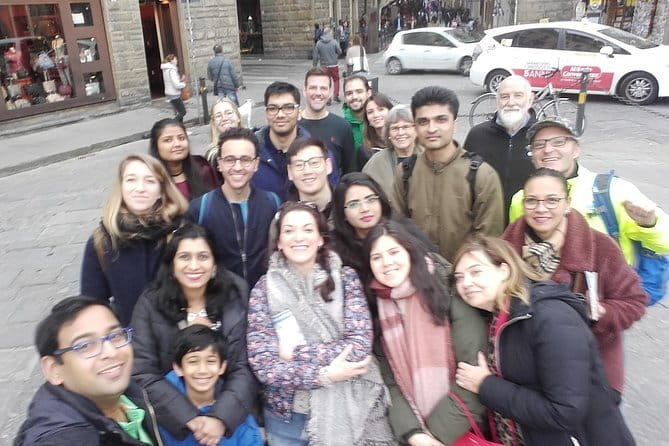
The main concern is sound. One report describes trouble hearing the guide, and another records a group of more than 40 people during a busy August period. The usual group size is meant to be no more than 20, but you should stay close to the guide and speak up quickly if the sound is poor.
Key points to know before you book
- A fast Florence orientation: Cover the main historic center in one morning, from Santa Maria Novella to Santa Croce.
- A guide-led route: Learn about Florence’s architecture, Roman beginnings, Medici power, art, and local customs without planning the walk yourself.
- Major sights from the outside: See the Duomo complex, Palazzo Vecchio, the Uffizi, Ponte Vecchio, and Santa Croce, with no standard museum admissions included.
- Useful local tips: Guides have shared advice about food, toilets, viewpoints, less touristy streets, and Florence’s wine windows.
- Very low upfront cost: The listed price is $3.63, but this is a tip-based free tour, so you are expected to decide what the guide’s work was worth.
- A few practical limits: English is the only listed language, the route requires walking, and hearing can be difficult if the group grows too large.
Why this is a good first walk through Florence
The best use of this experience is as an introduction, not as a substitute for Florence’s museums. You get the city’s framework first: the churches, squares, ruling families, artists, and streets that make later visits to the Uffizi, Duomo, or Palazzo Vecchio easier to understand.
The route also has a sensible shape. It begins near the main railway station at Santa Maria Novella and ends at Santa Croce, so you are not sent back to your starting point. After the walk, you can continue exploring around Santa Croce or make your way toward other central sights.
At 10:30 a.m., the tour takes place during the main sightseeing part of the day. That gives you plenty of daylight and time afterward for a museum or a longer lunch. It also means the center can be noisy, crowded, and hard to hear, especially around the Duomo and Piazza della Signoria.
The guides are an important part of the experience. Ludi, also referred to as Ludovica, has been praised for her strong command of Florentine stories and her willingness to point out less obvious streets. Natalia is noted for her explanations of art, Florence, and the Medici family. Ryan has been described as keeping a group together at a steady pace, even when a city event made the streets harder to navigate.
That range of guiding styles matters. You are not buying a recorded audio route. The quality depends on the person leading your group, the size of the group, the day’s street conditions, and where you are standing when the guide speaks.
More Walking Tours in Florence
- Florence: Guided Walking Tour
★ 4.5 · 3,334 reviews - Skip the line: Uffizi and Accademia Small Group Walking Tour
★ 4.5 · 3,135 reviews - Florence: Guided Walking Tour
★ 4.6 · 1,602 reviews
Santa Maria Novella: the tour’s practical starting point
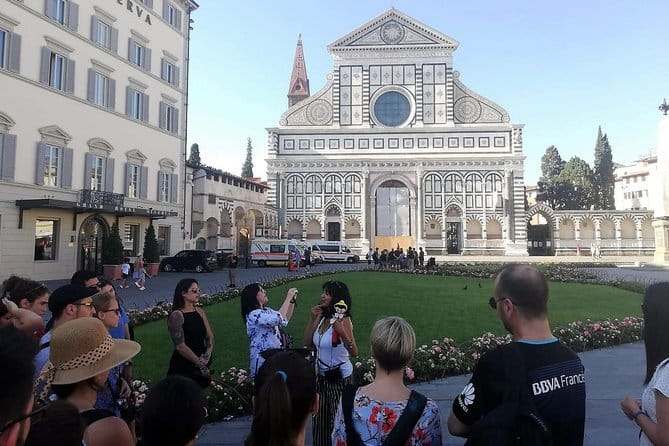
Meet at 10:30 a.m. at P.za di Santa Maria Novella, 4n, in front of the Basilica of Santa Maria Novella. This is a convenient starting point because the church is close to Florence’s main railway station and public transportation.
The opening stop gives the guide a chance to explain the church and set the tone for the rest of the walk. Santa Maria Novella is not just a useful meeting landmark. Its façade and long religious history introduce the mixture of art, faith, and civic power that appears again and again in Florence.
You are scheduled to spend about 10 minutes here, with no admission charge for the tour stop. That short visit is enough to get oriented, but not enough for a full look inside the church. If Santa Maria Novella interests you, plan a separate visit when you can give it more time.
Via de’ Tornabuoni and the polished side of Florence
From Santa Maria Novella, the route moves toward Via de’ Tornabuoni, Piazza Antinori, Palazzo Strozzi, and Piazza Santa Trinita. This part of the walk shows Florence as both a historic city and a place of fashion, commerce, and powerful families.
Via de’ Tornabuoni is known for its elegant shops, but the guide’s value here is putting the street into context. You are not simply walking past storefronts. You are learning how Florence’s grand streets, palaces, and public squares reflect the wealth of families who shaped the city.
The stop lasts about 10 minutes and is free. It is also one of the places where a guide can help you look beyond the obvious. Palazzo Strozzi and the surrounding streets offer a useful contrast with the religious buildings on the route, showing how private wealth and public architecture worked together.
Piazza della Repubblica and Florence’s Roman beginnings
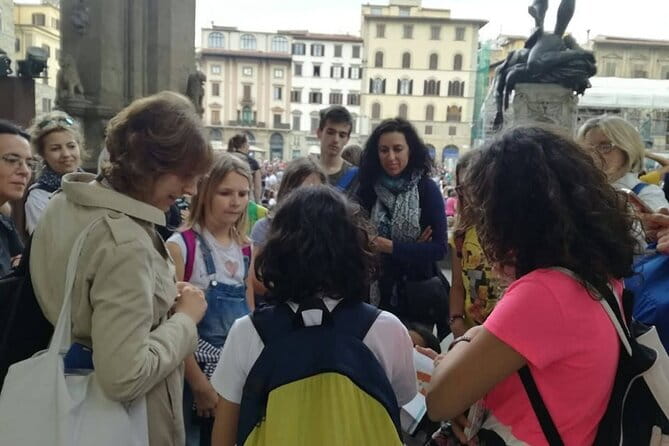
The five-minute stop at Piazza della Repubblica is brief, but it introduces a different layer of the city. The focus is Florence in Roman times, a reminder that today’s elegant square sits on much older foundations.
Do not expect a long archaeological lecture here. This is a quick piece of the larger story, inserted as the group crosses the center. That is typical of the tour: you get short explanations at many places rather than one long talk in a single square.
This approach suits you if you want a broad picture and a steady walk. If you prefer detailed study of each monument, you may find some stops too short. Take note of the places that catch your attention, then return later with more time.
Same city, a completely different sort of day:
- Florence: Skip-The-Line Uffizi Gallery Timed Entry Ticket
★ 4.5 · 27,832 reviews - Florence: Timed Entrance Ticket to Michelangelo’s David
★ 4.6 · 16,983 reviews - Florence: Michelangelo’s David Skip-the-Line Entry Ticket
★ 4.5 · 12,764 reviews - The Best tour in Florence: Renaissance & Medici Tales – guided by a STORYTELLER
★ 5.0 · 12,316 reviews
The Duomo complex, from Brunelleschi’s dome to Giotto’s tower
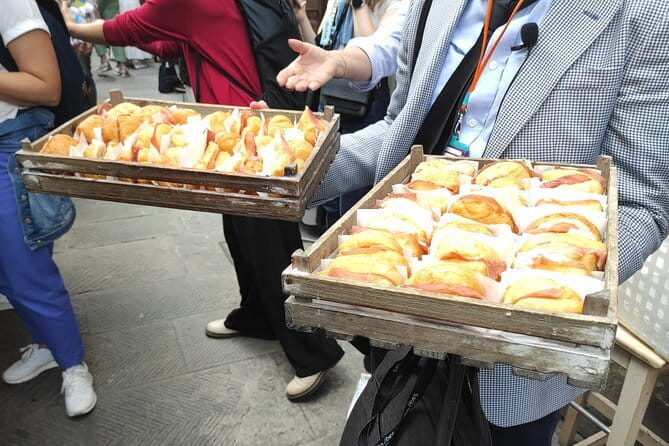
The Cathedral of Santa Maria del Fiore is the route’s grandest visual stop. The guide covers the cathedral, the Baptistery, Giotto’s Campanile, and Brunelleschi’s dome in about 10 minutes.
That is enough time to understand the parts of the complex and hear why they matter. It is not enough time to enter the cathedral, climb the dome, visit the bell tower, or study the Baptistery doors in detail. Admission is not included for this stop, so plan and pay for any separate interior visit yourself.
This is a key distinction when comparing the tour with a paid cathedral experience. Here, you are getting an outdoor explanation and an introduction to the architecture. You are not receiving timed entry or a climb reservation.
The quick format can still be useful. Florence’s cathedral complex is visually overwhelming, and a guide helps you sort the cathedral, Baptistery, campanile, and dome into a clear picture. Once you understand what you are looking at, a later visit feels less like a pile of impressive buildings and more like a connected project.
Because this is one of Florence’s busiest areas, sound may be a problem. Stay close, position yourself where you can see the guide, and ask for a repeat if you miss an important point.
Orsanmichele, where a church once served the city’s working life
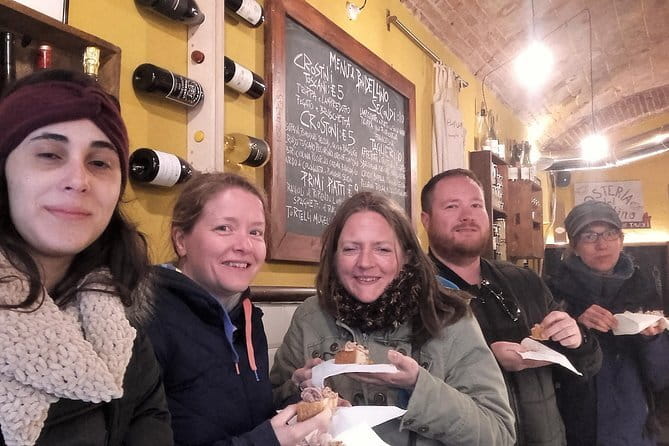
The route continues to the Church and Museum of Orsanmichele for about 10 minutes. This is a particularly useful stop for anyone interested in sculpture and the way Florence’s guilds shaped public art.
The names associated with the building include Donatello, Ghiberti, Giambologna, Brunelleschi, Verrocchio, Sangallo, and Orcagna. The guide’s job here is to connect those artists with the statues and architecture around you, rather than simply recite names.
Admission for the tour stop is listed as free, though the experience does not promise an extended museum visit. You should treat Orsanmichele as a focused explanation from the street or exterior area, with extra time needed if you want to enter and study the collection.
This stop also helps balance the better-known Duomo and Uffizi areas. You are still in the heart of Florence, but the subject shifts toward the city’s working institutions and the artists who made its public spaces famous.
Piazza della Signoria: Florence’s open-air political stage
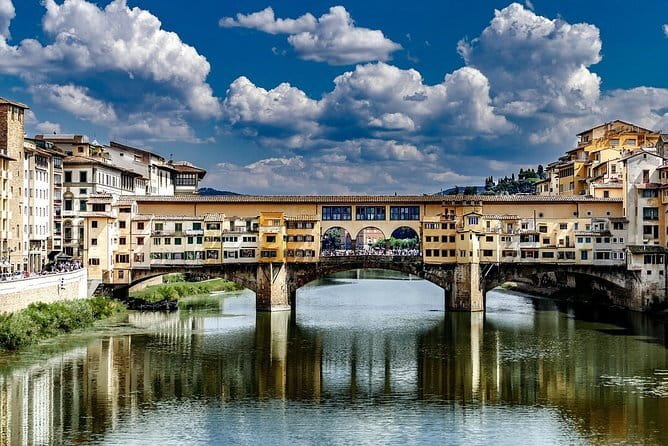
The 15-minute visit to Piazza della Signoria is the longest single stop. That makes sense. This square brings together Palazzo Vecchio, the Uffizi, Loggia dei Lanzi, the Torre di Arnolfo, and the route toward Ponte Vecchio.
The guide covers a long list of figures and works, including David, Marzocco, Cosimo de’ Medici, Perseus, and Cellini. The square can seem like a crowded collection of statues until someone explains who commissioned them, where they belonged in Florentine public life, and why their placement mattered.
You will not tour the Uffizi or Palazzo Vecchio as part of this walk. Instead, you receive the outside context needed to decide if either deserves a longer visit. This is good value if you are trying to plan your Florence days, but less useful if you expect detailed museum commentary.
The Loggia dei Lanzi is another place where the outdoor format works well. You can see sculpture in its original public setting, without an entrance line or an admission fee for the stop. The guide may also point toward Ponte Vecchio, giving you a useful sense of how the central sights connect.
Small local details, including Florence’s wine windows
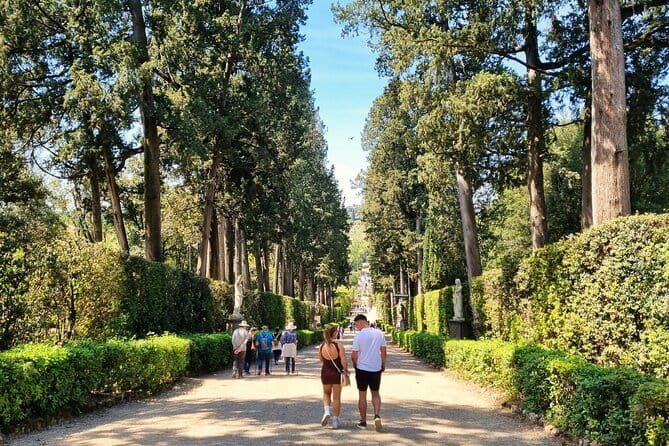
One of the pleasures of the walk is that it does not stick only to the grandest monuments. The route can include Florence’s wine windows, small openings associated with the old practice of selling wine directly from palaces.
These details are valuable because you might pass one without realizing what it is. A short explanation turns an ordinary wall into part of Florence’s social and commercial story.
The route also moves through streets that are less obvious than the standard postcard stops. Ludi has been praised for suggesting places away from the main path, along with food ideas, toilets, and viewpoints. Those tips may be as useful as the formal history, especially if this is your first day in Florence.
Do keep expectations realistic. The tour promises an express overview, not a food tour or a dedicated search for wine windows. These details appear as part of the walk rather than as its main subject.
Santa Croce: a fitting finish
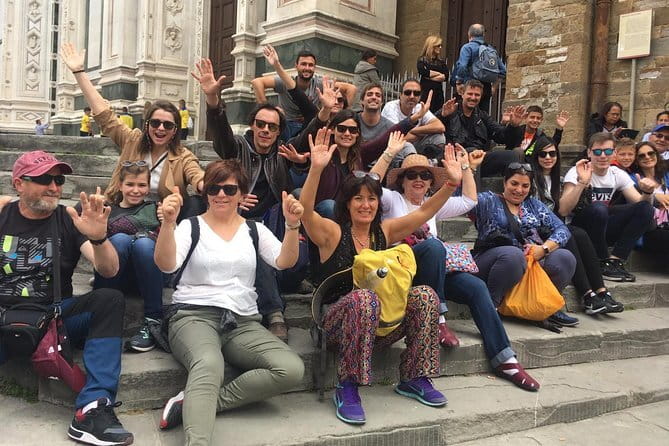
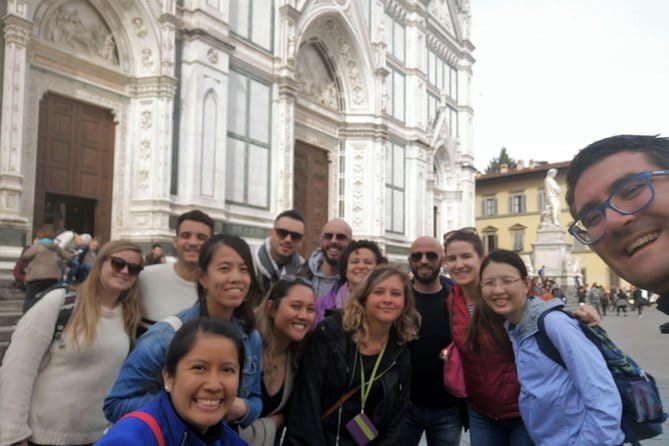
The tour ends in front of the Basilica of Santa Croce at Piazza di Santa Croce, 18R. The final stop lasts about 10 minutes and covers the basilica’s history and the monument to Dante.
Santa Croce is a strong ending because it gives the route a final church, a major square, and another link to Florence’s artistic and literary identity. It is also a useful place to continue on your own after the guide leaves.
As with Santa Maria Novella, you should not assume that the tour includes a full interior visit. The listed stop is free, but the experience is built around the walking route and explanations rather than extended time inside each monument.
The end point is practical. You can stay in the square, seek lunch, or use the tour’s orientation to choose your next museum or church. Since the walk begins near Santa Maria Novella and finishes across the center, it also gives you a helpful north-to-south understanding of the old city.
Price, tipping, and what the low fee really means
At $3.63 per person, the listed price is unusually low for a guided two-hour walk. It makes the experience easy to fit into a Florence budget, but you should understand the payment model before booking.
This is described as a free tour, which means the guide’s payment is based on your tip rather than being fully built into the ticket price. The low booking charge is not the whole cost in practice. Bring enough money to reward the guide if the walk gives you useful history, practical advice, and a good orientation.
That system can offer strong value. You can try a short city introduction without committing to a costly private tour, and the group format keeps the price accessible. It also means the final value depends heavily on the guide and on whether you can hear and follow the walk.
The tour does not include admission to the cathedral complex or other paid sights. You are paying for the route and guiding, not for museum entry, a dome climb, or reserved access.
Group size, sound, and walking comfort
The stated maximum is 20 people, which is a sensible size for a city walk. A group of that size can move through narrow streets without becoming impossible to manage, and you have a better chance of hearing the guide.
There has been at least one period when groups grew beyond that target, with a report of more than 40 people. The provider response says the usual group should be around 20 to 25 and that stricter limits were planned. Still, you should treat group size as a practical concern, not a minor detail.
A small speaker may be used, but it is not the same as a personal headset. One person left partway through after having trouble hearing. If you have any hearing difficulty, stand near the guide and tell the guide immediately when sound is lost.
The walk lasts approximately 2 hours and 15 minutes. The route is through the historic center, with stops at several major squares and churches. Most people can participate, and service animals are allowed, but the data does not provide a detailed surface or mobility description, so you should contact the provider if you need specific access information.
Who will get the most from this Florence walk
I would choose this tour for a first morning in Florence, a short stay, or a first day when you want help deciding where to spend your limited museum time. It is also a good fit if you like history in short, lively portions and want a guide to connect famous landmarks with streets you might otherwise ignore.
It suits budget-minded visitors particularly well. The $3.63 booking price keeps the risk low, while the tip system lets you judge the value after the walk.
You may want something else if you want interior visits, a dome climb, a quiet lecture, or detailed art analysis at every stop. A private tour or a museum-specific guide would be better for that. You should also think twice if you dislike group walking or find outdoor audio difficult.
English is the listed language. Confirmation is sent at booking, and free cancellation is available up to 24 hours before the start time. Changes or cancellations inside that window are not accepted for a refund, and poor weather or an insufficient number of bookings can lead to a new date, another experience, or a full refund.
Should you book this Florence walking tour?
Book it if you want a quick, inexpensive map of Florence with stories attached. The route covers an impressive number of major sights, and the strongest guides, including Ludi and Natalia, appear to add useful local advice rather than sticking to dry dates and names.
Go in knowing what you are buying: an outdoor overview, not museum access. Stay close to the guide, ask questions if you cannot hear, and remember that the tip is part of the free-tour model. For a first look at Florence, the price and route make this an easy choice, provided you are comfortable with a group walk and a brisk pace.
FAQ
Where does the tour begin?
It begins at 10:30 a.m. in front of the Basilica of Santa Maria Novella at P.za di Santa Maria Novella, 4n, Florence.
Where does the tour end?
The tour ends at Piazza di Santa Croce, 18R, in front of the Basilica of Santa Croce.
How long does the walking tour last?
It lasts approximately 2 hours and 15 minutes.
What language is the tour offered in?
The tour is offered in English.
Are admission tickets included?
The listed stops are generally free, but admission is not included for the Cathedral of Santa Maria del Fiore complex. The experience does not include standard entry to the cathedral, Baptistery, bell tower, or dome.
How many people can join the tour?
The stated maximum is 20 people. The provider indicates that groups normally stay around 20 to 25, though a larger group has occurred during a busy August period.
Can I cancel for a refund?
Yes. You can cancel at least 24 hours before the local start time for a full refund. Cancellations or changes made less than 24 hours before the start are not refunded or accepted.
Just added around Florence
- Walking Food Tour of Florence with Tastings and Wine★ 5.0 · 518 reviews
- Uffizi Gallery Timed Entry Admission Tickets★ 4.0 · 392 reviews
- Uffizi Gallery Small Group Tour with Guide★ 4.5 · 879 reviews
- Florence Accademia Guided Tour – Shared, Private & Combo Options★ 4.5 · 370 reviews
- Early Access Guided Uffizi Gallery Tour Skip-the-Line Small Group★ 4.5 · 707 reviews
- Uffizi and Accademia Small Group Guided Tour★ 4.5 · 449 reviews
- Florence Central Market Food Tour with Eating Europe★ 5.0 · 224 reviews
- Truffle Hunting Experience with Lunch in San Miniato★ 5.0 · 383 reviews
Walking Tours, compared.
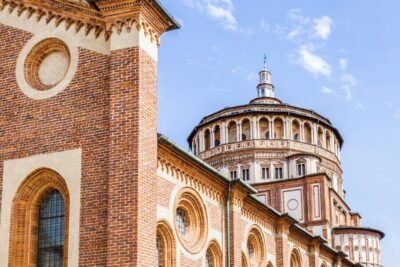
Guided Walking Tour & Last Supper Visit with Ticket
Read our review →
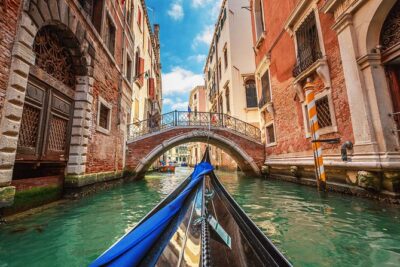
Rialto Bridge & Offbeat Unusual Venice Walking Tour
Read our review →
Private 3 hrs Venice Tour: St Mark’s, Walking tour & Boat tour
Read our review →
Skip the line: Uffizi and Accademia Small Group Walking Tour
Read our review →Browse the lists this tour appears in