
Reviewed · PASTA
Florence: Pasta Cooking Class with Unlimited Wine
Making pasta in a 1200s medieval tower near Brunelleschi’s Dome gives this Florence cooking class a setting you will remember long after dinner. You work with flour, shape three kinds of fresh pasta, and then eat what you made with sauces prepared by the chef.
I like the clear, hands-on format, especially the chance to make ravioli, tortelli, and pappardelle in one session. I also like the generous food and drink: the meal is substantial, and Tuscan wine and soft drinks are available throughout.
The main thing to consider is the social setting. The group can include up to 15 people, and some sessions may feel larger and livelier than an intimate family kitchen lesson. Also, check the meeting address carefully, since one booking had a venue mix-up that added a short walk.
Key points to know before booking
- Cook in a medieval tower: The school is in a stone tower dating to the 1200s, close to Florence’s cathedral complex and tied to Dante Alighieri’s wife’s family.
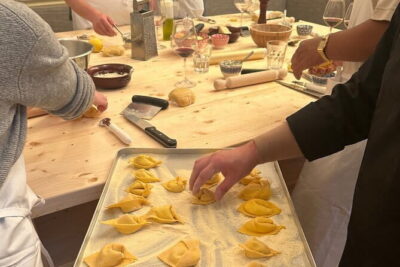
- Make three pasta styles: You prepare ravioli, tortelli, and pappardelle from scratch rather than watching a chef do all the work.
- The chef handles the sauces: Your main job is the pasta, while the chef prepares butter and sage, arrabbiata, and old-fashioned Tuscan ragù.
- A full meal is included: You eat all the pasta made during class, with Tuscan wine and unlimited soft drinks.
- A friendly group format: The maximum is 15 people, making this a good fit for couples, families, solo visitors, and anyone who enjoys meeting new people.
- Several chefs lead sessions: Past classes have been taught by Lorenzo, Antonio, Valentino, Valentina, Nico, David, Eduardo, and Eddie.
Why this pasta class works so well in Florence
Florence is full of grand churches, painted chapels, and famous museum rooms. After a day of looking, a cooking class gives you something to do with your hands. You are not simply being served an Italian meal. You are learning how flour becomes dinner.
The setting adds a useful sense of place. The school operates inside a medieval tower in central Florence, only a short distance from Brunelleschi’s Dome. The tower is said to have belonged to the family of Dante’s wife, linking the cooking lesson to the city’s medieval past and to the Tuscan language that shaped modern Italian.
You should not expect a formal culinary-school course. This is a casual, interactive lesson designed for beginners and mixed-age groups. The appeal is not technical perfection. It is getting your hands into the dough, learning the basic movements, and sitting down to eat the results.
That balance makes the class a good choice for a first cooking experience. You do not need to bring equipment, ingredients, or prior skill. Everything needed for the lesson is provided.
More Cooking Classes in Florence
- Florence: Pasta Cooking Class with Unlimited Wine
★ 4.9 · 10,285 reviews - Florence: Pasta & Tiramisu Cooking Class with Unlimited Wine
★ 4.9 · 6,708 reviews - Pastamania – Florence Pasta Making Class
★ 5.0 · 3,050 reviews
From flour to fresh ravioli, tortelli, and pappardelle
The class focuses on the pasta itself. The chef demonstrates the process, then guides you through each stage. You work from flour and continue through mixing, shaping, and forming the different pasta types.
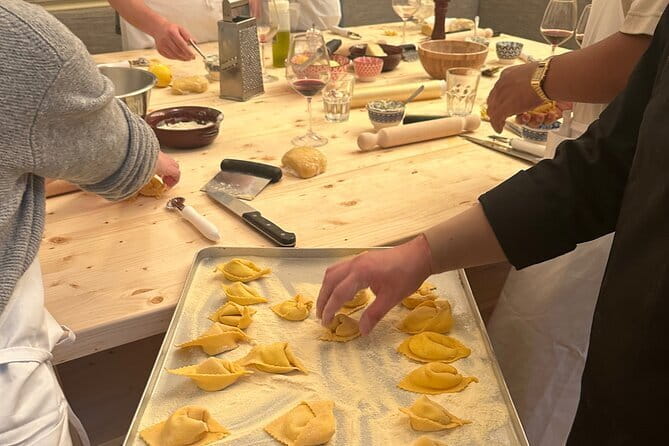
Ravioli and tortelli require more care than long pasta. You need to place the filling, seal the dough, and avoid trapping too much air. The shapes may not look exactly like the chef’s, but that is part of the fun. You learn how the dough behaves and gain enough confidence to try again at home.
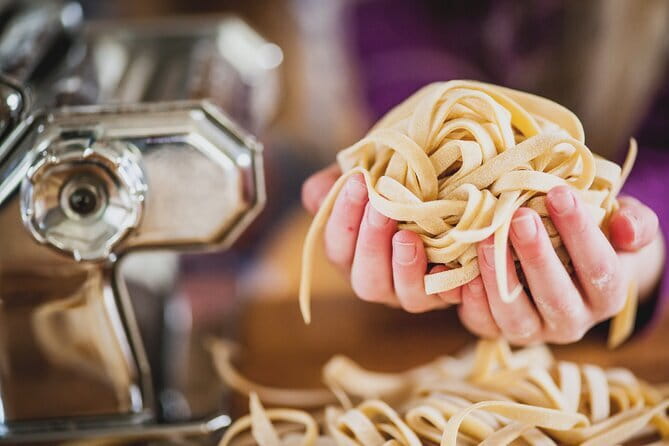
Pappardelle gives you a different task. This broad, long pasta is hearty and particularly well suited to Tuscan ragù. Rolling and cutting it helps you see the difference between delicate filled pasta and a wide noodle meant to carry a strong sauce.
The class usually includes three pasta preparations: ravioli, tortelli, and pappardelle. The exact order may vary with the chef and the pace of the group, but the structure gives you a useful introduction to both filled and long pasta.
I like this approach because it gives you variety without turning the session into a lecture. You get three shapes to practice, three sauces to taste, and a proper meal at the end. One limitation is that the three-hour format leaves little room for advanced technique. The focus is on clear instruction and a fun result, not on making every step elaborate.
The chef prepares the sauces while you work
While you focus on shaping the pasta, the chef prepares the sauces. The sample menu includes tortello with arrabbiata, pappardelle with Tuscan ragù, and ravioli with butter and sage.
Each sauce shows a different side of Italian cooking. Butter and sage is simple and delicate, allowing filled pasta to remain the center of the dish. Arrabbiata brings tomato and heat. Tuscan ragù is fuller and more substantial, a natural partner for broad pappardelle.
The chef also explains how ingredients work together and how regional cooking changes from one Italian city to another. Lorenzo, in particular, has been praised for explaining not only the steps but also the reasons behind ingredient choices and the differences in Florentine cooking.
You should understand the division of labor. You make the pasta, while the chef makes the sauces. That is sensible for a class of this length, since preparing three sauces from scratch at the same time would leave little room for teaching. If your goal is to master sauce-making as well as pasta, this class gives you an introduction but not a full sauce workshop.
Vegetarians are accommodated. The pasta and sauces can be prepared as vegetarian dishes, and the class has worked well for couples and families with different food preferences. The available information does not provide a full allergy policy, so you should raise any dietary concerns when booking.
What the three-hour evening feels like
The experience lasts about three hours and ends back at the meeting point. You arrive at the central Florence address on Via de’ Bardi, then join the group and meet the professional chef leading your session.
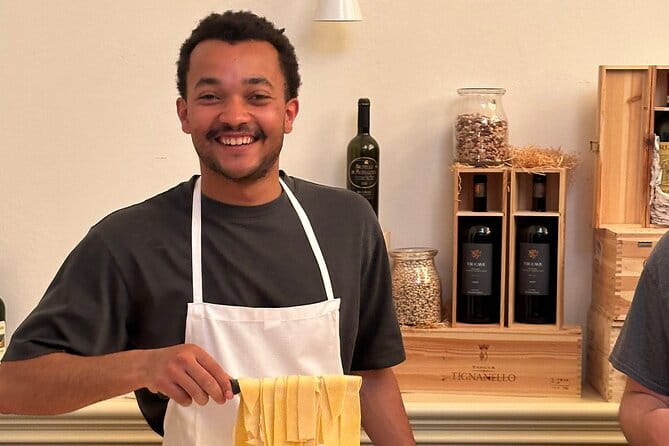
The first part is instructional. The chef explains the pasta process and demonstrates the movements. You then work through the dough with guidance nearby. This is not a watch-and-copy presentation where the instructor disappears after the first demonstration. The teaching style is meant to be active and easy to follow.
The middle of the class is the busiest part. You are forming different pasta shapes, talking with the people around you, and checking your work with the chef. That social energy is a major part of the experience. It suits you if you like cooking with other people and do not mind a little noise and conversation.
The final part is the meal. The pasta you prepare is cooked and served with the matching sauces, so the class turns into lunch or dinner rather than ending with a small sample. The amount can be more than some people expect, and the unlimited wine adds to the relaxed pace.
The timing also makes this useful on a Florence sightseeing day. You can spend the earlier part of the day around the Duomo, then walk to the class in central Florence. You do not need private transportation, and the meeting point is near public transportation.
More Wine Tours in Florence
- Winner 2025 Florence Sunset Food & Wine Tour by Eating Europe
★ 5.0 · 5,015 reviews - Florence: Cooking Class Pasta & Tiramisu Making Unlimited Wine
★ 5.0 · 2,234 reviews - Florence: Street Food Tour with Wine & Local Guide
★ 4.9 · 800 reviews - Florence: Handmade Pasta & Dessert Class with Unlimited Wine
★ 4.8 · 788 reviews
A social class, not a private cooking lesson
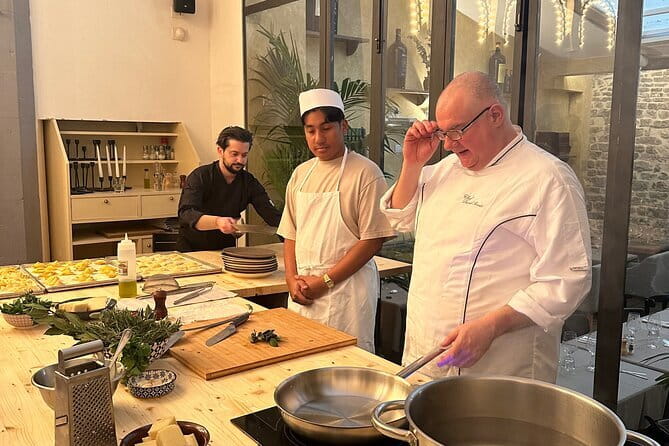
The maximum group size is 15 people. That is small enough for the chef to move around and help, but large enough to feel like a shared activity rather than a private lesson.
You might be paired with couples, families, friends, and solo visitors. The class can work especially well for solo visitors because the setup gives you an easy way to meet people over a shared task. It is also a strong option for a mother-daughter trip, a couple looking for an evening activity, or a family that wants something more active than another restaurant meal.
The group format has a tradeoff. If you want quiet, one-to-one coaching, this is not the best match. Some sessions have felt larger than expected, even though the stated maximum is 15. If you are happy to laugh, ask questions in front of others, and share a table, the group setting adds warmth.
The chefs make a difference. Antonio has been praised for being patient, friendly, and clear. Valentino is known for a calm teaching style and careful explanations. Lorenzo brings energy and humor. Other sessions have been led by Nico, David, Eduardo, Eddie, and Valentina.
Since the instructor can vary, you should book this for the overall format rather than for one specific chef unless your reservation clearly identifies the instructor. The core experience remains the same: fresh pasta, three sauces, a shared meal, and wine.
The medieval tower is part of the meal
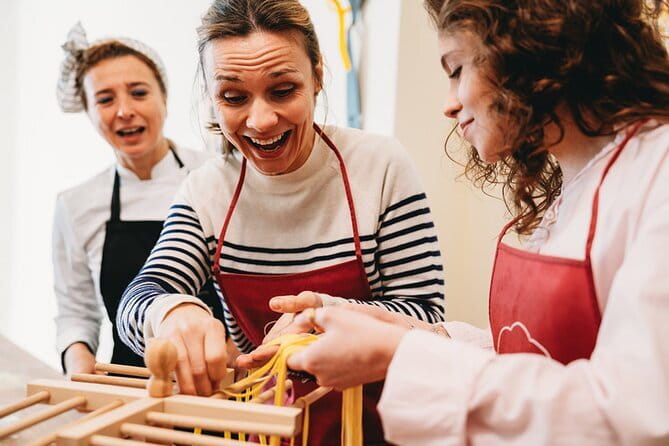
The building is more than a practical cooking room. The stone tower gives the class a strong Florence setting without requiring a separate guided history tour.
Its connection with Dante’s wife’s family adds a literary note, while the location near the Dome keeps you close to the city’s most recognizable landmark. You are cooking in a place tied to medieval Florence, using methods that resemble the home cooking tradition passed through Italian families.
That does not mean the class recreates a Medici-era kitchen in a museum-like way. The equipment is modern enough for a group lesson, and the focus remains practical. The value is in the atmosphere and the connection to place, not in a staged historical show.
I like that the setting supports the activity rather than distracting from it. You are still there to make pasta, but the old stone walls make the lesson feel more rooted in Florence than a generic cooking studio could.
Wine, soft drinks, and the value of the meal
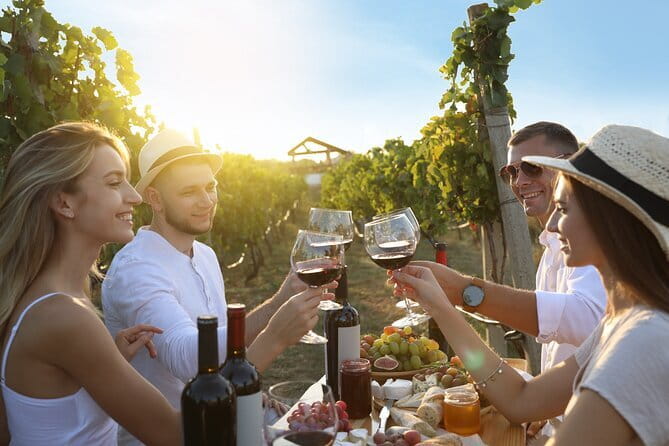
Lunch is included, along with all ingredients, equipment, the professional chef, Tuscan wine, and unlimited soft drinks. The wine is described as help-yourself, so you can enjoy it throughout the class rather than receiving one small glass with dinner.
That matters when judging the value. You are paying for instruction, a central location, a memorable setting, three types of pasta, a full meal, and drinks. Compared with booking a separate meal and a separate activity, the package covers a lot in three hours.
The wine also changes the tone of the class. It makes the experience feel more like a social Italian dinner than a strict lesson. You should pace yourself, since the class involves hands-on work as well as eating, and unlimited wine does not mean you need to drink heavily to get good value.
The food is the strongest practical payoff. You eat the pasta you helped prepare, rather than receiving a token tasting. Pappardelle with Tuscan ragù is likely to be the heartiest dish, while ravioli with butter and sage offers a simpler contrast. Arrabbiata adds heat and tomato flavor.
Portion sizes can be generous. If you are planning another major dinner soon afterward, keep that in mind.
What you take home, and what you may not
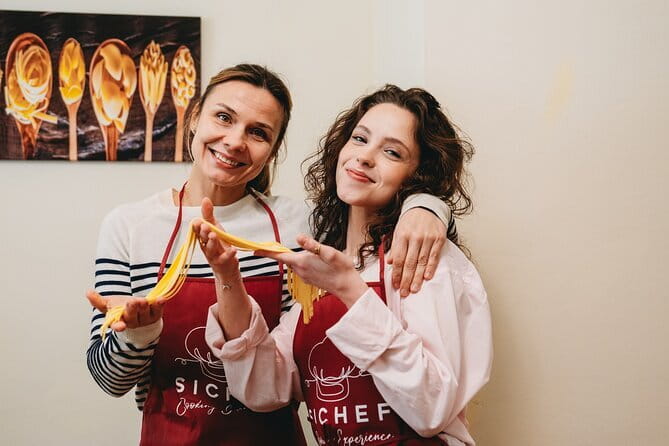
The most useful souvenir is the technique. You learn how to handle fresh dough, form filled pasta, cut broad noodles, and pair pasta shapes with sauces. With practice, you can repeat the dishes at home.
One practical weakness is that a printed recipe handout is not guaranteed. A digital code intended to provide recipes did not work for one participant, and some people wished they had a keepsake with the chef’s personal tips.
You can still remember the basic method, but I would take discreet notes if the chef shares a measurement or trick that you want to keep. Do not count on leaving with a physical booklet unless the provider confirms one is included.
The class is best for people who want confidence rather than professional training. You will learn enough to make a serious attempt at home, but you may need to adjust flour, water, filling, and cooking times as you gain experience in your own kitchen.
Meeting point, timing, and cancellation details
The listed starting point is Via de’ Bardi, 23 r, 50100 Firenze, and the activity finishes back at the meeting point. It is near public transportation, and private transportation is not included.
Check the exact meeting instructions before setting out. One session involved a ticket showing a different venue, followed by a roughly 10-minute walk to the actual class. That kind of mix-up can be frustrating if you arrive early and want a calm start.
Confirmation is provided at booking, and the experience is offered in English. The maximum stated group size is 15 people. Free cancellation is available if you cancel at least 24 hours before the start time. Cancellations or changes made inside that 24-hour window are not refunded or accepted.
Who should book this Florence cooking class?
I would choose this class for you if you want an easy, social activity that combines food, instruction, and a sense of place. It suits beginners, families, couples, solo visitors, and friends. You do not need to know anything about fresh pasta before arriving.
It is also a good pick for vegetarians, since the class can accommodate vegetarian pasta and sauces. The included meal makes it especially useful when you want an activity that also takes care of dinner.
I would be more cautious if you want a small private lesson, a printed recipe book, or advanced instruction in sauces and pasta technique. The class has a friendly group feel, but it is not designed as a quiet master class.
Should you book it?
Yes, if you want to make real pasta in Florence rather than simply eat it. The medieval tower, three pasta shapes, full meal, and unlimited Tuscan wine give the experience strong value, especially for first-time cooks.
Book it with the right expectations: you will share the room with other people, the chef prepares the sauces while you make the pasta, and the exact instructor may vary. Confirm the meeting location, arrive ready to participate, and bring your appetite. For most visitors, this is a memorable way to spend three hours in Florence and a skill you can carry into your own kitchen.
FAQ
How long does the pasta cooking class last?
The experience lasts approximately three hours.
Where does the class begin?
The listed meeting point is Via de’ Bardi, 23 r, 50100 Firenze FI, Italy. The activity ends back at the meeting point.
What types of pasta will I make?
The class includes three types of fresh pasta, typically ravioli, tortelli, and pappardelle.
Are food and drinks included?
Yes. Lunch, ingredients, equipment, professional chef instruction, Tuscan wine, and unlimited soft drinks are included.
Is the class taught in English?
Yes. The experience is offered in English.
What happens if I need to cancel?
You can receive a full refund if you cancel at least 24 hours before the experience start time. Cancellations or changes made less than 24 hours before the start time are not accepted and are not refunded.
More Pasta-Making in Florence
- Florence: Premium Cooking Class for Pasta and Gelato
★ 4.9 · 695 reviews - Florence: Pasta Class with Wine, Limoncello and Dessert
★ 4.9 · 674 reviews - Pasta Cooking Class: Mastering Nonna’s Recipes
★ 5.0 · 554 reviews - Florence: Countryside Tour with Wine Tasting & Pasta Class
★ 4.9 · 546 reviews
Just added around Florence
- Walking Food Tour of Florence with Tastings and Wine★ 5.0 · 518 reviews
- Florence Accademia Guided Tour – Shared, Private & Combo Options★ 4.5 · 370 reviews
- Uffizi Gallery Timed Entry Admission Tickets★ 4.0 · 392 reviews
- Uffizi Gallery Small Group Tour with Guide★ 4.5 · 879 reviews
- Early Access Guided Uffizi Gallery Tour Skip-the-Line Small Group★ 4.5 · 707 reviews
- Uffizi and Accademia Small Group Guided Tour★ 4.5 · 449 reviews
- Florence Central Market Food Tour with Eating Europe★ 5.0 · 224 reviews
- Truffle Hunting Experience with Lunch in San Miniato★ 5.0 · 383 reviews
Pasta, compared.
Florence Pizza or Pasta Class with Gelato Making at a Tuscan Farm
Read our review →
Pasta & Tiramisu Cooking Class with Unlimited Wine
Read our review →
Pasta & Tiramisu Class with Fine Wine by the Vatican
Read our review →
Pasta Making Class with Wine, Limoncello, and Dessert
Read our review →
Fettuccine Pasta Cooking Class in Rome’s City Center
Read our review →
Traditional Pasta with Cocktails Cooking Class
Read our review →Browse the lists this tour appears in