
Reviewed · WALKING TOURS
Cagliari: Underground Cagliari Walking Tour
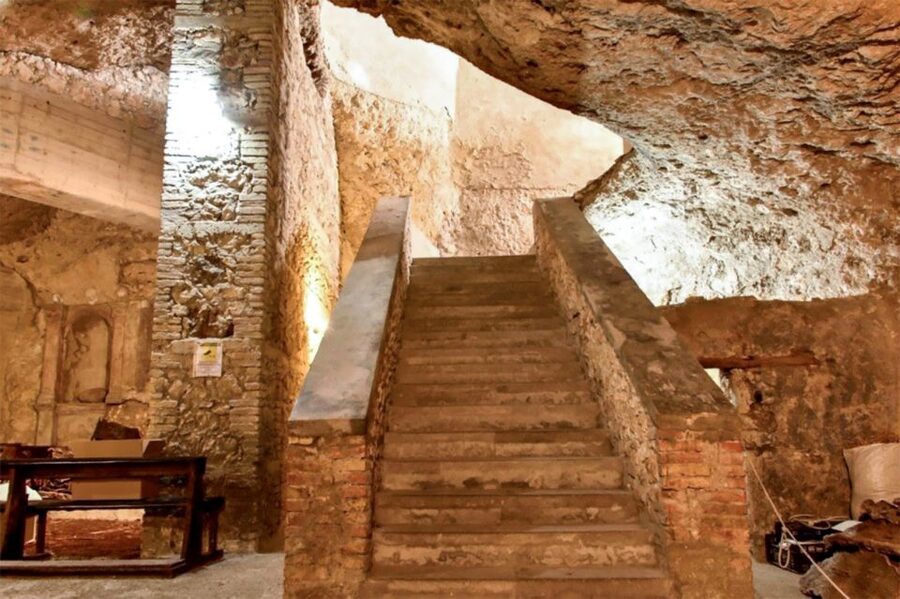
Beneath Cagliari’s bright streets lies a surprisingly layered world: a 120-meter wartime shelter, a dripping crypt once used for pagan worship, and a Roman road hidden below a church. This tour links those places with short walks through Stampace and Marina, so you see both the city below and the streets above it.
I like the mix of recent and ancient history, and I like that the three underground stops are genuinely different. The guide-led visits also make sense of places you could easily overlook on your own. The main drawback is the dual-language format. In a large group, explanations in English and Italian can slow the pace, and one recent group of about 25 people found separate language groups would have been easier.
Key points to know before you book
- Three distinct underground sites: Visit the Salesian School shelter, Santa Restituta crypt, and Saint Eulalia’s Roman archaeological area.
- Candle-lit wartime tunnel: The private shelter stretches about 120 meters and was used during World War II.
- Ancient and early Christian layers: Expect Roman paving, old frescoes, and evidence of pagan worship.
- Short outdoor walks included: The tour connects the sites through Stampace and Marina, so it is not underground from start to finish.
- Optional ways to extend the outing: Choose a guided Old Town walk or a wine tasting with Sardinian snacks.
- Good value at $35: Entry to all three underground locations and a live guide are included, with the tasting included only on selected options.
Why Cagliari’s underground makes a good first look at the city
Cagliari is easy to read from street level: sunny squares, steep lanes, churches, and the sea nearby. But the city’s lower layers explain why its streets and neighborhoods developed as they did. This tour gives you a compact introduction to that buried past without asking you to spend a full day in museums.
I especially like the time range covered. The shelter brings you into the fear and practical needs of World War II. Santa Restituta reaches back to a place of pagan worship in the fifth century. Saint Eulalia takes you even further into the Roman period, with a paved road among the remains.
That contrast keeps the outing from feeling like three versions of the same crypt. One stop is about war and survival. One is quiet, damp, and religious. The last connects you with the city’s Roman street plan. You get a stronger sense of Cagliari as a place built layer upon layer.
The advertised duration is two to four hours. The shorter timing likely fits the three site visits without the added Old Town walk, while the longer version allows more time for the historic-center walk or another selected option. Check the exact version when you book, because meeting and ending points change with the option you choose.
More Walking Tours in Cagliari:
- Cagliari: Walking Tour of the Old City
★ 4.8 · 560 reviews - Milan: Guided Walking Tour & Last Supper Visit with Ticket
★ 4.7 · 5,409 reviews - Naples: Street Food Walking Tour with Local Guide
★ 4.8 · 4,256 reviews
Starting at the Salesian School shelter
The tour begins at the Istituto Salesiano Don Bosco on Via Sant’Ignazio da Laconi. This first stop is the most modern and perhaps the most immediately affecting. Beneath the school is a private tunnel about 120 meters long that served as a bomb shelter during World War II.
The shelter is presented with a candle-lit atmosphere, which gives the tunnel a quiet, human scale. You are not just looking at a military object on a display panel. You are walking through a place intended to protect ordinary people during air raids. That makes the wartime section more personal than a standard history talk.
The guide explains the site as you walk, and the enclosed setting helps you picture how practical such a shelter had to be. It is also a useful reminder that Cagliari’s underground spaces are not all ancient. Some were made or adapted within living memory.
Allow about 40 minutes for the guided visit. Comfortable shoes matter, and you should expect a setting that may feel tight in places. This stop is not suitable for people with claustrophobia, and the activity is not designed for wheelchair users, people with mobility impairments, or people with visual impairments.
Crossing Stampace between past and present
After the shelter, you walk for about 10 minutes through Stampace. This is one of Cagliari’s old districts, and the short outdoor section gives you a break from the enclosed spaces. It also helps connect the shelter to the city around it rather than treating each site as an isolated attraction.
Stampace is part of the pleasure of the tour because you get a little street-level context without committing to a long city walk. Your guide can point out the changing feel of the neighborhood as you move toward Santa Restituta. Bring comfortable shoes even if you are mainly interested in the underground sites. The route includes walking outdoors, and the streets may be uneven or sloped.
Weather matters here. If rain is expected, bring an umbrella. The tour continues between sites, so this is not a fully indoor plan.
Entering the crypt of Santa Restituta
Santa Restituta is the most atmospheric stop. The crypt has old frescoes, damp walls, and the sound of water dripping through the space. It was also a place of pagan worship during the fifth century, adding a layer that reaches beyond its later religious use.
This is the kind of place where a guide earns the admission price. Without explanation, you might notice the frescoes and the unusual shape of the space, but you could miss the changes in purpose over time. The guide gives you the story behind the room and helps you see how beliefs and rituals left traces beneath the modern city.
The atmosphere is part of the appeal, but it can also be a limitation. Damp underground spaces are not comfortable for everyone, and the low light may make it harder to see details. Take your time and listen closely while the guide describes what remains. The visit lasts about 40 minutes.
I would place this stop near the center of the tour rather than at the start. By this point, you have already seen a modern shelter and walked through Stampace. Santa Restituta then feels like a real step backward through time, not simply the first dark room of the day.
A few more Cagliari half-days worth a look
- Cagliari: Devil’s Saddle Boat Tour with Spritz and Chips
★ 4.9 · 1,193 reviews - Cagliari: Boat Tour with 4 Swim Stops, Snorkeling & Prosecco
★ 4.9 · 865 reviews - Cagliari: Boat Tour, 4 Stops, Swim, Snorkeling, & 1 Spritz
★ 4.8 · 539 reviews - Cagliari: Zodiac Boat Tour, 3-4 SwimStops, Wine & Snorkeling
★ 4.9 · 500 reviews
Walking through Marina to Saint Eulalia
A second outdoor walk, roughly 10 minutes, takes you through Marina. This district links the historic center with the port area and gives you another chance to see how Cagliari works above ground. The transition is brief, but it keeps the tour from becoming a series of disconnected entrances and exits.
You may appreciate this portion most if you want a little orientation as well as archaeology. The route between Stampace and Marina makes the city’s old quarters part of the experience. If your chosen version ends with the Old Town walk, this short connection becomes the beginning of a longer look at the historic center.
The guide may need to speak in both English and Italian during these transitions and inside the sites. That arrangement makes the tour available to both language groups, but it can affect the rhythm. In a small group it should be manageable. In a larger group, allow extra time for repeated explanations.
Seeing Roman paving below Saint Eulalia
The final main stop is the underground area beneath the Saint Eulalia church, visited through MUTSEU, the Museum of the Treasure and Archaeological Area of Saint Eulalia. Here, the highlight is Roman remains, including a paved Roman road.
A road is an especially helpful archaeological feature because it shows how people moved through the city, not just what they built. You can look at the paving and imagine the site as part of a working urban network rather than a collection of broken stones. The church above adds another layer, showing how later Cagliari developed over the Roman city.
This stop also gives the tour a useful finish. The shelter showed a place designed for emergency protection. Santa Restituta showed a sacred underground space. Saint Eulalia brings you to public Roman infrastructure and the long life of the city itself.
Plan on about 40 minutes here. The archaeological area is also one of the possible ending points, although some options finish at Piazza Yenne or nearby streets. If you plan to visit the museum after the tour, one recent booking found the archaeological area included in the experience, so check what your selected option covers before buying a separate ticket.
Adding the Old Town walk or the tasting
You can extend the underground visit with a guided walk through Cagliari’s Old Town. This is the better choice if you are new to the city and want the guide to connect the buried sites with the historic streets above them.
The walk lets you see more of the center after the three underground visits. It also changes the feel of the outing from a focused archaeology tour into a broader introduction to Cagliari. I would choose it on a first day in town, especially if you want help finding your bearings before exploring alone.
The other option is a wine tasting with a snack. The food and wine selection is useful if you want a relaxed finish, but keep your expectations modest. The tasting has been described as one glass of wine with Sardinian snacks rather than a large tasting flight or a full meal. That can still be pleasant, but the word tasting may suggest more variety than you actually receive.
A guide named Silvia has led the added tasting for some bookings, while guides such as Francesca, Valentina, Federico, and others have led the main tour at different times. Your guide is not fixed, so treat those names as examples rather than a promise.
How the guiding and group format affect the experience
The tour is offered in English and Italian, often with the guide switching between languages. Several guides have been praised for clear English, strong delivery, patience, and a good sense of humor. One guide, Federico, was especially effective at mixing historical detail with humor, while Valentina was noted for enthusiasm during a longer four-hour version.
The quality of the explanation matters here. Underground sites can be visually spare, and much of their value comes from knowing what you are looking at. A guide who explains the Roman road, the frescoes, and the shelter’s wartime role turns three dark spaces into a connected story.
Still, group size can change the experience. A group of about 25 people may feel crowded in narrow areas and may make the two-language format slower. A private group is available if you want more room for questions and a steadier pace. The private option costs more than the listed $35 shared experience, but it may be worth considering for families or small groups with a strong interest in history.
Arrive 10 minutes early. The meeting point varies by booking, and the tour has several possible ending locations. Do not assume you will return to the starting point.
Is $35 a fair price?
At $35 per person, the tour offers solid value if you want both access and explanation. The price includes entry to three underground sites and a live guide in English and Italian. You are also getting the short walks through Stampace and Marina, which add some city context without requiring separate transport.
The value is strongest for a first visit to Cagliari. You see places that would be easy to miss, especially the private school shelter and the underground areas below Saint Eulalia. The tour also saves you from working out how the three sites relate to one another.
The optional tasting changes the calculation. Since the food and wine version may amount to one glass and Sardinian snacks, choose it for the pleasant finish rather than as a replacement for lunch. If you want more time in the historic center, the Old Town walk may provide more sightseeing value.
Free cancellation up to 24 hours before the start and the option to reserve now and pay later make the booking fairly flexible. The minimum is two adults per booking, so solo visitors should check availability before relying on this tour.
Who should choose this tour?
I would recommend it to you if you enjoy history but do not want a full museum day. It suits first-time visitors, couples, small groups, and anyone curious about how Cagliari developed beneath its present streets.
The tour is also a good fit if you want variety. The WWII shelter, crypt, Roman road, and outdoor walks each offer a different mood. Add the Old Town walk if you want a wider city introduction.
You should think twice if you dislike enclosed spaces, struggle with stairs or uneven walking, or need a wheelchair-accessible route. The activity is not suitable for people with claustrophobia, mobility impairments, wheelchair users, or visually impaired people. It is also not fully indoors, so rain can affect the outdoor portions.
Should you book it?
Book this tour if you want a compact, well-explained look at Cagliari’s less visible past. The strongest reasons are the unusual WWII shelter, the damp and atmospheric Santa Restituta crypt, and the Roman road beneath Saint Eulalia. At $35, the included admissions make the basic tour a sensible buy.
Choose the Old Town extension if this is your first day in Cagliari. Choose the tasting only if a simple glass of wine and Sardinian snacks sound like the right ending. If you prefer quiet, detailed guiding, select a private group when possible and avoid assuming the advertised duration will be the same for every option.
FAQ
How long does the Cagliari Underground Walking Tour last?
The tour lasts between two and four hours, depending on the option selected. The three guided site visits are each listed at about 40 minutes, with short walks between them and possible Old Town or tasting additions.
Which underground sites are included?
The tour visits the tunnel shelter at the Salesian School, the crypt of Santa Restituta, and the Archaeological Area of Saint Eulalia beneath the Saint Eulalia church.
Is the tour entirely underground?
No. You walk outdoors between the sites through the Stampace and Marina districts. An umbrella is suggested if rain is expected.
Is the tour available in English?
Yes. The live tour is conducted in English and Italian, with the guide switching between the two languages.
Is the tour suitable for wheelchair users or people with claustrophobia?
No. The activity is not suitable for wheelchair users, people with mobility impairments, people with claustrophobia, or people with visual impairments.
What is included in the price?
The standard tour includes a guide, entry fees for the three underground sites, and the dual-language walking tour. Wine tasting and Sardinian snacks are included only when you select the tasting option.
Just added around Cagliari
- Small-Group Food and Wine Tour from Cagliari★ 5.0 · 237 reviews
- Boat Tour at Devil’s Saddle: 4 Swim Stops, Snorkeling & Prosecco★ 5.0 · 263 reviews
- 4×4 Mountains And Beaches – Chia area★ 5.0 · 330 reviews
- Catamaran tour stops bathing and snorkeling toast with prosecco★ 5.0 · 214 reviews
- Cagliari Vintage Tour★ 5.0 · 185 reviews
- Guided Electric Bicycle Tour in Cagliari★ 5.0 · 320 reviews
- Cagliari: Sailing Tour with 4 Stops, Snorkeling and Prosecco★ 4.8 · 341 reviews
- Cagliari: Walking Tour of the Old City★ 4.8 · 560 reviews
Walking Tours, compared.

Guided Walking Tour & Last Supper Visit with Ticket
Read our review →

Rialto Bridge & Offbeat Unusual Venice Walking Tour
Read our review →
Private 3 hrs Venice Tour: St Mark’s, Walking tour & Boat tour
Read our review →
Skip the line: Uffizi and Accademia Small Group Walking Tour
Read our review →Browse the lists this tour appears in