
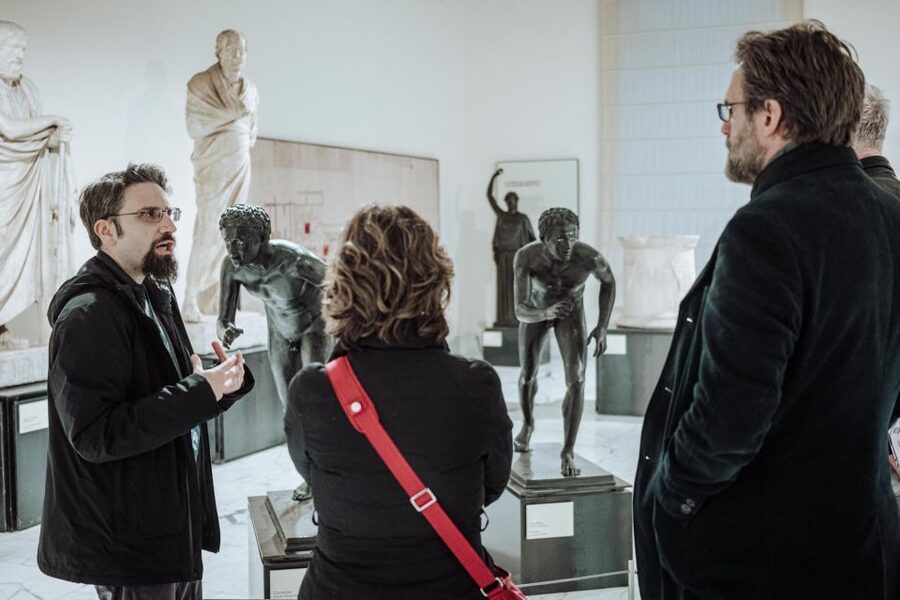
Reviewed · MUSEUMS
Naples: National Archaeological Museum of Naples Guided Tour
The most useful way to see Naples’ National Archaeological Museum is with a guide who can tell you what deserves your attention. This enormous collection brings together the Farnese sculptures and the paintings, mosaics, and objects rescued from Pompeii and Herculaneum, including the famous Alexander mosaic.
I like the two-hour focus: you get the museum’s main stories without trying to conquer every corridor. I also like the archaeologist-led commentary, especially after visiting Pompeii or Herculaneum. The main drawback is that two hours cannot cover the whole building, and hearing the guide may be difficult if the audio equipment is not working well.
Key points to know before booking
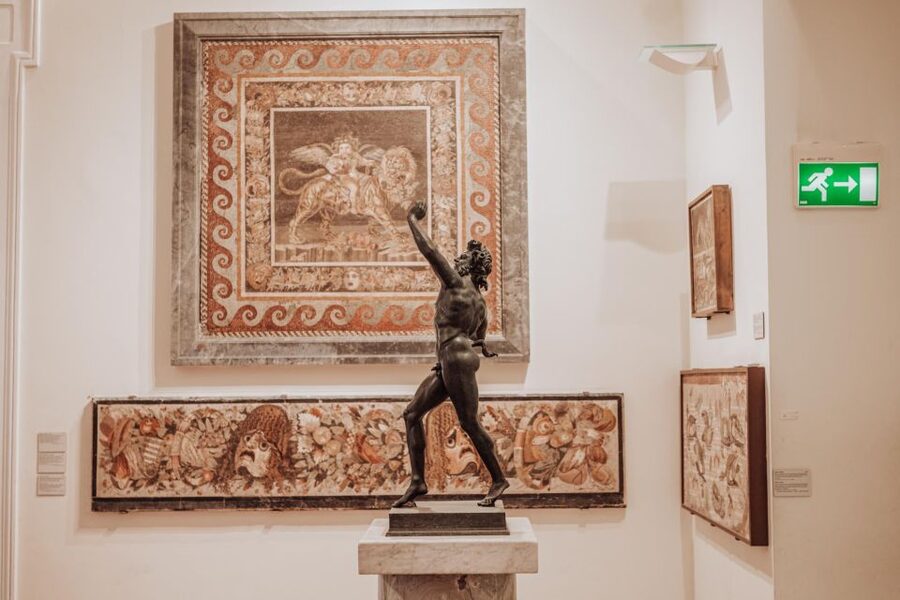
- The Farnese Hercules and Toro Farnese are central highlights, with Greek and Roman gods, heroes, and emperors filling the surrounding galleries.
- Pompeii and Herculaneum collections make this an excellent follow-up to visits at the ruined towns near Mount Vesuvius.
- Archaeologist guides such as Silvia, Nicoletta, Salvatore, and Gennaro have been praised for clear explanations and lively delivery.
- Skip-the-line entry removes the need to wait at the museum ticket line, though you still meet outside the ticket office.
- The tour lasts two hours, and you can stay in the museum afterward to see rooms the guided visit does not reach.
- Large bags, strollers, and wheelchairs are not allowed, so this is not a good choice for visitors with mobility needs or bulky luggage.
Why this museum needs a guide
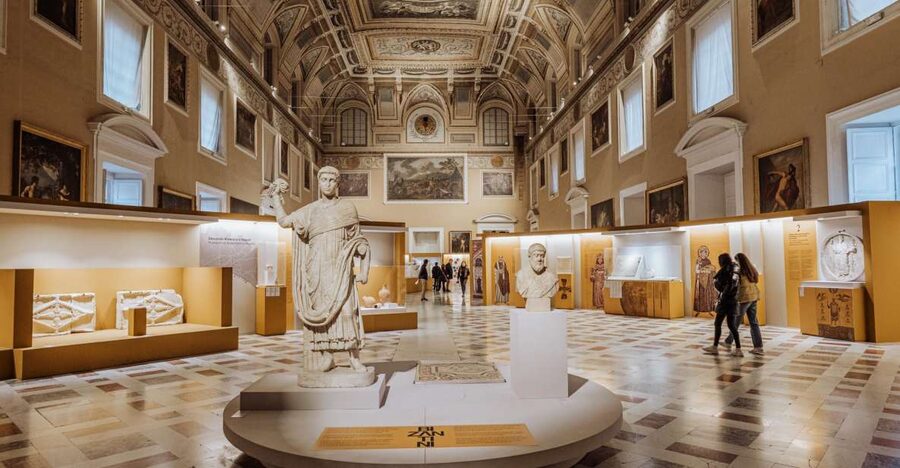
Naples’ National Archaeological Museum is not a small display of famous statues. It is a vast collection spread through a grand building, with sculpture, frescoes, mosaics, coins, wall paintings, and objects from several ancient cultures.
That scale is both the museum’s strength and its problem. Without a plan, you can spend your energy walking from room to room while missing the meaning of what you see. A guide gives you a route through the main rooms and explains how the pieces fit together.
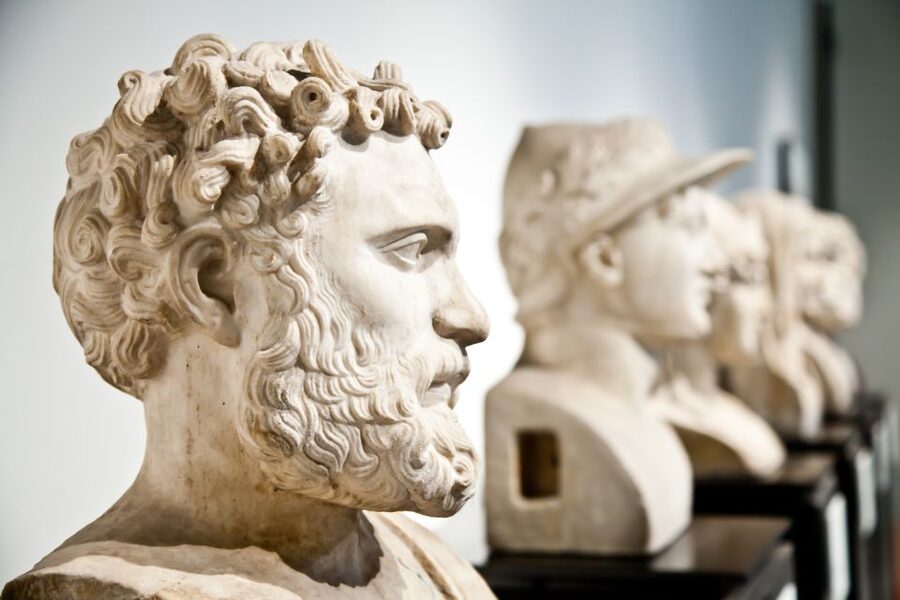
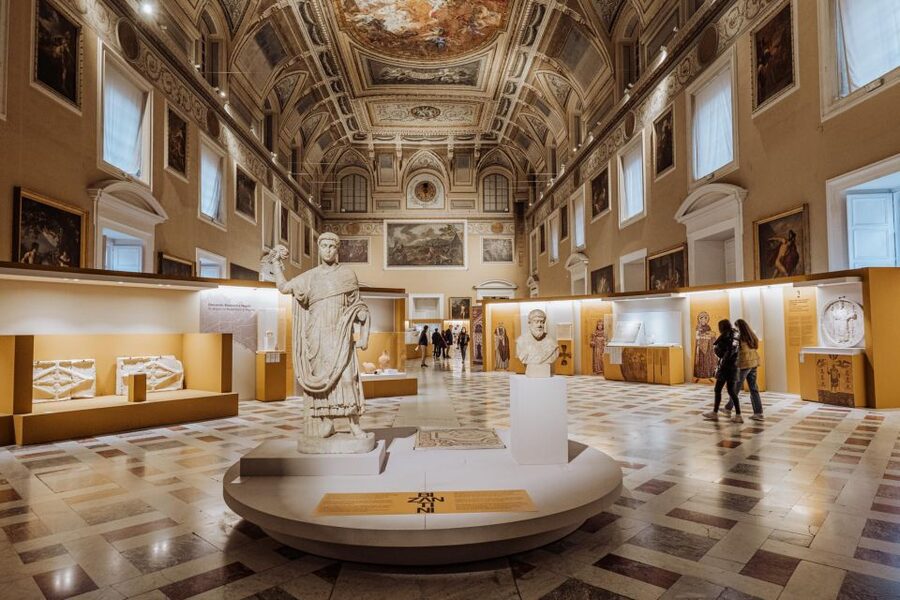
I find the setting important, too. The building itself is described as a work of art, so the visit is not simply a walk through neutral galleries. You move through large corridors lined with busts of Roman and Greek gods, rulers, and notable figures. The architecture and the displays create a sense of how ancient art was collected, reused, and presented over time.
The tour begins outside the museum ticket office. Look for the guide holding an ASKOS TOURS sign. From there, you enter with skip-the-line access and begin the two-hour walking tour inside the museum.
More Guided Tours in Naples
- Naples: Naples Underground Entry Ticket and Guided Tour
★ 4.4 · 21,781 reviews - Naples: Spanish Quarters Underground Guided Tour
★ 4.8 · 5,064 reviews - Naples: Street Food Walking Tour with Local Guide
★ 4.8 · 4,256 reviews
Seeing Pompeii after the eruption
The museum’s Pompeii and Herculaneum collections are a major reason to book this tour. At the archaeological sites, you see streets, houses, temples, and public buildings in their original setting. Here, you see the delicate things that could not remain in place: colored wall paintings, detailed floor mosaics, household objects, and works of art protected from the eruption of Mount Vesuvius in 79 AD.
This change of setting matters. A fresco on a museum wall can reveal the decoration of a room that you saw only as bare plaster at Pompeii. A mosaic can show the taste and skill of a wealthy household more clearly than the remains of the house itself.
If you have already visited Pompeii, I would place this museum visit afterward. Several guides, including Silvia, Nicoletta, and Gennaro, have built their tours around making that connection. Their explanations help you recognize what you saw at the site and understand the objects in a wider setting.
You do not need to visit Pompeii first to enjoy the museum. The guide explains the background as you go. Still, the two experiences work best together. Pompeii gives you the physical setting, while the museum supplies many of the paintings, mosaics, and sculptures that make that setting easier to picture.
The Farnese Collection and its giant sculptures
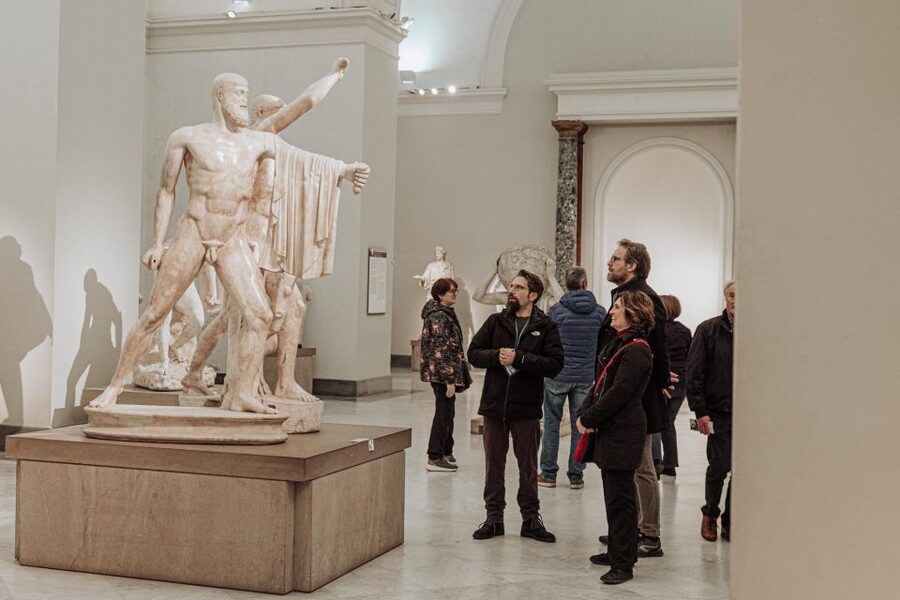
The Farnese Collection is the other major reason this tour earns its place in a Naples itinerary. It includes some of the most famous classical sculptures in the museum, including the Farnese Hercules and the Toro Farnese.
The Hercules is a powerful focal point. It is not simply a statue to photograph and pass. Your guide can help you look at the pose, the scale, and the way the figure communicates physical strength. The Toro Farnese, also known as the Farnese Bull, offers a very different experience, with a complex group of figures rather than one solitary hero.
The collection also includes depictions of Greek gods, Roman emperors, and other figures from the classical world. Moving through the galleries, you can compare idealized bodies, expressive faces, political portraits, and mythological scenes.
This is where a live guide has an advantage over a basic audio recording. You can ask why a statue matters, how a Roman copy relates to a Greek original, or what a particular figure represents. The guide can also adjust the pace if your group is especially interested in sculpture.
Several guides have archaeological backgrounds, and that adds useful context. Silvia, for example, is described as working at Pompeii and teaching archaeology at university. Nicoletta has also been praised for connecting the art to the ancient communities around the Bay of Naples. The exact guide varies, but the tour is designed around an informed, human explanation rather than a fixed recording.
Mosaics, frescoes, and the famous Alexander scene
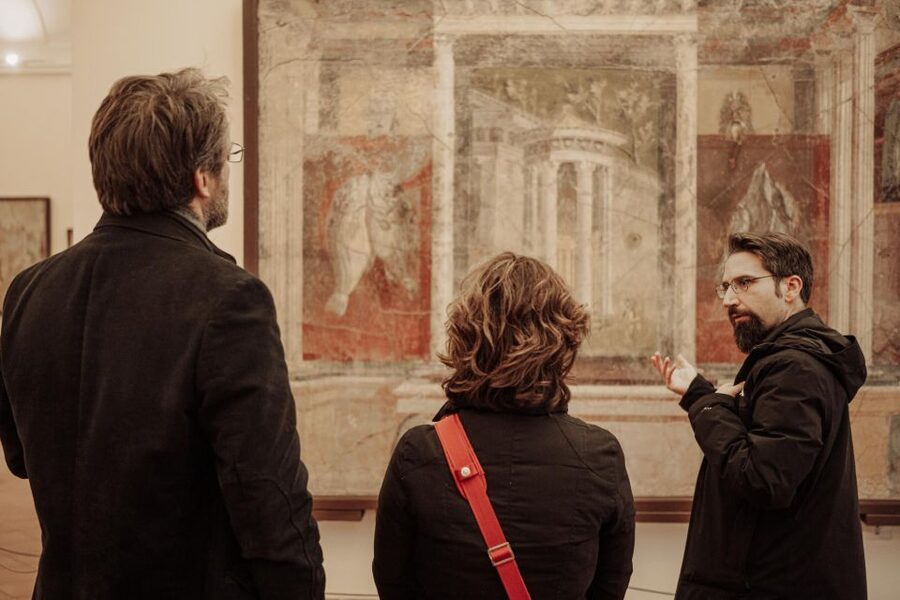
The mosaics are among the most rewarding parts of the visit. Their small pieces of colored stone and glass create scenes with remarkable detail, from decorative patterns to large narrative compositions.
The Alexander mosaic is a major attraction. It depicts the battle between Alexander the Great and Darius and is one of the museum’s most important works. At times, restoration work may affect what you can see, so do not assume every famous object will always be fully on display. Even when part of a work is being treated, it remains a key reason the museum matters.
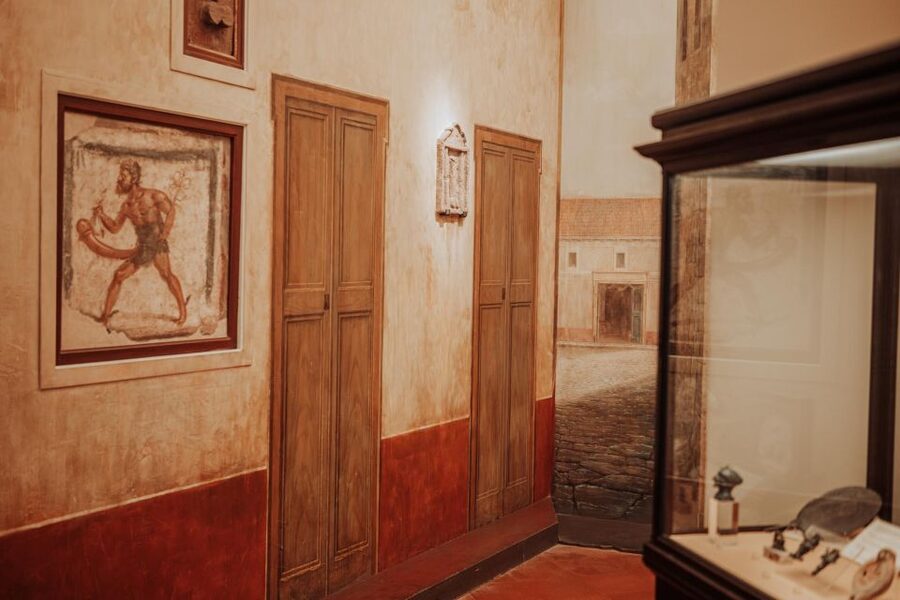
The frescoes from Pompeii and Herculaneum show a different side of ancient life. You see color, ornament, figures, architecture, and mythological scenes that make Roman interiors feel less plain than the surviving ruins often suggest.
A guide can point out details that are easy to miss when you are standing several feet away. You might learn how a scene is arranged, what a figure is carrying, or why a particular image appeared in a domestic setting. These explanations turn the room from a collection of attractive fragments into evidence of taste, status, religion, and daily life.
More Ancient Ruins in Naples:
- Naples: National Archaeological Museum Ticket & Audio App
★ 4.4 · 617 reviews - Paestum: Small-Group Tour with an Archaeologist and Tickets
★ 4.9 · 451 reviews - Naples: City Walking Tour w/ Underground Roman Ruins Ticket
★ 4.5 · 247 reviews - From Naples: Pompeii Ruins & Mount Vesuvius Day Tour
★ 4.3 · 11,459 reviews
What the two-hour route can and cannot do
The tour is best understood as a guided overview, not a complete museum visit. In two hours, your guide takes you to the principal highlights, but the museum is too large to cover every floor and exhibition.
That limitation is not necessarily a problem. I would rather spend time properly looking at the Farnese Hercules, major mosaics, and selected Pompeii frescoes than rush through every room. A strong guide also gives you a sensible starting point for exploring alone afterward.
Several tour participants have stayed on after the guided portion to see additional displays or return to favorite objects. This is one of the best features of the format. The guide gives you a framework, then you can use the rest of your museum time according to your interests.
If you want every gallery explained, choose a longer private visit instead. If you want to understand the main collections and avoid wandering without direction, two hours is a practical length.
The guides make the difference
The strongest part of this experience is the quality of the guides. Names associated with particularly strong visits include Nicoletta, Silvia, Salvatore, Gennaro, Adele, Laura, Barbara, and Vincent.
The praise is consistent in the useful ways. Guides are described as friendly, willing to answer questions, and able to explain difficult material in an approachable way. Nicoletta is noted for her enthusiasm about Naples and the Roman world around the bay. Salvatore has been praised for making classical art easier to understand. Gennaro helped connect the museum to a recent Pompeii visit with a steady stream of useful detail.
The exact personality and delivery style will vary because you are not booking one named individual. English and Italian tours are offered, and the clarity of spoken English can vary from guide to guide. One visitor found a guide’s English difficult to follow on a different visit, while many others found their guides clear and engaging.
Sound equipment is another practical point. Some groups receive earpieces, which can help in crowded rooms or for anyone who is hard of hearing. Other experiences noted weak sound or difficulty hearing a guide with a sore throat. If you struggle to hear, stand close to the guide and ask about an audio device at the start.
Price, timing, and what you receive
The advertised price is $52 per person. Museum admission is included, listed as €20 for adults and €2 for reduced EU admission for citizens aged 18 to 25. The remaining amount pays for the guide, the organization of the visit, and skip-the-line access.
For an adult who would otherwise pay the full museum price, the difference can be reasonable if you value explanation and a clear route. The museum is large enough that a good guide can save time and help you avoid missing the most important rooms.
The value is weaker for someone who already knows classical art well and prefers to read labels alone. It is also less appealing if you want to see every collection at your own pace from the moment you enter.
No transportation, food, or drinks are included. You make your own way to the museum and meet outside the ticket office. Check the available start times when booking, since the duration is fixed at two hours but the departure time is not.
Free cancellation is available up to 24 hours before the tour, and you can reserve now and pay later. Those terms are helpful if your Naples schedule includes Pompeii, Herculaneum, or changing train plans.
Who should book this Naples museum tour
I would recommend it most strongly to first-time visitors, people with limited time, and anyone who has already seen Pompeii or Herculaneum. It also suits families and mixed-interest groups because the guide can explain the objects without requiring a background in archaeology.
The tour works well for people who enjoy asking questions. A guide can respond to your interest in myths, Roman portraits, household decoration, coins, or excavation methods rather than forcing everyone through the same silent route.
It is less suitable for visitors with mobility impairments. The activity is a walking tour, and the supplied conditions exclude non-folding wheelchairs, electric wheelchairs, baby strollers, large bags, and oversize luggage. You should also avoid arriving with anything bulky that cannot be left elsewhere.
Two hours is a good introduction, but it is not enough for a slow, room-by-room study. If you want a relaxed look at every floor, plan additional independent museum time after the tour.
Should you book it?
Book this tour if you want the Farnese Collection, Pompeii frescoes, and ancient mosaics explained by an archaeologist or museum specialist rather than encountered at random. The strongest payoff comes when you pair it with Pompeii or Herculaneum, then use the museum to see the art and decoration removed from those sites.
Skip it if you prefer complete independence, already have strong classical art knowledge, or need wheelchair or stroller access. For most visitors, the $52 price is justified by the museum’s size, the skip-the-line entry, and the chance to ask questions during a focused two-hour route.
FAQ
How long does the guided tour last?
The guided visit lasts two hours.
Where do I meet the guide?
Meet outside the ticket office of the National Archaeological Museum of Naples. The guide will hold an ASKOS TOURS sign.
Is museum admission included?
Yes. Entry to the Archaeological Museum of Naples is included. The listed admission is €20 for adults and €2 for reduced EU admission for citizens aged 18 to 25.
What languages are available?
The live guide is available in English or Italian.
Can I stay in the museum after the tour?
Yes. You can continue looking at the museum on your own after the guided portion and return to exhibits you want to see again.
Can I bring luggage or a stroller?
No. Oversize luggage, large bags, and baby strollers are not allowed. Non-folding and electric wheelchairs are also not allowed.
Can I cancel the booking?
Yes. You can cancel up to 24 hours in advance for a full refund. Reserve now and pay later is also available.
Just added around Naples
- The Three Tenors in Sorrento: Opera Arias, Naples and Songs★ 4.8 · 327 reviews
- Naples: The Holy Mile 3-Hour Guided Tour★ 4.9 · 711 reviews
- SORRENTO: Pizza School Mastering Neapolitan Delights★ 4.9 · 201 reviews
- Procida: Boat Tour with Swimming Stops and Underwater Photos★ 5.0 · 322 reviews
- Paestum: Small-Group Tour with an Archaeologist and Tickets★ 4.9 · 451 reviews
- Naples: Neapolitan Pizza and Tiramisù Making Class★ 4.8 · 839 reviews
- Naples: Veiled Christ Entrance Ticket and Guided Tour★ 4.8 · 956 reviews
- Naples: Guided Pub Crawl in the Old Town★ 4.7 · 300 reviews
Museums, compared.

Vatican: Museums & Sistine Chapel Entrance Ticket
Read our review →
Vatican Museums & Sistine Chapel Tour with Optional Basilica
Read our review →
Vatican Museums, Sistine Chapel & St Peter’s Basilica Guided Tour
Read our review →
Skip-The-Line Uffizi Gallery Timed Entry Ticket
Read our review →
Vatican Museums, Sistine Chapel & Basilica Tour
Read our review →
Vatican Museums & Sistine Chapel Skip-the-Line Entry Ticket
Read our review →Vatican Museums, Sistine Chapel & Basilica Tour
Read our review →
Vatican Museums & Sistine Chapel Guided Tour
Read our review →Browse the lists this tour appears in