
Reviewed · AUDIO TOURS
Naples: National Archaeological Museum Ticket & Audio App
The best reason to visit this museum is simple: it gives you the objects that Pompeii and Herculaneum cannot. After walking through the excavated streets, you can see the frescoes, mosaics, cooking pots, glassware, and sculptures that once filled those homes. The Farnese collection adds a second major attraction, with famous Greco-Roman sculpture and engraved gems.
I like the freedom of a one-day ticket, since you can set your own pace, and I like the museum’s range. You can move from monumental statues to tiny coins, Egyptian pieces, and the celebrated Secret Cabinet. The main drawback is the digital audio app. Some visitors found it slow to download or less useful than expected, so do not book this product solely for the commentary.
Key points at a glance
- Pompeii and Herculaneum indoors: See frescoes, mosaics, household objects, and displays that add vital context to the outdoor ruins.
- The Farnese collection: Admire major Greek and Roman sculpture, marble works, and engraved gems collected by the Bourbons.
- A museum for several interests: The galleries cover sculpture, coins, Egyptian artifacts, Roman domestic life, and erotic art.
- Allow three to five hours: You can see highlights in less time, but the collection is large and mentally demanding.
- One entry only: Your ticket is valid for a single admission, so plan your visit before you pass through the entrance.
- Good value at $29: The price makes sense if you care about ancient art or are also visiting Pompeii and Herculaneum.
Why this museum belongs beside Pompeii
Pompeii gives you streets, walls, baths, and the powerful feeling of a Roman town interrupted. The National Archaeological Museum gives you the portable and decorative objects removed from those sites. Put the two together and the ancient city becomes easier to understand.
A painted wall at Pompeii can look faded or incomplete outdoors. In the museum, you may see related frescoes protected indoors, often with clearer color and more detail. A small bronze tool, glass vessel, or cooking pot can seem easy to overlook at an excavation site. Here, it sits at eye level, separated from the dust and distance of the ruins.
The same is true of mosaics. At Pompeii, you often look down at floors while trying to grasp the size of a house. In the museum, major pieces receive more space and attention. That lets you study the tiny pieces of stone and the careful patterns that made Roman interiors so decorative.
I would visit the museum either before Pompeii or soon after it. Before the archaeological site, it gives you a visual introduction to Roman life. Afterward, it helps you put names and objects to places you have already seen. Several hours here can make your Pompeii visit more meaningful without adding another tour.
More Entry Tickets in Naples
- Naples: Naples Underground Entry Ticket and Guided Tour
★ 4.4 · 21,781 reviews - Naples: Downtown Tour with Veiled Christ & St Clare Tickets
★ 4.9 · 6,462 reviews - Naples: Hop-on Hop-off Bus Tour 24-Hour Ticket
★ 4.3 · 5,157 reviews
Entering with the $29 ticket
The listed price is $29 per person. For a major museum with a day ticket and access to one of Naples’ finest ancient art collections, that is a reasonable price, especially if you plan to spend three or four hours inside.
The ticket is not a guided tour. It includes museum admission and access to a digital audio app, but you will explore independently. That is a strength if you prefer to pause, skip rooms, or focus on a few works rather than follow a fixed route.
There is one slightly awkward step. You need to show your smartphone voucher at the Museo Archeologico di Napoli ticket office and exchange it for the official entrance ticket. A digital voucher does not take you directly through the museum door. Bring your passport or ID card, since it is listed as required identification.
Some people found no wait at the ticket counter, especially outside the busiest periods. Others found advance booking useful when the entrance line was long. I would reserve ahead during a busy visit, but keep your expectations sensible: exchanging a voucher for a paper ticket is still part of the process.
Your ticket allows one entry only. It does not include reentry, so do not leave casually to find lunch and expect to come back in. Once inside, plan to stay until you have finished the rooms you most want to see.
The Farnese collection and its giant sculptures
The museum began taking shape in the 18th century under Charles III of Spain. Its core includes the Farnese Collection, inherited and transferred through the Bourbon family. This is the section that gives the museum its grand, almost palace-like character.
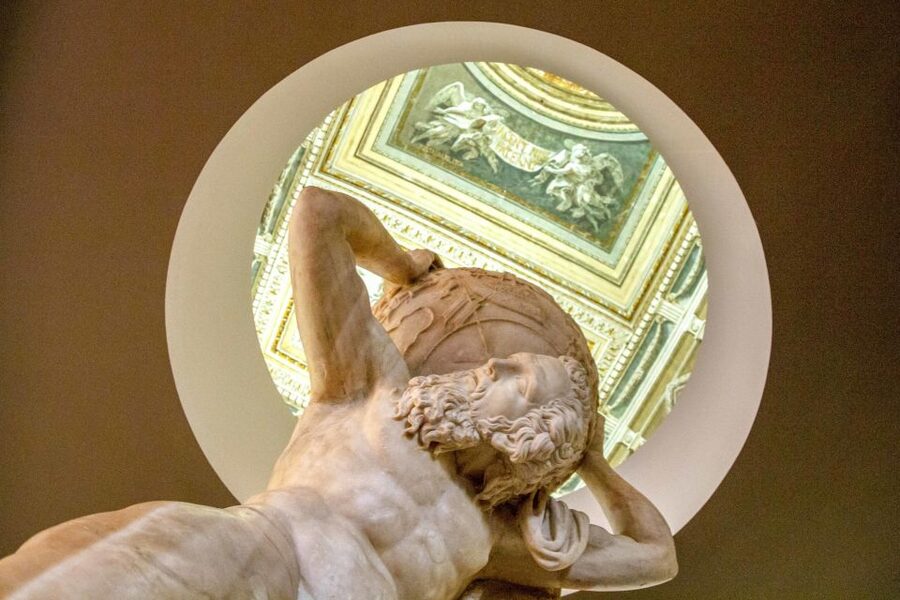
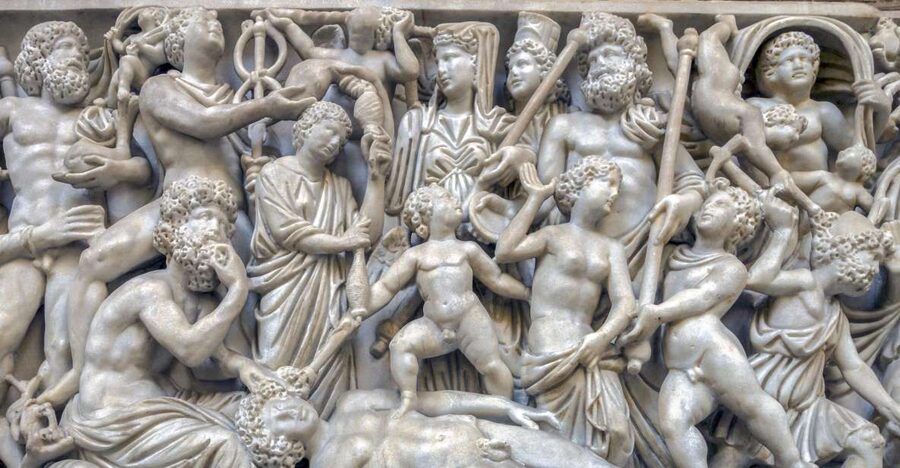
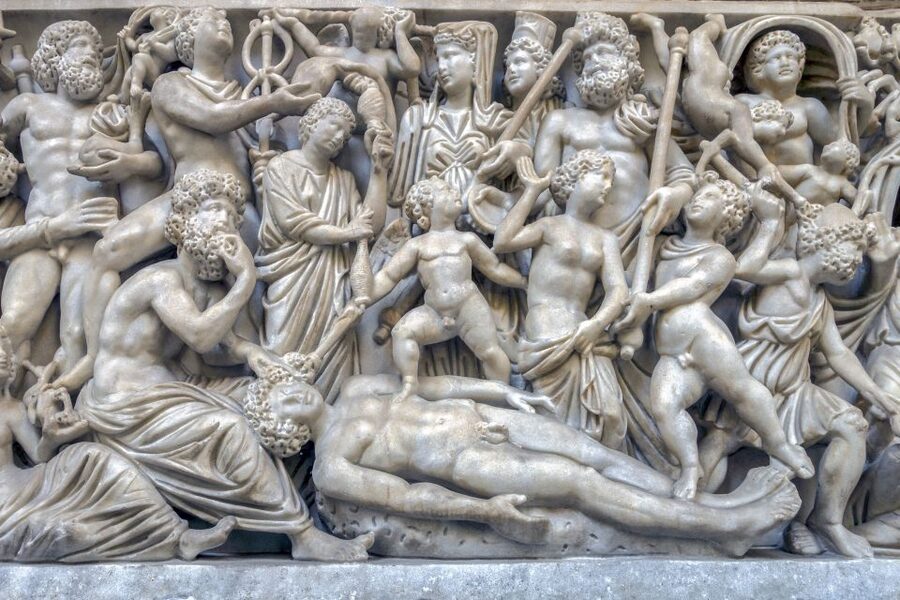
The Farnese material includes engraved gems and the Farnese Marbles, along with major sculptures connected with the Greek and Roman world. You will see large works that demand space, distance, and time. Do not rush through these rooms while trying to check every item off a list.
The scale of the sculpture can be surprising after the smaller domestic objects from Pompeii. One minute you are examining a cup or fragment of wall painting. The next, you are facing a marble figure many times your height. That change in scale is part of the museum’s pleasure.
I suggest beginning with a broad look at the sculpture galleries, then returning to the works that catch your attention. A short visit can cover the famous pieces. A longer visit lets you notice details in hair, fabric, limbs, and carved surfaces that are easy to miss in a quick circuit.
The museum’s building also helps create a calmer setting for this art. Several visitors found the atmosphere relaxed, with room to look without constant pressure from organized groups. That can change by time of day, but arriving near opening time is still a smart way to see the biggest galleries with fewer people.
Pompeii and Herculaneum, room by room

The archaeological collections are the museum’s strongest reason to buy this ticket. They include objects recovered from Pompeii, Herculaneum, and related sites around the Bay of Naples.
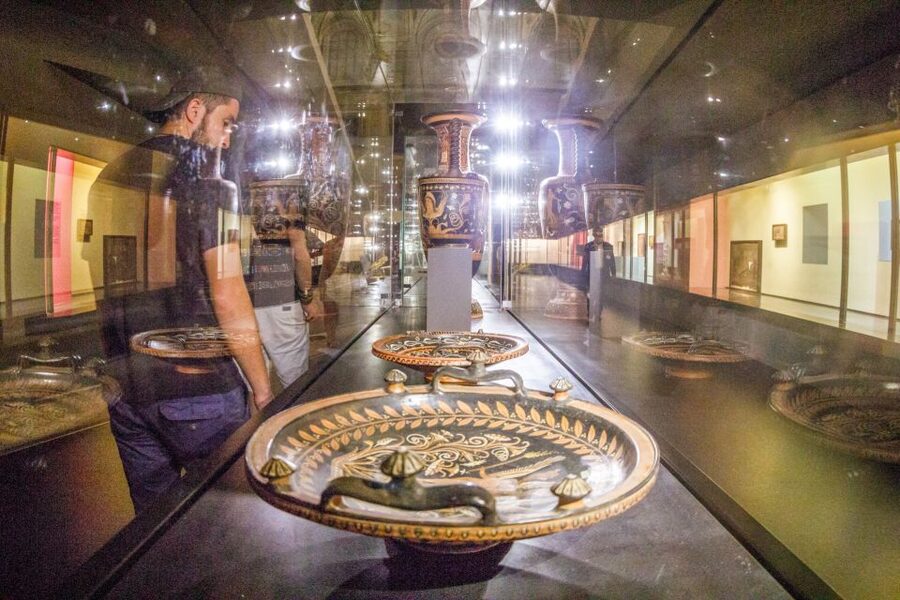
Expect far more than statues. You might find painted panels, mosaics, glass vessels, cooking equipment, household furnishings, and small decorative pieces. These objects show what people used at home, not just what wealthy Romans commissioned for public display.
The household material is especially effective after a visit to Pompeii. Pots and serving pieces can make the kitchens and shops of the excavated town feel less like empty stone rooms. Glassware and decorative objects suggest the daily life that the ruins alone can leave to your imagination.
A Pompeii display also includes a miniature model and a video presentation. These can help you understand the layout and the sudden disaster that overtook the town. The museum is not a substitute for the archaeological site, but it supplies details that the site cannot show easily.
Herculaneum receives important attention too. Its preserved materials offer another view of Roman domestic life, and the museum lets you compare objects from different ancient communities. You may find the contrast useful even if your main goal is Pompeii.
Allow at least three hours if you want to combine sculpture and archaeological objects. Four hours is more comfortable. Five hours is possible for a serious visit, though the amount of information can become tiring. Plan a short café break rather than trying to absorb every room without pause.
More Ancient Ruins in Naples:
- Naples: National Archaeological Museum of Naples Guided Tour
★ 4.8 · 498 reviews - Paestum: Small-Group Tour with an Archaeologist and Tickets
★ 4.9 · 451 reviews - Naples: City Walking Tour w/ Underground Roman Ruins Ticket
★ 4.5 · 247 reviews - From Naples: Pompeii Ruins & Mount Vesuvius Day Tour
★ 4.3 · 11,459 reviews
The Secret Cabinet and Roman erotic art
The Secret Cabinet is one of the museum’s best-known special sections. It presents artifacts connected with the erotic side of ancient Roman life.
This is not a side note to the collection. Roman attitudes toward sex, fertility, humor, and private decoration were part of everyday life, and the objects help explain that culture. The display can also change the way you read Pompeii, where sexual imagery and fertility symbols appear in homes, shops, and public spaces.
The room may not suit every child or every visitor, so consider your group before making it a priority. If you are interested in Roman social customs, art, and domestic life, it is one of the more distinctive parts of the museum.
Do not expect the Secret Cabinet alone to fill an afternoon. Treat it as one stop within a much larger visit. Its value comes from showing a side of Roman culture that is often softened or omitted in general art displays.
Egyptian artifacts, coins, and changing displays
The museum also includes a section devoted to Egyptian artifacts. The supplied information notes that this area was closed through March 31, 2023, so you should check the current status before visiting if it is important to you. Museum galleries can change, and an older closure notice should not be treated as a current opening schedule.
The coin display adds another layer to the visit. Coins are small, but they can reveal rulers, symbols, trade, and changing political power. This area will appeal most if you enjoy close study rather than only monumental art.
New displays may also alter the route or emphasis from one visit to the next. That is another reason not to build a rigid plan around a single gallery unless the museum has confirmed it is open.
Making the audio app work for you
The digital audio guide is included, but it is not a live guide and should not be confused with a full museum-led tour. You access it through a provided link using a username and password.
The app may be useful if you want basic help identifying major works while touring alone. It gives you the option of adding explanation without joining a group. For some visitors, that independence is worth the small effort of using your phone.
Still, I would treat it as a bonus rather than the main reason to book. Some users found the app slow to download, and some stopped using it after a few minutes. Others felt it was not really a complete audio guide for the museum. English and Italian explanations are available in much of the museum, which can reduce the need for extra commentary.
Download or open the guide before you begin if possible, and carry a charged phone. If the app fails, your museum visit is not ruined. The objects, room labels, and displays still provide the main experience.
Timing, crowds, and a sensible route
The ticket is valid for one day, with starting times shown when you check availability. It is not an open-ended pass for repeated visits. Pick a time that lets you stay for at least three hours without rushing to another appointment.
Early arrival has two advantages. You have a better chance of seeing popular rooms with space around the exhibits, and you can photograph or study major works before the museum fills. One visitor found the museum much harder to move through after a couple of hours, so timing matters.
A practical route might look like this:
- Start with the major Farnese sculptures while you are fresh.
- Continue to the Pompeii and Herculaneum collections.
- Pause at the model and video presentation if available.
- Visit the Secret Cabinet and Egyptian section if open.
- Finish with coins, smaller objects, the café, or the bookstore.
That order is only a suggestion. If Pompeii is your main interest, begin with those rooms and save the large sculptures for later. The important point is to choose your priorities before entering. A museum of this size can easily swallow an entire afternoon.
The café provides a useful break, and prices were found reasonable by some visitors. The bookstore is another convenient stop, especially if you want a guidebook or a visual reminder of the objects you saw.
Accessibility and practical limits
The activity is listed as wheelchair accessible, but the Vittorio Emanuele apartments are not accessible to people with impaired mobility. If those rooms are essential to your visit, check the current route and access arrangements before booking.
Security screening takes place before entry. Keep your identification and ticket details easy to reach, and allow a little extra time rather than arriving at the last possible minute.
The activity ends back at the museum meeting point because it is a self-guided admission rather than a walking tour. You can continue around Naples afterward, but you should not expect transportation or a guide to take you elsewhere.
Who should book this museum ticket?
I would recommend it most strongly to anyone visiting Pompeii or Herculaneum. The connection between outdoor ruins and indoor objects is the museum’s great strength.
It also suits art lovers who want Greek and Roman sculpture, families with older children interested in ancient life, and cruise passengers looking for a substantial cultural visit in Naples. The museum can be reached on foot from the cruise port according to the provided experience details, and it is also easy to access by Metro.
You should be comfortable exploring independently. If you want a guide explaining every room, this product is not the best match. The included audio app may help, but it does not replace a dedicated guided tour.
At $29, the ticket is good value when you use it as a serious half-day visit. It is less appealing if you only have an hour or if your main interest is modern Naples rather than ancient art. The collection is large enough that a rushed visit will leave you seeing only a fraction of what you paid to enter.
Should you book it?
Yes, if Pompeii, Herculaneum, Roman art, or ancient daily life is part of your Naples plan. The museum connects loose pieces of history into something you can see and study: frescoes, mosaics, dishes, glass, coins, and monumental marble sculpture.
Book ahead if your schedule is tight or if you expect a busy period, but remember that you still exchange the phone voucher for an official ticket. Arrive early, plan for three to five hours, and do not count on the audio app to carry the visit.
If you prefer a personal guide, book a separate guided tour instead. If you want control over your route and a strong collection at a fair price, this ticket is a practical choice.
FAQ
How long is the ticket valid?
The ticket is valid for one day.
Can I leave and reenter the museum?
No. The ticket allows a single entry and does not include reentry.
What does the ticket include?
It includes museum admission and access to a digital audio app.
Is a guided tour included?
No. This is a self-guided museum visit, not a guided tour.
How do I enter the museum with a smartphone voucher?
You must exchange your smartphone voucher at the Museo Archeologico di Napoli ticket office for an official entrance ticket.
Do I need identification?
Yes. You should bring your passport or ID card.
Is the museum wheelchair accessible?
The activity is listed as wheelchair accessible, but the Vittorio Emanuele apartments are not accessible to people with impaired mobility.
Is the Egyptian section open?
The supplied information says the Egyptian section was closed until March 31, 2023. Check the current status before your visit.
Can I cancel the booking?
Yes. You can cancel up to 24 hours in advance for a full refund.
Just added around Naples
- The Three Tenors in Sorrento: Opera Arias, Naples and Songs★ 4.8 · 327 reviews
- Naples: The Holy Mile 3-Hour Guided Tour★ 4.9 · 711 reviews
- SORRENTO: Pizza School Mastering Neapolitan Delights★ 4.9 · 201 reviews
- Procida: Boat Tour with Swimming Stops and Underwater Photos★ 5.0 · 322 reviews
- Paestum: Small-Group Tour with an Archaeologist and Tickets★ 4.9 · 451 reviews
- Naples: Neapolitan Pizza and Tiramisù Making Class★ 4.8 · 839 reviews
- Naples: Guided Pub Crawl in the Old Town★ 4.7 · 300 reviews
- Naples: Veiled Christ Entrance Ticket and Guided Tour★ 4.8 · 956 reviews
Audio Tours, compared.

Colosseum & Forum with Audio Guide App -Optional Arena
Read our review →
Pantheon Fast-Track Ticket and Official Audio Guide
Read our review →

La Fenice Opera House Entry Ticket with Audio Guide
Read our review →
St. Peter’s Basilica & Dome Entry Ticket & Audio Tour
Read our review →
Cathedral & Brunelleschi’s Dome Ticket & Audio App
Read our review →
Michelangelo’s David Priority Ticket & Audio App
Read our review →
Uffizi Priority Ticket & Masterpieces Audio App
Read our review →Browse the lists this tour appears in