
Reviewed · HISTORICAL TOURS
Alberobello: History Walking Tour
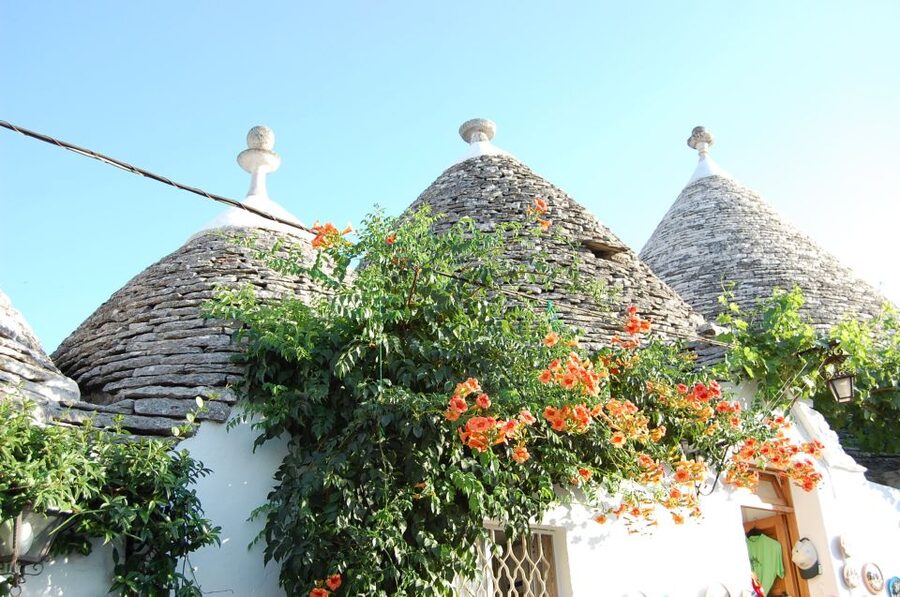
Alberobello is a town of stone cones. The famous trulli look almost storybook-like, but this walking tour explains the practical reasons behind their shape, the way they were built, and how people lived inside them. You begin at the Belvedere terrace, then walk through Aia Piccola and Rione Monti before entering a traditional trullo home.
I like the tour’s two-district route, since it lets you compare Alberobello’s quieter historic quarter with its more commercial streets. I also like the chance to step inside a local trullo. That changes the experience from simply photographing whitewashed roofs to understanding the small, clever spaces beneath them.
The main consideration is timing. The tour lasts 1.5 to 2 hours, and much of it takes place on foot through alleys and sloping streets. The meeting point can vary by booking, so check the details carefully, and remember that transfers are not included.
Key points to know before you book
- Start with a broad view: The Belvedere terrace gives you a quick visual introduction to Alberobello and its dense field of conical roofs.
- See both historic districts: Aia Piccola offers a more residential feel, while Rione Monti is the livelier area with many trulli shops and visitor stops.
- Enter a real trullo: You do not only look at the buildings from outside. The tour includes a visit inside a traditional home.
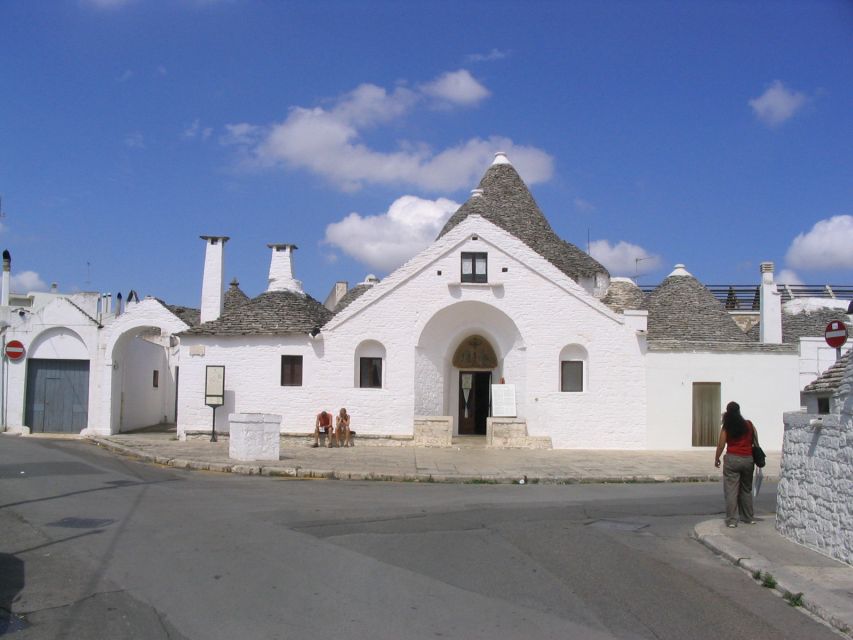
- Reach a church shaped like a trullo: The Church of San Antonio is one of Alberobello’s most unusual sights.
- Expect strong storytelling: Guides such as Francesco, Dominicio, Floriana, Sylvia, Mario, Alessandro, and Roberta have been praised for clear explanations, humor, and useful local suggestions.
- Check the group conditions: At least two participants are needed, and a private group option is available.
Why Alberobello’s trulli are worth a guided walk
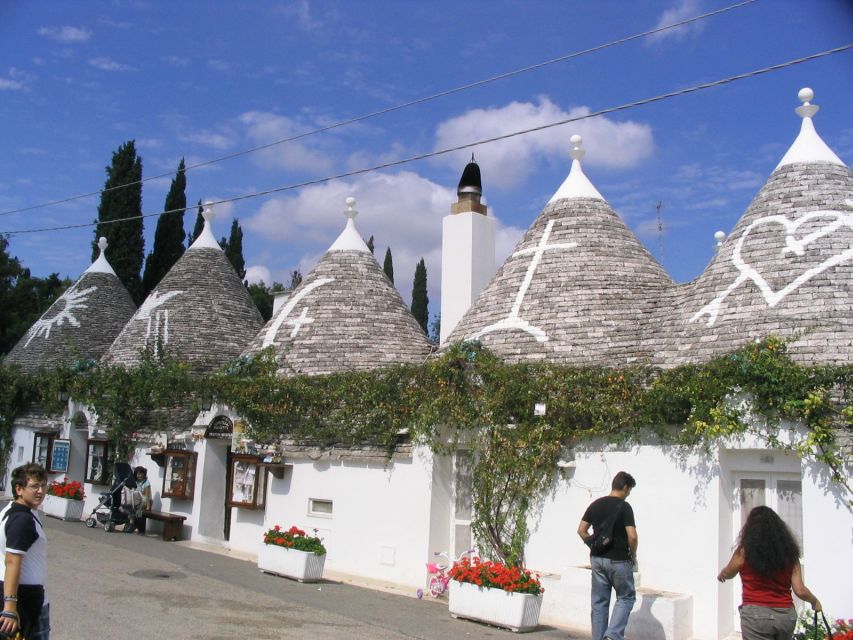
Alberobello can look simple at first: white walls, gray stone roofs, narrow lanes, and plenty of cameras. The details become more interesting once you know what you are seeing.
A trullo is built from local limestone, with stones fitted into dry walls rather than held together with cement. The conical roof is made from overlapping stone slabs. Inside, the result is a compact home with thick walls and an unusual ceiling that rises to a point.
That construction method is not just a visual trick. It tells you something about local building practice and the way families adapted to the materials around them. A guide can point out features that are easy to miss when you walk alone, then explain the architecture in a way that connects the roof, walls, rooms, and daily life.
The UNESCO designation adds weight to the visit, but it does not explain Alberobello by itself. You need context to understand why the town looks so different from other Apulian villages. This tour is useful because it gives that context while you are standing among the buildings, rather than separating history from the place itself.
More Walking Tours in Puglia
- Lecce: Baroque Architecture and Underground Walking Tour
★ 4.7 · 842 reviews - Bari: Guided Walking Tour
★ 4.7 · 744 reviews - Bari: Pasta Experience Walking Tour
★ 4.7 · 660 reviews
Beginning at the Belvedere terrace
The tour starts with a view from the Belvedere terrace. This is a smart first stop because it lets you see Alberobello as a whole before you enter the lanes.
From above, the trulli form a distinctive pattern of pale walls and pointed roofs. The view also helps you get your bearings. Instead of seeing one photogenic building at a time, you understand that these houses make up entire sections of town.
Your guide uses this opening view to introduce the history of Alberobello and explain what makes the site important. It is a short orientation, but it gives the rest of the walk a clear purpose.
I would pay attention here rather than treating the terrace as only a photo stop. The story of the town begins with the buildings themselves, and the wide view makes their scale easier to appreciate. If you arrive early, this is also the moment to settle into the pace of the tour before the narrow streets take over.
Aia Piccola, the quieter side of Alberobello
From the Belvedere, the route continues into Aia Piccola. This district is one of the key reasons the tour is more useful than a quick stroll through the busiest streets.
Aia Piccola is known for its traditional trulli and more residential character. Walking here gives you a better sense of Alberobello as a historic community, not only as a shopping area built around souvenirs and photographs.
The lanes are narrow, and the architecture is close at hand. You can look at the way roofs meet walls, notice the small scale of the homes, and see how the buildings fit together in a tight urban pattern. The guide explains the local building tradition and how these structures were used.
This is also where a guide’s storytelling matters most. The physical setting is unusual, but the facts can become repetitive if you only hear that every roof is cone-shaped. A strong guide adds the human side: how the homes were arranged, what the construction tells you, and why this part of Alberobello has such value.
The supplied guide information includes several names associated with highly praised tours here. Francesco is described as offering clear English and taking visitors into historic houses. Dominicio is noted for lively storytelling. Roberta is praised for explaining why the trulli were built from rocks without cement and for using museum exhibits to make the architecture easier to understand.
Your guide may be someone else, but these comments show what to look for: clear explanations, room for questions, and a connection between the building in front of you and the wider story of Alberobello.
Rione Monti and the more commercial trulli
The route also passes through Rione Monti, Alberobello’s better-known trulli district. Here you will find a larger concentration of the conical houses, along with shops and places aimed at visitors.
Rione Monti is visually impressive. The lanes climb and twist among rows of whitewashed buildings, making it easy to see why Alberobello is such a popular stop in Apulia. The district gives you many chances for photographs, but the guide keeps the focus on architecture and history.
The trade-off is atmosphere. Compared with Aia Piccola, Rione Monti can feel more tourist-oriented. That does not make it uninteresting. It simply means you should expect a livelier setting, more commercial activity, and less of the quiet residential mood found elsewhere.
The benefit of visiting both districts in one tour is the contrast. Aia Piccola helps you understand the historic settlement. Rione Monti shows how that architecture now functions as a major visitor attraction. Seeing both gives you a more balanced picture than visiting only the most photographed lanes.
Your guide can also help you look past the repeated exterior shape. Not every trullo tells the same story, and small differences in layout, roof design, and use become easier to notice when someone points them out.
More History Tours in Puglia:
- Venice: St. Mark Basilica Ticket, Audioguide+History Gallery
★ 3.9 · 4,780 reviews - Venice’s Best: Basilica, Doge’s Palace, Gondola & History Gallery
★ 4.5 · 2,478 reviews - Historic Milan Tour with Skip-the-Line Last Supper Ticket
★ 4.5 · 1,976 reviews - Venice: City Center Historical Guided Walking Tour
★ 4.2 · 1,873 reviews
Entering a traditional trullo home
The indoor visit is one of the strongest parts of this experience. You will have the chance to enter a local home and see how a trullo is composed.
Exterior photographs tell only half the story. Inside, the thick stone walls and pointed roof make more sense. You can see how the rooms are shaped and gain a better idea of the practical challenges and advantages of living in a structure built this way.
This stop also gives the tour a more personal feel. You are not only looking at preserved buildings from the street. You are seeing an interior connected to local life, with a guide explaining the details as you move through it.
Several guides are praised for arranging visits with local residents and explaining small features inside the historic houses. Alessandro, for example, is noted for combining architectural information with visits that expanded the understanding of Alberobello. That kind of access is valuable because it moves the tour beyond the standard photo route.
Keep your expectations sensible. This is a brief walking tour, not a long house museum visit. The point is to understand the form and use of the trullo, then carry that knowledge with you as you continue through town.
The Church of San Antonio
The walk eventually reaches the Church of San Antonio, a church built in the shape of a trullo. It is a fitting stop because it shows how the local architectural style extends beyond private homes.
The church gives you another way to read the town. The cone-shaped roof is no longer only a feature of small dwellings. It becomes part of a religious building, showing how strongly the trullo form is tied to Alberobello’s identity.
This stop is especially worthwhile after seeing the residential districts. You will already understand the basic shape, so the church becomes a comparison point rather than an isolated curiosity. Your guide can place it within the walking route and explain why it matters visually and culturally.
The itinerary does not promise a long interior visit or a separate religious tour, so think of San Antonio as one important stop along the route. The value is in seeing the building in context, surrounded by the lanes and roofs that define Alberobello.
What the guides add to the experience
The strongest part of this tour is the human explanation. Alberobello is easy to photograph but harder to understand without help.
The guides speak English, French, Spanish, or Italian. The named guides connected with this experience have received praise for different strengths. Mario is described as funny and clear when explaining the trulli. Floriana is noted for her pleasant manner, humor, and strong grasp of local history. Sylvia is praised for warmth, local food suggestions, and clear explanations. Francesco is described as making visitors feel at home while showing historic houses and local products.
I would not book this tour expecting a scripted lecture. The best version of the experience seems to depend on the guide’s ability to answer questions and adjust the pace. One guide was praised for accommodating very late arrivals, but you should still arrive on time and follow the meeting instructions provided for your booking.
A useful guide can also help with the next part of your day. One guide offered lunch suggestions, and another tour included local product tasting at the end. These extras are not listed as guaranteed parts of every departure, so treat them as possible guide-led additions rather than promised features.
How much value do you get for $40?
At $40 per person, this is not the cheapest way to walk through Alberobello. You can see the streets without paying for a guide. The question is what you want from the visit.
The price includes a 1.5 to 2-hour walking tour and a licensed guide. It does not include transportation. For that cost, you are paying for the explanation of the trulli, a planned route through both main districts, the Belvedere introduction, the Church of San Antonio, and entry into a traditional home.
I think the price is fair if you care about context and have limited time in town. A guide helps you avoid wandering through the same few lanes without understanding the buildings. The indoor visit is also a useful value point because it gives you access to a side of the trulli you cannot get from street photos.
The value is weaker if you prefer to explore slowly by yourself, shop at your own pace, or spend several hours taking photographs. This tour follows a set route and keeps moving. It is designed to explain Alberobello efficiently, not to replace a full day of independent wandering.
Children under 18 are free, which makes the price more attractive for families. A minimum of two participants is required for the tour to run, and a private group is available if you want more control over the pace and discussion.
Timing, meeting points, and practical comfort
The tour takes 1.5 to 2 hours, with starting times shown when you check availability. That length works well as an introduction, especially if you are fitting Alberobello into a larger Apulia itinerary.
Because the route is on foot, wear comfortable shoes. The walk includes little alleys and the two historic districts, so you should expect uneven or sloping streets rather than a flat indoor museum visit.
The meeting point may change depending on the option you choose. Check the exact instructions before setting out. The tour ends back at the meeting point, while transfers to or from Alberobello are not included.
The booking terms are flexible: you can cancel up to 24 hours before the activity for a full refund, and you can reserve now and pay later. Those terms are useful if your Apulia plans are still shifting, but they do not remove the need to check the minimum participant rule.
Who should book this Alberobello walking tour?
I would choose this tour if you are visiting Alberobello for the first time and want the town explained rather than simply photographed. It suits anyone interested in architecture, local building methods, UNESCO sites, and the daily use of historic homes.
Families may also find it practical because children under 18 are free. The route is short enough to fit into a day visit, and a live guide can make the unusual buildings more understandable for younger visitors.
It is a good choice for visitors who want language flexibility. You can book with a guide speaking English, French, Spanish, or Italian. A private group option may suit couples, families, or friends who want a more personal experience.
I would skip it if you strongly prefer complete independence or already plan to spend several hours exploring with a detailed guidebook. You should also think twice if a walking route through narrow, sloping lanes would be uncomfortable for you.
Should you book it?
Book this tour if you want the story behind Alberobello’s trulli, not just a collection of roof photographs. The Belvedere view, two-district route, Church of San Antonio, and indoor visit form a sensible introduction, and the strongest guides add humor, local detail, and practical suggestions.
The best reason to pay $40 is the chance to enter a traditional trullo and have its construction explained on the spot. The main drawbacks are the fixed walking route, the possibility of a more commercial atmosphere in Rione Monti, and the fact that transport is not included.
For a first visit, I think it offers good value. Check the meeting point, confirm that at least two people are booked, and choose a language and starting time that fit your day.
FAQ
Where does the Alberobello history walking tour take place?
The tour takes place in Alberobello, in Apulia, Italy. It visits the Rione Monti and Aia Piccola districts.
How long does the walking tour last?
The tour lasts between 1.5 and 2 hours. Starting times depend on availability.
What languages are available?
The live tour guide may speak English, French, Spanish, or Italian.
Is the tour private?
A private group option is available. The exact group arrangement depends on the option you book.
Does the tour include a visit inside a trullo?
Yes. The itinerary includes a visit to a local home so you can see how a traditional trullo is arranged.
Does the tour visit the Church of San Antonio?
Yes. The route reaches the trullo-shaped Church of San Antonio.
Are transfers included?
No. Transfers are not included. The tour is a walking activity.
Where does the tour start and end?
The meeting point can vary depending on the option booked. The activity ends back at the meeting point.
Are children allowed to join for free?
Yes. Children under 18 are free.
Can I cancel the tour for a refund?
You can cancel up to 24 hours in advance for a full refund. A reserve-now, pay-later option is also available.
Just added around Puglia
- Private Tour of the Medieval Village of Ostuni by Tuk Tuk★ 4.5 · 278 reviews
- Bari Vecchia Group Tour in Italian★ 5.0 · 241 reviews
- The Original Street Food Walking Tour in Bari★ 4.5 · 226 reviews
- Boat trip to the Polignano a Mare caves★ 5.0 · 395 reviews
- Bari Rickshaw Tour★ 5.0 · 233 reviews
- Bari Walking Tour with Pasta Experience★ 4.5 · 270 reviews
- Bari Walking City Tour★ 4.5 · 511 reviews
- Bari Bike Tour★ 5.0 · 266 reviews
Historical Tours, compared.
St. Mark Basilica Ticket, Audioguide+History Gallery
Read our review →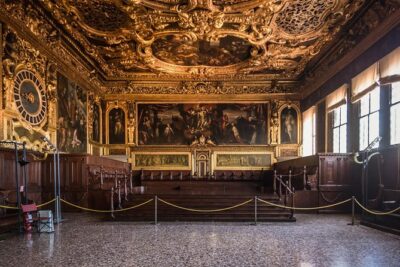
Venice’s Best: Basilica, Doge’s Palace, Gondola & History Gallery
Read our review →
Historic Milan Tour with Skip-the-Line Last Supper Ticket
Read our review →

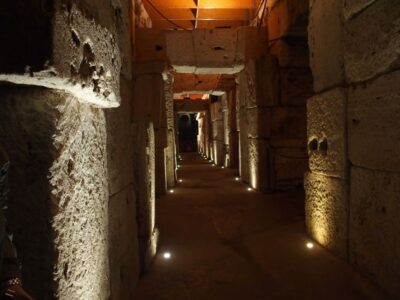
Ancient History and Colosseum Underground Tour
Read our review →
Forbidden History Walking Tour & Pub Crawl with Drinks
Read our review →Browse the lists this tour appears in